
Determinants of GFR GFR Capillary filtration coefficient X
- Slides: 13
Determinants of GFR • GFR = Capillary filtration coefficient X Net filtration pressure. • Increased glomerular Capillary filtration coefficient increases GFR. – Probably not a primary mechanism for day-to-day regulation of GFR. – Glomerular Capillary filtration coefficient is changed in some disease states such as diabetes millitus.
Determinants of GFR • GFR = Capillary filtration coefficient X Net filtration pressure. • Increased hydrostatic pressure in Bowman’s capsule decreases GFR (inverse is also true). – Normally, not a primary mechanism for day-to-day regulation of GFR. – Hydrostatic pressure in Bowman’s capsule can change in some pathologic conditions such as obstruction of the urinary tract. Guyton’s Textbook of Medical Physiology 26 -12
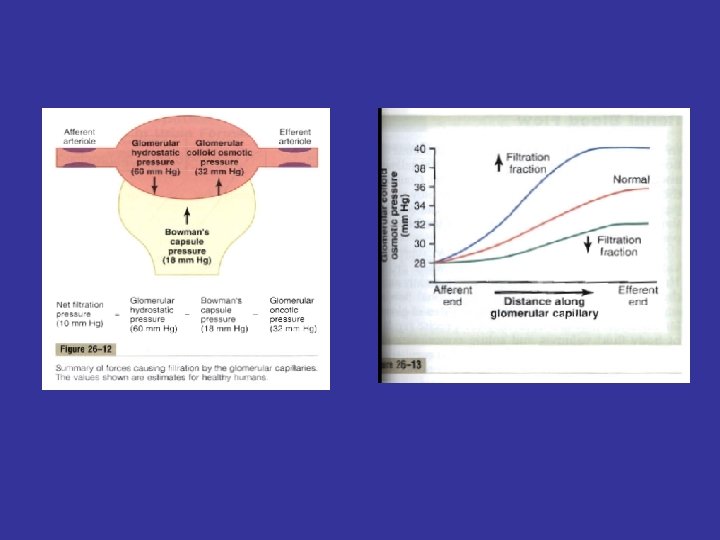
Determinants of GFR • GFR = Capillary filtration coefficient X Net filtration pressure. • Increased glomerular capillary colloid osmotic pressure decreases GFR. – Two factors regulate glomerular capillary colloid osmotic pressure: • Arterial plasma colloid osmotic pressure. • Filtration fraction. Guyton’s Textbook of Medical Physiology 26 -12 & 13
Determinants of GFR • Increased glomerular capillary colloid osmotic pressure decreases GFR (cont. ) – Filtration fraction = GFR/renal blood flow – Such that, a lower rate of blood flow into the glomerulus causes an increase in the filtration fraction • decreased plasma volume with constant filtration volume increasing the protein concentration. • results in an increase in Glomerular colloid osmotic pressure which tends to decrease GFR. – inverse is also true.
Determinants of GFR • GFR = Capillary filtration coefficient X Net filtration pressure. • Increased glomerular capillary hydrostatic pressure increases GFR. – Three variables determine the glomerular hydrostatic pressure. • Arterial pressure. • Afferent arterial resistance. • Efferent arterial resistance. Guyton’s Textbook of Medical Physiology 26 -12
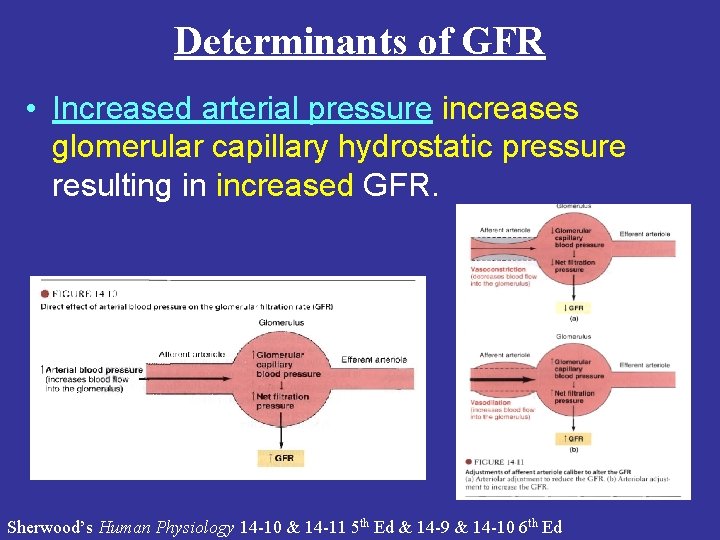
Determinants of GFR • Increased arterial pressure increases glomerular capillary hydrostatic pressure resulting in increased GFR. Sherwood’s Human Physiology 14 -10 & 14 -11 5 th Ed & 14 -9 & 14 -10 6 th Ed
Determinants of GFR • Increased afferent arterial resistance decreases blood flow to the glomerular capillary resulting in decreased glomerular capillary hydrostatic pressure and reduced GFR. Sherwood’s Human Physiology 14 -10 & 14 -11 5 th Ed & 14 -9 & 14 -10 6 th Ed
Determinants of GFR • Decreased afferent arterial resistance (dilation) _increases_ glomerular capillary hydrostatic pressure and GFR. Sherwood’s Human Physiology 14 -10 & 14 -11 5 th Ed & 14 -9 & 14 -10 6 th Ed
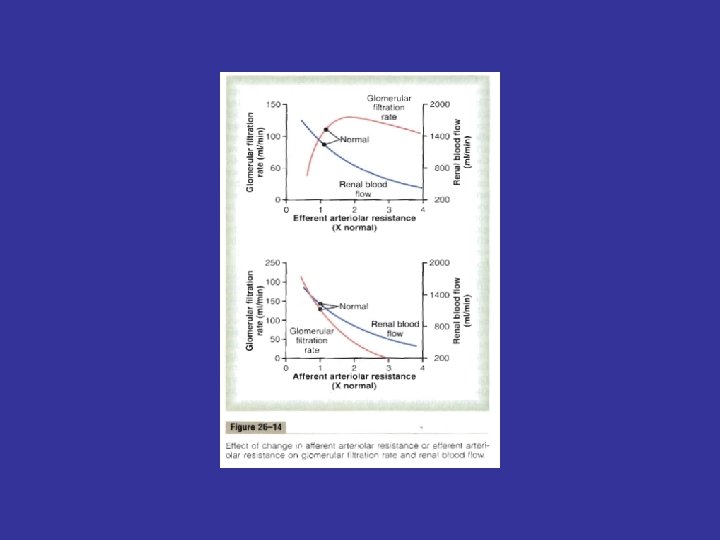
Determinants of GFR • Moderate increases in efferent arterial resistance (constriction) increase glomerular capillary hydrostatic pressure and slightly increases GFR. Guyton’s Textbook of Medical Physiology 26 -12
Determinants of GFR • A severe increase in efferent arterial resistance (constriction) increases glomerular capillary hydrostatic pressure, but also increases the colloid osmotic pressure (due to the decreased renal blood flow). This results in a net decrease in GFR. Guyton’s Textbook of Medical Physiology 26 -14
Renal blood flow • The Kidneys get ~22% of the cardiac output. – Greater than what is needed to supply kidneys with nutrients and remove waste products. – Great volume is necessary to supply enough plasma for high GFRs. – The renal cortex receives most of the blood. – The renal medulla receives only 1 -2% of the blood. • Renal blood flow is determined by the pressure gradient across the renal vasculature divided by the total renal vascular resistance.