
Determinants and Cardiovascular Consequences of Medial Arterial Calcification



- Slides: 25
Determinants and Cardiovascular Consequences of Medial Arterial Calcification: A Proposed Ancillary Study to MESA II Joachim H. Ix, MD, MAS Michael H. Criqui, MD, MPH (Sponsor) University of California San Diego
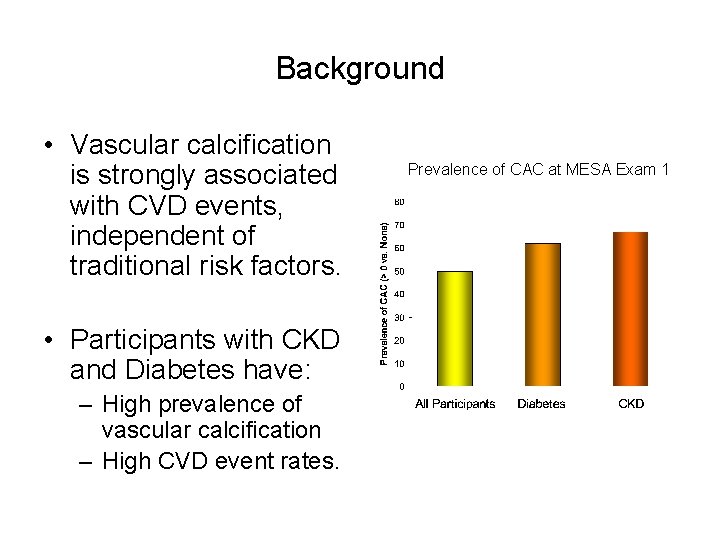
Background • Vascular calcification is strongly associated with CVD events, independent of traditional risk factors. • Participants with CKD and Diabetes have: – High prevalence of vascular calcification – High CVD event rates. Prevalence of CAC at MESA Exam 1
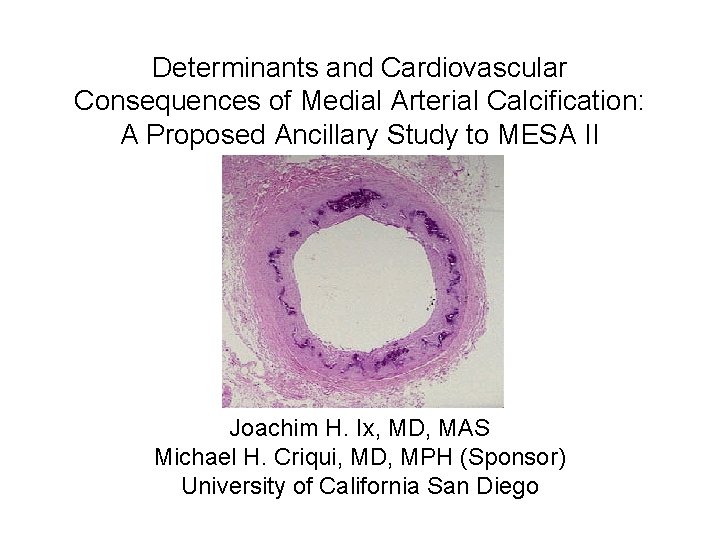
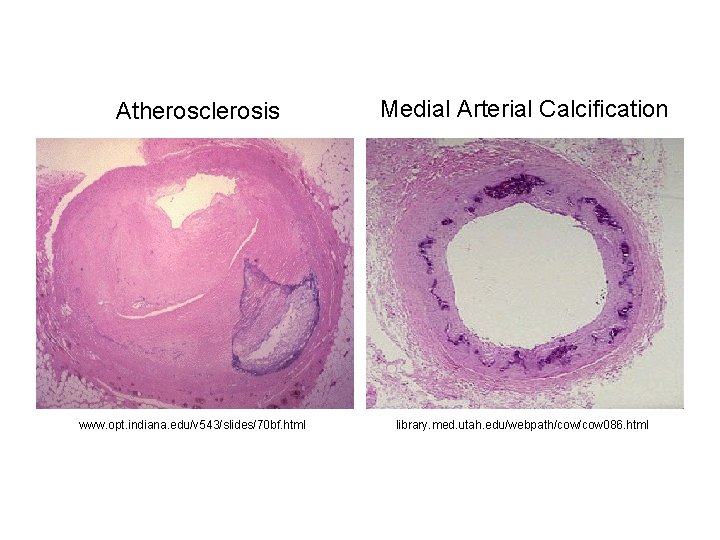
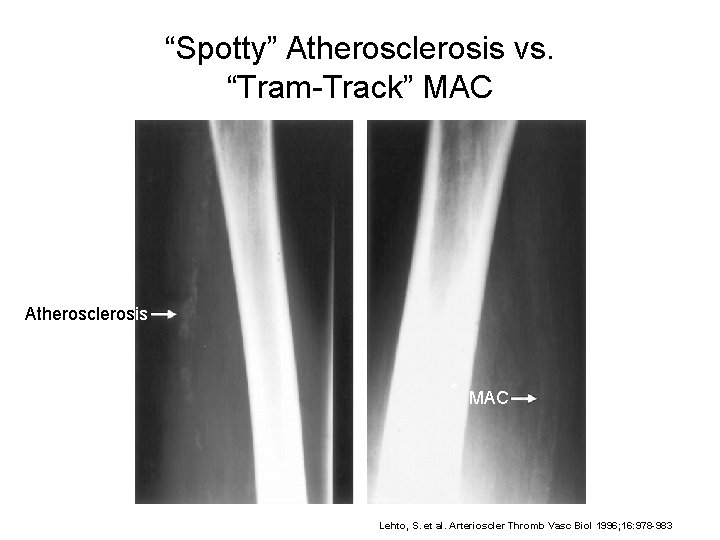
Background • However, vascular calcification may represents two distinct vasculopathies: (1) Atherosclerosis (2) Medial Arterial Calcification (MAC) • MAC is highly prevalent in diabetes and ESRD, although it also exists in persons without either condition. • Because of its diffuse nature, MAC is hypothesized to directly lead to vascular stiffness.
Atherosclerosis www. opt. indiana. edu/v 543/slides/70 bf. html Medial Arterial Calcification library. med. utah. edu/webpath/cow 086. html
“Spotty” Atherosclerosis vs. “Tram-Track” MAC Atherosclerosis MAC Lehto, S. et al. Arterioscler Thromb Vasc Biol 1996; 16: 978 -983
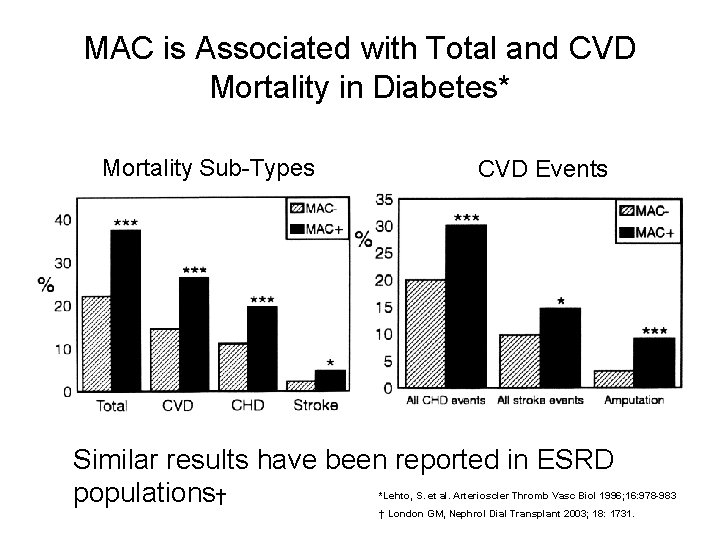
MAC is Associated with Total and CVD Mortality in Diabetes* Mortality Sub-Types CVD Events Similar results have been reported in ESRD populations† *Lehto, S. et al. Arterioscler Thromb Vasc Biol 1996; 16: 978 -983 † London GM, Nephrol Dial Transplant 2003; 18: 1731.
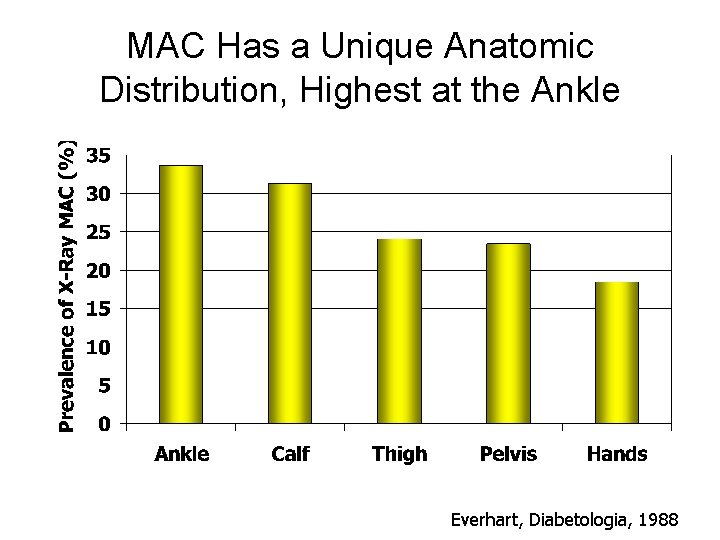
MAC Has a Unique Anatomic Distribution, Highest at the Ankle Everhart, Diabetologia, 1988
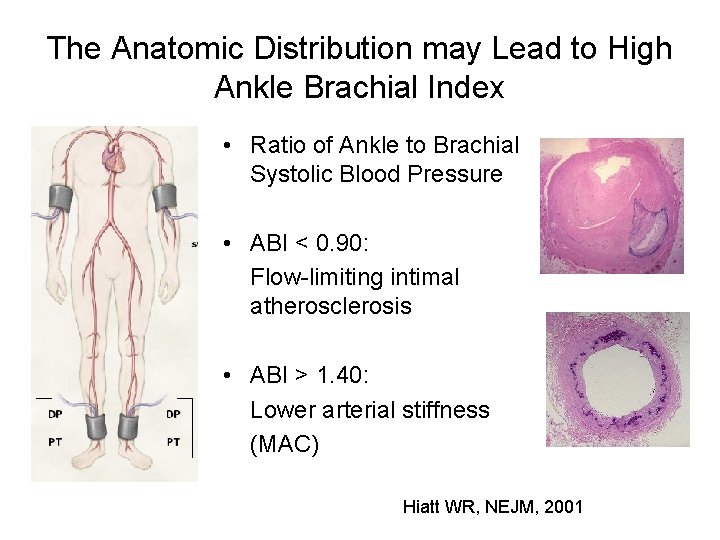
The Anatomic Distribution may Lead to High Ankle Brachial Index • Ratio of Ankle to Brachial Systolic Blood Pressure • ABI < 0. 90: Flow-limiting intimal atherosclerosis • ABI > 1. 40: Lower arterial stiffness (MAC) Hiatt WR, NEJM, 2001
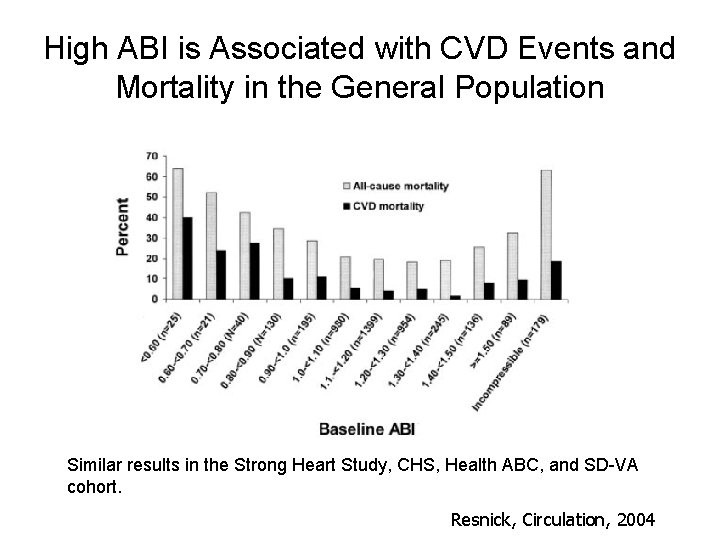
High ABI is Associated with CVD Events and Mortality in the General Population Similar results in the Strong Heart Study, CHS, Health ABC, and SD-VA cohort. Resnick, Circulation, 2004
Two Important Limitations to Existing Studies (1) Stiff ankle arteries do not allow for compression – The accuracy for detecting atherosclerosis may be sharply impaired in patients with stiff arteries. • Concomitant (undetected) atherosclerosis may be responsible for the association of high ABI and CVD events. (2) High ABI may only detect subjects with the most severe MAC (low sensitivity)
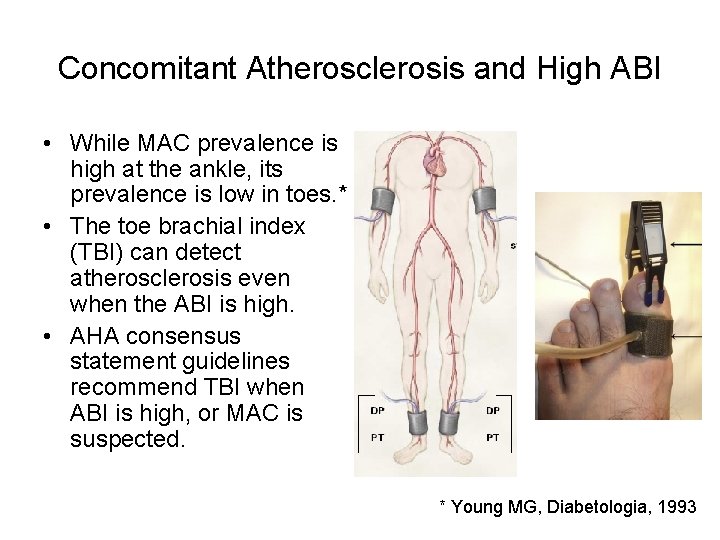
Concomitant Atherosclerosis and High ABI • While MAC prevalence is high at the ankle, its prevalence is low in toes. * • The toe brachial index (TBI) can detect atherosclerosis even when the ABI is high. • AHA consensus statement guidelines recommend TBI when ABI is high, or MAC is suspected. * Young MG, Diabetologia, 1993
Concomitant Atherosclerosis and High ABI • Two recent studies evaluated the prevalence of a low TBI (atherosclerosis) among subjects with a high ABI (MAC) among persons referred to the vascular lab. – How frequently do subjects with a stiff lower limb arteries have atherosclerotic PAD? • Prevalence of low TBI was 60 -80% in these subjects. • Thus, the association of high ABI with CVD events may be confounded by atherosclerotic PAD. Suominen V, Eur J Vasc Endovasc Surg, 2008 Aboyans V, J Vasc Surg, 2008
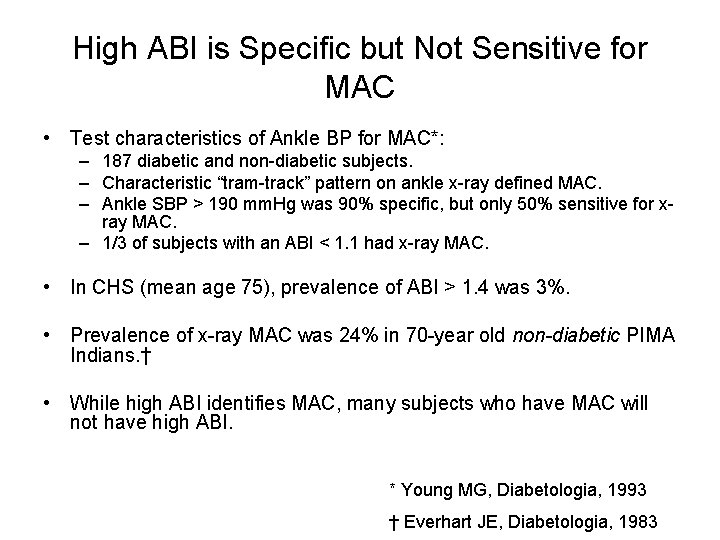
High ABI is Specific but Not Sensitive for MAC • Test characteristics of Ankle BP for MAC*: – 187 diabetic and non-diabetic subjects. – Characteristic “tram-track” pattern on ankle x-ray defined MAC. – Ankle SBP > 190 mm. Hg was 90% specific, but only 50% sensitive for xray MAC. – 1/3 of subjects with an ABI < 1. 1 had x-ray MAC. • In CHS (mean age 75), prevalence of ABI > 1. 4 was 3%. • Prevalence of x-ray MAC was 24% in 70 -year old non-diabetic PIMA Indians. † • While high ABI identifies MAC, many subjects who have MAC will not have high ABI. * Young MG, Diabetologia, 1993 † Everhart JE, Diabetologia, 1983
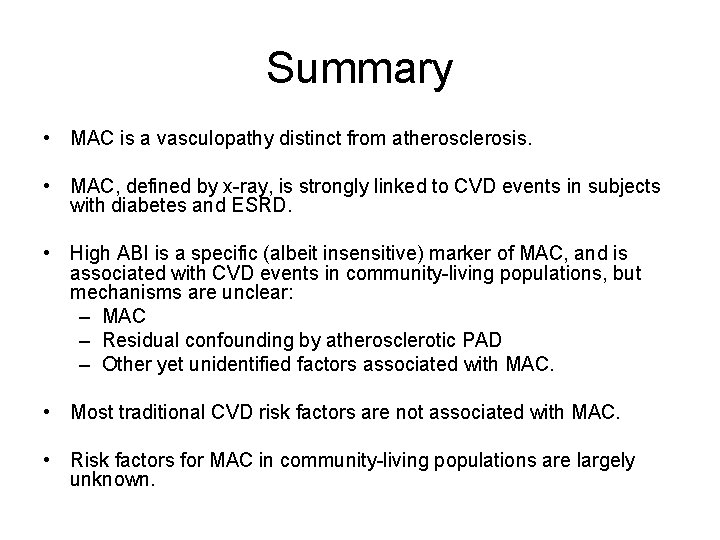
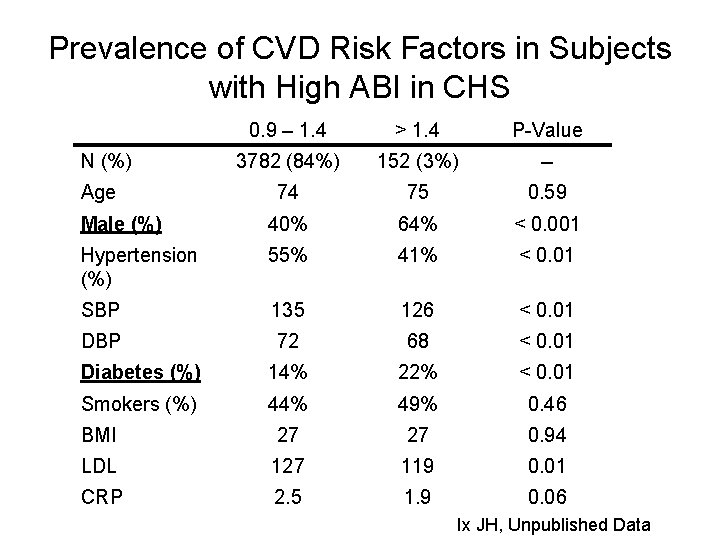
Summary • MAC is a vasculopathy distinct from atherosclerosis. • MAC, defined by x-ray, is strongly linked to CVD events in subjects with diabetes and ESRD. • High ABI is a specific (albeit insensitive) marker of MAC, and is associated with CVD events in community-living populations, but mechanisms are unclear: – MAC – Residual confounding by atherosclerotic PAD – Other yet unidentified factors associated with MAC. • Most traditional CVD risk factors are not associated with MAC. • Risk factors for MAC in community-living populations are largely unknown.
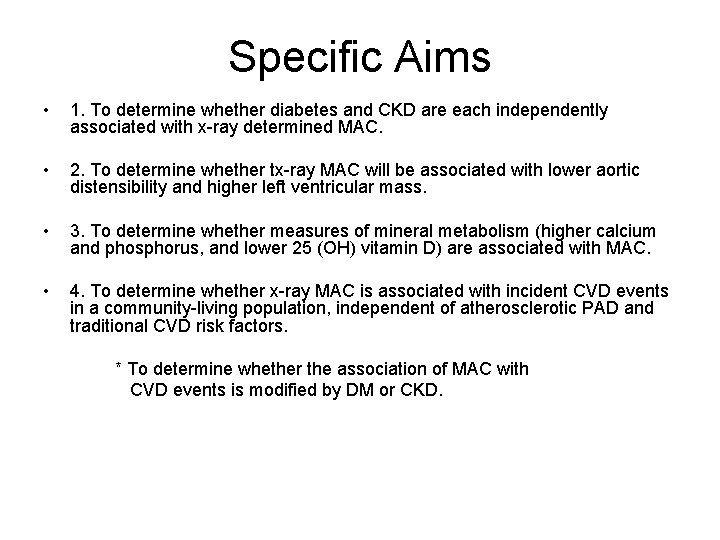
Specific Aims • 1. To determine whether diabetes and CKD are each independently associated with x-ray determined MAC. • 2. To determine whether tx-ray MAC will be associated with lower aortic distensibility and higher left ventricular mass. • 3. To determine whether measures of mineral metabolism (higher calcium and phosphorus, and lower 25 (OH) vitamin D) are associated with MAC. • 4. To determine whether x-ray MAC is associated with incident CVD events in a community-living population, independent of atherosclerotic PAD and traditional CVD risk factors. * To determine whether the association of MAC with CVD events is modified by DM or CKD.
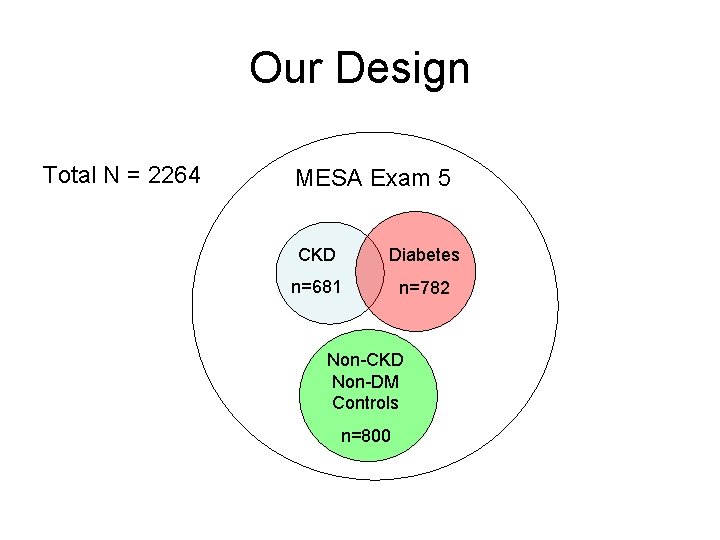
Our Design Total N = 2264 MESA Exam 5 CKD Diabetes n=681 n=782 Non-CKD Non-DM Controls n=800
Study Measurements • Plain x-rays of the bilateral ankles: – Scored for MAC presence and severity • Toe Brachial Index: – Will detect atherosclerotic PAD irrespective of MAC status.
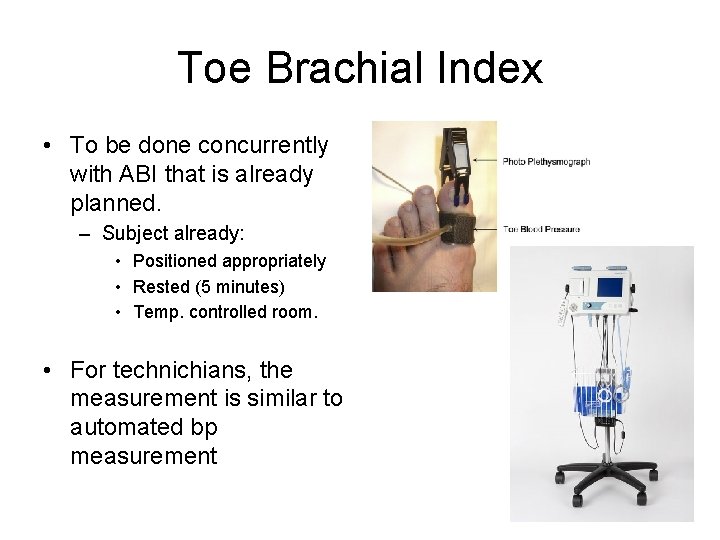
Toe Brachial Index • To be done concurrently with ABI that is already planned. – Subject already: • Positioned appropriately • Rested (5 minutes) • Temp. controlled room. • For technichians, the measurement is similar to automated bp measurement
Bilateral Plain X-rays of Ankles SEPARATE VISIT • To minimize disruption of the main visit, we propose a SEPARATE X-RAY VISIT.
Time With Participants: • TBI Measurements: 5 minutes • X-rays (separate visit): 20 minutes Without Participants: • Case report forms / data entry: 15 minutes • Copying / mailing results to participants: 3 minutes.
Proposed Funding Mechanism • NIH R 01 • Proposed submission date Feb 5, 2009.
Why MESA? • Community-based, multi-ethnic. • Availability of subjects with DM, CKD, and neither of the above. • Availability of existing measures: – – Cardiac structure (LV Mass) Vascular function (Aortic distensibility) Calcification in other vascular beds (CAC) Outcome adjudication for CVD events. • Consistent with MESA’s mission: – MESA set out to comprehensively evaluate subclinical CVD in community-living persons. – MAC is strongly linked to CVD events and mortality. – No measure of MAC is available in MESA, or elsewhere.
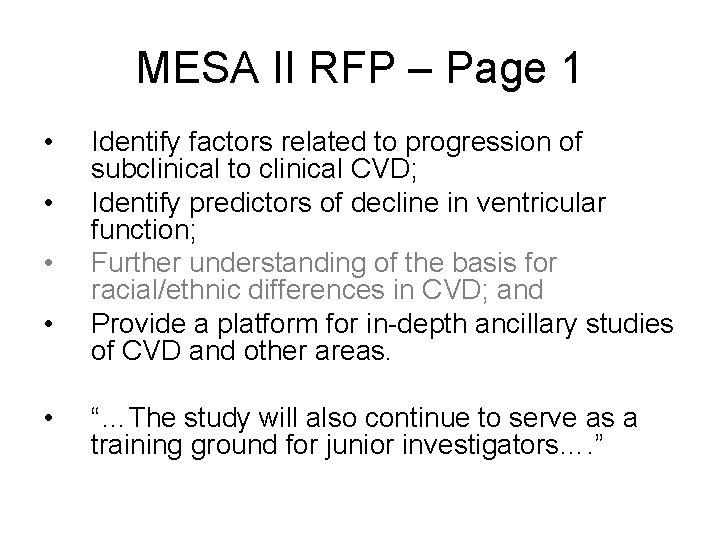
MESA II RFP – Page 1 • • • Identify factors related to progression of subclinical to clinical CVD; Identify predictors of decline in ventricular function; Further understanding of the basis for racial/ethnic differences in CVD; and Provide a platform for in-depth ancillary studies of CVD and other areas. “…The study will also continue to serve as a training ground for junior investigators…. ”
Prevalence of CVD Risk Factors in Subjects with High ABI in CHS 0. 9 – 1. 4 > 1. 4 P-Value 3782 (84%) 152 (3%) -- 74 75 0. 59 Male (%) 40% 64% < 0. 001 Hypertension (%) 55% 41% < 0. 01 SBP 135 126 < 0. 01 DBP 72 68 < 0. 01 Diabetes (%) 14% 22% < 0. 01 Smokers (%) 44% 49% 0. 46 BMI 27 27 0. 94 LDL 127 119 0. 01 CRP 2. 5 1. 9 0. 06 N (%) Age Ix JH, Unpublished Data