
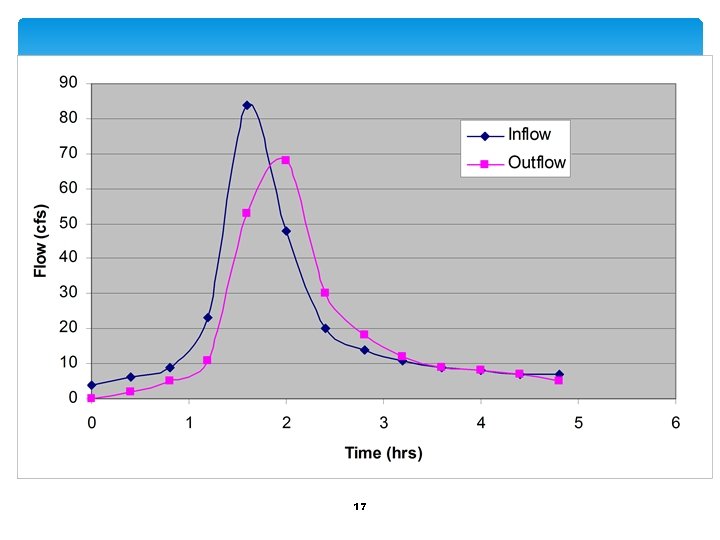
Detention Routing 1 Objectives Determine an outflow hydrograph
Detention Routing 1
Objectives Determine an outflow hydrograph using routing given: Inflow Hydrograph Storage and Outflow versus WSE 2
Detention Basins Inflow (ditch or pipe) Storage Outflow (orifice or weir or combination) Berm Emergency spillway 3
Routing Method used to model the outflow hydrograph Based on continuity equation Water in varies Water out varies 4
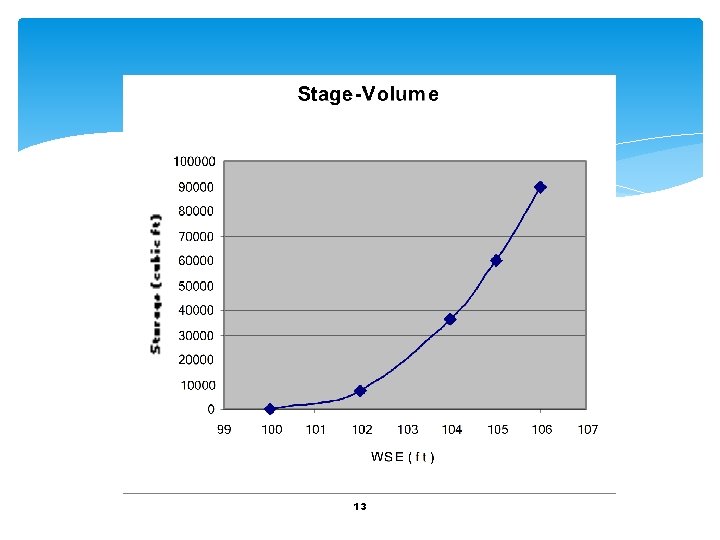
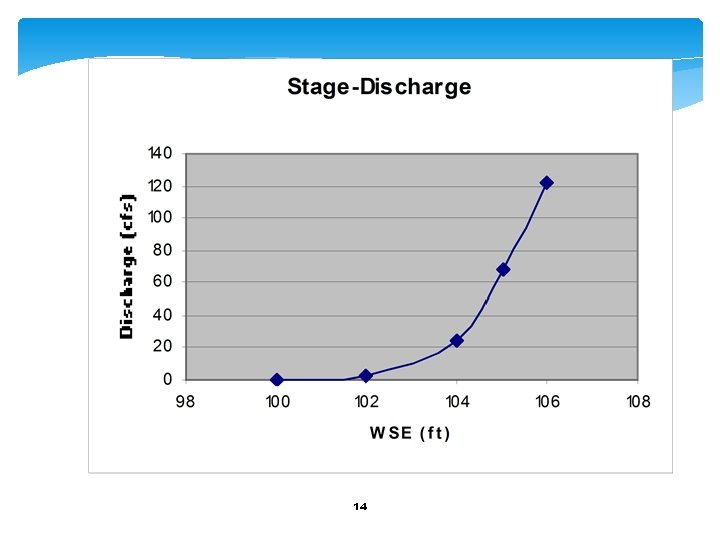
Information Needed to Route Inflow hydrograph Relation of storage volume to elevation in the proposed detention basin Relation of outflow to water level elevation (discharge rating) 5
Set up table with small time steps Water in – Water Out = Difference in Storage (water in is changing w/ time) (water out is a function of basin WSE) (basin WSE is a function of basin geometry) 6
Reservoir Routing Avg Inflow (I) – Avg Outflow (O) = Change in storage per some increment of time If I=O there is no change in water elevation If I>O then water surface rises If I<O then water surface decreases 7
Reservoir Routing Over some time increment (1 to 2) I 1 and I 2 are inflows at beginning (1) and end (2) of time increment O 1 and O 2 are outflows S 2 and S 1 are actual storage volumes Delta t is the time from 1 to 2 Note-variables in red are initially known 8

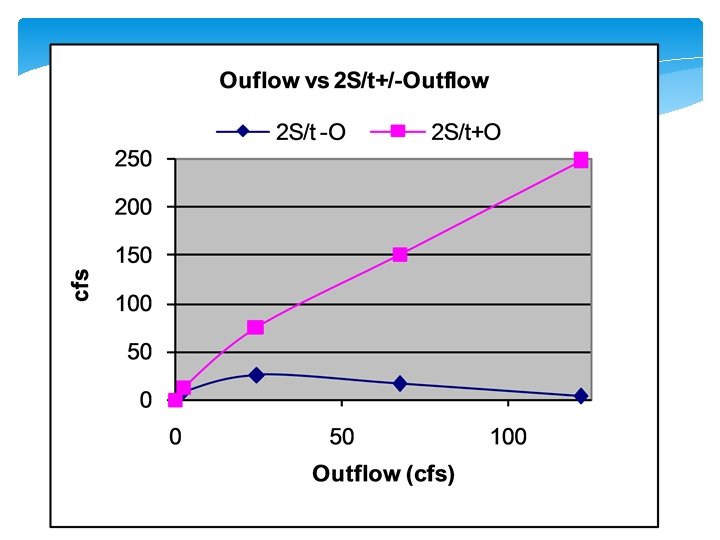
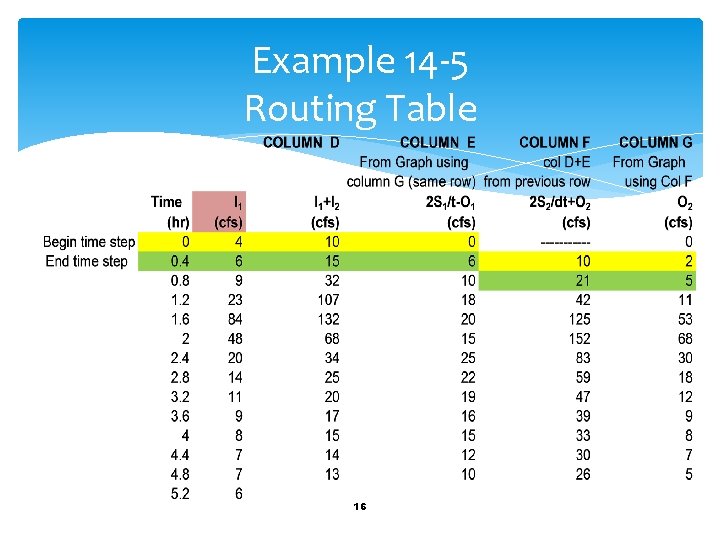
Equation (I 1+I 2)/2 – (O 1+O 2)/2 = (S 2 -S 1)/t Rearrange to: (I 1+I 2) + [(2*S 1/t)-O 1]=2*S 2/t + O 2 Left hand side – knowns Right-hand side - unknowns 9
Equation O 2 and S 2 -2 unknowns; need 2 equations There is a relationship between outflow and storage volume 10
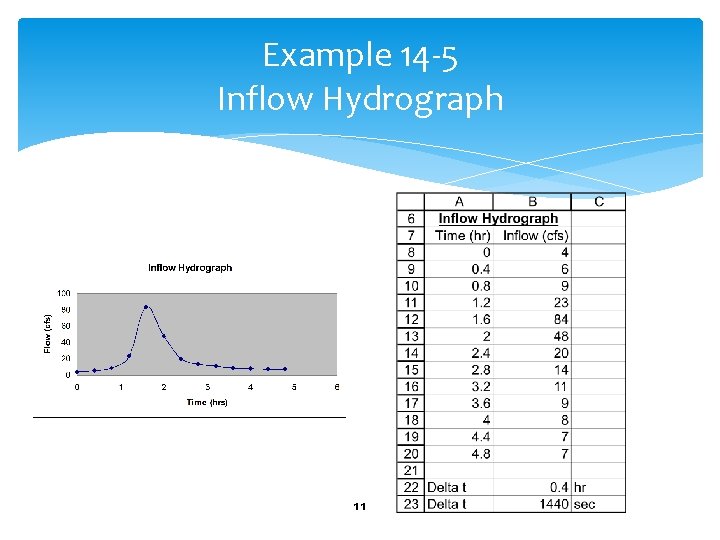
Example 14 -5 Inflow Hydrograph 11
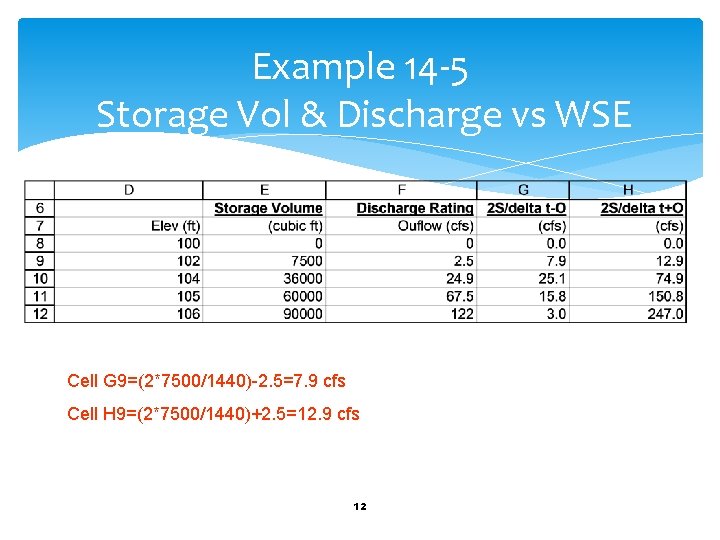
Example 14 -5 Storage Vol & Discharge vs WSE Cell G 9=(2*7500/1440)-2. 5=7. 9 cfs Cell H 9=(2*7500/1440)+2. 5=12. 9 cfs 12
13
14
15
Example 14 -5 Routing Table 16
17
- Slides: 17