
Detector Control Systems A software implementation Cern Framework
- Slides: 17
Detector Control Systems A software implementation: Cern Framework + PVSS Niccolo’ Moggi and Stefano Zucchelli University and INFN Bologna 1 09/11/2006
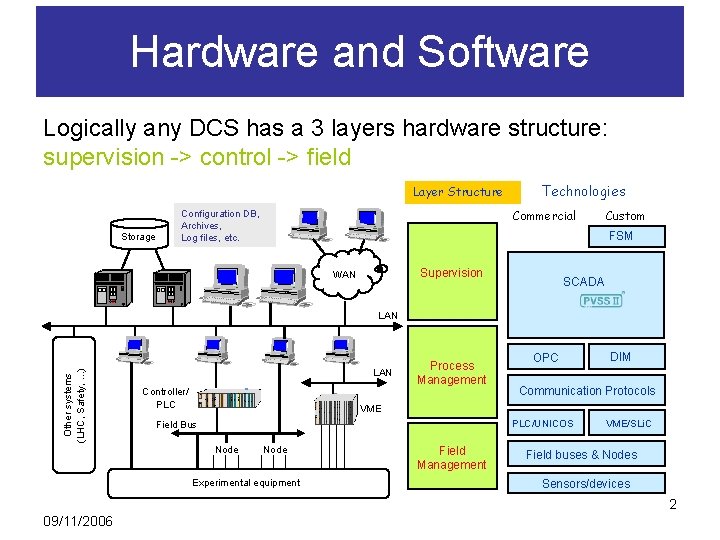
Hardware and Software Logically any DCS has a 3 layers hardware structure: supervision -> control -> field Layer Structure Storage Technologies Commercial Configuration DB, Archives, Log files, etc. Custom FSM Supervision WAN SCADA Other systems (LHC, Safety, . . . ) LAN Controller/ PLC Process Management OPC DIM Communication Protocols VME PLC/UNICOS Field Bus Node Experimental equipment Field Management VME/SLi. C Field buses & Nodes Sensors/devices 2 09/11/2006
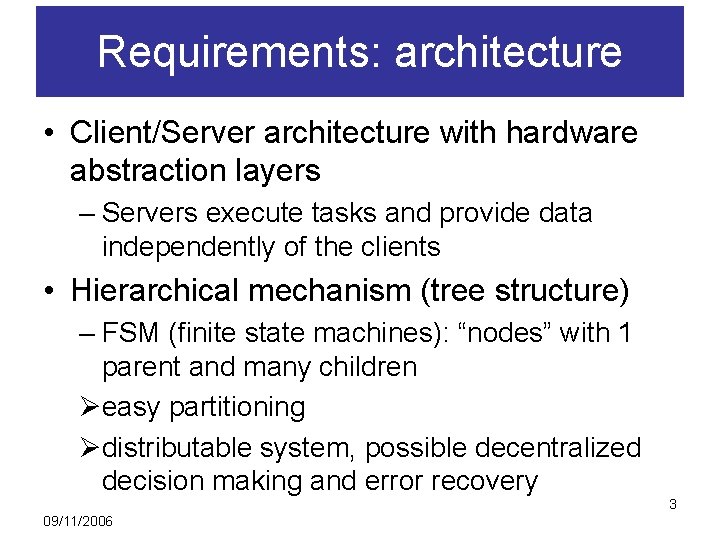
Requirements: architecture • Client/Server architecture with hardware abstraction layers – Servers execute tasks and provide data independently of the clients • Hierarchical mechanism (tree structure) – FSM (finite state machines): “nodes” with 1 parent and many children Øeasy partitioning Ødistributable system, possible decentralized decision making and error recovery 3 09/11/2006
Requirements: implementation – reliability – flexibility, expandability – low cost – short development time – ease of use (developers and users) – documentation/support 4 09/11/2006
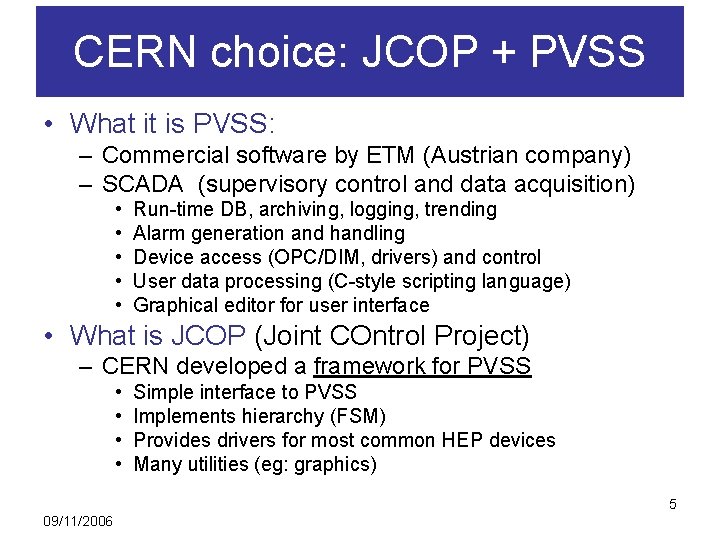
CERN choice: JCOP + PVSS • What it is PVSS: – Commercial software by ETM (Austrian company) – SCADA (supervisory control and data acquisition) • • • Run-time DB, archiving, logging, trending Alarm generation and handling Device access (OPC/DIM, drivers) and control User data processing (C-style scripting language) Graphical editor for user interface • What is JCOP (Joint COntrol Project) – CERN developed a framework for PVSS • • Simple interface to PVSS Implements hierarchy (FSM) Provides drivers for most common HEP devices Many utilities (eg: graphics) 5 09/11/2006
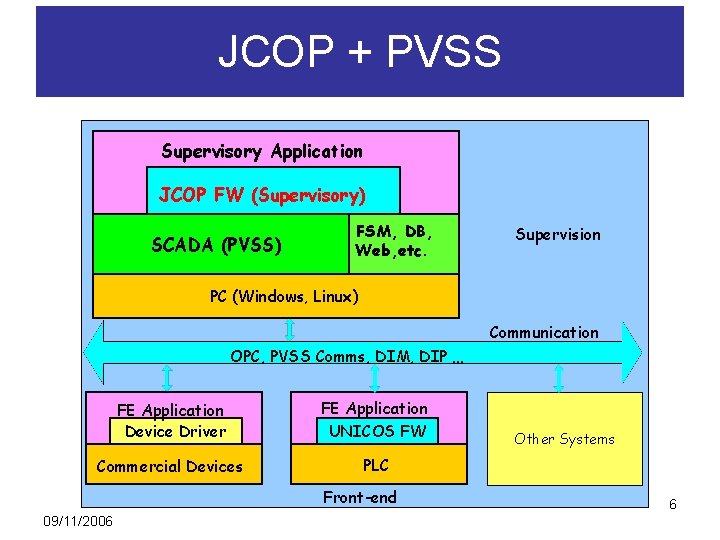
JCOP + PVSS Supervisory Application JCOP FW (Supervisory) SCADA (PVSS) FSM, DB, Web, etc. Supervision PC (Windows, Linux) OPC, PVSS Comms, DIM, DIPDIP … FE Application Device Driver FE Application UNICOS FW Commercial Devices PLC Front-end 09/11/2006 Communication Other Systems 6
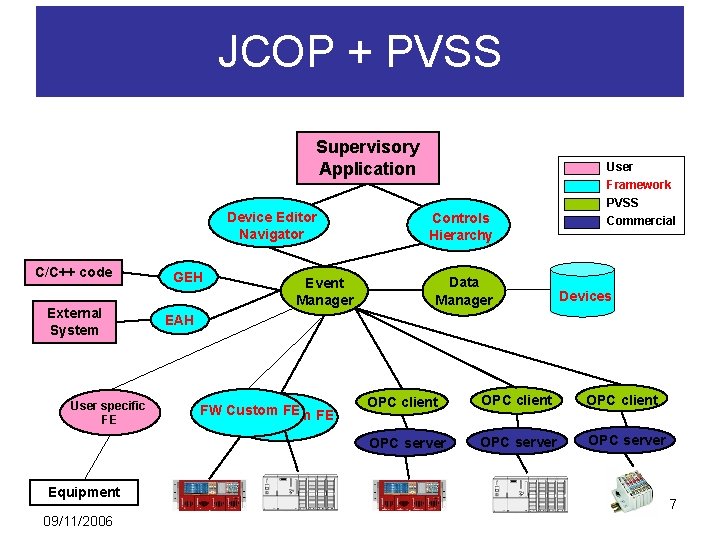
JCOP + PVSS Supervisory Application Device Editor Navigator C/C++ code External System User specific FE Equipment 09/11/2006 GEH Event Manager Controls Hierarchy Data Manager User Framework PVSS Commercial Devices EAH FW Custom FE FE FW Custom OPC client OPC server 7
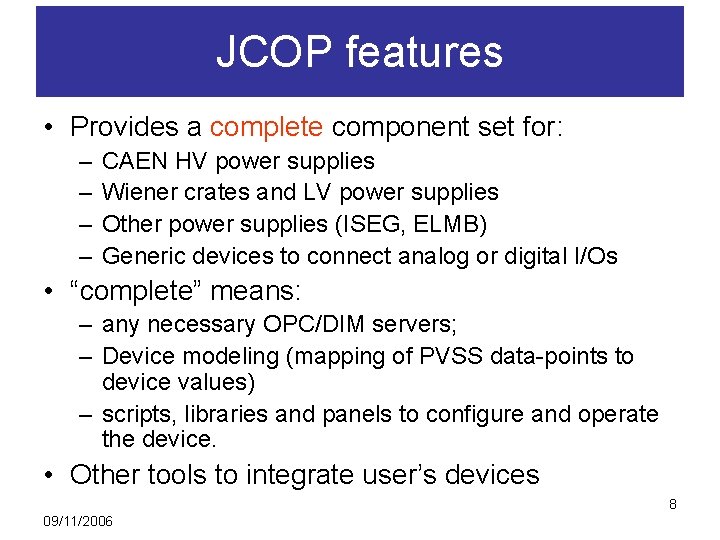
JCOP features • Provides a complete component set for: – – CAEN HV power supplies Wiener crates and LV power supplies Other power supplies (ISEG, ELMB) Generic devices to connect analog or digital I/Os • “complete” means: – any necessary OPC/DIM servers; – Device modeling (mapping of PVSS data-points to device values) – scripts, libraries and panels to configure and operate the device. • Other tools to integrate user’s devices 8 09/11/2006
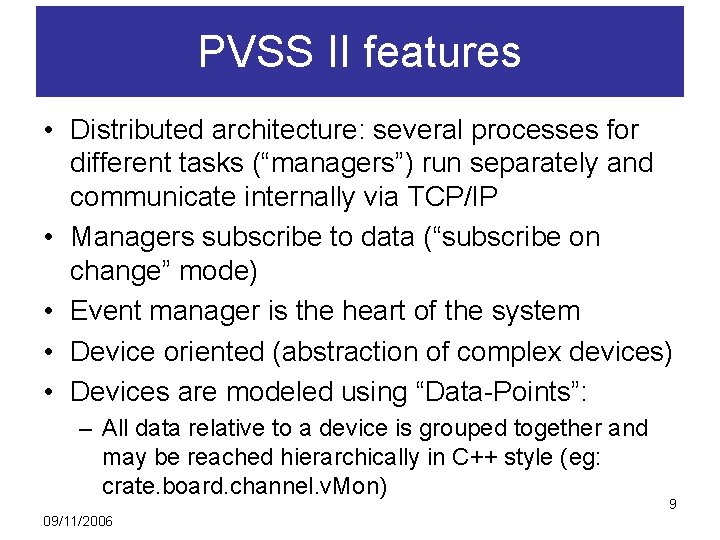
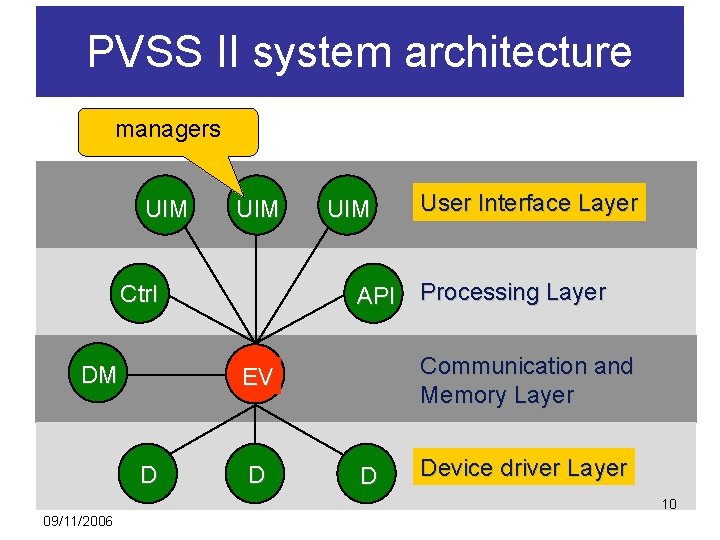
PVSS II features • Distributed architecture: several processes for different tasks (“managers”) run separately and communicate internally via TCP/IP • Managers subscribe to data (“subscribe on change” mode) • Event manager is the heart of the system • Device oriented (abstraction of complex devices) • Devices are modeled using “Data-Points”: – All data relative to a device is grouped together and may be reached hierarchically in C++ style (eg: crate. board. channel. v. Mon) 09/11/2006 9
PVSS II system architecture managers UIM Ctrl DM UIM API D Processing Layer Communication and Memory Layer EV D User Interface Layer D Device driver Layer 10 09/11/2006
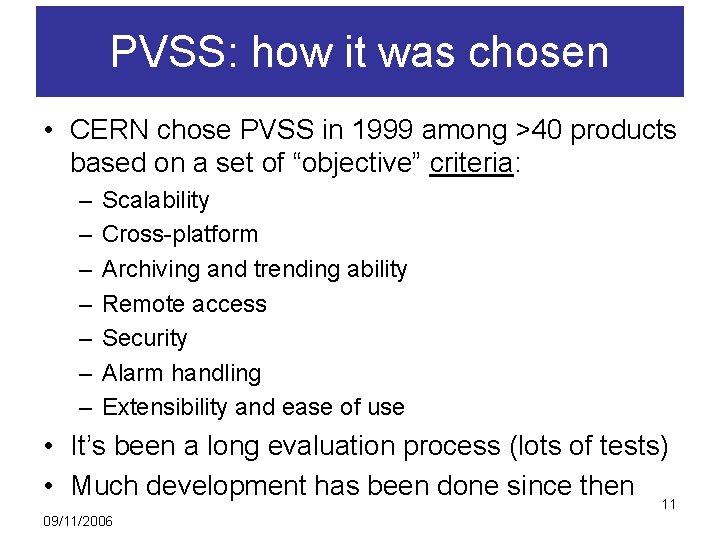
PVSS: how it was chosen • CERN chose PVSS in 1999 among >40 products based on a set of “objective” criteria: – – – – Scalability Cross-platform Archiving and trending ability Remote access Security Alarm handling Extensibility and ease of use • It’s been a long evaluation process (lots of tests) • Much development has been done since then 11 09/11/2006
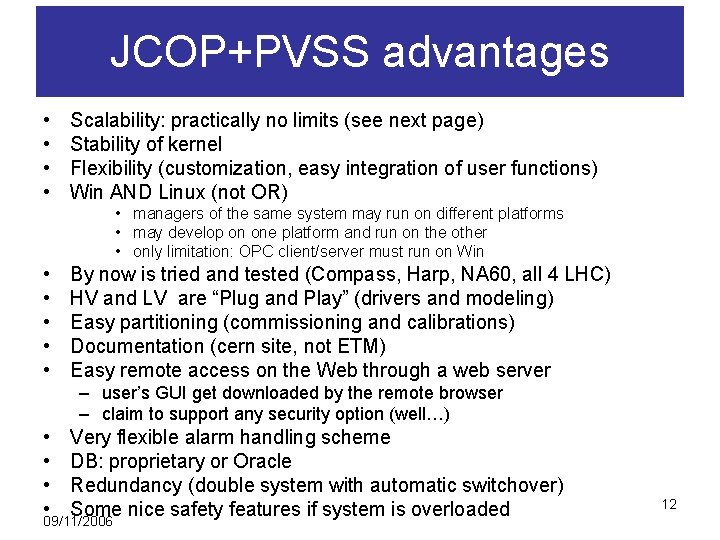
JCOP+PVSS advantages • • Scalability: practically no limits (see next page) Stability of kernel Flexibility (customization, easy integration of user functions) Win AND Linux (not OR) • managers of the same system may run on different platforms • may develop on one platform and run on the other • only limitation: OPC client/server must run on Win • • • By now is tried and tested (Compass, Harp, NA 60, all 4 LHC) HV and LV are “Plug and Play” (drivers and modeling) Easy partitioning (commissioning and calibrations) Documentation (cern site, not ETM) Easy remote access on the Web through a web server – user’s GUI get downloaded by the remote browser – claim to support any security option (well…) • Very flexible alarm handling scheme • DB: proprietary or Oracle • Redundancy (double system with automatic switchover) • Some nice safety features if system is overloaded 09/11/2006 12
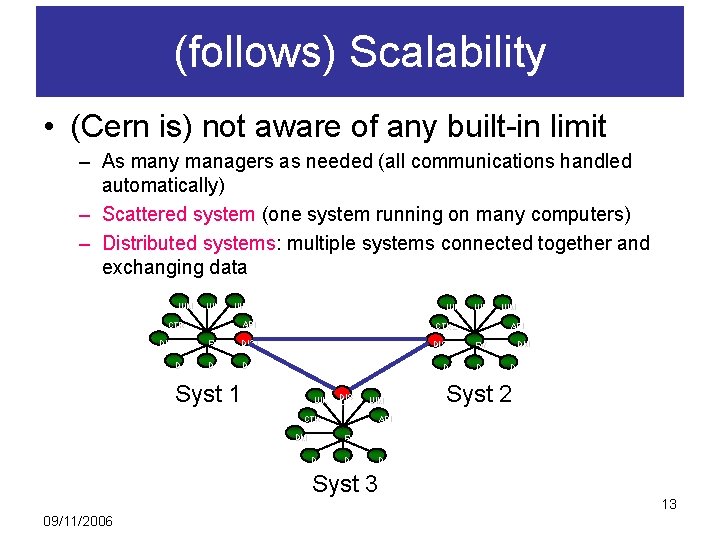
(follows) Scalability • (Cern is) not aware of any built-in limit – As many managers as needed (all communications handled automatically) – Scattered system (one system running on many computers) – Distributed systems: multiple systems connected together and exchanging data UIM UIM API CTRL DM D UIM EV DIST D D DIST D UIM DIS T UIM CTRL DM UIM API CTRL Syst 1 DM EV D D Syst 2 API EV D D D Syst 3 09/11/2006 UIM 13
Dis-advantages • COST !!! – have no idea: should investigate with ETM (koller@etm. at) – complex licensing model: usually possible to negotiate special deals • Maybe even too “big” ? • Still need to develop part of the device drivers (but this is unavoidable) • Support by ETM in the US ? • Cern will not commit to any formal support but “this does not mean we will not help you if we could” (Wayne. Salter@cern. ch) 14 09/11/2006
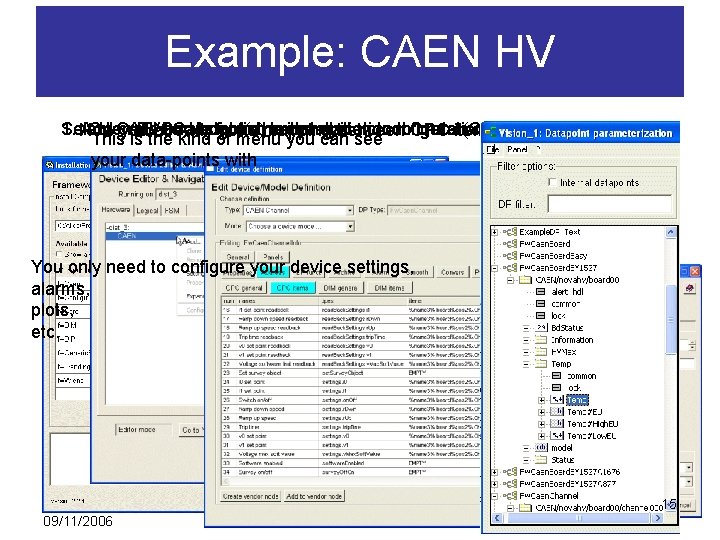
Example: CAEN HV Select 1. Add Open CAEN crate PVSS, and crate establish board(s) from to communication installation the system tool configuration to. OPC crateitems (OPC) Now already gotmenu athe mapping between and PVSS data-points Thisyou is the kind of you can see your data-points with You only need to configure your device settings, alarms, plots, etc. 15 09/11/2006
Performance • Report tests made at Cern in 2003/6 – Distributed 16 -system in 3 -level tree on 16 PC of various type, each system with ~40 K DPE – Tested up to 260 K DPE on one PC (non-realistic test 5 M DPE on top PC of a 130 -system in 5 -level tree) – Total # of DPE not significant in subscribe-on-change mode. What overload a system is the # of changes/s • P 4 CPU: 2. 4 GHz RAM: 2 Gb running EM + DM + 5 managers – saturate CPU at 1600 changes/s (500 ch/s = 35%CPU) – when moving EM outside saturates CPU at 2800 changes/s – alarm handling and archiving: saturate at ~700 alarms/s • Dual-CPU and large RAM are well exploited • With 400 K DPE (includes FEB) 09/11/2006 – 1% changes/s : 1+2 CPU tree – 5% changes/s : 1+10 CPU tree 16
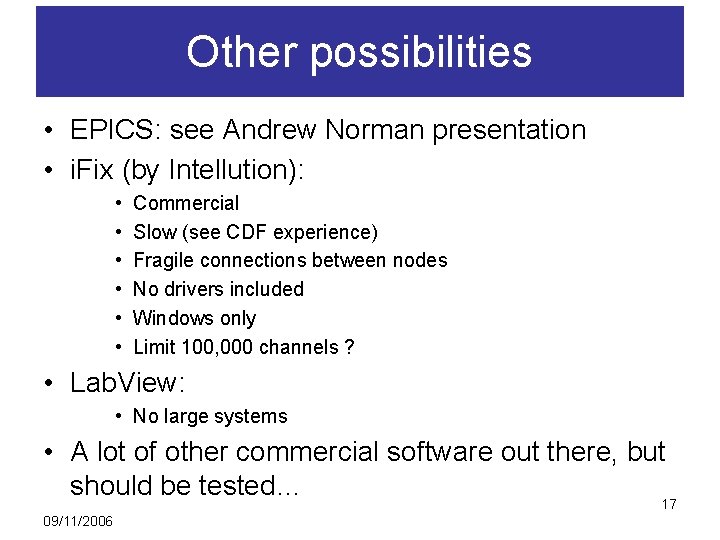
Other possibilities • EPICS: see Andrew Norman presentation • i. Fix (by Intellution): • • • Commercial Slow (see CDF experience) Fragile connections between nodes No drivers included Windows only Limit 100, 000 channels ? • Lab. View: • No large systems • A lot of other commercial software out there, but should be tested… 17 09/11/2006