
Detective Work Investigating art Why to help direct
- Slides: 12
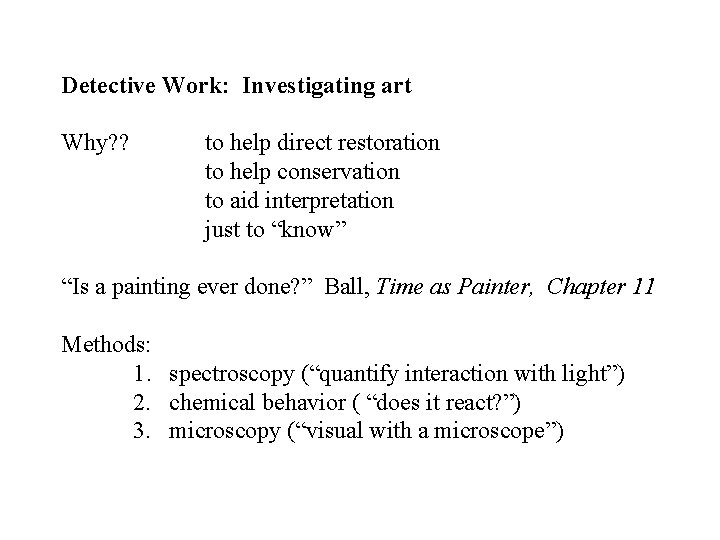
Detective Work: Investigating art Why? ? to help direct restoration to help conservation to aid interpretation just to “know” “Is a painting ever done? ” Ball, Time as Painter, Chapter 11 Methods: 1. spectroscopy (“quantify interaction with light”) 2. chemical behavior ( “does it react? ”) 3. microscopy (“visual with a microscope”)
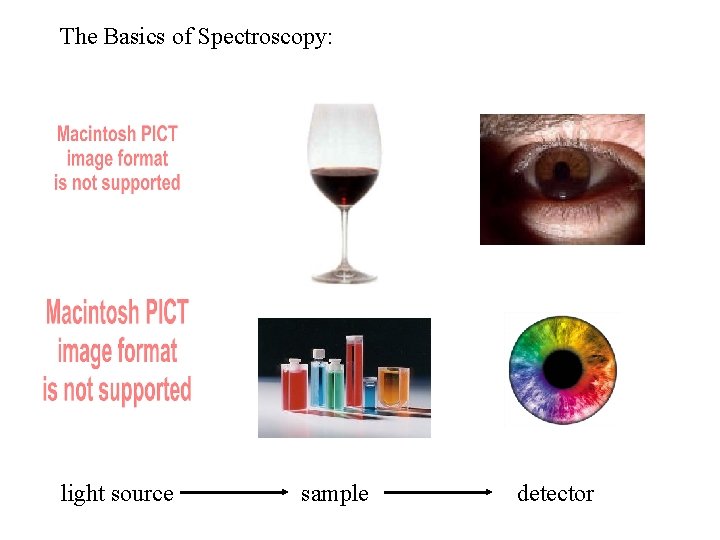
The Basics of Spectroscopy: light source sample detector
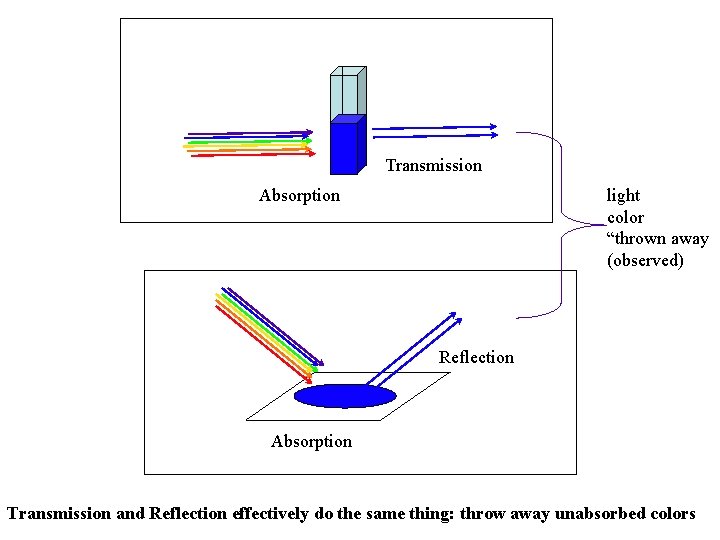
Transmission Absorption light color “thrown away (observed) Reflection Absorption Transmission and Reflection effectively do the same thing: throw away unabsorbed colors
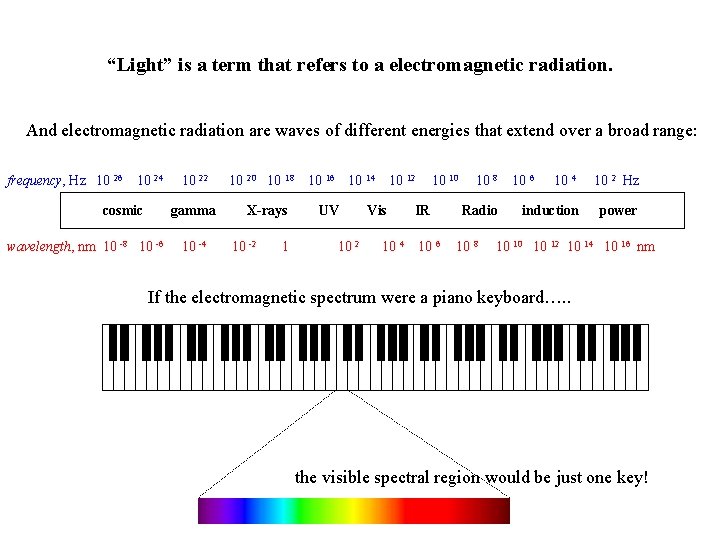
“Light” is a term that refers to a electromagnetic radiation. And electromagnetic radiation are waves of different energies that extend over a broad range: frequency, Hz 10 26 10 24 cosmic 10 22 gamma wavelength, nm 10 -8 10 -6 10 -4 10 20 10 18 X-rays 10 -2 1 10 16 10 14 UV 10 2 10 12 Vis 10 4 10 10 IR 10 6 10 8 Radio 10 8 10 6 10 4 10 2 Hz induction power 10 10 10 12 10 14 10 16 nm If the electromagnetic spectrum were a piano keyboard…. . the visible spectral region would be just one key!
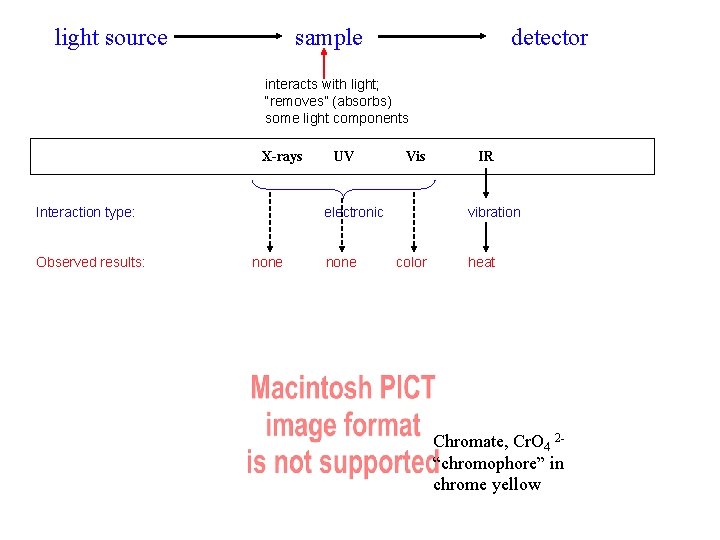
light source sample detector interacts with light; “removes” (absorbs) some light components X-rays Interaction type: Observed results: UV Vis electronic none IR vibration color heat Chromate, Cr. O 4 2“chromophore” in chrome yellow
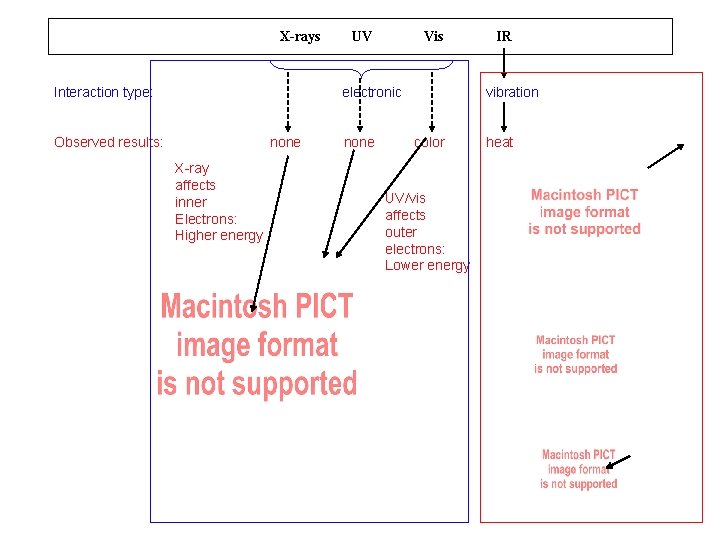
X-rays Interaction type: UV Vis electronic Observed results: none X-ray affects inner Electrons: Higher energy none IR vibration color UV/vis affects outer electrons: Lower energy heat
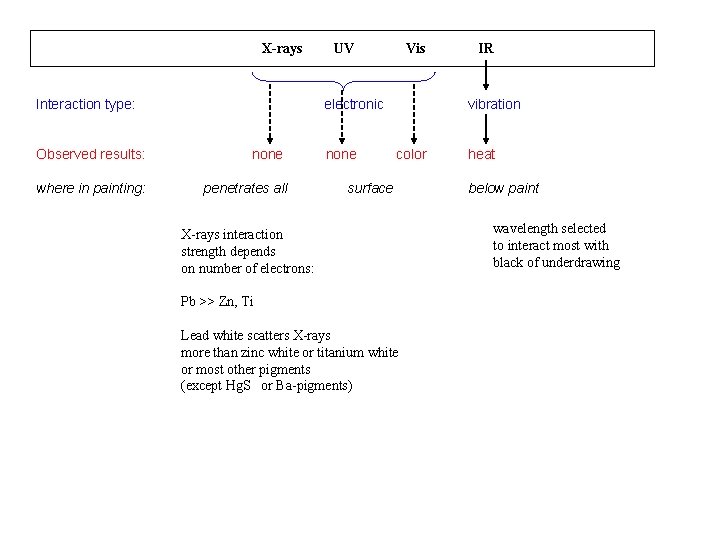
X-rays Interaction type: UV Vis electronic Observed results: none where in painting: penetrates all none IR vibration color surface X-rays interaction strength depends on number of electrons: Pb >> Zn, Ti Lead white scatters X-rays more than zinc white or titanium white or most other pigments (except Hg. S or Ba-pigments) heat below paint wavelength selected to interact most with black of underdrawing
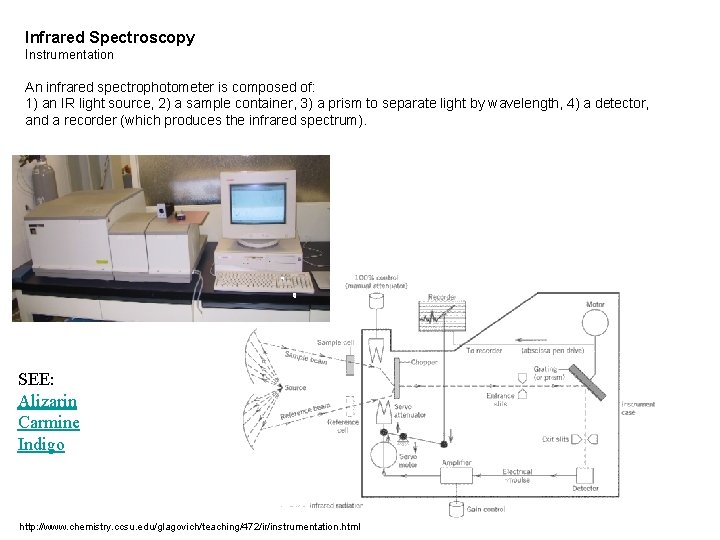
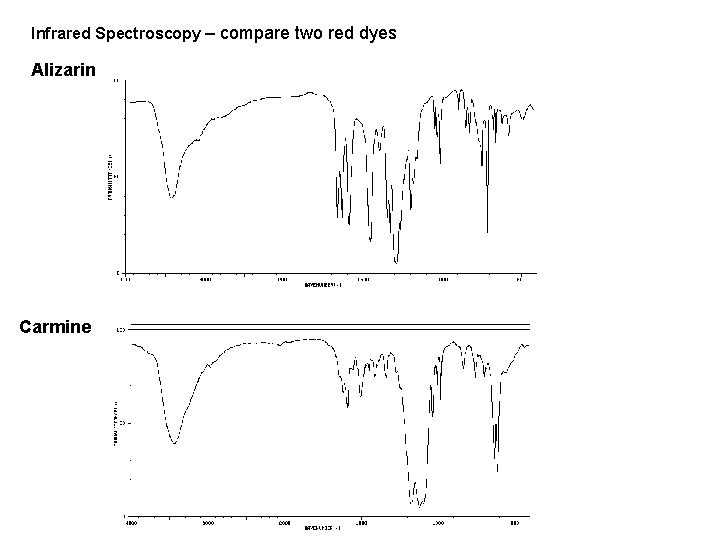
Infrared Spectroscopy Instrumentation An infrared spectrophotometer is composed of: 1) an IR light source, 2) a sample container, 3) a prism to separate light by wavelength, 4) a detector, and a recorder (which produces the infrared spectrum). SEE: Alizarin Carmine Indigo http: //www. chemistry. ccsu. edu/glagovich/teaching/472/ir/instrumentation. html
Infrared Spectroscopy – compare two red dyes Alizarin Carmine
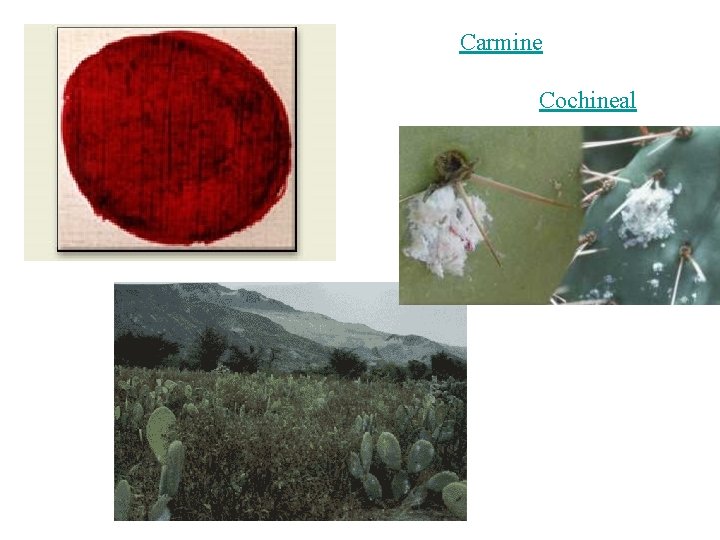
Carmine Cochineal
Feast of the Gods An analysis by Web. Exhibits begin with historical context: • when did artist/work occur • workshop/atelier context and influences? • location • information on commission/motivation for work
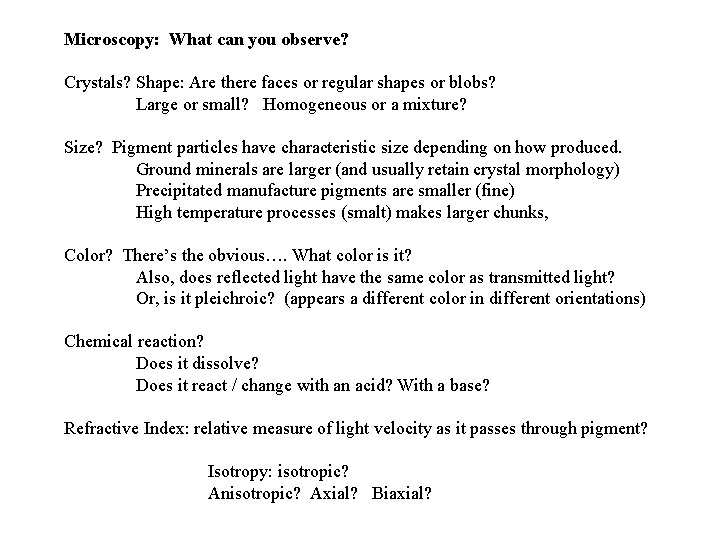
Microscopy: What can you observe? Crystals? Shape: Are there faces or regular shapes or blobs? Large or small? Homogeneous or a mixture? Size? Pigment particles have characteristic size depending on how produced. Ground minerals are larger (and usually retain crystal morphology) Precipitated manufacture pigments are smaller (fine) High temperature processes (smalt) makes larger chunks, Color? There’s the obvious…. What color is it? Also, does reflected light have the same color as transmitted light? Or, is it pleichroic? (appears a different color in different orientations) Chemical reaction? Does it dissolve? Does it react / change with an acid? With a base? Refractive Index: relative measure of light velocity as it passes through pigment? Isotropy: isotropic? Anisotropic? Axial? Biaxial?