
Detection of XRays Detector characteristics Proportional counters Microchannel
- Slides: 27
Detection of X-Rays • Detector characteristics • Proportional counters • Microchannel plates • Solid state detectors • Microcalorimeters
Detector Characteristics • • • Sensitivity Quantum efficiency Energy resolution Time resolution Position resolution
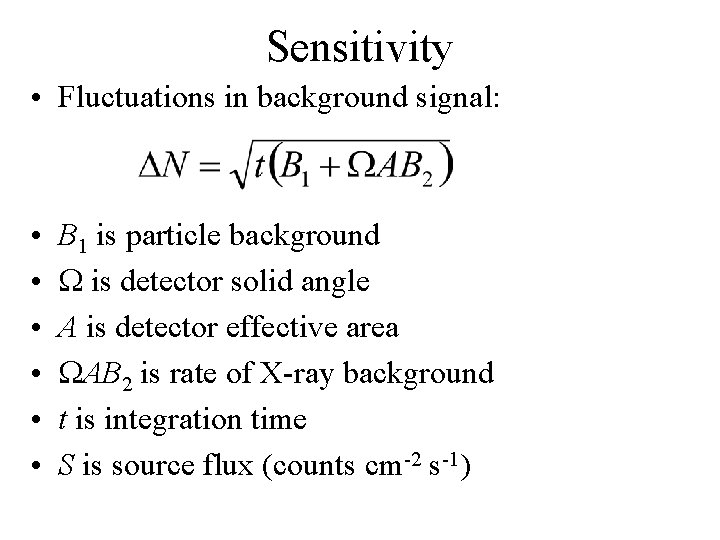
Sensitivity • Fluctuations in background signal: • • • B 1 is particle background is detector solid angle A is detector effective area AB 2 is rate of X-ray background t is integration time S is source flux (counts cm-2 s-1)
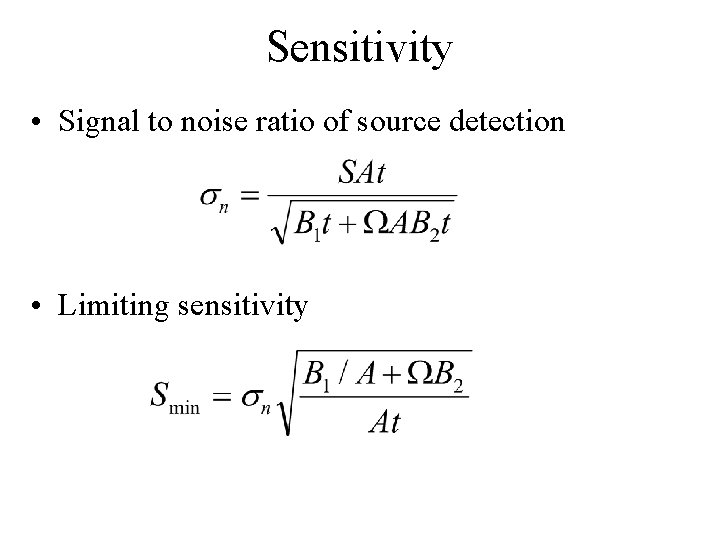
Sensitivity • Signal to noise ratio of source detection • Limiting sensitivity
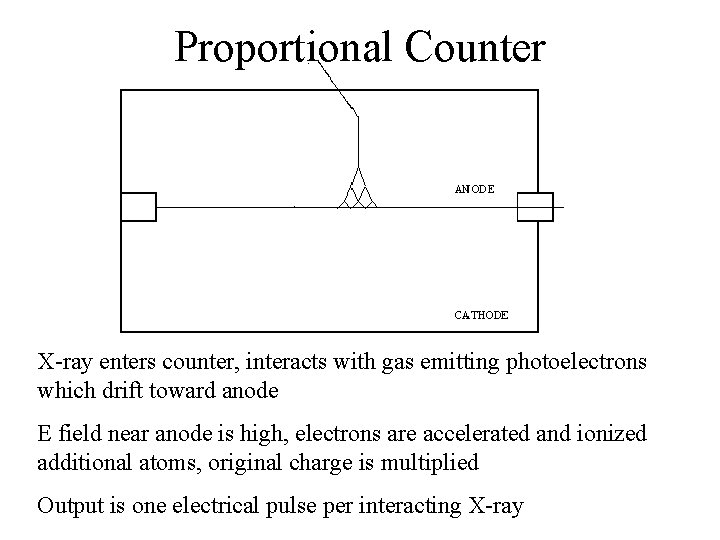
Proportional Counter X-ray enters counter, interacts with gas emitting photoelectrons which drift toward anode E field near anode is high, electrons are accelerated and ionized additional atoms, original charge is multiplied Output is one electrical pulse per interacting X-ray
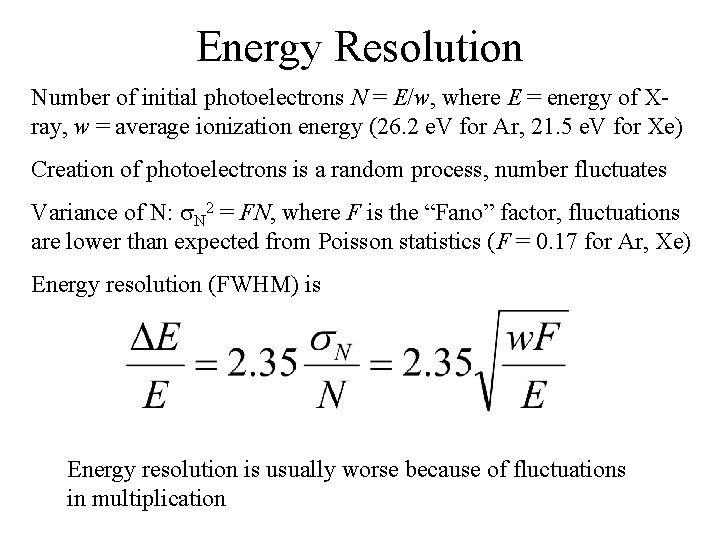
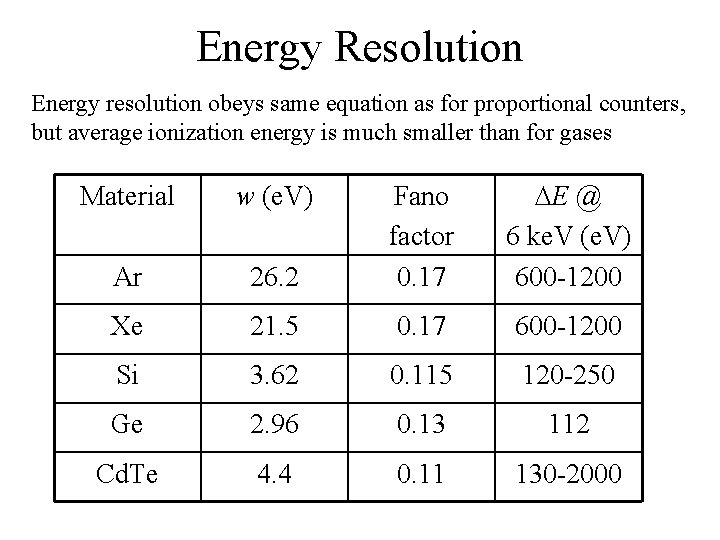
Energy Resolution Number of initial photoelectrons N = E/w, where E = energy of Xray, w = average ionization energy (26. 2 e. V for Ar, 21. 5 e. V for Xe) Creation of photoelectrons is a random process, number fluctuates Variance of N: N 2 = FN, where F is the “Fano” factor, fluctuations are lower than expected from Poisson statistics (F = 0. 17 for Ar, Xe) Energy resolution (FWHM) is Energy resolution is usually worse because of fluctuations in multiplication
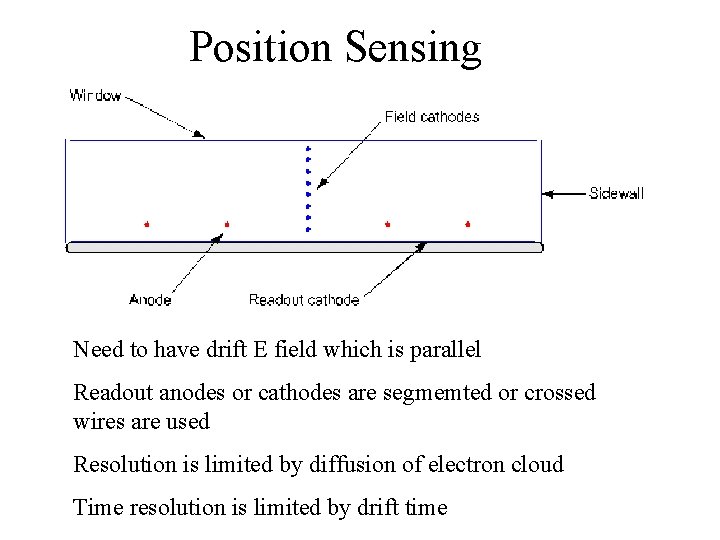
Position Sensing Need to have drift E field which is parallel Readout anodes or cathodes are segmemted or crossed wires are used Resolution is limited by diffusion of electron cloud Time resolution is limited by drift time
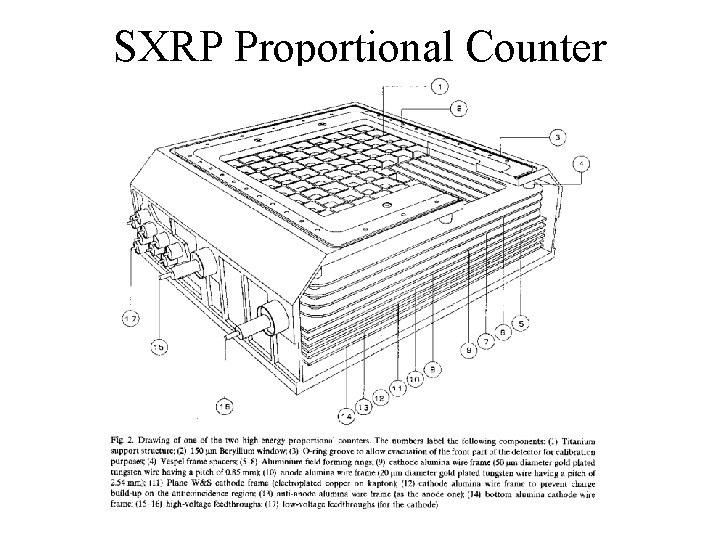
SXRP Proportional Counter
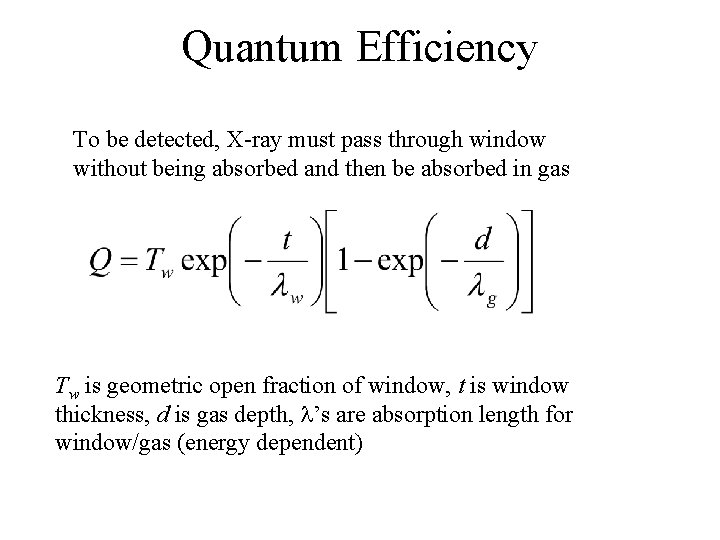
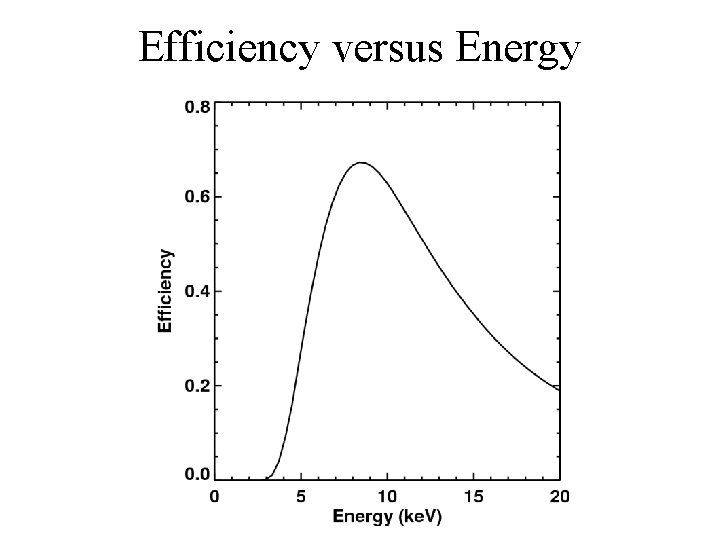
Quantum Efficiency To be detected, X-ray must pass through window without being absorbed and then be absorbed in gas Tw is geometric open fraction of window, t is window thickness, d is gas depth, ’s are absorption length for window/gas (energy dependent)
Efficiency versus Energy
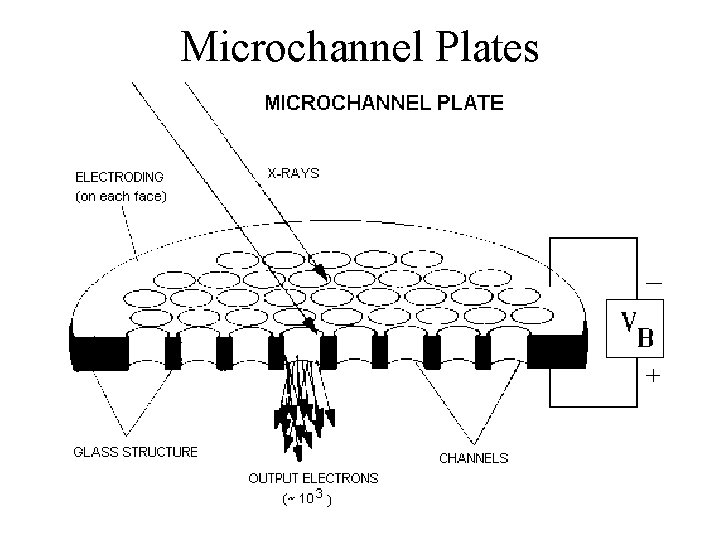
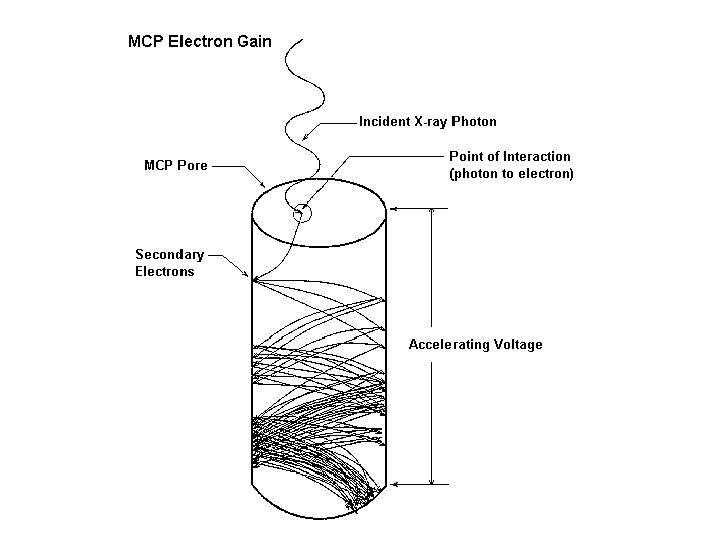
Microchannel Plates
Microchannel Plates
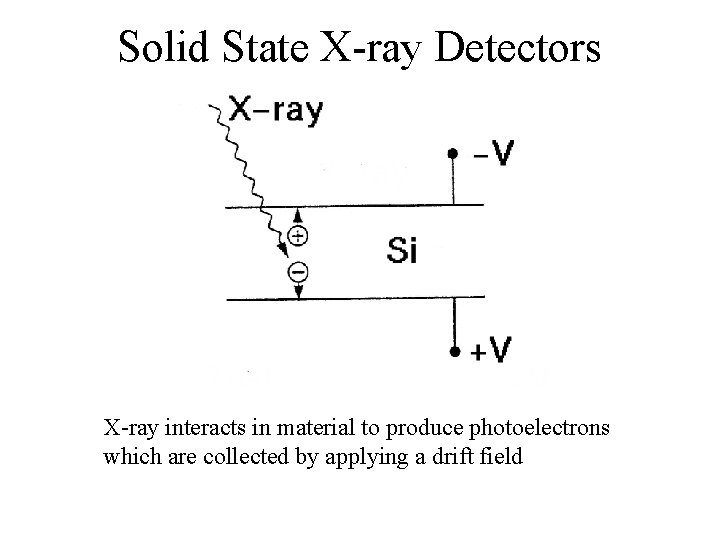
Solid State X-ray Detectors X-ray interacts in material to produce photoelectrons which are collected by applying a drift field
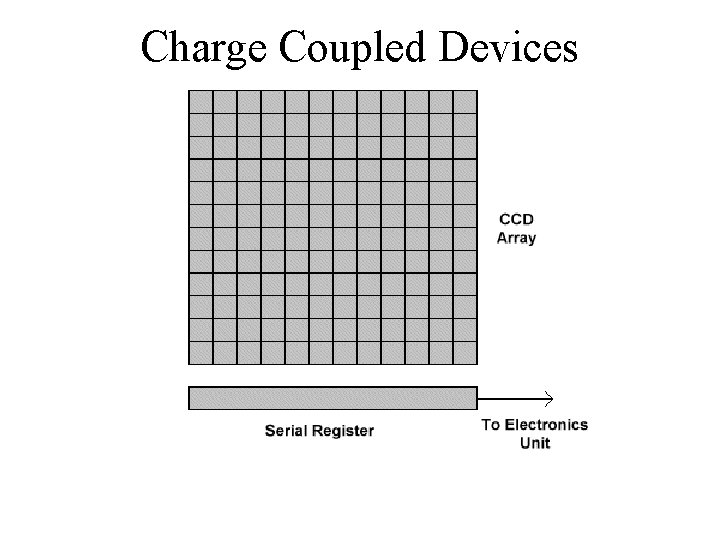
Charge Coupled Devices
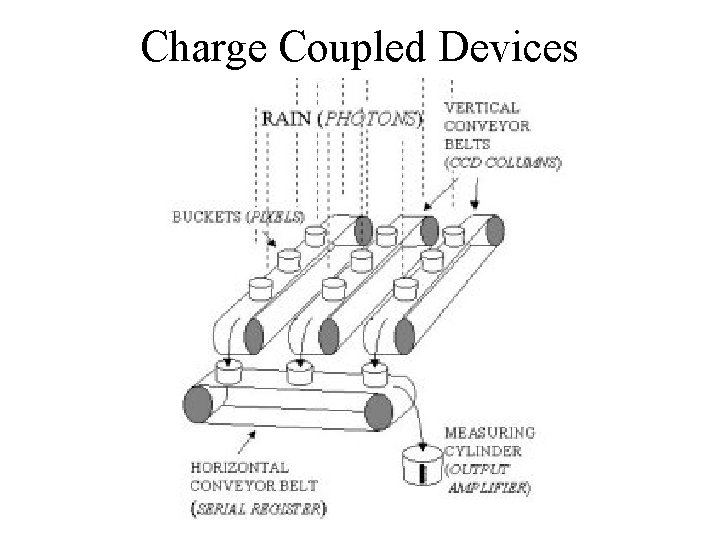
Charge Coupled Devices
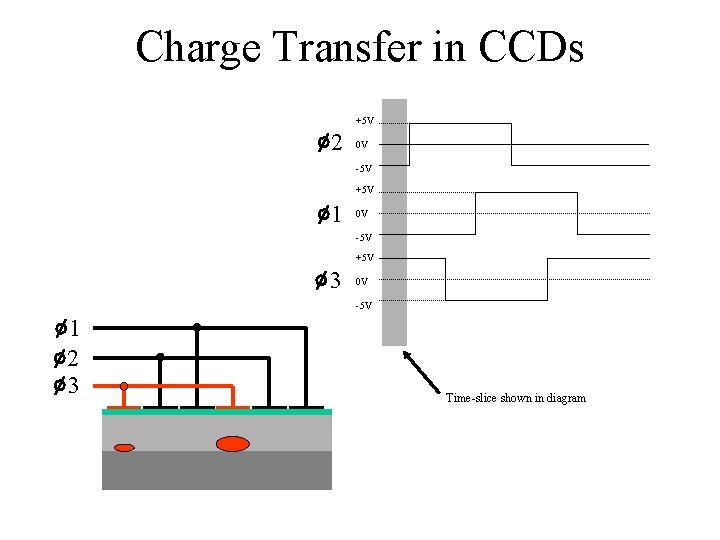
Charge Transfer in CCDs +5 V 2 0 V -5 V +5 V 1 0 V -5 V +5 V 3 0 V -5 V 1 2 3 Time-slice shown in diagram
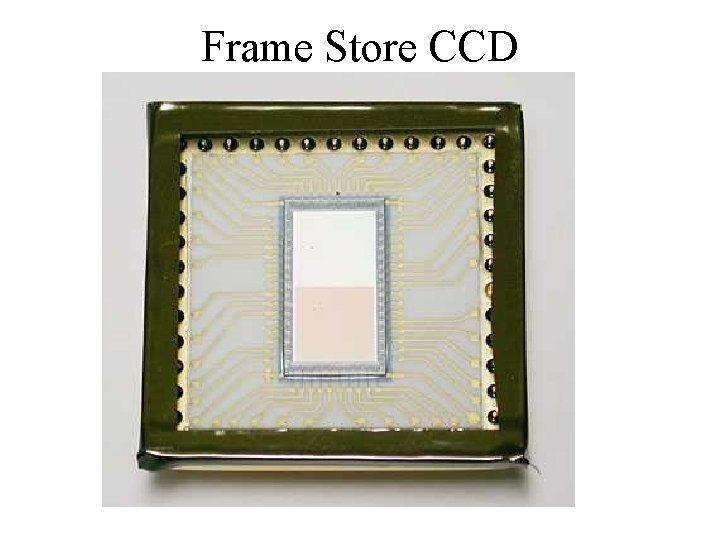
Frame Store CCD
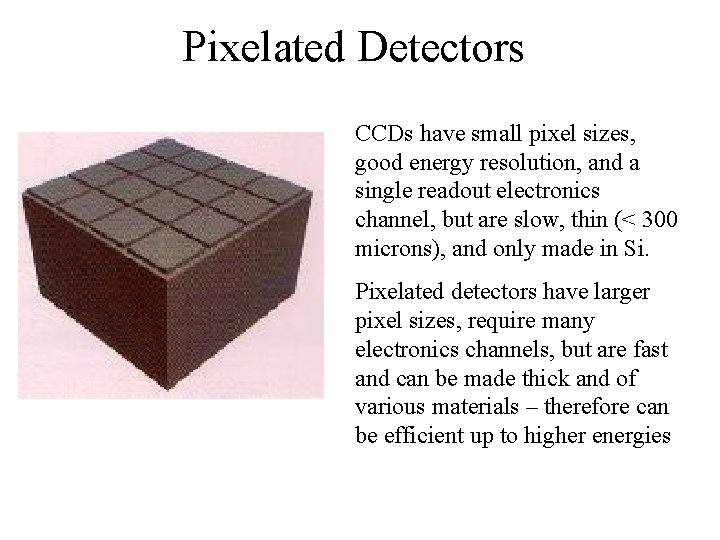
Pixelated Detectors CCDs have small pixel sizes, good energy resolution, and a single readout electronics channel, but are slow, thin (< 300 microns), and only made in Si. Pixelated detectors have larger pixel sizes, require many electronics channels, but are fast and can be made thick and of various materials – therefore can be efficient up to higher energies
Energy Resolution Energy resolution obeys same equation as for proportional counters, but average ionization energy is much smaller than for gases 26. 2 Fano factor 0. 17 E @ 6 ke. V (e. V) 600 -1200 Xe 21. 5 0. 17 600 -1200 Si 3. 62 0. 115 120 -250 Ge 2. 96 0. 13 112 Cd. Te 4. 4 0. 11 130 -2000 Material w (e. V) Ar
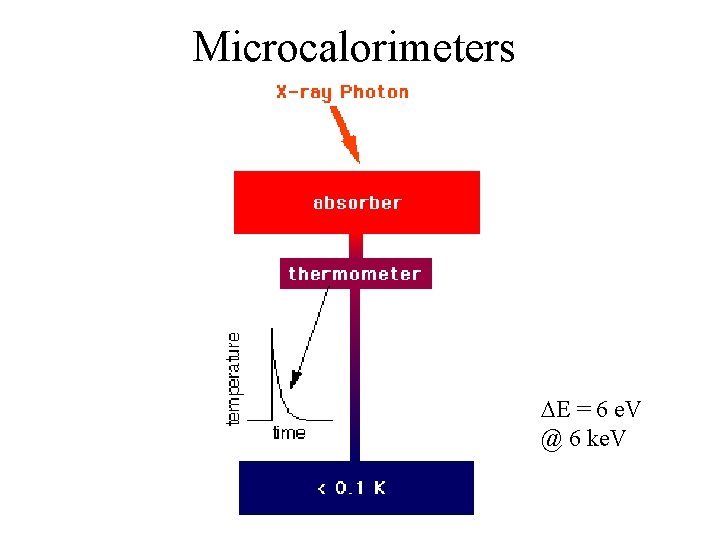
Microcalorimeters E = 6 e. V @ 6 ke. V
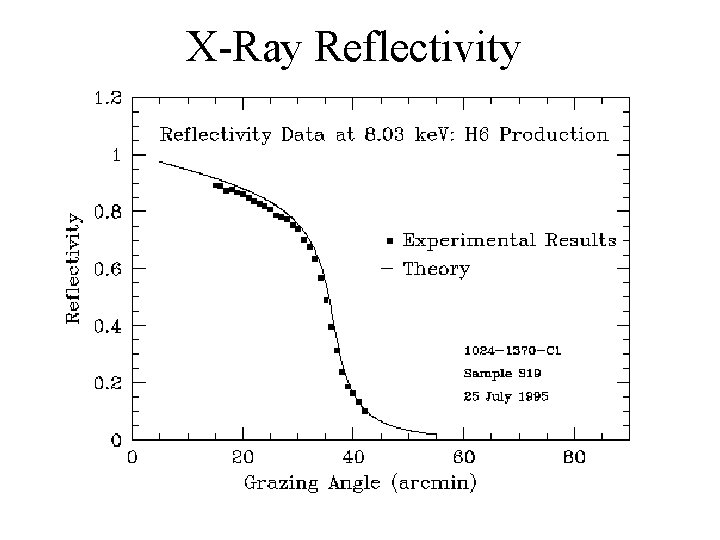
X-Ray Reflectivity
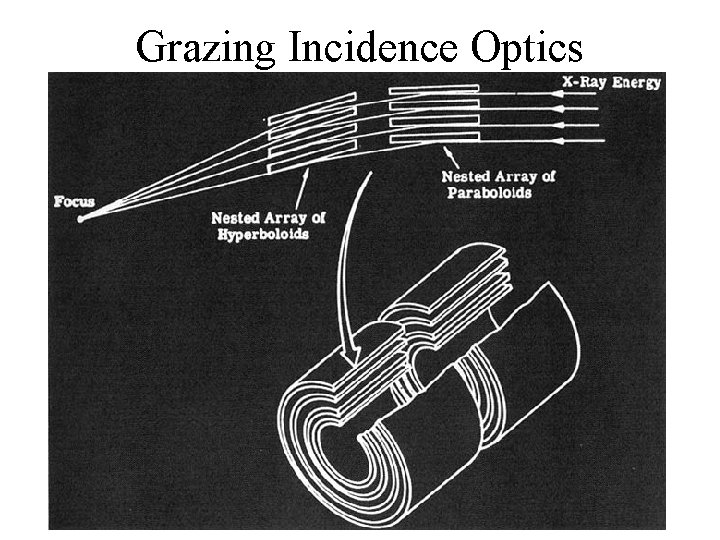
Grazing Incidence Optics
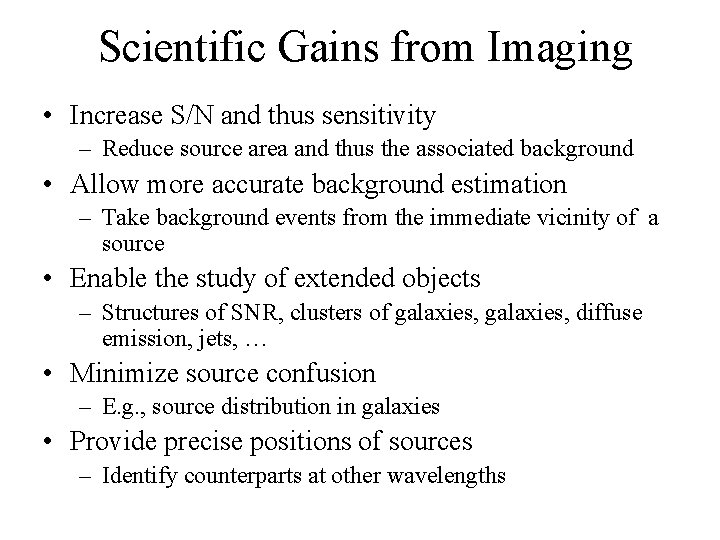
Scientific Gains from Imaging • Increase S/N and thus sensitivity – Reduce source area and thus the associated background • Allow more accurate background estimation – Take background events from the immediate vicinity of a source • Enable the study of extended objects – Structures of SNR, clusters of galaxies, diffuse emission, jets, … • Minimize source confusion – E. g. , source distribution in galaxies • Provide precise positions of sources – Identify counterparts at other wavelengths
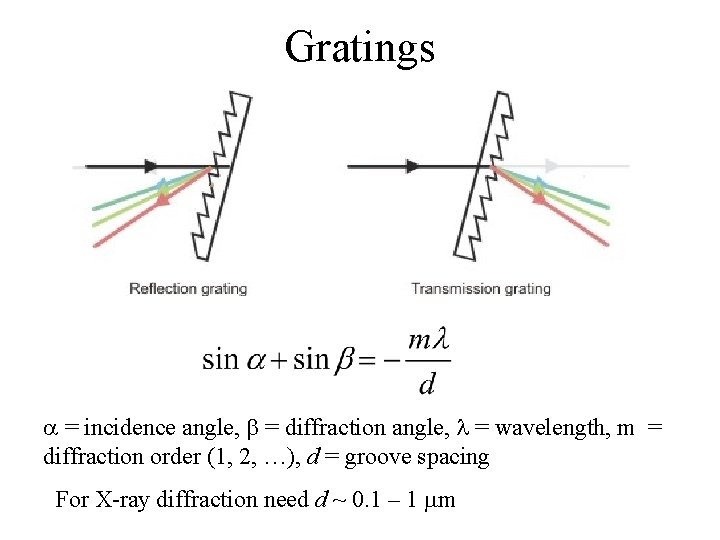
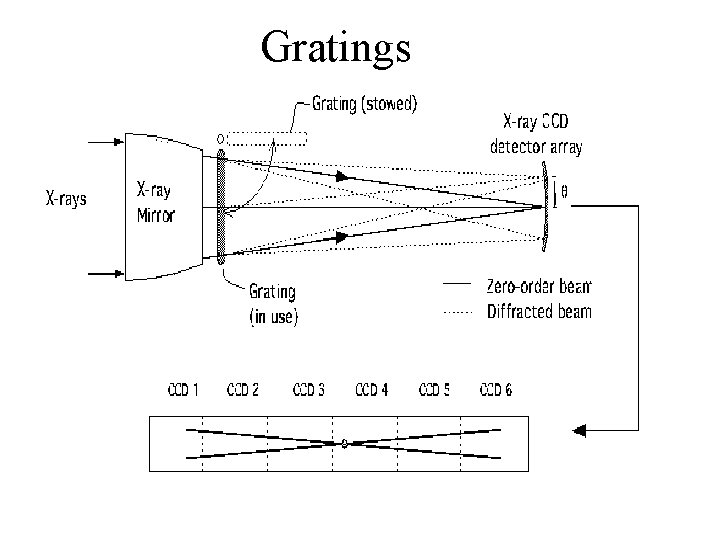
Gratings a = incidence angle, = diffraction angle, = wavelength, m = diffraction order (1, 2, …), d = groove spacing For X-ray diffraction need d ~ 0. 1 – 1 m
Gratings
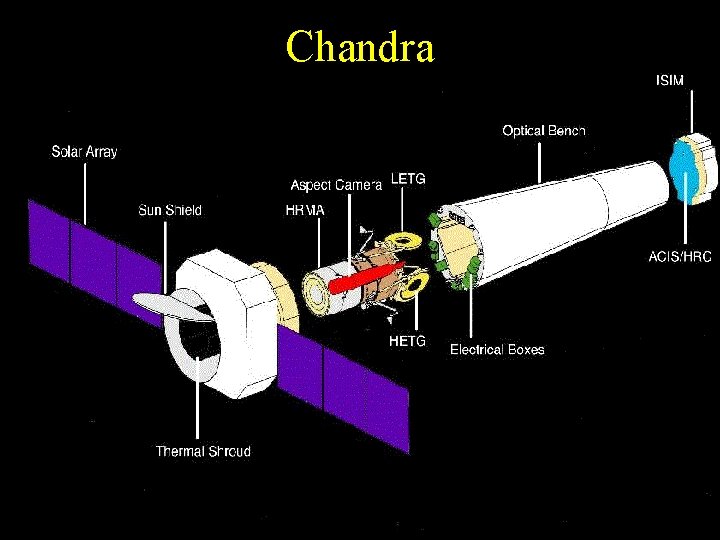
Chandra
Reading • Longair: 6. 4, 6. 5, 7. 1, 7. 3