
Detection of Percolating Paths in PMMACB Segregated Network
Detection of Percolating Paths in PMMA/CB Segregated Network Composites Using EFM and C-AFM Jacob Waddell, Runqing Ou, Sidhartha Gupta, Charles A. Parker, and Rosario A. Gerhardt Georgia Institute of Technology Katya Seal, Sergei V. Kalinin, and Arthur P. Baddorf Oak Ridge National Laboratory 07/30/2009
Outline • Brief Review of Percolation • Random Microstructure Vs Segregated Network Microstructure • Scanning Probe Microscopy Modes • EFM Detection of Microstructure • TUNA Detection of Conductive Paths
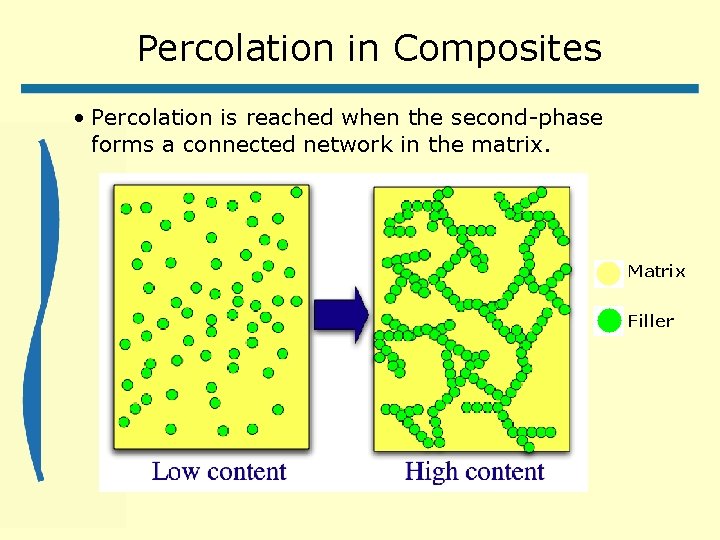
Percolation in Composites • Percolation is reached when the second-phase forms a connected network in the matrix. Matrix Filler
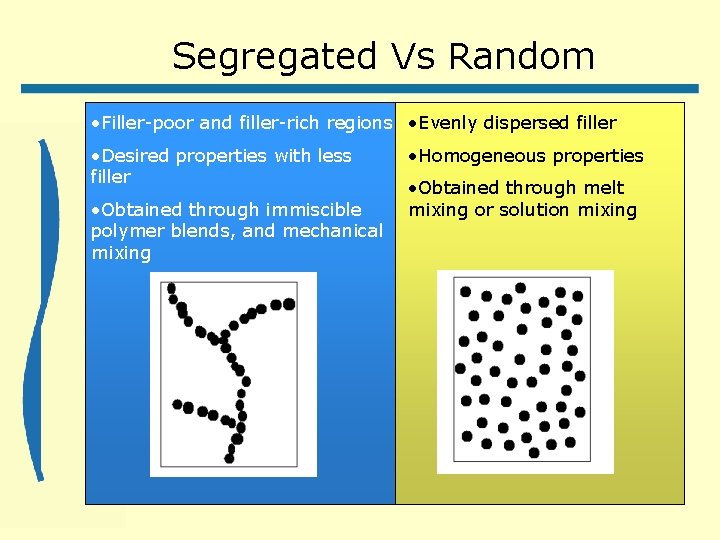
Segregated Vs Random • Filler-poor and filler-rich regions • Evenly dispersed filler • Desired properties with less filler • Obtained through immiscible polymer blends, and mechanical mixing • Homogeneous properties • Obtained through melt mixing or solution mixing
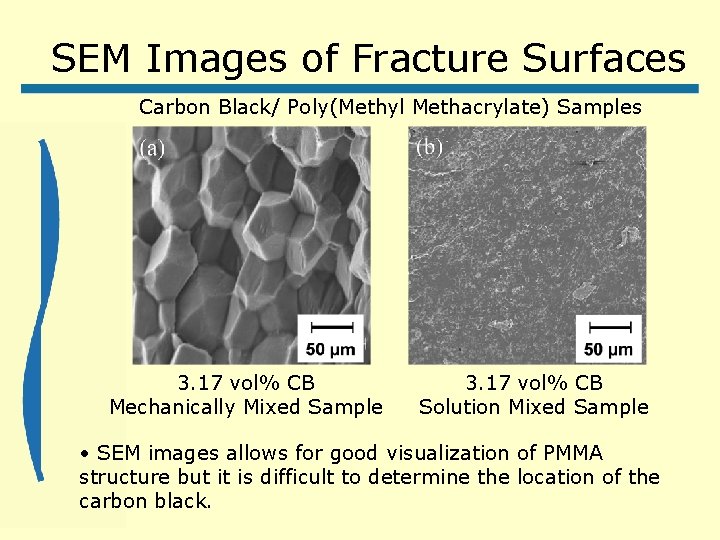
SEM Images of Fracture Surfaces Carbon Black/ Poly(Methyl Methacrylate) Samples 3. 17 vol% CB Mechanically Mixed Sample 3. 17 vol% CB Solution Mixed Sample • SEM images allows for good visualization of PMMA structure but it is difficult to determine the location of the carbon black.
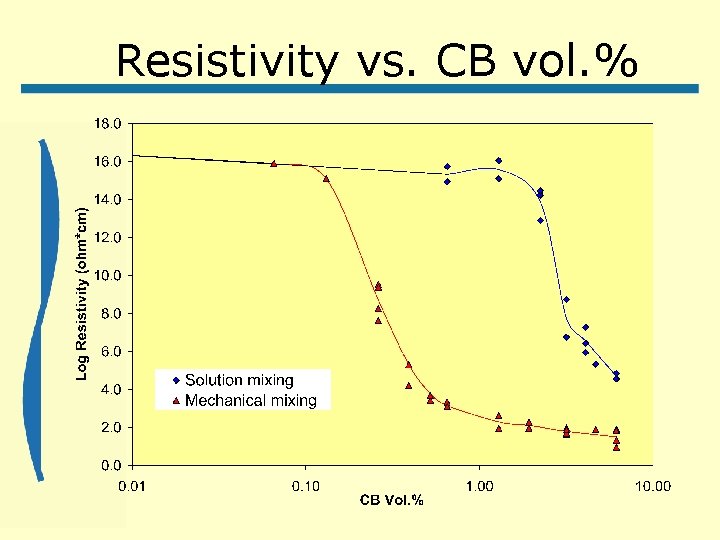
Resistivity vs. CB vol. %
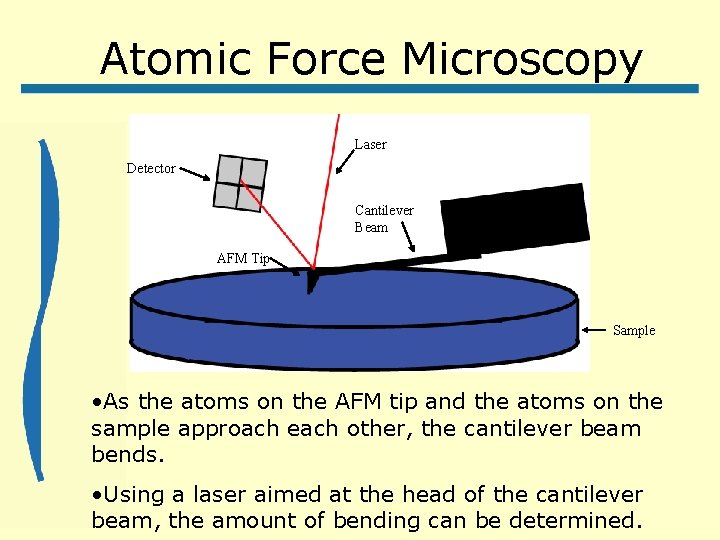
Atomic Force Microscopy Laser Detector Cantilever Beam AFM Tip Sample • As the atoms on the AFM tip and the atoms on the sample approach each other, the cantilever beam bends. • Using a laser aimed at the head of the cantilever beam, the amount of bending can be determined.
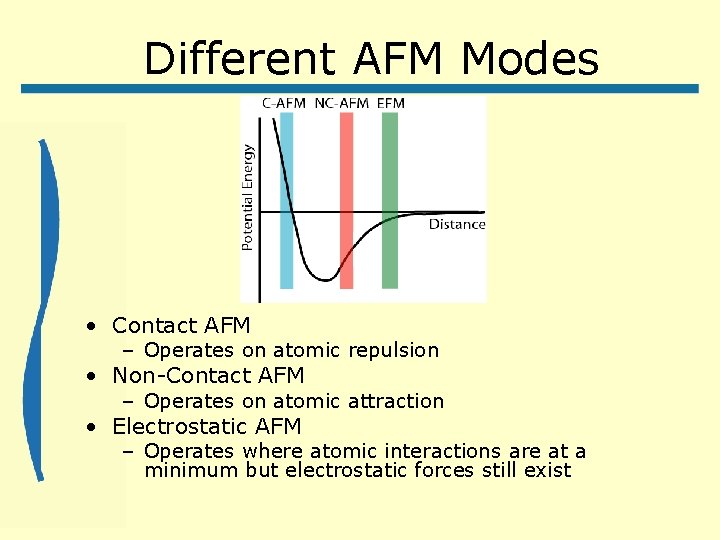
Different AFM Modes • Contact AFM – Operates on atomic repulsion • Non-Contact AFM – Operates on atomic attraction • Electrostatic AFM – Operates where atomic interactions are at a minimum but electrostatic forces still exist
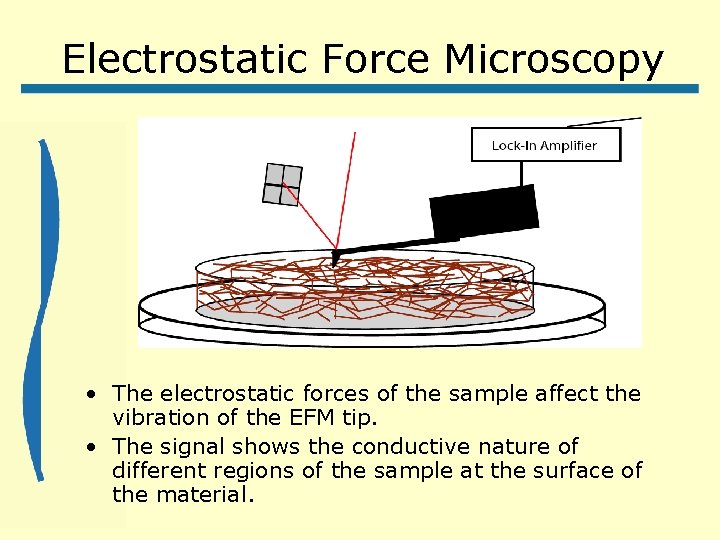
Electrostatic Force Microscopy • The electrostatic forces of the sample affect the vibration of the EFM tip. • The signal shows the conductive nature of different regions of the sample at the surface of the material.
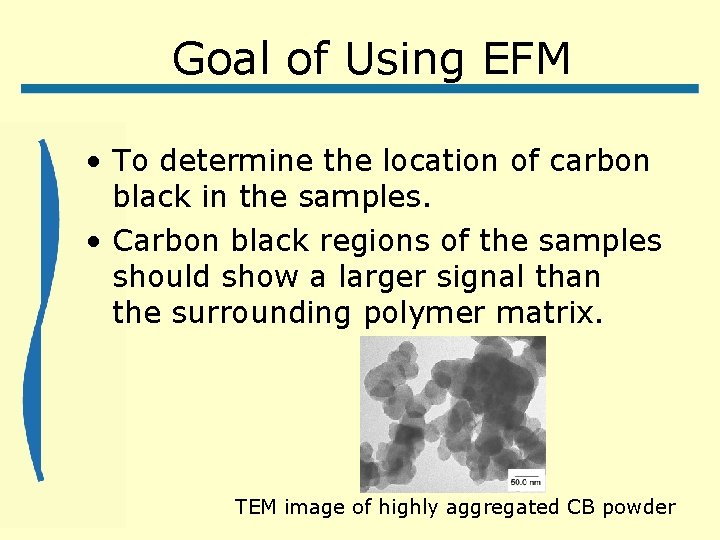
Goal of Using EFM • To determine the location of carbon black in the samples. • Carbon black regions of the samples should show a larger signal than the surrounding polymer matrix. TEM image of highly aggregated CB powder
EFM Operating Parameters • • • Instrument – Veeco Dimension V AFM Mode - EFM Cantilever Tip – NSC 35 Cr-Au tip Tip Bias - 7 volts Frequency – 336 k. Hz
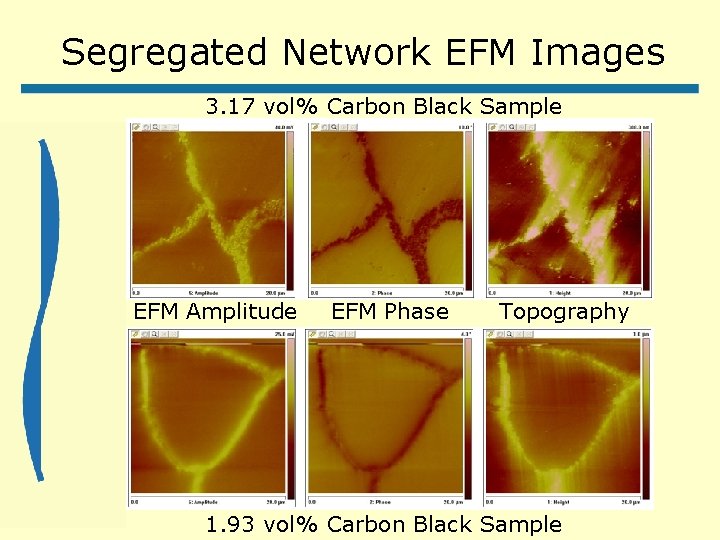
Segregated Network EFM Images 3. 17 vol% Carbon Black Sample EFM Amplitude EFM Phase Topography 1. 93 vol% Carbon Black Sample
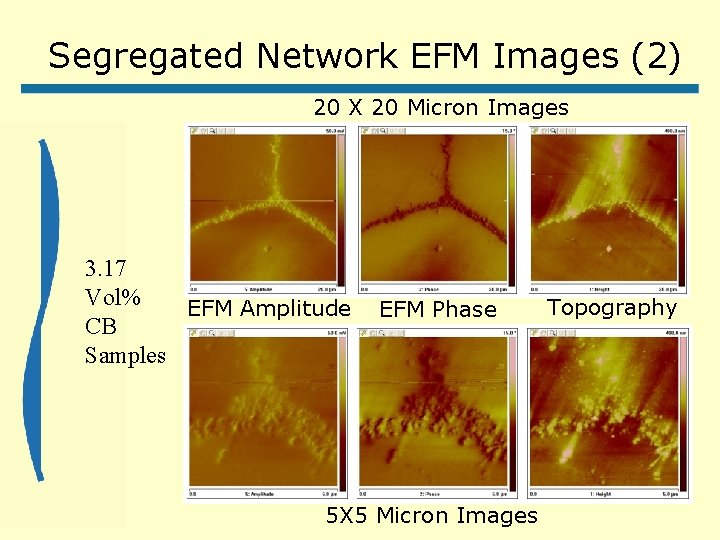
Segregated Network EFM Images (2) 20 X 20 Micron Images 3. 17 Vol% EFM Amplitude CB Samples EFM Phase 5 X 5 Micron Images Topography
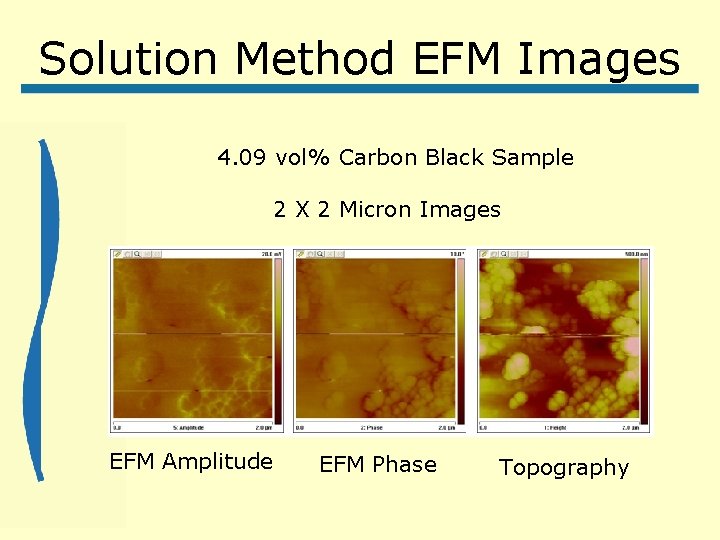
Solution Method EFM Images 4. 09 vol% Carbon Black Sample 2 X 2 Micron Images EFM Amplitude EFM Phase Topography
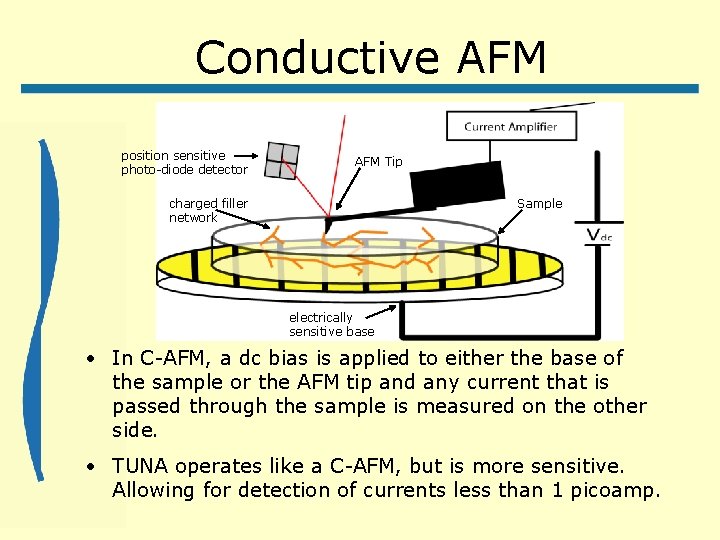
Conductive AFM position sensitive photo-diode detector AFM Tip charged filler network Sample electrically sensitive base • In C-AFM, a dc bias is applied to either the base of the sample or the AFM tip and any current that is passed through the sample is measured on the other side. • TUNA operates like a C-AFM, but is more sensitive. Allowing for detection of currents less than 1 picoamp.
Goal of Using TUNA • To determine the carbon black on the surface of the sample that is part of a percolated network • The carbon black that is conducting current will show a higher electrical signal than regions of polymer matrix or carbon black that is not part of a percolated network
TUNA Operating Parameters • • Instrument – Veeco Dimension V AFM Mode – TUNA Cantilever Tip – CSC 36 Cr-Au tip Applied Voltage – 2 V
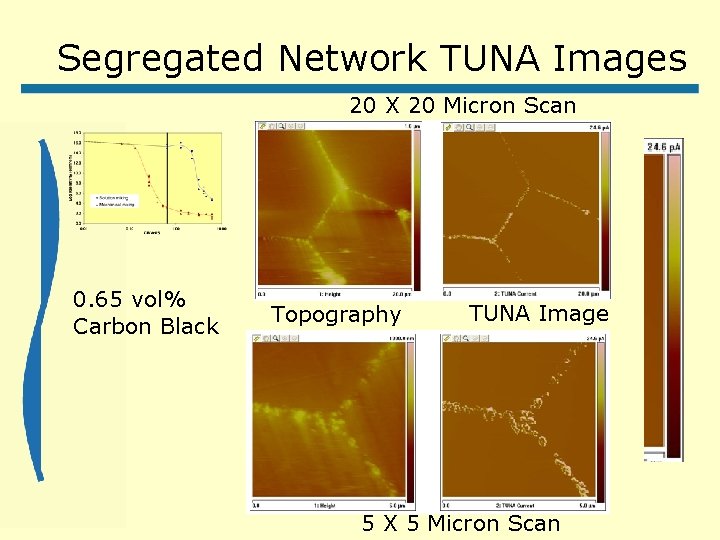
Segregated Network TUNA Images 20 X 20 Micron Scan 0. 65 vol% Carbon Black Topography TUNA Image 5 X 5 Micron Scan
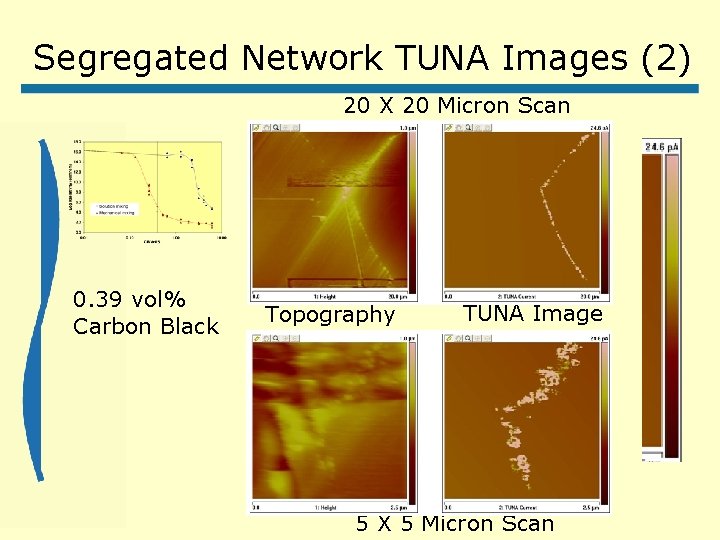
Segregated Network TUNA Images (2) 20 X 20 Micron Scan 0. 39 vol% Carbon Black Topography TUNA Image 5 X 5 Micron Scan
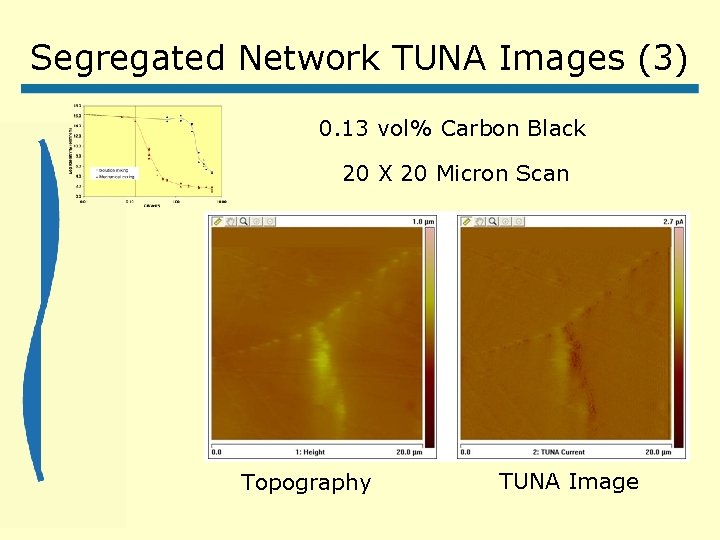
Segregated Network TUNA Images (3) 0. 13 vol% Carbon Black 20 X 20 Micron Scan Topography TUNA Image
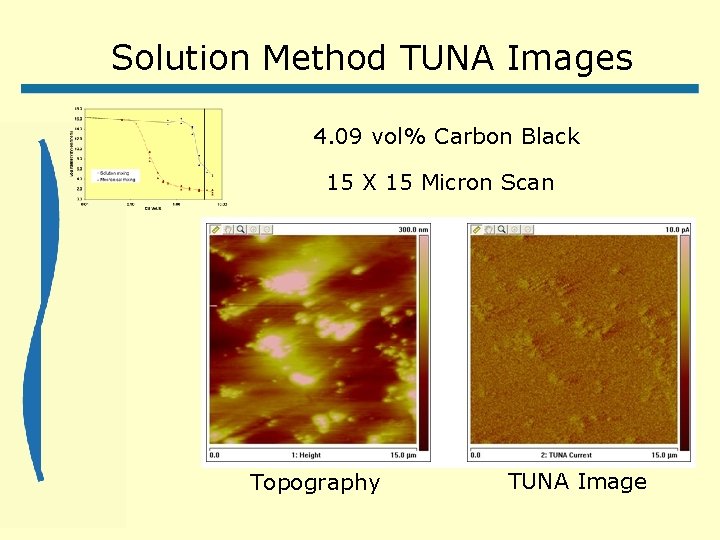
Solution Method TUNA Images 4. 09 vol% Carbon Black 15 X 15 Micron Scan Topography TUNA Image
Summary • EFM effectively detected the presence of the carbon black at the boundaries of polymer grains in the mechanically mixed samples. • EFM also showed the random distribution in the solution mixed samples. • TUNA images detected carbon black that was part of a percolated network. • EFM and TUNA imaging allowed for confirmation of the microstructures of the mechanical mixed and solution mixed samples.
Acknowledgments
- Slides: 23