
Detection and Segmentation of Stroke Lesions from Diffusion

- Slides: 35
Detection and Segmentation of Stroke Lesions from Diffusion Weighted MRI of the Brain IIIT Hyderabad Presented by: Shashank Mujumdar
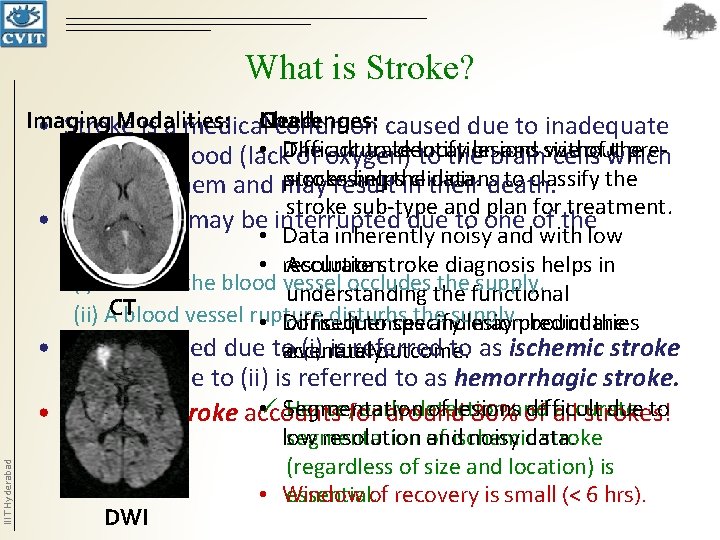
What is Stroke? Imaging Modalities: Need: • Stroke is a medical. Challenges: condition caused due to inadequate • Difficult The accurate to identify location and size without of which the presupply of blood (lack of oxygen) to thelesions brain cells processing stroke helps the data. death. to classify the damages them and may result inclinicians their stroke sub-type and plan for treatment. • Blood flow may be interrupted due to one of the • Data inherently noisy and with low following: • resolution. Accurate stroke diagnosis helps in (i) A clot in the blood vessel occludes the functional supply. understanding (ii) ACT blood vessel rupture disturbs the supply. • Difficult consequences to specify and lesion may predict boundaries the • Stroke caused due toaccurately. (i) is referred to as ischemic stroke eventual outcome. IIIT Hyderabad and that due to (ii) is referred to as hemorrhagic stroke. • ü Segmentation Hence, for early detection of lesions difficult accurate due to • Ischemic Stroke accounts around 80%and of all strokes! DWI low segmentation resolution of and ischemic noisy data. stroke (regardless of size and location) is • Window essential. of recovery is small (< 6 hrs).
IIIT Hyderabad Auto-Windowing of Ischemic Stroke Lesions in Brain DWI Mujumdar et. al. ICMIT, 2013, IIT-KGP, India.
IIIT Hyderabad Need for Windowing • DWI acquisition is done using the standard Echo Planar Imaging (EPI) Technique. • EPI induces a trade-off between signal-to-noise ratio (SNR), time of acquisition and resolution of the acquired image. • Since the time of acquisition is significantly less (<1 min), EPI compromises the resolution as well as the SNR of acquired DWI scans. • A linear transform for contrast enhancement is desired which preserves the relative contrast among the tissues. • The wide dynamic range (12 -16 bit data) poses a problem for image analysis tasks such as segmentation which operate on lesion contrast since subtle intensity changes may get lost. ü A solution is to perform windowing for contrast enhancement of the stroke lesions.
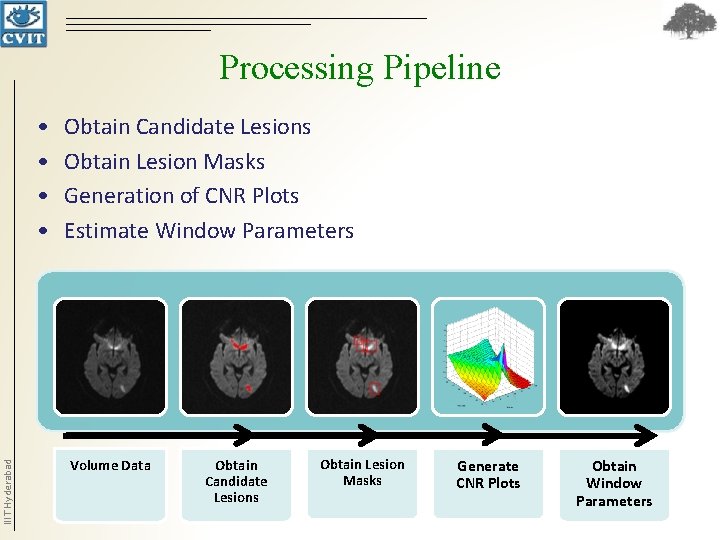
Processing Pipeline IIIT Hyderabad • • Obtain Candidate Lesions Obtain Lesion Masks Generation of CNR Plots Estimate Window Parameters Volume Data Obtain Candidate Lesions Obtain Lesion Masks Generate CNR Plots Obtain Window Parameters
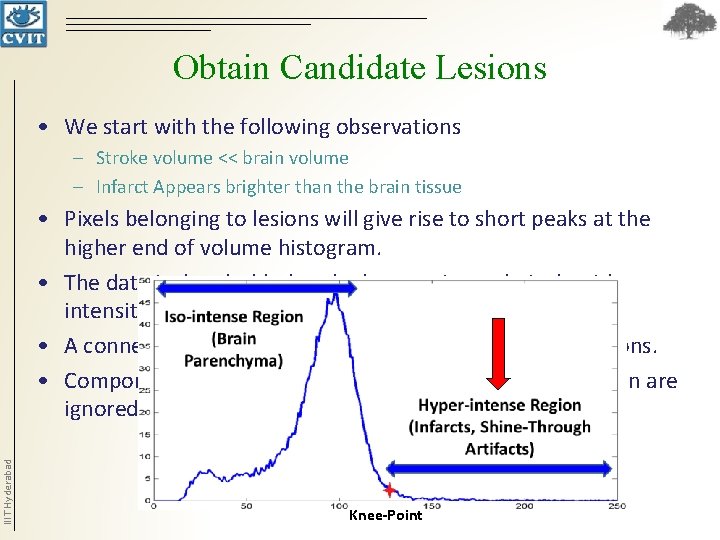
Obtain Candidate Lesions • We start with the following observations – Stroke volume << brain volume – Infarct Appears brighter than the brain tissue IIIT Hyderabad • Pixels belonging to lesions will give rise to short peaks at the higher end of volume histogram. • The data is thresholded at the knee-point and pixels with intensities greater than the threshold are retained. • A connected component analysis gives the candidate lesions. • Components with size less than 5% of the image dimension are ignored. Knee-Point
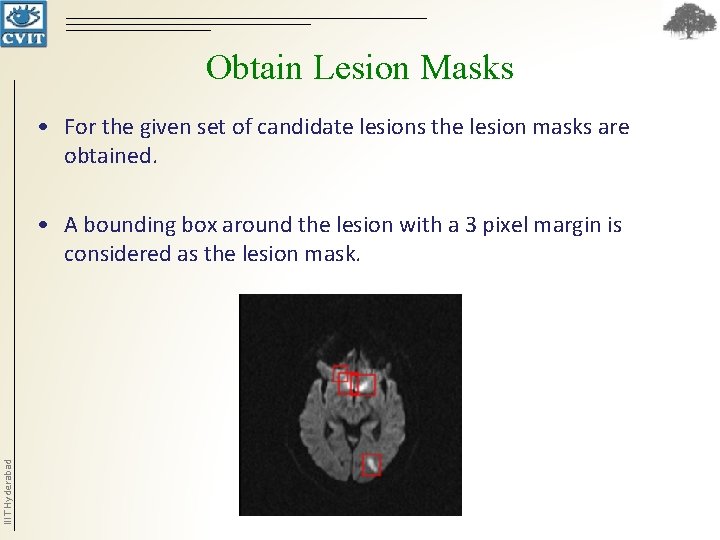
Obtain Lesion Masks • For the given set of candidate lesions the lesion masks are obtained. IIIT Hyderabad • A bounding box around the lesion with a 3 pixel margin is considered as the lesion mask.
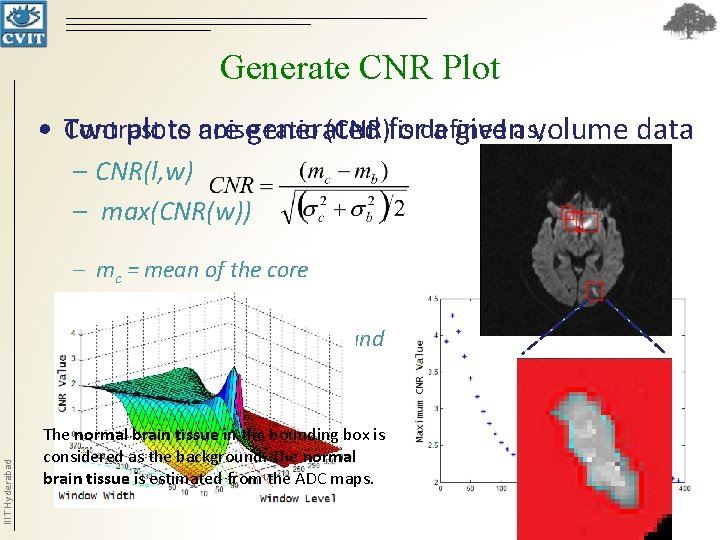
Generate CNR Plot Contrast to are noisegenerated ratio (CNR)for is defined • Two plots a givenas, volume data – CNR(l, w) – max(CNR(w)) IIIT Hyderabad – – mc = mean of the core σc = std of the core mb = mean of the background σb = std of the background The normal brain tissue in the bounding box is considered as the background. The normal brain tissue is estimated from the ADC maps.
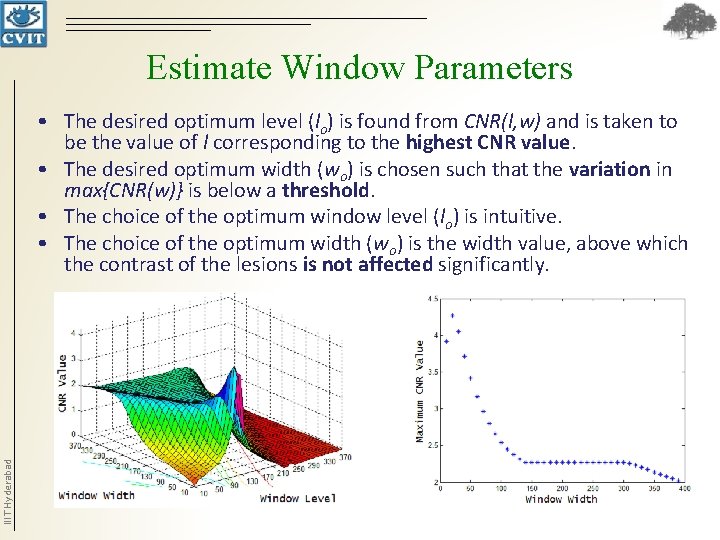
Estimate Window Parameters IIIT Hyderabad • The desired optimum level (lo) is found from CNR(l, w) and is taken to be the value of l corresponding to the highest CNR value. • The desired optimum width (wo) is chosen such that the variation in max{CNR(w)} is below a threshold. • The choice of the optimum window level (lo) is intuitive. • The choice of the optimum width (wo) is the width value, above which the contrast of the lesions is not affected significantly.
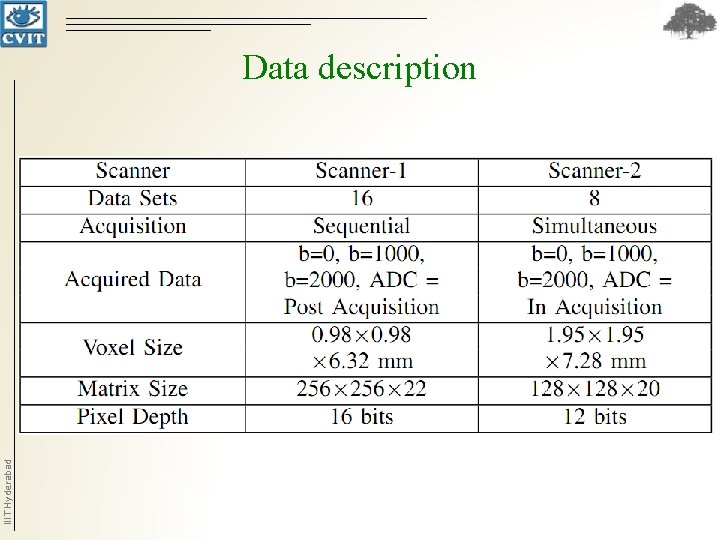
IIIT Hyderabad Data description
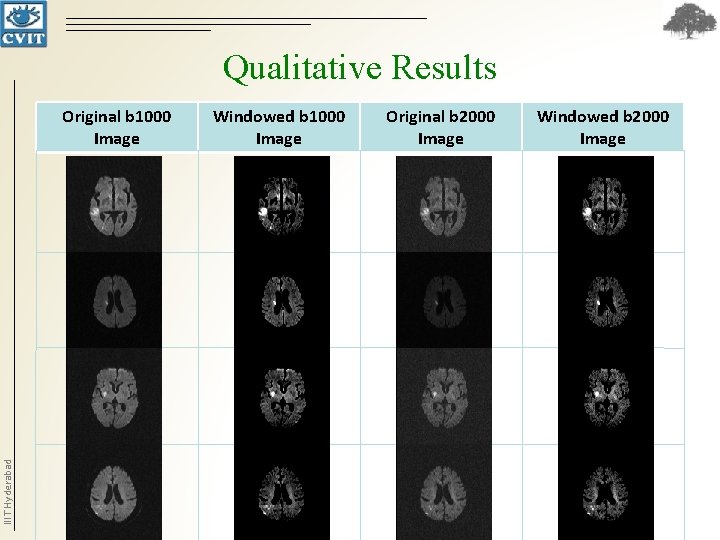
Qualitative Results IIIT Hyderabad Original b 1000 Image Windowed b 1000 Image Original b 2000 Image Windowed b 2000 Image
Quantitative Assessment • The assessment aimed at determining the effectiveness of the approach across multiple diffusion weighting (b 1000 and b 2000). • We report on two different types of assessments IIIT Hyderabad – A mirror region of interest analysis (MRA) – A contrast improvement ratio analysis (CIR)
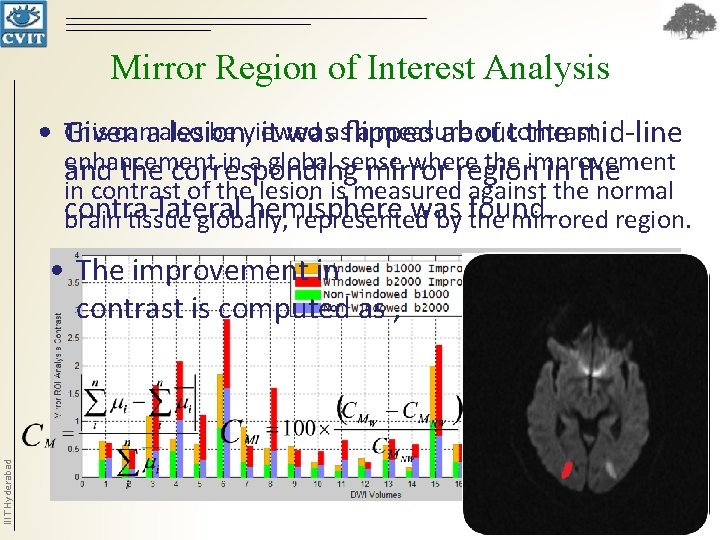
Mirror Region of Interest Analysis • Given This canaalso be viewed a measure of contrast lesion, it wasasflipped about the mid-line enhancement in a global sense where the improvement and the corresponding mirror region in the in contrast of the lesion is measured against the normal contra-lateral hemisphere was found. brain tissue globally, represented by the mirrored region. IIIT Hyderabad • The improvement in contrast is computed as ,
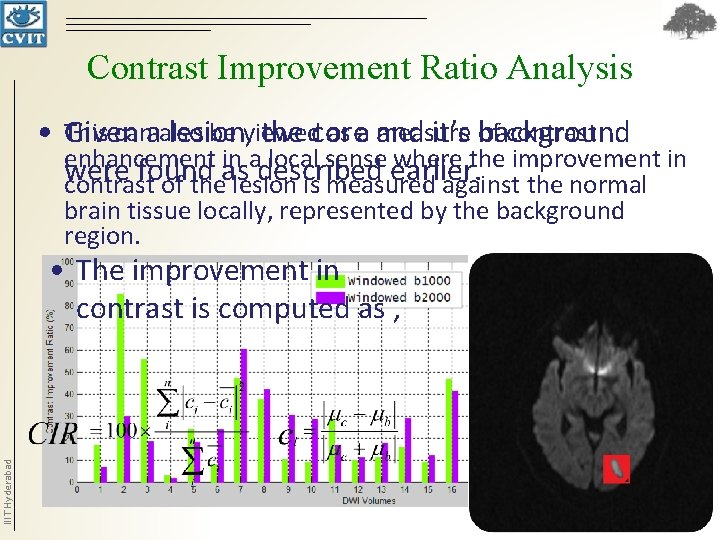
Contrast Improvement Ratio Analysis • Given This canaalso be viewed as a and measure contrast lesion, the core it’s of background enhancement in adescribed local sense earlier. where the improvement in were found as contrast of the lesion is measured against the normal brain tissue locally, represented by the background region. IIIT Hyderabad • The improvement in contrast is computed as ,
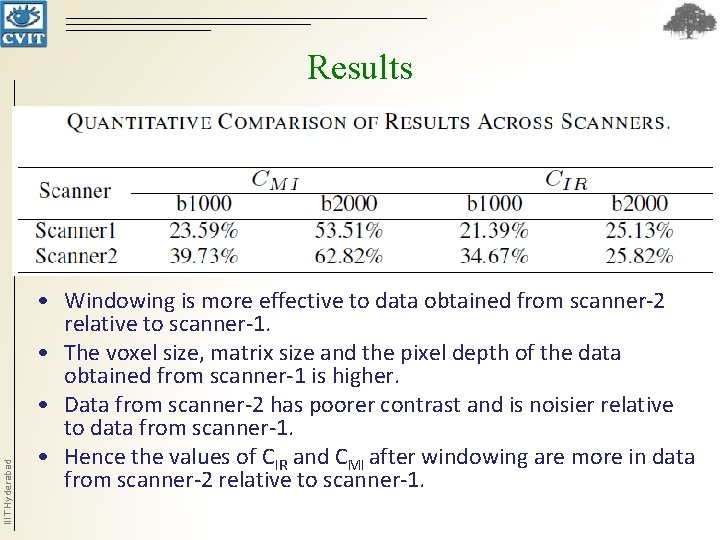
IIIT Hyderabad Results • Windowing is more effective to data obtained from scanner-2 relative to scanner-1. • The voxel size, matrix size and the pixel depth of the data obtained from scanner-1 is higher. • Data from scanner-2 has poorer contrast and is noisier relative to data from scanner-1. • Hence the values of CIR and CMI after windowing are more in data from scanner-2 relative to scanner-1.
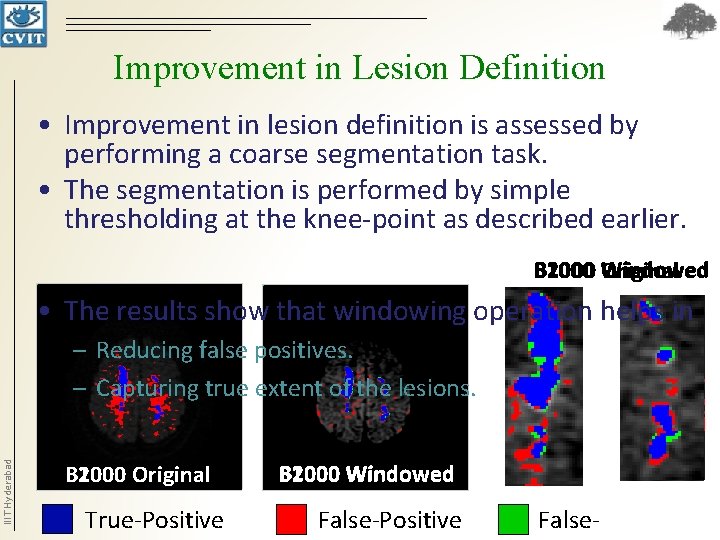
Improvement in Lesion Definition • Improvement in lesion definition is assessed by performing a coarse segmentation task. • The segmentation is performed by simple thresholding at the knee-point as described earlier. B 2000 Windowed B 1000 Original • The results show that windowing operation helps in IIIT Hyderabad – Reducing false positives. – Capturing true extent of the lesions. B 2000 B 1000 Original True-Positive B 2000 Windowed B 1000 False-Positive False-
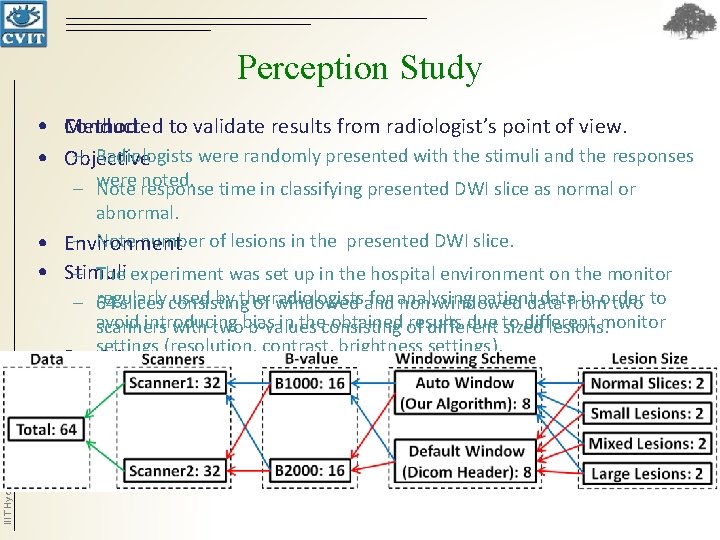
Perception Study • Method Conducted to validate results from radiologist’s point of view. – Radiologists were randomly presented with the stimuli and the responses • Objective noted. time in classifying presented DWI slice as normal or – were Note response abnormal. – Note number of lesions in the presented DWI slice. • Environment • Stimuli – The experiment was set up in the hospital environment on the monitor used by the for analysing patientdatafrom in order – regularly 64 slices consisting ofradiologists windowed and non-windowed two to avoid introducing in theconsisting obtained of results due to different scanners with twobias b-values different sized lesions. monitor settings (resolution, contrast, brightness settings). • Participants IIIT Hyderabad – 8 radiologists from CARE hospital, Hyderabad with mean experience of 9. 82 ± 9. 97 years. (max = 29 years, min = 0. 6 years)
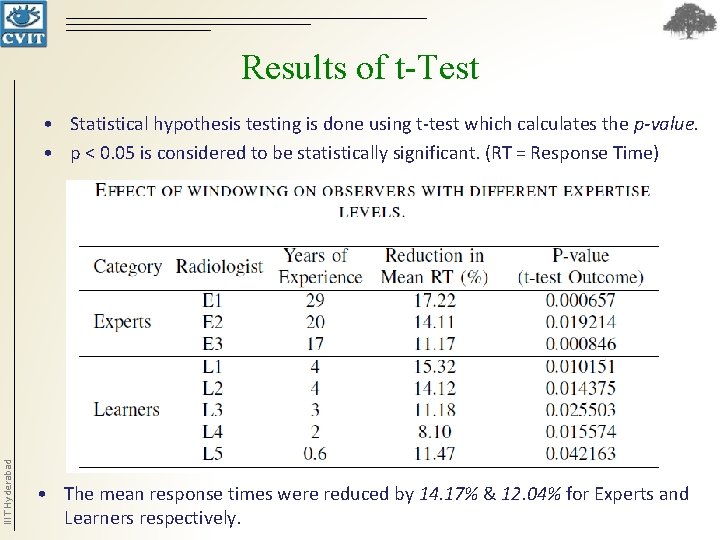
Results of t-Test IIIT Hyderabad • Statistical hypothesis testing is done using t-test which calculates the p-value. • p < 0. 05 is considered to be statistically significant. (RT = Response Time) • The mean response times were reduced by 14. 17% & 12. 04% for Experts and Learners respectively.
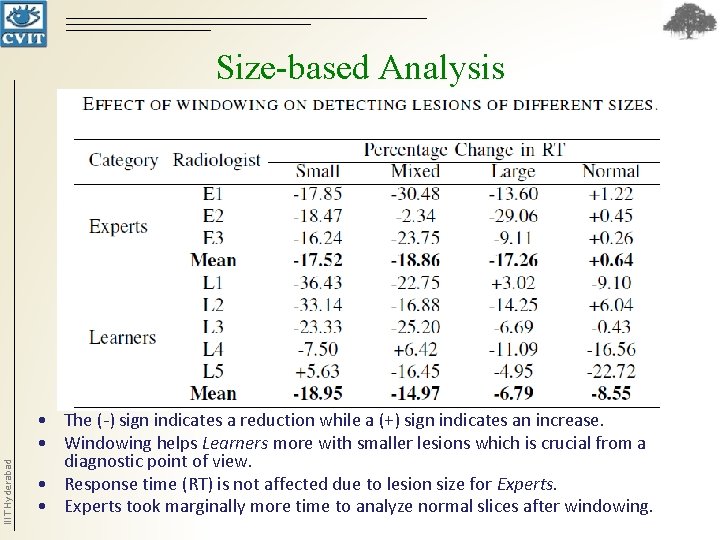
IIIT Hyderabad Size-based Analysis • The (-) sign indicates a reduction while a (+) sign indicates an increase. • Windowing helps Learners more with smaller lesions which is crucial from a diagnostic point of view. • Response time (RT) is not affected due to lesion size for Experts. • Experts took marginally more time to analyze normal slices after windowing.
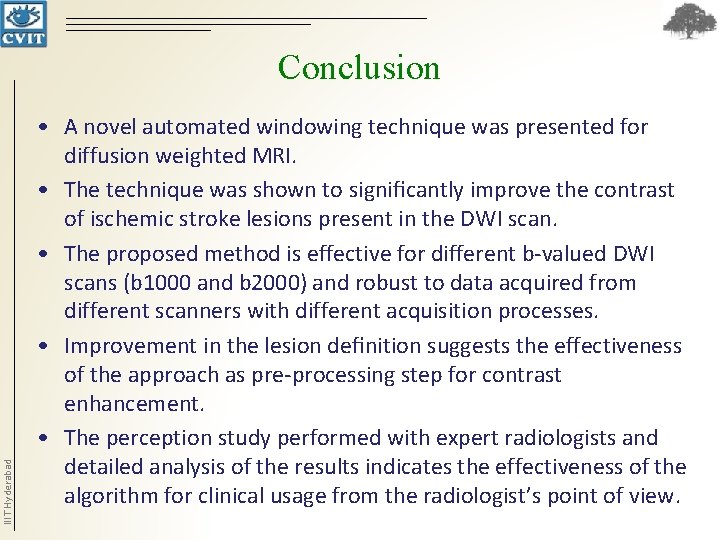
IIIT Hyderabad Conclusion • A novel automated windowing technique was presented for diffusion weighted MRI. • The technique was shown to significantly improve the contrast of ischemic stroke lesions present in the DWI scan. • The proposed method is effective for different b-valued DWI scans (b 1000 and b 2000) and robust to data acquired from different scanners with different acquisition processes. • Improvement in the lesion definition suggests the effectiveness of the approach as pre-processing step for contrast enhancement. • The perception study performed with expert radiologists and detailed analysis of the results indicates the effectiveness of the algorithm for clinical usage from the radiologist’s point of view.
IIIT Hyderabad Stroke Detection and Segmentation From Brain DWI Scans With Multiple b-Values. Mujumdar et. al. ICPR, 2012, Japan.
Related Work • Broad classification of methods – Manual • May provide accurate results but are labor intensive and operator dependent. – Semi-automated • Rely on operator intervention in tuning the algorithm parameters or to initialize the algorithm. IIIT Hyderabad – Automated • Generally fail to capture small-sized lesions in the data. - B. J. D. Stein Eastwood et Prakash al. MICCAI, et al. et. AJNR, 2001. 2003. KN Bhanu al. CARS, 2008.
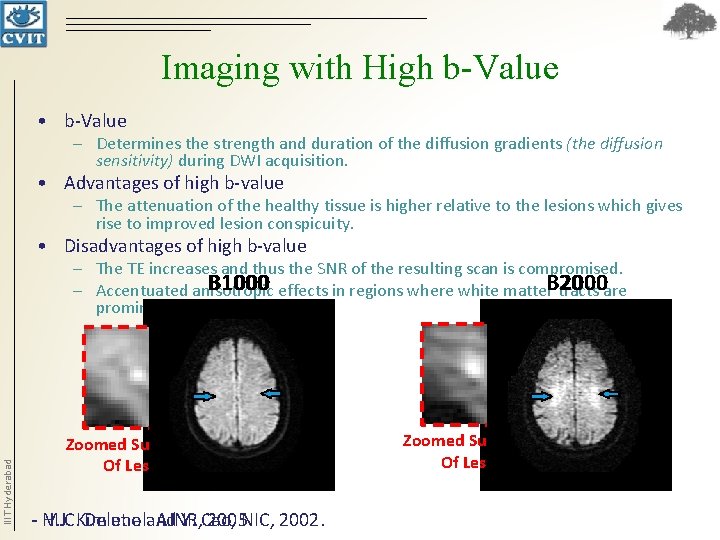
Imaging with High b-Value • b-Value – Determines the strength and duration of the diffusion gradients (the diffusion sensitivity) during DWI acquisition. • Advantages of high b-value – The attenuation of the healthy tissue is higher relative to the lesions which gives rise to improved lesion conspicuity. • Disadvantages of high b-value IIIT Hyderabad – The TE increases and thus the SNR of the resulting scan is compromised. B 1000 effects in regions where white matter. B 2000 – Accentuated anisotropic tracts are prominent. Zoomed Sub-Image Of Lesion Stroke Lesion - M. C. Delano Y. Cao, NIC, 2002. H. J. Kim et al. and AJNR, 2005. Zoomed Sub-Image Of Lesion Stroke Lesion
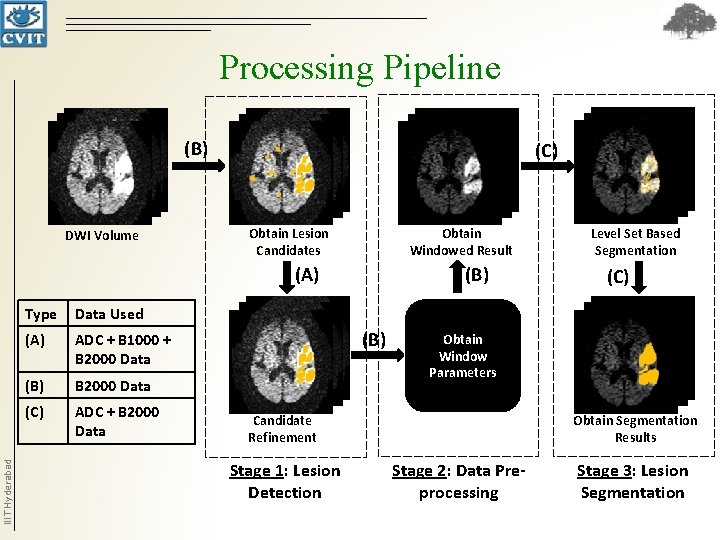
Concept • The b 2000 data with high sensitivity for stroke is suitable for finding candidate locations – Will have high number of false positive locations (FP) due to anisotropy effects. • The b 1000 data (with low anisotropy effects) and the ADC (impervious to shine-through artifacts) are appropriate to help reject the FPs. IIIT Hyderabad • Segmentation is performed on the obtained lesion candidates.
Processing Pipeline (B) DWI Volume (C) Obtain Windowed Result Obtain Lesion Candidates IIIT Hyderabad (A) Type Data Used (A) ADC + B 1000 + B 2000 Data (B) B 2000 Data (C) ADC + B 2000 Data (B) (C) Obtain Window Parameters Obtain Segmentation Results Candidate Refinement Stage 1: Lesion Detection Level Set Based Segmentation Stage 2: Data Preprocessing Stage 3: Lesion Segmentation
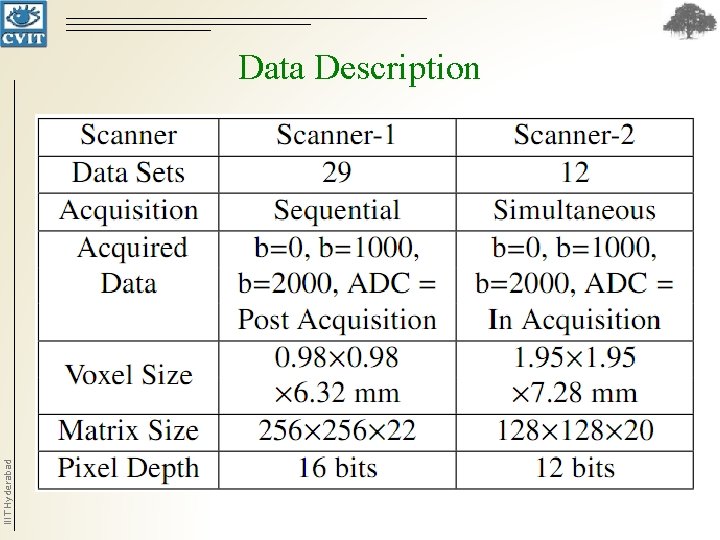
IIIT Hyderabad Data Description
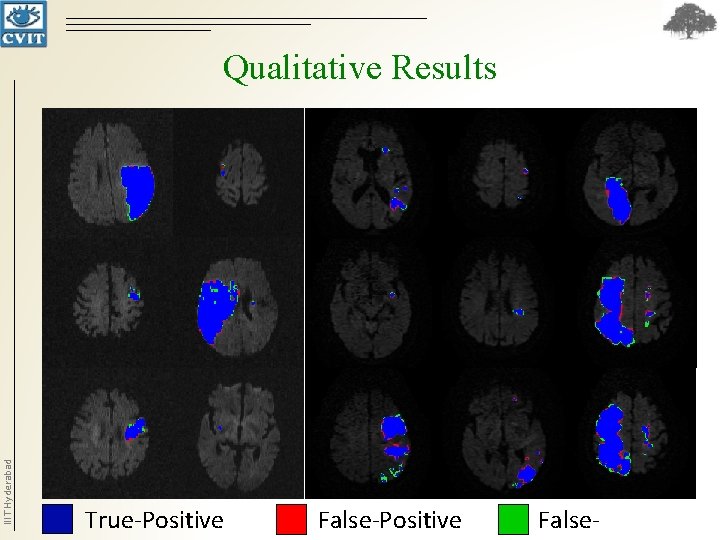
IIIT Hyderabad Qualitative Results True-Positive False-
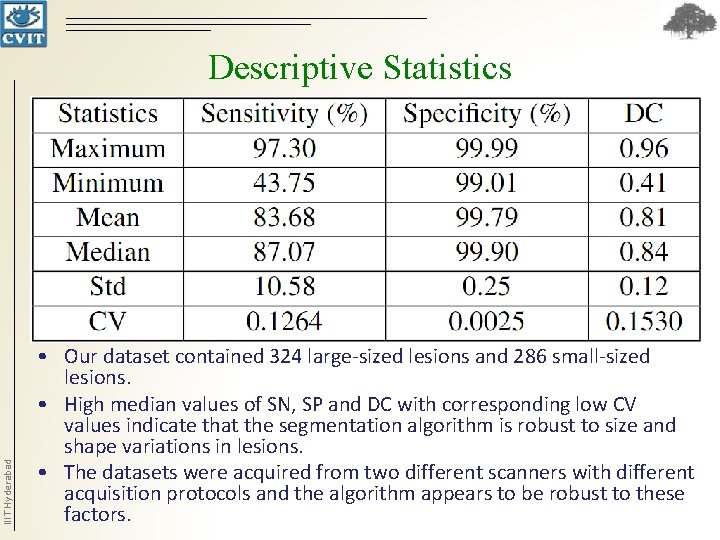
IIIT Hyderabad Descriptive Statistics • Our dataset contained 324 large-sized lesions and 286 small-sized lesions. • High median values of SN, SP and DC with corresponding low CV values indicate that the segmentation algorithm is robust to size and shape variations in lesions. • The datasets were acquired from two different scanners with different acquisition protocols and the algorithm appears to be robust to these factors.
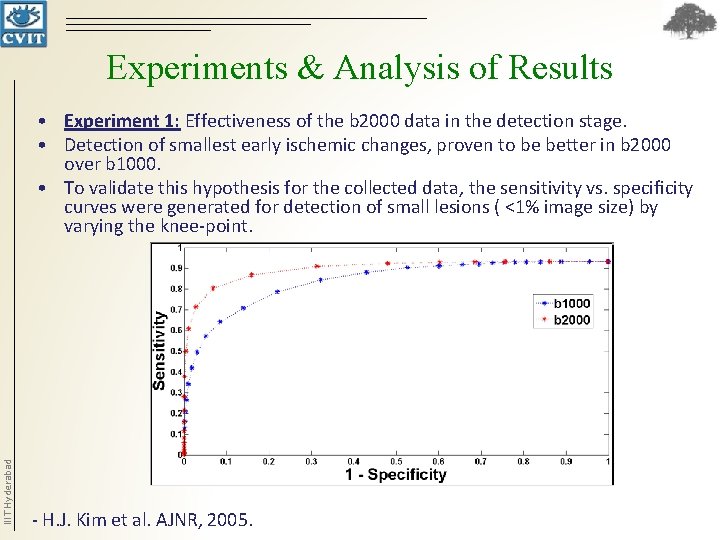
Experiments & Analysis of Results IIIT Hyderabad • Experiment 1: Effectiveness of the b 2000 data in the detection stage. • Detection of smallest early ischemic changes, proven to be better in b 2000 over b 1000. • To validate this hypothesis for the collected data, the sensitivity vs. specificity curves were generated for detection of small lesions ( <1% image size) by varying the knee-point. - H. J. Kim et al. AJNR, 2005.
Experiments & Analysis of Results • Experiment 2: The experiment aimed to study the degree of improvement in the segmentation accuracy (at the boundaries) due to b 2000 data. • The segmentation was performed on b 1000 and b 2000 data separately, for only true lesion locations (found from GT), for all the volumes. IIIT Hyderabad • The median DC values for the segmentation results were 0. 68 and 0. 83 for b 1000 and b 2000 data respectively. • An improvement of 22. 06% in the segmentation accuracy was observed on b 2000 data.
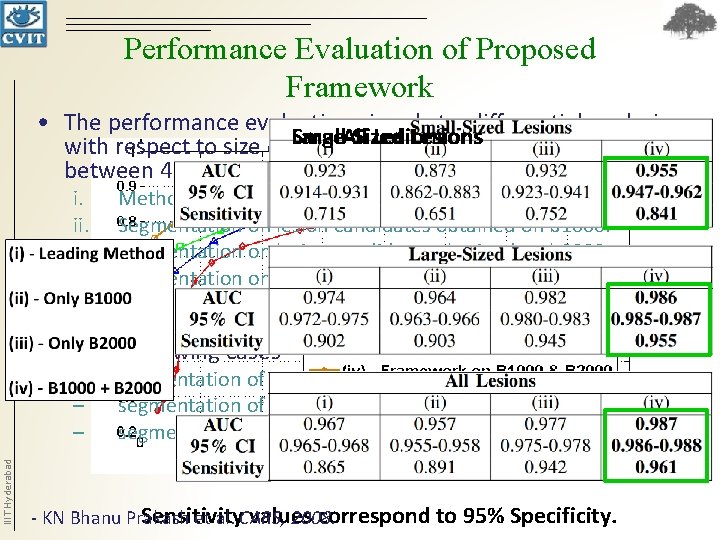
Performance Evaluation of Proposed Framework • The performance evaluation aimed at a differential analysis Small-Sized All Lesions with respect to size of Large-Sized the lesions, comparing the ROC plots between 4 methods i. iii. iv. • IIIT Hyderabad – – – Method described in *. Segmentation on lesion candidates obtained on b 1000. Segmentation on lesion candidates obtained on b 2000. Segmentation on lesion candidates obtained utilizing b 1000, b 2000 & ADC (our method). Based on the lesion size, the ROC plots were generated for the following cases segmentation of small-sized (<1% of image size) lesions. segmentation of large-sized (>1% of image size) lesions. segmentation of all the lesions in the data. Sensitivity values correspond to 95% Specificity. - KN Bhanu Prakash et al. CARS, 2008.
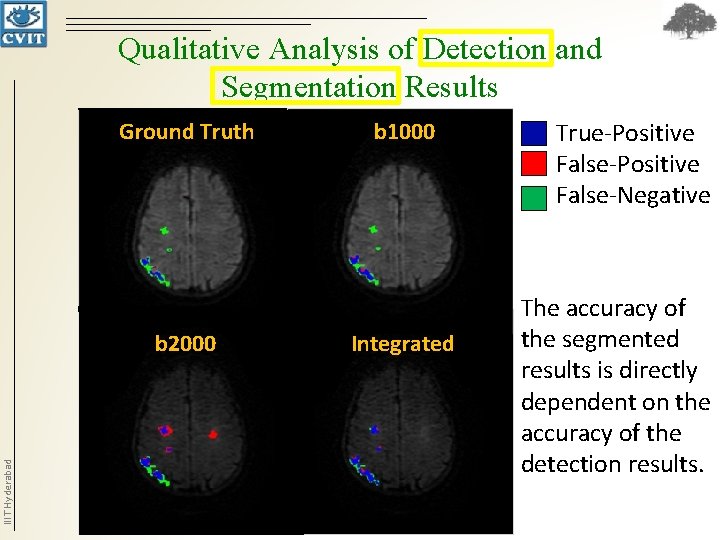
Qualitative Analysis of Detection and Segmentation Results Ground Truth IIIT Hyderabad b 2000 b 1000 Integrated True-Positive False-Negative The accuracy of the segmented results is directly dependent on the accuracy of the detection results.
Conclusions • Novel technique is proposed. – Utilizes multiple b-values (b 1000 & b 2000) and the ADC maps. – Adapts to data acquired from multiple scanners with different acquisition processes. – Automated. • Experiments and analysis validate the superiority of the method in detection and segmentation. – Signifies role of b 2000 data. – Superiority over methods utilizing only b 1000 data. • Limitation. IIIT Hyderabad – Computationally expensive framework due to additional data processing. • The performance of the system outweighs the computational burden.
IIIT Hyderabad Questions?
IIIT Hyderabad Thank You