
Detection and Identification of Near Seismic Events by
Detection and Identification of Near Seismic Events by Seis. Com. P 3 limited by a sparse distributed Seismic Network Thomas Burghardt, Friedrich-Schiller. Universität Jena 17. Januar 2013 User Group Meeting Potsdam GFZ
Contents • Configuration of the network • Which signals are measured and which features the measurement has • Examples for detected events • The reported events • Conclusion
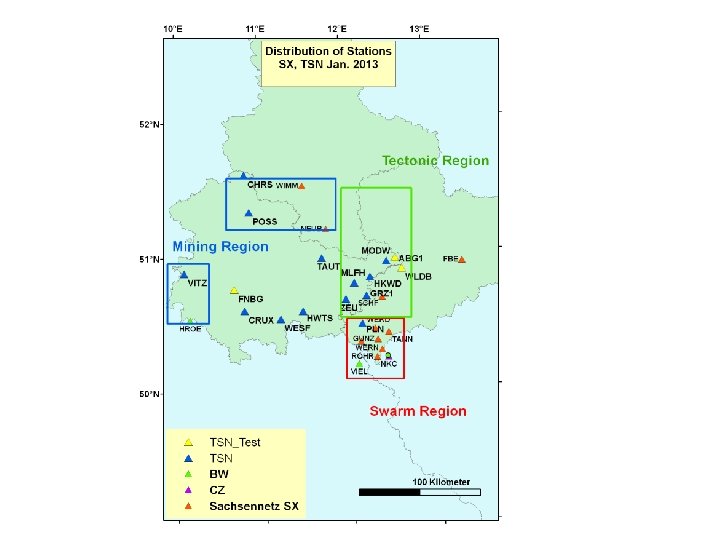
How TSN and SX network is configured for Seis. Com. P 3?
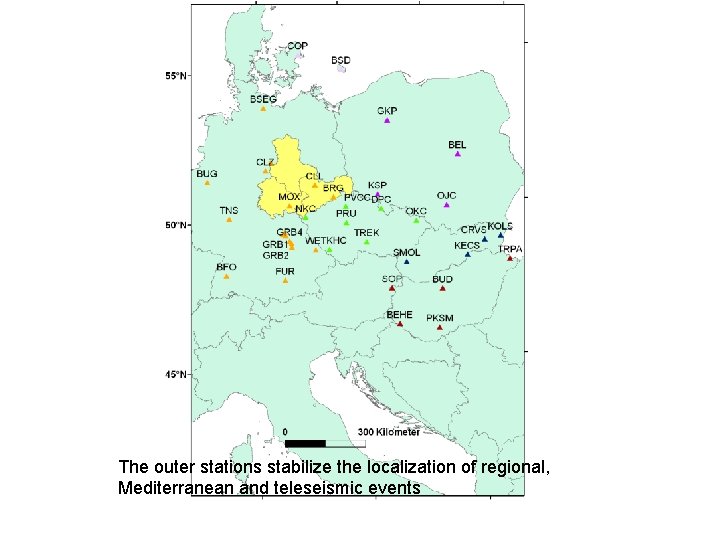
The outer stations stabilize the localization of regional, Mediterranean and teleseismic events
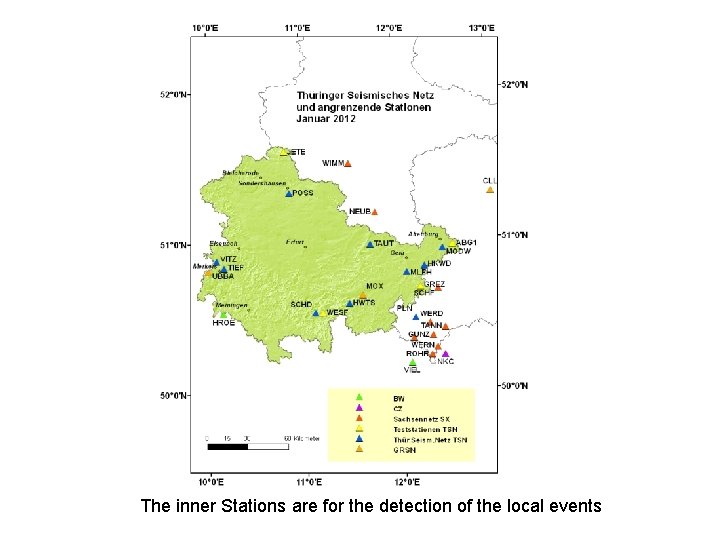
The inner Stations are for the detection of the local events

• Grid Search Algorithm Parameter
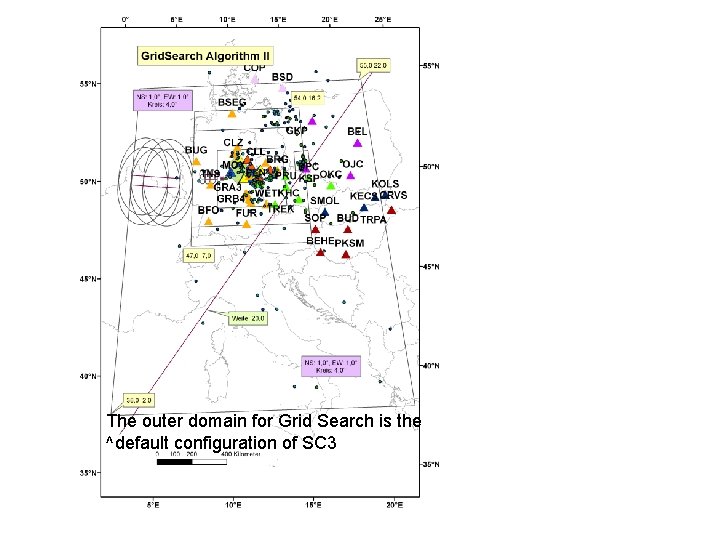
The outer domain for Grid Search is the ^default configuration of SC 3
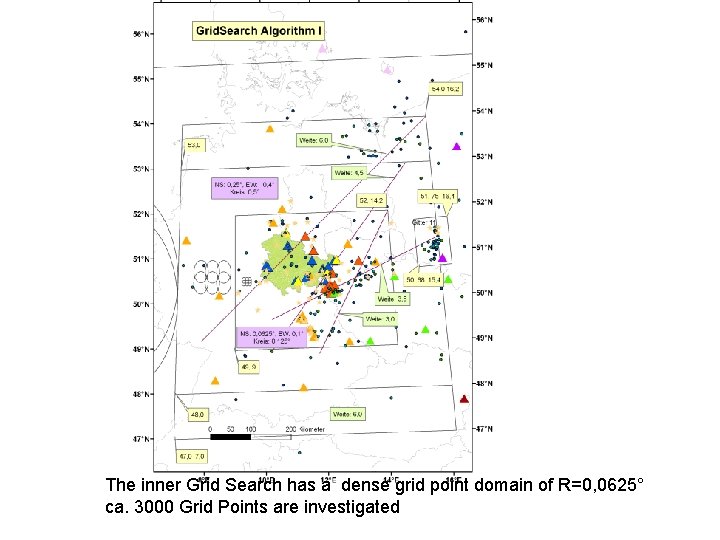
The inner Grid Search has a dense grid point domain of R=0, 0625° ca. 3000 Grid Points are investigated

Which signals the network measures?
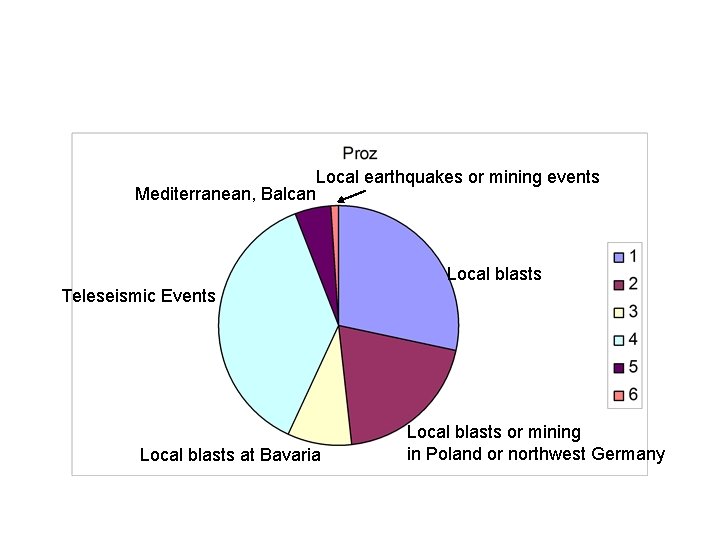
Mediterranean, Balcan Local earthquakes or mining events Local blasts Teleseismic Events Local blasts at Bavaria Local blasts or mining in Poland or northwest Germany

The ambiguity of the Grid Search Algorithm and of Loc. SAT
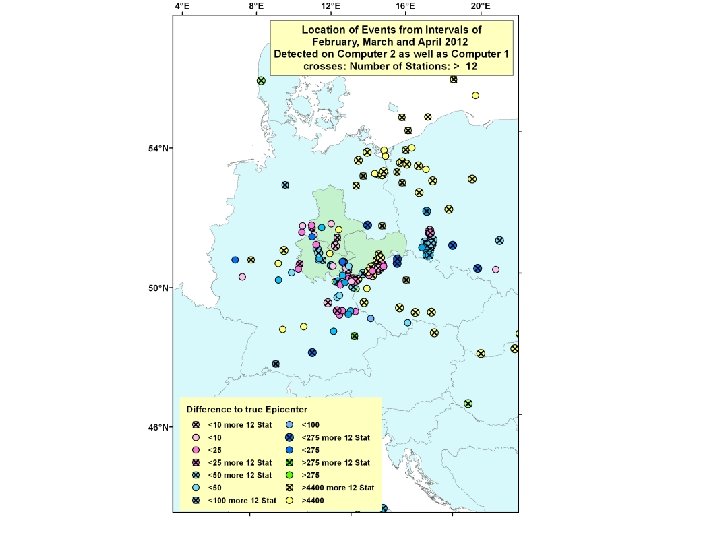
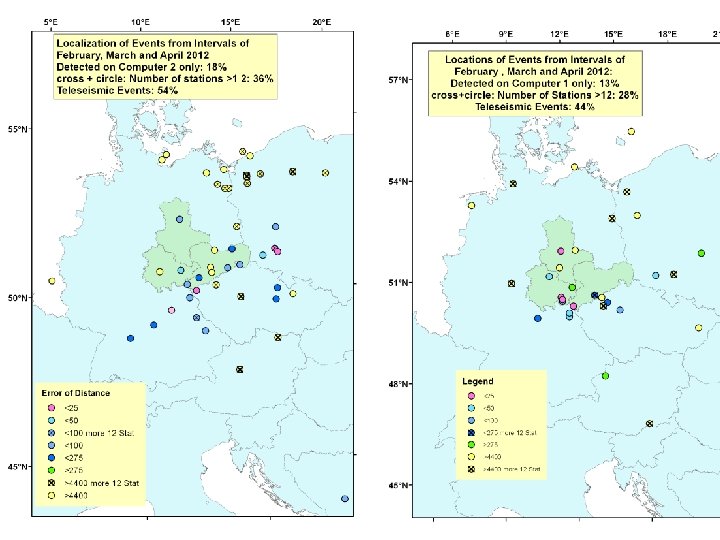
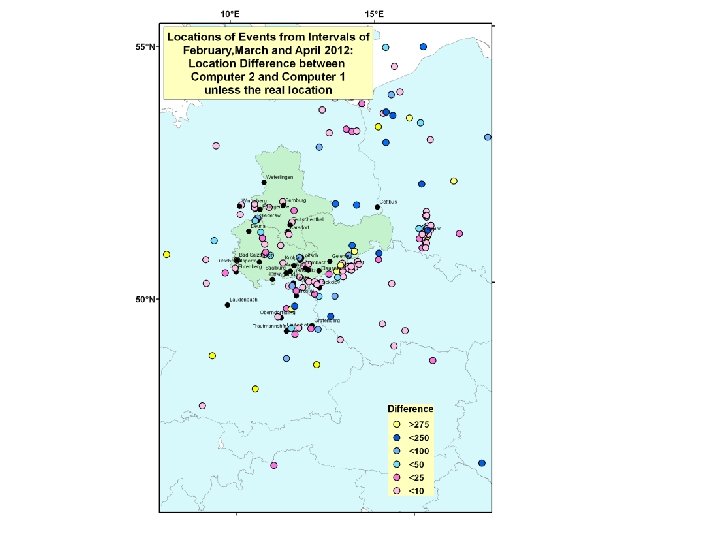
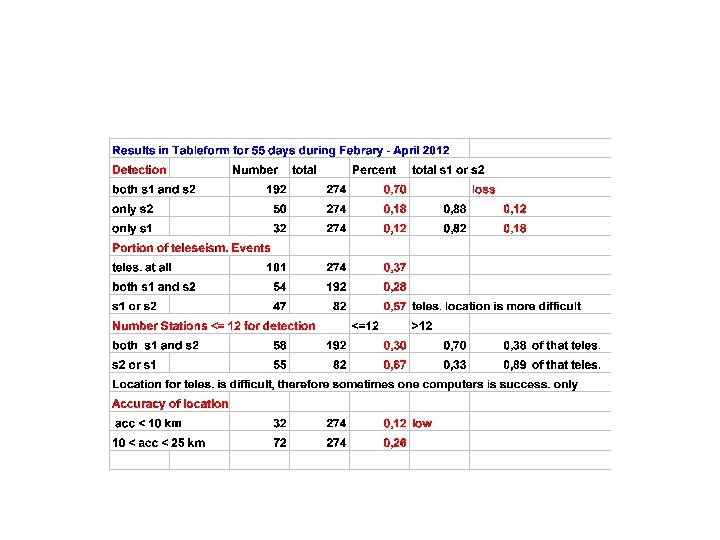
• Conclusion: There are different detection and location results at two computers with the same SC 3 configuration. To my mind the cause depends on the not stabilized Grid Search Algorithm for near events and on the difficulties of Loc. SAT to localize teleseismic events with a regional velocity model.
• Is the localization error less for a denser distribution of the stations in the network ?
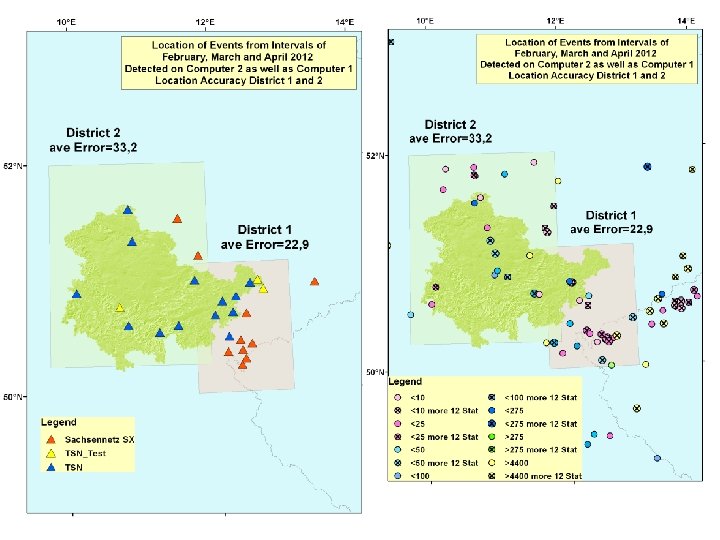
• Is answer seems to be no. Probably the influence of the S onsets and the unsufficient pick order provided by the Grid Search have a great portion to the false localization

Examples P- und S Onsets
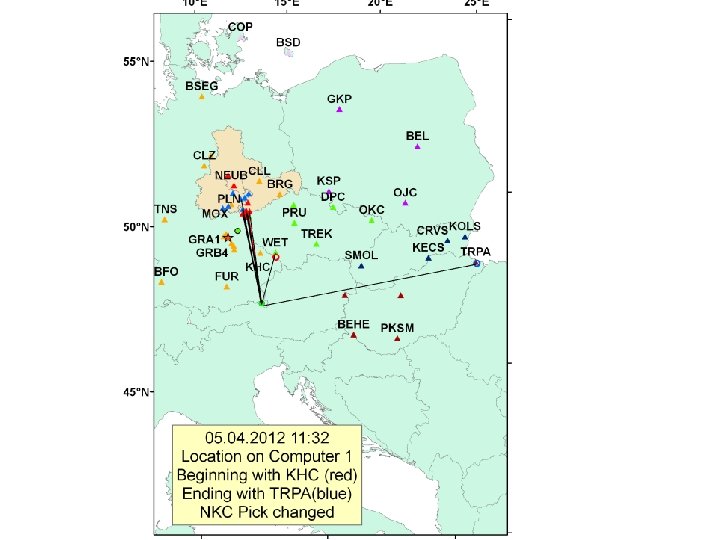
• Gräfenberg, Germany 05. Apr. 2012, blast SHM: 49, 651 ; 11, 406 , ML=1, 7 S 2: 49, 84 ; 11, 85 Neustadt am Kulm S 1: 47, 62 ; 12, 82 Ramsau, Oberbayern wrong distant station TRPA (HU)
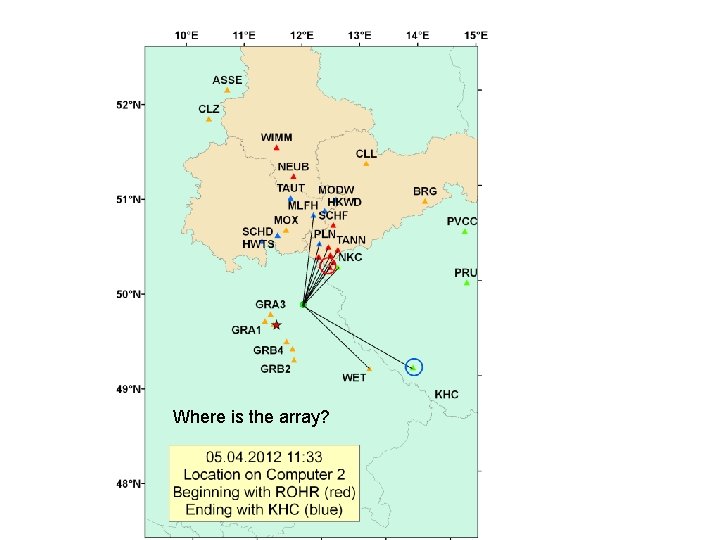
Where is the array?
• Swabian Alp, Albstadt, Germany, Earthquake • 02. Jan. 2013 19: 55 EMSC: 48, 24 ; 9, 01 ML=2, 3 • S 2: south. Nürnberg: 49, 16 ; 10, 91 P Onsets, BFO is absent, but the pick exists • S 1: S Onsets Near Cannes after relocation after put of the far station: TRPA : 42, 97 ; 6, 03
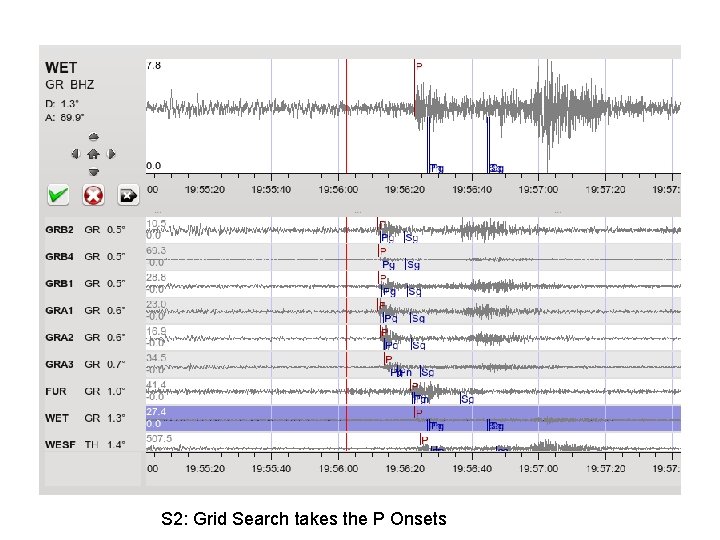
S 2: Grid Search takes the P Onsets
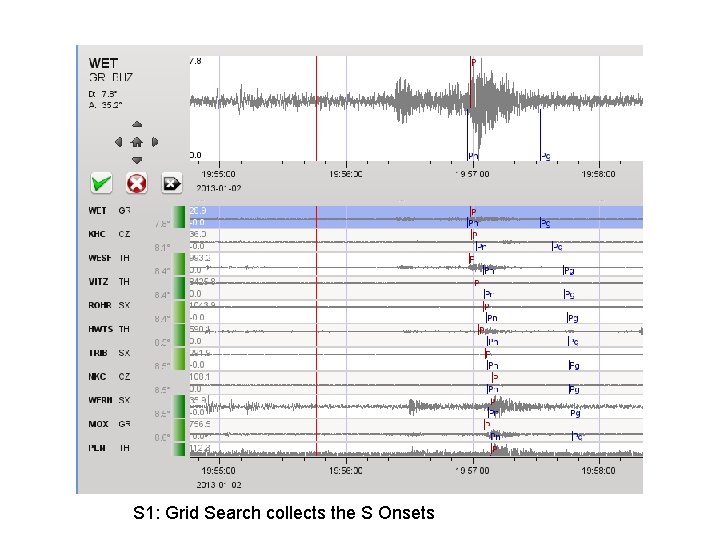
S 1: Grid Search collects the S Onsets
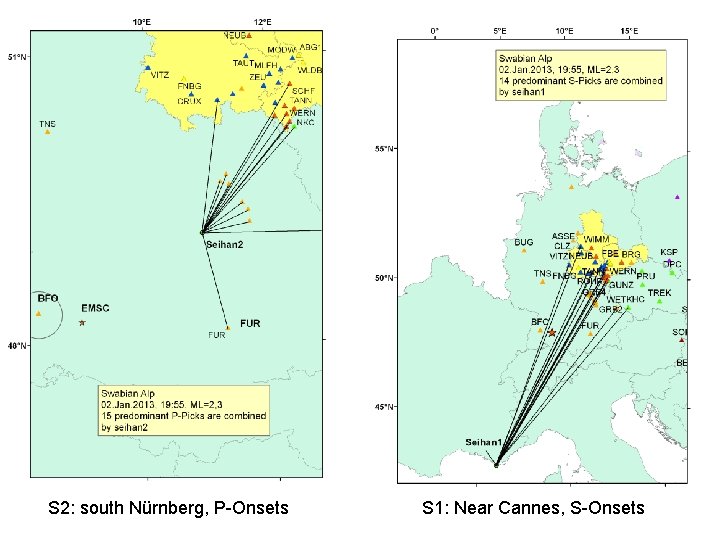
S 2: south Nürnberg, P-Onsets S 1: Near Cannes, S-Onsets
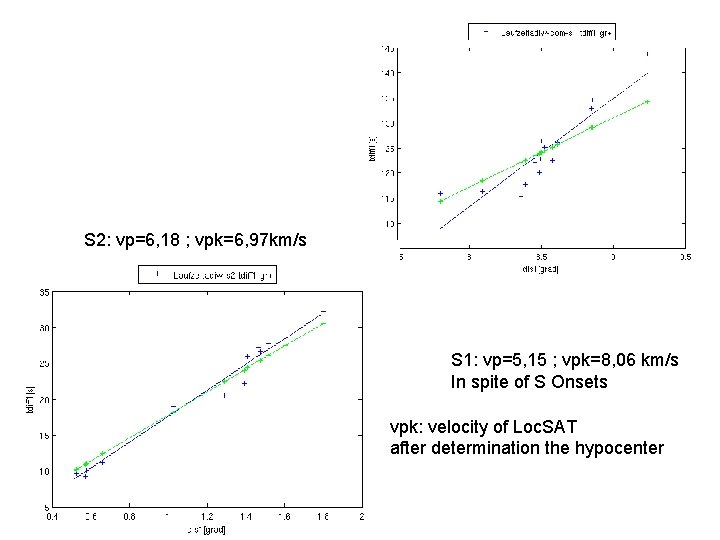
S 2: vp=6, 18 ; vpk=6, 97 km/s S 1: vp=5, 15 ; vpk=8, 06 km/s In spite of S Onsets vpk: velocity of Loc. SAT after determination the hypocenter
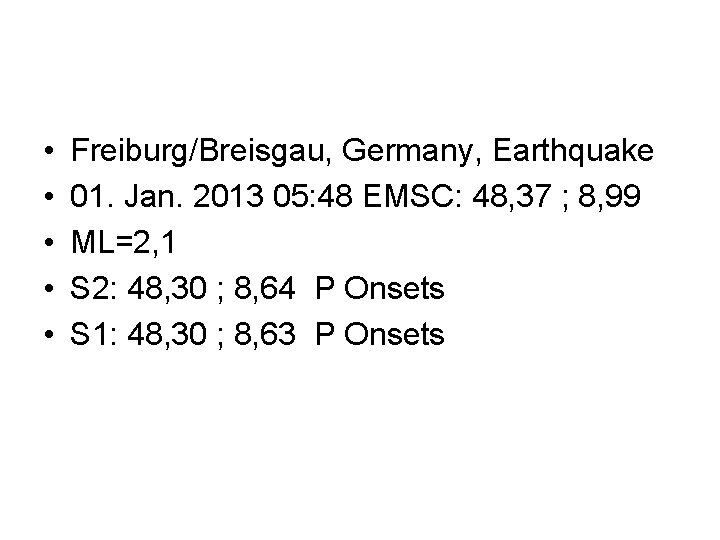
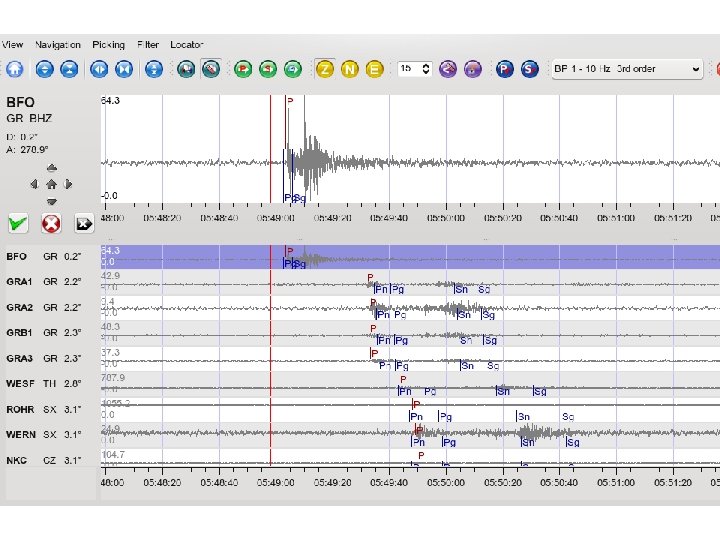
• • • Freiburg/Breisgau, Germany, Earthquake 01. Jan. 2013 05: 48 EMSC: 48, 37 ; 8, 99 ML=2, 1 S 2: 48, 30 ; 8, 64 P Onsets S 1: 48, 30 ; 8, 63 P Onsets
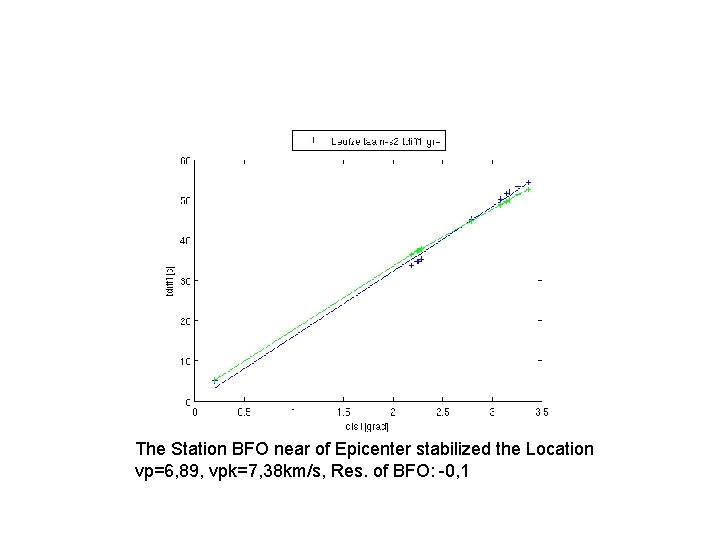
The Station BFO near of Epicenter stabilized the Location vp=6, 89, vpk=7, 38 km/s, Res. of BFO: -0, 1
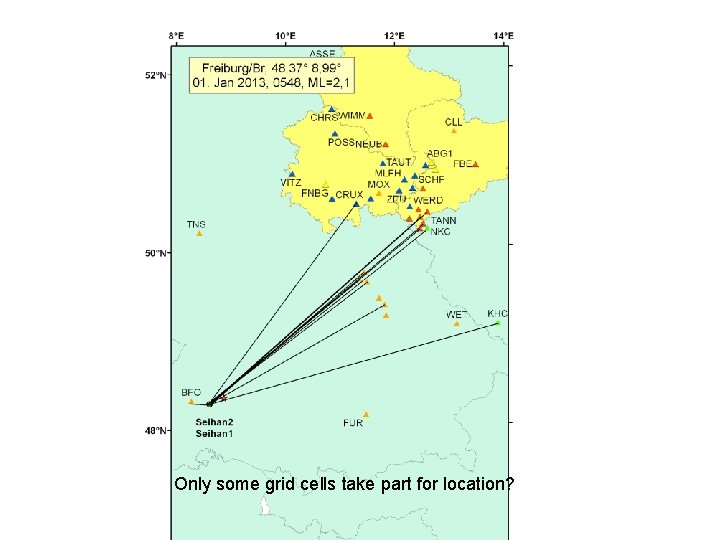
Only some grid cells take part for location?
• • • Plauen, Germany, Earthquake 28. Dec. 2012 19: 55 SHM: 50, 454 ; 12, 225, ML=1, 1, 10, 5 km S 2: 50, 46 ; 12, 34 MLv=1, 1 S 1: 50, 45 ; 12, 33 MLv=1, 1 The best place for determination of hypocenter, because of the dense network
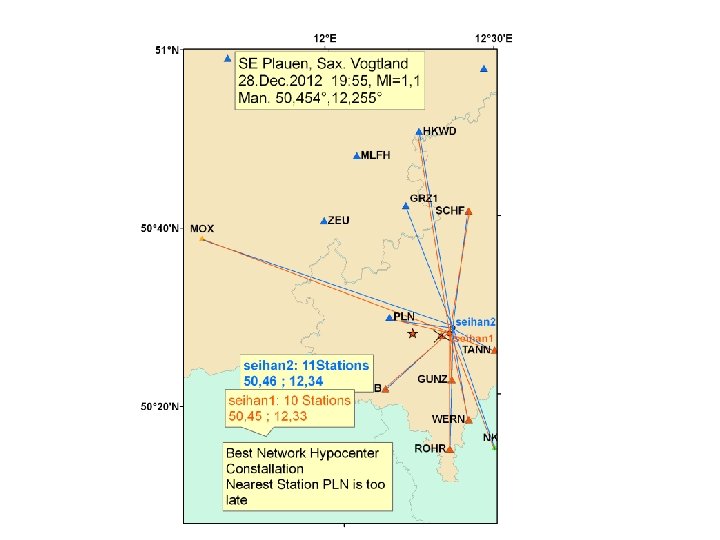
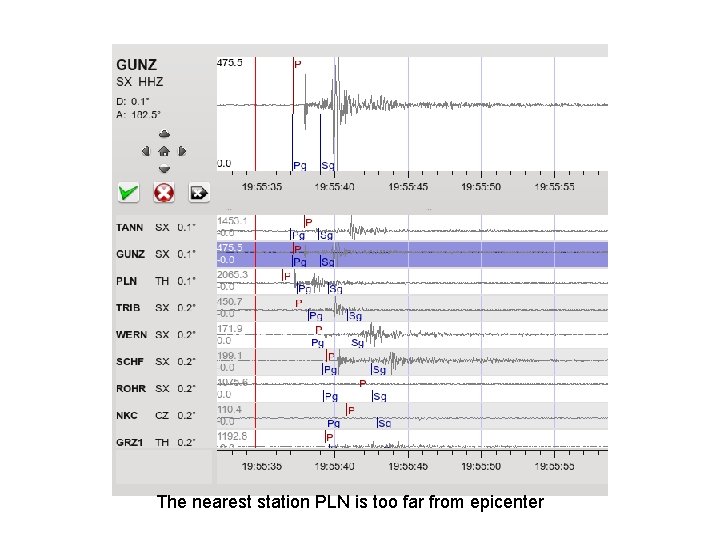
The nearest station PLN is too far from epicenter
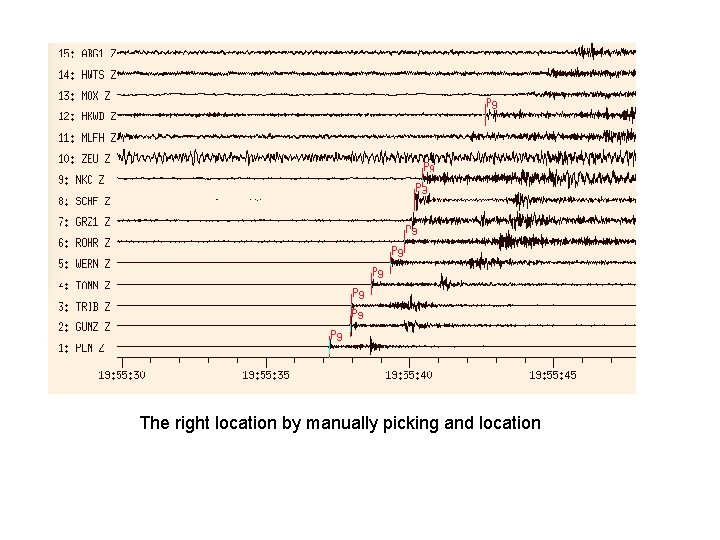
The right location by manually picking and location
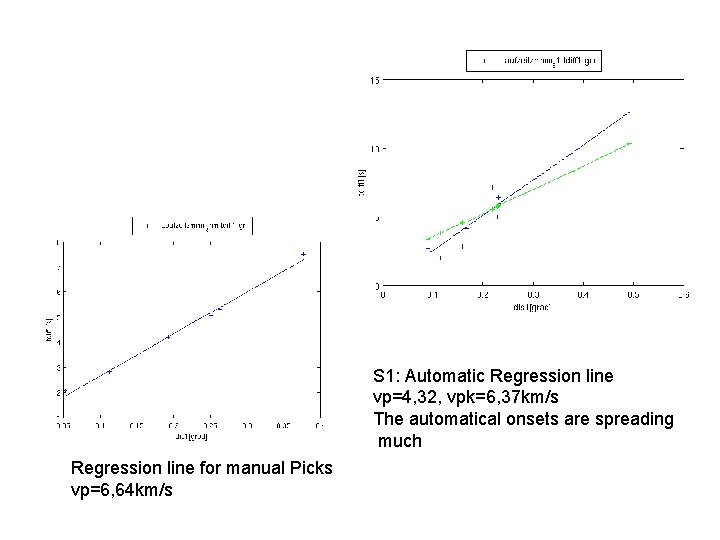
S 1: Automatic Regression line vp=4, 32, vpk=6, 37 km/s The automatical onsets are spreading much Regression line for manual Picks vp=6, 64 km/s
• Legnica, Poland, 03. Jan. 2013, 22: 25, mining event, EMSC: 51, 39 ; 16, 28 ML=2, 9 • S 2: 52, 03 ; 19, 77 P Onsets • S 1: 48, 73 ; 18, 40 S Onsets
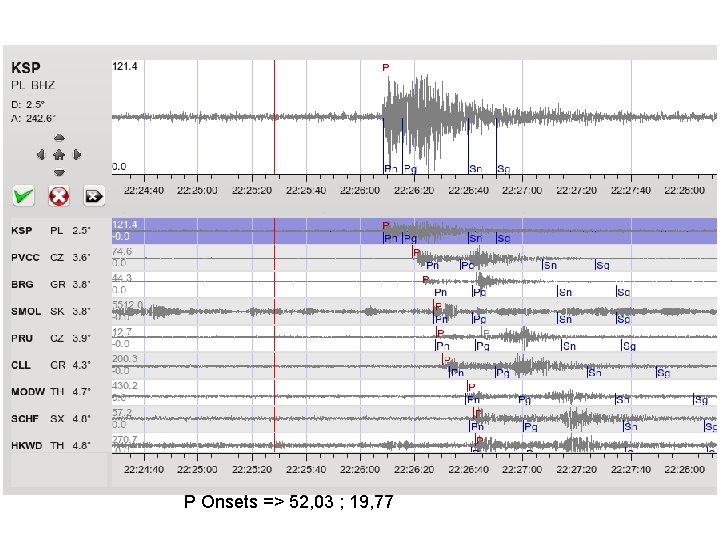
P Onsets => 52, 03 ; 19, 77
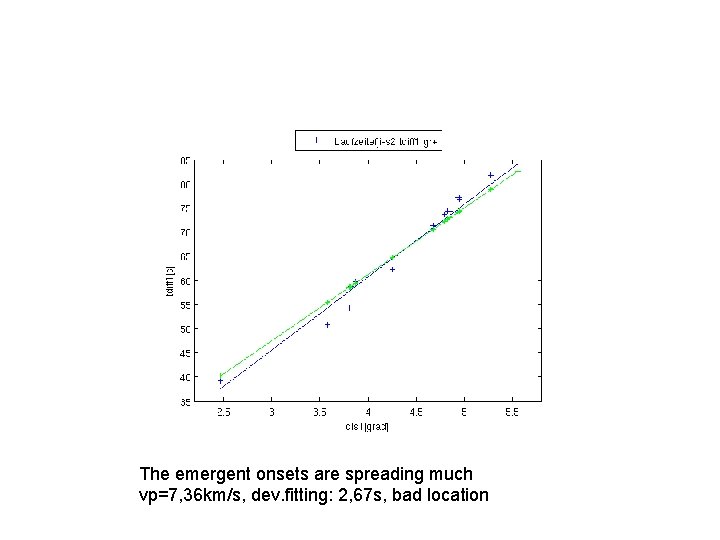
The emergent onsets are spreading much vp=7, 36 km/s, dev. fitting: 2, 67 s, bad location
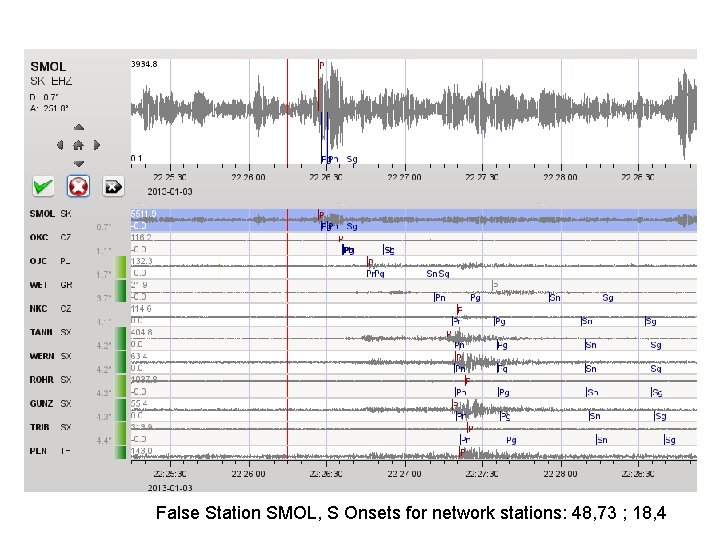
False Station SMOL, S Onsets for network stations: 48, 73 ; 18, 4
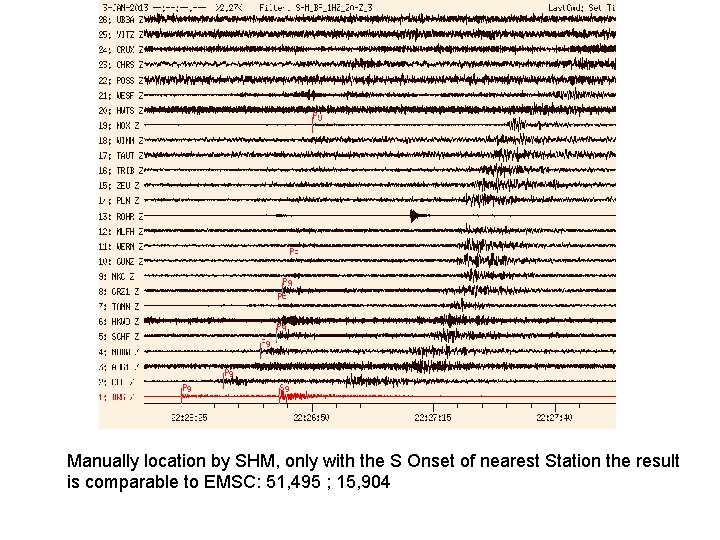
Manually location by SHM, only with the S Onset of nearest Station the result is comparable to EMSC: 51, 495 ; 15, 904
• Novy Kostel, Czech, 07. Jan. 2013, 17: 19 Earthquake • SHM: 50, 231 ; 12, 452, ML=1, 8 • S 2: 50, 24 ; 12, 45 ML=1, 9 • S 1: 50, 23 ; 12, 47 ML=1, 9
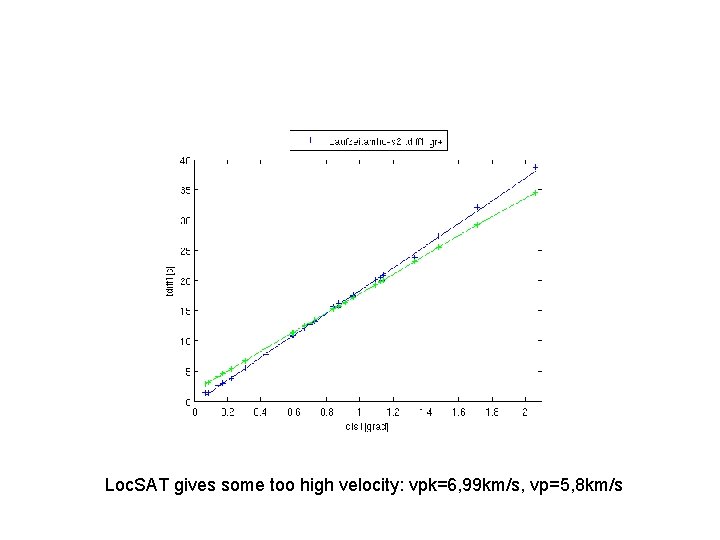
Loc. SAT gives some too high velocity: vpk=6, 99 km/s, vp=5, 8 km/s
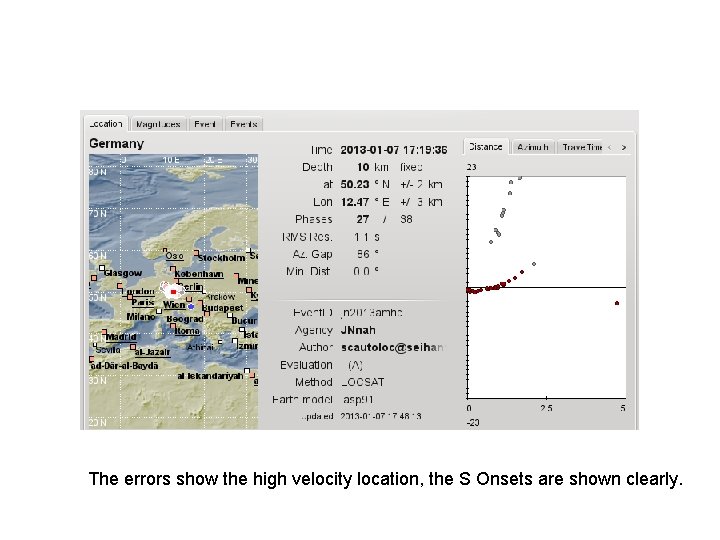
The errors show the high velocity location, the S Onsets are shown clearly.
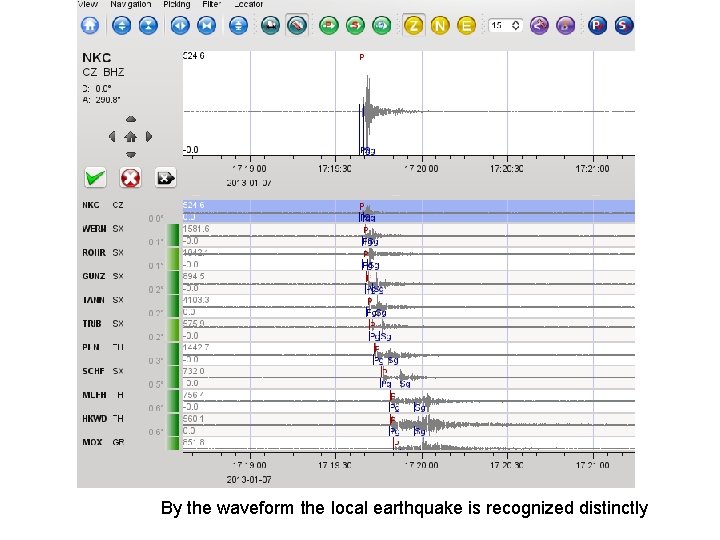
By the waveform the local earthquake is recognized distinctly
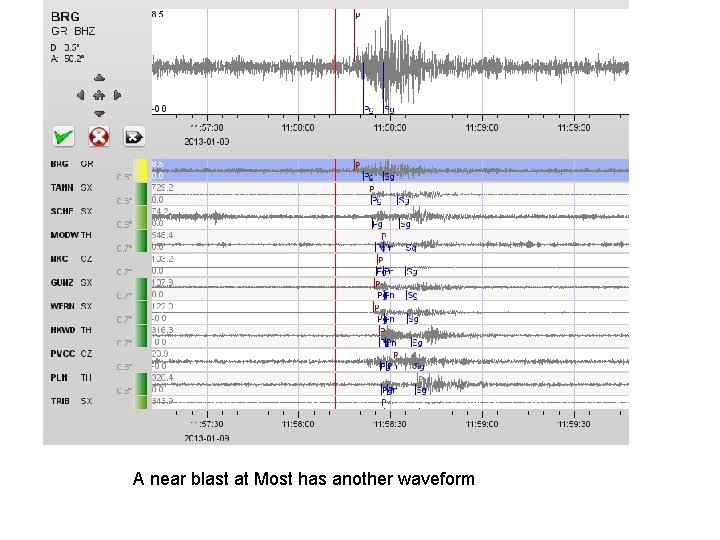
A near blast at Most has another waveform
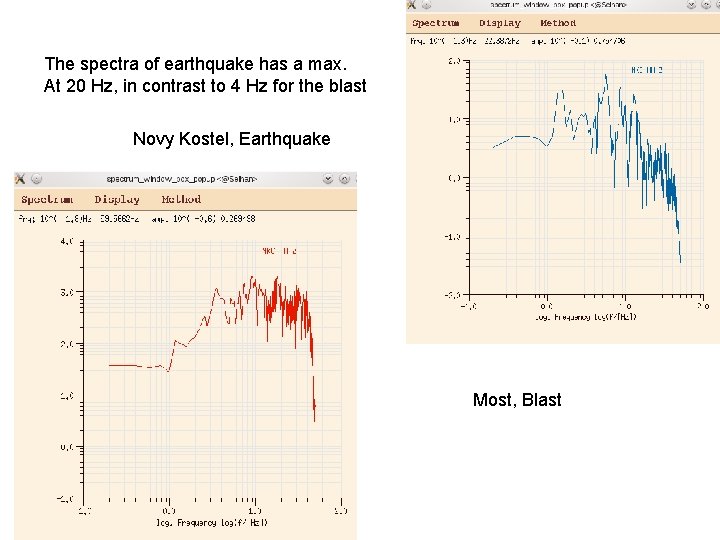
The spectra of earthquake has a max. At 20 Hz, in contrast to 4 Hz for the blast Novy Kostel, Earthquake Most, Blast
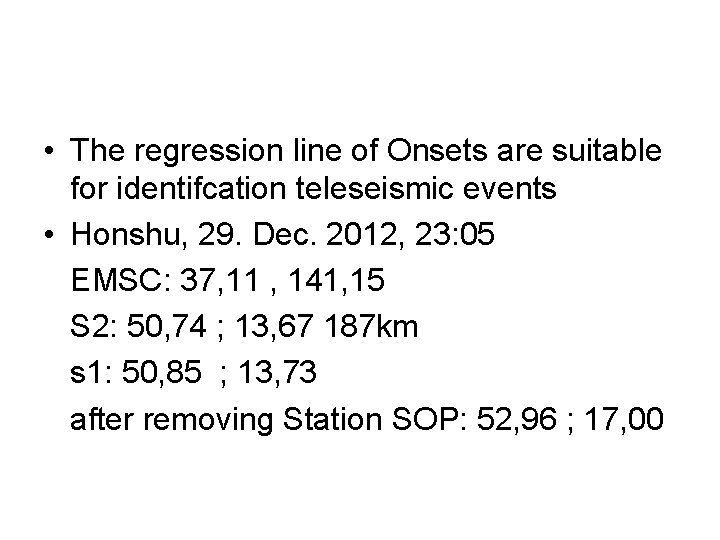
• The regression line of Onsets are suitable for identifcation teleseismic events • Honshu, 29. Dec. 2012, 23: 05 EMSC: 37, 11 , 141, 15 S 2: 50, 74 ; 13, 67 187 km s 1: 50, 85 ; 13, 73 after removing Station SOP: 52, 96 ; 17, 00
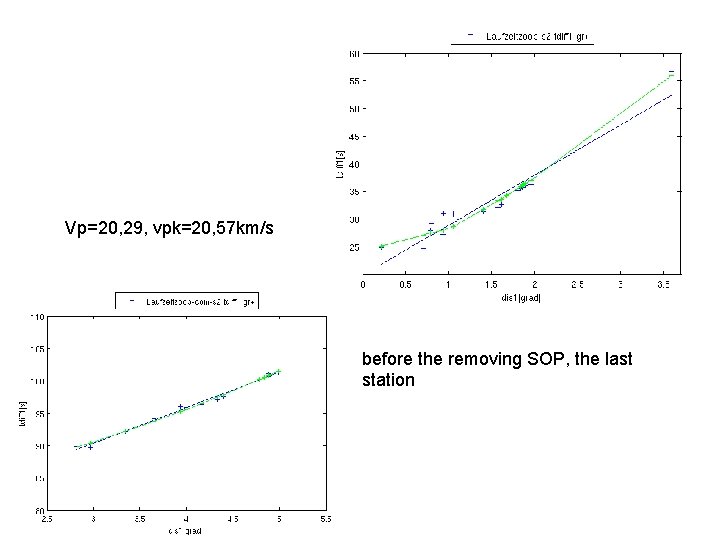
Vp=20, 29, vpk=20, 57 km/s before the removing SOP, the last station
• Vanuatu, 22. Dec. 2012, 07: 53 EMSC: -20, 28 ; 169, 6, mb=4, 9 only s 1: 51, 02 ; 11, 21 (near Weimar, Germany)
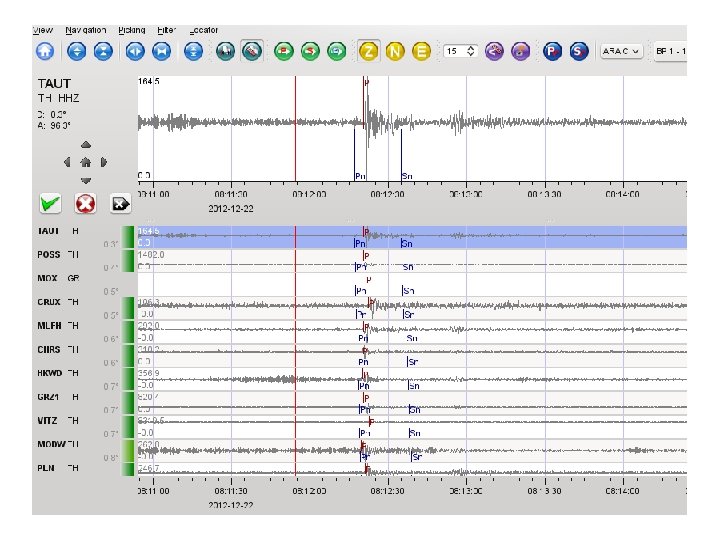
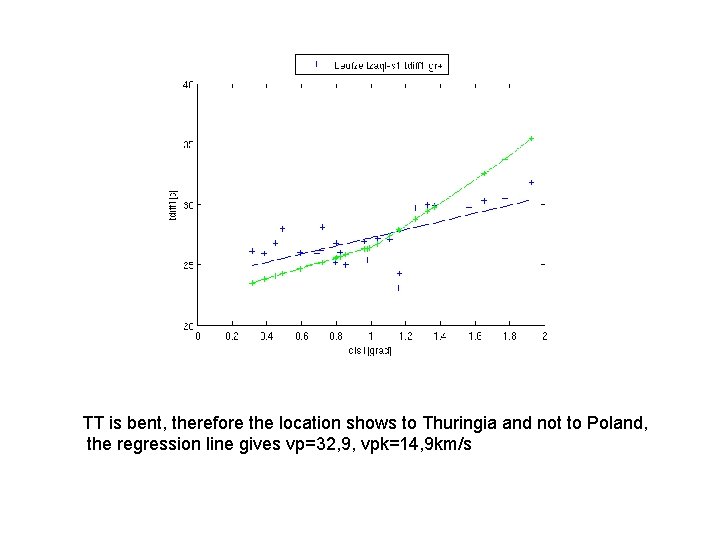
TT is bent, therefore the location shows to Thuringia and not to Poland, the regression line gives vp=32, 9, vpk=14, 9 km/s
• The determination of S velocity by regression line is problematical because of the wrong epicenter resulting by S Onset location

• Detection Results of the reported events to the Office of Environment and Geology of Thuringia
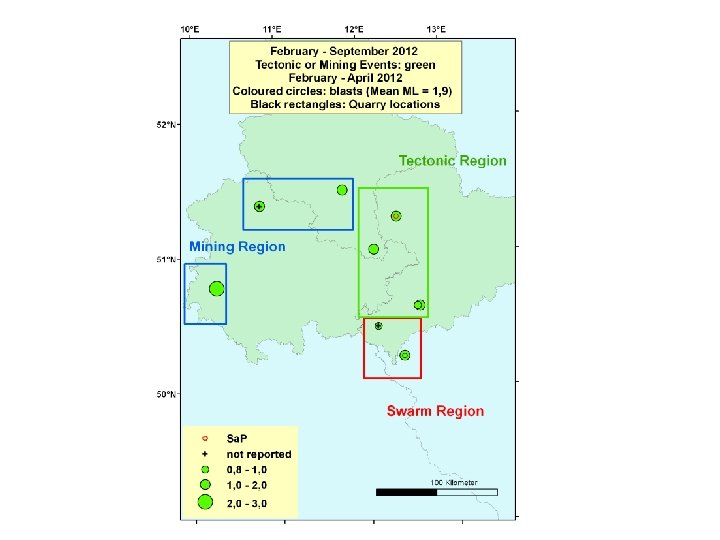
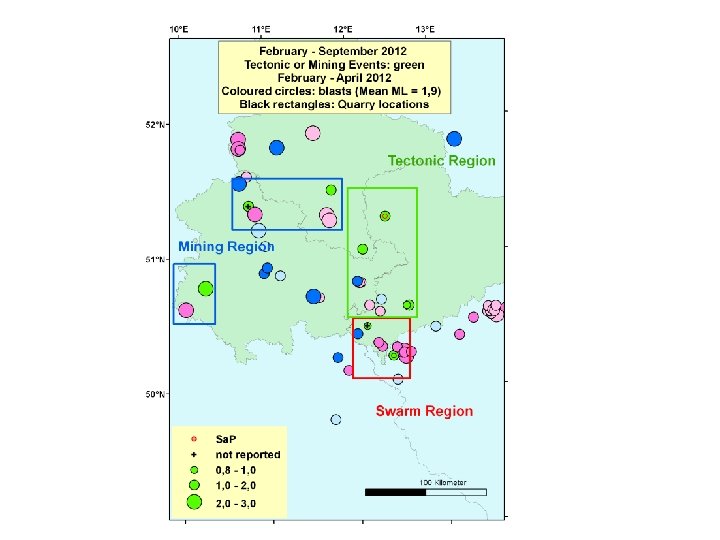
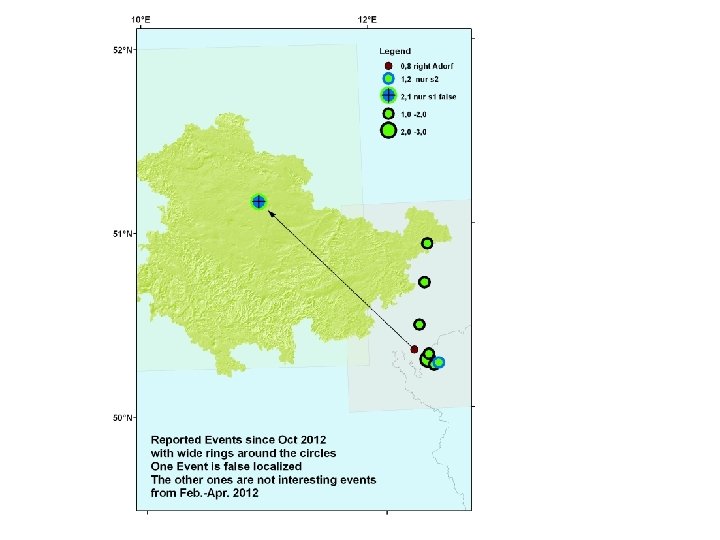
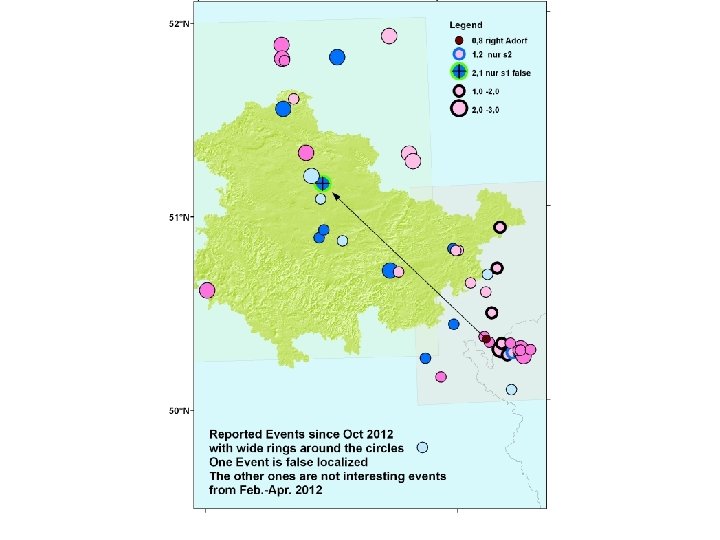
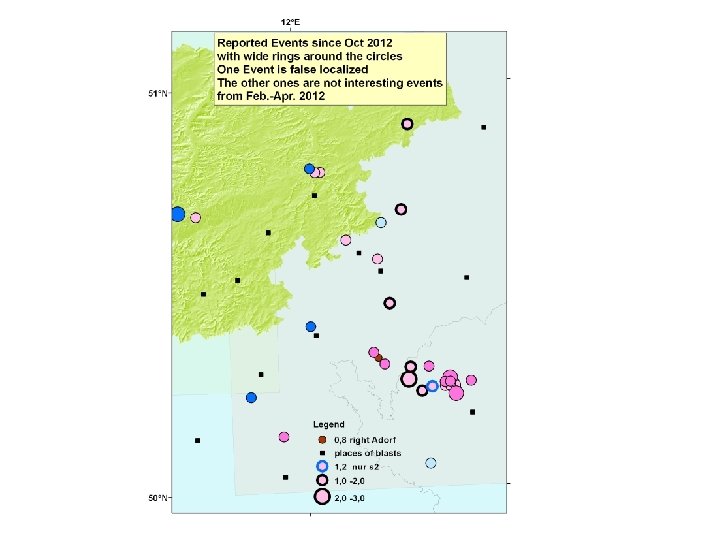
• The detectibility of the network in the swarm and in the tectonic region is sufficiently good. Down up to ML=1, 5 with a location error up to 15 km the network give hints for manually revising. • At the mining areas due to the sparse distribution of stations the Magnitude threshold is higher than 2.
Conclusion • To my mind the Grid Search Algorithm has to be tuned to the sparse network to achieve a better location and less ambiguity. • It will not become perfectly, because of the heterogeneity and the missing of coherence of signals in comparison to the teleseimic signals. • With the absent regonizability of S onsets arises a big problem for localization. • At this level of development in the local event detection with a sparse network, SC 3 is an excellent tool for detection of the events, but a revision by a seismologist is absolutely necessary. • The possibility to determine the spectra of the event with SC 3 tool would be helpful.
- Slides: 63