
Detecting Fingerprints Chapter 14 I Types of Crime
- Slides: 7
Detecting Fingerprints Chapter 14
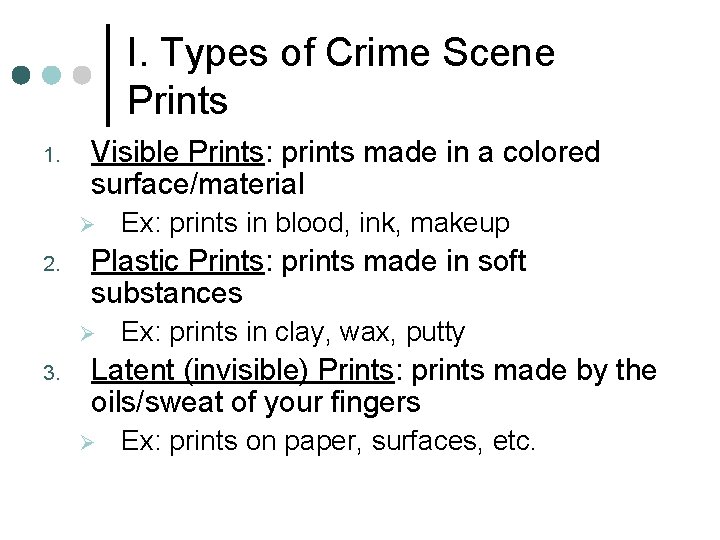
I. Types of Crime Scene Prints 1. Visible Prints: prints made in a colored surface/material Ø 2. Plastic Prints: prints made in soft substances Ø 3. Ex: prints in blood, ink, makeup Ex: prints in clay, wax, putty Latent (invisible) Prints: prints made by the oils/sweat of your fingers Ø Ex: prints on paper, surfaces, etc.
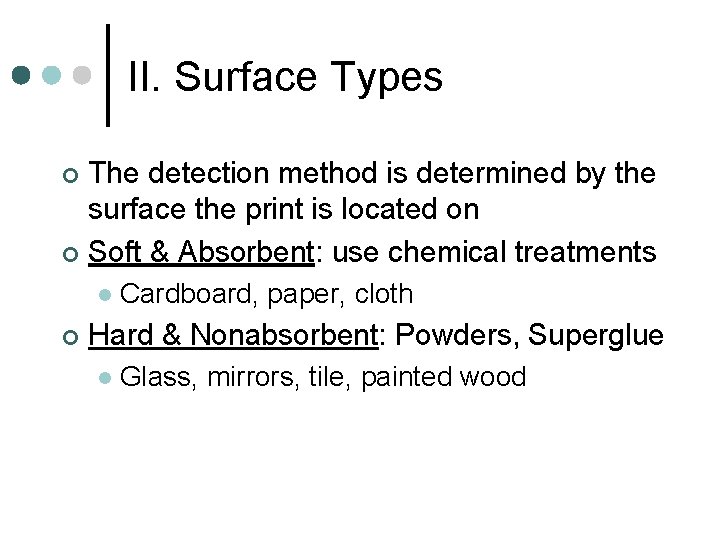
II. Surface Types The detection method is determined by the surface the print is located on ¢ Soft & Absorbent: use chemical treatments ¢ l ¢ Cardboard, paper, cloth Hard & Nonabsorbent: Powders, Superglue l Glass, mirrors, tile, painted wood
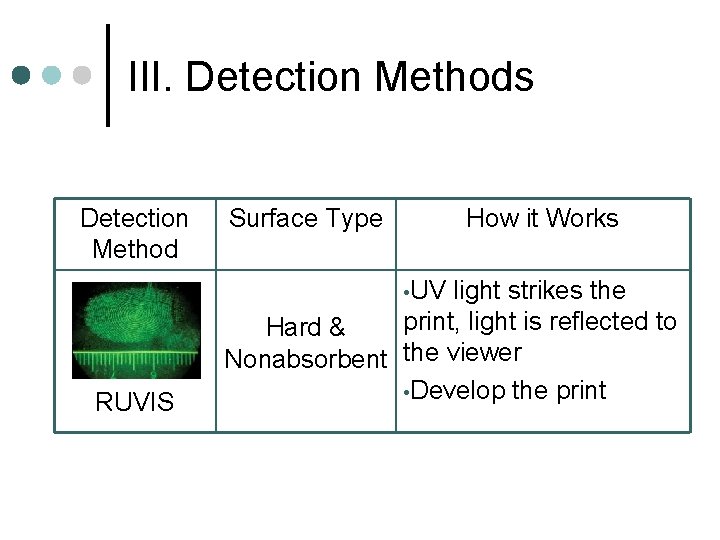
III. Detection Methods Detection Method Surface Type How it Works • UV RUVIS light strikes the print, light is reflected to Hard & Nonabsorbent the viewer • Develop the print
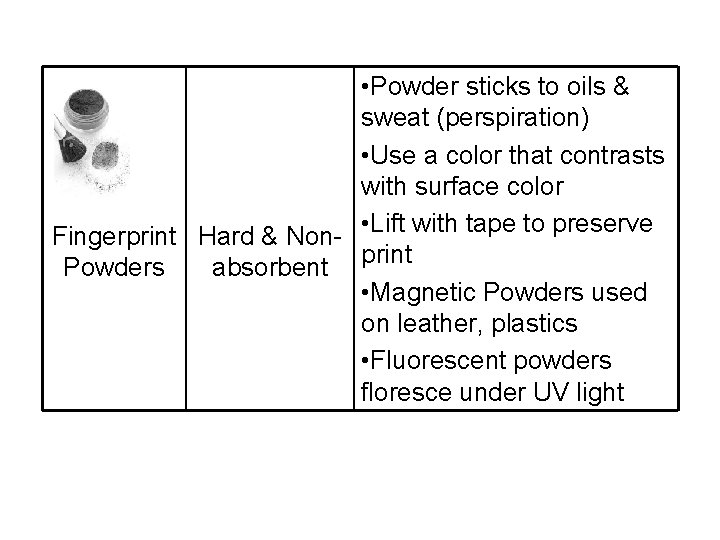
• Powder sticks to oils & sweat (perspiration) • Use a color that contrasts with surface color Fingerprint Hard & Non- • Lift with tape to preserve Powders absorbent print • Magnetic Powders used on leather, plastics • Fluorescent powders floresce under UV light
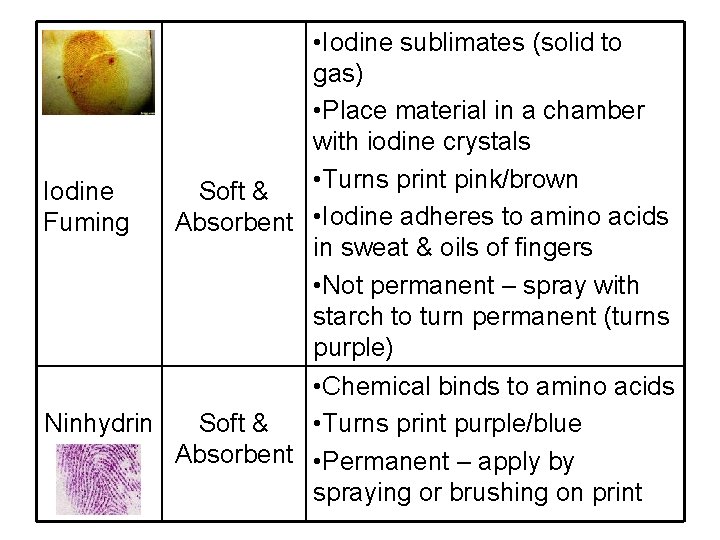
• Iodine sublimates (solid to gas) • Place material in a chamber with iodine crystals • Turns print pink/brown Iodine Soft & Fuming Absorbent • Iodine adheres to amino acids in sweat & oils of fingers • Not permanent – spray with starch to turn permanent (turns purple) • Chemical binds to amino acids Ninhydrin Soft & • Turns print purple/blue Absorbent • Permanent – apply by spraying or brushing on print
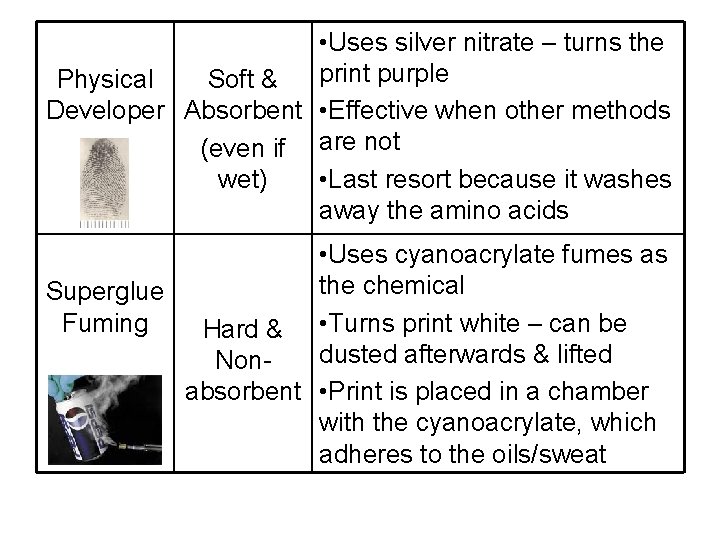
• Uses silver nitrate – turns the print purple Physical Soft & Developer Absorbent • Effective when other methods (even if are not wet) • Last resort because it washes away the amino acids • Uses cyanoacrylate fumes as the chemical Superglue Fuming Hard & • Turns print white – can be dusted afterwards & lifted Nonabsorbent • Print is placed in a chamber with the cyanoacrylate, which adheres to the oils/sweat