
DET 308 POWER SYSTEM II CHAPTER 1 ECONOMICS

- Slides: 42
DET 308: POWER SYSTEM II CHAPTER 1 ECONOMICS OF GENERATIONS
Introduction: Modern Power System • The power system of today is a complex interconnected network. • A power system can be subdivided into four major parts: • Generation • Transmission and Subtransmission • Distribution • Loads 2
3
Generation • Generators: Device that converts mechanical energy to electrical energy. • Generator is one of the essential components of power system is the three phase ac generator known as synchronous generator or alternator. • In power plant, the size of generators can vary from 50 MW to 1500 MW. 4
• Transformer: device that changes AC electric power at one voltage level into AC electric power at another voltage level through action of magnetic field. • Another major component of a power system. It transfer power with very high efficiency. 5
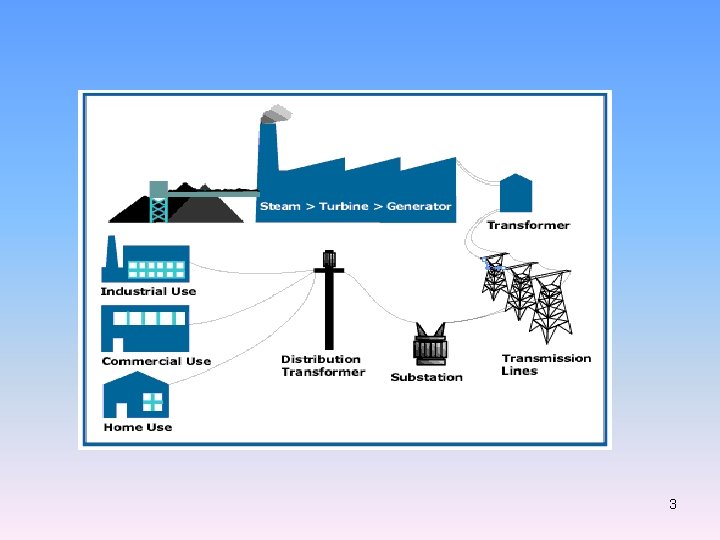
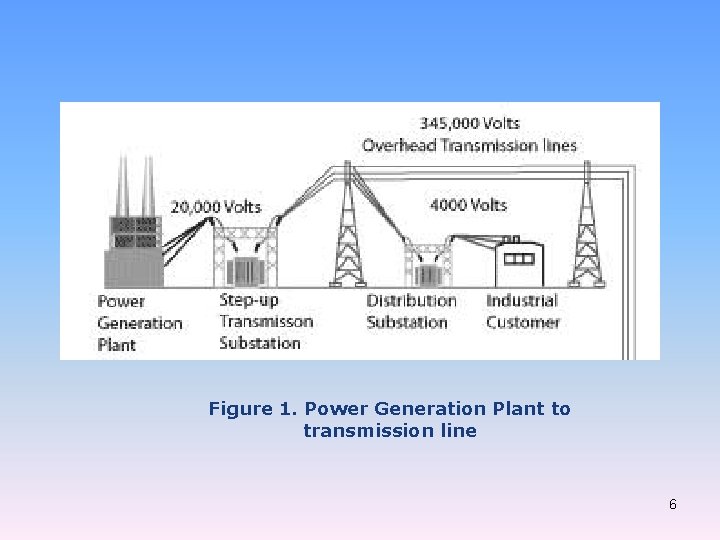
Figure 1. Power Generation Plant to transmission line 6
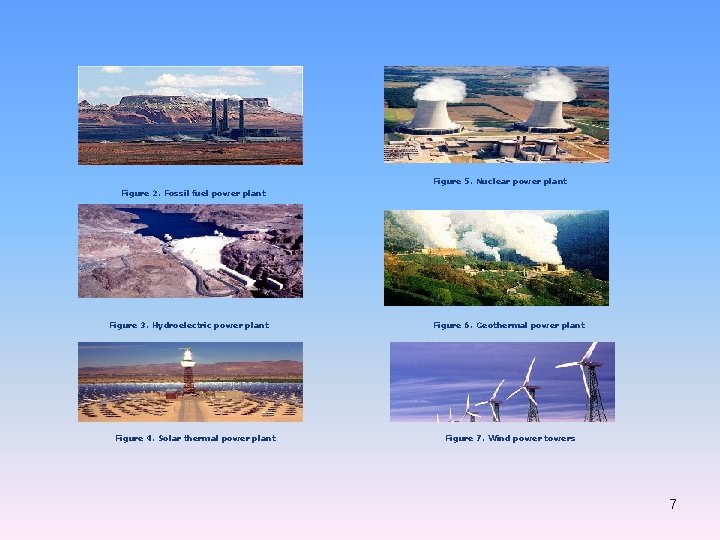
Figure 5. Nuclear power plant Figure 2. Fossil fuel power plant Figure 3. Hydroelectric power plant Figure 4. Solar thermal power plant Figure 6. Geothermal power plant Figure 7. Wind power towers 7
Transmission and sub-transmission • The purpose of an overhead transmission network is to transfer electric energy from generating units at various locations to the distribution system which ultimately supplies the load • Transmission lines also interconnect neighboring utilities which permits not only economic dispatch of power within regions during normal conditions, but also to transfer of power between regions during emergencies. • They can carry alternating current or direct current or a system can be a combination of both. • Also, electric current can be carried by either overhead or underground lines. 8
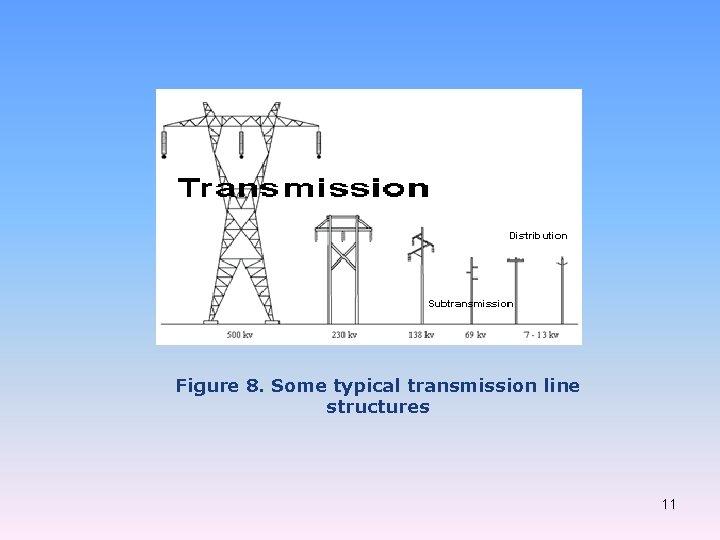
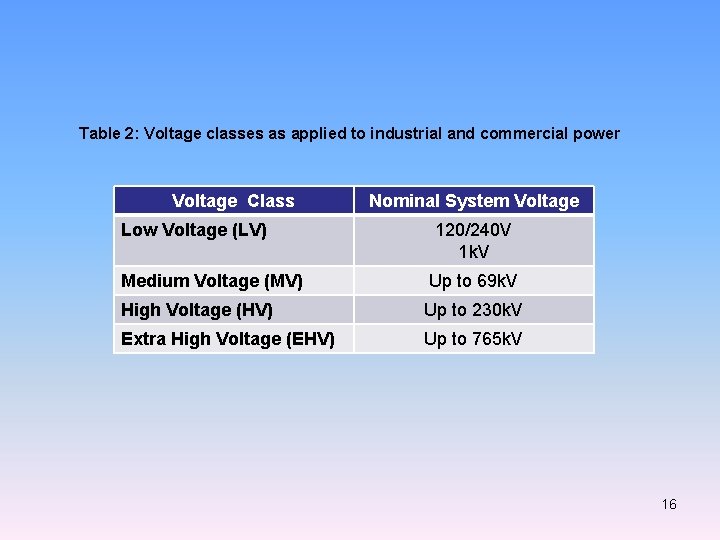
• Standard transmission voltages are established in the US by American National Standard Institute (ANSI) and in Europe by IEC. • Transmission voltage lines operating at more than 60 k. V are standardized at 69 k. V, 115 k. V, 138 k. V, 161 k. V, 230 k. V, 345 k. V, 500 k. V, and 765 k. V line-to-line. • Transmission voltages above 230 k. V are usually referred to as extra-high voltage (EHV) 9
• Subtransmission lines carry voltages reduced from the major transmission line system. • Sometimes the subtransmission voltage is tapped along the way for use in industrial or large commercial operations. • Some utilities categorize these as transmission lines. • In Malaysia, the transmission voltage networks are 500 k. V, 275 k. V and 132 k. V. • Supply frequency: 50 Hz ± 1% 10
Figure 8. Some typical transmission line structures 11
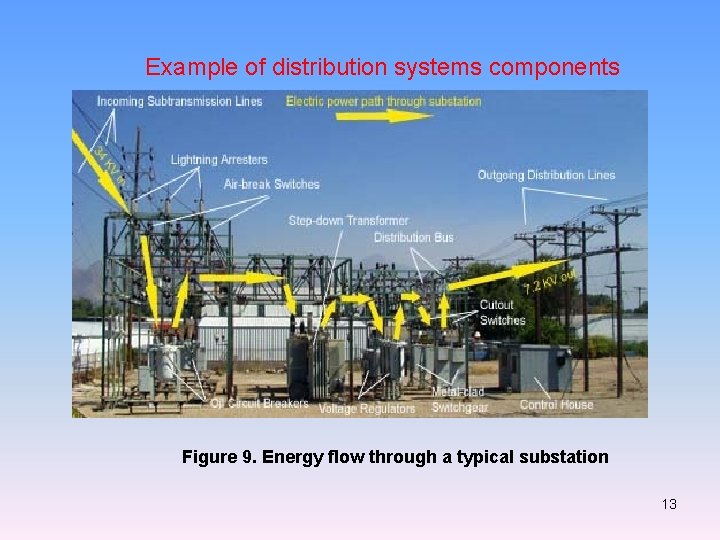
Distribution • The distribution system is the part that connects the distribution substations to the consumers’ service-entrance equipment. • Distribution system can be categorized as overhead and underground • In Malaysia, Distribution voltages are 33 k. V, 11 k. V and 415/240 Volts. (Johor & Perak may also include 22 k. V and 6. 6 k. V). 12
Example of distribution systems components Figure 9. Energy flow through a typical substation 13
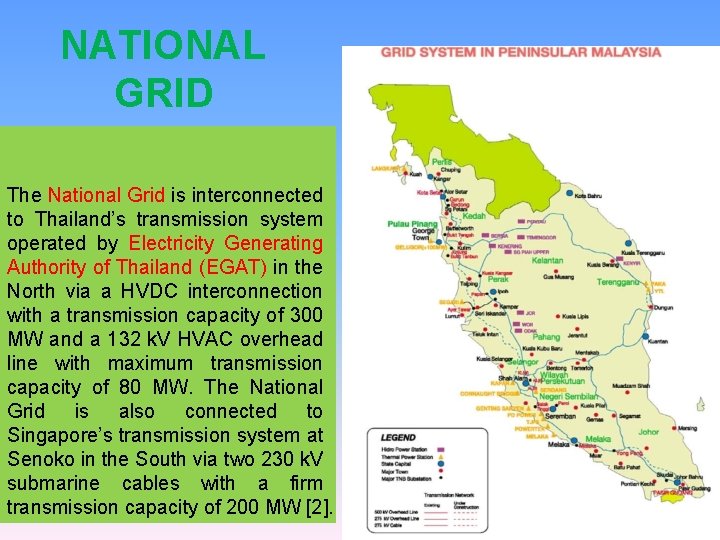
NATIONAL GRID The National Grid is interconnected to Thailand’s transmission system operated by Electricity Generating Authority of Thailand (EGAT) in the North via a HVDC interconnection with a transmission capacity of 300 MW and a 132 k. V HVAC overhead line with maximum transmission capacity of 80 MW. The National Grid is also connected to Singapore’s transmission system at Senoko in the South via two 230 k. V submarine cables with a firm transmission capacity of 200 MW [2]. 14
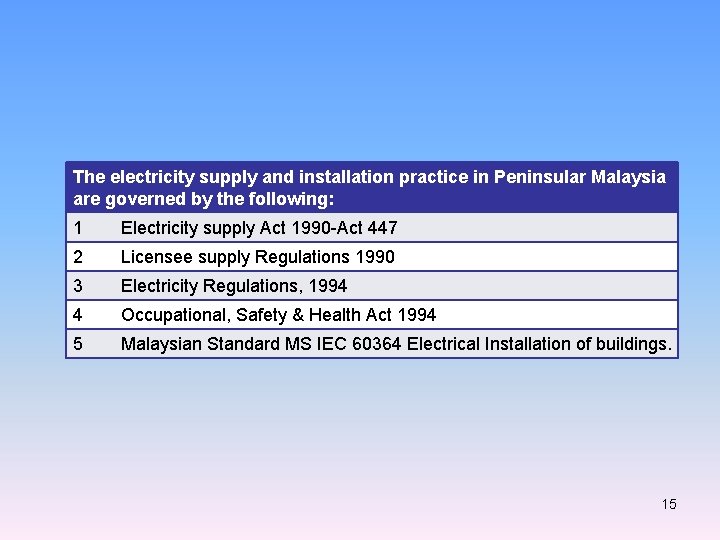
The electricity supply and installation practice in Peninsular Malaysia are governed by the following: 1 Electricity supply Act 1990 -Act 447 2 Licensee supply Regulations 1990 3 Electricity Regulations, 1994 4 Occupational, Safety & Health Act 1994 5 Malaysian Standard MS IEC 60364 Electrical Installation of buildings. 15
Table 2: Voltage classes as applied to industrial and commercial power Voltage Class Low Voltage (LV) Nominal System Voltage 120/240 V 1 k. V Medium Voltage (MV) Up to 69 k. V High Voltage (HV) Up to 230 k. V Extra High Voltage (EHV) Up to 765 k. V 16
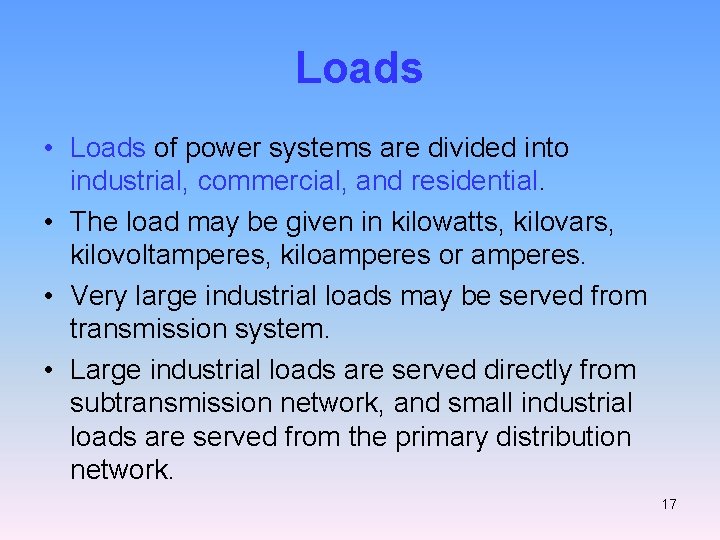
Loads • Loads of power systems are divided into industrial, commercial, and residential. • The load may be given in kilowatts, kilovars, kilovoltamperes, kiloamperes or amperes. • Very large industrial loads may be served from transmission system. • Large industrial loads are served directly from subtransmission network, and small industrial loads are served from the primary distribution network. 17
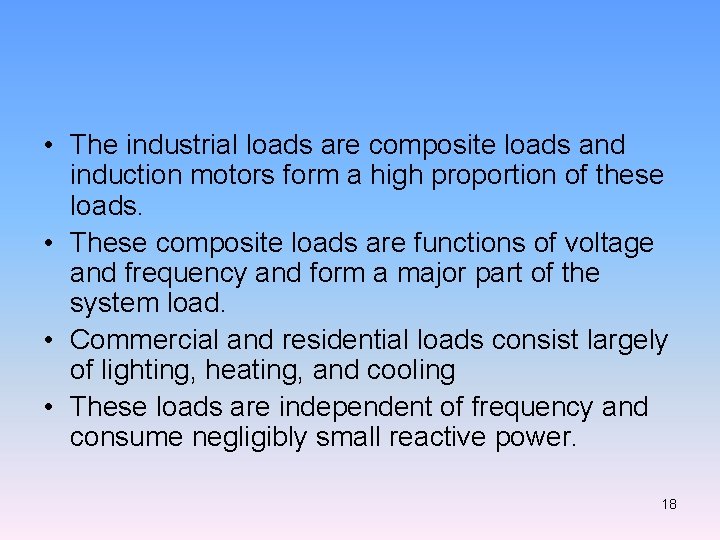
• The industrial loads are composite loads and induction motors form a high proportion of these loads. • These composite loads are functions of voltage and frequency and form a major part of the system load. • Commercial and residential loads consist largely of lighting, heating, and cooling • These loads are independent of frequency and consume negligibly small reactive power. 18
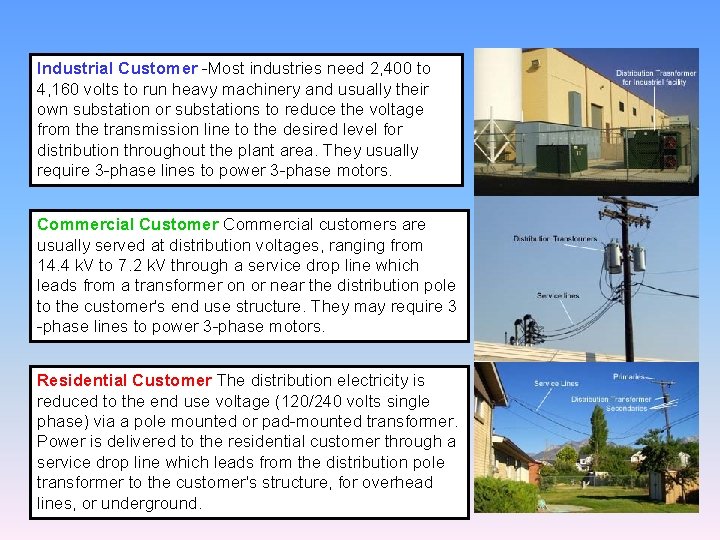
Industrial Customer -Most industries need 2, 400 to 4, 160 volts to run heavy machinery and usually their own substation or substations to reduce the voltage from the transmission line to the desired level for distribution throughout the plant area. They usually require 3 -phase lines to power 3 -phase motors. Commercial Customer Commercial customers are usually served at distribution voltages, ranging from 14. 4 k. V to 7. 2 k. V through a service drop line which leads from a transformer on or near the distribution pole to the customer's end use structure. They may require 3 -phase lines to power 3 -phase motors. Residential Customer The distribution electricity is reduced to the end use voltage (120/240 volts single phase) via a pole mounted or pad-mounted transformer. Power is delivered to the residential customer through a service drop line which leads from the distribution pole transformer to the customer's structure, for overhead lines, or underground. 19
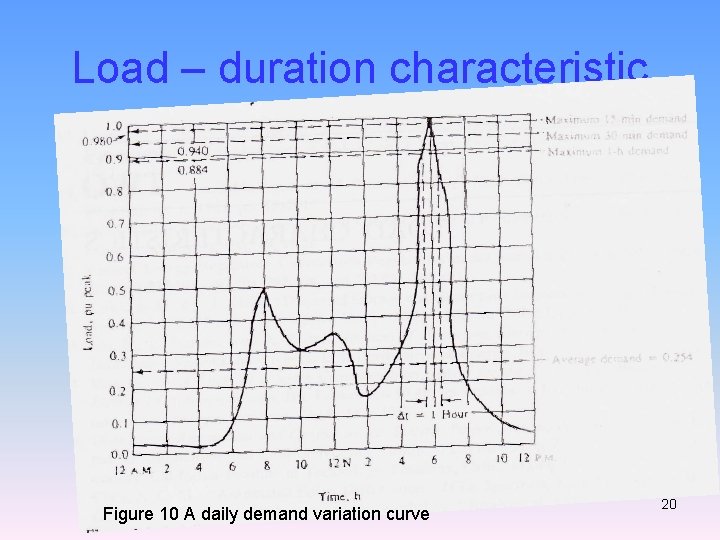
Load – duration characteristic Figure 10 A daily demand variation curve 20
• The real power loads are expressed in terms of kilowatts or megawatts. • The magnitude of load varies throughout the day and the power must be available to consumers on demand. • The daily load curve of a utility is a composite of demands made by various classes of users. 21
• The greatest value of load during a 24 - hours period is called “peak or maximum demand”. • Demand factor is the ratio of the maximum demand of a system to the total connected load of the system. • Smaller peaking generators may be commissioned to meat the peak load that occurs for only a few hours. • In order to assess the usefulness of the generating plant, the “load factor” is defined. 22
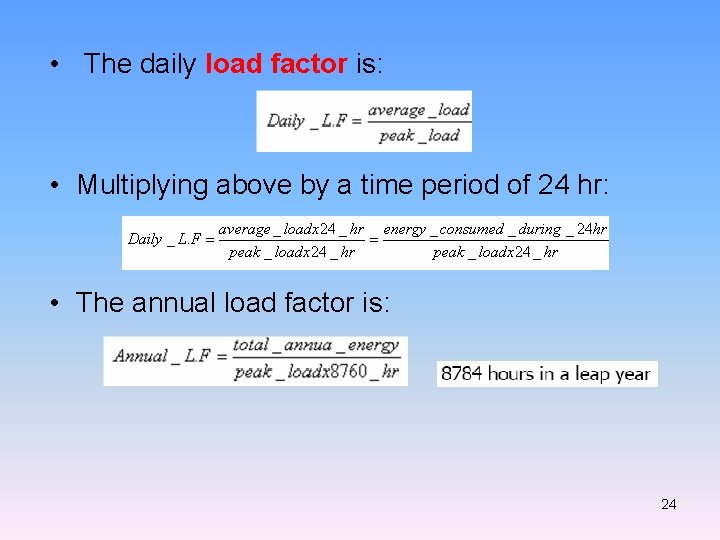
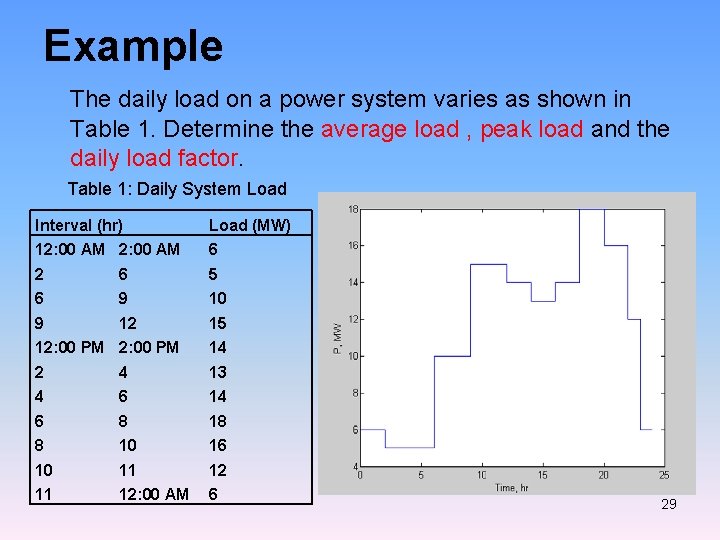
Load factor • The load factor is the ratio of average energy demand (load) to the maximum demand (peak load) during the period. • Load factors may be given for a day, a month or a year. The yearly or annual load factor is the most useful since a year represents a full cycle of a time. 23
• The daily load factor is: • Multiplying above by a time period of 24 hr: • The annual load factor is: 24
• Generally there is diversity in the peak load between different classes of loads, which improves the overall system load factor. • In order for a power plant to operate economically, it must have a high system load factor. Today’s typical system load factors are in the range of 55 to 70% 25
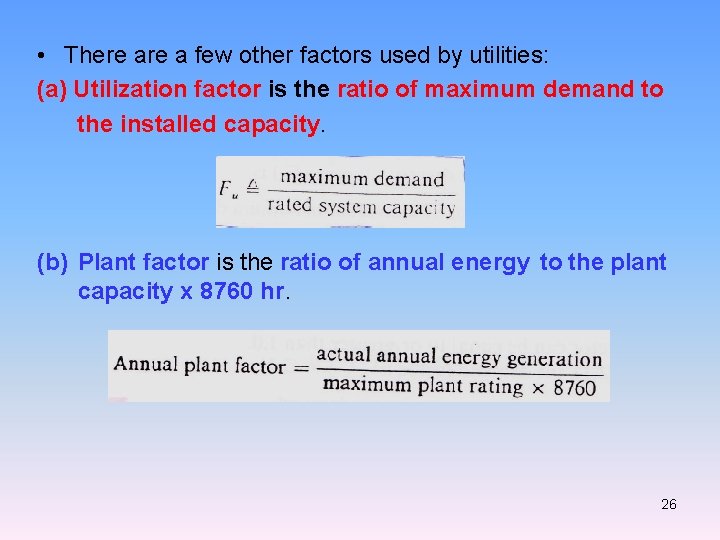
• There a few other factors used by utilities: (a) Utilization factor is the ratio of maximum demand to the installed capacity. (b) Plant factor is the ratio of annual energy to the plant capacity x 8760 hr. 26
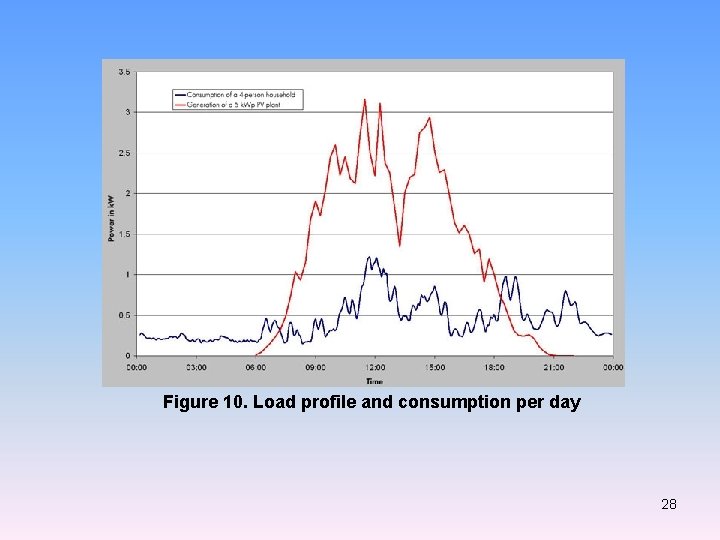
Load profile • Load profile is a broad term that can refer to a number of different forms of data. • It can refer to demand consumption data or it can be a reference to derived data types such as regression and profile coefficients. • All these data types have one thing in common which is they represent the pattern of electricity usage of a segment of supply market customers. 27
Figure 10. Load profile and consumption per day 28
Example The daily load on a power system varies as shown in Table 1. Determine the average load , peak load and the daily load factor. Table 1: Daily System Load Interval (hr) Load (MW) 12: 00 AM 6 2 6 5 6 9 10 9 12 15 12: 00 PM 14 2 4 13 4 6 14 6 8 18 8 10 16 10 11 12: 00 AM 6 29
Economic dispatch What is Economic Dispatch? Power output of each plant which can minimize the overall cost of fuel needed to serve the system load. 30
Economic dispatch (cont. ) • Power system operation worldwide • Experiencing dramatic change due to the ongoing of industry. These visible changes have: Ø Shifting of responsibilities Ø Changes in the area of influence Ø Shift in the operating objectives and strategies Ø Distribution of work Ø Power system operation Ø For example: TNB • Power system operation from classical perspective view – single entity 31
Economic dispatch (cont. ) • Economic power system operation is important for profit return on the capital investment. • Capital investment comprises: ØCost of land buildings ØCost of generating equipment ØCost of transmission system ØCost of distribution system, etc 32
Economic dispatch (cont. ) • Reasons for power companies have to achieve the maximum efficiency of power system operation: ØRates fixed by regulatory bodies v. TNB new tariff for all sector ØImportant of conservation fuel ØMinimizes the cost of k. Wh to the consumer 33
Economic dispatch (cont. ) • Economics operation involving power generation and delivery can divided into two parts: – Dealing with the minimum cost of power production called economic dispatch (ED) – Dealing with minimum loss (ML) delivery of the generated power to the loads 34
The Cost of Electricity • The production, transmission and distribution of electricity energy comprises important costs that may be divided into 2 main categories: ØFixed cost comprise the depreciation against buildings, dams, turbines, generators, circuit breakers, transformers, transmission lines and other equipments used in the production, transmission and distribution of electrical energy. ØOperating cost include salaries, fuel costs, administration, and other daily or weekly expenses. 35
• Utility companies have established rate structures for these two types of cost that attempt to be as equitable as possible for their customers. • The rates are based upon the following guidelines: – The amount of energy consumed (KWh) – The demand, or rate at which energy is consumed (KWh) – The power factor of the load 36
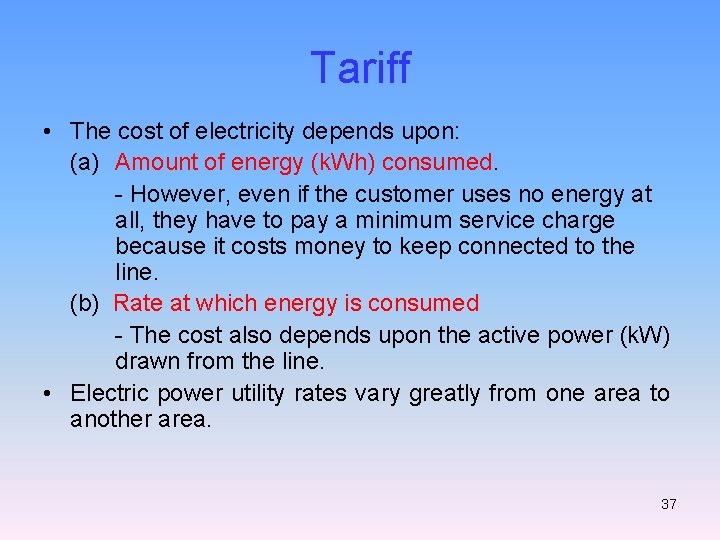
Tariff • The cost of electricity depends upon: (a) Amount of energy (k. Wh) consumed. - However, even if the customer uses no energy at all, they have to pay a minimum service charge because it costs money to keep connected to the line. (b) Rate at which energy is consumed - The cost also depends upon the active power (k. W) drawn from the line. • Electric power utility rates vary greatly from one area to another area. 37
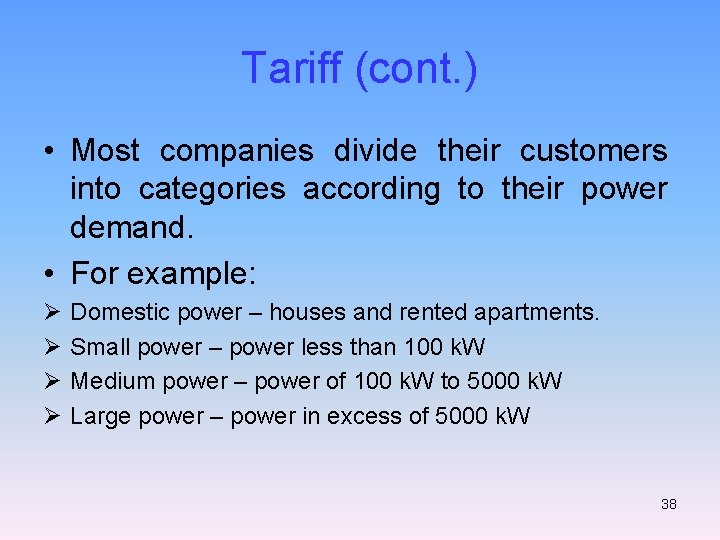
Tariff (cont. ) • Most companies divide their customers into categories according to their power demand. • For example: Ø Ø Domestic power – houses and rented apartments. Small power – power less than 100 k. W Medium power – power of 100 k. W to 5000 k. W Large power – power in excess of 5000 k. W 38
Electricity Tariff in Malaysia • Tariffs are subjected to change as may be published from time to time. • Refer to Tariff booklet and new Tariff rate by Suruhanjaya Tenaga updated on 1 June 2011. 39
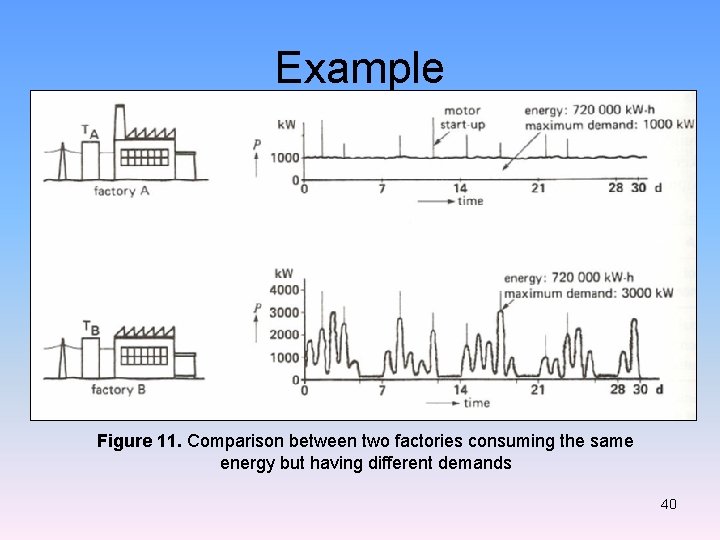
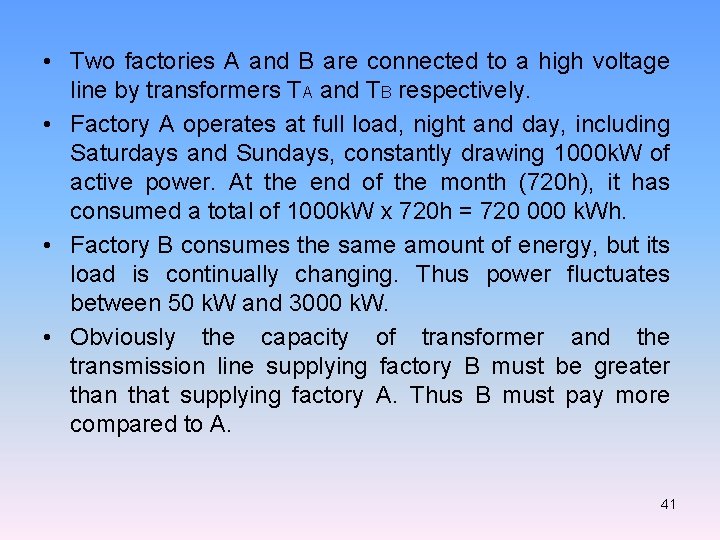
Example Figure 11. Comparison between two factories consuming the same energy but having different demands 40
• Two factories A and B are connected to a high voltage line by transformers TA and TB respectively. • Factory A operates at full load, night and day, including Saturdays and Sundays, constantly drawing 1000 k. W of active power. At the end of the month (720 h), it has consumed a total of 1000 k. W x 720 h = 720 000 k. Wh. • Factory B consumes the same amount of energy, but its load is continually changing. Thus power fluctuates between 50 k. W and 3000 k. W. • Obviously the capacity of transformer and the transmission line supplying factory B must be greater than that supplying factory A. Thus B must pay more compared to A. 41
End of Chapter 1 42