
Designing your local technology stack Thomas Craig General








- Slides: 40
Designing your local technology stack Thomas Craig, General Manager thomas@trilliumtransit. com
Your transit system is made up of technologies. - Buses - Bus stops - Schedules - Left/Right sheets - Board of Directors meeting agenda templates
You are a technology expert.
Technologies are just tools and processes A group of technologies connected together is a technology stack. Your agency is a transit technology stack.
Step 1: Define the parts
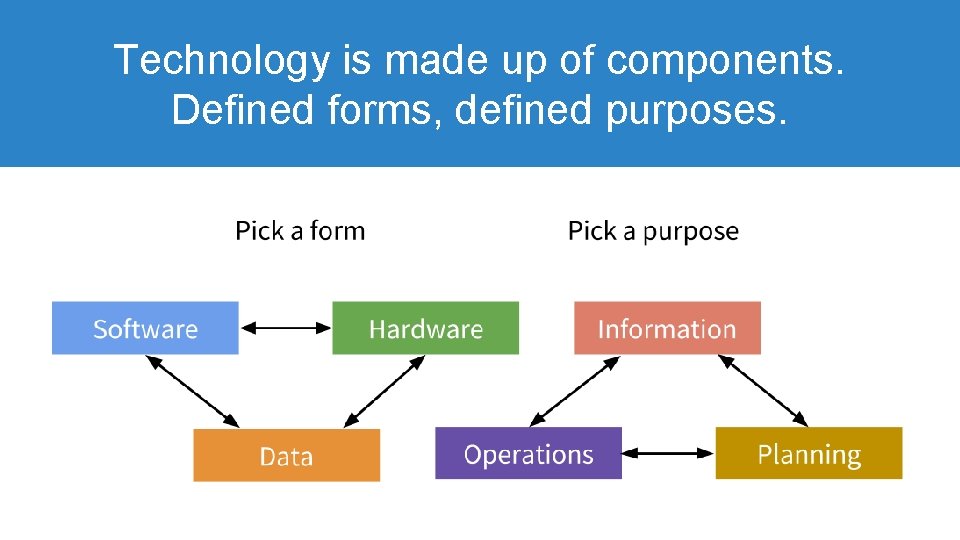
Technology is made up of components. Defined forms, defined purposes.
A single component might have multiple forms, and might have multiple purposes.
But each form and purpose is discrete and can (should? ) be defined separately.
Example • Your website is a component. • It has subcomponents in software, hardware, and data forms. • It has subcomponents that serve information, operations, and planning purposes.
Example Procuring your website, those subcomponents must be defined: • The trip planner widget (software) directs users to transit directions (information). • The web server (hardware) ensures the website can be reached (operations). • The board meeting posts (data) are stored for retrieval and use by agency
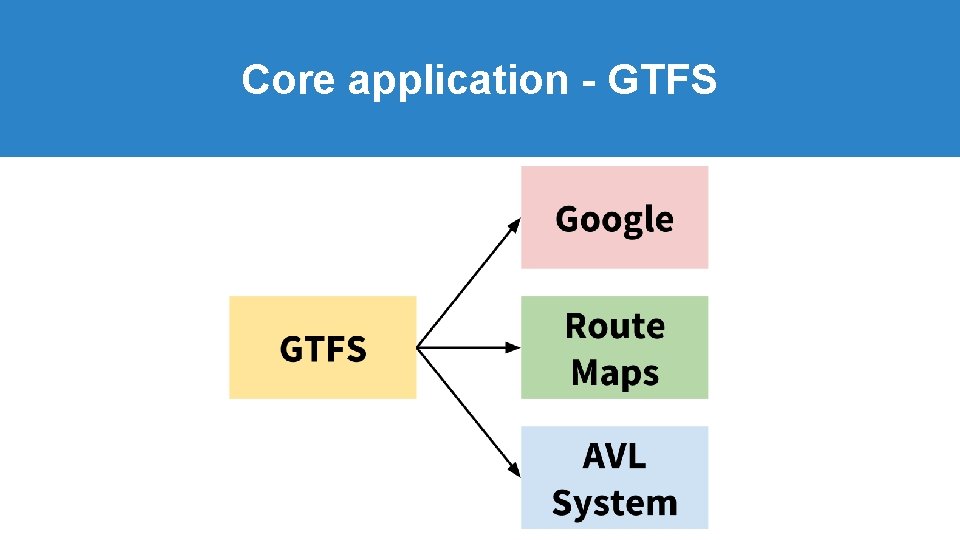
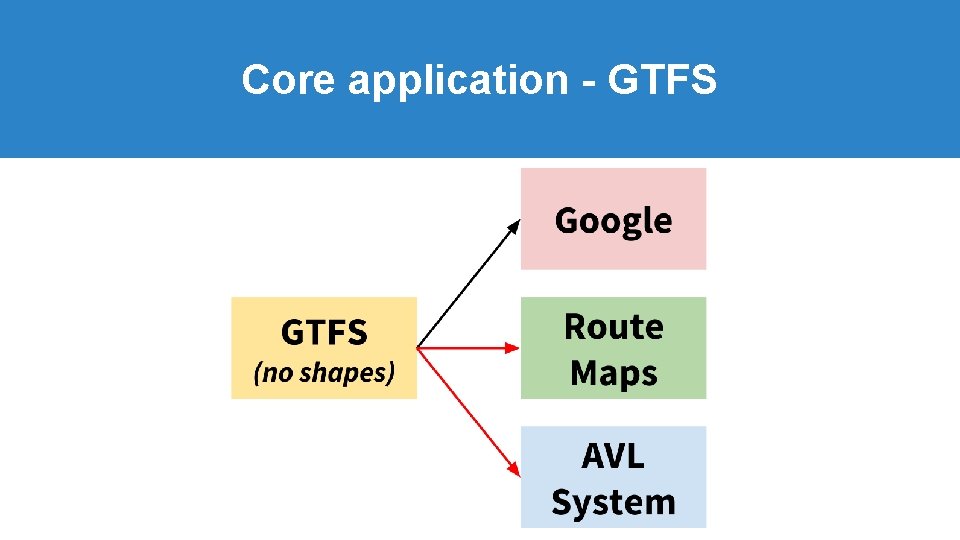
Core application - GTFS data is one of the most important components of any fixed route technology stack. GTFS is data, and its primary purpose is information. But GTFS also has planning and operations applications, and many subcomponents!
Core application - GTFS
Core application - GTFS
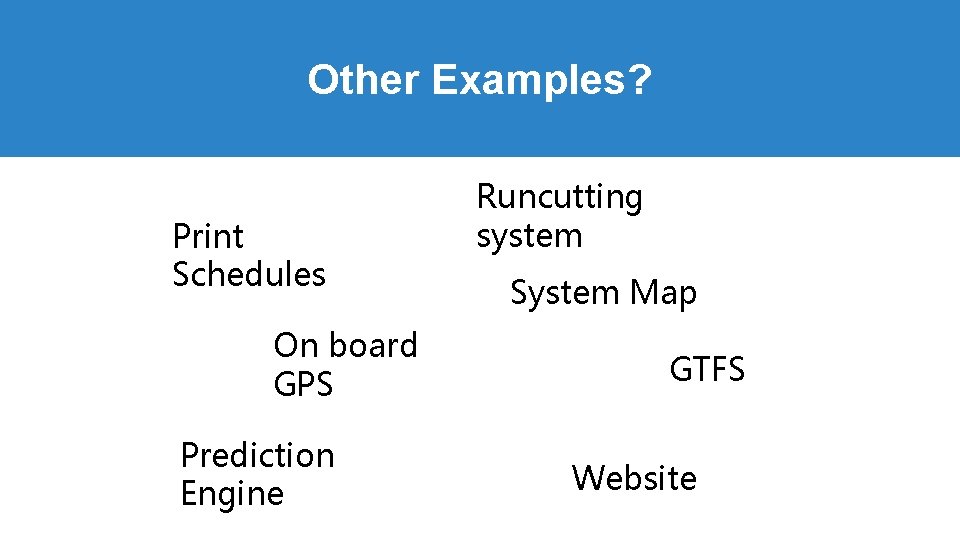
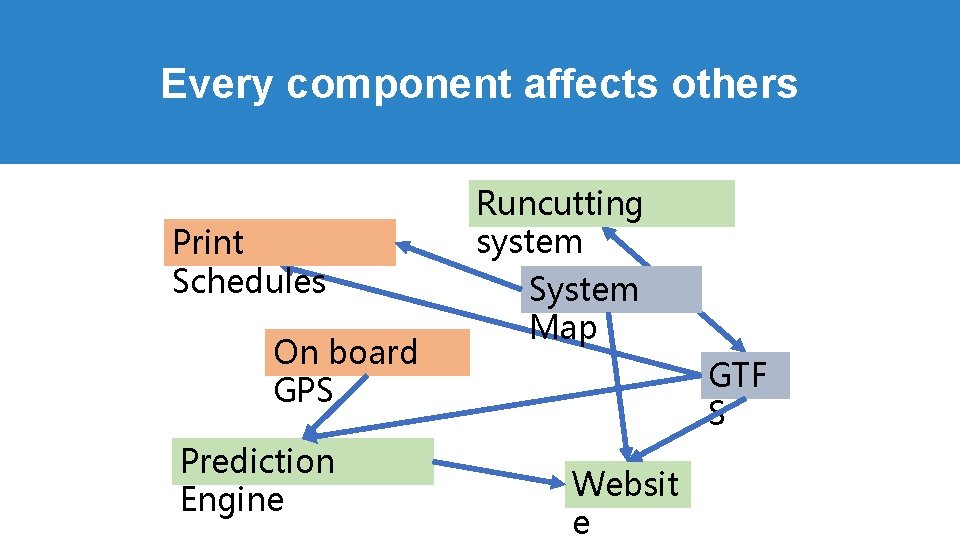
Other Examples? Print Schedules On board GPS Prediction Engine Runcutting system System Map GTFS Website
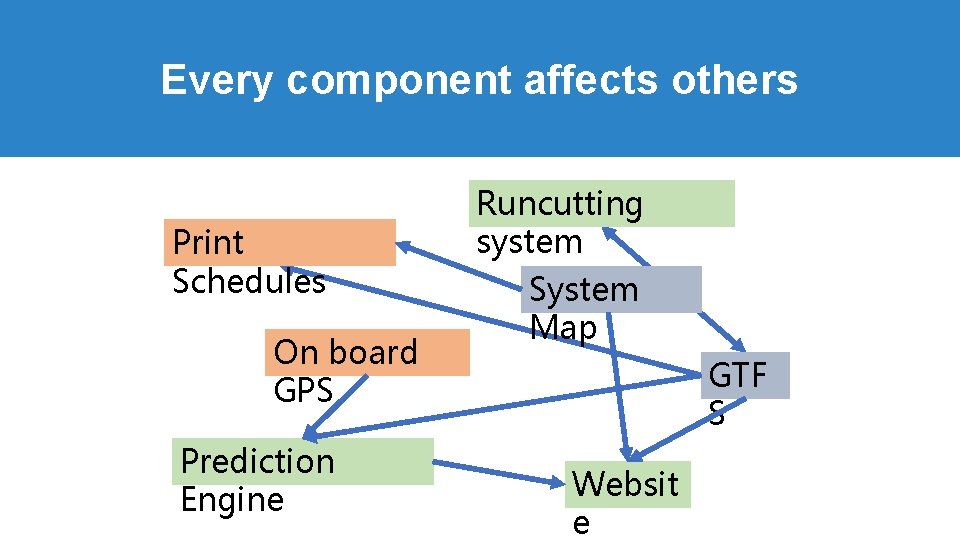
Step 2: Connect them together
Every component affects others Print Schedules On board GPS Prediction Engine Runcutting system System Map GTF S Websit e
Each component’s purpose relies upon interactions with other components.
Software is no good without data and hardware. Operations is no good without planning and information.
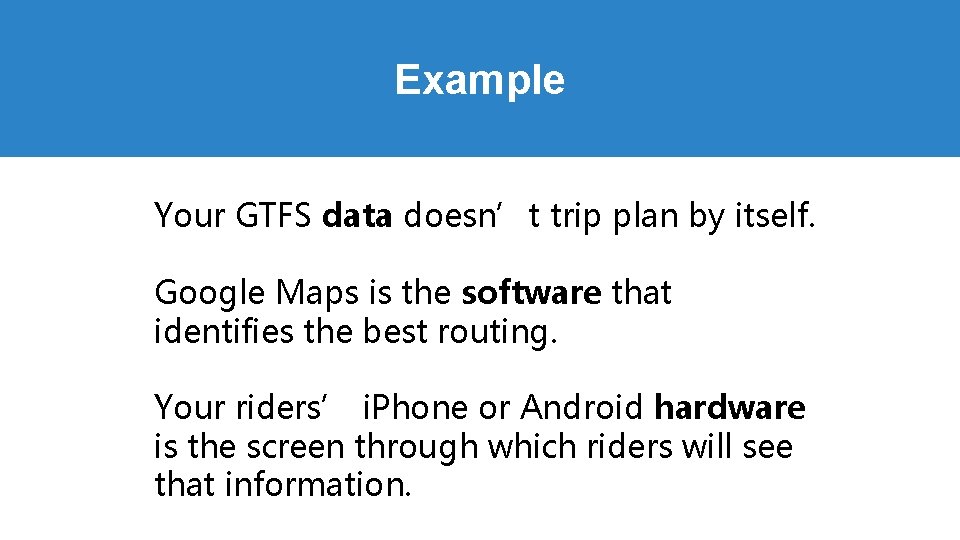
Example Your GTFS data doesn’t trip plan by itself. Google Maps is the software that identifies the best routing. Your riders’ i. Phone or Android hardware is the screen through which riders will see that information.
Example (Yes that’s right—Google Maps and every cell phone in your service area is part of your transit technology stack. )
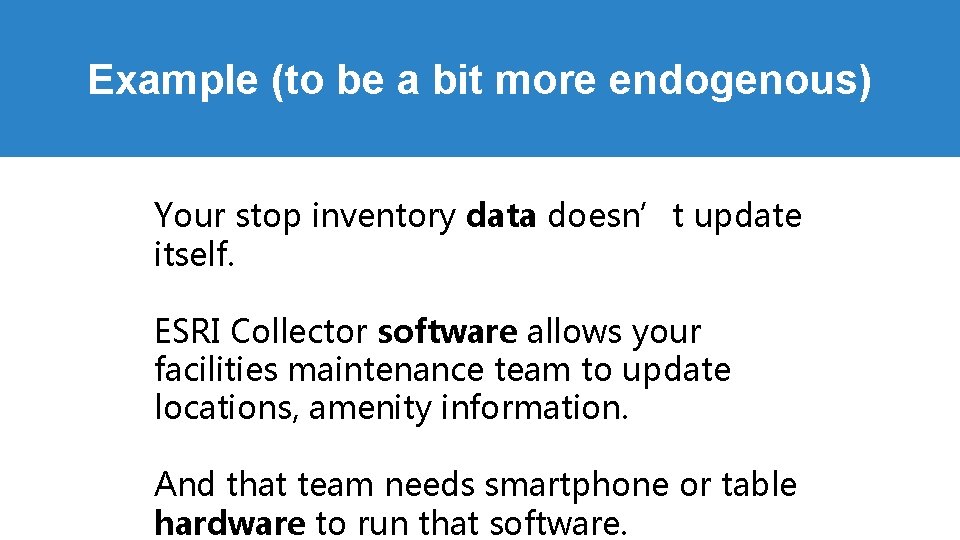
Example (to be a bit more endogenous) Your stop inventory data doesn’t update itself. ESRI Collector software allows your facilities maintenance team to update locations, amenity information. And that team needs smartphone or table hardware to run that software.
So you want a new website… Your website has information, operations, planning components, and absolutely nothing on it should have to be recreated from scratch. So the first step to procuring a website is not to define the technical specifications. Rather, the first step is to define the end uses.
So you want a new website… From those use cases you want your website to support, you identify which components you already have. And your technical specifications are then mostly integrations, rather than the creation of new features.
Step 3: Don’t break the system
Right now you have a working system. You have a whole lot of really important jobs. But the most important job is clear: Keep the system working.
Replacing everything at once is a great way to break everything.
How do we change operators?
One step at a time, if we could.
Every component affects others Print Schedules On board GPS Prediction Engine Runcutting system System Map GTF S Websit e
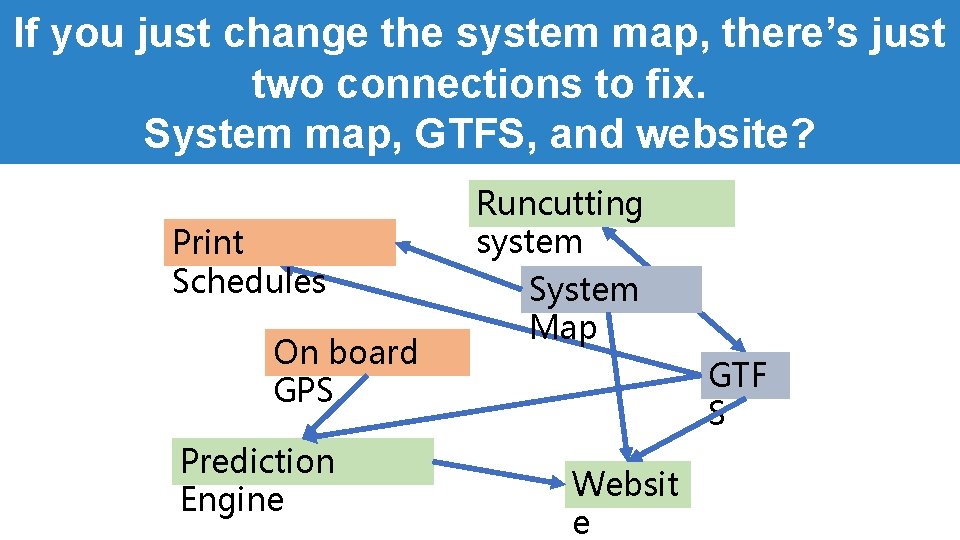
If you just change the system map, there’s just two connections to fix. System map, GTFS, and website? Print Schedules On board GPS Prediction Engine Runcutting system System Map GTF S Websit e
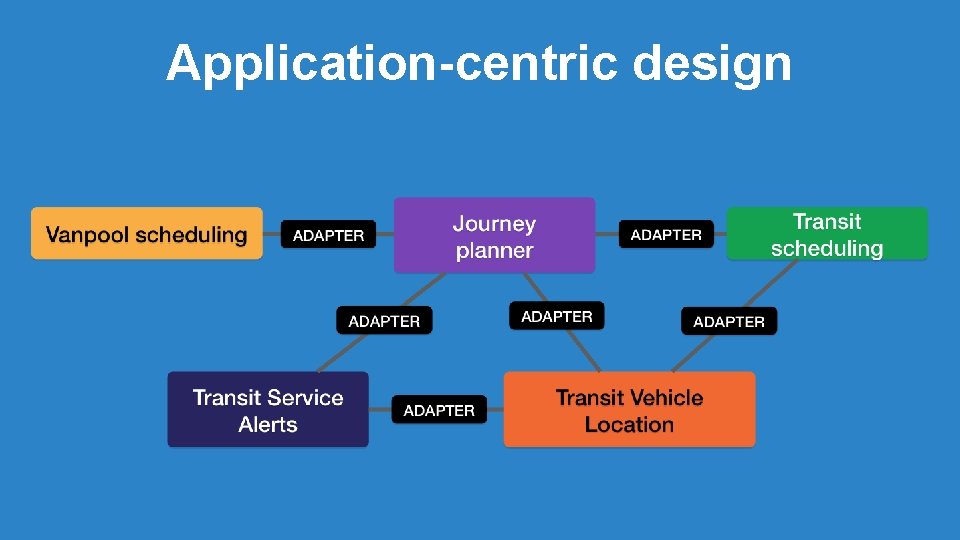
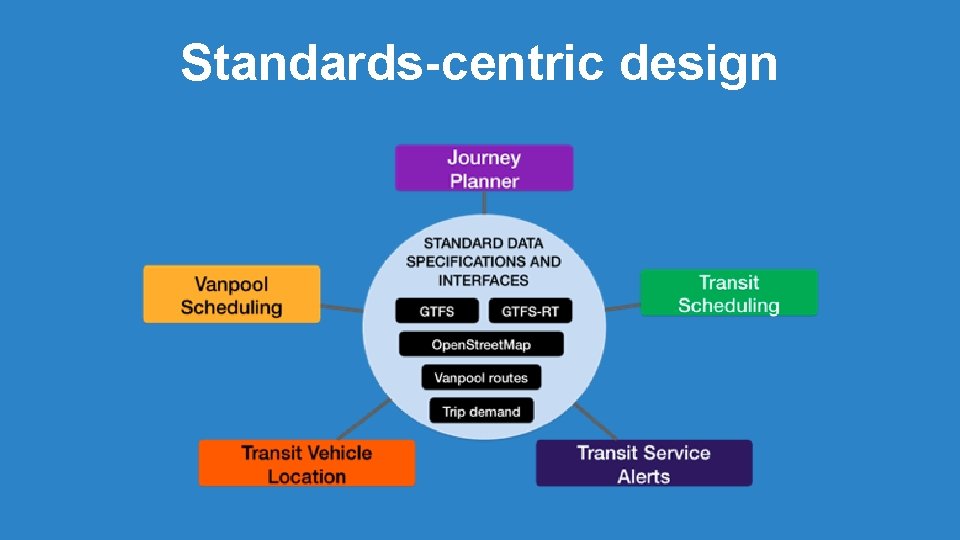
Data is special. Data makes the simplest, best connections.
But data can only serve that purpose if it is standardized.
Application-centric design
Standards-centric design
Back to Step 1: Define your Transit Stack
A “technology stack” is a group of components connected for to create a working system.
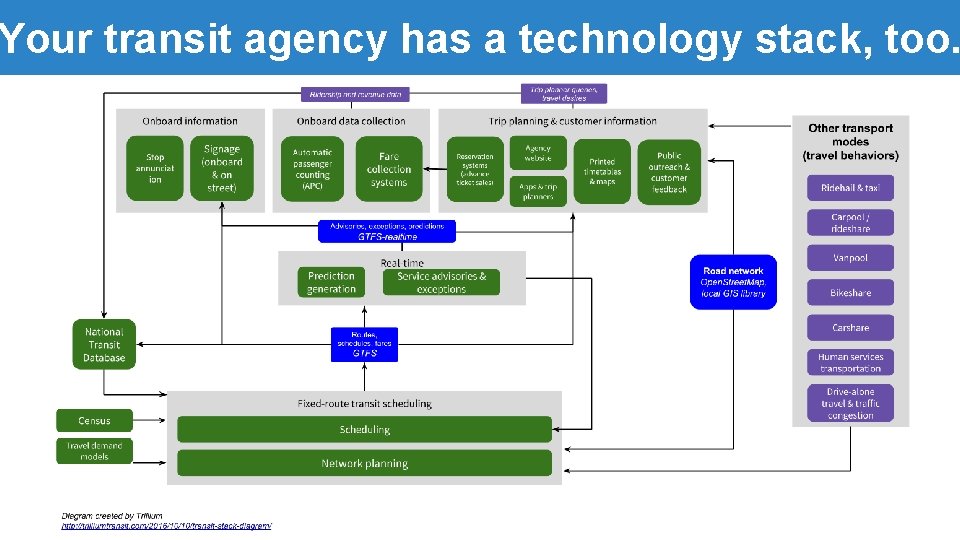
Your transit agency has a technology stack, too.
Don’t procure an Intelligent Transportation System You are an intelligent transportation system.
Define the components. Connect them together. Don’t break it; improve it.
Designing your local technology stack Thomas Craig General Manager thomas@trilliumtransit. com 503 -567 -8422 ext. 4