
Designing wildlife conservation education programs using community participatory
- Slides: 2
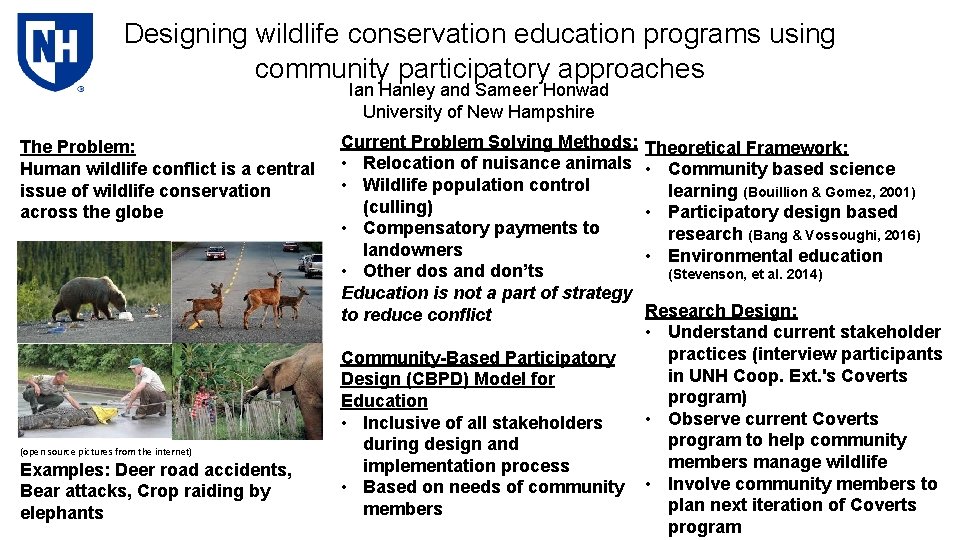
Designing wildlife conservation education programs using community participatory approaches Ian Hanley and Sameer Honwad University of New Hampshire The Problem: Human wildlife conflict is a central issue of wildlife conservation across the globe (open source pictures from the internet) Examples: Deer road accidents, Bear attacks, Crop raiding by elephants Current Problem Solving Methods: • Relocation of nuisance animals • Wildlife population control (culling) • Compensatory payments to landowners • Other dos and don’ts Education is not a part of strategy to reduce conflict Community-Based Participatory Design (CBPD) Model for Education • Inclusive of all stakeholders during design and implementation process • Based on needs of community members Theoretical Framework: • Community based science learning (Bouillion & Gomez, 2001) • Participatory design based research (Bang & Vossoughi, 2016) • Environmental education (Stevenson, et al. 2014) Research Design: • Understand current stakeholder practices (interview participants in UNH Coop. Ext. 's Coverts program) • Observe current Coverts program to help community members manage wildlife • Involve community members to plan next iteration of Coverts program
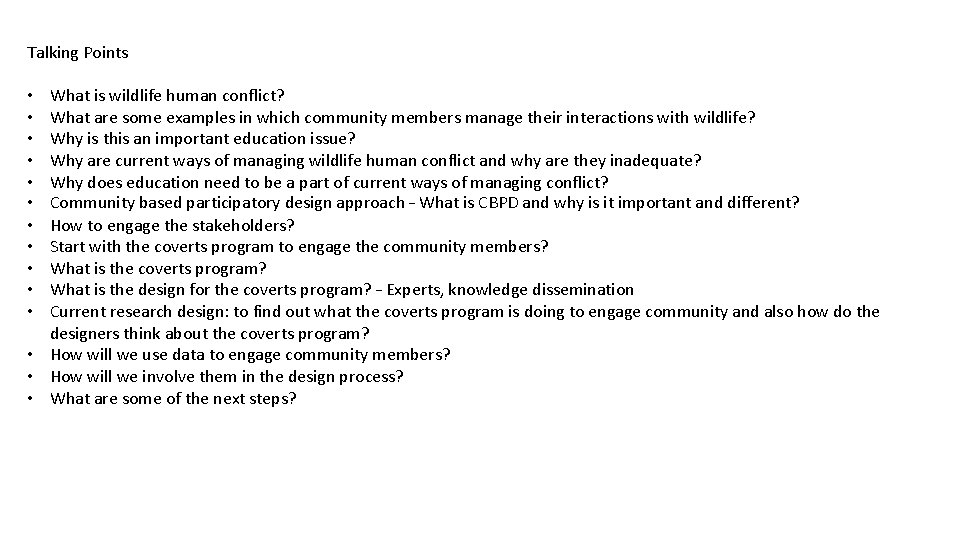
Talking Points What is wildlife human conflict? What are some examples in which community members manage their interactions with wildlife? Why is this an important education issue? Why are current ways of managing wildlife human conflict and why are they inadequate? Why does education need to be a part of current ways of managing conflict? Community based participatory design approach – What is CBPD and why is it important and different? How to engage the stakeholders? Start with the coverts program to engage the community members? What is the coverts program? What is the design for the coverts program? – Experts, knowledge dissemination Current research design: to find out what the coverts program is doing to engage community and also how do the designers think about the coverts program? • How will we use data to engage community members? • How will we involve them in the design process? • What are some of the next steps? • • •