
Designing trials of complex occupational therapy with the
- Slides: 1
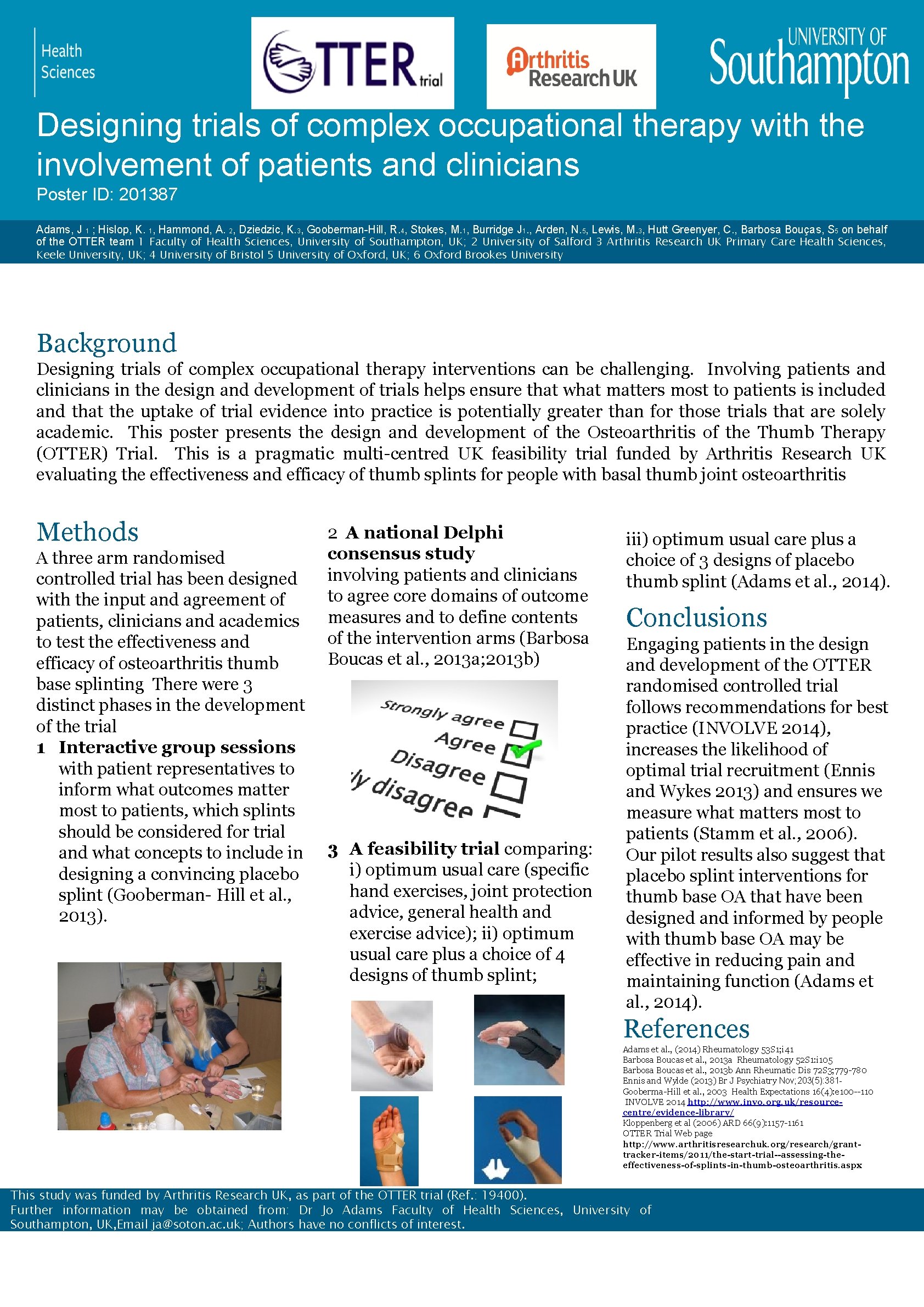
Designing trials of complex occupational therapy with the involvement of patients and clinicians Poster ID: 201387 Adams, J 1 ; Hislop, K. 1, Hammond, A. 2, Dziedzic, K. 3, Gooberman-Hill, R. 4, Stokes, M. 1, Burridge J 1. , Arden, N. 5, Lewis, M. 3, Hutt Greenyer, C. , Barbosa Bouças, S 5 on behalf of the OTTER team 1 Faculty of Health Sciences, University of Southampton, UK; 2 University of Salford 3 Arthritis Research UK Primary Care Health Sciences, Keele University, UK; 4 University of Bristol 5 University of Oxford, UK; 6 Oxford Brookes University Background Designing trials of complex occupational therapy interventions can be challenging. Involving patients and clinicians in the design and development of trials helps ensure that what matters most to patients is included and that the uptake of trial evidence into practice is potentially greater than for those trials that are solely academic. This poster presents the design and development of the Osteoarthritis of the Thumb Therapy (OTTER) Trial. This is a pragmatic multi-centred UK feasibility trial funded by Arthritis Research UK evaluating the effectiveness and efficacy of thumb splints for people with basal thumb joint osteoarthritis Methods A three arm randomised controlled trial has been designed with the input and agreement of patients, clinicians and academics to test the effectiveness and efficacy of osteoarthritis thumb base splinting There were 3 distinct phases in the development of the trial 1 Interactive group sessions with patient representatives to inform what outcomes matter most to patients, which splints should be considered for trial and what concepts to include in designing a convincing placebo splint (Gooberman- Hill et al. , 2013). 2 A national Delphi consensus study involving patients and clinicians to agree core domains of outcome measures and to define contents of the intervention arms (Barbosa Boucas et al. , 2013 a; 2013 b) 3 A feasibility trial comparing: i) optimum usual care (specific hand exercises, joint protection advice, general health and exercise advice); ii) optimum usual care plus a choice of 4 designs of thumb splint; iii) optimum usual care plus a choice of 3 designs of placebo thumb splint (Adams et al. , 2014). Conclusions Engaging patients in the design and development of the OTTER randomised controlled trial follows recommendations for best practice (INVOLVE 2014), increases the likelihood of optimal trial recruitment (Ennis and Wykes 2013) and ensures we measure what matters most to patients (Stamm et al. , 2006). Our pilot results also suggest that placebo splint interventions for thumb base OA that have been designed and informed by people with thumb base OA may be effective in reducing pain and maintaining function (Adams et al. , 2014). References Adams et al. , (2014) Rheumatology 53 S 1; i 41 Barbosa Boucas et al. , 2013 a Rheumatology 52 S 1: i 105 Barbosa Boucas et al. , 2013 b Ann Rheumatic Dis 72 S 3; 779 -780 Ennis and Wylde (2013) Br J Psychiatry Nov; 203(5): 381 Gooberma-Hill et al. , 2003 Health Expectations 16(4): e 100 --110 INVOLVE 2014 http: //www. invo. org. uk/resourcecentre/evidence-library/ Kloppenberg et al (2006) ARD 66(9): 1157 -1161 OTTER Trial Web page http: //www. arthritisresearchuk. org/research/granttracker-items/2011/the-start-trial--assessing-theeffectiveness-of-splints-in-thumb-osteoarthritis. aspx This study was funded by Arthritis Research UK, as part of the OTTER trial (Ref. : 19400). Further information may be obtained from: Dr Jo Adams Faculty of Health Sciences, University of Southampton, UK, Email ja@soton. ac. uk; Authors have no conflicts of interest.