
Designing the Extrusion System of Chocolate 3 D

- Slides: 19
Designing the Extrusion System of Chocolate 3 D printer Hongyi Jiang, Adam Kemp, Applied Engineering Research
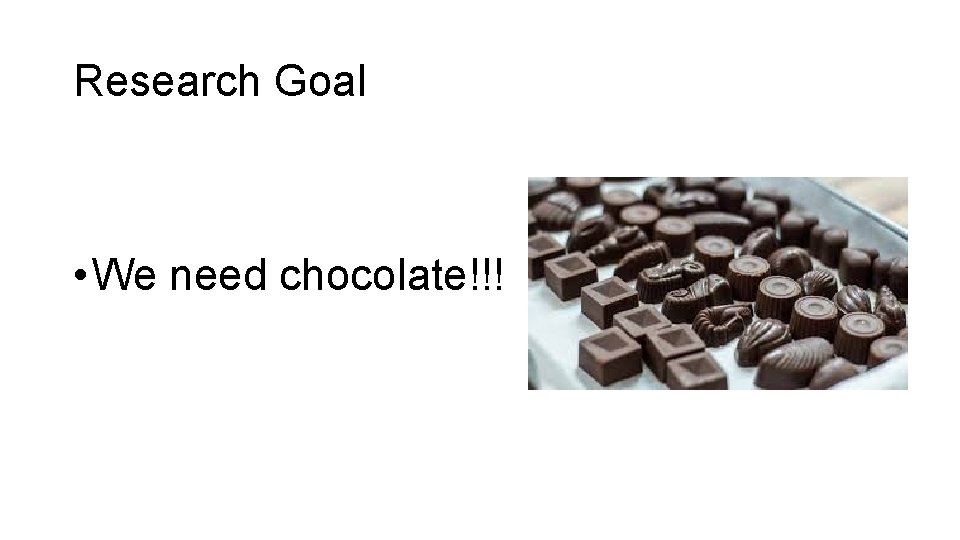
Research Goal • We need chocolate!!!
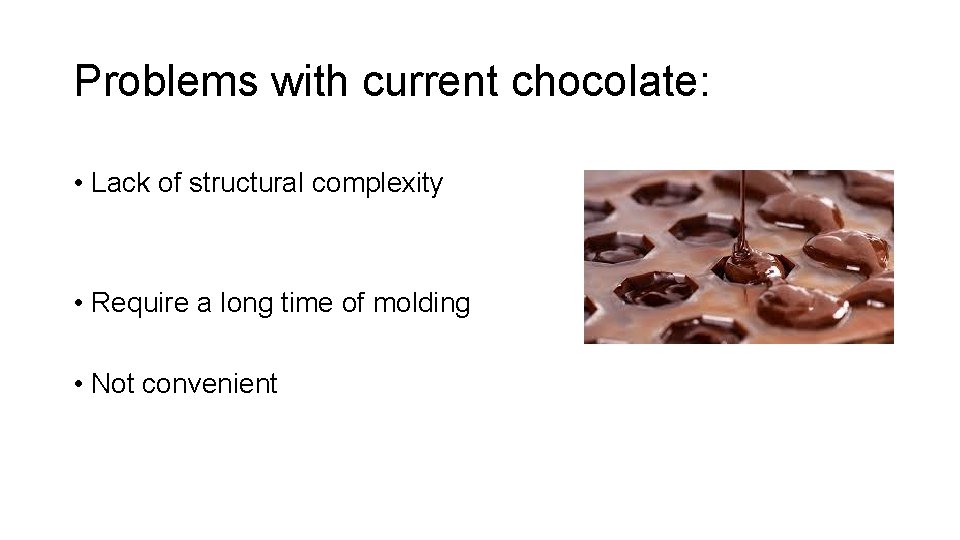
Problems with current chocolate: • Lack of structural complexity • Require a long time of molding • Not convenient
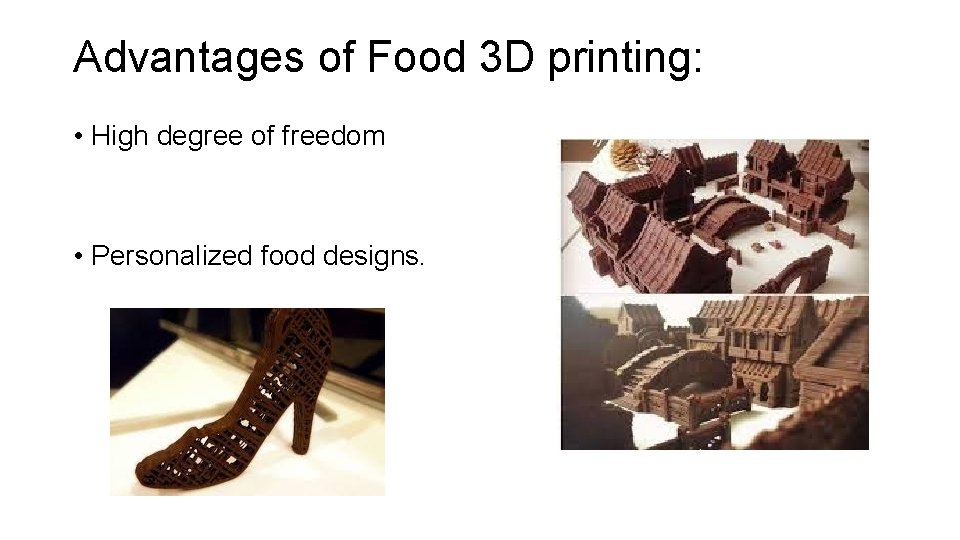
Advantages of Food 3 D printing: • High degree of freedom • Personalized food designs.
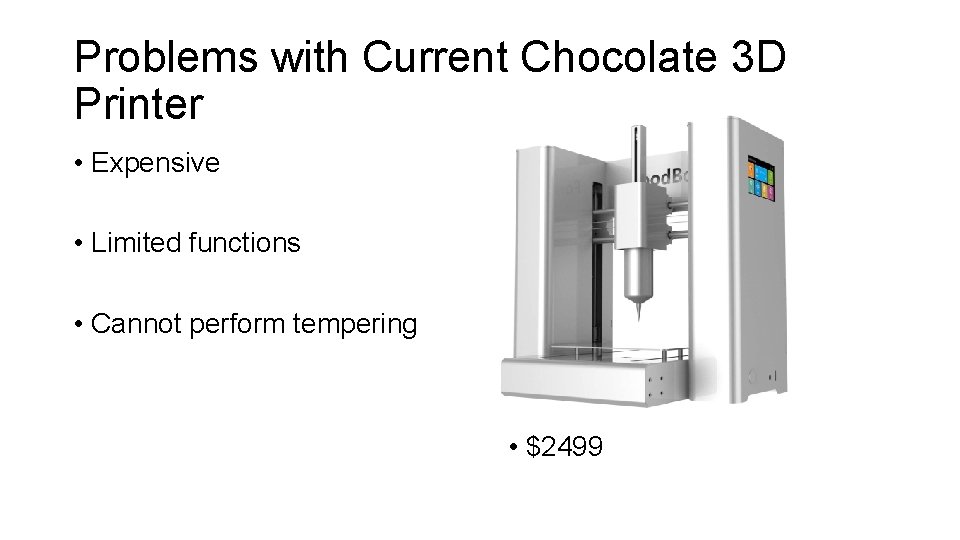
Problems with Current Chocolate 3 D Printer • Expensive • Limited functions • Cannot perform tempering • $2499
Research Potential • Provide a useful tool for pastry chef • Improve the efficiency of producing chocolate • Require less skill to master • Personalized design for everyone
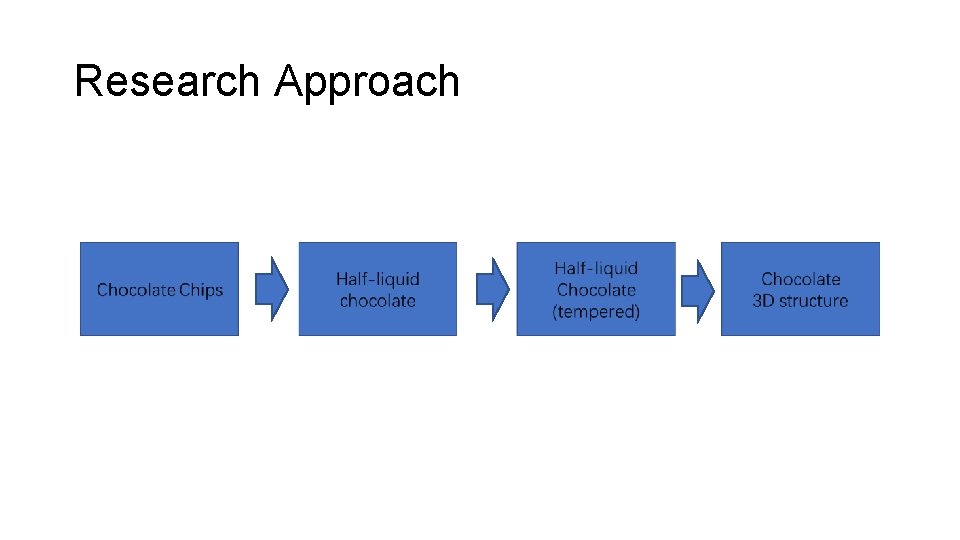
Research Objectives • Design a Chocolate 3 D printer that print out complex structures of chocolate with tempering process from chocolate chips
Qualitative performance objectives • The printer is cheap • The printer is convenient to use • The chocolate product is delicious • The chocolate is safe to eat • The chocolate printer can attract consumers
Quantitative performance objectives • The difference between the final product and the designed 3 D model is about 2 mm. • The 3 D printer can continuously print for over 5 hours • The 3 D printer can print out an object with a volume at least 100 cm³ • The temperature should stay around 2 ℃ to the target temperature during 90% of the printing process. • The 3 D printer can print with less than 2% waste of material
Research Approach
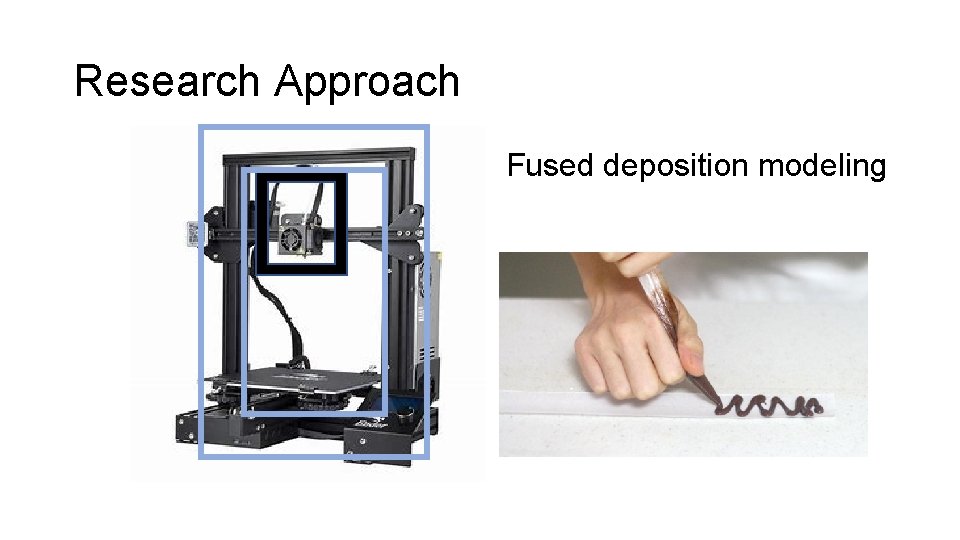
Research Approach Fused deposition modeling
Research Approach
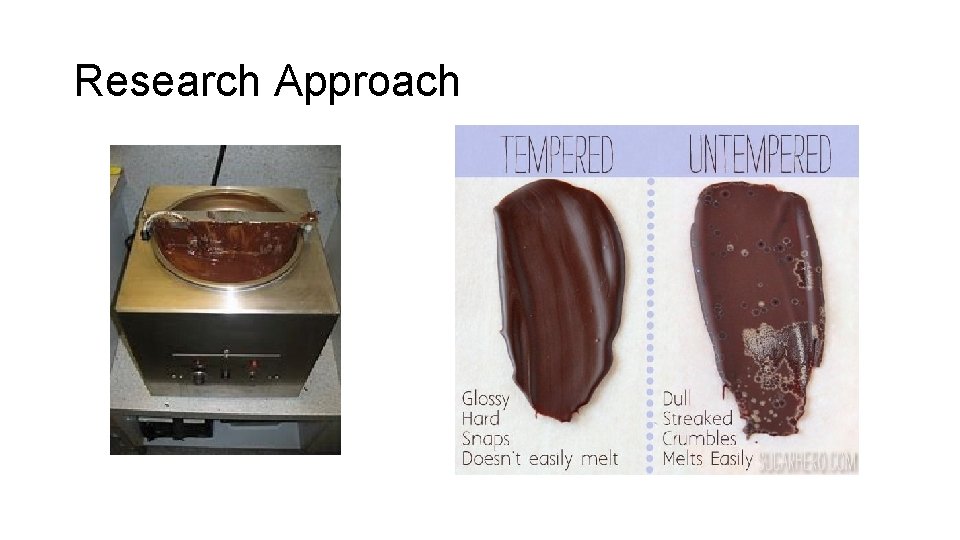
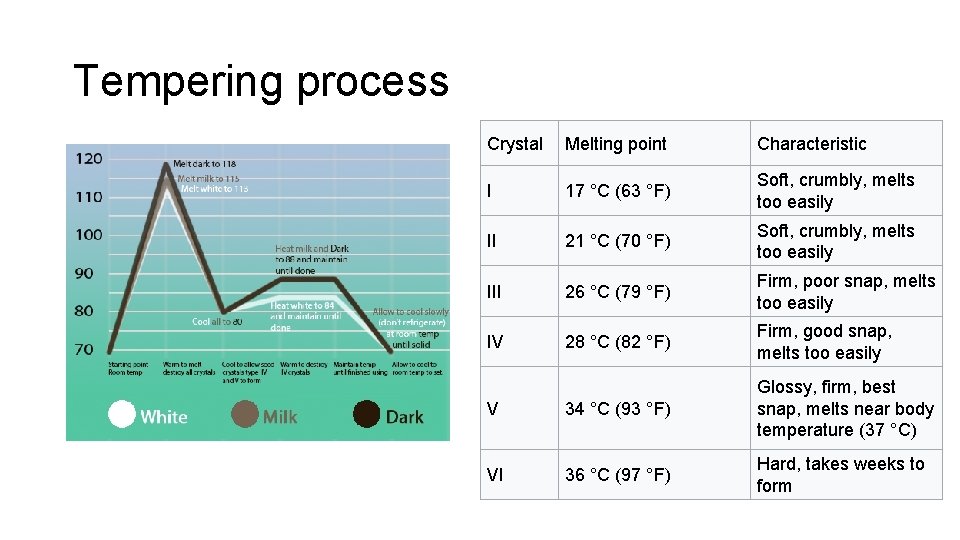
Tempering process Crystal Melting point Characteristic I 17 °C (63 °F) Soft, crumbly, melts too easily II 21 °C (70 °F) Soft, crumbly, melts too easily III 26 °C (79 °F) Firm, poor snap, melts too easily IV 28 °C (82 °F) Firm, good snap, melts too easily V 34 °C (93 °F) Glossy, firm, best snap, melts near body temperature (37 °C) VI 36 °C (97 °F) Hard, takes weeks to form
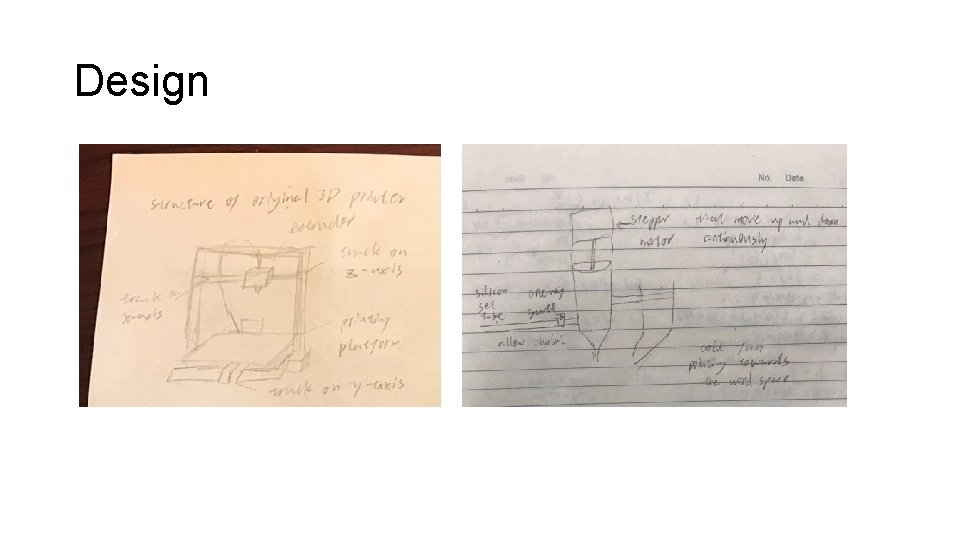
Design
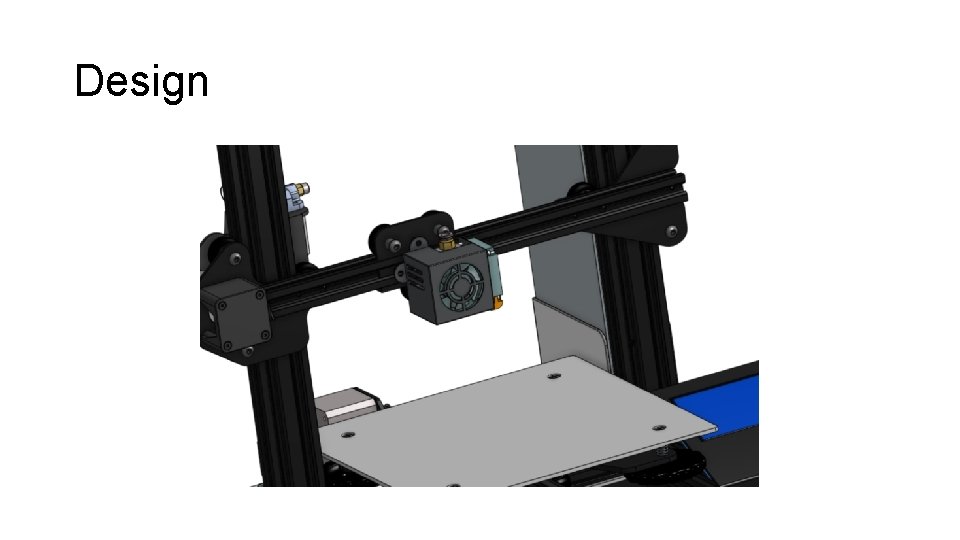
Design
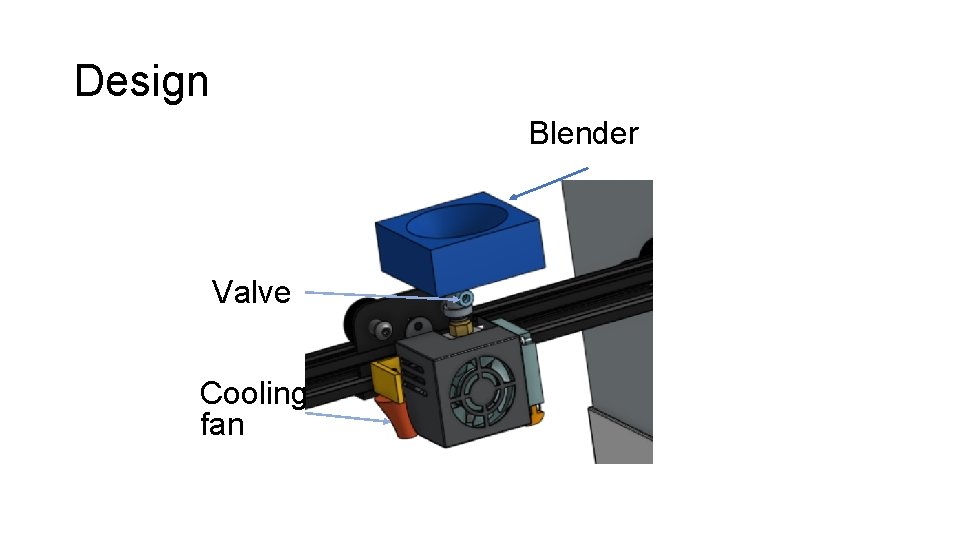
Design Blender Valve Cooling fan
Future Plan • Finish the design 3 D model in next weeks • Choose the proper parts to construct the prototypes at the beginning of February • Start building and testing prototypes by the mid-February • Assemble everything when ?
Thanks for Listening
References 1. Hershey to Launch the First Ever 3 D Printed Chocolate Exhibit, Brian Krassenstein, Dec 17, 2014. https: //3 dprint. com/31758/hersheys-3 d-printing-exhibit/ 2. J. I. Lipton, 3 D PRINTING FOOD , FOAM AND FORCES ADDITIVE MANUFACTURING OF EDIBLE CONSTRUCTS , CELLULAR STRUCTURES AND ACTUATORS A Dissertation Presented to the Faculty of the Graduate School of Cornell University in Partial Fulfillment of the Requirements for the Degree of Doctor of Philosophy by Jeffrey Ian Lipton August 2015 (2015). 3. Derossi, A. ; Caporizzi, R. ; Ricci, I. ; Severini, C. Critical Variables in 3 D Food Printing; Elsevier Inc. : Amsterdam, The Netherlands, 2019; ISBN 9780128145647 4. Tran, J. L. 3 D-Printed Food. Minnesota J. Law Sci. Technol. 2016, 17, 855. 5. About Upprinting Food. Available online: https: //www. upprintingfood. com/about (accessed on 13 April 2020). 6. Izdebska, J. ; Zołek-Tryznowska, Z. 3 D food printing—Facts and future. Agro Food Ind. Hi Tech 2016, 27, 33– 37.