
DESIGNING SALTWATER DISPOSAL SYSTEMS FOR OPTIMAL OIL RECOVERY

- Slides: 32
DESIGNING SALTWATER DISPOSAL SYSTEMS FOR OPTIMAL OIL RECOVERY AND MINIMUM MAINTENANCE Kirby Mohr, P. E. Mohr Separations Research, Inc. Lewisville, TX Website: oilandwaterseparator. com email: kirby@ oilandwaterseparator. com
Introduction - Need for Better Salt Water Treatment 1. Resource Recovery – can sell any captured oil 2. Avoid primary plugging of down-hole areas by oil 3. Avoid secondary plugging by bacterial growth
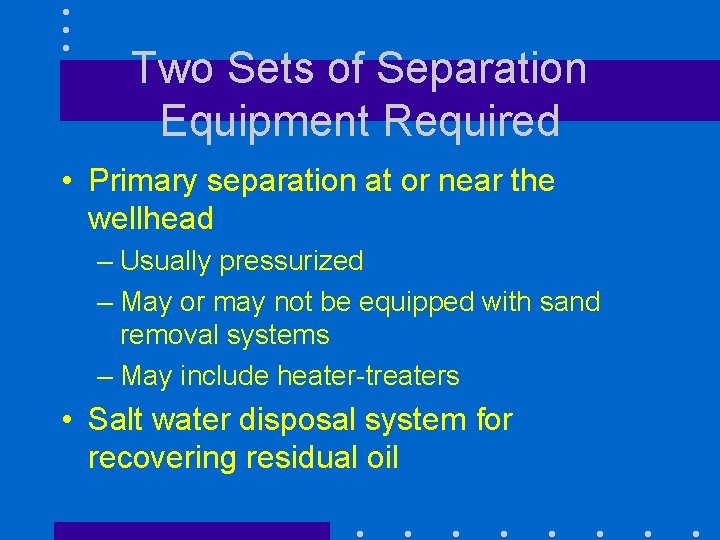
Two Sets of Separation Equipment Required • Primary separation at or near the wellhead – Usually pressurized – May or may not be equipped with sand removal systems – May include heater-treaters • Salt water disposal system for recovering residual oil
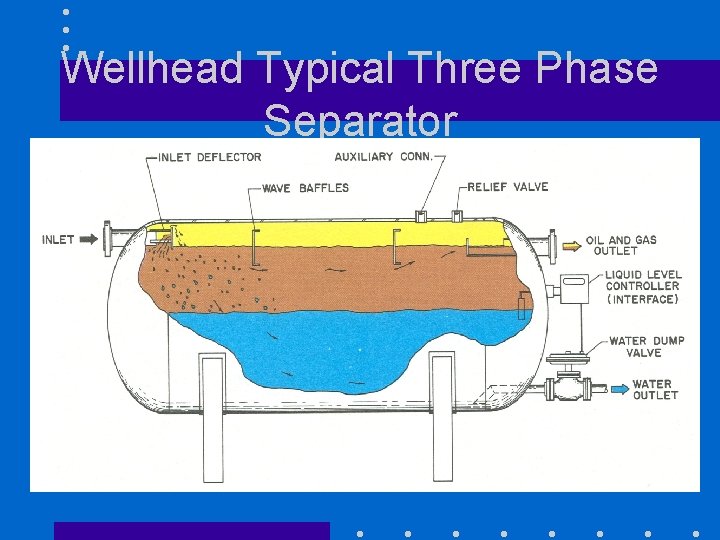
Wellhead Typical Three Phase Separator
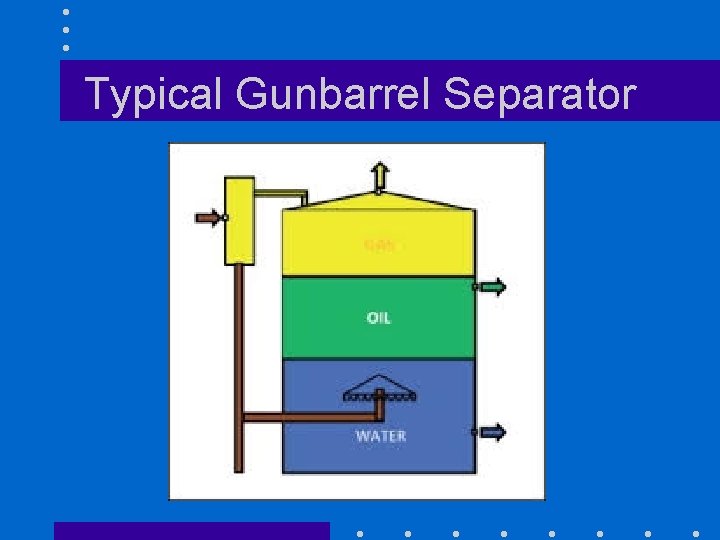
Typical Gunbarrel Separator
Wellhead Separation Equipment • Three phase separators – Good rough-cut separation system • Gunbarrel separators – Mostly empty tank type system • Both are relatively inexpensive, lowmaintenance and simple to operate • Neither are designed to capture small oil droplets and not very efficient
Separation by Gravity • Separation governed by Stokes’s Law
Stokes’s Law Variables • Variables are – Density of Droplets – Density of the Water – Viscosity of continuous phase (temperature) – Average Droplet size (Squared function)
Stokes’s Assumptions • • • Laminar Flow Consistent specific gravity Spherical Particles Consistent particle size Droplets are large enough to avoid Brownian Motion flow regime
Information needed for Disposal System Design • • Design flow rate Design inlet oil content and gravity Design water specific gravity Design operating temperature range Oil outlet concentration desired Design solids content Design solids type / configuration Possible variations in the parameters
Design Flow Rate • Design flow rate determined on an instantaneous (gpm or equal) basis • BPD if 24 hour operation • 30, 000 -36, 000 BPD is a reasonable large size – For larger flows, use multiple units • Design for maximum flow expected – performance will be better at lower flows
Design Inlet oil Content / Specific Gravity • If analyses are available, use highest oil content found. • If no analyses, use 5% as maximum oil content. • If specific gravity is available, use that • If gravity is unknown, use literature value for that field or get a sample tested
Design Operating Water Temperature • In general, higher temperature is better up to about 150 F (65 C). • Higher water temperature is better because the viscosity of the water is less at higher temperature • But, at higher temperatures convection and other currents will be worse and may cause separation problems. • Check with the possible water sources for temperatures
Design Oil Removal • Can’t get to ZERO ppm oil in effluent, but can get to “non-detect” levels (about 2 ppm) • Better oil removal brings more oil to sell and also reduces operating costs • Can only get down to droplets about 10 -15 micrometers in diameter (Brownian Motion) • Volume of oil in a droplet depends on the cube of the diameter
Design Inlet Solids Content • Solid content in the inlet will vary wildly from one truck to the next • Take samples for analysis if possible. • If it is not possible to get samples for analysis, estimate 50 ppm solids. • If the solids content is eventually proven to be more, add solids settling capacity
Variations in Parameters • Some parameters are not likely to change substantially: – Oil specific gravity – Removal required • Some parameters will change substantially: • Flow rate • Operating water temperature
Design choices • Instantaneous flow rate • Surge capacity / solids and oil retention volume • Piping sizes • Flow Scheme and Separations system • Can centrifugal pumps be avoided?
Instantaneous flow rate • Treatment systems operate on an instantaneous basis – not a barrels per year basis • This basis should be determined using the maximum flow expected
Tank Capacity • Inlet tank capacity should be sufficient to contain: – Water to allow for up to two days of operation – Oil content of up to 5% for two days of operation – Solids storage sufficient for 50 mg/l for two days of operation • Total = sum of above
Piping Flow Capacity • Make sure the piping system from the inlet of the overall system to the injection pump is large enough for the flow • Use large pipe to avoid pressure drops which cost energy and degrade droplet size distributions • If piping is too small, water will back up in the inlet tankage • Avoid centrifugal pumps if possible
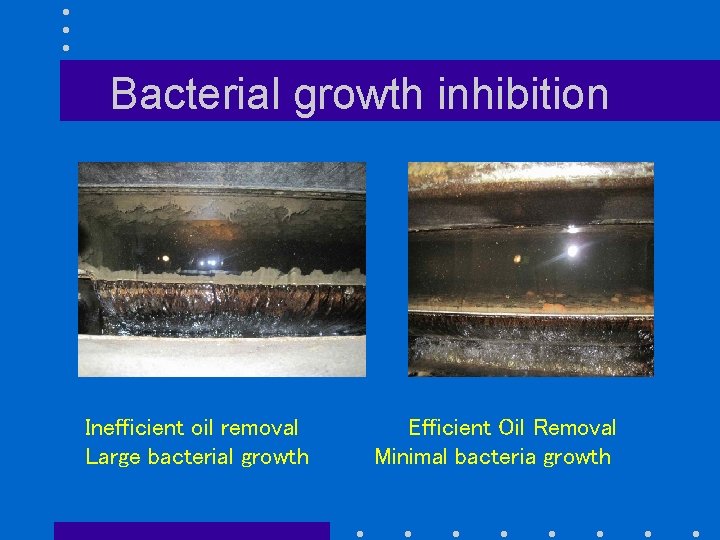
Separation System Design • Systems should be designed to remove substantially all of the oil present in the inlet • Coalescing plate separators work well • Really good oil removal will preclude bacterial growth in the system, final filter, and downhole formation.
Bacterial growth inhibition Inefficient oil removal Large bacterial growth Efficient Oil Removal Minimal bacteria growth
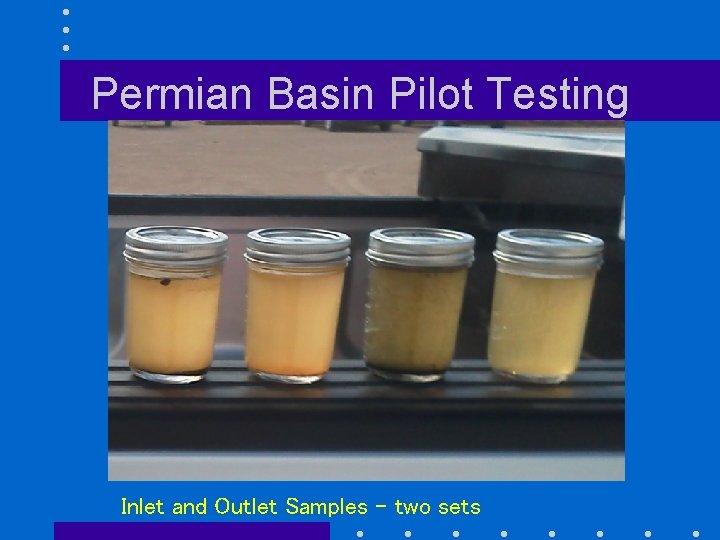
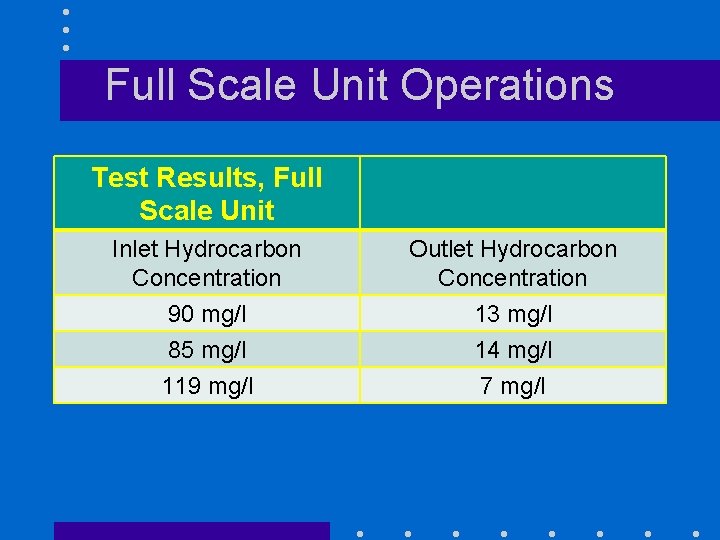
Permian Basin Pilot Testing Inlet and Outlet Samples – two sets
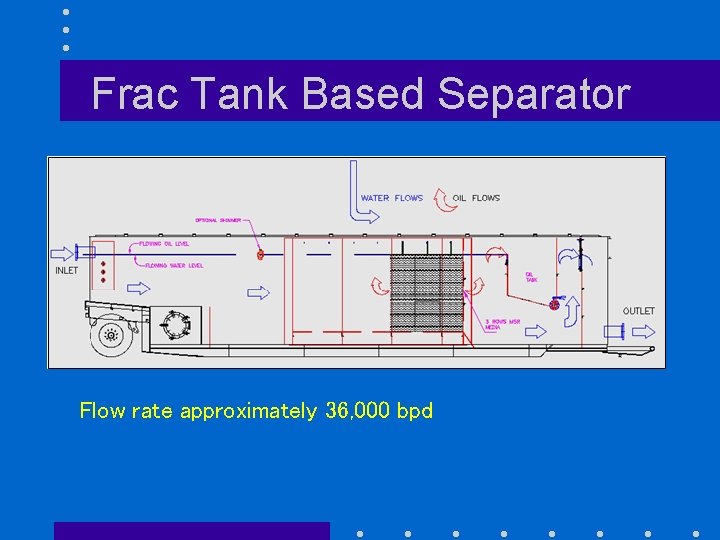
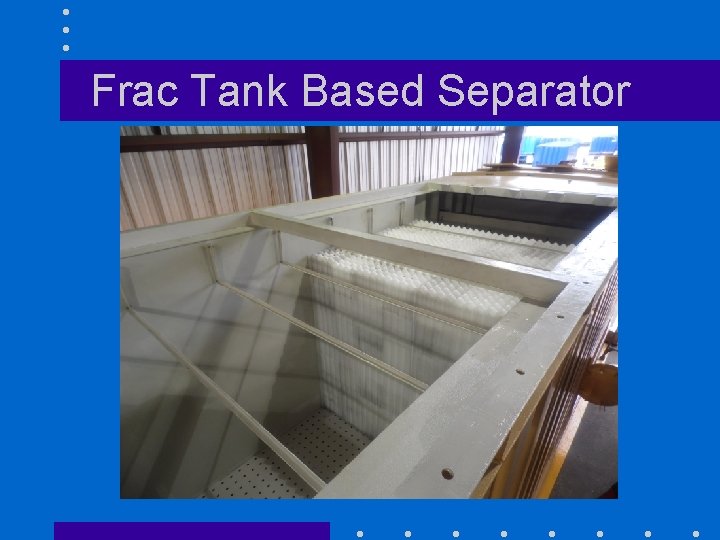
Design of Full Scale Unit • • • Based on 500 barrel Frac Tank 1050 gpm (36, 000 bpd) water flow Capacity: 1 -7 rows of media West Texas light crude 0. 82 S. G. Designed for 50 mg/l out with 2000 mg/l inlet concentration with three rows of media • Can additional rows if necessary for more flow or lower effluent
Frac Tank Based Separator Flow rate approximately 36, 000 bpd
Frac Tank Based Separator
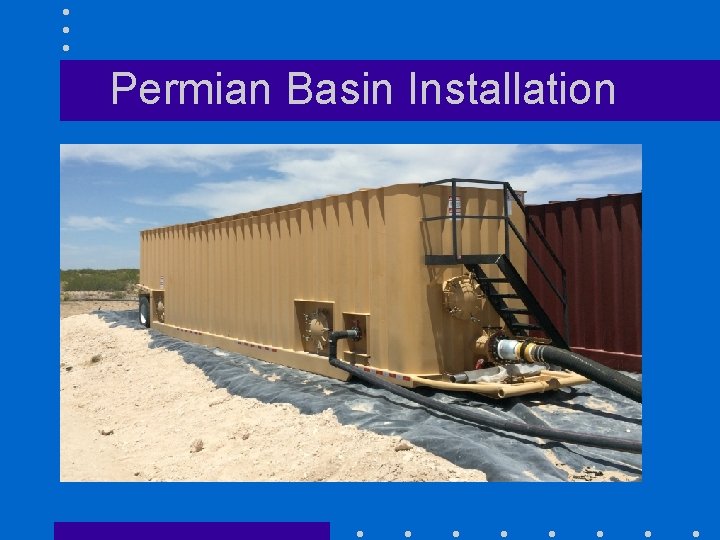
Permian Basin Installation
Full Scale Unit Operations Test Results, Full Scale Unit Inlet Hydrocarbon Concentration Outlet Hydrocarbon Concentration 90 mg/l 13 mg/l 85 mg/l 14 mg/l 119 mg/l 7 mg/l
Coalescing Plate Systems • Gravity operated • High efficiency Predictable oil removal • Design for whatever maximum effluent is allowed • Much smaller than other separators for same flow rate • Plates are not consumed – last years • Recovered oil can be sold
How is Maintenance Improved? • Extend periods between filter changes • Reduce filter change cost and labor • Reduce wear and tear on injection pump • Reduce downhole plugging and workover requirements – Reduce plugging due to oil in injection water – Reduce plugging due to bacterial growth
Summary and Conclusions • Recover oil that would otherwise be lost • Minimize plugging of final filter – reduce filter changes • Reduce plugging of disposal well by oil • Reduce plugging of well by bacteria • Improve operations and reduce workover and maintenance requirements
DESIGNING SALTWATER DISPOSAL SYSTEMS FOR OPTIMAL OIL RECOVERY AND MINIMUM MAINTENANCE Questions? If you would like a transcript of this presentation, please leave your business card and I will send one.