
Designing fuel cell systems for rail applications September
Designing fuel cell systems for rail applications September 2020 1
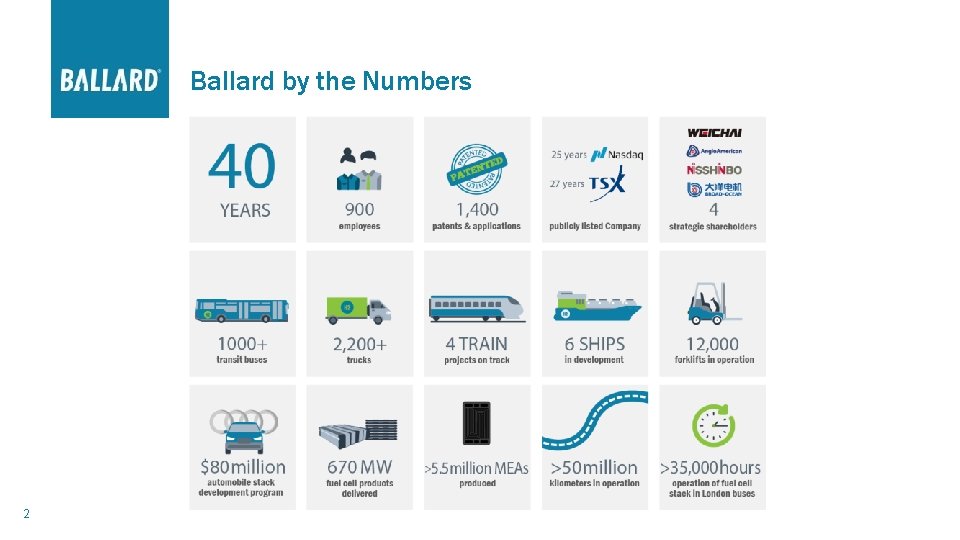
Ballard by the Numbers 2
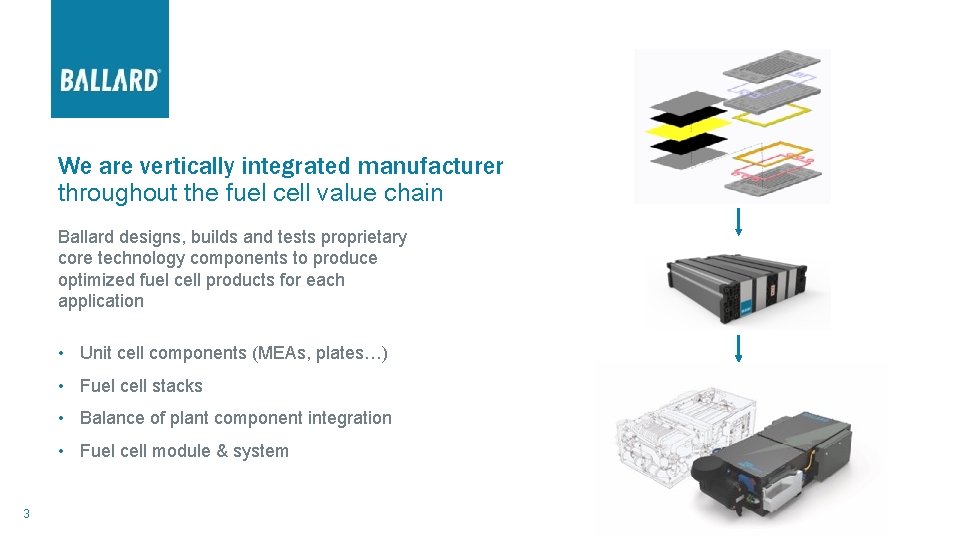
We are vertically integrated manufacturer throughout the fuel cell value chain Ballard designs, builds and tests proprietary core technology components to produce optimized fuel cell products for each application • Unit cell components (MEAs, plates…) • Fuel cell stacks • Balance of plant component integration • Fuel cell module & system 3
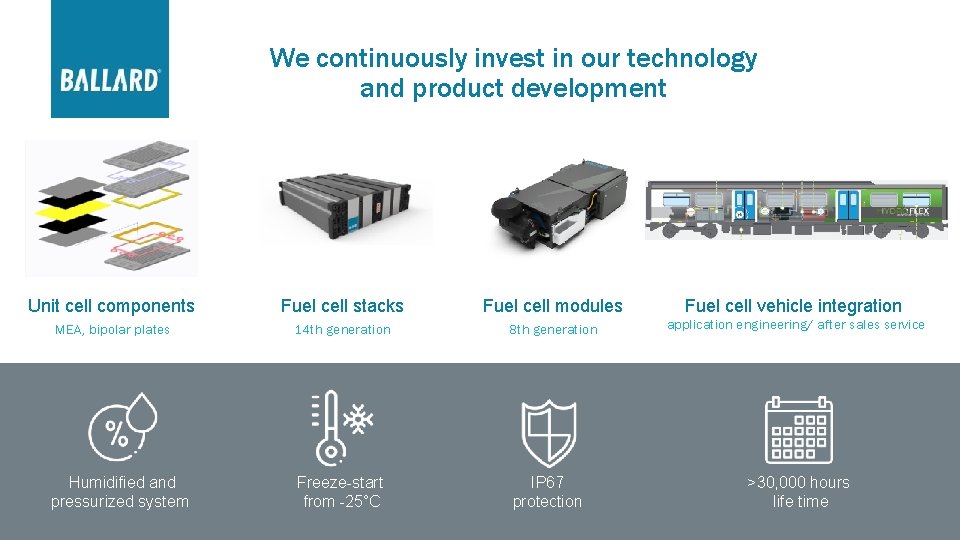
We continuously invest in our technology and product development Unit cell components Fuel cell stacks Fuel cell modules Fuel cell vehicle integration MEA, bipolar plates 14 th generation 8 th generation application engineering/ after sales service Humidified and pressurized system Freeze-start from -25°C IP 67 protection 4 >30, 000 hours life time
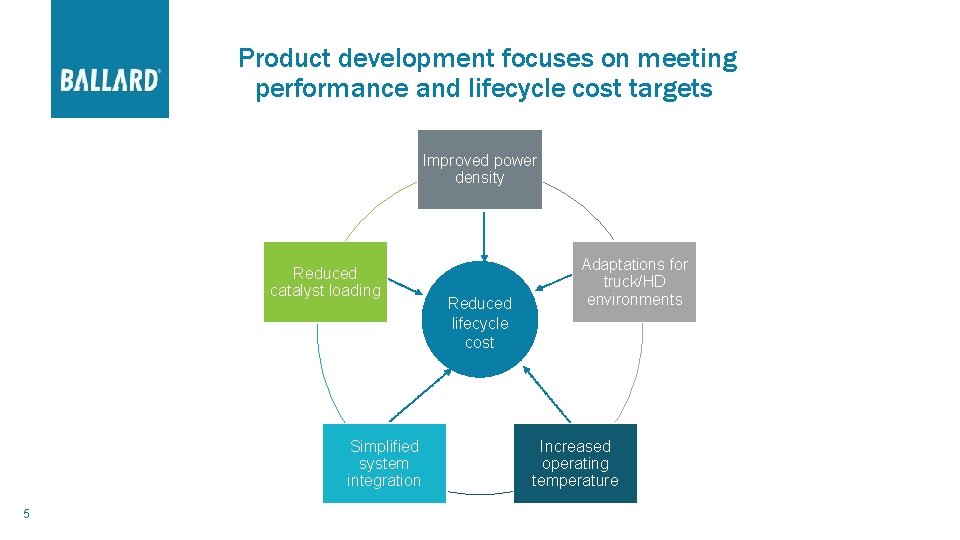
Product development focuses on meeting performance and lifecycle cost targets Improved power density Reduced catalyst loading Simplified system integration 5 Reduced lifecycle cost Adaptations for truck/HD environments Increased operating temperature
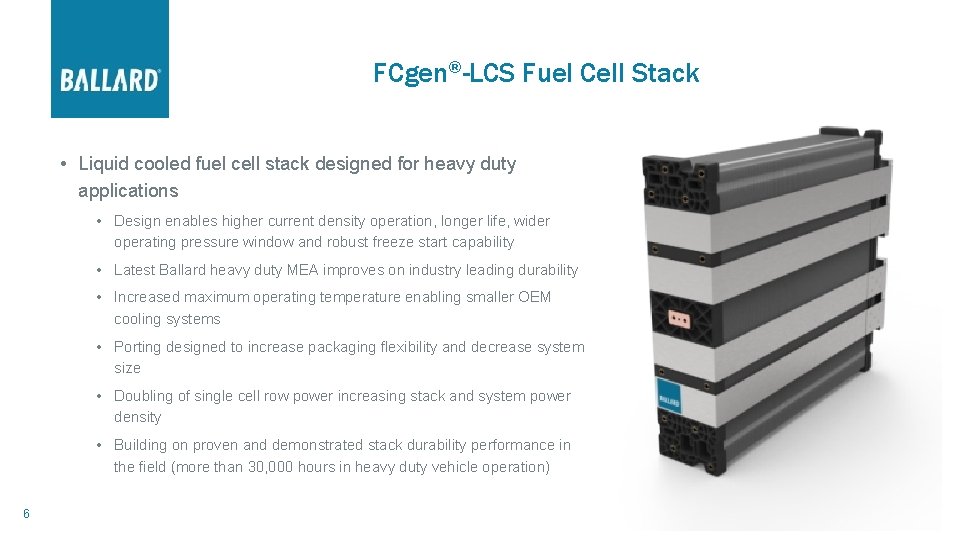
FCgen®-LCS Fuel Cell Stack • Liquid cooled fuel cell stack designed for heavy duty applications • Design enables higher current density operation, longer life, wider operating pressure window and robust freeze start capability • Latest Ballard heavy duty MEA improves on industry leading durability • Increased maximum operating temperature enabling smaller OEM cooling systems • Porting designed to increase packaging flexibility and decrease system size • Doubling of single cell row power increasing stack and system power density • Building on proven and demonstrated stack durability performance in the field (more than 30, 000 hours in heavy duty vehicle operation) 6

FCmove™ 8 th generation heavy duty module powered by FCgen®-LCS 35% 40% reduction in total life cycle cost reduction in product volume >30, 000 hr 35% operating lifetime 7 fuel cell stack is recyclable 50% reduction in number of components -25 C freeze start capability reduction in product weight
From road to rails 8 • 15+ years of experience in designing heavy duty fuel cell engines • Now on 8 th generation of module design • Integration experience with multiple vehicle platforms (buses, trucks, trains) • Proven technology with 50 million kilometers travelled
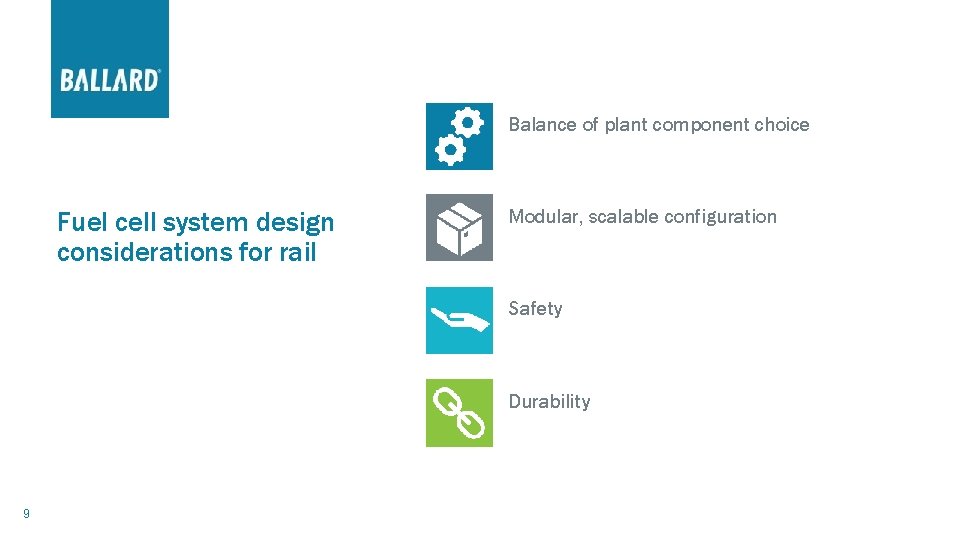
Balance of plant component choice Fuel cell system design considerations for rail Modular, scalable configuration Safety Durability 9
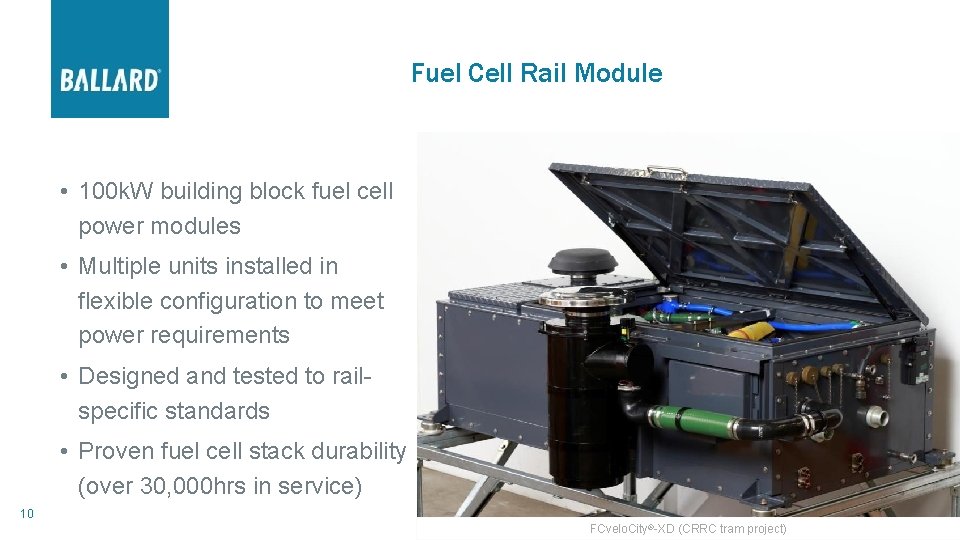
Fuel Cell Rail Module • 100 k. W building block fuel cell power modules • Multiple units installed in flexible configuration to meet power requirements • Designed and tested to railspecific standards • Proven fuel cell stack durability (over 30, 000 hrs in service) 10 FCvelo. City®-XD (CRRC tram project)
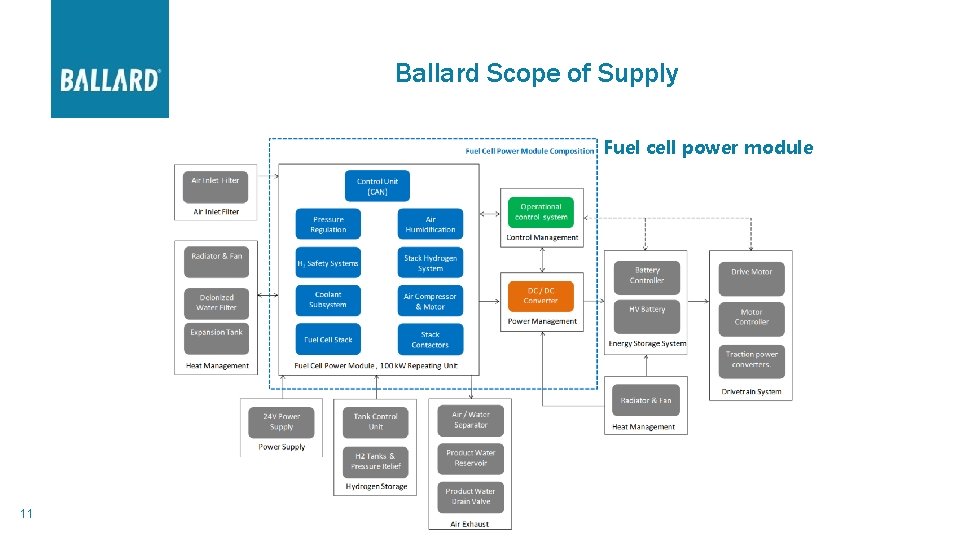
Ballard Scope of Supply Fuel cell power module 11
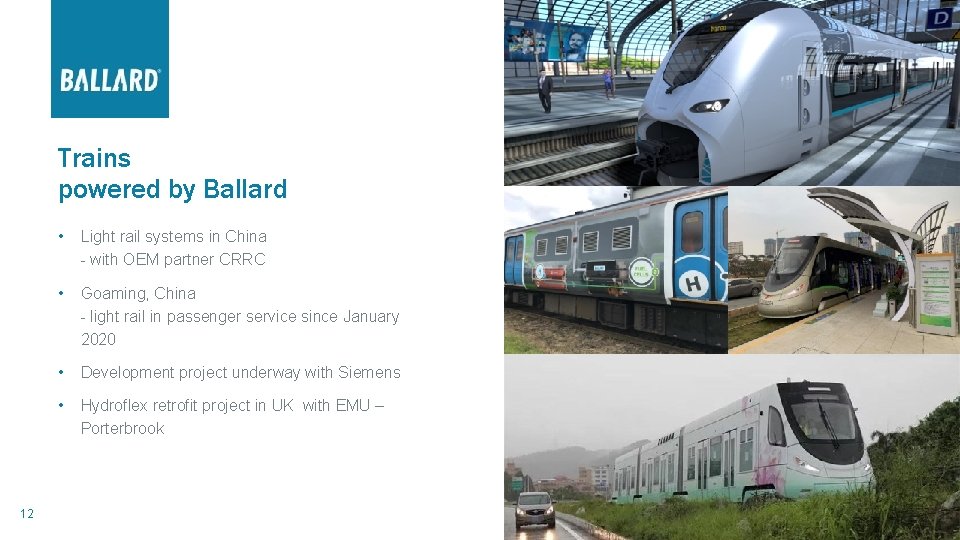
Trains powered by Ballard 12 • Light rail systems in China - with OEM partner CRRC • Goaming, China - light rail in passenger service since January 2020 • Development project underway with Siemens • Hydroflex retrofit project in UK with EMU – Porterbrook
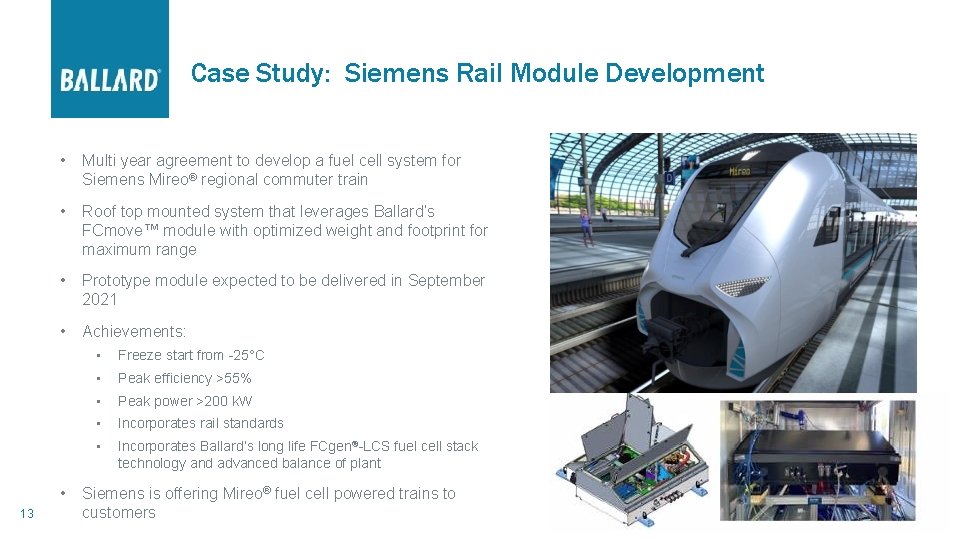
Case Study: Siemens Rail Module Development • Multi year agreement to develop a fuel cell system for Siemens Mireo® regional commuter train • Roof top mounted system that leverages Ballard’s FCmove™ module with optimized weight and footprint for maximum range • Prototype module expected to be delivered in September 2021 • Achievements: • 13 • Freeze start from -25°C • Peak efficiency >55% • Peak power >200 k. W • Incorporates rail standards • Incorporates Ballard’s long life FCgen®-LCS fuel cell stack technology and advanced balance of plant Siemens is offering Mireo® fuel cell powered trains to customers
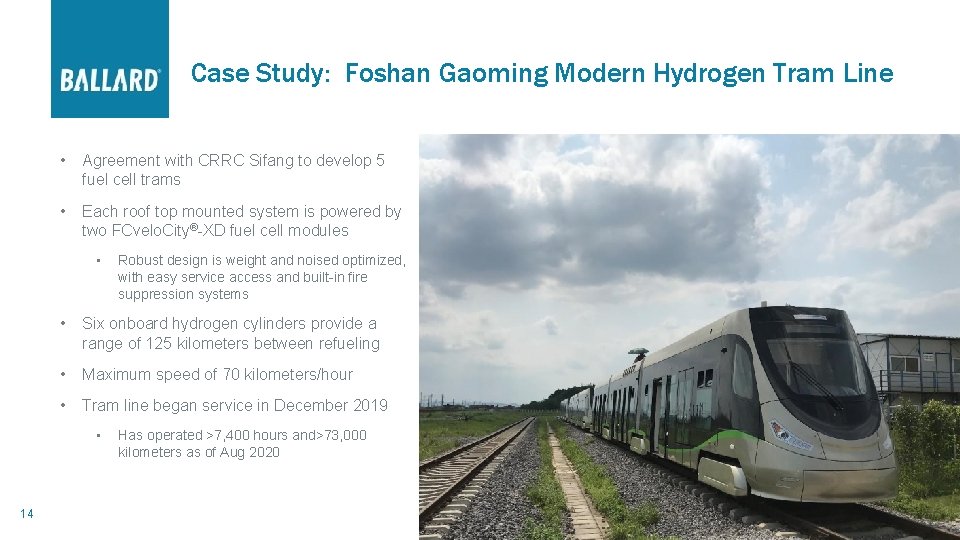
Case Study: Foshan Gaoming Modern Hydrogen Tram Line • Agreement with CRRC Sifang to develop 5 fuel cell trams • Each roof top mounted system is powered by two FCvelo. City®-XD fuel cell modules • • Six onboard hydrogen cylinders provide a range of 125 kilometers between refueling • Maximum speed of 70 kilometers/hour • Tram line began service in December 2019 • 14 Robust design is weight and noised optimized, with easy service access and built-in fire suppression systems Has operated >7, 400 hours and>73, 000 kilometers as of Aug 2020
Strategic industrial partnerships will accelerate fuel cell industrialization and integration Addressing the cost reduction challenge: Ballard's road map to 70% cost reduction Supply chain in China will advance the fuel cell supply chain and increase access to the automotive supply chain Ballard’s cost reduction initiatives include process & design yield improvements, reduction of platinum, increased power density, and lower cost materials Recycling/refurbishments will increase lifecycle and improve FCEV residual value 15
Thank you Please contact Ballard for more information www. ballard. com 16
- Slides: 16