
Designing for Transparency in Complex Federal Information Contexts


- Slides: 23
Designing for Transparency in Complex Federal Information Contexts Work in progress Dr. Julie Gerdes jgerdes@g. clemson. edu
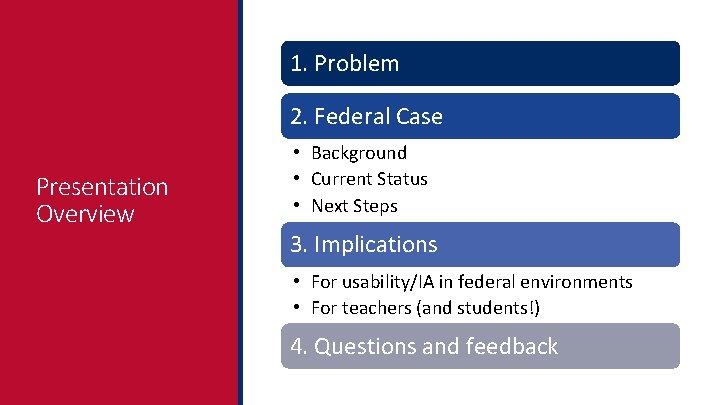
1. Problem 2. Federal Case Presentation Overview • Background • Current Status • Next Steps 3. Implications • For usability/IA in federal environments • For teachers (and students!) 4. Questions and feedback
1. Problem: Revealing Hyperpragmatism
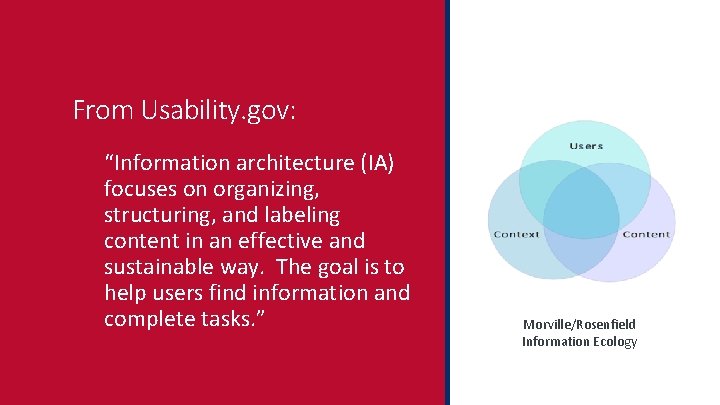
From Usability. gov: “Information architecture (IA) focuses on organizing, structuring, and labeling content in an effective and sustainable way. The goal is to help users find information and complete tasks. ” Morville/Rosenfield Information Ecology
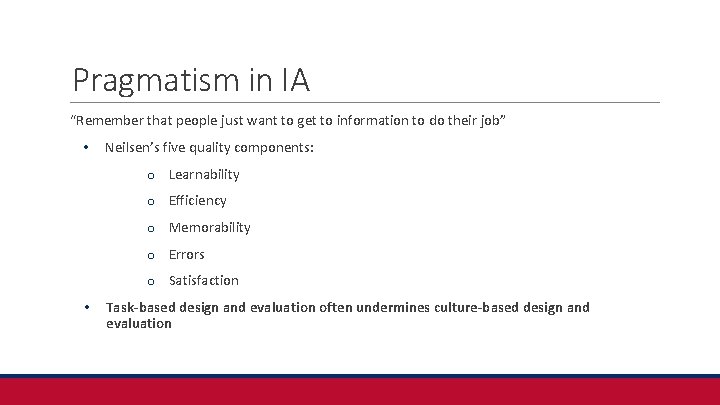
Pragmatism in IA “Remember that people just want to get to information to do their job” • Neilsen’s five quality components: o Learnability o Efficiency o Memorability o Errors o Satisfaction • Task-based design and evaluation often undermines culture-based design and evaluation
2. The Case of a Federal Entity
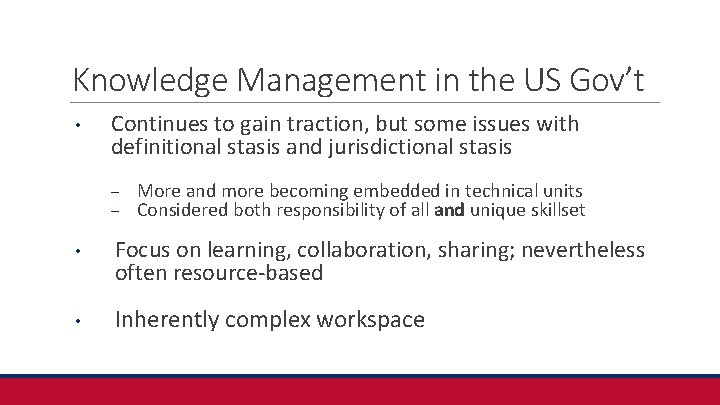
Knowledge Management in the US Gov’t • Continues to gain traction, but some issues with definitional stasis and jurisdictional stasis – – • • More and more becoming embedded in technical units Considered both responsibility of all and unique skillset Focus on learning, collaboration, sharing; nevertheless often resource-based Inherently complex workspace
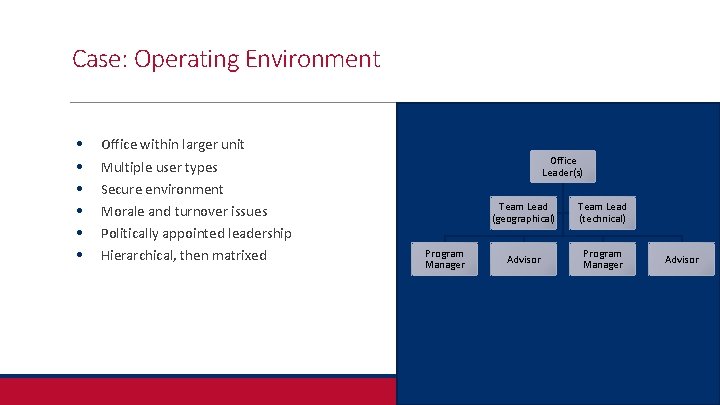
Case: Operating Environment • • • Office within larger unit Multiple user types Secure environment Morale and turnover issues Politically appointed leadership Hierarchical, then matrixed Office Leader(s) Program Manager Team Lead (geographical) Team Lead (technical) Advisor Program Manager Advisor
Part I: Identifying cultural-relational issues
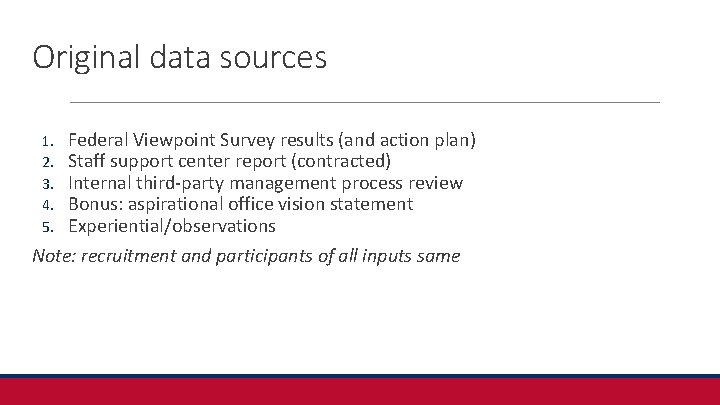
Original data sources Federal Viewpoint Survey results (and action plan) Staff support center report (contracted) Internal third-party management process review Bonus: aspirational office vision statement Experiential/observations Note: recruitment and participants of all inputs same 1. 2. 3. 4. 5.
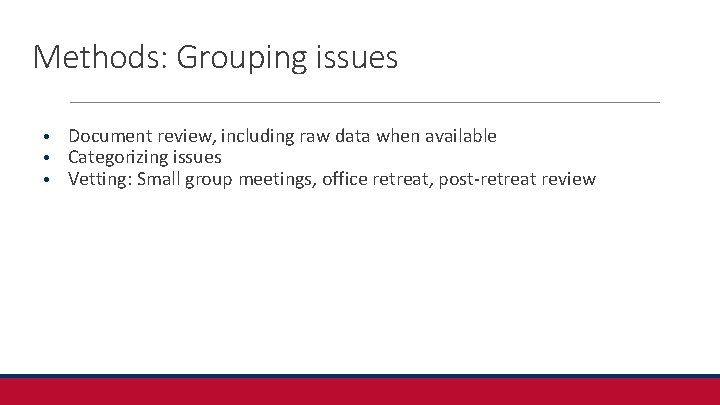
Methods: Grouping issues • • • Document review, including raw data when available Categorizing issues Vetting: Small group meetings, office retreat, post-retreat review
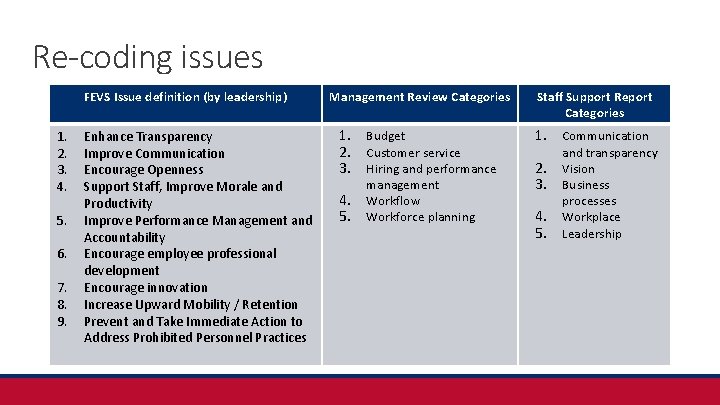
Re-coding issues FEVS Issue definition (by leadership) 1. 2. 3. 4. 5. 6. 7. 8. 9. Enhance Transparency Improve Communication Encourage Openness Support Staff, Improve Morale and Productivity Improve Performance Management and Accountability Encourage employee professional development Encourage innovation Increase Upward Mobility / Retention Prevent and Take Immediate Action to Address Prohibited Personnel Practices Management Review Categories Staff Support Report Categories 1. Budget 2. Customer service 3. Hiring and performance 1. Communication 4. 5. management Workflow Workforce planning 2. 3. 4. 5. and transparency Vision Business processes Workplace Leadership
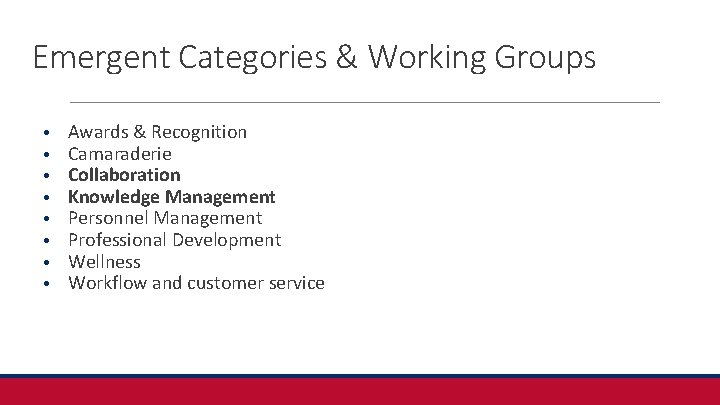
Emergent Categories & Working Groups • • Awards & Recognition Camaraderie Collaboration Knowledge Management Personnel Management Professional Development Wellness Workflow and customer service
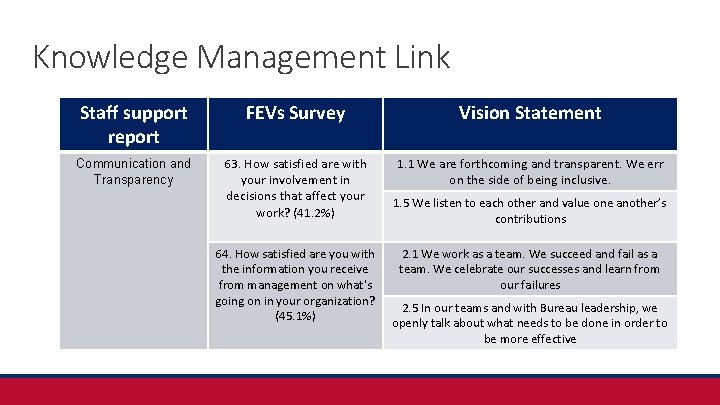
Knowledge Management Link Staff support report FEVs Survey Vision Statement Communication and Transparency 63. How satisfied are with your involvement in decisions that affect your work? (41. 2%) 1. 1 We are forthcoming and transparent. We err on the side of being inclusive. 64. How satisfied are you with the information you receive from management on what's going on in your organization? (45. 1%) 1. 5 We listen to each other and value one another’s contributions 2. 1 We work as a team. We succeed and fail as a team. We celebrate our successes and learn from our failures 2. 5 In our teams and with Bureau leadership, we openly talk about what needs to be done in order to be more effective
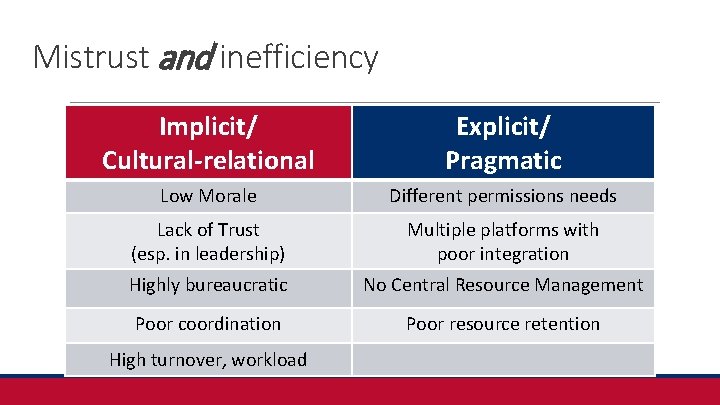
Mistrust and inefficiency Implicit/ Cultural-relational Explicit/ Pragmatic Low Morale Different permissions needs Lack of Trust (esp. in leadership) Multiple platforms with poor integration Highly bureaucratic No Central Resource Management Poor coordination Poor resource retention High turnover, workload
Status Report
Google site inventory
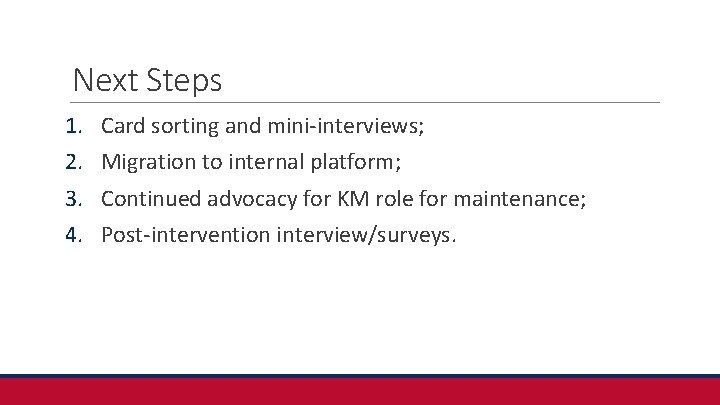
Next Steps 1. 2. 3. 4. Card sorting and mini-interviews; Migration to internal platform; Continued advocacy for KM role for maintenance; Post-intervention interview/surveys.
3. Implications
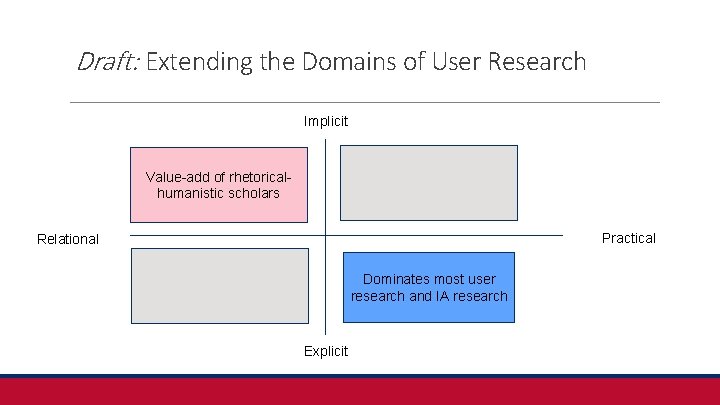
Draft: Extending the Domains of User Research Implicit Value-add of rhetoricalhumanistic scholars Practical Relational Dominates most user research and IA research Explicit
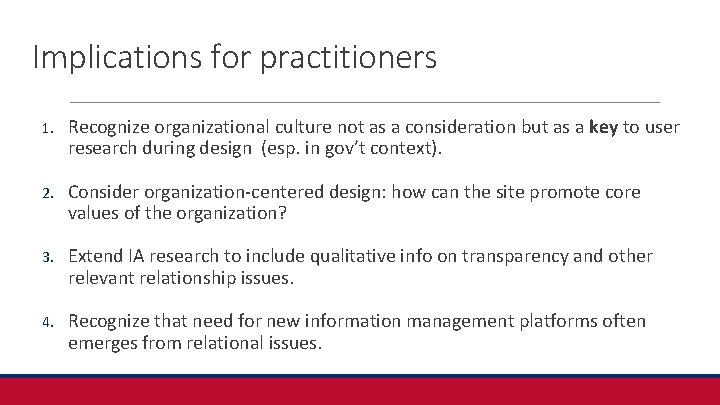
Implications for practitioners 1. Recognize organizational culture not as a consideration but as a key to user research during design (esp. in gov’t context). 2. Consider organization-centered design: how can the site promote core values of the organization? 3. Extend IA research to include qualitative info on transparency and other relevant relationship issues. 4. Recognize that need for new information management platforms often emerges from relational issues.
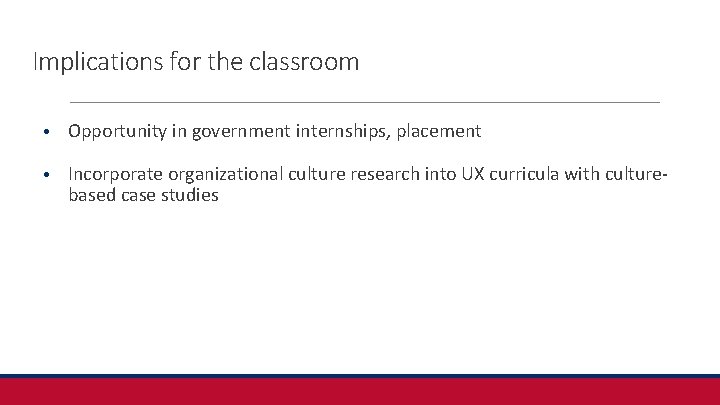
Implications for the classroom • Opportunity in government internships, placement • Incorporate organizational culture research into UX curricula with culturebased case studies
4. Questions? Feedback and recommendations? Julie Gerdes, Ph. D jgerdes@g. clemson. edu