
Designing for Design Learning Girls Building Information Technology
Designing for Design Learning Girls Building Information Technology Fluency Through Design Melissa Koch Director of Build IT SRI International 1
Our IT Workforce § Information Technology Workforce issues § Current IT workers retire and move into other business areas (Gartner, 2005) § Decline in number of individuals graduating with computer science undergraduate or graduate degrees. As much as a 39% drop in some cases (Computing Research Association, 2005) § IT labor needs continue to grow and change with technology innovations (U. S. Depart of Commerce, 1999 s) § Women constitute 45% of the workforce in the U. S. but hold only 12% of science and engineering jobs (National Council for Research on Women, 2001). 2

Computer science instruction that emphasizes the ‘web’ of associations between programming, design, and other areas of the curriculum would help to attract a more diverse group of learners, and would advance computer fluency for all students. (Tech-Savvy, AAUW, Commission on Technology, Gender, and Teacher Education, 2000). 3
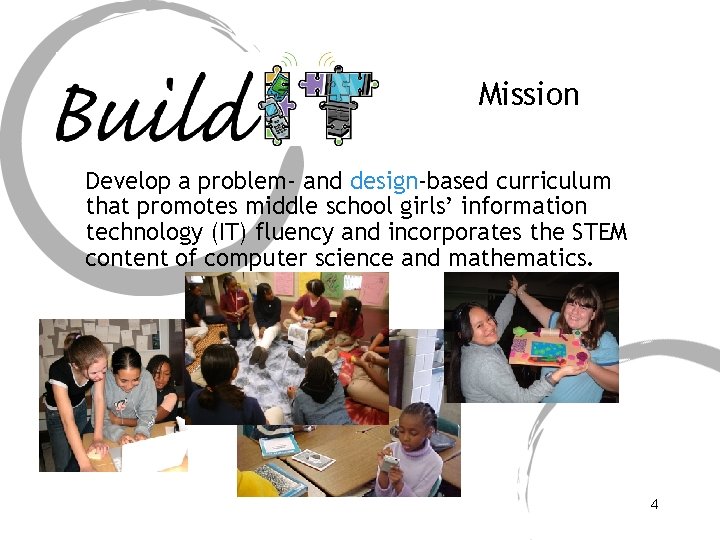
Mission Develop a problem- and design-based curriculum that promotes middle school girls’ information technology (IT) fluency and incorporates the STEM content of computer science and mathematics. 4
Goals Motivate middle school girls to § use technology and build their technology fluency § take high school algebra and geometry courses in preparation for postsecondary STEM education and/or IT careers. § explore IT and pursue IT careers. Enhance staff capacity to offer IT fluency programming. 5
The Girls § 150 middle school girls in Alameda County, CA. § 82% are African-American and Latina § majority comes from low socioeconomic households § disseminate to Girls Inc. ’s 1, 500 program sites nationally 6
Build IT’s Design Approach § Curriculum Development § Follow the Understanding by Design (Ub. D) approach. § Engage youth and youth leaders in curriculum development through usercentered and participatory design techniques § Feedback sessions § Pilot tests with girls and leaders § Train-the-trainer professional development § Embed formative assessments (i. e. performances tasks) for evaluating girls’ technology fluency § Embed formative evaluation for iterative design of the curriculum § Curriculum Implementation § Teach computer science concepts through design and communication technologies. § Teach the design process. § Provide individual and design team experiences in participatory and user 7 centered design.

Ub. D’s 3 Steps 1. What do we want girls to learn? § § Being Fluent with Information Technology (NRC) Secretary’s Commission on Necessary Skills (SCANS) National Council of Teachers of Mathematics (NCTM) A Model Curriculum for K-12 Computer Science (ACM) 8
Ub. D’s 3 Steps 2. What evidence will show that they’ve learned it? § § 3. Embedded Performances (activities and Family Tech Night presentations) Interviews & Observations IT Attitudes Survey IT Concepts Survey What curriculum will foster this learning? § Then develop the curriculum 9
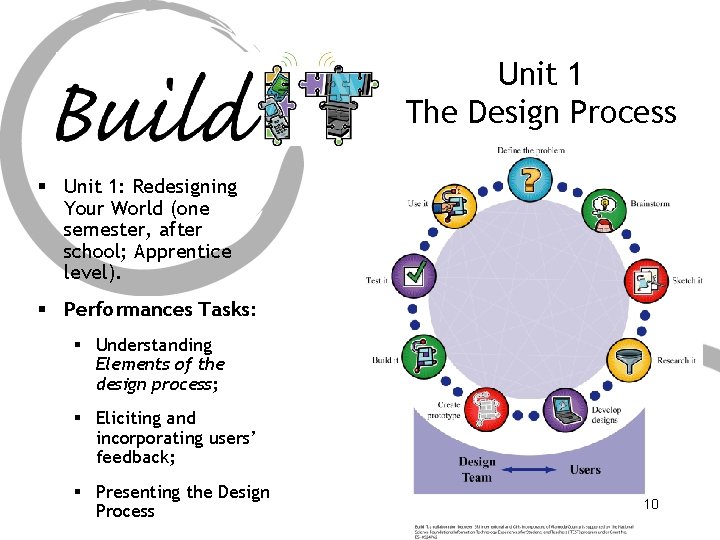
Unit 1 The Design Process § Unit 1: Redesigning Your World (one semester, after school; Apprentice level). § Performances Tasks: § Understanding Elements of the design process; § Eliciting and incorporating users’ feedback; § Presenting the Design Process 10
Six Units § Unit 2: Design Online: Communication Tools and the Internet (one semester, after school; Apprentice level). § § Unit 3: Redesigning the Web (two weeks during the summer; Apprentice level). § § Performances: Networks have human and technology components; computers can be used as part of networks or on their own. Algorithmic thinking. Handhelds, Group. Scribbles Unit 5: Collaborative Game Design & Troubleshooting (one semester, after school; Journey. Girl level). § § Performances: Functionality can be visible or hidden; role of engineering conventions; Draw what the html will do. Unit 4: Design in Networked Technologies (one semester, after school; Journey. Girl level). § § Performances: Form and function; Linking blog pages; Model how email and web page information travels on the Internet; Presenting their blogs, Tapped In Clubhouses, and demonstrations of how the Internet works Performances: Object-oriented programming; collaboration; participatory design. Stagecast Creator Unit 6: Joining a Design Team (two weeks during the summer; Journey. Girl level). § Performances: Leadership; troubleshooting 11
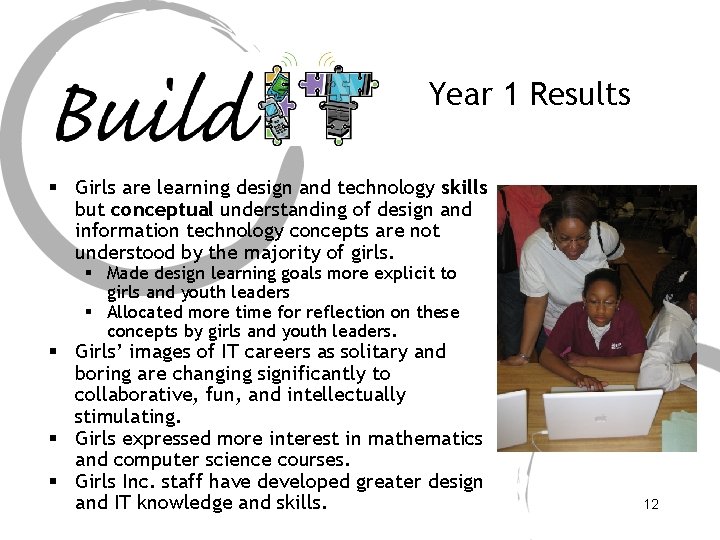
Year 1 Results § Girls are learning design and technology skills but conceptual understanding of design and information technology concepts are not understood by the majority of girls. § Made design learning goals more explicit to girls and youth leaders § Allocated more time for reflection on these concepts by girls and youth leaders. § Girls’ images of IT careers as solitary and boring are changing significantly to collaborative, fun, and intellectually stimulating. § Girls expressed more interest in mathematics and computer science courses. § Girls Inc. staff have developed greater design and IT knowledge and skills. 12
Next Design Steps § What are best practices in creating curricula for and teaching design skills and concepts? § How should we simplify § the design process without loosing its complexity? § design methodologies, such as participatory and user-centered design? 13
- Slides: 13