
Designing for Deeper Learning How Can Learning Objects

Designing for Deeper Learning: How Can Learning Objects Help? Kathy Bennett, University of Tennessee Patricia Mc. Gee, the University of Texas at San Antonioå
Learning at Brick & Mortar Environments. Classrooms, the field, home, hallways… Strategies. Cooperative learning, lecture, demonstration, modeling… Activities. Practice, inquiry, observation, debate… Assessments. Quizzes, exams, papers, projects…
Learning @ New Academy Environments. e-mail, Web. CT, Blogs, Wikis, discussion forums, gaming, shopping… Strategies. Computer Supported Collaborative Learning (CSCL), We. Quests, Webliography… Activities. Practice, inquiry, observation, debate… Assessments. Digital papers, Power Point Presentations, Web Pages, Communities of Practice…

Topics for Learning • Must be learned by different people at different times. • Is used in different contexts for different purposes. • May be required for review or updating skills. • Involves interaction with content, manipulation of data, practice, etc. that is not easy to accomplish in a classroom or training session.
Learning Objects A “learning object” is “any digital resource that can be reused to mediate learning” (Wiley & Edwards, 2002) Learning Objects should serve us: • Just enough – if you need only part of a course, you can use the learning objects you need. • Just in time – learning objects are searchable, you can instantly find and take the content you need. • Just for you – learning objects allow for easy customization of courses for a whole organization or even for each individual.
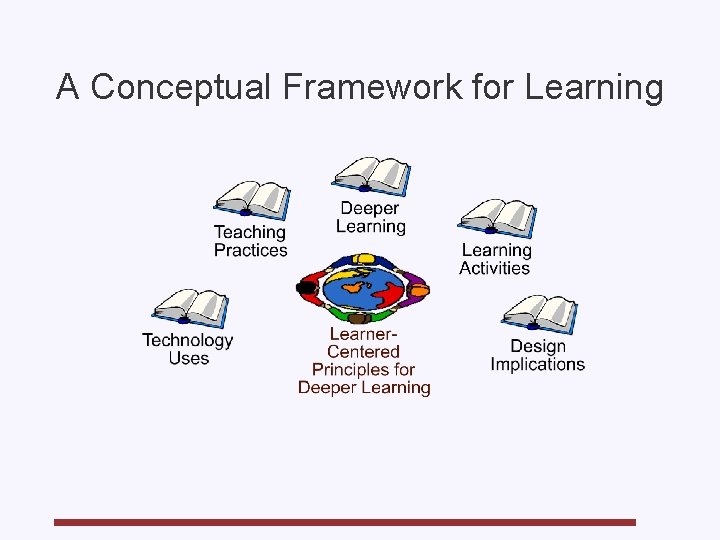
A Conceptual Framework for Learning
• Active
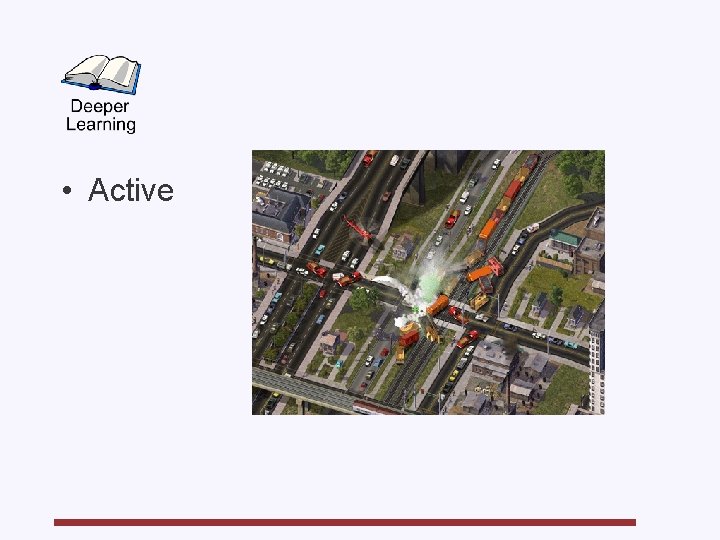
• Active
• Active • Contextual
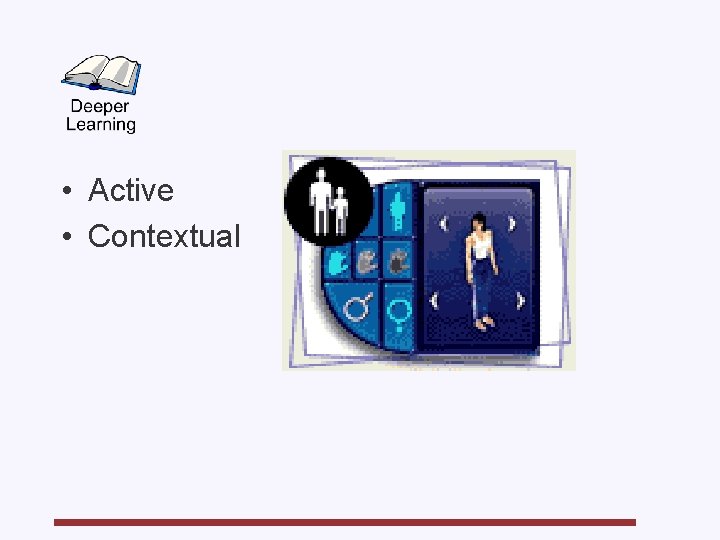
• Active • Contextual
• Active • Contextual • Social
• Active • Contextual • Social
• • Active Contextual Social Engaged
• • Active Contextual Social Engaged
• • • Active Contextual Social Engaged Ownership
• • • Active Contextual Social Engaged Ownership
• Thinking –Problem solving –Analyzing
• Assignments – Discovery – Experiential and field-based – Apprenticeship
• Projects – Group – Case studies – Products
• Projects – Group – Case studies – Products • Assessment – Formative – Self
Evaluation of a Learning Object

BREAK

Deeper Learning Strategies • Problem-solving (provide solution to a real world problem) • Inquiry (generate question(s) about a topic and find answers) • Research (hypothesize, generate research questions, and support a conclusive answer) • Creative (generate something new, e. g game, model) • Debate (support a position with evidence and refute arguments) • Prototyping or field-testing (new product, strategy, process)
A Medieval Design
Design Process Step 1: Identify Scope Step 2: Determine Scenario/Context Step 3: Identify and Select Resources Step 4: Determine Learner Deliverables. Sep 5: Create Learner Activities Step 5: Decide on Assessment Measures
Reflection • What are challenges? • What is the greatest potential?
References & Resources • A Learning Object on Learning Objects http: //people. cohums. ohio-state. edu/dagefoerde 2/NLII_LO/examples. htm • Learning Objects Key Theme Page http: //www. educause. edu/nlii/keythemes/learning. Objects. asp • Learning Object Glossary http: //educ 3. utsa. edu/pmcgee/nlii/glossary/

- Slides: 33