
Designing for Asynchronous Collaboration Michael Bernstein ComputerSupported Cooperative
Designing for Asynchronous Collaboration Michael Bernstein Computer-Supported Cooperative Work 4/25/07 1
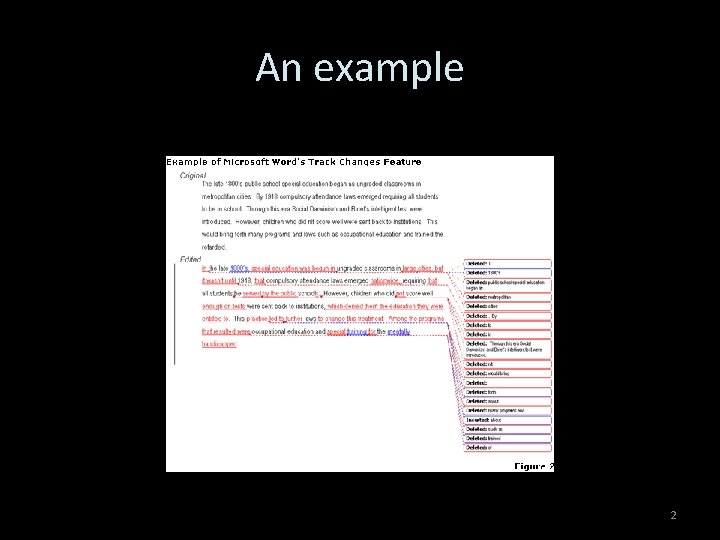
An example 2
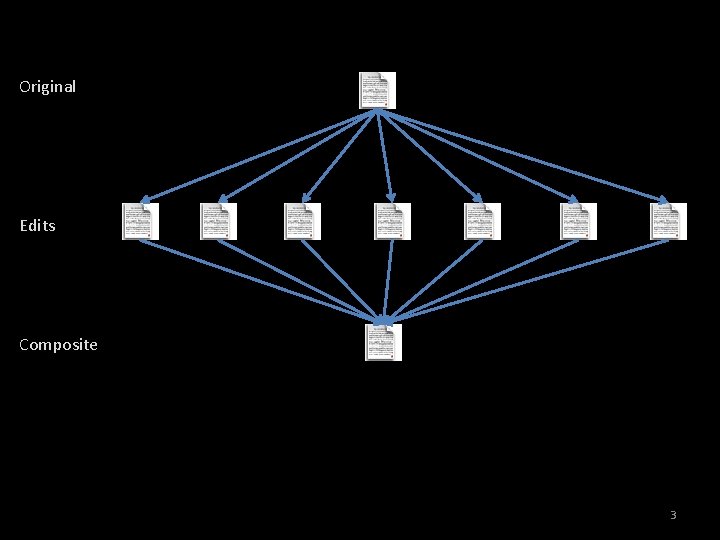
Original Edits Composite 3
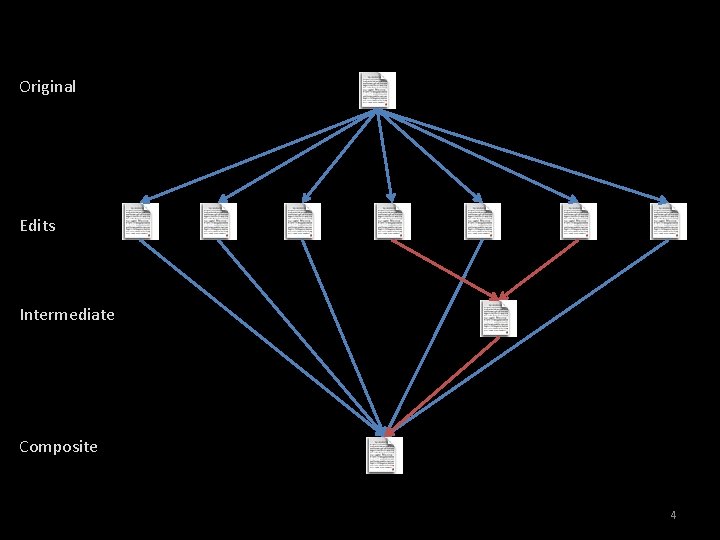
Original Edits Intermediate Composite 4
Design Challenges for Asynchronous Collaboration • Awareness – Of the document’s history – Of the document’s current status • Re-syncing – Usability: how to merge the myriad changes into a useful, meaningful whole? 5
Today • Hill, Hollan, Wroblewski, Mc. Candless. Edit Wear and Read Wear. CHI 1992. • Edwards, Mynatt. Timewarp: Techniques for Autonomous Collaboration. CHI 1997. 6
Edit Wear and Read Wear 7
![Wear • Permanent evidence of use [Mc. Grath 1984] 8](http://slidetodoc.com/presentation_image_h2/3c1da5ac78519da90f6c1a867a32d9ed/image-8.jpg "Wear • Permanent evidence of use [Mc. Grath 1984] 8")
Wear • Permanent evidence of use [Mc. Grath 1984] 8
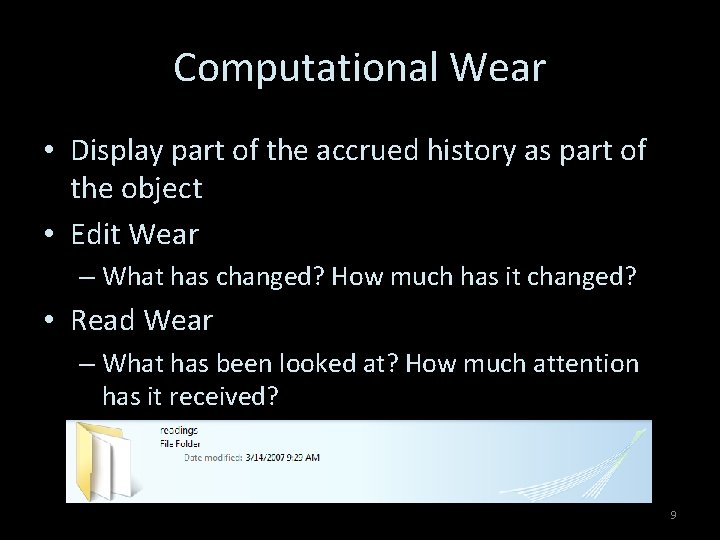
Computational Wear • Display part of the accrued history as part of the object • Edit Wear – What has changed? How much has it changed? • Read Wear – What has been looked at? How much attention has it received? 9
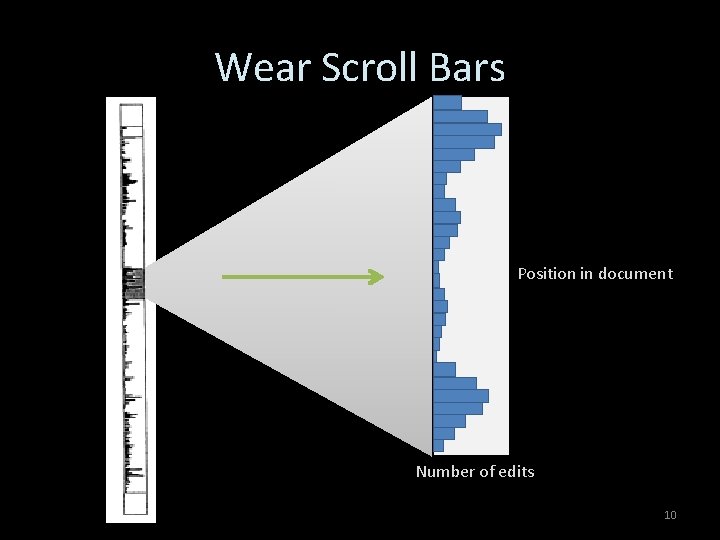
Wear Scroll Bars Position in document Number of edits 10
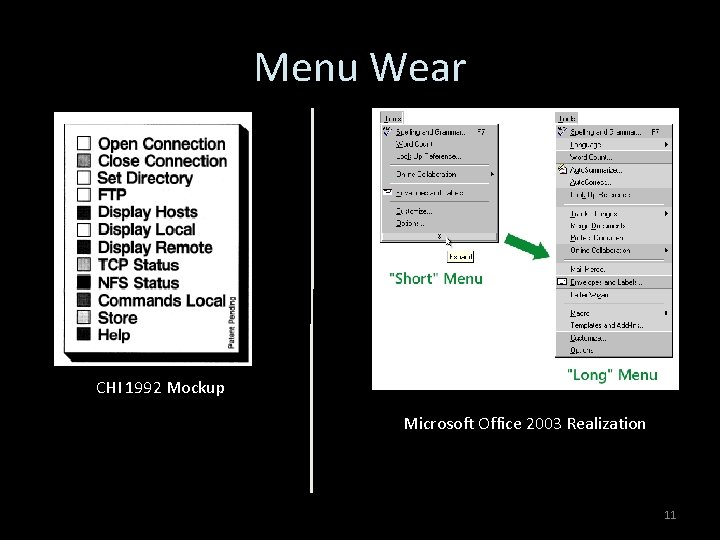
Menu Wear CHI 1992 Mockup Microsoft Office 2003 Realization 11
Computational Wear and Reflective Conversation • Reflective Conversation – “Through the unintended effects of action, the situation talks back. The practitioner, reflecting on this back-talk, may find new meaning in the situation which leads him to a new reframing. ” [Schoen, in Hill 1992] • Read and edit wear bring about reflective conversations with the material – Enhancing awareness of others and self 12
Computational Wear and CSCW • Supports awareness of what other authors are doing and have done – Who is reading a topic? Who is working on what section? • Invokes social responses rather than enforcing artificial ones user ‘carbunkle’ has locked paragraph vs. “Oh, Eric is looking at this section; I’ll leave it alone. ” 13
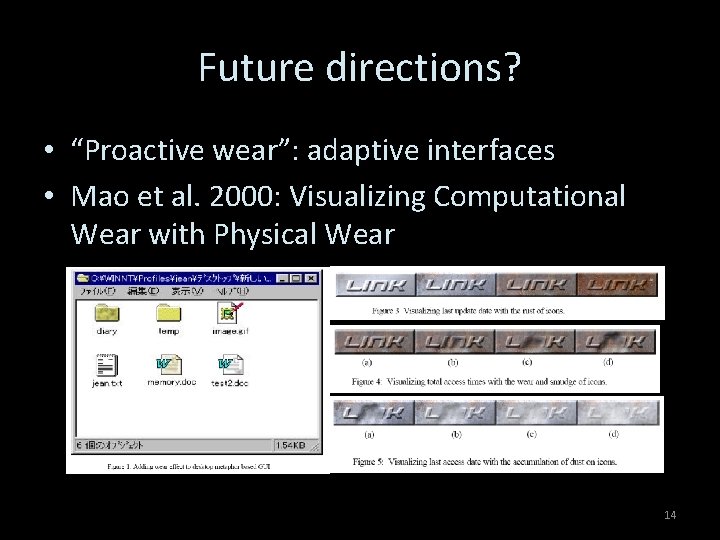
Future directions? • “Proactive wear”: adaptive interfaces • Mao et al. 2000: Visualizing Computational Wear with Physical Wear 14
Timewarp: Techniques for Autonomous Collaboration 15
Autonomous Collaboration • Characterized by: – Asynchronous work on a loosely-shared artifact (e. g. , document example) – Periods of tightly-coupled sharing for integration • Main problem: – Awareness of current and past efforts amongst users • Term from [Kolland, Markus 1994] 16
It’s about time! 17
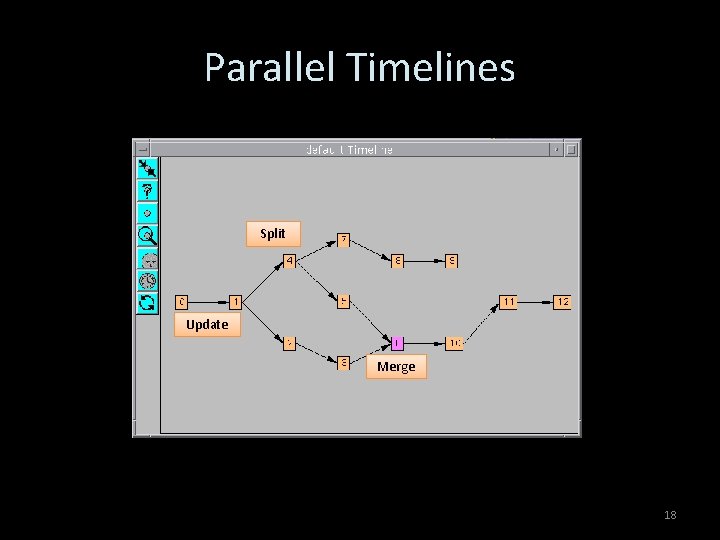
Parallel Timelines Split Update Merge 18
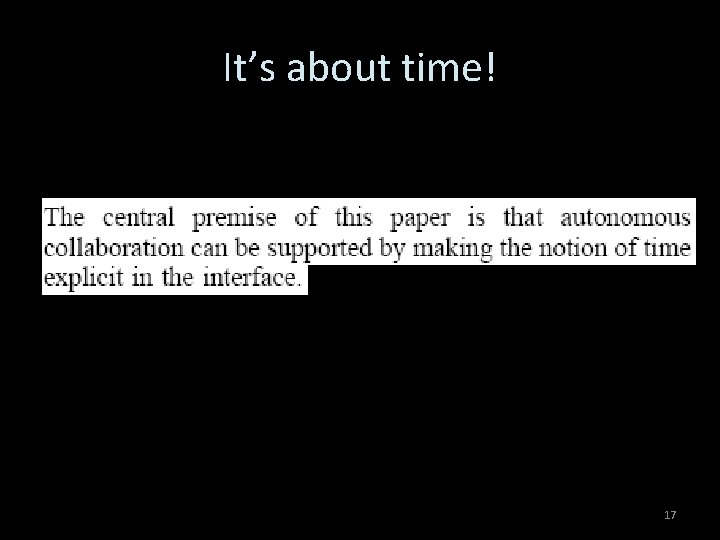
Let’s do the Timewarp again • Time should be malleable – Can adjust any version of the document, not just the current one – Adjust the file upstream, propagate it to all downstream versions (including the present) • Time should be explicit – Visible representation of document timelines 19
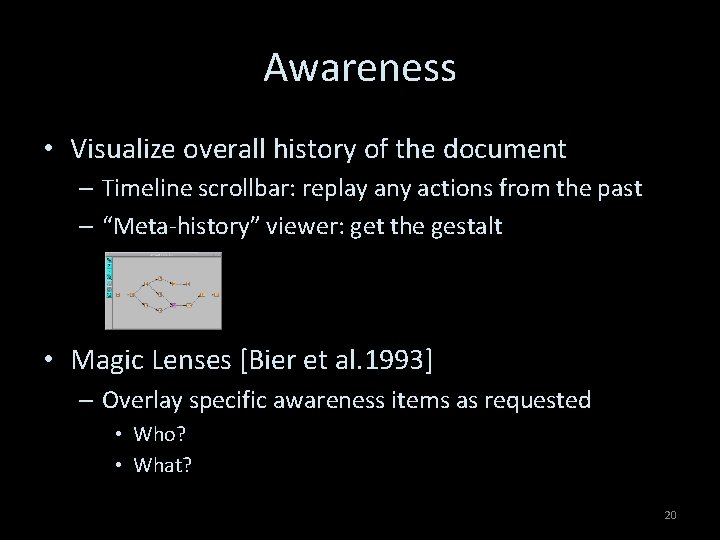
Awareness • Visualize overall history of the document – Timeline scrollbar: replay any actions from the past – “Meta-history” viewer: get the gestalt • Magic Lenses [Bier et al. 1993] – Overlay specific awareness items as requested • Who? • What? 20
“Details” • Detecting and mediating conflicting changes – (see the UIST paper) 21
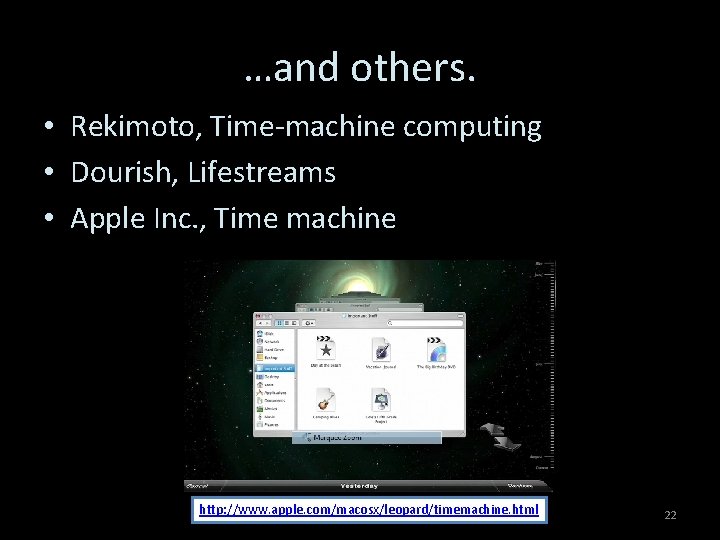
…and others. • Rekimoto, Time-machine computing • Dourish, Lifestreams • Apple Inc. , Time machine http: //www. apple. com/macosx/leopard/timemachine. html 22
- Slides: 22