
Designing e Learning environment for reflection applying Moons
- Slides: 29
Designing e. Learning environment for reflection : applying Moon's preparation guidelines Sara Abdelmawgoud, Ph. D Candidate, University of New South Wales, Canberra
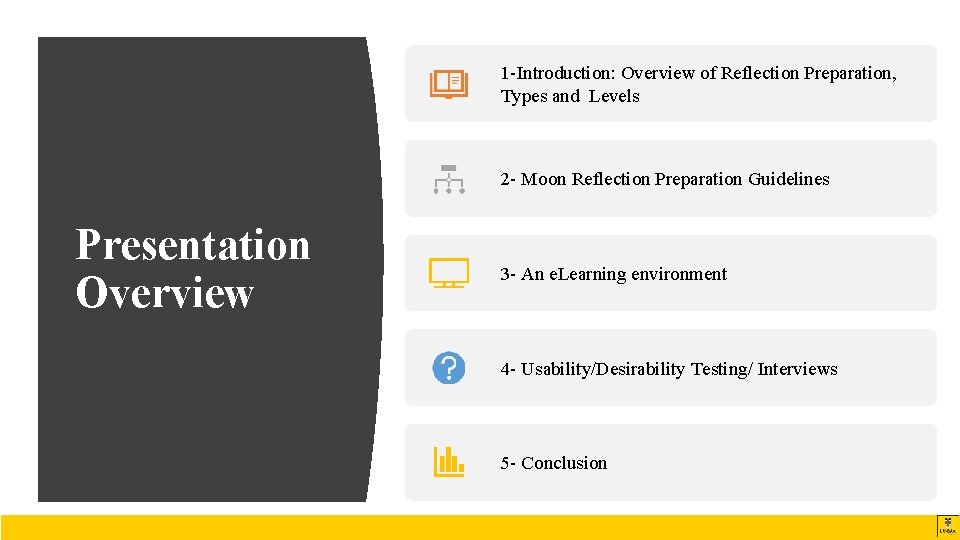
1 -Introduction: Overview of Reflection Preparation, Types and Levels 2 - Moon Reflection Preparation Guidelines Presentation Overview 3 - An e. Learning environment 4 - Usability/Desirability Testing/ Interviews 5 - Conclusion
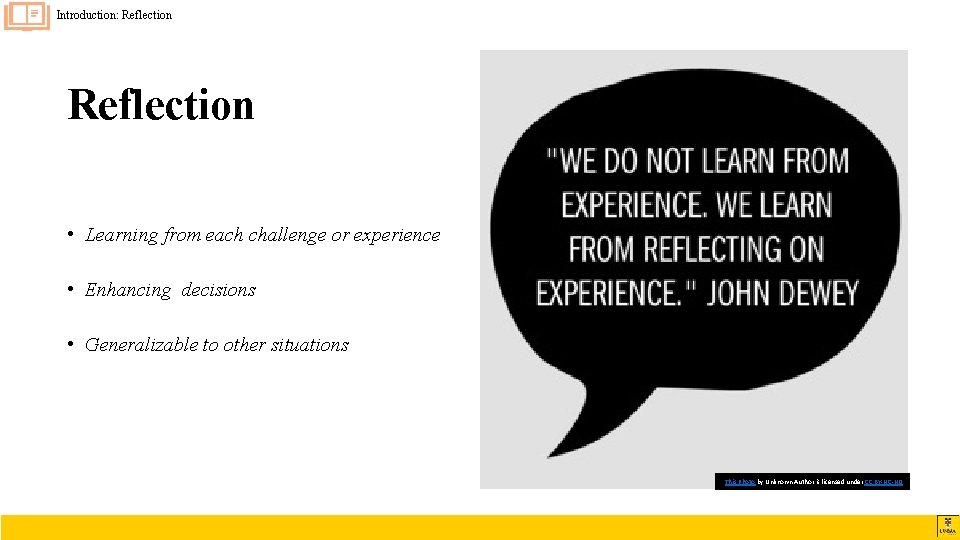
Introduction: Reflection • Learning from each challenge or experience • Enhancing decisions • Generalizable to other situations This Photo by Unknown Author is licensed under CC BY-NC-ND
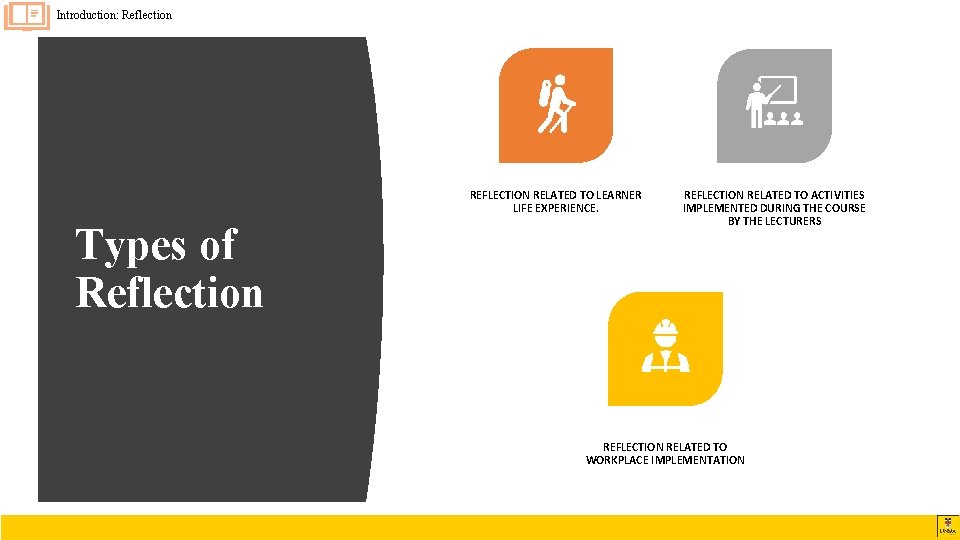
Introduction: Reflection REFLECTION RELATED TO LEARNER LIFE EXPERIENCE. Types of Reflection REFLECTION RELATED TO ACTIVITIES IMPLEMENTED DURING THE COURSE BY THE LECTURERS REFLECTION RELATED TO WORKPLACE IMPLEMENTATION
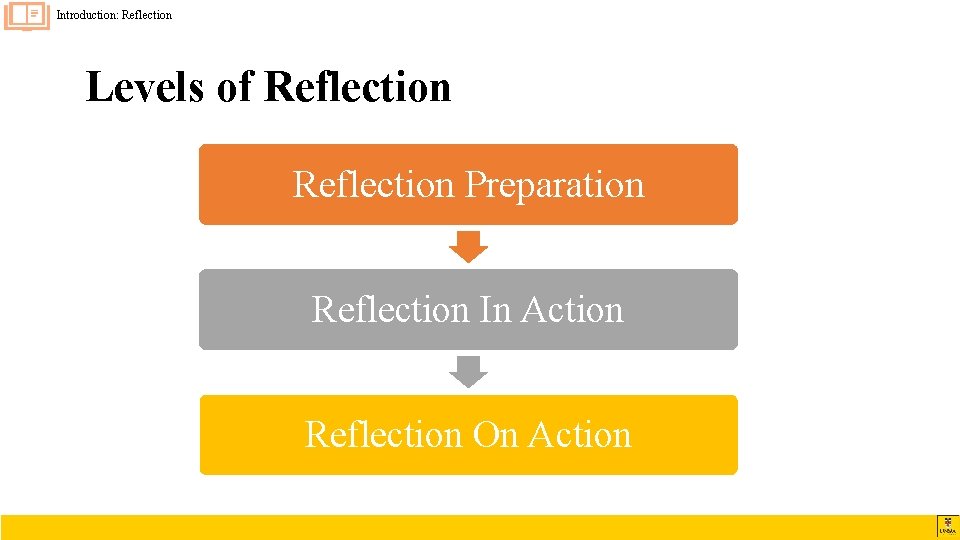
Introduction: Reflection Levels of Reflection Preparation Reflection In Action Reflection On Action
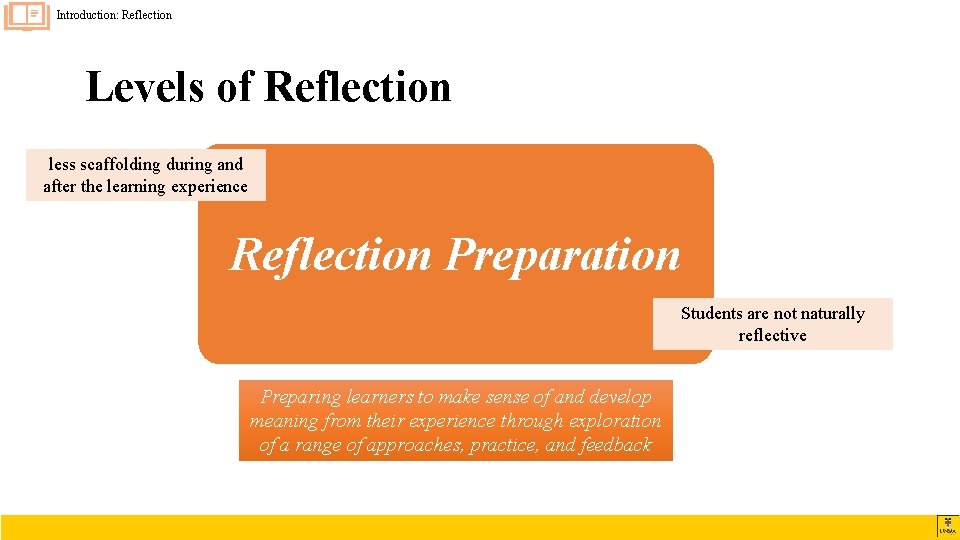
Introduction: Reflection Levels of Reflection less scaffolding during and after the learning experience Reflection Preparation Students are not naturally reflective Preparing learners to make sense of and develop meaning from their experience through exploration of a range of approaches, practice, and feedback
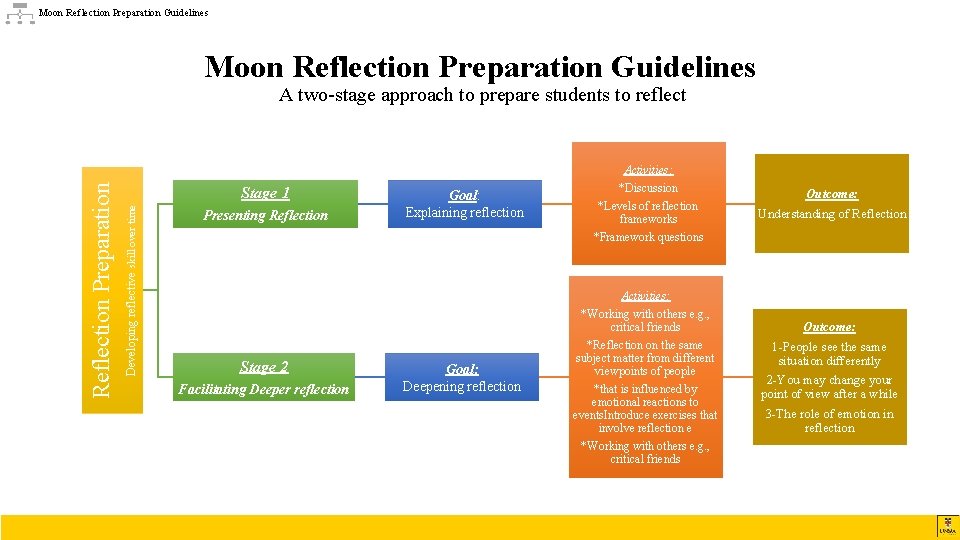
Moon Reflection Preparation Guidelines A two-stage approach to prepare students to reflect Stage 1 Developing reflective skill over time Reflection Preparation Activities: Presenting Reflection Goal: Explaining reflection *Discussion *Levels of reflection frameworks *Framework questions Outcome: Understanding of Reflection Activities: Stage 2 Facilitating Deeper reflection Goal: Deepening reflection *Working with others e. g. , critical friends *Reflection on the same subject matter from different viewpoints of people *that is influenced by emotional reactions to events. Introduce exercises that involve reflection e *Working with others e. g. , critical friends Outcome: 1 -People see the same situation differently 2 -You may change your point of view after a while 3 -The role of emotion in reflection
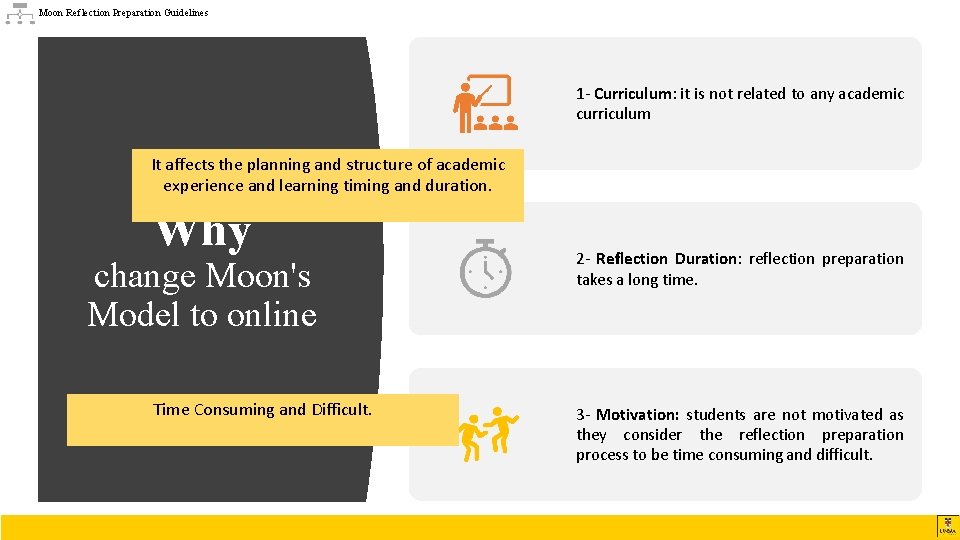
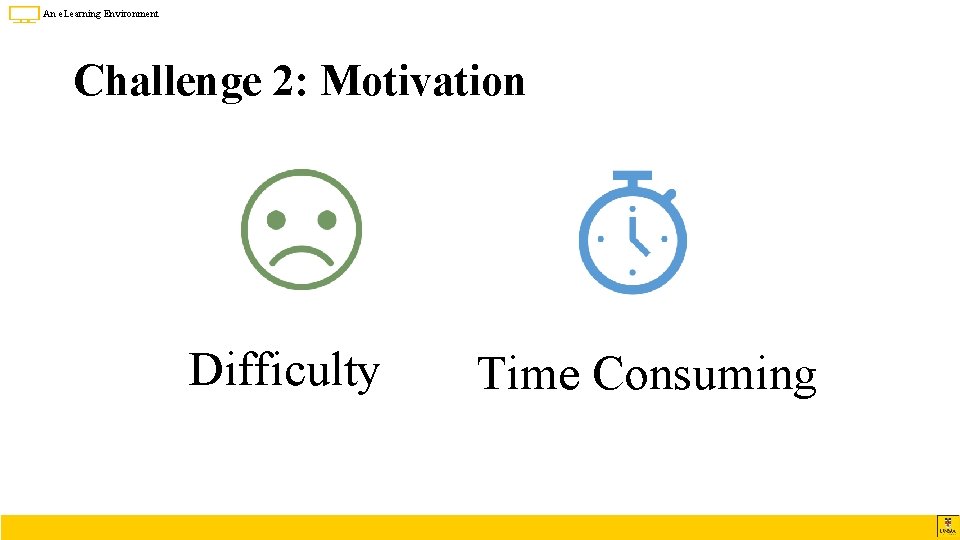
Moon Reflection Preparation Guidelines 1 - Curriculum: it is not related to any academic curriculum It affects the planning and structure of academic experience and learning timing and duration. Why change Moon's Model to online Time Consuming and Difficult. 2 - Reflection Duration: reflection preparation takes a long time. 3 - Motivation: students are not motivated as they consider the reflection preparation process to be time consuming and difficult.
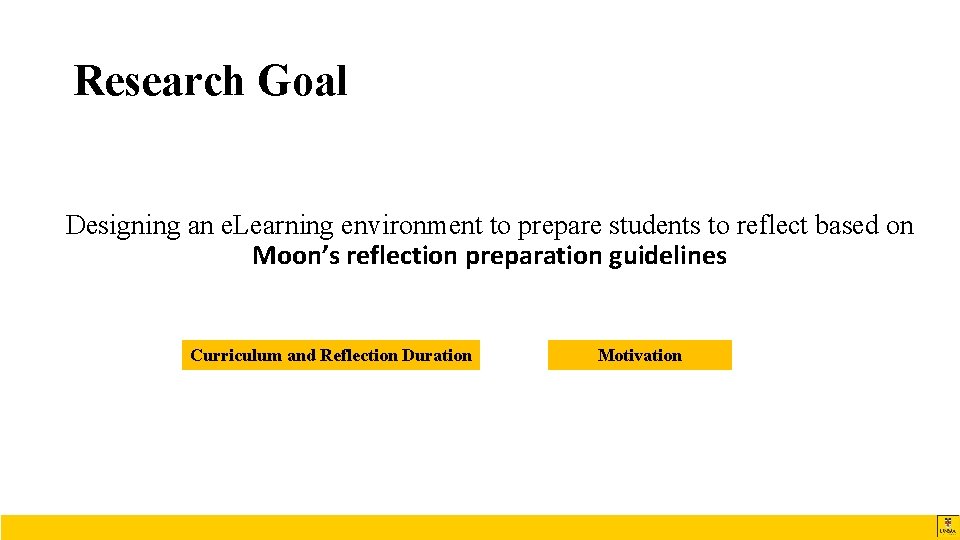
Research Goal Designing an e. Learning environment to prepare students to reflect based on Moon’s reflection preparation guidelines Curriculum and Reflection Duration Motivation
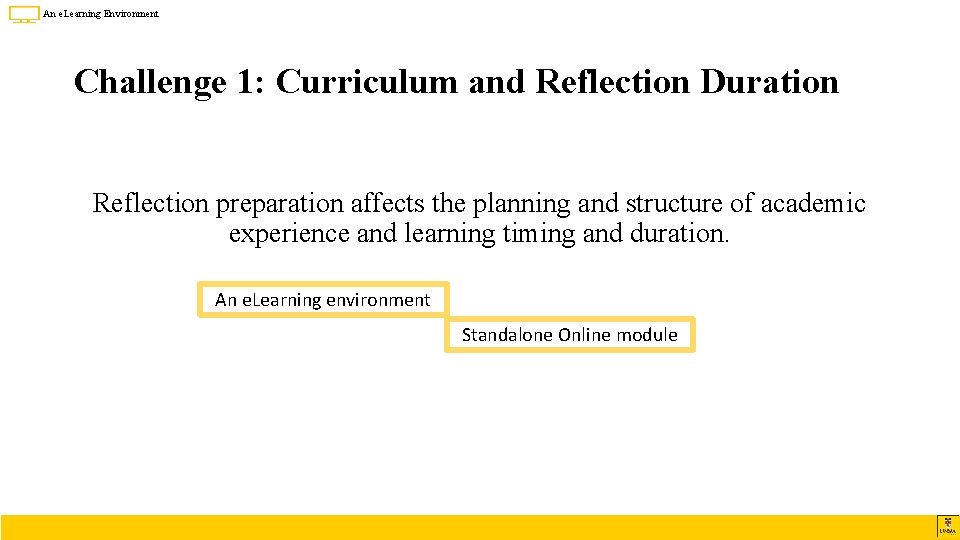
An e. Learning Environment Challenge 1: Curriculum and Reflection Duration Reflection preparation affects the planning and structure of academic experience and learning timing and duration. An e. Learning environment Standalone Online module
An e. Learning Environment Challenge 2: Motivation Difficulty Time Consuming
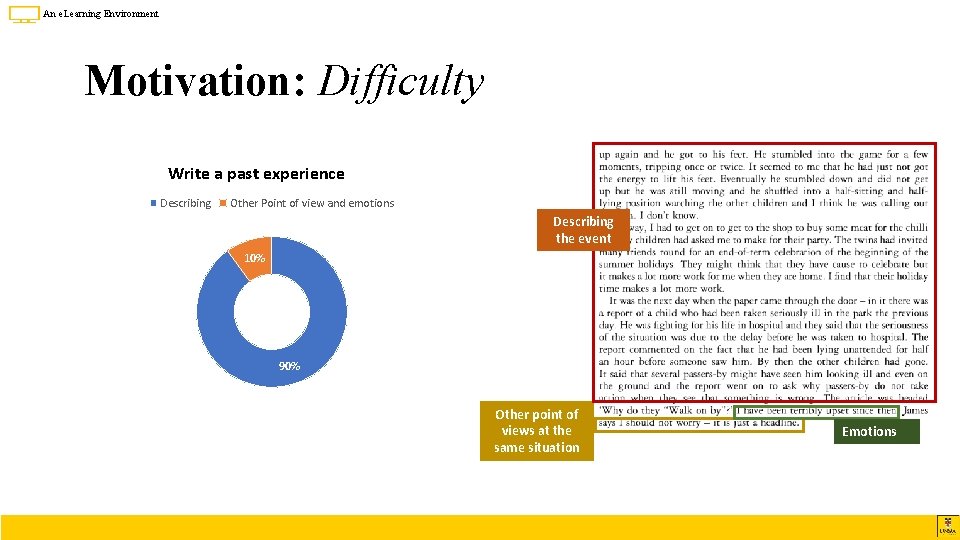
An e. Learning Environment Motivation: Difficulty Write a past experience Describing Other Point of view and emotions Describing the event 10% 90% Other point of views at the same situation Emotions
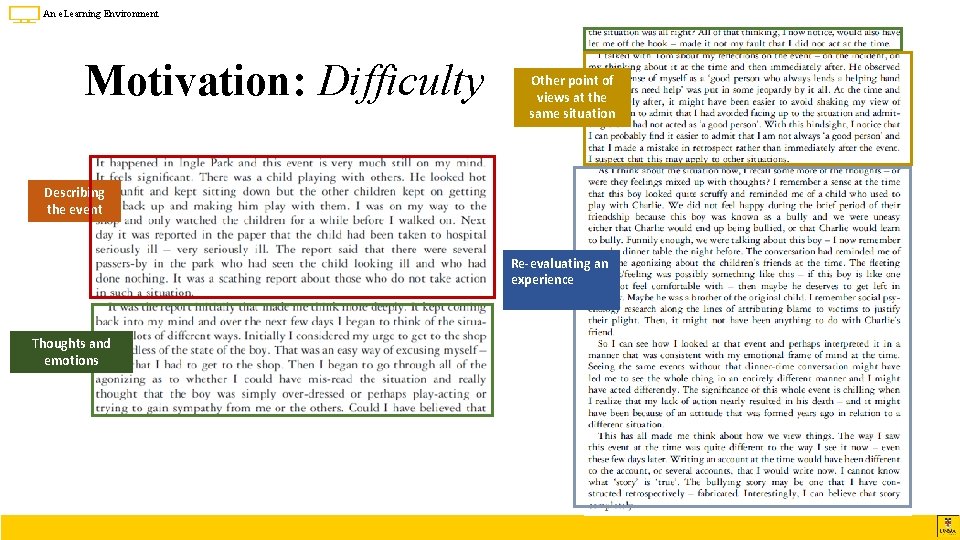
An e. Learning Environment Motivation: Difficulty Other point of views at the same situation Describing the event Re-evaluating an experience Thoughts and emotions
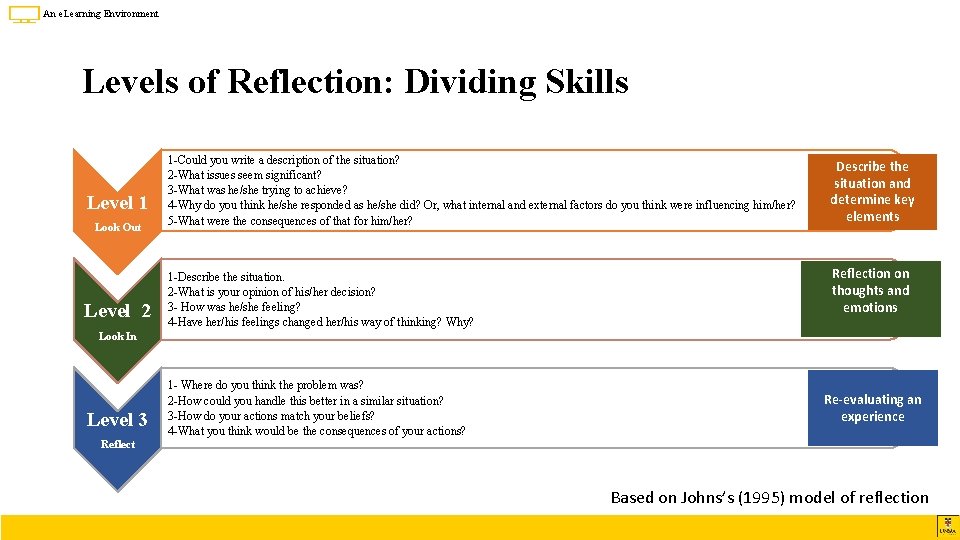
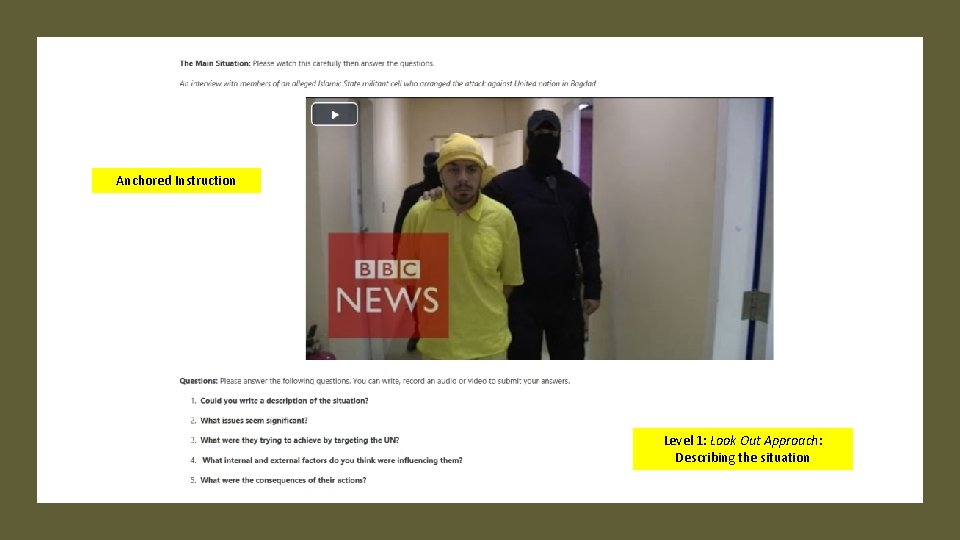
An e. Learning Environment Levels of Reflection: Dividing Skills Level 1 Look Out Level 2 1 -Could you write a description of the situation? 2 -What issues seem significant? 3 -What was he/she trying to achieve? 4 -Why do you think he/she responded as he/she did? Or, what internal and external factors do you think were influencing him/her? 5 -What were the consequences of that for him/her? Describe the situation and determine key elements 1 -Describe the situation. 2 -What is your opinion of his/her decision? 3 - How was he/she feeling? 4 -Have her/his feelings changed her/his way of thinking? Why? Reflection on thoughts and emotions Look In Level 3 1 - Where do you think the problem was? 2 -How could you handle this better in a similar situation? 3 -How do your actions match your beliefs? 4 -What you think would be the consequences of your actions? Re-evaluating an experience Reflect Based on Johns’s (1995) model of reflection
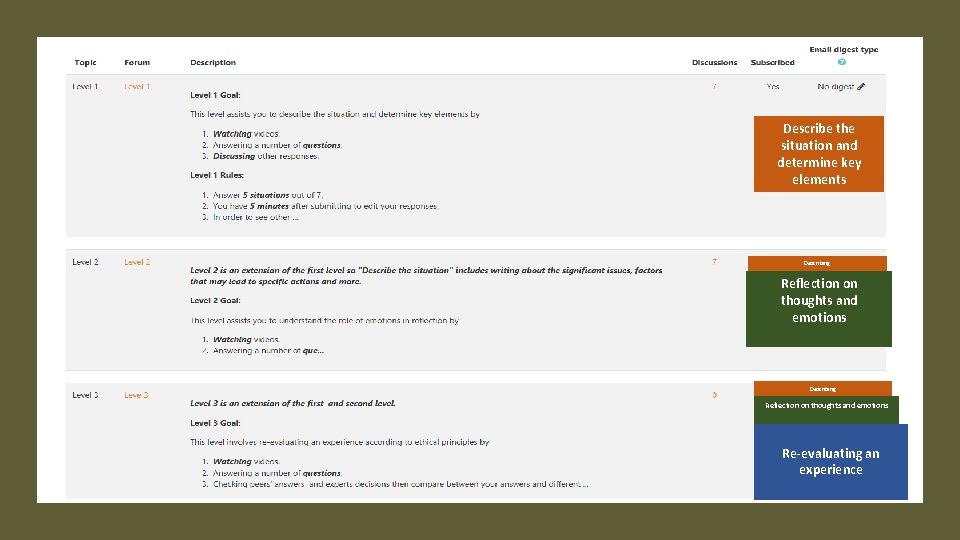
Describe the situation and determine key elements Describing Reflection on thoughts and emotions Re-evaluating an experience
An e. Learning Environment Motivation Time consuming Difficulty
An e. Learning Environment Motivation Time Consuming
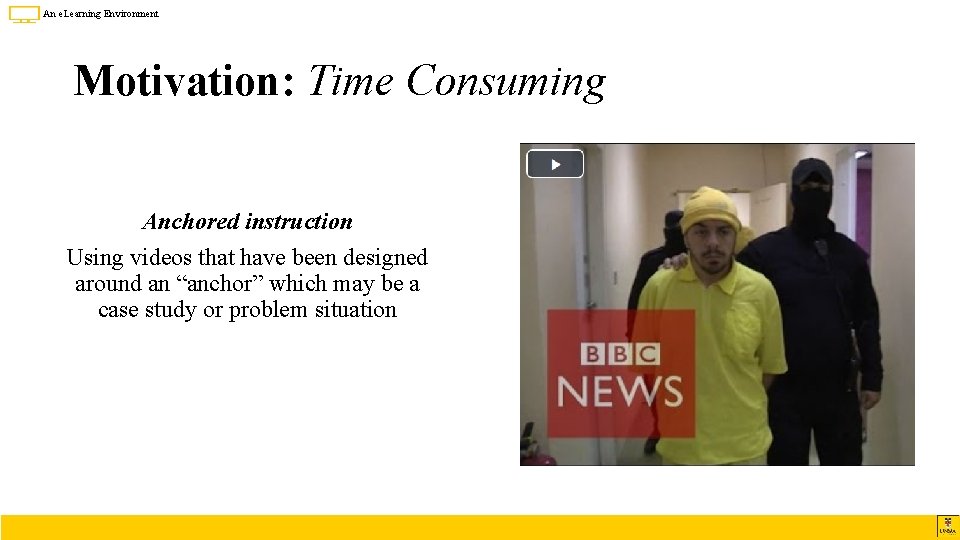
An e. Learning Environment Motivation: Time Consuming Anchored instruction Using videos that have been designed around an “anchor” which may be a case study or problem situation
Anchored Instruction Level 1: Look Out Approach: Describing the situation
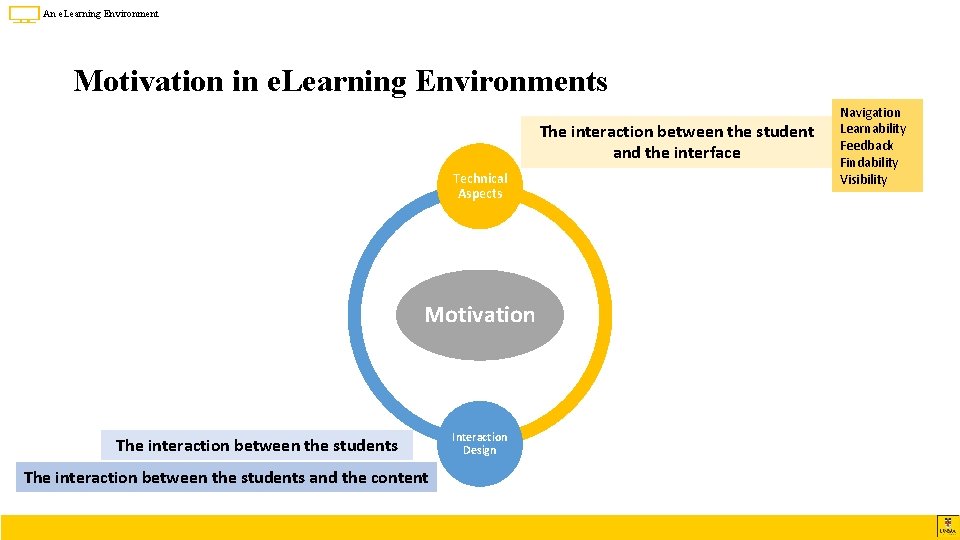
An e. Learning Environment Motivation in e. Learning Environments The interaction between the student and the interface Technical Aspects Motivation The interaction between the students and the content Interaction Design Navigation Learnability Feedback Findability Visibility
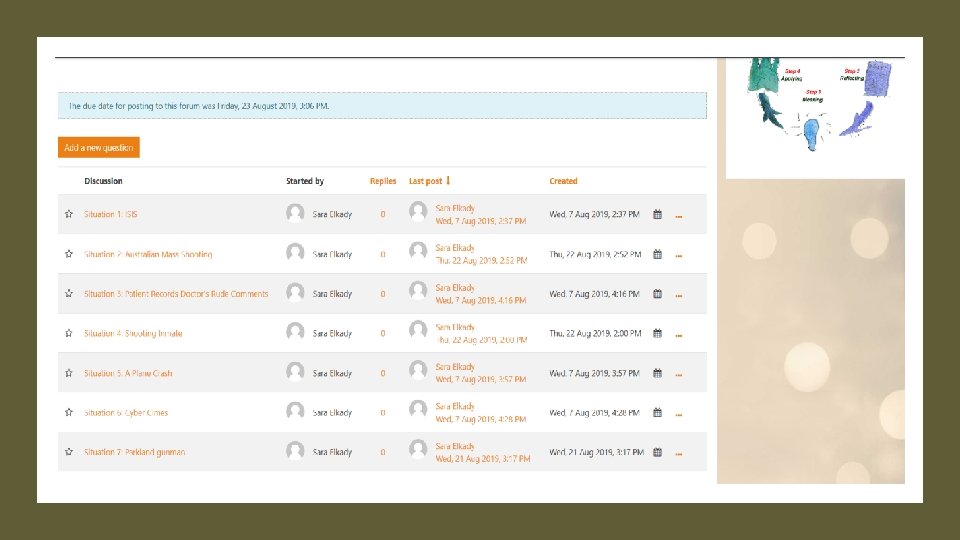
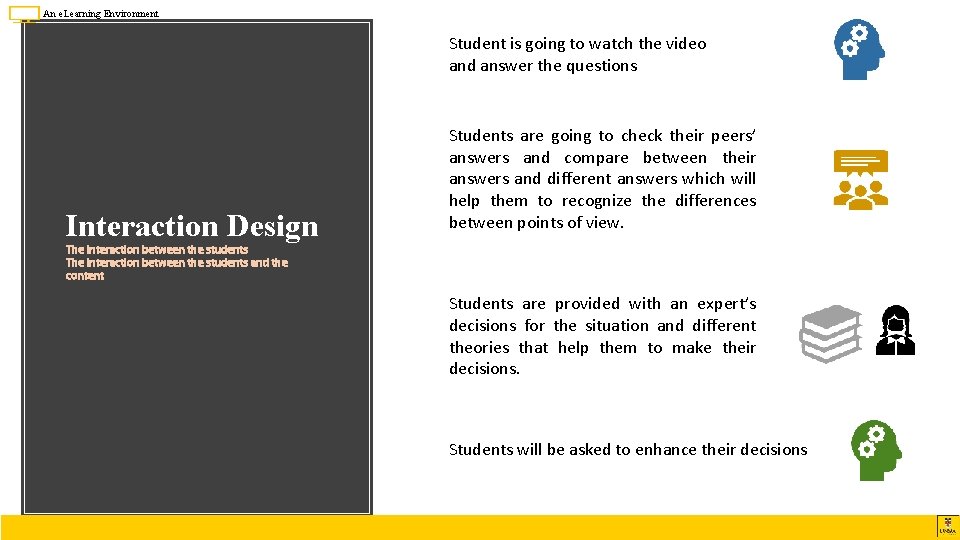
An e. Learning Environment Student is going to watch the video and answer the questions Interaction Design Students are going to check their peers’ answers and compare between their answers and different answers which will help them to recognize the differences between points of view. The interaction between the students and the content Students are provided with an expert’s decisions for the situation and different theories that help them to make their decisions. Students will be asked to enhance their decisions
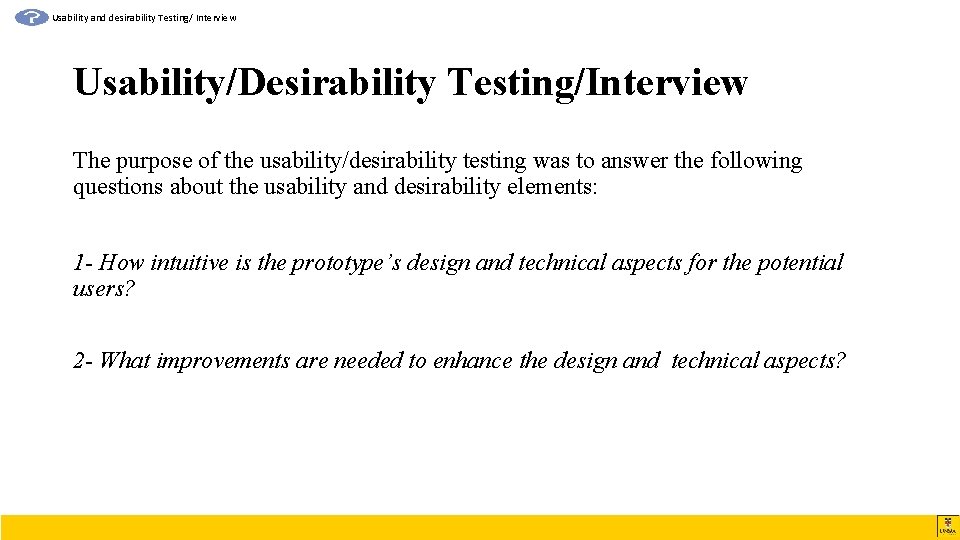
Usability and desirability Testing/ Interview Usability/Desirability Testing/Interview The purpose of the usability/desirability testing was to answer the following questions about the usability and desirability elements: 1 - How intuitive is the prototype’s design and technical aspects for the potential users? 2 - What improvements are needed to enhance the design and technical aspects?
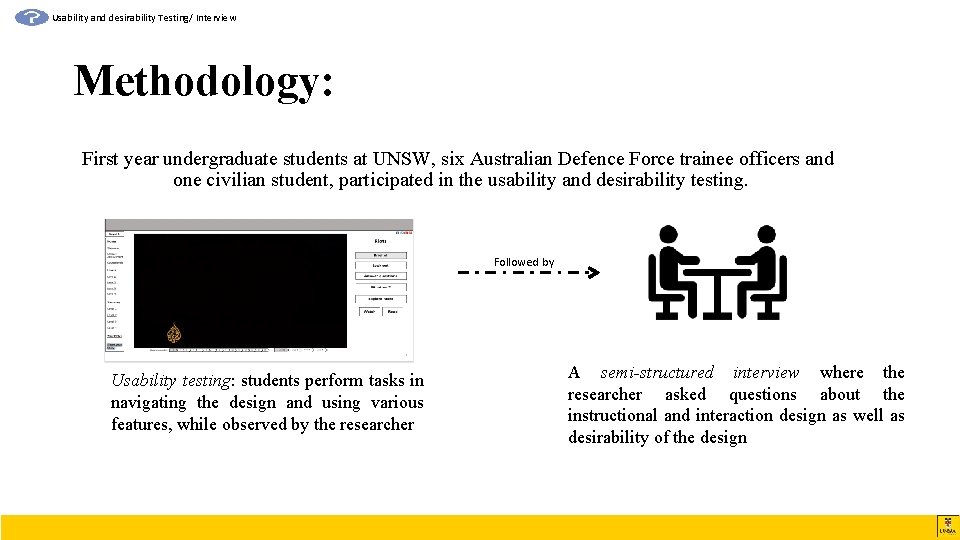
Usability and desirability Testing/ Interview Methodology: First year undergraduate students at UNSW, six Australian Defence Force trainee officers and one civilian student, participated in the usability and desirability testing. Followed by Usability testing: students perform tasks in navigating the design and using various features, while observed by the researcher A semi-structured interview where the researcher asked questions about the instructional and interaction design as well as desirability of the design
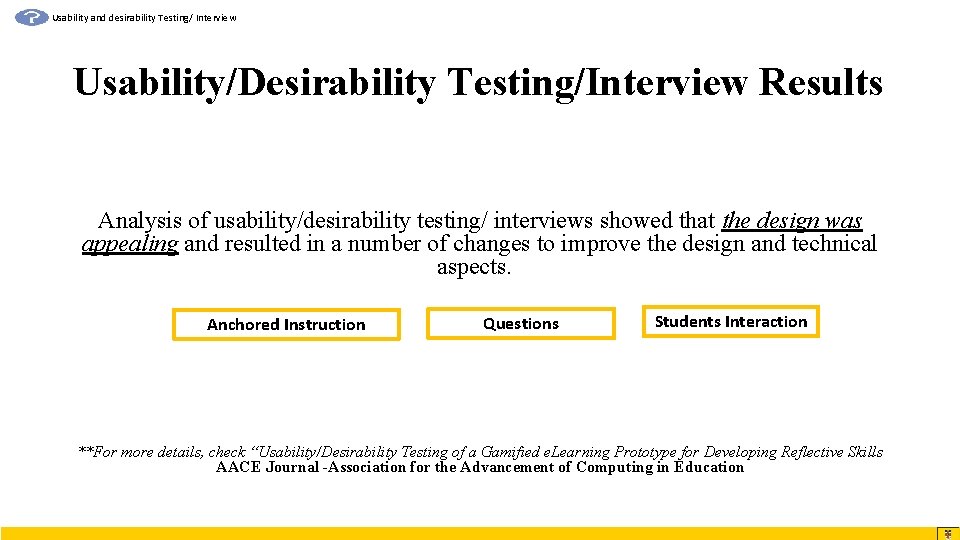
Usability and desirability Testing/ Interview Usability/Desirability Testing/Interview Results Analysis of usability/desirability testing/ interviews showed that the design was appealing and resulted in a number of changes to improve the design and technical aspects. Anchored Instruction Questions Students Interaction **For more details, check “Usability/Desirability Testing of a Gamified e. Learning Prototype for Developing Reflective Skills AACE Journal -Association for the Advancement of Computing in Education
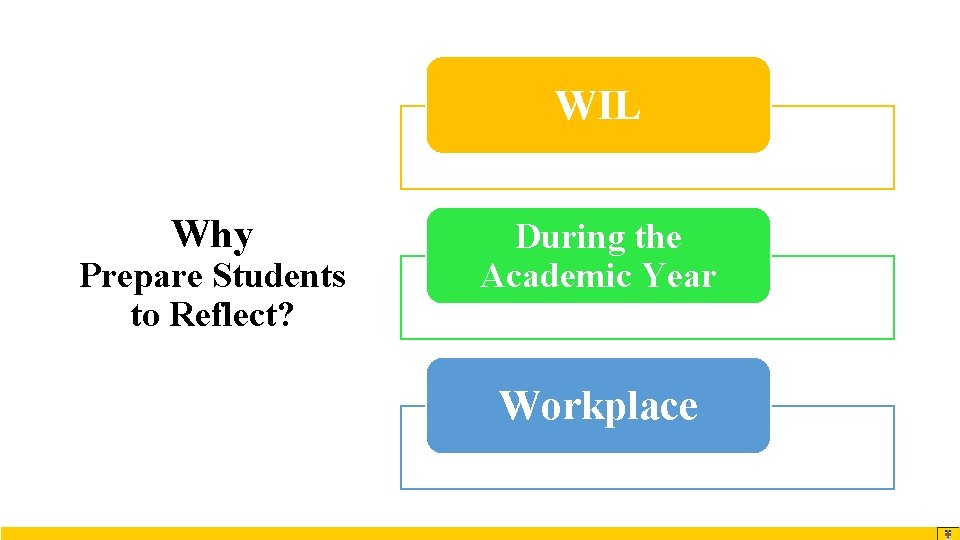
WIL Why Prepare Students to Reflect? During the Academic Year Workplace
Conclusion Reflection is the means by which awareness of experience is recognized as knowledge and is made explicit and generalizable to other situations.
Questions?
References Coulson, D. , & Harvey, M. (2013). Scaffolding student reflection for experience-based learning: a framework. Teaching in Higher Education, 18(4), 401 -413. doi: 10. 1080/13562517. 2012. 752726 Johns, C. (1995). Framing learning through reflection within Carper's fundamental ways of knowing in nursing. Journal of Advanced Nursing, 22(2), 226 -234. doi: 10. 1046/j. 1365 -2648. 1995. 22020226. x Moon, J. A. (2013). A handbook of reflective and experiential learning: Theory and practice: Routledge.