
DESIGNING COURSES for SIGNIFICANT LEARNING Workshop led by

DESIGNING COURSES for SIGNIFICANT LEARNING Workshop led by: L. Dee Fink, Ph. D. Educational Consultant in Higher Education Author: Creating Significant Learning Experiences East Tennessee State University January 8, 2018
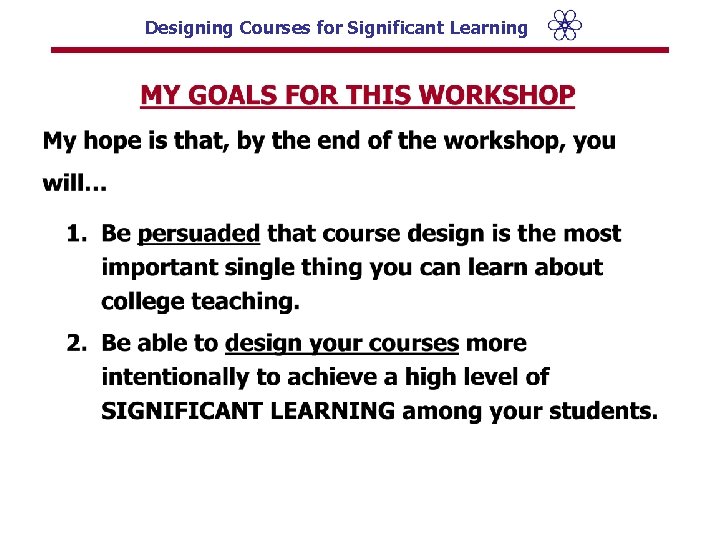
Designing Courses for Significant Learning
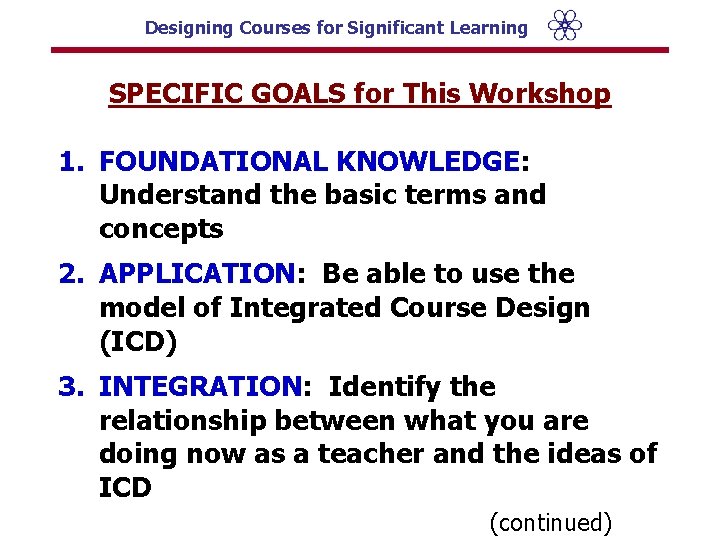
Designing Courses for Significant Learning SPECIFIC GOALS for This Workshop 1. FOUNDATIONAL KNOWLEDGE: Understand the basic terms and concepts 2. APPLICATION: Be able to use the model of Integrated Course Design (ICD) 3. INTEGRATION: Identify the relationship between what you are doing now as a teacher and the ideas of ICD (continued)
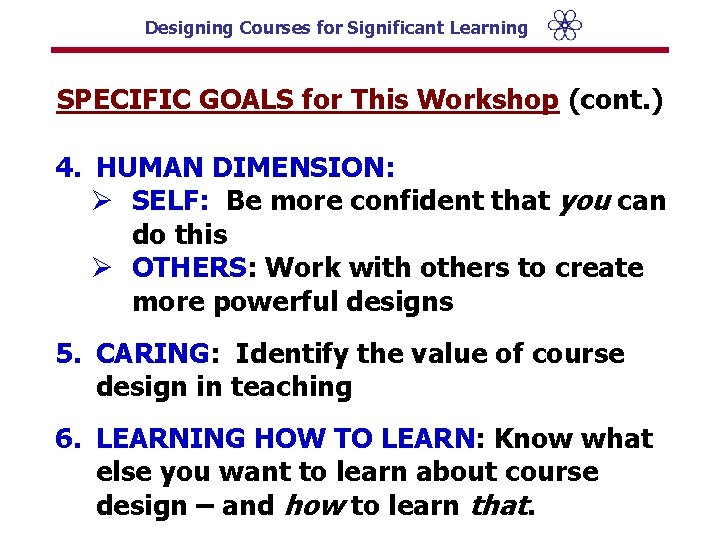
Designing Courses for Significant Learning SPECIFIC GOALS for This Workshop (cont. ) 4. HUMAN DIMENSION: Ø SELF: Be more confident that you can do this Ø OTHERS: Work with others to create more powerful designs 5. CARING: Identify the value of course design in teaching 6. LEARNING HOW TO LEARN: Know what else you want to learn about course design – and how to learn that.
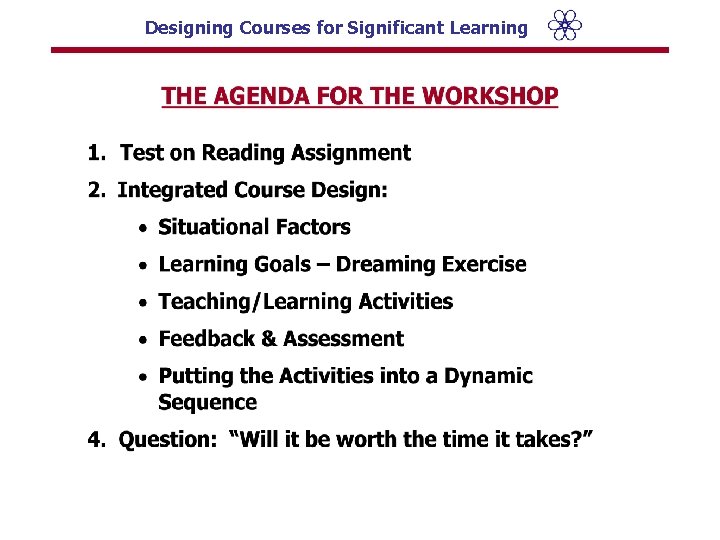
Designing Courses for Significant Learning
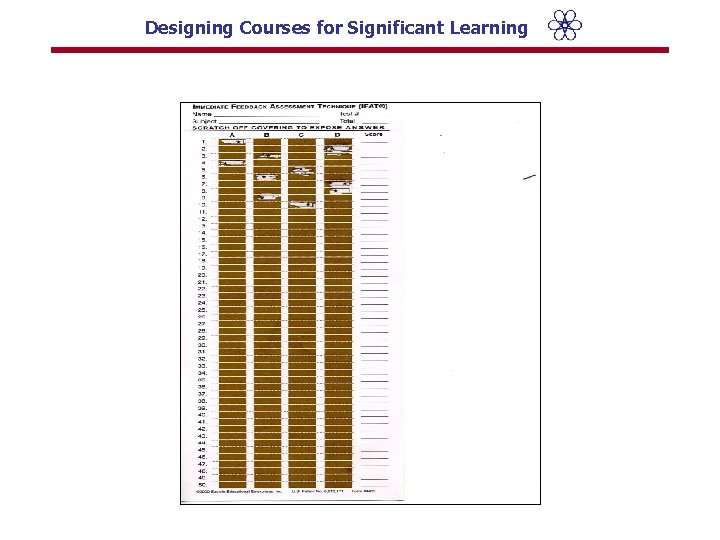
Designing Courses for Significant Learning Readiness Assessment Test (RAT)
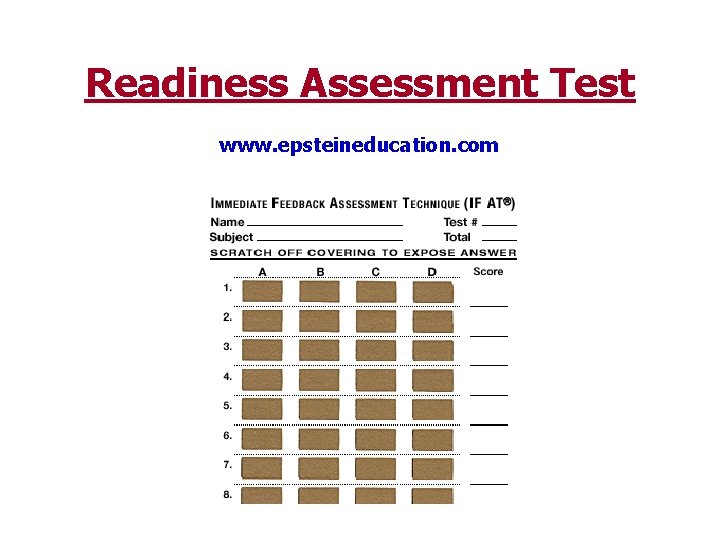
Readiness Assessment Test www. epsteineducation. com
Designing Courses for Significant Learning
Designing Courses for Significant Learning # of SCRATCHES: # of POINTS: 1 - - 4 2 - - 2 3 - - 1 4 - - 0
Designing Courses for Significant Learning Integrated Course Design: SITUATIONAL FACTORS
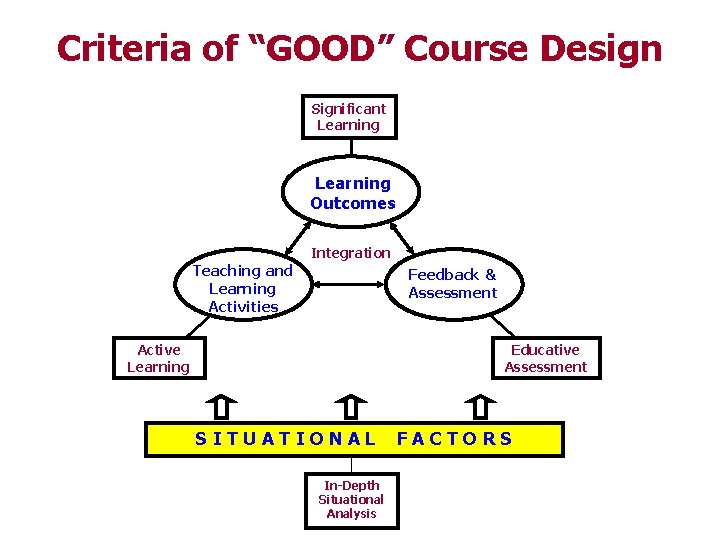
Criteria of “GOOD” Course Design Significant Learning Outcomes Integration Teaching and Learning Activities Feedback & Assessment Active Learning Educative Assessment S I T U A T I O N A L F A C T O R S In-Depth Situational Analysis
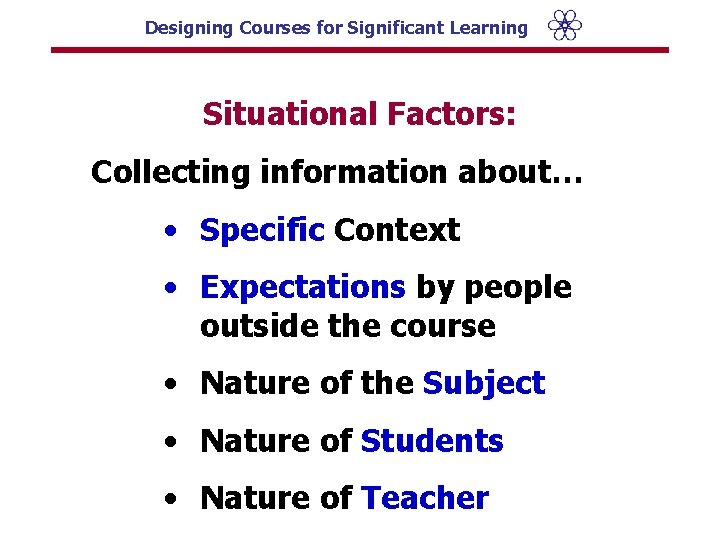
Designing Courses for Significant Learning Situational Factors: Collecting information about… • Specific Context • Expectations by people outside the course • Nature of the Subject • Nature of Students • Nature of Teacher
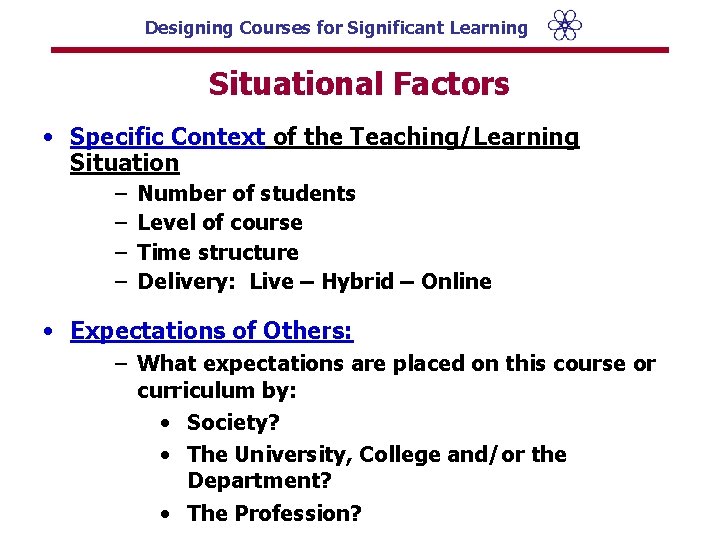
Designing Courses for Significant Learning Situational Factors • Specific Context of the Teaching/Learning Situation – – Number of students Level of course Time structure Delivery: Live – Hybrid – Online • Expectations of Others: – What expectations are placed on this course or curriculum by: • Society? • The University, College and/or the Department? • The Profession?
Designing Courses for Significant Learning • Nature of the Subject – Primarily theoretical, practical, or some combination? – Convergent or divergent? – Important changes or controversies occurring? • Characteristics of the Learners – Their life situation (e. g. , working, family, professional goals)? – Their prior knowledge, experiences, and initial feelings? – Their learning goals, expectations, and preferred learning styles?
Designing Courses for Significant Learning • Characteristics of the Teacher(s) – My beliefs and values about teaching and learning? – My attitude toward: the subject, students? – My teaching skills? – My level of knowledge or familiarity with this subject?
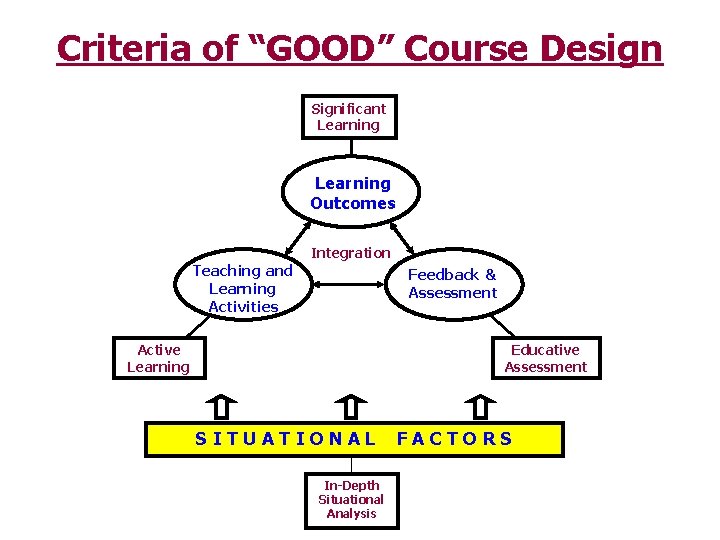
Criteria of “GOOD” Course Design Significant Learning Outcomes Integration Teaching and Learning Activities Feedback & Assessment Active Learning Educative Assessment S I T U A T I O N A L F A C T O R S In-Depth Situational Analysis
Designing Courses for Significant Learning Integrated Course Design: DESIRED LEARNING OUTCOMES
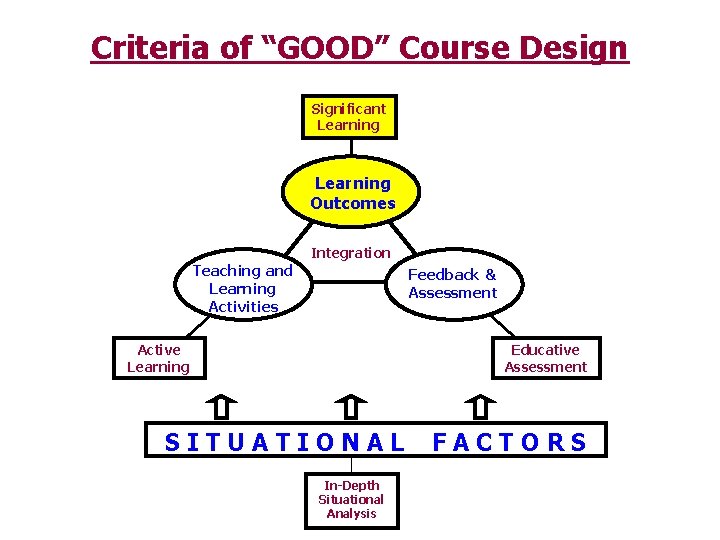
Criteria of “GOOD” Course Design Significant Learning Outcomes Integration Teaching and Learning Activities Feedback & Assessment Active Learning Educative Assessment S I T U A T I O N A L F A C T O R S In-Depth Situational Analysis
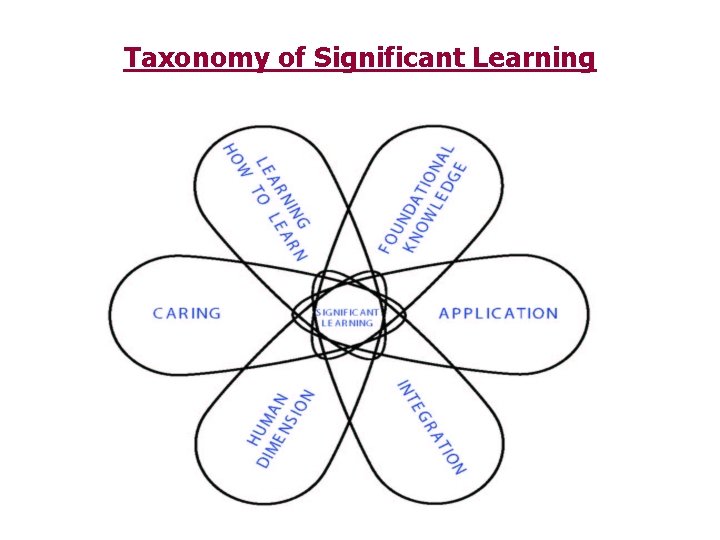
Taxonomy of Significant Learning
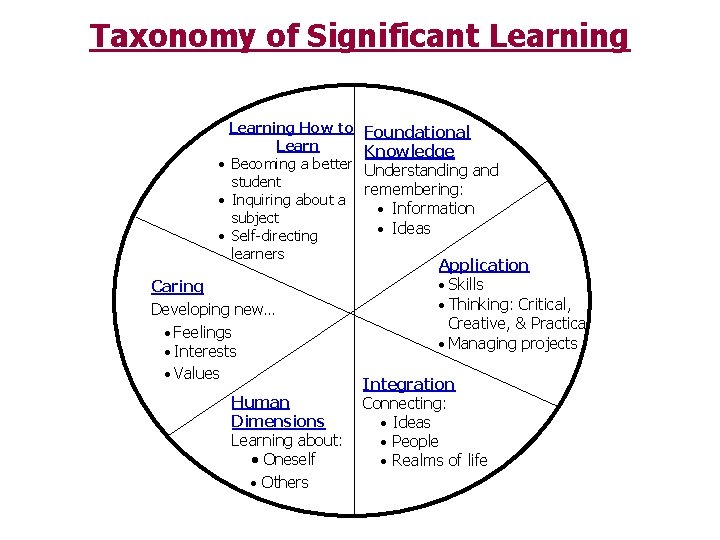
Taxonomy of Significant Learning How to Learn · Becoming a better student · Inquiring about a subject · Self-directing learners Caring Developing new… · Feelings · Interests · Values Human Dimensions Learning about: · Oneself · Others Foundational Knowledge Understanding and remembering: · Information · Ideas Application · Skills · Thinking: Critical, Creative, & Practical · Managing projects Integration Connecting: · Ideas · People · Realms of life
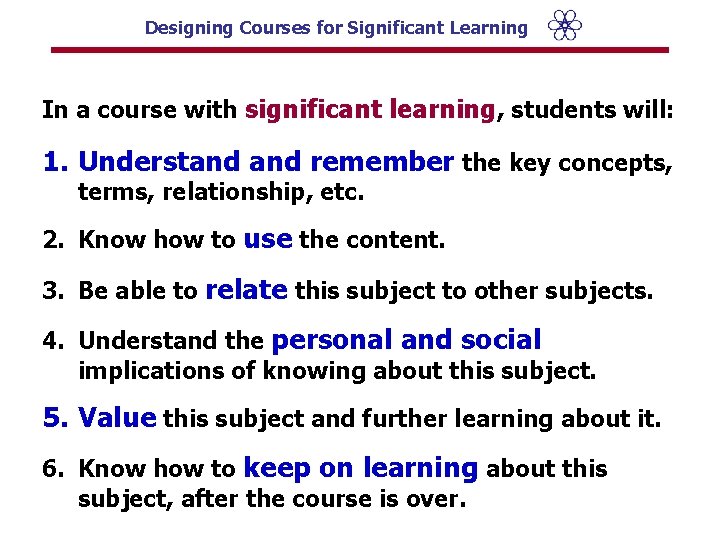
Designing Courses for Significant Learning In a course with significant learning, students will: 1. Understand remember the key concepts, terms, relationship, etc. 2. Know how to use the content. 3. Be able to relate this subject to other subjects. 4. Understand the personal and social implications of knowing about this subject. 5. Value this subject and further learning about it. 6. Know how to keep on learning about this subject, after the course is over.
Designing Courses for Significant Learning Can you CLASSIFY these Learning Outcomes? “By the end of the course, students will be able to… • Demonstrate increased confidence in using ICD to redesign their own courses. • Identify the six parts of the taxonomy of significant learning when looking at examples of outcomes.
Designing Courses for Significant Learning Can you CLASSIFY these Learning Outcomes? “By the end of the course, students will be able to… • Find increased value in the importance of course design in higher education. • Use some of the information learned in the course when given a specific hospitality situation.
Designing Courses for Significant Learning Rate the QUALITY of these Learning Outcomes: 1. Learn the basic theories of Social Psychology. 2. Write an analysis of a major historical event, using historical information and reasoning in an appropriate manner. 3. Communicate in Spanish with grammatically correct sentences.
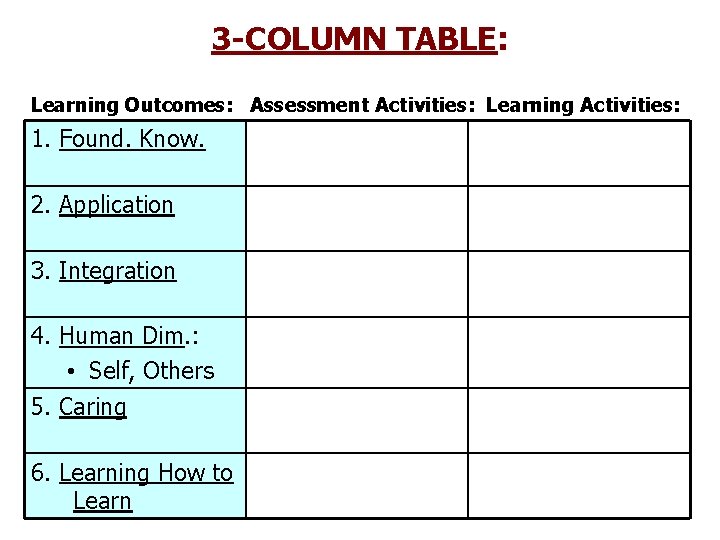
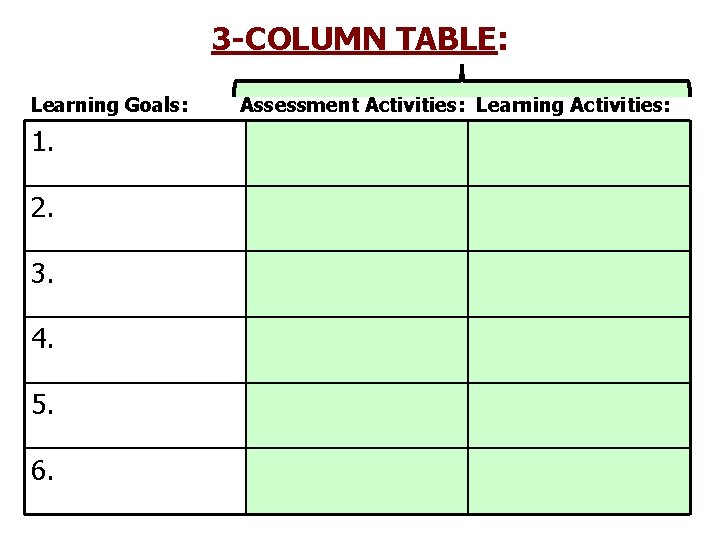
3 -COLUMN TABLE: Learning Outcomes: Assessment Activities: Learning Activities: 1. Found. Know. 2. Application 3. Integration 4. Human Dim. : • Self, Others 5. Caring 6. Learning How to Learn
Designing Courses for Significant Learning Individual Assignment: • Write one Learning Outcome for one of your courses: 1. From the Taxonomy, on: “INTEGRATION” • Preface: “My hope is that, by the end of the course, students will be able to…. ” • Suggestions: ü Pay close attention to your VERBS ü Strive for “High Visibility” for students
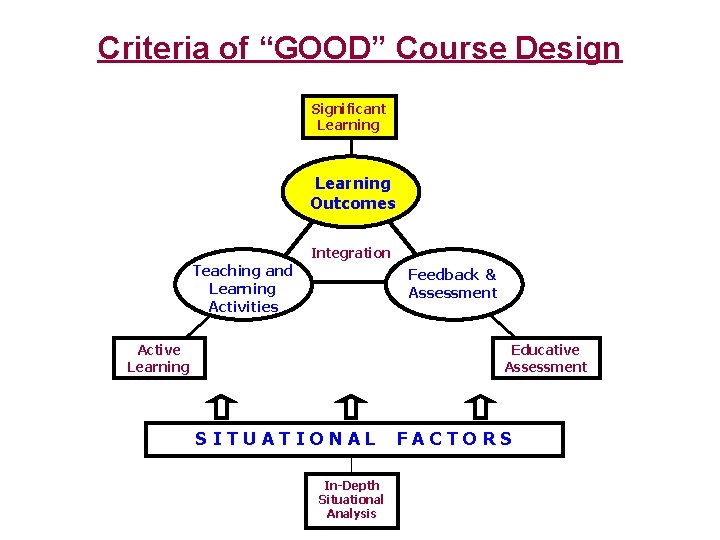
Criteria of “GOOD” Course Design Significant Learning Outcomes Integration Teaching and Learning Activities Feedback & Assessment Active Learning Educative Assessment S I T U A T I O N A L F A C T O R S In-Depth Situational Analysis
Designing Courses for Significant Learning Integrated Course Design: FEEDBACK & ASSESSMENT
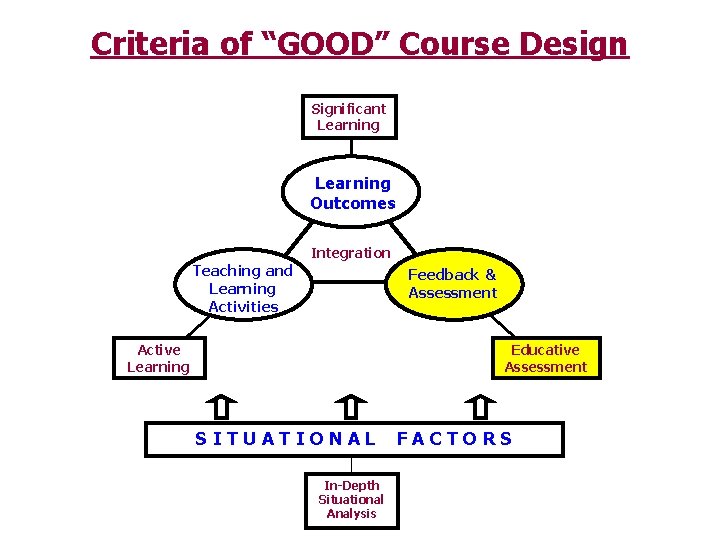
Criteria of “GOOD” Course Design Significant Learning Outcomes Integration Teaching and Learning Activities Feedback & Assessment Active Learning Educative Assessment S I T U A T I O N A L F A C T O R S In-Depth Situational Analysis
Designing Courses for Significant Learning ASSESSMENT Activities: 2 Steps 1. Identify assessment activities appropriate to each of your learning goals, using the 3 -column table. 2. Use principles of Educative Assessment to develop powerful assessment activities
Designing Courses for Significant Learning ASSESSMENT ACTIVITIES: 2 Steps 1. Identify assessment activities appropriate to each of your learning goals, using the 3 -column table. 2. Use principles of Educative Assessment to develop powerful assessment activities
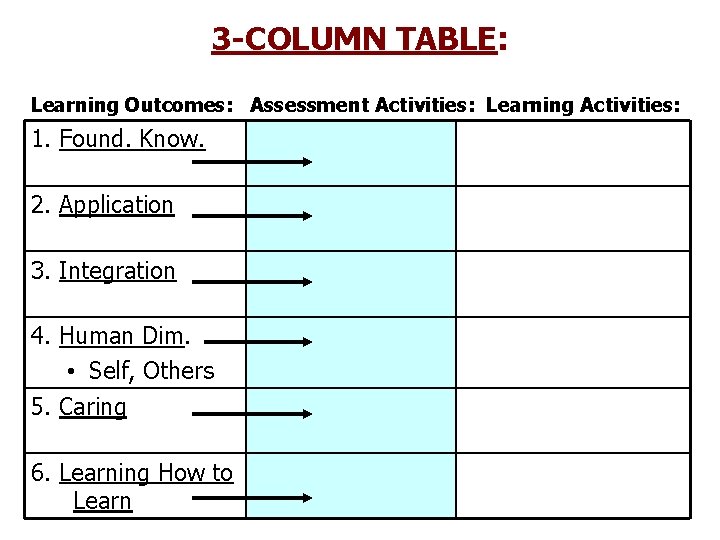
3 -COLUMN TABLE: Learning Outcomes: Assessment Activities: Learning Activities: 1. Found. Know. 2. Application 3. Integration 4. Human Dim. • Self, Others 5. Caring 6. Learning How to Learn
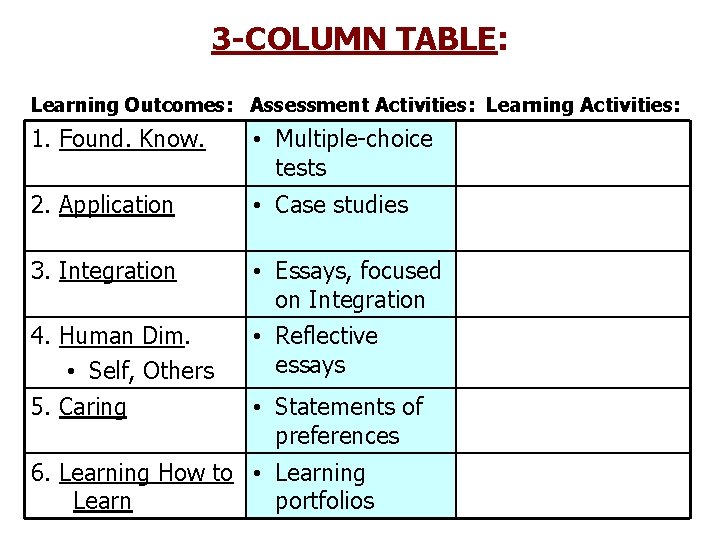
3 -COLUMN TABLE: Learning Outcomes: Assessment Activities: Learning Activities: 1. Found. Know. • Multiple-choice tests 2. Application • Case studies 3. Integration • Essays, focused on Integration 4. Human Dim. • Self, Others 5. Caring • Reflective essays • Statements of preferences 6. Learning How to • Learning Learn portfolios
Designing Courses for Significant Learning “Feedback & Assessment” FIRST ASSIGNMENT • IDENTIFY appropriate assessment activities for your “Integration” Learning Goal, using the 3 -column table. • Important Principle: Ø Different Assessment Activities for Different Learning Goals (see handout)
Designing Courses for Significant Learning ASSESSMENT ACTIVITIES: 1. Identify assessment activities appropriate to each of your 2 learning goals, using the 3 -column table. 2 nd Task: Ø Check your assessment activities, using the principles of Educative Assessment
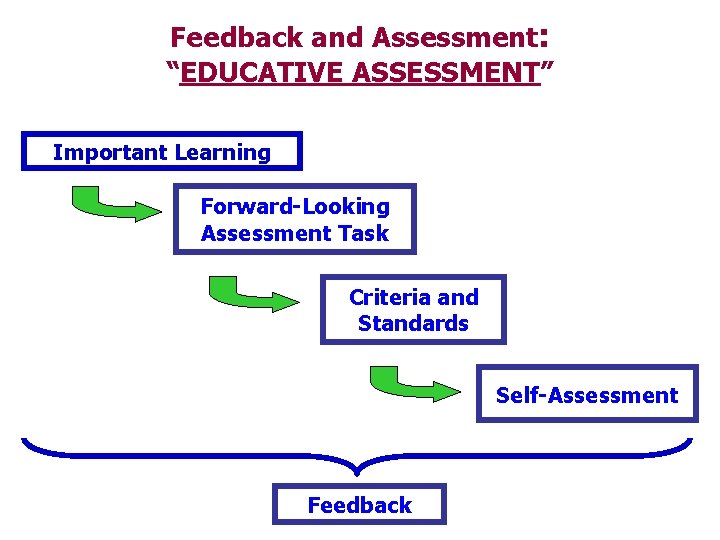
Feedback and Assessment: “EDUCATIVE ASSESSMENT” Important Learning Forward-Looking Assessment Task Criteria and Standards Self-Assessment Feedback
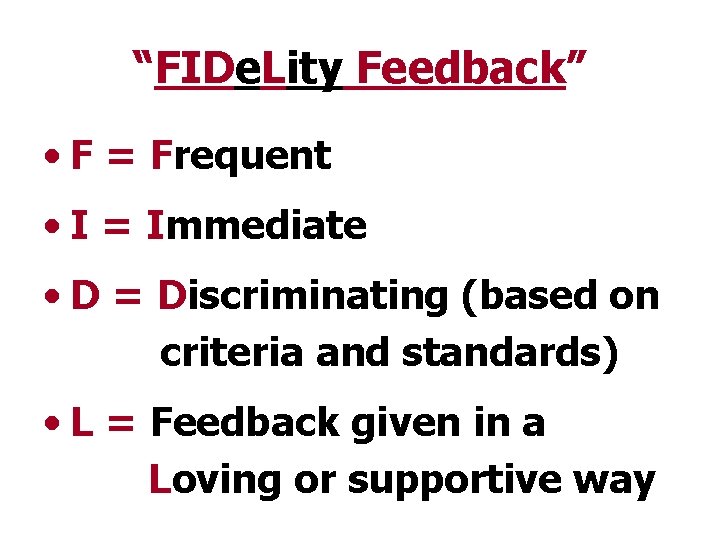
“FIDe. Lity Feedback” • F = Frequent • I = Immediate • D = Discriminating (based on criteria and standards) • L = Feedback given in a Loving or supportive way
Designing Courses for Significant Learning Integrated Course Design: LEARNING ACTIVITIES
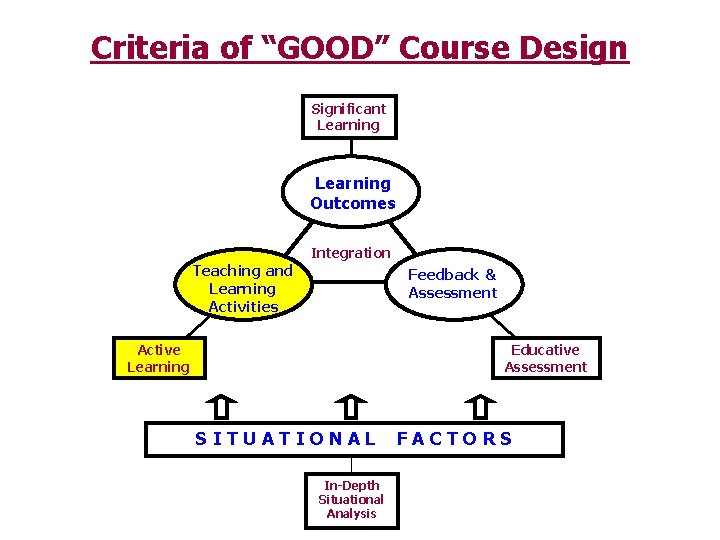
Criteria of “GOOD” Course Design Significant Learning Outcomes Integration Teaching and Learning Activities Feedback & Assessment Active Learning Educative Assessment S I T U A T I O N A L F A C T O R S In-Depth Situational Analysis
Designing Courses for Significant Learning LEARNING ACTIVITIES: 1. Identify learning activities that are appropriate to each of your learning goals, using the 3 -column table. 2. For powerful learning activities, use the principles of Active Learning.
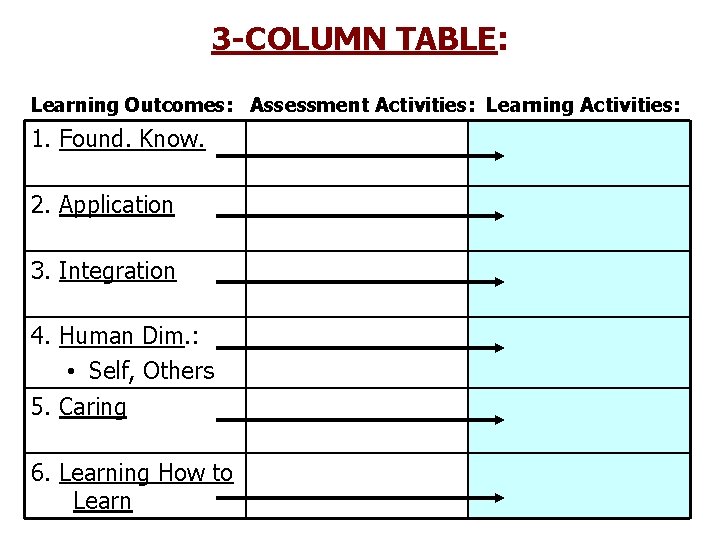
3 -COLUMN TABLE: Learning Outcomes: Assessment Activities: Learning Activities: 1. Found. Know. 2. Application 3. Integration 4. Human Dim. : • Self, Others 5. Caring 6. Learning How to Learn
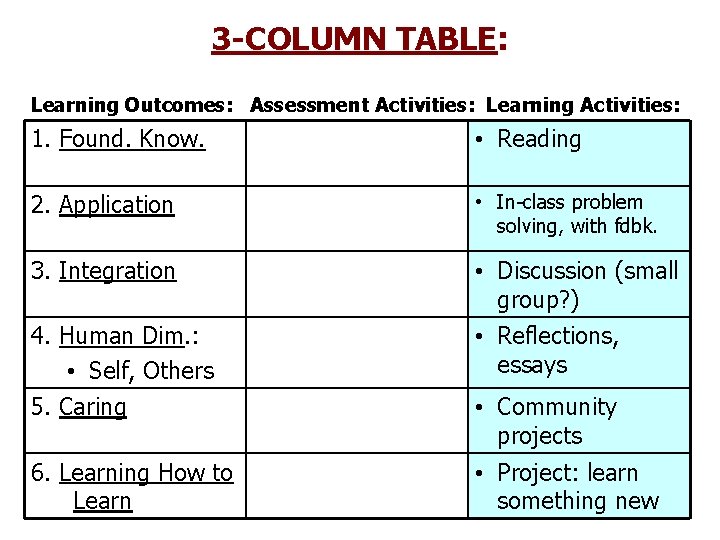
3 -COLUMN TABLE: Learning Outcomes: Assessment Activities: Learning Activities: 1. Found. Know. • Reading 2. Application • In-class problem solving, with fdbk. 3. Integration • Discussion (small group? ) 4. Human Dim. : • Self, Others 5. Caring • Reflections, essays 6. Learning How to Learn • Community projects • Project: learn something new
Designing Courses for Significant Learning ASSIGNMENT: • In the 3 -column table, IDENTIFY one or two learning activities for your “Integration” learning goal.
Designing Courses for Significant Learning LEARNING ACTIVITIES: 1. Identify learning activities that are appropriate to each of your learning goals, using the 3 -column table. 2. For powerful learning activities, use the principles of Active Learning.
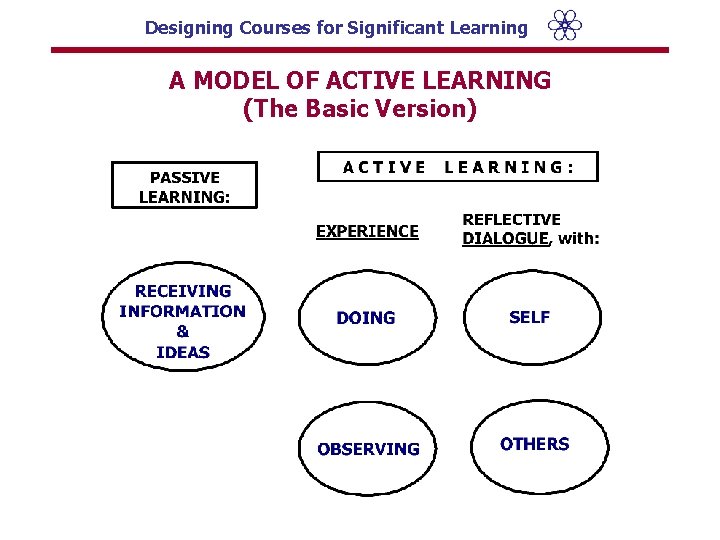
Designing Courses for Significant Learning A MODEL OF ACTIVE LEARNING (The Basic Version)
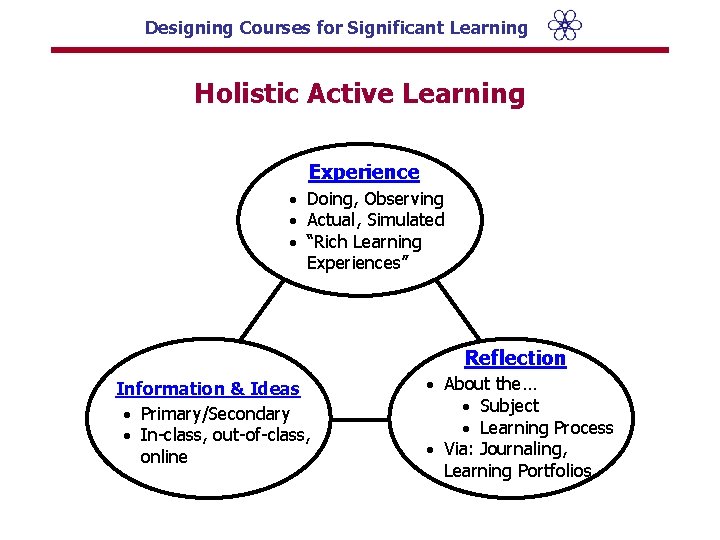
Designing Courses for Significant Learning Holistic Active Learning Experience · Doing, Observing · Actual, Simulated · “Rich Learning Experiences” Reflection Information & Ideas · Primary/Secondary · In-class, out-of-class, online · About the… · Subject · Learning Process · Via: Journaling, Learning Portfolios
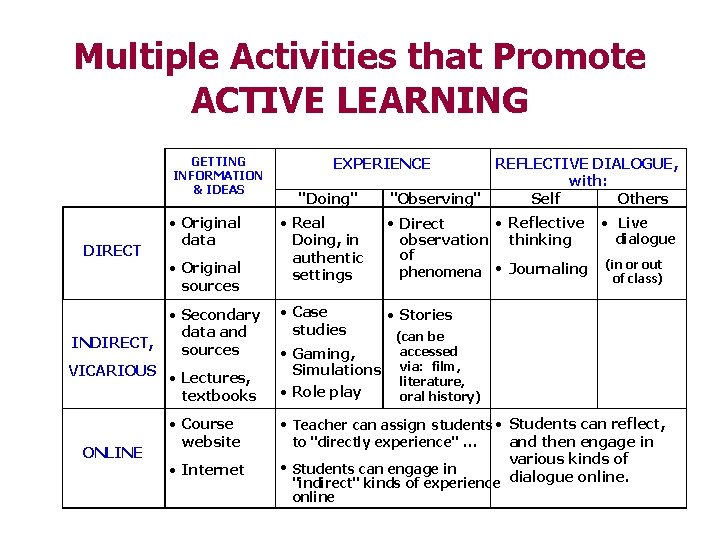
Multiple Activities that Promote ACTIVE LEARNING DIRECT GETTING INFORMATION & IDEAS · Original data · Original sources · Secondary data and INDIRECT, sources VICARIOUS · Lectures, textbooks ONLINE · Course website · Internet EXPERIENCE "Doing" REFLECTIVE DIALOGUE, with: "Observing" Self Others · Real Doing, in authentic settings · Direct · Reflective · Live dialogue observation thinking · Case studies · Stories of (in or out phenomena · Journaling of class) (can be accessed · Gaming, Simulations via: film, literature, · Role play oral history) · Teacher can assign students · Students can reflect, and then engage in to "directly experience" … various kinds of · Students can engage in "indirect" kinds of experience dialogue online
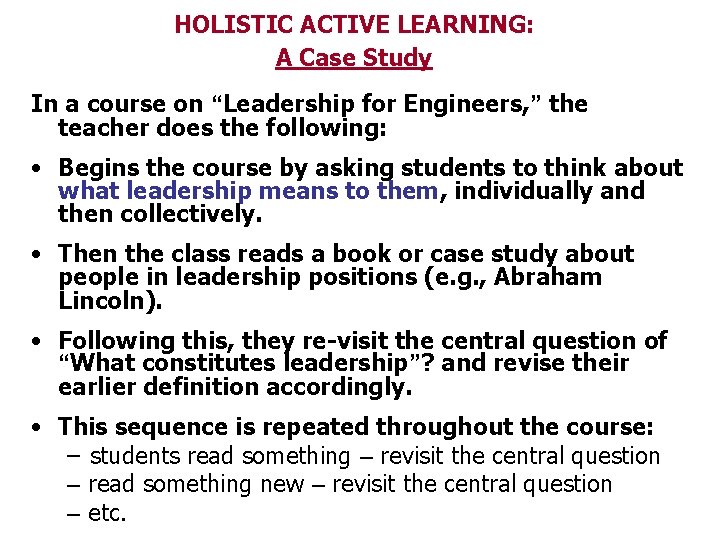
HOLISTIC ACTIVE LEARNING: A Case Study In a course on “Leadership for Engineers, ” the teacher does the following: • Begins the course by asking students to think about what leadership means to them, individually and then collectively. • Then the class reads a book or case study about people in leadership positions (e. g. , Abraham Lincoln). • Following this, they re-visit the central question of “What constitutes leadership”? and revise their earlier definition accordingly. • This sequence is repeated throughout the course: – students read something – revisit the central question – read something new – revisit the central question – etc.
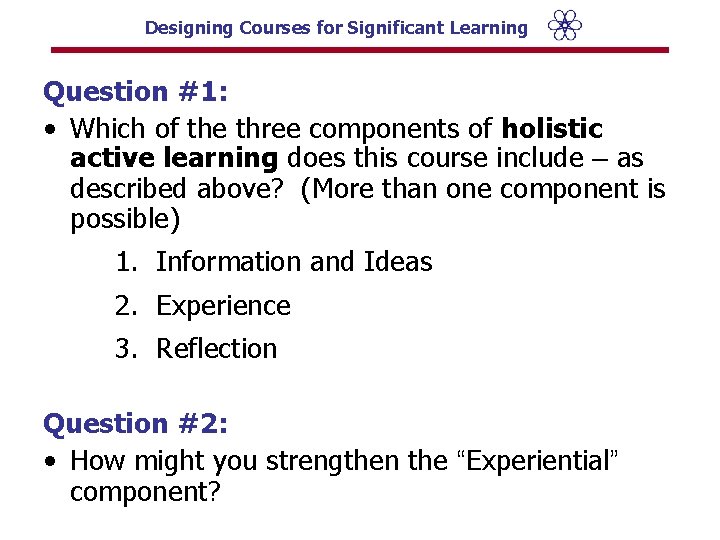
Designing Courses for Significant Learning Question #1: • Which of the three components of holistic active learning does this course include – as described above? (More than one component is possible) 1. Information and Ideas 2. Experience 3. Reflection Question #2: • How might you strengthen the “Experiential” component?
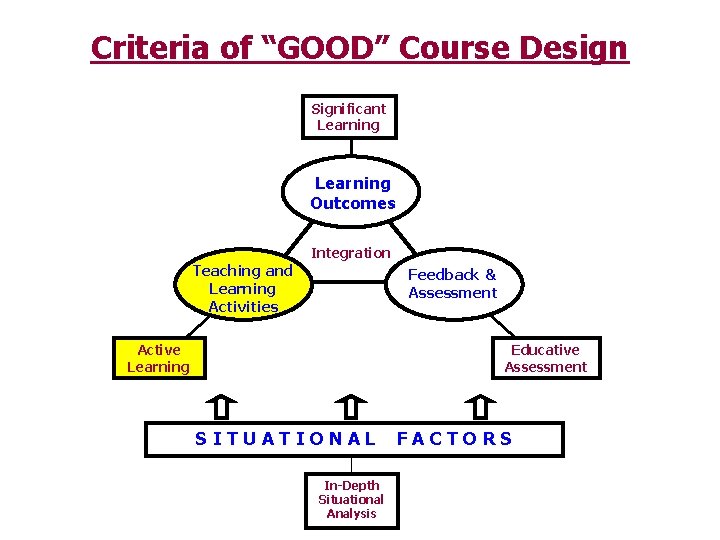
Criteria of “GOOD” Course Design Significant Learning Outcomes Integration Teaching and Learning Activities Feedback & Assessment Active Learning Educative Assessment S I T U A T I O N A L F A C T O R S In-Depth Situational Analysis
Designing Courses for Significant Learning Integrated Course Design: INTEGRATION
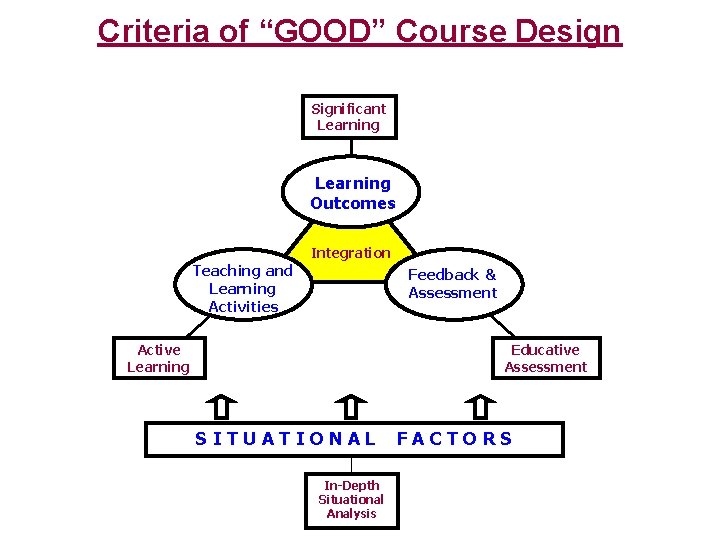
Criteria of “GOOD” Course Design Significant Learning Outcomes Integration Teaching and Learning Activities Feedback & Assessment Active Learning Educative Assessment S I T U A T I O N A L F A C T O R S In-Depth Situational Analysis
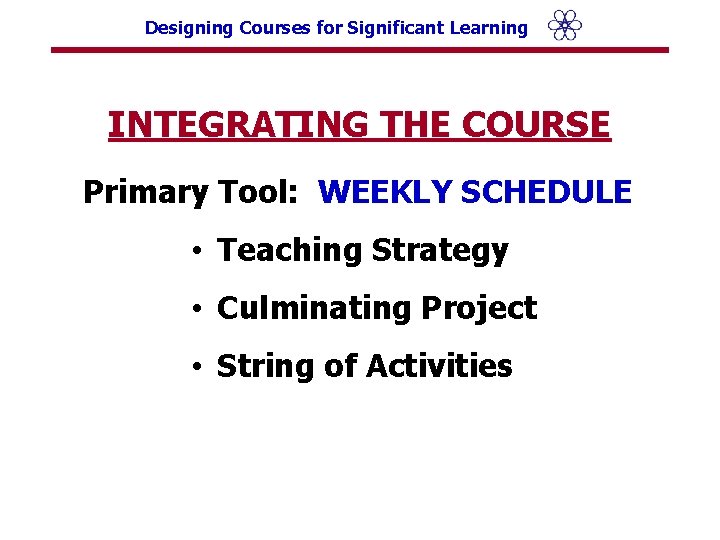
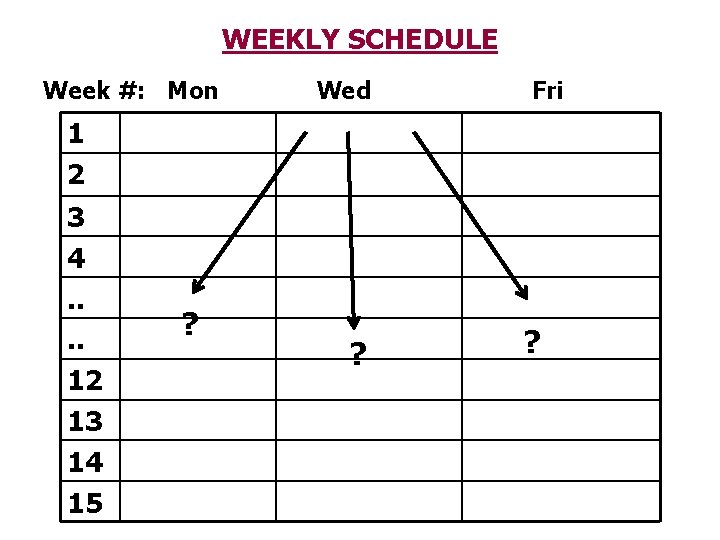
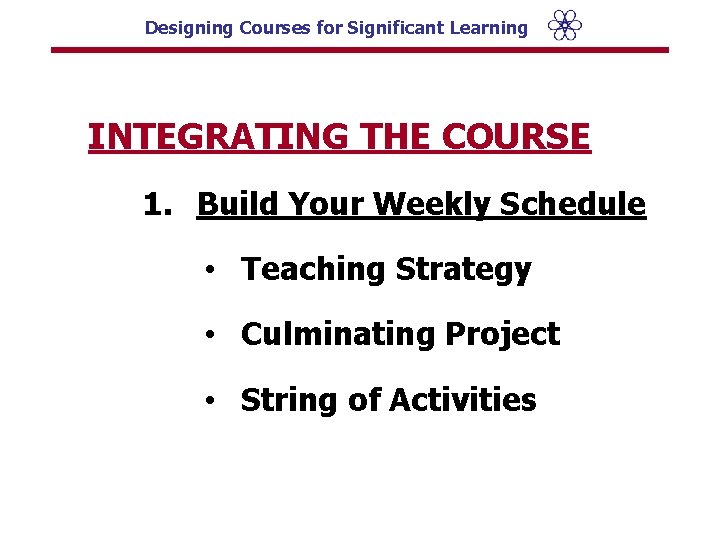
Designing Courses for Significant Learning INTEGRATING THE COURSE Primary Tool: WEEKLY SCHEDULE • Teaching Strategy • Culminating Project • String of Activities
3 -COLUMN TABLE: Learning Goals: Assessment Activities: Learning Activities: 1. 2. 3. 4. 5. 6.
WEEKLY SCHEDULE Week #: Mon Wed Fri 1 2 3 4. . 12 13 14 15 ? ? ?
Designing Courses for Significant Learning Set of Learning Activities C B A T I M E D
Designing Courses for Significant Learning Building Your Weekly Schedule: • See handout
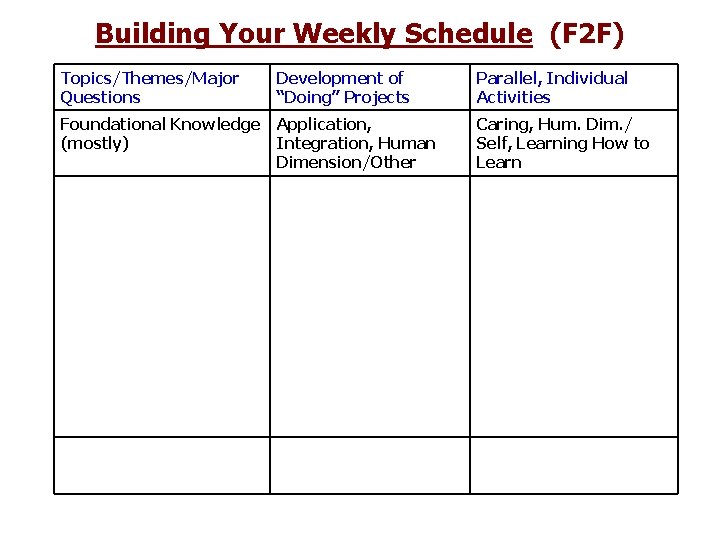
Building Your Weekly Schedule (F 2 F) Topics/Themes/Major Questions Development of “Doing” Projects Foundational Knowledge Application, (mostly) Integration, Human Dimension/Other Parallel, Individual Activities Caring, Hum. Dim. / Self, Learning How to Learn
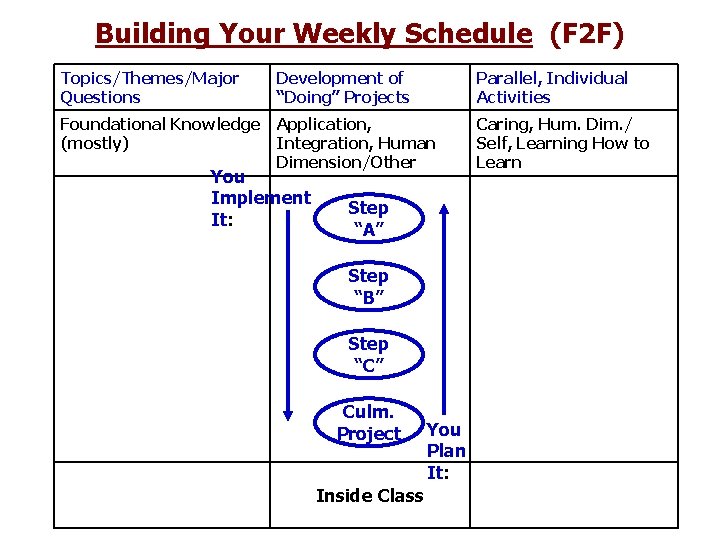
Building Your Weekly Schedule (F 2 F) Topics/Themes/Major Questions Development of “Doing” Projects Parallel, Individual Activities Foundational Knowledge Application, (mostly) Integration, Human Dimension/Other You Implement It: Step “A” Step “B” Step “C” Culm. Project Inside Class You Plan It: Caring, Hum. Dim. / Self, Learning How to Learn
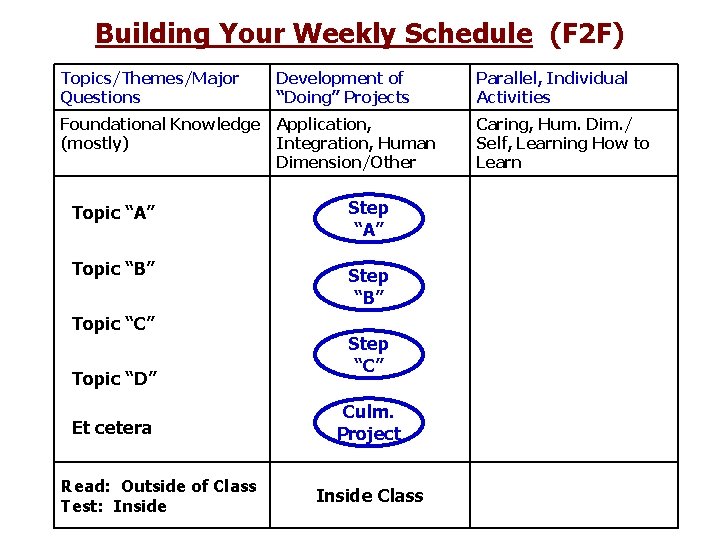
Building Your Weekly Schedule (F 2 F) Topics/Themes/Major Questions Development of “Doing” Projects Foundational Knowledge Application, (mostly) Integration, Human Dimension/Other Topic “A” Step “A” Topic “B” Step “B” Topic “C” Topic “D” Et cetera Read: Outside of Class Test: Inside Step “C” Culm. Project Inside Class Parallel, Individual Activities Caring, Hum. Dim. / Self, Learning How to Learn
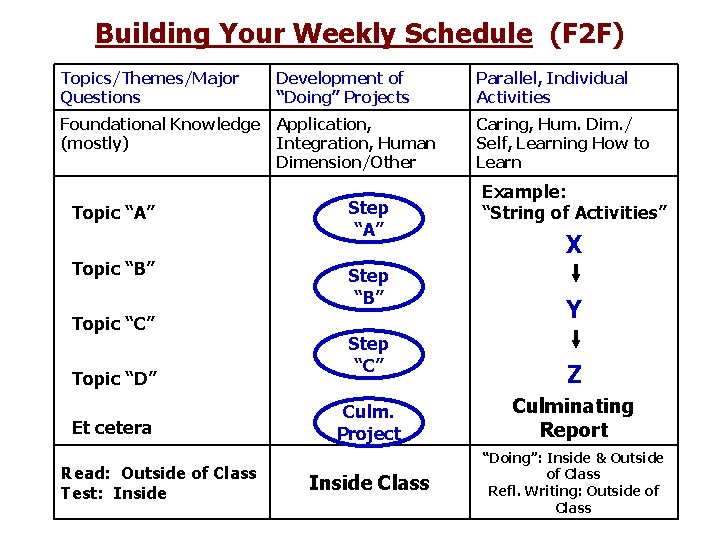
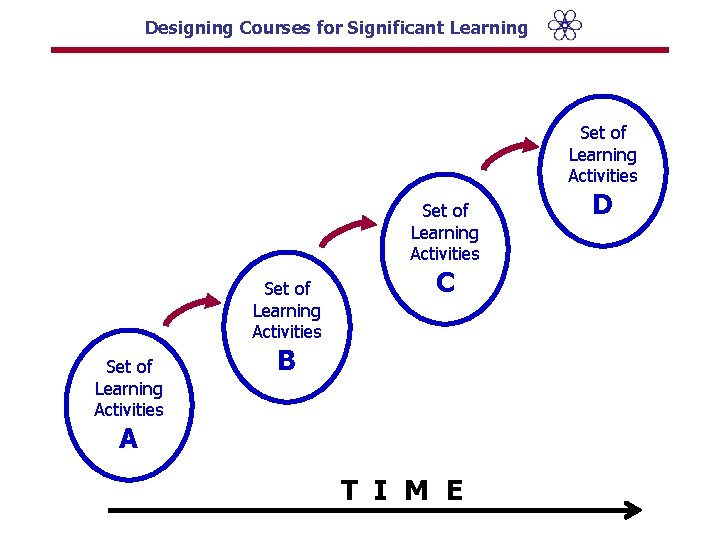
Building Your Weekly Schedule (F 2 F) Topics/Themes/Major Questions Development of “Doing” Projects Foundational Knowledge Application, (mostly) Integration, Human Dimension/Other Topic “A” Topic “B” Topic “C” Topic “D” Et cetera Read: Outside of Class Test: Inside Step “A” Step “B” Step “C” Parallel, Individual Activities Caring, Hum. Dim. / Self, Learning How to Learn Example: “String of Activities” X Y Z Culm. Project Culminating Report Inside Class “Doing”: Inside & Outside of Class Refl. Writing: Outside of Class
Designing Courses for Significant Learning INTEGRATING THE COURSE 1. Weekly Schedule: • TEACHING STRATEGY • Culminating Project • String of Activities
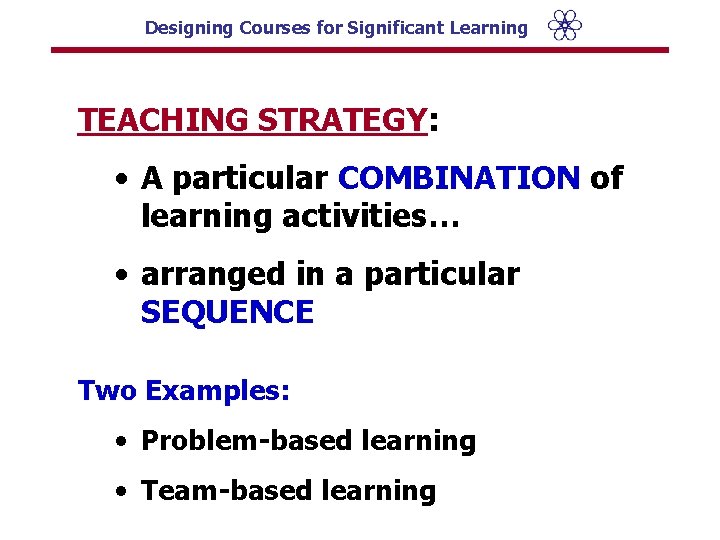
Designing Courses for Significant Learning TEACHING STRATEGY: • A particular COMBINATION of learning activities… • arranged in a particular SEQUENCE Two Examples: • Problem-based learning • Team-based learning
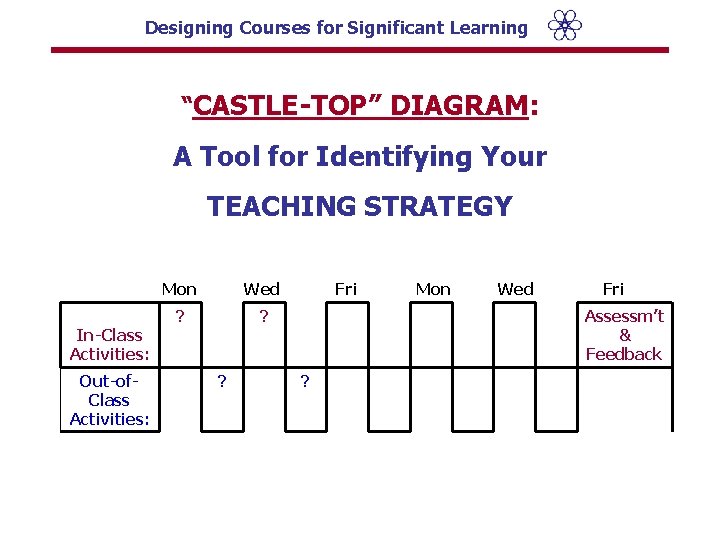
Designing Courses for Significant Learning “CASTLE-TOP” DIAGRAM: A Tool for Identifying Your TEACHING STRATEGY Mon Wed Fri In-Class Activities: Out-of. Class Activities: ? ? ? Mon Wed Fri Assessm’t & Feedback ?
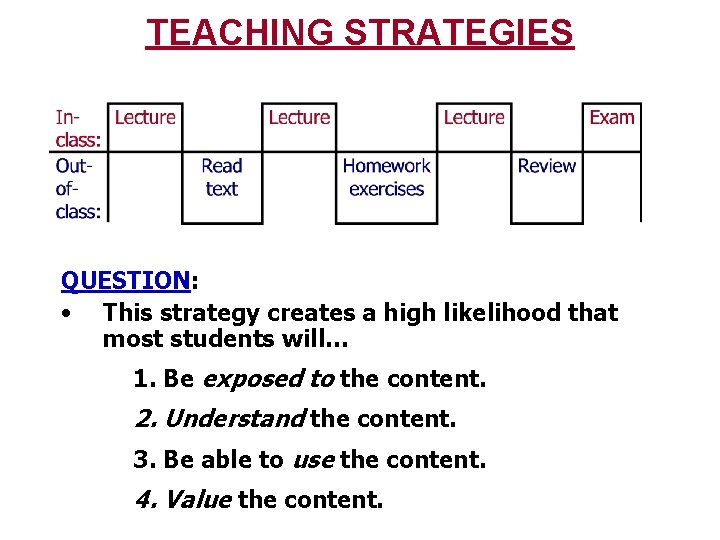
TEACHING STRATEGIES QUESTION: • This strategy creates a high likelihood that most students will… 1. Be exposed to the content. 2. Understand the content. 3. Be able to use the content. 4. Value the content.
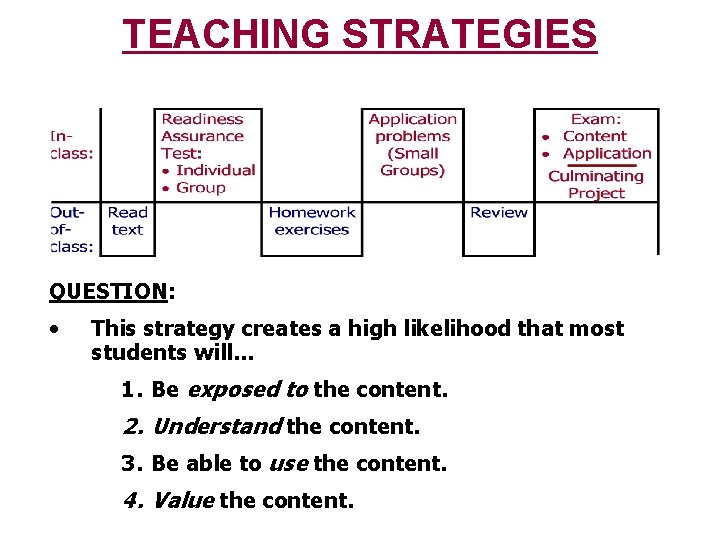
TEACHING STRATEGIES QUESTION: • This strategy creates a high likelihood that most students will… 1. Be exposed to the content. 2. Understand the content. 3. Be able to use the content. 4. Value the content.
Designing Courses for Significant Learning INTEGRATING THE COURSE 1. 3 -Column Table 2. Weekly Schedule • Teaching Strategy • Culminating Project • String of Activities
Designing Courses for Significant Learning INTEGRATING THE COURSE 1. Weekly Schedule • Teaching Strategy • Culminating Project • String of Activities
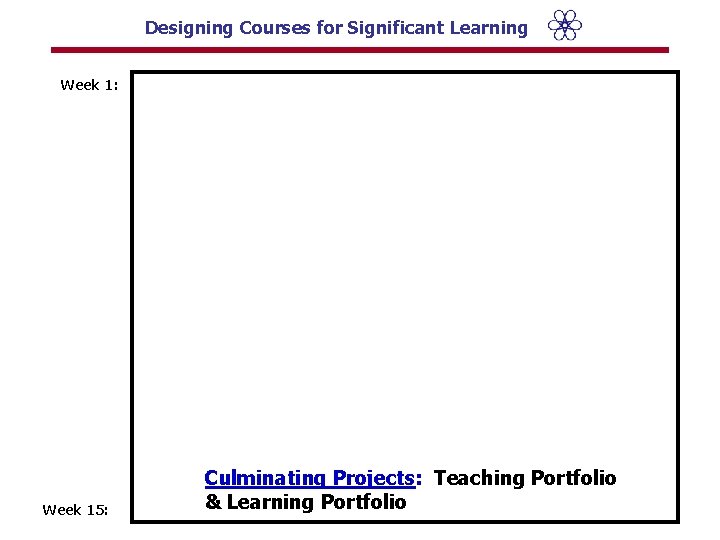
Designing Courses for Significant Learning Week 1: Week 15: Culminating Projects: Teaching Portfolio & Learning Portfolio
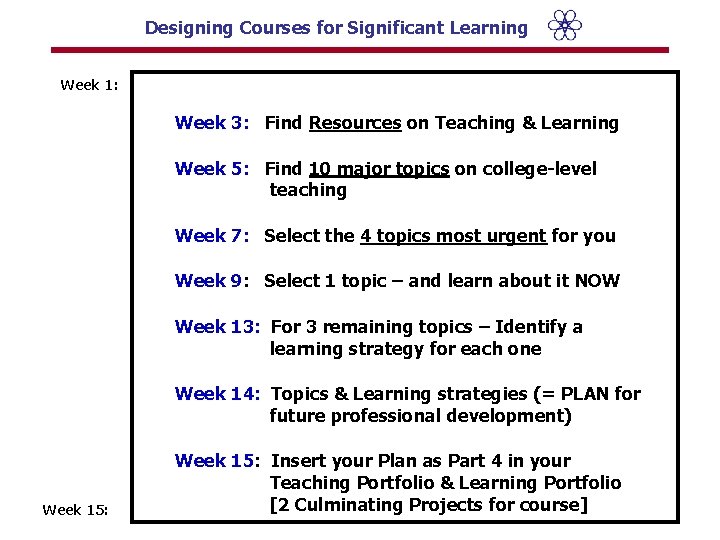
Designing Courses for Significant Learning Week 1: Week 3: Find Resources on Teaching & Learning Week 5: Find 10 major topics on college-level teaching Week 7: Select the 4 topics most urgent for you Week 9: Select 1 topic – and learn about it NOW Week 13: For 3 remaining topics – Identify a learning strategy for each one Week 14: Topics & Learning strategies (= PLAN for future professional development) Week 15: Insert your Plan as Part 4 in your Teaching Portfolio & Learning Portfolio [2 Culminating Projects for course]
Designing Courses for Significant Learning INTEGRATING THE COURSE 1. Build Your Weekly Schedule • Teaching Strategy • Culminating Project • String of Activities
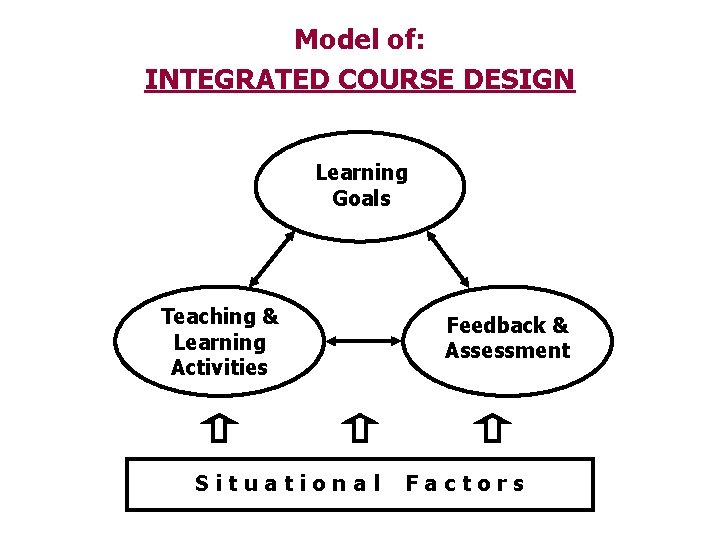
Model of: INTEGRATED COURSE DESIGN Learning Goals Teaching & Learning Activities Feedback & Assessment S i t u a t i o n a l F a c t o r s
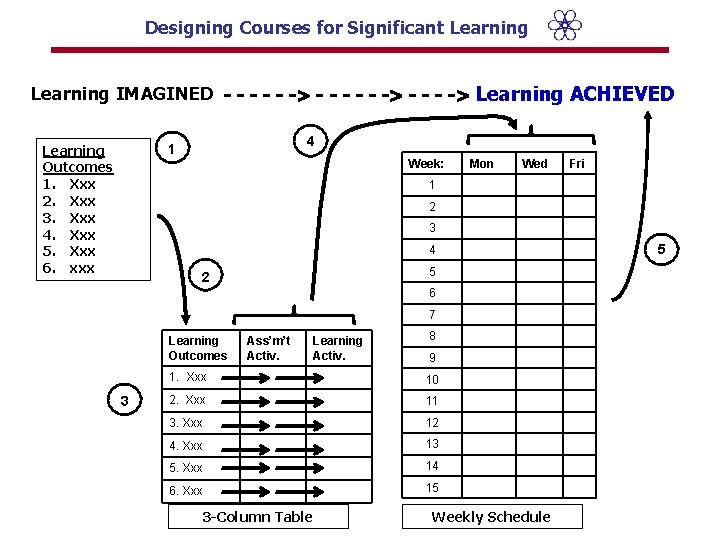
Designing Courses for Significant Learning IMAGINED - - -> - -> Learning ACHIEVED Learning Outcomes 1. Xxx 2. Xxx 3. Xxx 4. Xxx 5. Xxx 6. xxx 4 1 Week: Mon Wed Fri 1 2 3 4 5 2 6 7 Learning Outcomes 3 Ass’m’t Activ. Learning Activ. 8 9 1. Xxx 10 2. Xxx 11 3. Xxx 12 4. Xxx 13 5. Xxx 14 6. Xxx 15 3 -Column Table Weekly Schedule 5
Designing Courses for Significant Learning Integrated Course Design: DOES IT WORK?
Designing Courses for Significant Learning DOES IT MAKE A DIFFERENCE? Case #1 • Jane Connor, SUNY-Binghamton • Course: Multi-Cultural Psychology • Primary Learning Goal: • To help students learn about – and learn how to interact with – people who are different from themselves
Designing Courses for Significant Learning COURSE DESIGN FEATURES: • CONTENT: Used Readiness Assurance Process from TBL • STORIES: Had speakers come in (students, people from community) • REFLECTIONS: Both before and after readings; before and after stories • RICH LEARNING EXPERIENCE: • For a 4 -week period, students had to put themselves in contact with someone different from themselves – preferably someone (or group with whom they were uncomfortable)
Designing Courses for Significant Learning RESULTS? • Students did the readings – and understood them. • As a result of the “strategy” (readings + dialogue with others + special experiences + multiple reflections): • Students reported, almost to a person, that this course “transformed” them. • Teacher won the university’s primary teaching award. • Dean of Student Affairs: 11 of 16 students said this was “the most valuable course in their whole college experience. ”
Designing Courses for Significant Learning Does It Make a Difference? Case #2 • Bill Weeks, University of Missouri at Rolla • Course: Coding in Computer Science • Small class (18 students), traditional time structure (M-W-F) • Initially: Lecture + homework • Results: Students overwhelmed by complexity of the math – frustration – apathy – low course evaluations
Designing Courses for Significant Learning Changes Made: 1. Completely re-wrote his learning outcomes: (examples) • For a given communication channel, students will be able to compute the maximum rate of reliable transmission • Students will learn how to work effectively in a group setting. • Students will be able to direct their own learning in relation to understanding, designing, and evaluating new codes. 2. New teaching strategy: Used TBL 3. Used reflective writing: Learning portfolios 4. Oral presentations 5. Had students re-submit their homework
Designing Courses for Significant Learning RESULTS: • Students did the readings, and did as well as before on exams of Foundational Knowledge. • TEACHER: “…drastic improvement in student morale…They worked harder – and reported enjoying it more. ” • STUDENTS: • …an interesting learning experience I will never forget…provided me with knowledge to carry out independent study. • I enjoyed this course to the fullest…course was entertaining and at the same time enlightening.
Designing Courses for Significant Learning TEACHER’S REACTION: • “Teaching such an excited group of students was an unforgettable experience. • It made my job seem worthwhile and very fulfilling. • I will be feeding off that student excitement for years. ”
Designing Courses for Significant Learning RESOURCES FOR FURTHER LEARNING: ü Books ü Website: Tips, Examples www. designlearning. org ü Online Short-Course www. optimizelearning. org ü Each Other ü Your Dreams
Designing Courses for Significant Learning THE END! Higher Education: Let’s make it all that it can be and needs to
- Slides: 83