
Designing Change Projects Overview Tab 11 Model for

Designing Change Projects Overview Tab 11
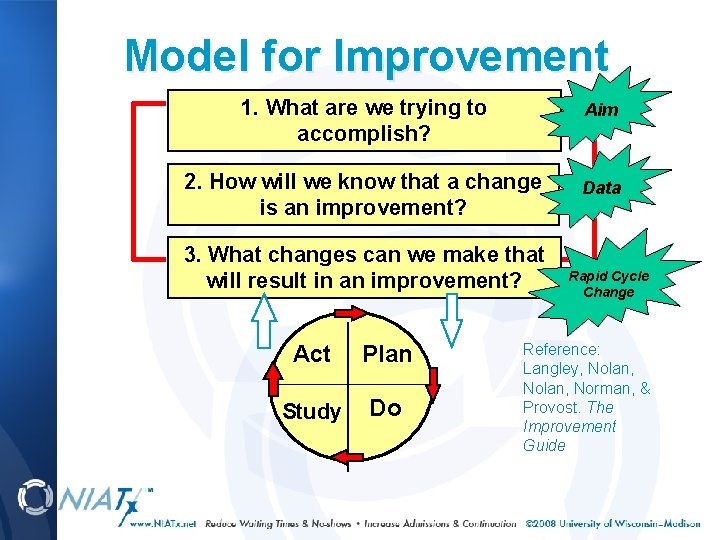
Model for Improvement 1. What are we trying to accomplish? Aim 2. How will we know that a change is an improvement? Data 3. What changes can we make that will result in an improvement? Act Plan Study Do Rapid Cycle Change Reference: Langley, Nolan, Norman, & Provost. The Improvement Guide
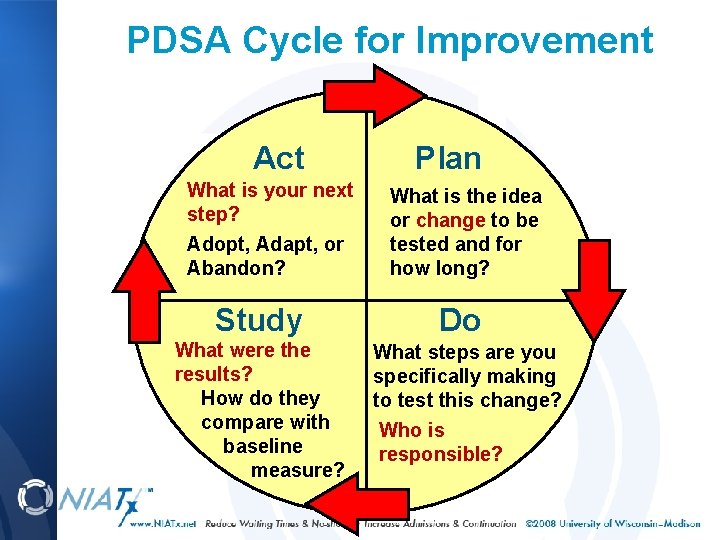
PDSA Cycle for Improvement Act What is your next step? Adopt, Adapt, or Abandon? Study What were the results? How do they compare with baseline measure? Plan What is the idea or change to be tested and for how long? Do What steps are you specifically making to test this change? Who is responsible?
DEFEAT REPEATS Presented by: Kelly Randall, RN Becky Manning, RN, APNP Grant/Iowa Counties
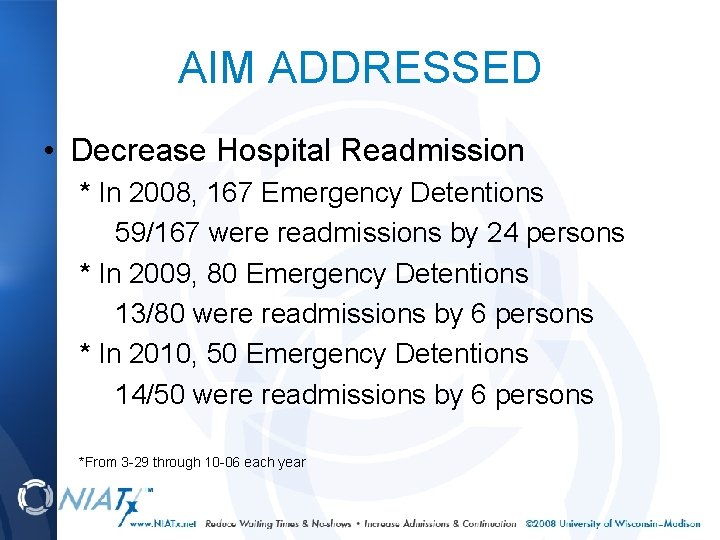
AIM ADDRESSED • Decrease Hospital Readmission * In 2008, 167 Emergency Detentions 59/167 were readmissions by 24 persons * In 2009, 80 Emergency Detentions 13/80 were readmissions by 6 persons * In 2010, 50 Emergency Detentions 14/50 were readmissions by 6 persons *From 3 -29 through 10 -06 each year
CHANGES #1 DISCHARGE FOLLOW-UP Contact all clients within 2 business days following discharge #2 OUTREACH Client offered contact with social worker within 96 hours following discharge to develop WRAP (Wellness Recovery Action Plan) #3 STAFF TRAINING All on-call staff attended training on suicide assessment #4 OUTREACH Client offered contact with social worker OR established outpatient provider #5 ON-CALL CRISIS PLAN Developed from completed WRAP #6 DECREASE HOSPITAL LENGTH OF STAY Clients without discharge plan at final hearing closely monitored #7 CRISIS APPOINTMENT Crisis Appointments available daily
DATA Plan Change #1 • 50 Emergency Detentions • 27 Follow-up phone calls • 14/50 out-of-county or non-UCS provider • 3 readmissions prior to initial follow-up • 1 deceased prior to initial follow-up • 3 nursing home residents • 2 discharged to jail Plan Change #2 • One Outreach Appointment by SW • Five Outreach Appointments by established provider
DATA Plan Change #3 • All on-call staff received 3 hour suicide assessment training from Dr. William Hutter. On-call document was revised to include a formal suicide assessment Plan Change #4 • Only two clients interested in working on WRAP, no completed WRAPs Plan Change #5 • Unable to complete d/t uncompleted WRAPs Plan Change #6 • Have not had to use yet!! Plan Change #7 • 5 crisis appointments offered and accepted; diverted hospitalizations
CHANGES #1 DISCHARGE FOLLOW-UP ** Contact all clients within 2 business days following discharge #2 OUTREACH * Client offered contact with social worker within 96 hours following discharge to develop WRAP (Wellness Recovery Action Plan) #3 STAFF TRAINING (Good to do) All on-call staff attended training on suicide assessment #4 OUTREACH Client offered contact with social worker OR established outpatient provider #5 ON-CALL CRISIS PLAN Developed from completed WRAP #6 DECREASE HOSPITAL LENGTH OF STAY Clients without discharge plan at final hearing closely monitored #7 CRISIS APPOINTMENT ** Crisis Appointments available daily
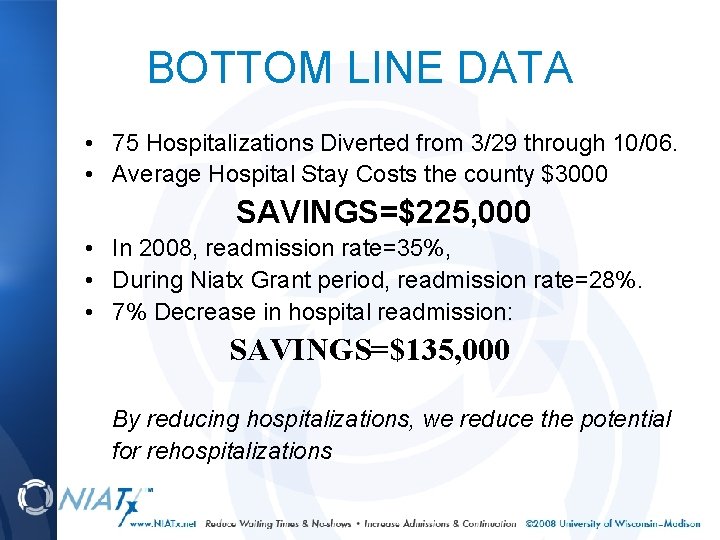
BOTTOM LINE DATA • 75 Hospitalizations Diverted from 3/29 through 10/06. • Average Hospital Stay Costs the county $3000 SAVINGS=$225, 000 • In 2008, readmission rate=35%, • During Niatx Grant period, readmission rate=28%. • 7% Decrease in hospital readmission: SAVINGS=$135, 000 By reducing hospitalizations, we reduce the potential for rehospitalizations
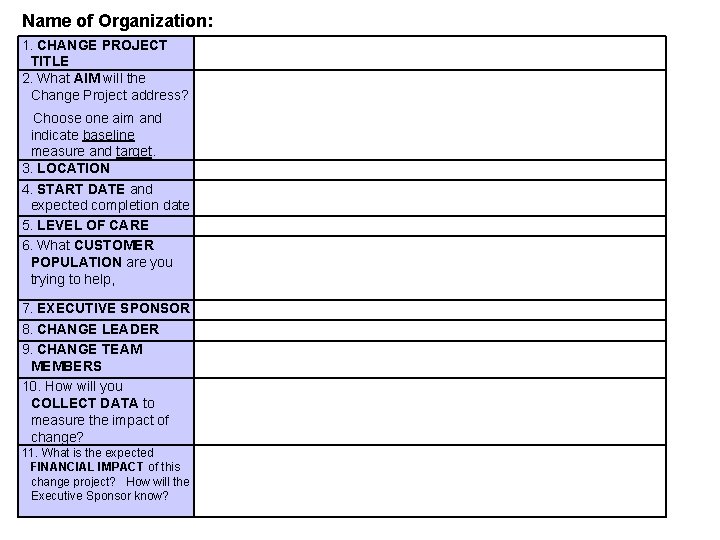
Name of Organization: 1. CHANGE PROJECT TITLE 2. What AIM will the Change Project address? Choose one aim and indicate baseline measure and target. 3. LOCATION 4. START DATE and expected completion date 5. LEVEL OF CARE 6. What CUSTOMER POPULATION are you trying to help, 7. EXECUTIVE SPONSOR 8. CHANGE LEADER 9. CHANGE TEAM MEMBERS 10. How will you COLLECT DATA to measure the impact of change? 11. What is the expected FINANCIAL IMPACT of this change project? How will the Executive Sponsor know?
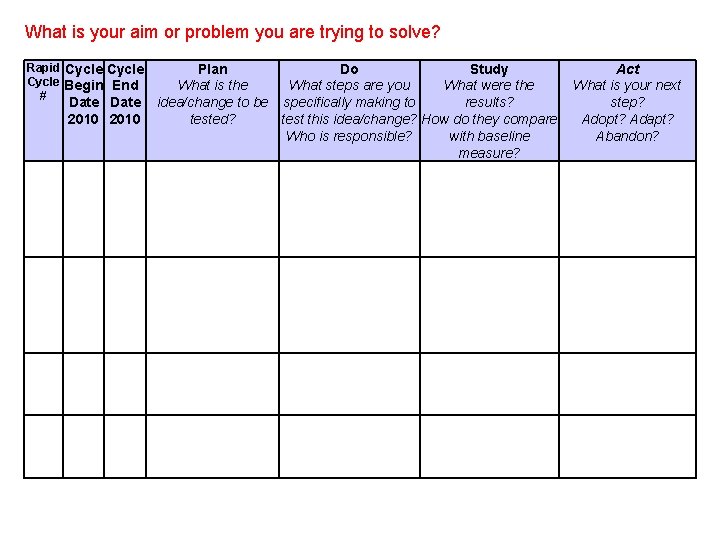
What is your aim or problem you are trying to solve? Rapid Cycle Begin End # Date 2010 Plan Do Study What is the What steps are you What were the idea/change to be specifically making to results? tested? test this idea/change? How do they compare Who is responsible? with baseline measure? Act What is your next step? Adopt? Adapt? Abandon?
- Slides: 12