
Designing and Maintaining a PedestrianFriendly Work Zone Gerald
- Slides: 27
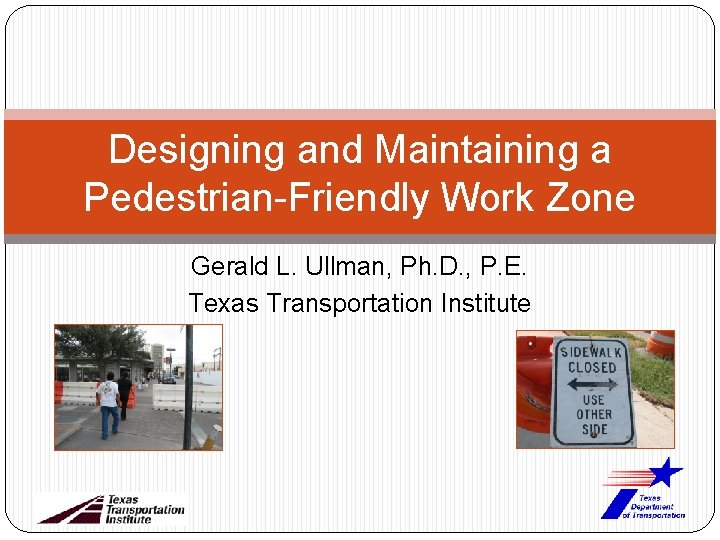
Designing and Maintaining a Pedestrian-Friendly Work Zone Gerald L. Ullman, Ph. D. , P. E. Texas Transportation Institute
The MUTCD is clear! The needs and control of all road users (motorists, bicyclists, and pedestrians…) through a TTC zone shall be an essential part of highway construction, utility work, maintenance operations…
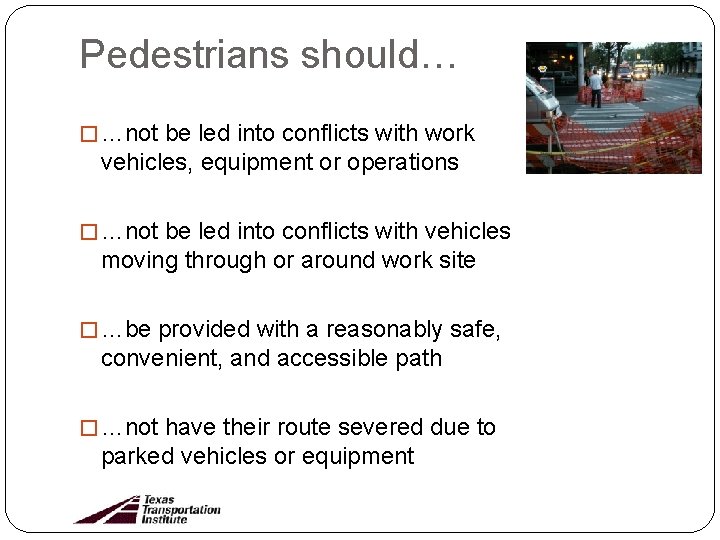
Pedestrians should… � …not be led into conflicts with work vehicles, equipment or operations � …not be led into conflicts with vehicles moving through or around work site � …be provided with a reasonably safe, convenient, and accessible path � …not have their route severed due to parked vehicles or equipment
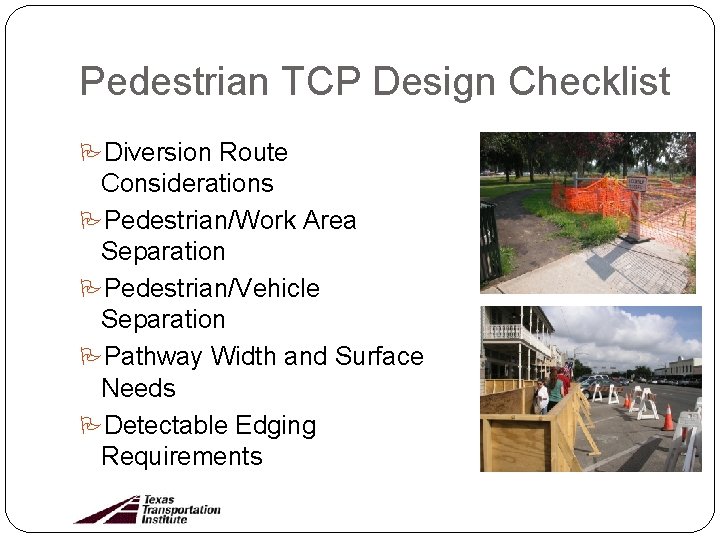
Pedestrian TCP Design Checklist Diversion Route Considerations Pedestrian/Work Area Separation Pedestrian/Vehicle Separation Pathway Width and Surface Needs Detectable Edging Requirements
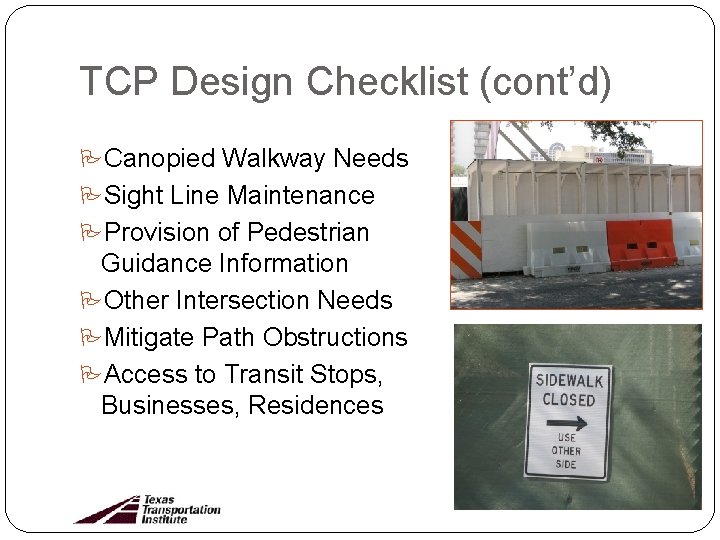
TCP Design Checklist (cont’d) Canopied Walkway Needs Sight Line Maintenance Provision of Pedestrian Guidance Information Other Intersection Needs Mitigate Path Obstructions Access to Transit Stops, Businesses, Residences
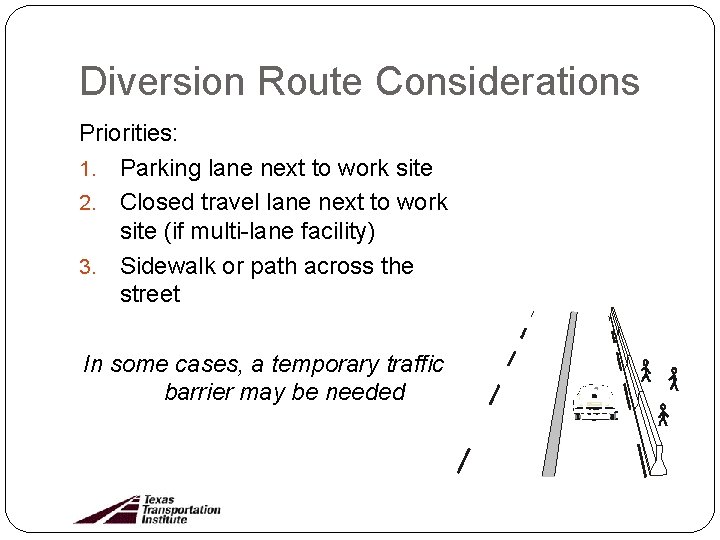
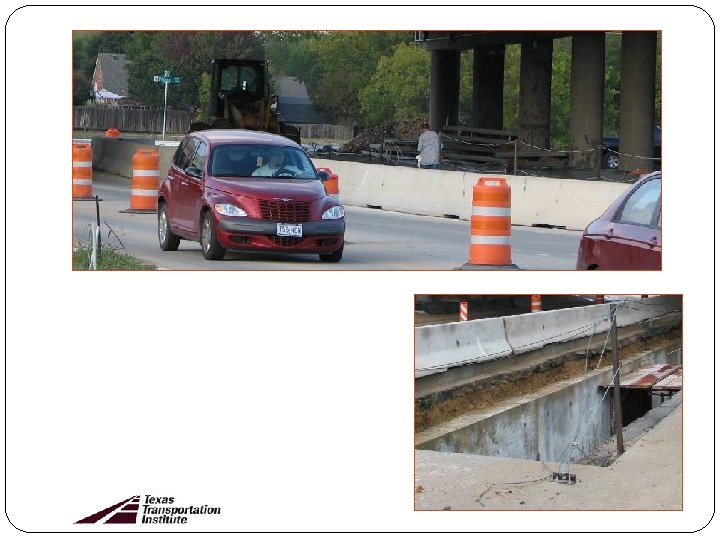
Diversion Route Considerations Priorities: 1. Parking lane next to work site 2. Closed travel lane next to work site (if multi-lane facility) 3. Sidewalk or path across the street In some cases, a temporary traffic barrier may be needed
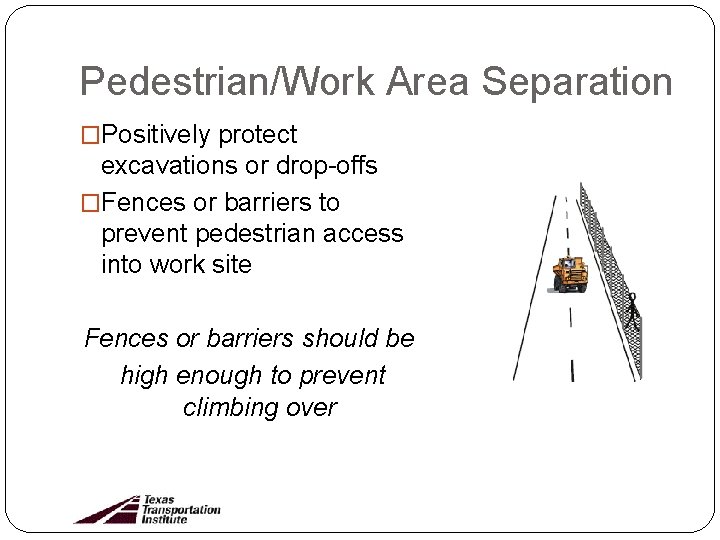
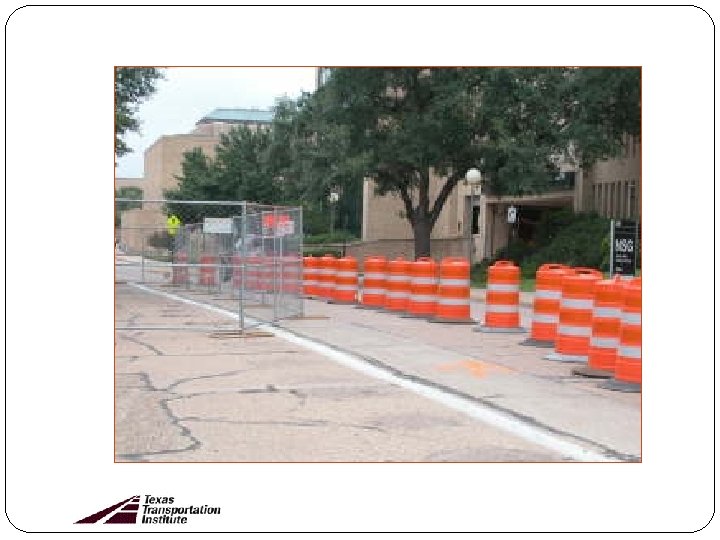
Pedestrian/Work Area Separation �Positively protect excavations or drop-offs �Fences or barriers to prevent pedestrian access into work site Fences or barriers should be high enough to prevent climbing over
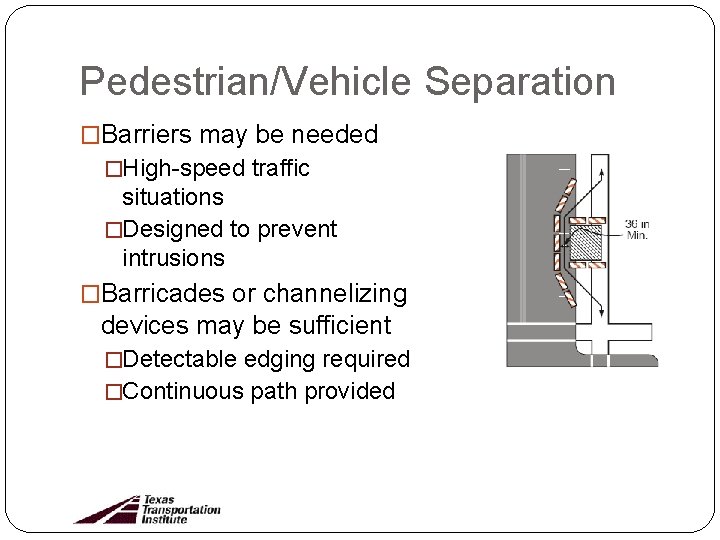
Pedestrian/Vehicle Separation �Barriers may be needed �High-speed traffic situations �Designed to prevent intrusions �Barricades or channelizing devices may be sufficient �Detectable edging required �Continuous path provided
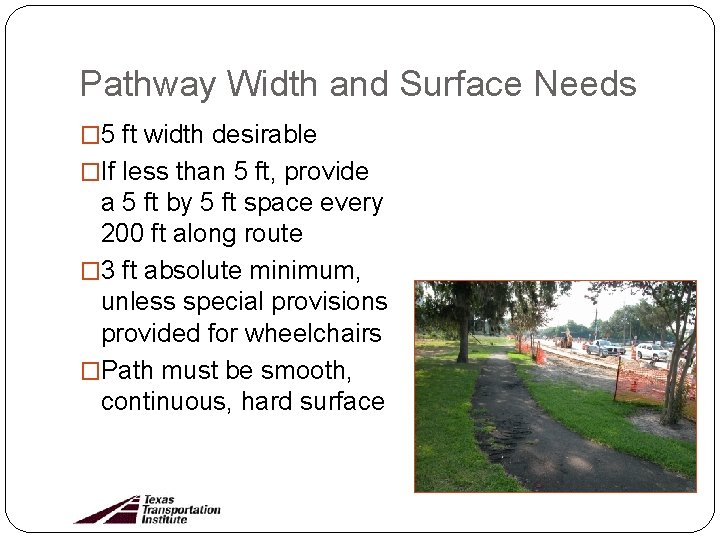
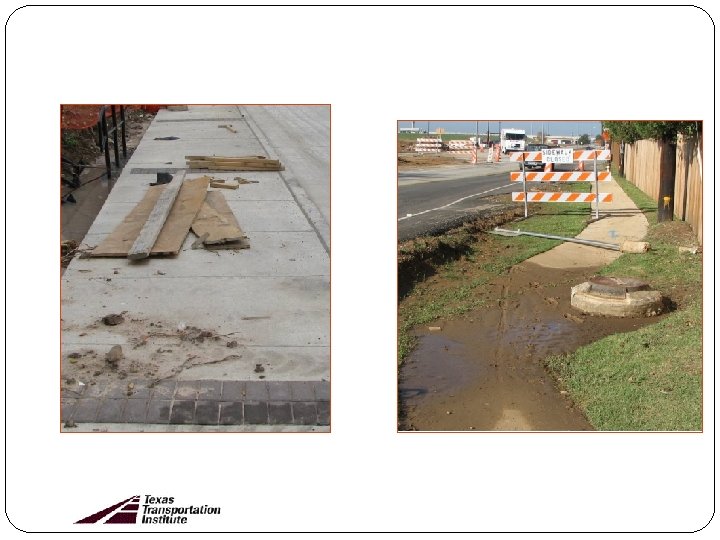
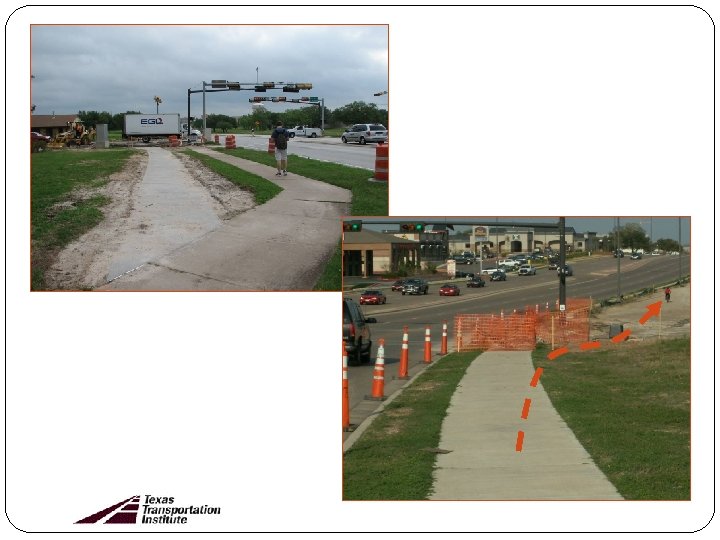
Pathway Width and Surface Needs � 5 ft width desirable �If less than 5 ft, provide a 5 ft by 5 ft space every 200 ft along route � 3 ft absolute minimum, unless special provisions provided for wheelchairs �Path must be smooth, continuous, hard surface
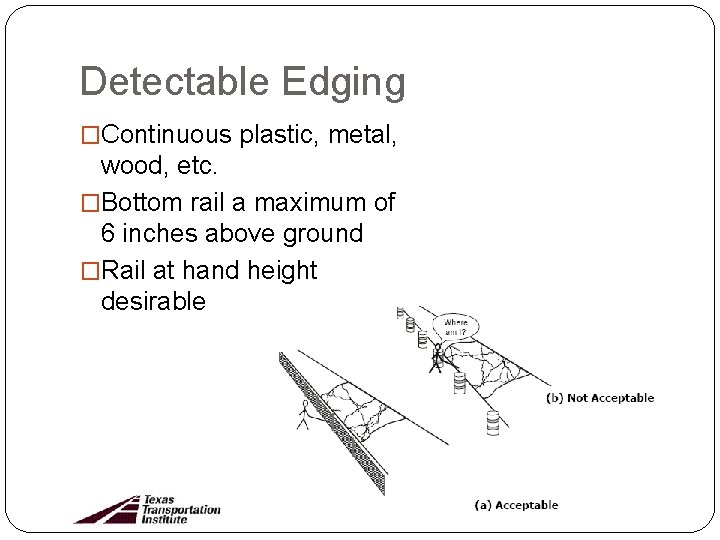
Detectable Edging �Continuous plastic, metal, wood, etc. �Bottom rail a maximum of 6 inches above ground �Rail at hand height desirable
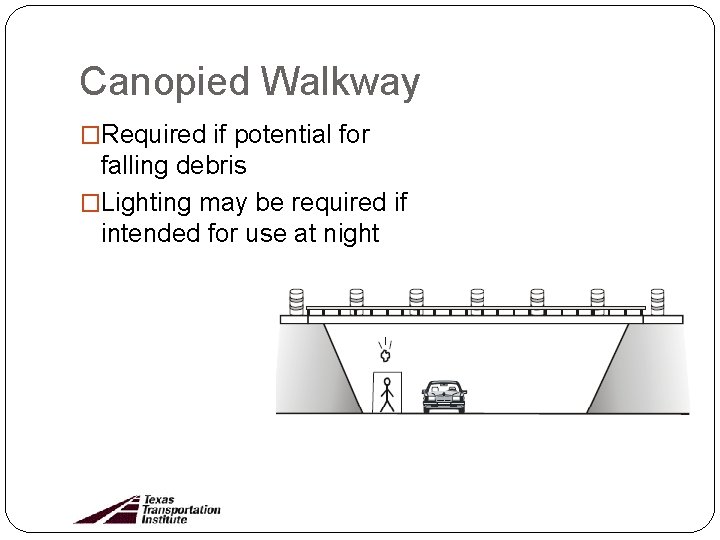
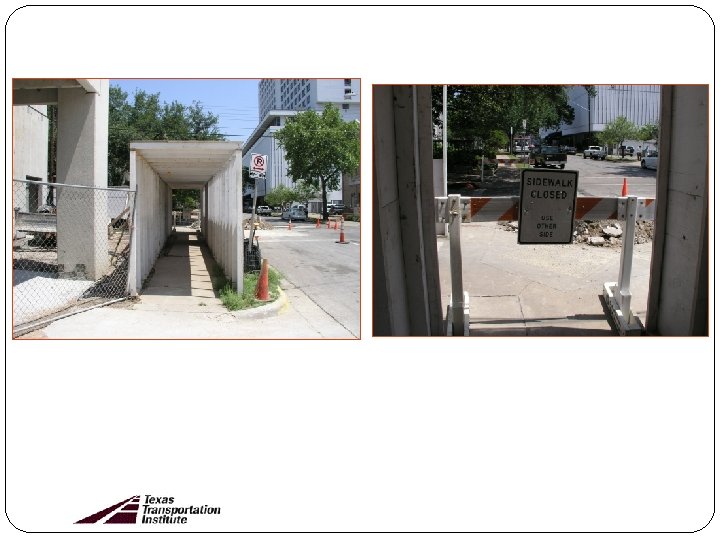
Canopied Walkway �Required if potential for falling debris �Lighting may be required if intended for use at night
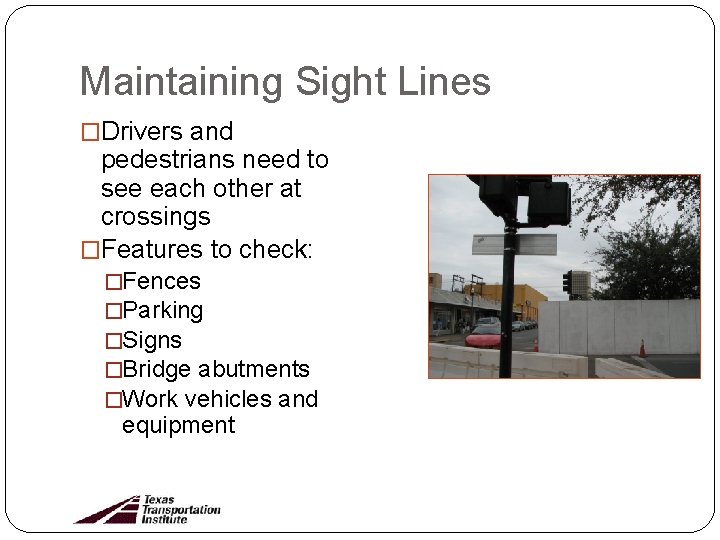
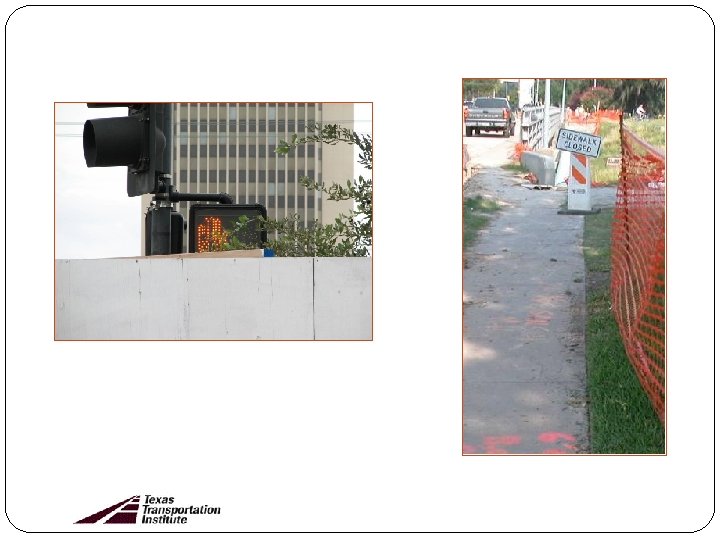
Maintaining Sight Lines �Drivers and pedestrians need to see each other at crossings �Features to check: �Fences �Parking �Signs �Bridge abutments �Work vehicles and equipment
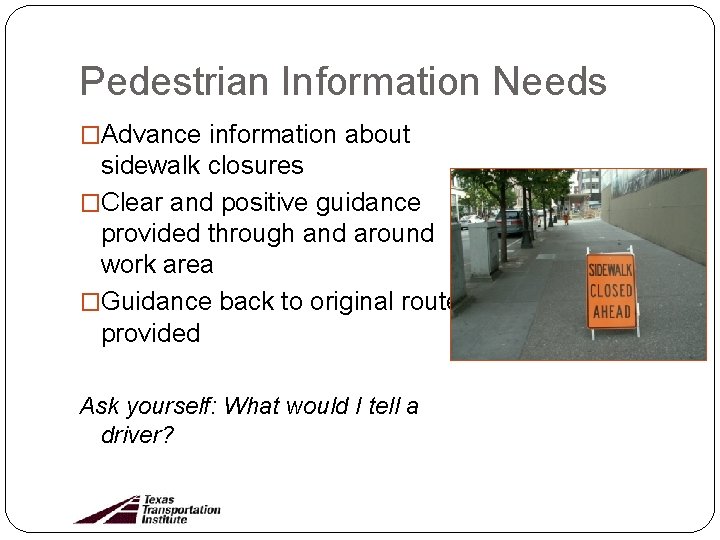
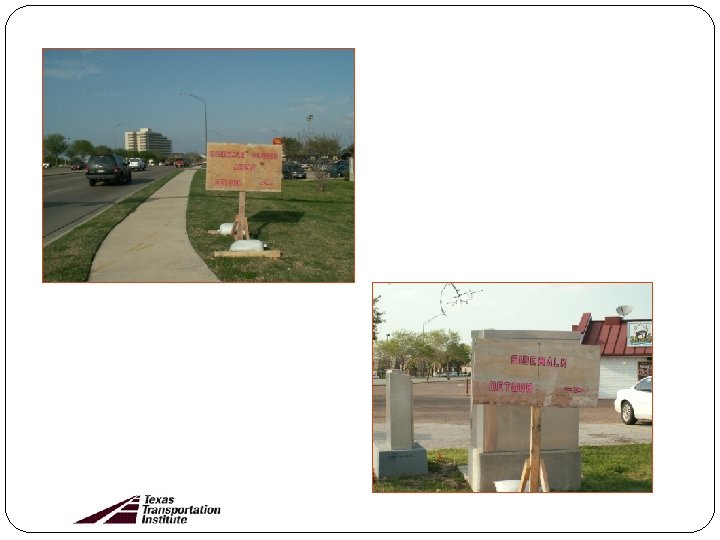
Pedestrian Information Needs �Advance information about sidewalk closures �Clear and positive guidance provided through and around work area �Guidance back to original route provided Ask yourself: What would I tell a driver?
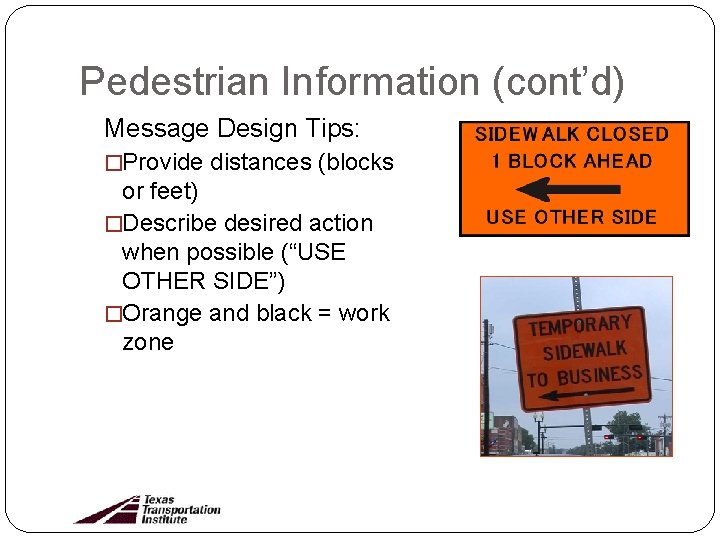
Pedestrian Information (cont’d) Message Design Tips: �Provide distances (blocks or feet) �Describe desired action when possible (“USE OTHER SIDE”) �Orange and black = work zone
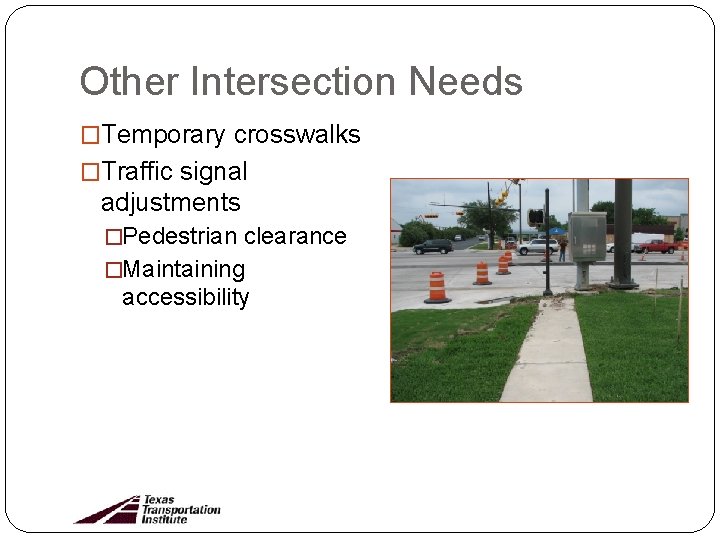
Other Intersection Needs �Temporary crosswalks �Traffic signal adjustments �Pedestrian clearance �Maintaining accessibility
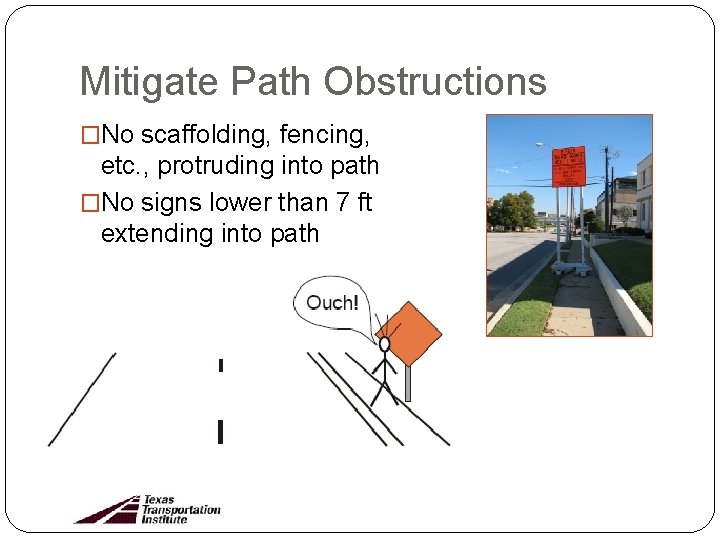
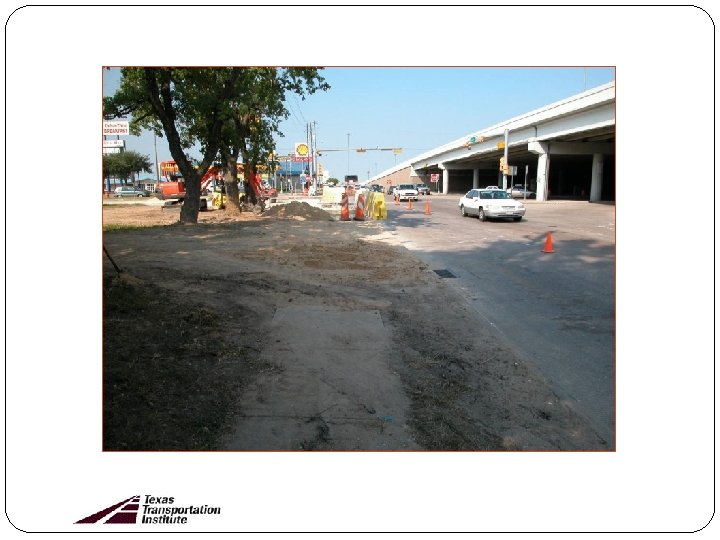
Mitigate Path Obstructions �No scaffolding, fencing, etc. , protruding into path �No signs lower than 7 ft extending into path
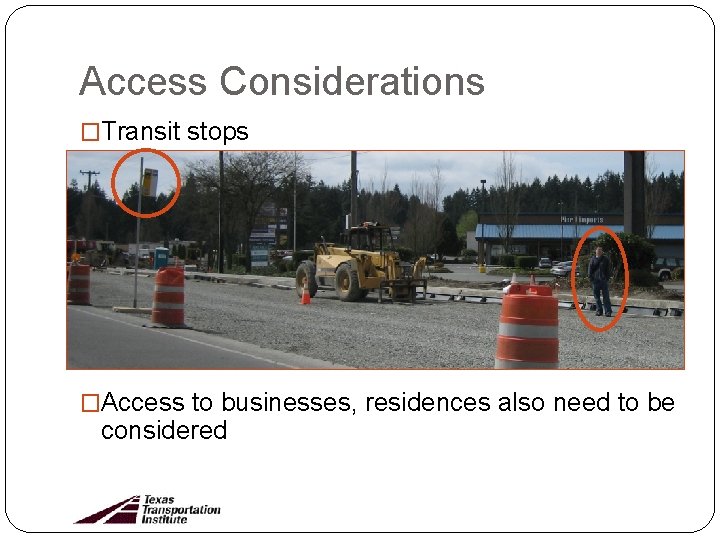
Access Considerations �Transit stops �Access to businesses, residences also need to be considered
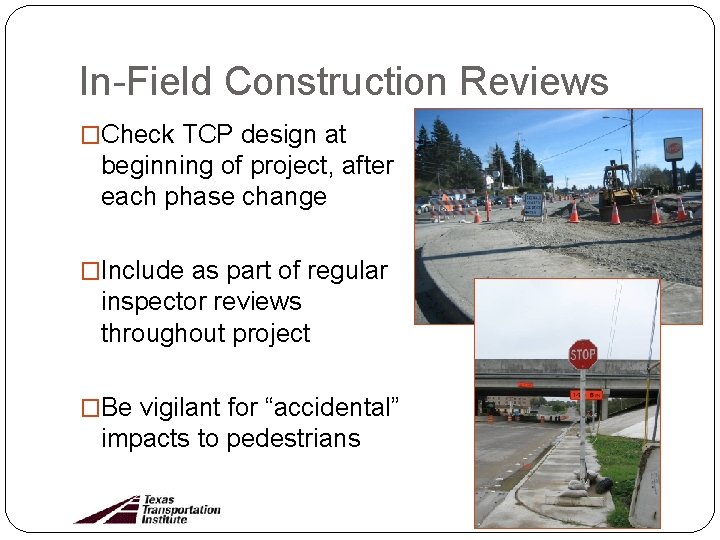
In-Field Construction Reviews �Check TCP design at beginning of project, after each phase change �Include as part of regular inspector reviews throughout project �Be vigilant for “accidental” impacts to pedestrians
For more information…. � Checklist for Accommodating Pedestrians in Temporary Traffic Control Areas, December 2007, http: //tti. tamu. edu/documents/0 -5237 -P 1. pdf � FHWA Work Zone Safety Grant Program http: //www. workzonesafety. org/fhwa_wz_grant/atssa/ atssa_pedestrian_checklist http: //www. workzonesafety. org/fhwa_wz_grant/atssa/ atssa_guidance_sheet Gerald Ullman TTI (979) 845 -9908 g-ullman@tamu. edu