
Designing and Implementing Effective Advisor Development Programs Jayne



- Slides: 54
Designing and Implementing Effective Advisor Development Programs Jayne Drake
“ Would you tell me please, which way ought I go from here? ” “That depends a good deal on where you want to get to, ” said the Cat. “ “ I don’t much care where—” said Alice. Then it doesn’t matter which way you go, ” said the Cat. “So long as I get SOMEWHERE, ” Alice added as an explanation. “Oh, you’re sure to do that, ” said the Cat, “ if only you walk long enough. ”
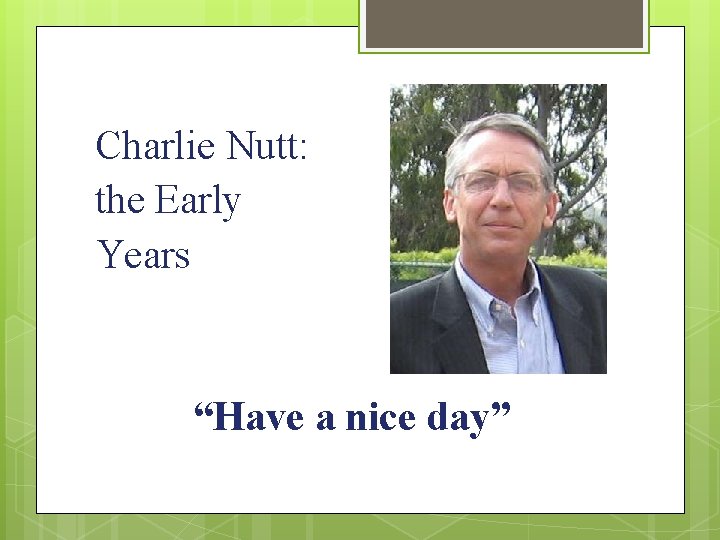
Charlie Nutt: the Early Years “Have a nice day”
Built in Assumptions • • • No advance preparation needed to advise students Advising = what courses to take Only curriculum, rules, and regulations matter—and where to find them Advising = a clerical function best just got through Students are all alike “Just do as I say”
The Challenge and the Process Broad institutional commitment and administrative support I. II. A carefully crafted advisor development program III. Focused, on-going assessment of the advising program IV. Recognition and reward for effective advising
I. Broad Institutional Commitment and Administrative Support
Starting from Scratch 1. Identify all campus stakeholders Who are critical to its success? Professional advisors? Faculty? Students? President? Provost? Bursar? Registrar? Career Center?
Next 2. Gather together the stakeholders to discuss the purpose and goals of the program and how they hope to achieve them.
Next Craft an advising mission statement (if you don’t have one already) that sets the 3. foundation and guides the efforts that follow. (Take the time you need to get this right. )
Next 4. If you are looking for funding, prepare a proposal that includes: A clear statement of the issues Why is this program important to the institution? What does it hope to accomplish? How does it intend to achieve its goals? How will it assess the outcomes?
And. . Who is responsible for developing and sustaining the project? If the project is long term, provide a timeline If the project requires monetary resources, create a budget Develop assessment plans for the project
About that mission statement It is the backbone of everything that you want to accomplish. “Promote student success” “Academic excellence” “Set academic, career and personal goals” NACADA’s Clearinghouse of Academic Advising Resources
II. Carefully Crafted Advisor Development Program
1. Designate someone to be in charge Job Description: Respected Leadership Perseverance and tenacity Guts Perspiration / inspiration Sensitivity to audiences Sense of humor
2. Determine the audience New advisors? Well-seasoned advisors? Faculty advisors? Special populations advisors? Everyone at the same time?
3. Determine Goals and Outcomes Goals address the purpose of the program. Why are we developing this training and development program? Outcomes are what we expect advisors to learn as a result of participating in the program.
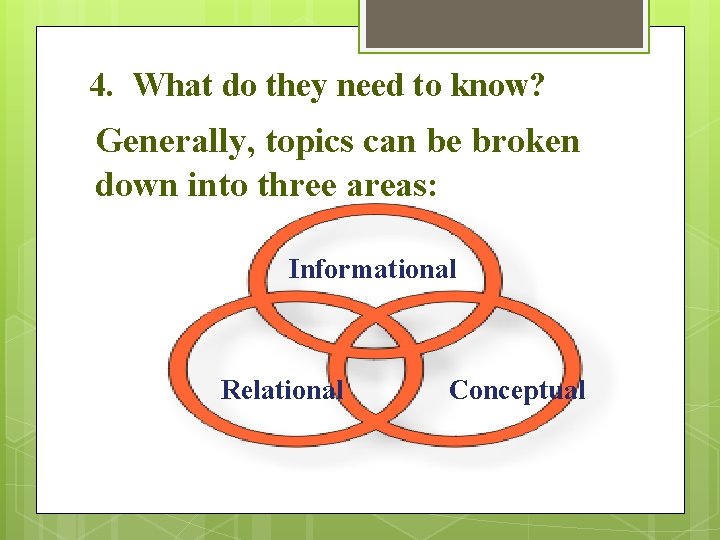
4. What do they need to know? Generally, topics can be broken down into three areas: Informational Relational Conceptual
§ Informational: the substance What advisors and students should KNOW Curriculum and degree requirements Institutional policies and procedures Campus resources (and how to guide students to them) Too often advising conversations stop here
§ Relational: the developmental What advisors should DO that takes them beyond simply providing information “Competencies” include: Relationship building Communication and questioning skills Mentoring skills
For example Providing an open, welcoming atmosphere Getting to know the students by asking open-ended questions Being a good listener Expressing genuine interest in students and their uniqueness
And Respecting their opinions Showing concern for their academic, personal, and professional growth Helping them to explore their own needs, interests, and values, and helping them get there Exploring careers
§ Conceptual: the foundation What advisors should UNDERSTAND The definition of advising Student development theories Learning The theories and advising approaches connection between advising and student success
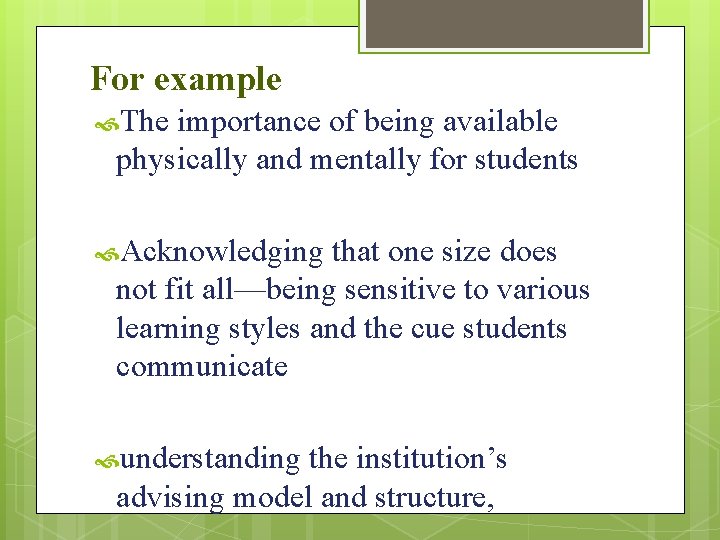
For example The importance of being available physically and mentally for students Acknowledging that one size does not fit all—being sensitive to various learning styles and the cue students communicate understanding the institution’s advising model and structure,
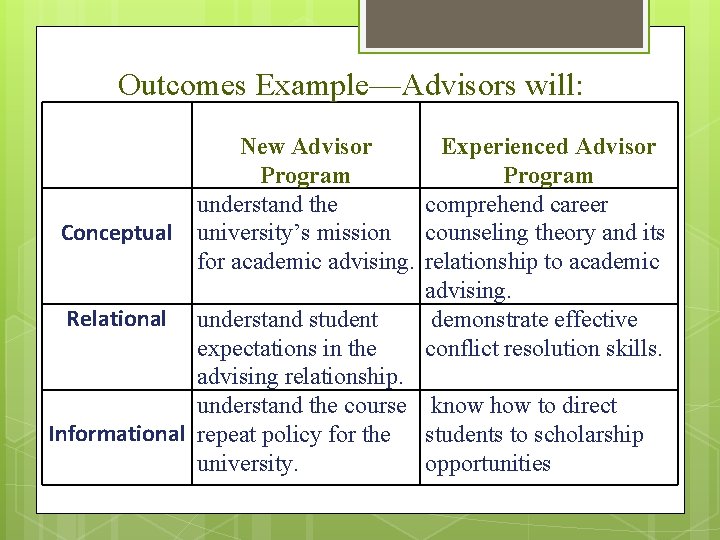
Outcomes Example—Advisors will: New Advisor Experienced Advisor Program understand the comprehend career Conceptual university’s mission counseling theory and its for academic advising. relationship to academic advising. Relational understand student demonstrate effective expectations in the conflict resolution skills. advising relationship. understand the course know how to direct Informational repeat policy for the students to scholarship university. opportunities
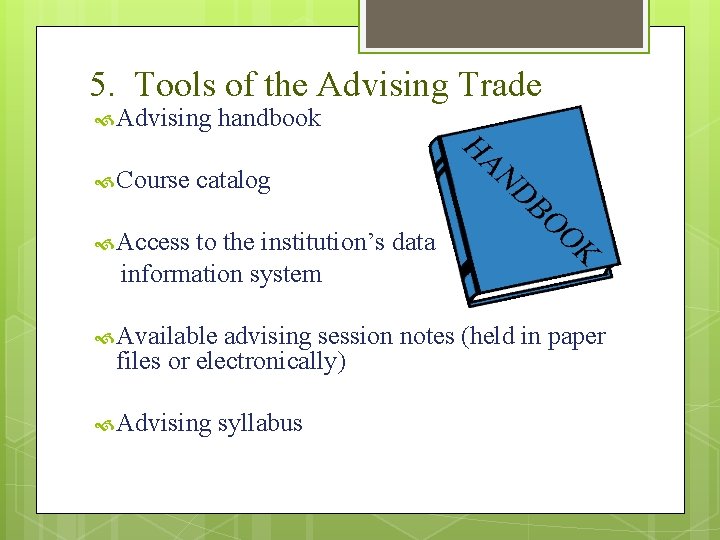
5. Tools of the Advising Trade Advising Course handbook catalog Access to the institution’s data information system Available advising session notes (held in paper files or electronically) Advising syllabus
Today at 1: 00 p. m. Topical Session #4 Constructing an Academic Advising Handbook
6. Possible Program Delivery Methods Annual or semi-annual workshop or retreat Series of workshops or brown bags throughout the academic year On demand, on-line training An advising newsletter
And Panel discussions Guest speakers regional or national NACADA events Case studies/advising scenarios (Scenes for Learning and Reflection)
7. Off to Market – Create the Buzz
A Pause to Recap— A person is in charge Stakeholders Mission are on board statement done Audience determined and content established
Goals and outcomes have been identified Professional development needs determined Delivery methods worked out The right tools for the job are lined up
Thursday at 10: 30 a. m. Topical Session #13 Focusing the Lens: Crafting Successful Advisor Training and Development Programs
III. Focused, Ongoing Assessment of the Advising Program
Institutions must be accountable for the advising services they provide How do you know if your training and development program is working well (or needs tweaking), or is meeting its intended goals? ** Accountability—who is watching you? ** Collective conversations = collective understanding
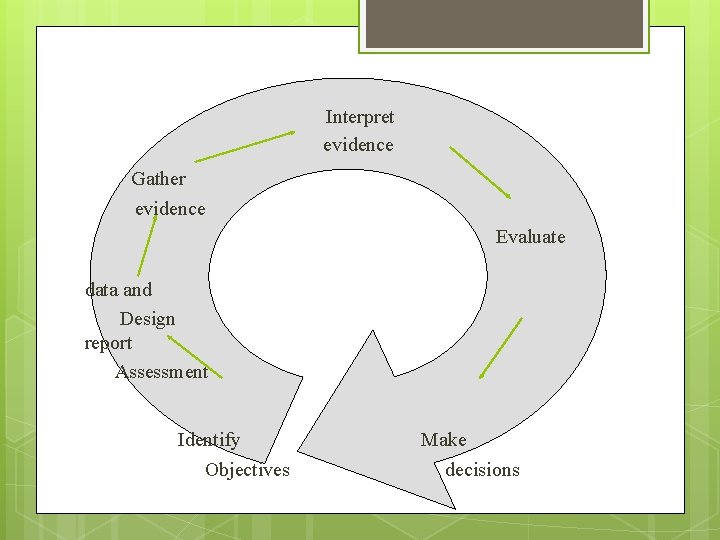
Interpret evidence Gather evidence Evaluate data and Design report Assessment Identify Objectives Make decisions
Let’s just say. . Learning objectives—begin by asking What do we want advisors to know? What do we want them to be able to do? What do we want them to value or appreciate as a result of the training and development program?
If advisors are expected to demonstrate a knowledge set, skills, and values related to academic advising, how do we state a learning objective and deliver the opportunity? E. g. , as a result of the program, advisors will be expected to. .
If done right and well. . Assessment ultimately improves student and advisor satisfaction with academic advising -- and -- Assessment ultimately provides a strong advising raison d’etre in an era of increased accountability and squeezed budgets.
Tomorrow at 9: 00 a. m. Foundation Session #4 Assessment of Academic Advising: An Overview Thursday at 9: 00 a. m. Workshop #3 Assessment of Academic Advising
IV. Recognition and Rewards for Effective Advising
Commitment What value does your unit/department/campus/ institution place on quality academic advising? Does it acknowledge advisors and their roles in contributing to student success?
Tangible and intangible rewards are part of a clear, coherent strategy within the mission of an organization.
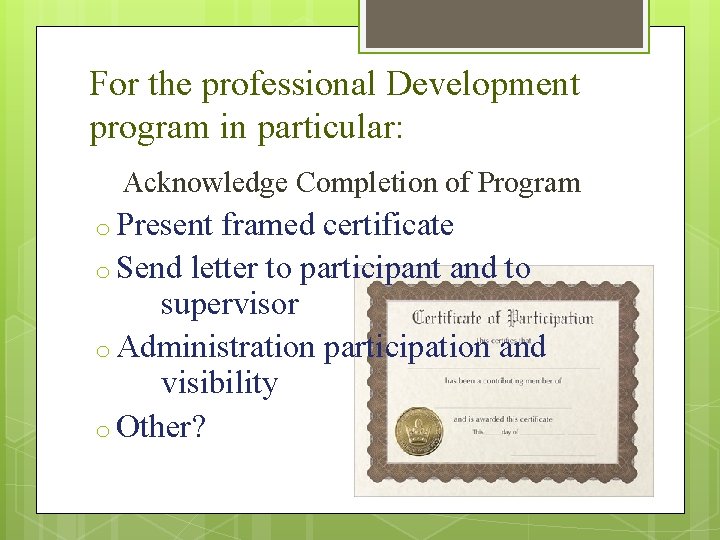
For the professional Development program in particular: Acknowledge Completion of Program o Present framed certificate o Send letter to participant and to supervisor o Administration participation and visibility o Other?
Other options? This is not a rhetorical question.
Develop the R&R Plan The questions are: Whom do you want to recognize/reward? Why do you want to recognize/reward them? How are they to be recognized/ rewarded?
How are the candidates to be nominated? What criteria will be used to determine the awardees? Who will evaluate the nominee packets? What exactly will be the recognition/ reward? At what venue, if any, will the awardee(s) by recognized?
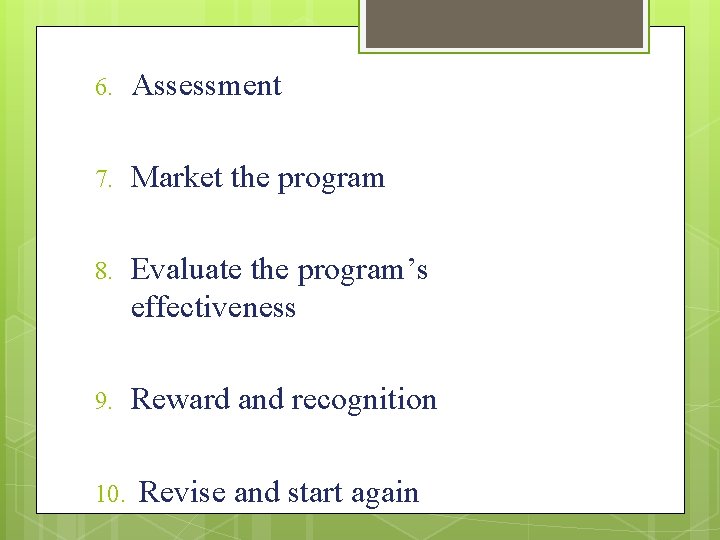
The 10 -step program 1. Committee and leader named 2. Needs identified 3. Goals and Outcomes determined 4. Develop content 5. Decide method of delivery
6. Assessment 7. Market the program 8. Evaluate the program’s effectiveness 9. Reward and recognition 10. Revise and start again
Good advising does not just happen.
Thursday at 1: 00 p. m. Foundation Session #5 Initiating Change: Leading from Your Position
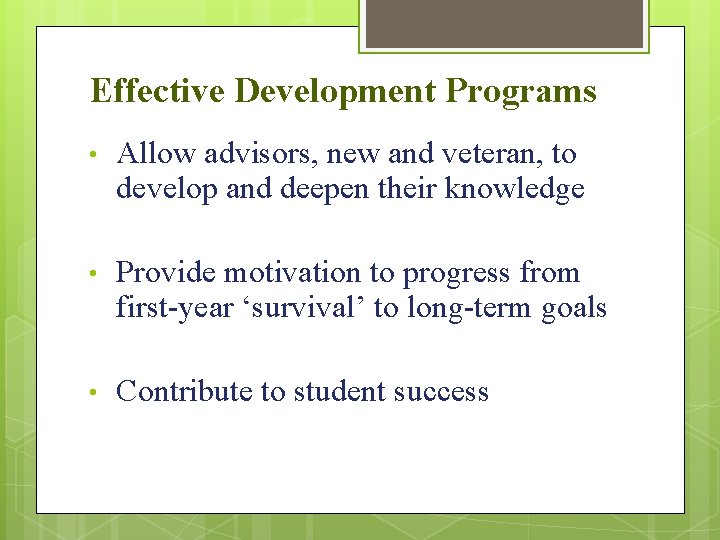
Effective Development Programs • Allow advisors, new and veteran, to develop and deepen their knowledge • Provide motivation to progress from first-year ‘survival’ to long-term goals • Contribute to student success
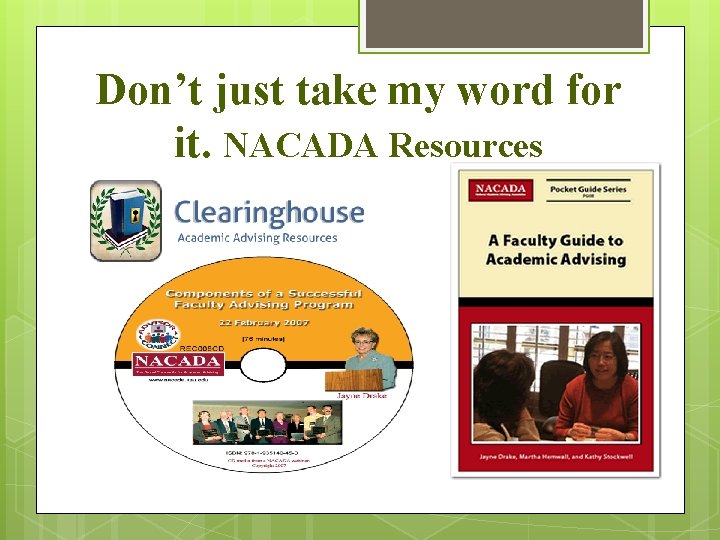
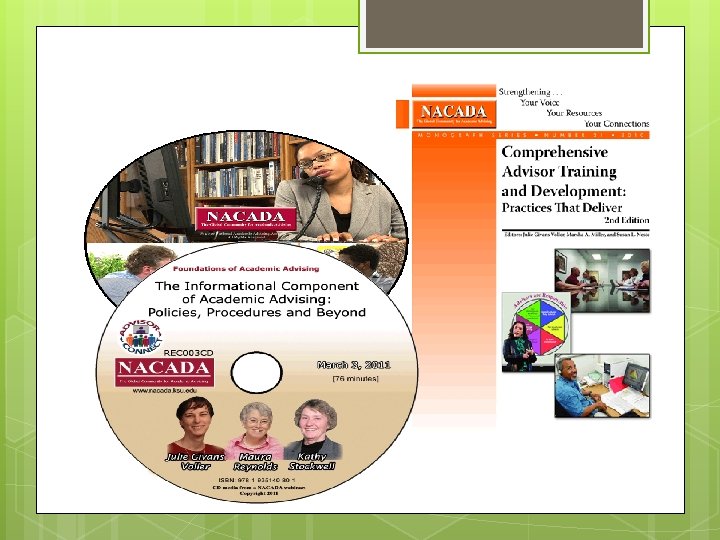
Don’t just take my word for it. NACADA Resources
Thank you And my special thanks to Jennifer Joslin Casey Self Marsha Miller For their words and inspiration