
Designing a research question and Data collection Dr

- Slides: 46
Designing a research question and Data collection Dr. Rahul Mhaskar Director Office of Research, Innovation and Scholarly Endeavors (RISE) Associate Professor Department of Internal Medicine
Learning objectives At the end of this session participants will be able to • Learn the importance of a specific research question in clinical research and decision making • Learn to design research questions using a framework • Match the research question to a study design • Identify key elements of designing data collection tools • Design a data collection and management tool • Clean the data and prepare it for statistical analyses
Learning Environment • Learning format • Interactive (i. e. informal) • Active participation from the participants is highly desired • Questioning/interruption • Expected (there are no stupid questions)
What is a research question? The researcher asks a very specific question and tests a specific hypothesis. Broad questions are usually broken into smaller, testable hypotheses or questions. Often called an objective or aim, though calling it a question tends to help with focusing the hypothesis and thinking about how to find an answer • PICOTS format
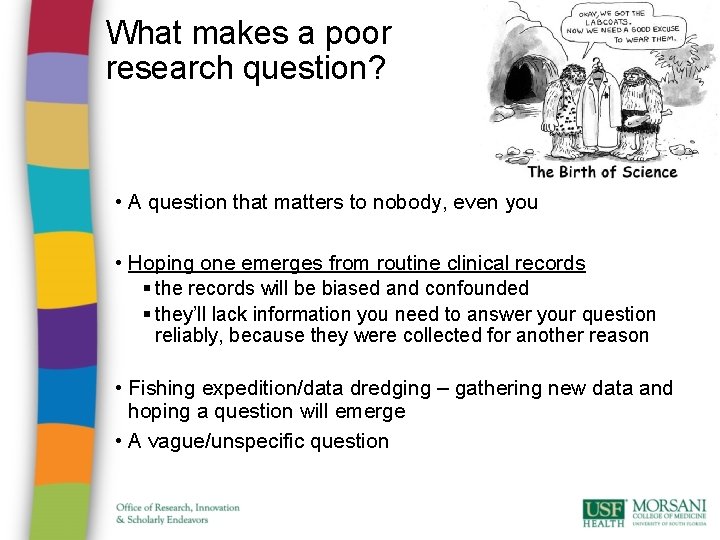
What makes a poor research question? • A question that matters to nobody, even you • Hoping one emerges from routine clinical records § the records will be biased and confounded § they’ll lack information you need to answer your question reliably, because they were collected for another reason • Fishing expedition/data dredging – gathering new data and hoping a question will emerge • A vague/unspecific question
What makes a good question? Specificity / focus : PICOTS format P - who are the patients or what’s the problem? I - what is the intervention or exposure? C – what is the comparison group? O - what is the outcome or endpoint? T- What is the type of the question? S- what is an optimal study design to answer this question?
On morning rounds in the Hem/Onc unit, a first year resident turns to you for consultation. She wants to discuss options for managing moderate nausea and vomiting that result following chemotherapy. She shares an experience a relative had taking ginger when prochlorperazine didn’t provide effective relief and asks for your input.
Traditionally, clinicians have used a conservative approach to the diagnostic evaluation of head-injured infants, arguing that infants are at increased risk of intracranial injury (ICI) and that symptoms or signs of brain injury may not be reliably present in those with ICI. A number of previous studies have reported that a significant fraction of ICIs in infants occur in patients with a normal neurological status and with no signs or symptoms of brain injury. You want to see how well clinical features predict ICI in infants.
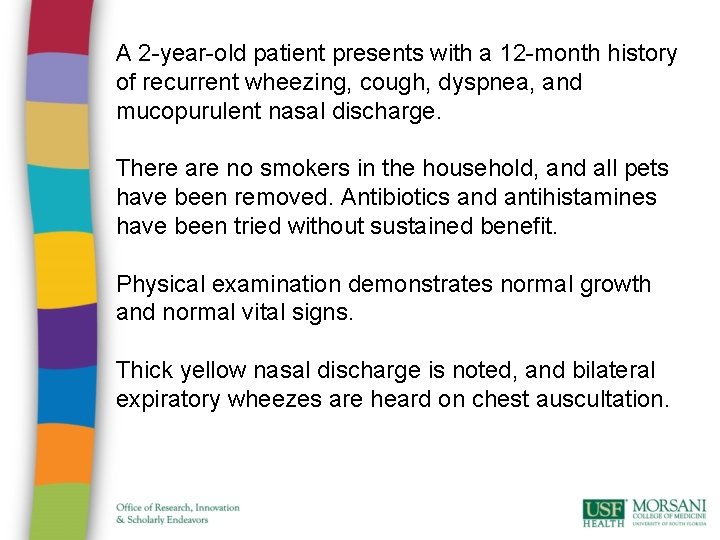
A 2 -year-old patient presents with a 12 -month history of recurrent wheezing, cough, dyspnea, and mucopurulent nasal discharge. There are no smokers in the household, and all pets have been removed. Antibiotics and antihistamines have been tried without sustained benefit. Physical examination demonstrates normal growth and normal vital signs. Thick yellow nasal discharge is noted, and bilateral expiratory wheezes are heard on chest auscultation.
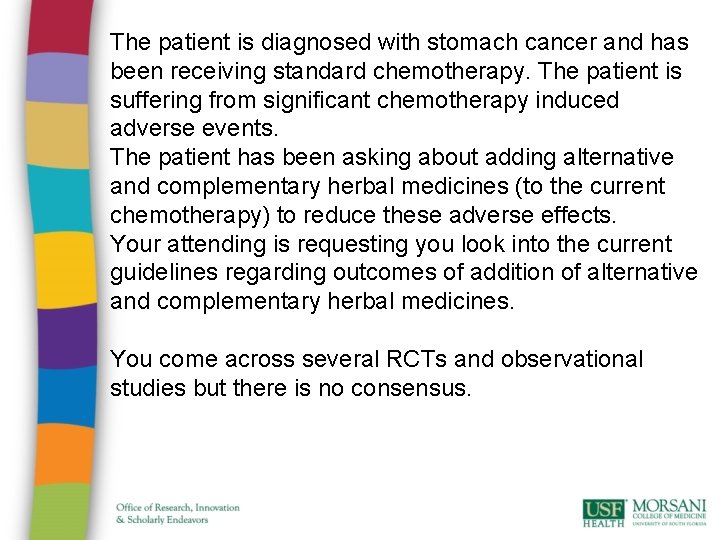
The patient is diagnosed with stomach cancer and has been receiving standard chemotherapy. The patient is suffering from significant chemotherapy induced adverse events. The patient has been asking about adding alternative and complementary herbal medicines (to the current chemotherapy) to reduce these adverse effects. Your attending is requesting you look into the current guidelines regarding outcomes of addition of alternative and complementary herbal medicines. You come across several RCTs and observational studies but there is no consensus.
How to focus your question? • brief literature search for previous evidence (think about library services) • discuss with colleagues • narrow down the question – time, place, group • what answer do you expect to find?
From a research question to a proposal • who am I collecting information from? • what kinds of information do I need? • how much information will I need? * • how will I use the information? • how will I minimise chance/bias/confounding? • how will I collect the information ethically? * sample size – ask a statistician for help
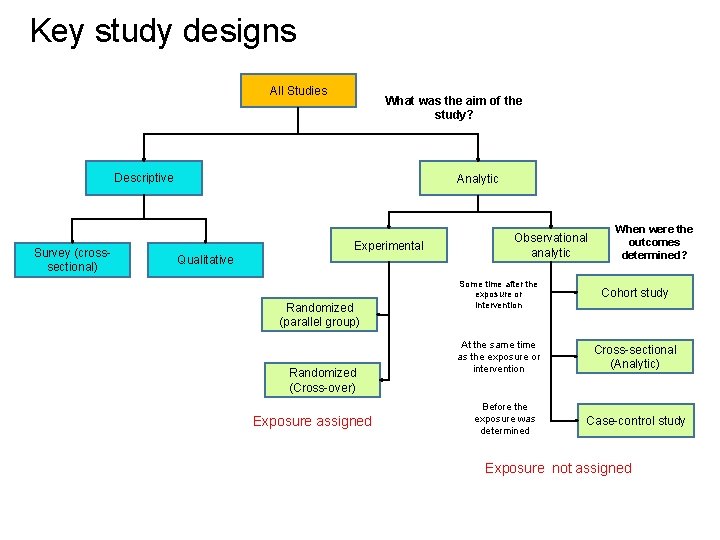
Key study designs All Studies What was the aim of the study? Descriptive Survey (crosssectional) Analytic Experimental Qualitative Randomized (parallel group) Randomized (Cross-over) Exposure assigned Observational analytic When were the outcomes determined? Some time after the exposure or intervention Cohort study At the same time as the exposure or intervention Cross-sectional (Analytic) Before the exposure was determined Case-control study Exposure not assigned
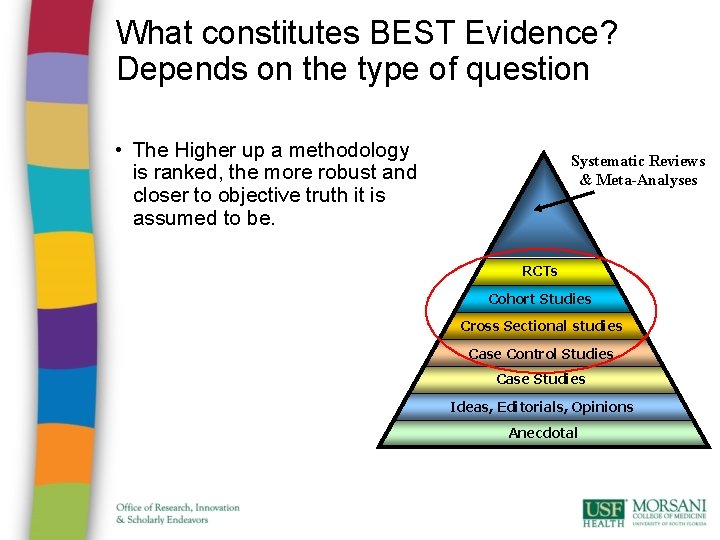
What constitutes BEST Evidence? Depends on the type of question • The Higher up a methodology is ranked, the more robust and closer to objective truth it is assumed to be. Systematic Reviews & Meta-Analyses RCTs Cohort Studies Cross Sectional studies Case Control Studies Case Studies Ideas, Editorials, Opinions Anecdotal
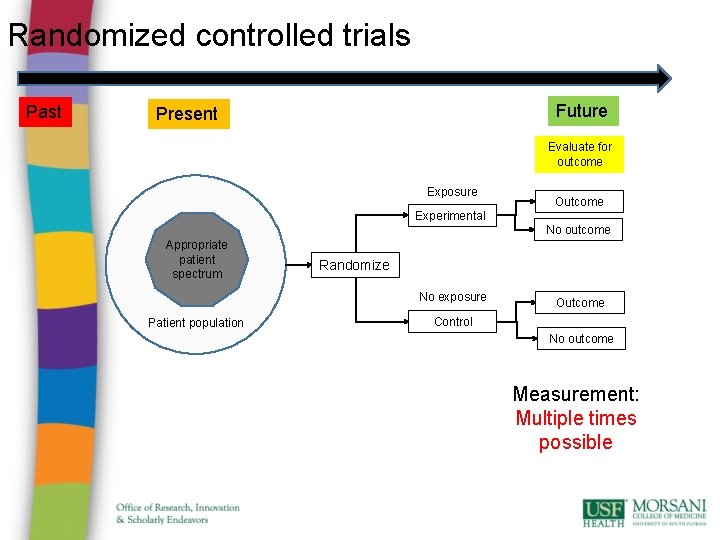
Randomized controlled trials Past Future Present Evaluate for outcome Exposure Outcome Experimental No outcome Appropriate patient spectrum Randomize No exposure Patient population Outcome Control No outcome Measurement: Multiple times possible
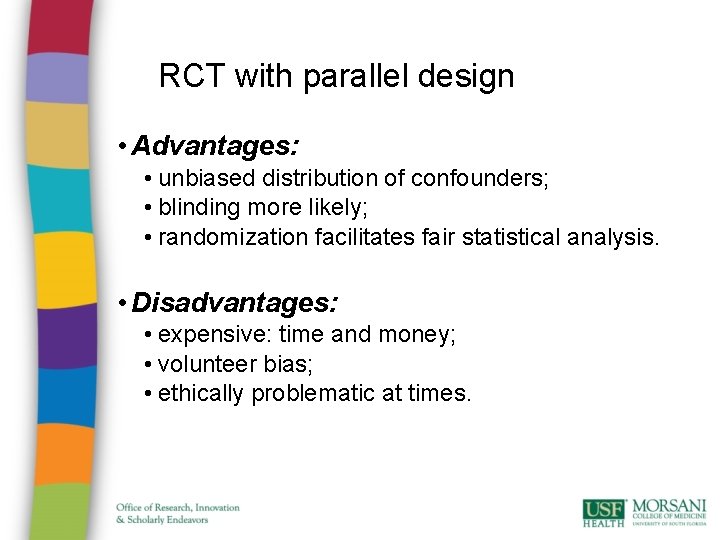
RCT with parallel design • Advantages: • unbiased distribution of confounders; • blinding more likely; • randomization facilitates fair statistical analysis. • Disadvantages: • expensive: time and money; • volunteer bias; • ethically problematic at times.
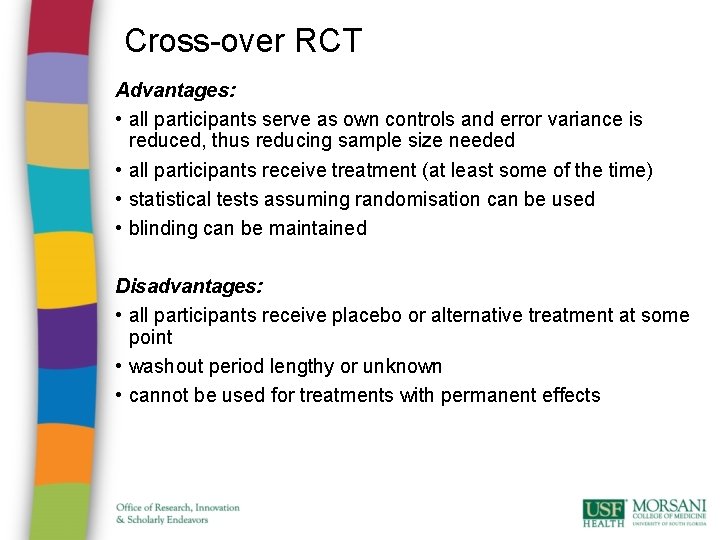
Cross-over RCT Advantages: • all participants serve as own controls and error variance is reduced, thus reducing sample size needed • all participants receive treatment (at least some of the time) • statistical tests assuming randomisation can be used • blinding can be maintained Disadvantages: • all participants receive placebo or alternative treatment at some point • washout period lengthy or unknown • cannot be used for treatments with permanent effects
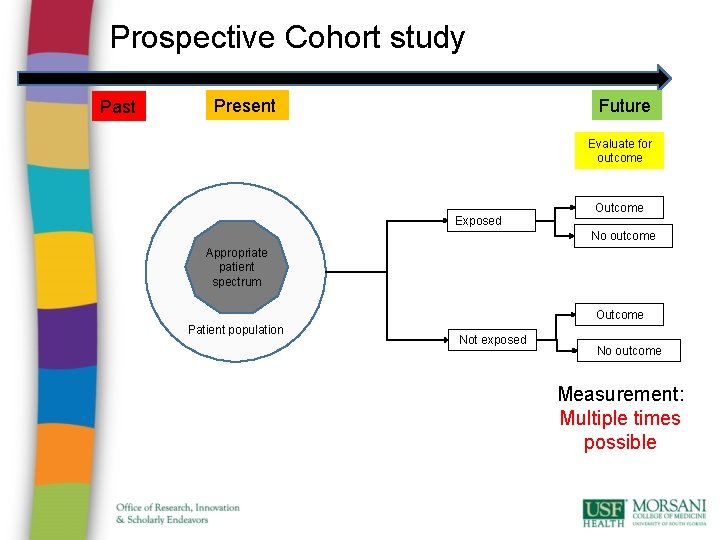
Prospective Cohort study Past Future Present Evaluate for outcome Exposed Outcome No outcome Appropriate patient spectrum Outcome Patient population Not exposed No outcome Measurement: Multiple times possible
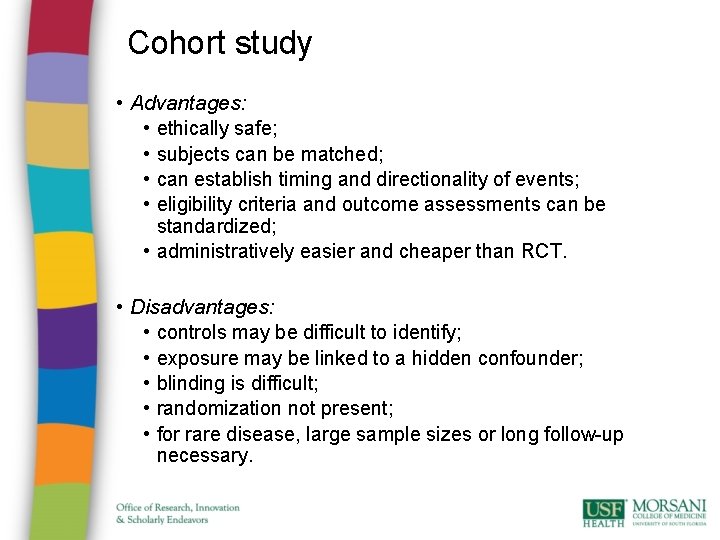
Cohort study • Advantages: • ethically safe; • subjects can be matched; • can establish timing and directionality of events; • eligibility criteria and outcome assessments can be standardized; • administratively easier and cheaper than RCT. • Disadvantages: • controls may be difficult to identify; • exposure may be linked to a hidden confounder; • blinding is difficult; • randomization not present; • for rare disease, large sample sizes or long follow-up necessary.
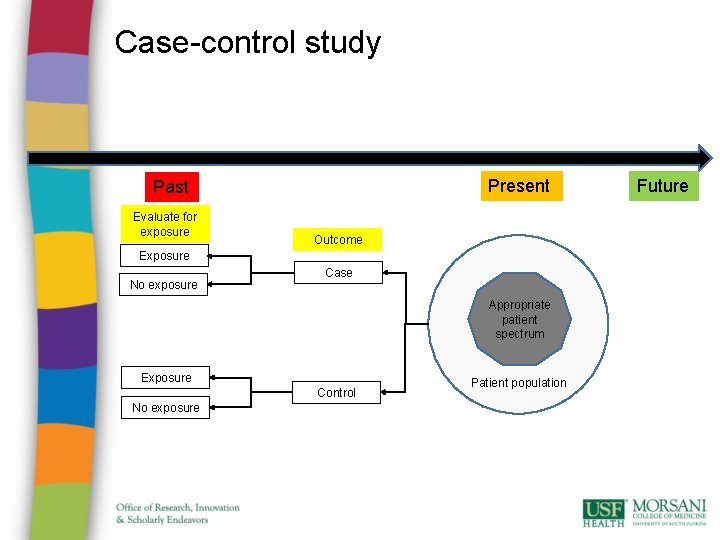
Case-control study Present Past Evaluate for exposure Outcome Exposure No exposure Case Appropriate patient spectrum Exposure Control No exposure Patient population Future
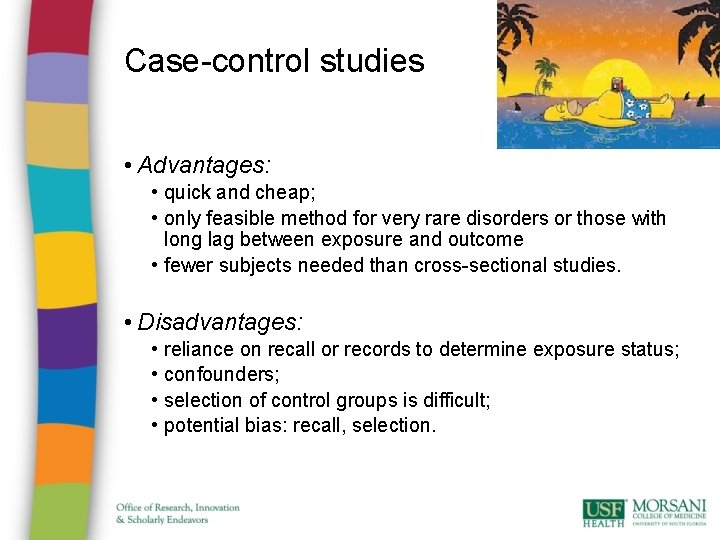
Case-control studies • Advantages: • quick and cheap; • only feasible method for very rare disorders or those with long lag between exposure and outcome • fewer subjects needed than cross-sectional studies. • Disadvantages: • • reliance on recall or records to determine exposure status; confounders; selection of control groups is difficult; potential bias: recall, selection.
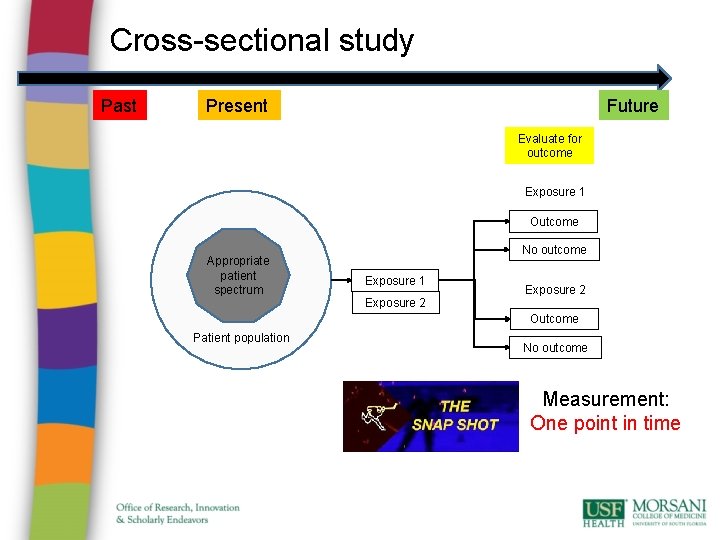
Cross-sectional study Past Future Present Evaluate for outcome Exposure 1 Outcome Appropriate patient spectrum No outcome Exposure 1 Exposure 2 Outcome Patient population No outcome Measurement: One point in time
Cross-sectional study • Advantages: • cheap and simple; • ethically safe. • Disadvantages: • establishes association at most, not causality; • recall bias susceptibility (e. g. surveys); • confounders may be unequally distributed; • group sizes may be unequal.
• Chili pepper is the key to good health • Be sure to eat Chili pepper with every meal • Chili pepper –it kills harmful bacteria
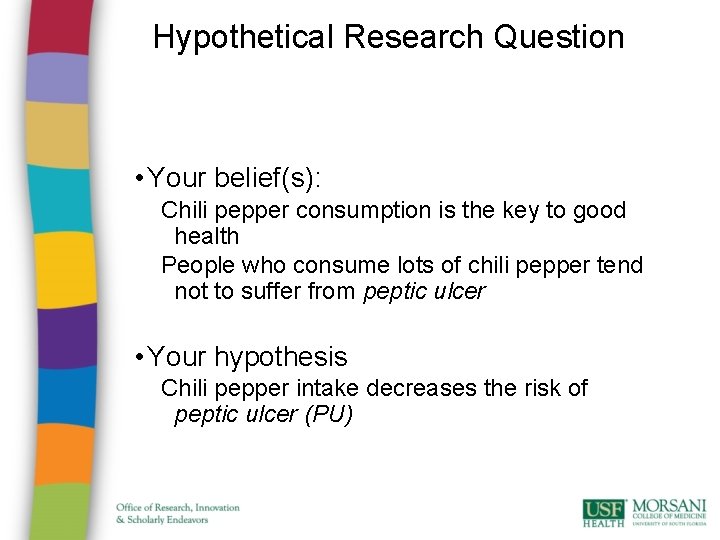
Hypothetical Research Question • Your belief(s): Chili pepper consumption is the key to good health People who consume lots of chili pepper tend not to suffer from peptic ulcer • Your hypothesis Chili pepper intake decreases the risk of peptic ulcer (PU)
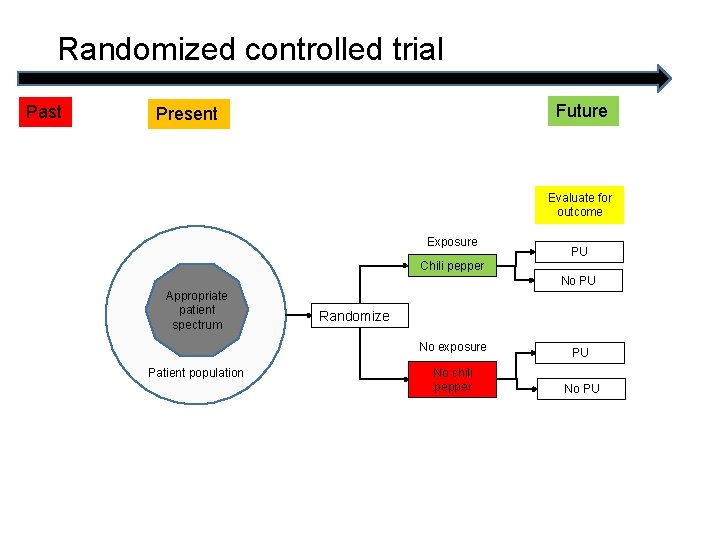
Randomized controlled trial Past Future Present Evaluate for outcome Exposure PU Chili pepper No PU Appropriate patient spectrum Randomize No exposure Patient population No chili pepper PU No PU
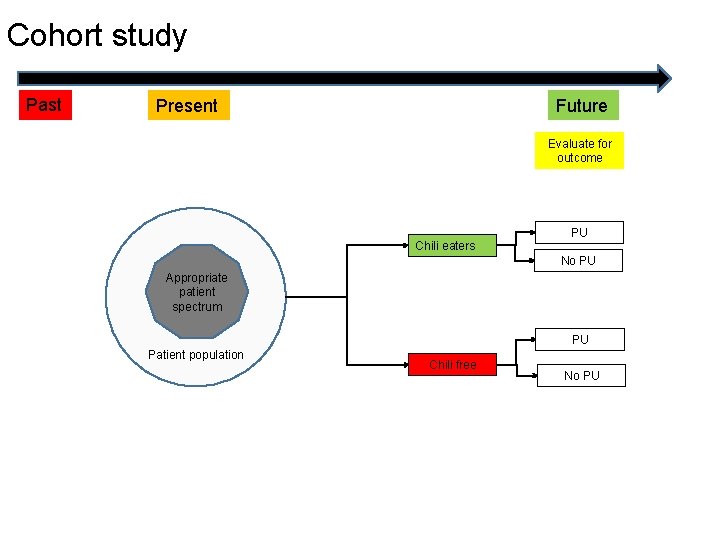
Cohort study Past Future Present Evaluate for outcome Chili eaters PU No PU Appropriate patient spectrum PU Patient population Chili free No PU
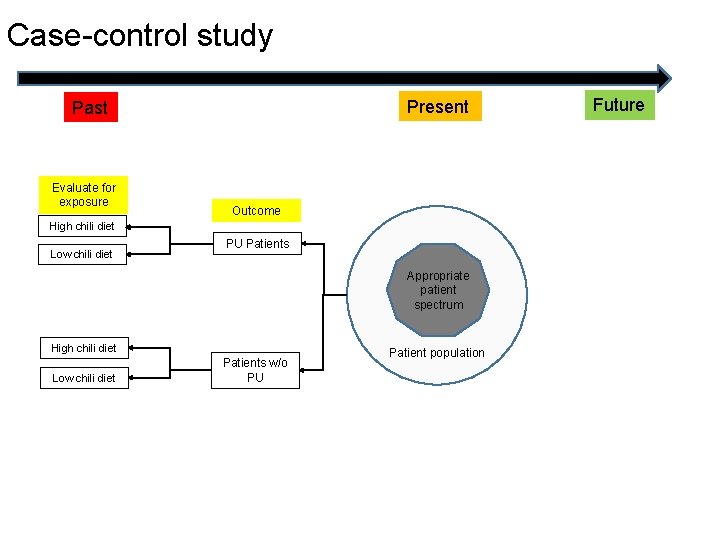
Case-control study Present Past Evaluate for exposure Outcome High chili diet Low chili diet PU Patients Appropriate patient spectrum High chili diet Low chili diet Patients w/o PU Patient population Future
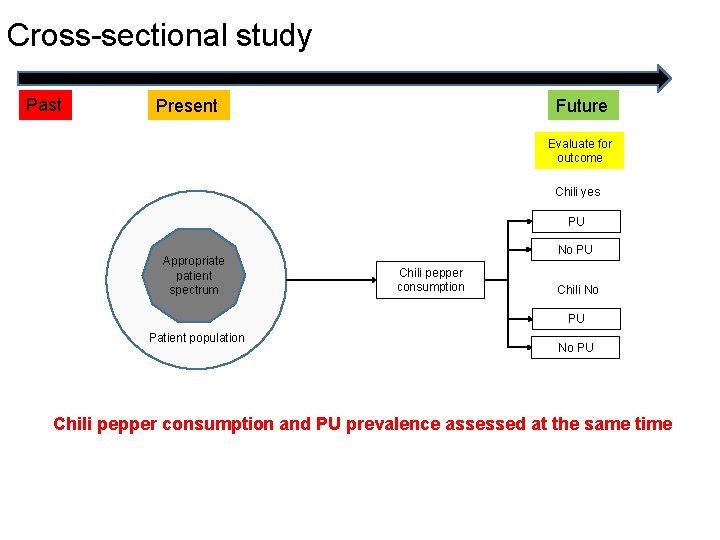
Cross-sectional study Past Future Present Evaluate for outcome Chili yes PU Appropriate patient spectrum No PU Chili pepper consumption Chili No PU Patient population No PU Chili pepper consumption and PU prevalence assessed at the same time
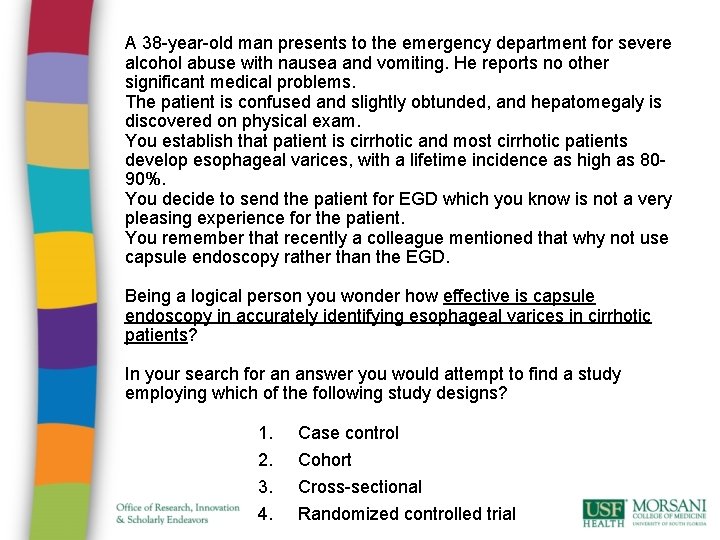
A 38 -year-old man presents to the emergency department for severe alcohol abuse with nausea and vomiting. He reports no other significant medical problems. The patient is confused and slightly obtunded, and hepatomegaly is discovered on physical exam. You establish that patient is cirrhotic and most cirrhotic patients develop esophageal varices, with a lifetime incidence as high as 8090%. You decide to send the patient for EGD which you know is not a very pleasing experience for the patient. You remember that recently a colleague mentioned that why not use capsule endoscopy rather than the EGD. Being a logical person you wonder how effective is capsule endoscopy in accurately identifying esophageal varices in cirrhotic patients? In your search for an answer you would attempt to find a study employing which of the following study designs? 1. 2. 3. 4. Case control Cohort Cross-sectional Randomized controlled trial
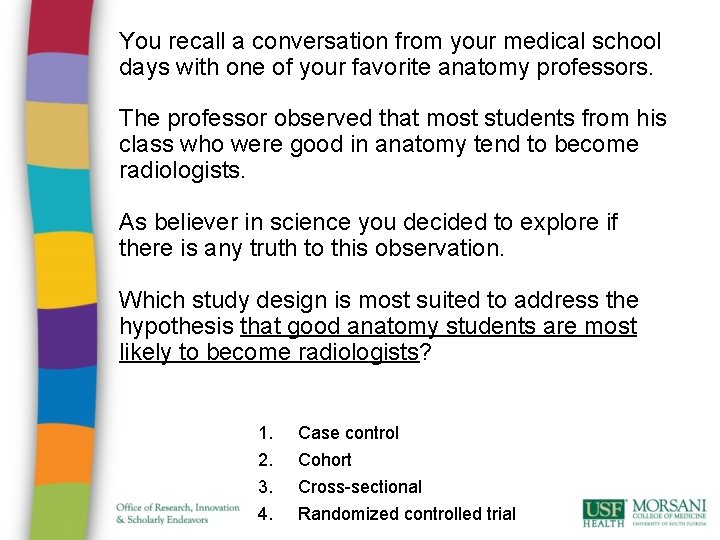
You recall a conversation from your medical school days with one of your favorite anatomy professors. The professor observed that most students from his class who were good in anatomy tend to become radiologists. As believer in science you decided to explore if there is any truth to this observation. Which study design is most suited to address the hypothesis that good anatomy students are most likely to become radiologists? 1. 2. 3. 4. Case control Cohort Cross-sectional Randomized controlled trial
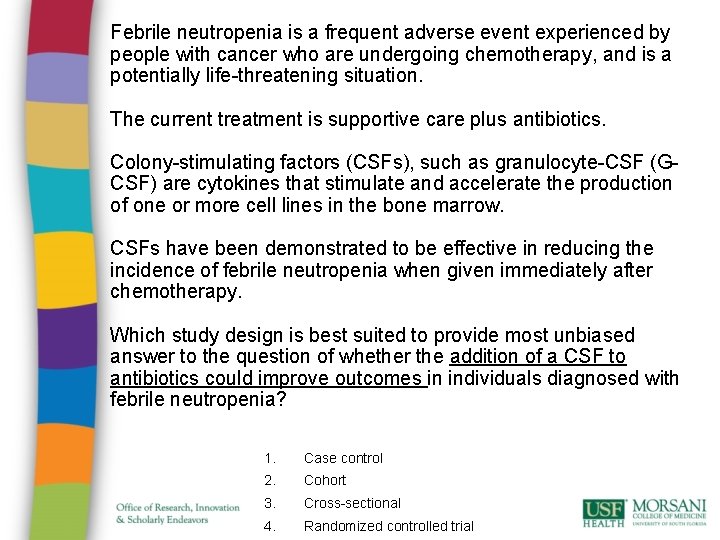
Febrile neutropenia is a frequent adverse event experienced by people with cancer who are undergoing chemotherapy, and is a potentially life-threatening situation. The current treatment is supportive care plus antibiotics. Colony-stimulating factors (CSFs), such as granulocyte-CSF (GCSF) are cytokines that stimulate and accelerate the production of one or more cell lines in the bone marrow. CSFs have been demonstrated to be effective in reducing the incidence of febrile neutropenia when given immediately after chemotherapy. Which study design is best suited to provide most unbiased answer to the question of whether the addition of a CSF to antibiotics could improve outcomes in individuals diagnosed with febrile neutropenia? 1. Case control 2. Cohort 3. Cross-sectional 4. Randomized controlled trial
Thank you Any questions about research questions ?
Introduction: Data Collection • Most research is based on an enormous amount of diverse data • Forms, documents, medical records etc. • Collected by some people • Analyzed by different people • Data collected and stored in an unstructured, unorganized manner is most likely: • Difficult/impossible to interpret • Waste of resources (human and/or computer hardware) 34
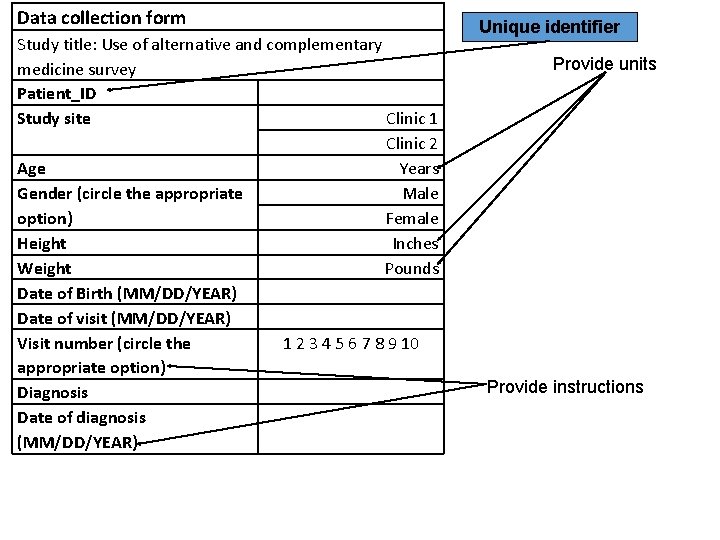
Data collection form Development: key points • Keep all users in mind • Data outlined in the study protocol • Be clear and concise data elements • Avoid duplication • Minimal free text responses • Do not collect numbers and text in the same column in MS EXCEL • Data required by the regulatory agencies
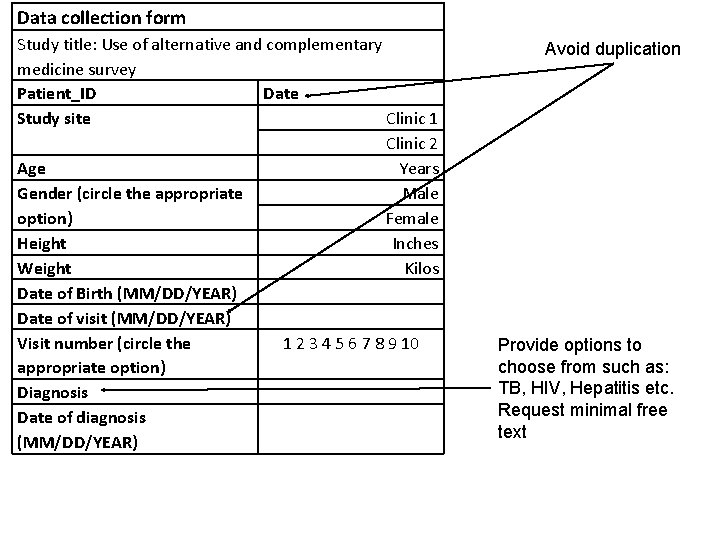
Data collection form Study title: Use of alternative and complementary medicine survey Patient_ID Date Study site Clinic 1 Clinic 2 Age Years Gender (circle the appropriate Male option) Female Height Inches Weight Kilos Date of Birth (MM/DD/YEAR) Date of visit (MM/DD/YEAR) Visit number (circle the 1 2 3 4 5 6 7 8 9 10 appropriate option) Diagnosis Date of diagnosis (MM/DD/YEAR) Avoid duplication Provide options to choose from such as: TB, HIV, Hepatitis etc. Request minimal free text
Data collection form Study title: Use of alternative and complementary medicine survey Patient_ID Study site Clinic 1 Clinic 2 Age Years Gender (circle the appropriate Male option) Female Height Inches Weight Pounds Date of Birth (MM/DD/YEAR) Date of visit (MM/DD/YEAR) Visit number (circle the 1 2 3 4 5 6 7 8 9 10 appropriate option) Diagnosis Date of diagnosis (MM/DD/YEAR) Unique identifier Provide units Provide instructions
Unique identification: a must have ! • There MUST be at least one key identifier for each study participant. • Usually the participant identification number (P_ID) is used as the “unique identifier” in the study. • In other words: no two study participants can have the same P_ID.
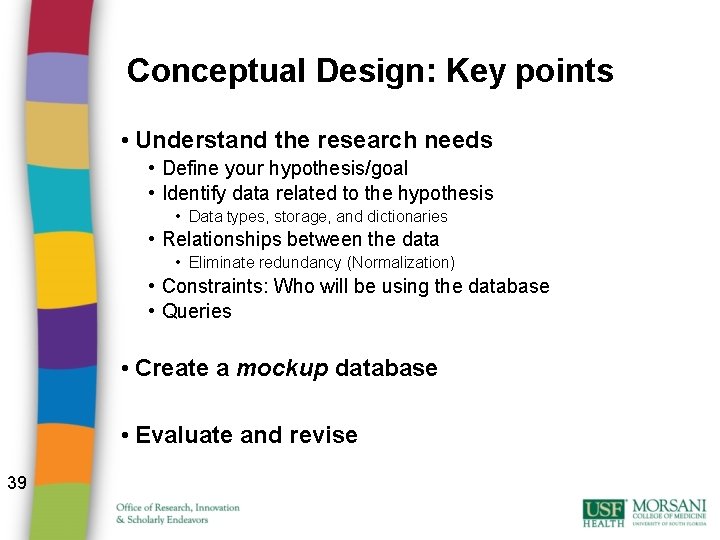
Conceptual Design: Key points • Understand the research needs • Define your hypothesis/goal • Identify data related to the hypothesis • Data types, storage, and dictionaries • Relationships between the data • Eliminate redundancy (Normalization) • Constraints: Who will be using the database • Queries • Create a mockup database • Evaluate and revise 39
Tips for database design • Use MS EXCEL. . it’s easy and powerful • Think simple. . Be kind to yourself and your team • Variable names • Each variable should be given a distinct name • Easily identifies the variable or the type of information collected • Understandable, consistent and short (some software programs only allow 8 characters!) • Good idea to name all variables using lower case letters • Use underscore (a_b) instead of a hyphen (a-b) 40
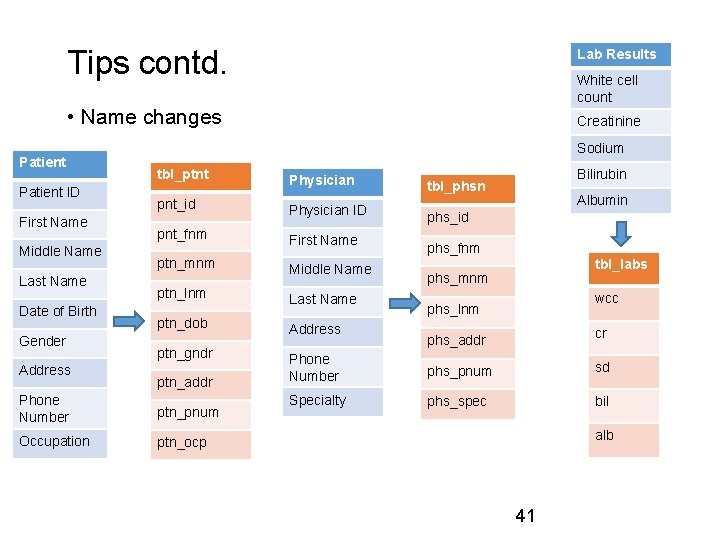
Tips contd. Lab Results White cell count • Name changes Patient ID First Name Middle Name Last Name Date of Birth Gender Address Creatinine Sodium tbl_ptnt Physician pnt_id Physician ID pnt_fnm First Name ptn_mnm Middle Name ptn_lnm Last Name ptn_dob ptn_gndr ptn_addr Phone Number ptn_pnum Occupation ptn_ocp Address Bilirubin tbl_phsn Albumin phs_id phs_fnm tbl_labs phs_mnm wcc phs_lnm cr phs_addr Phone Number phs_pnum sd Specialty phs_spec bil alb 41
Tips contd. • Record Coding • Coding is both an act of translation and an act of summarization. • Most statistical routines require that nonnumeric information be coded into numeric answers. • For example: “Have you ever smoked? ” • 1=”Yes” • 2=”No” • 9=”Don't Know” • These numbers then become the values in a field of the electronic data file eventually produced. 42
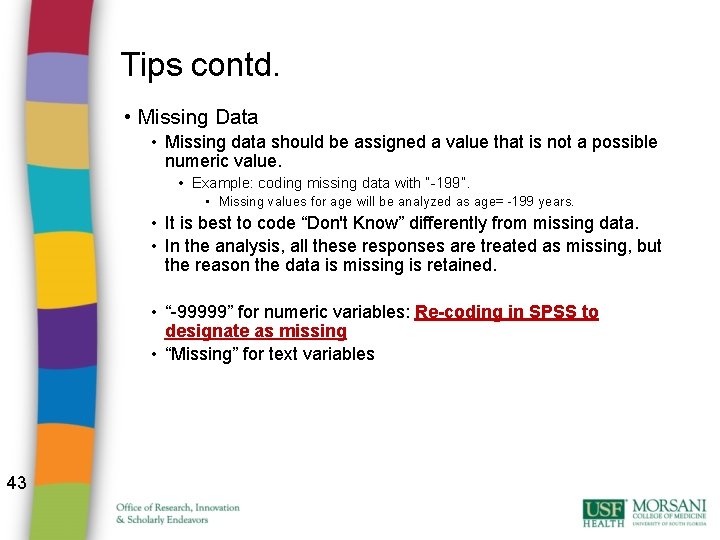
Tips contd. • Missing Data • Missing data should be assigned a value that is not a possible numeric value. • Example: coding missing data with “-199”. • Missing values for age will be analyzed as age= -199 years. • It is best to code “Don't Know” differently from missing data. • In the analysis, all these responses are treated as missing, but the reason the data is missing is retained. • “-99999” for numeric variables: Re-coding in SPSS to designate as missing • “Missing” for text variables 43
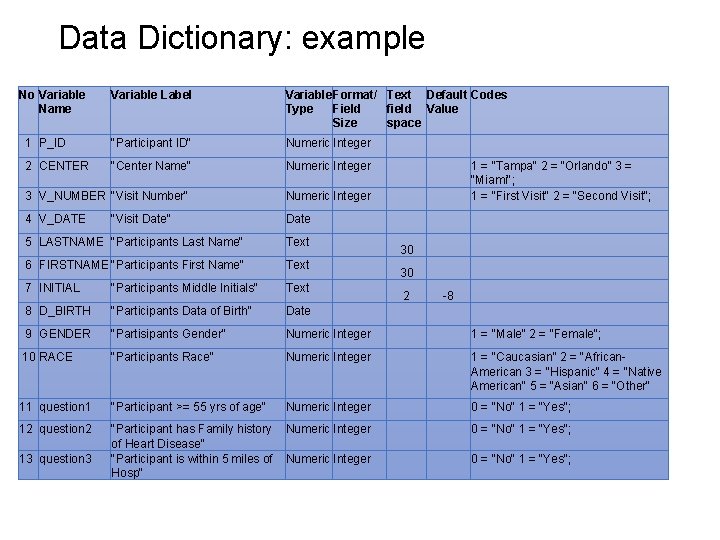
Data Dictionary: example No Variable Name Variable Label Variable Format/ Text Default Codes Type Field field Value Size space 1 P_ID "Participant ID" Numeric Integer 2 CENTER "Center Name" Numeric Integer 3 V_NUMBER "Visit Number" Numeric Integer 4 V_DATE Date "Visit Date" 1 = “Tampa" 2 = “Orlando” 3 = “Miami"; 1 = "First Visit" 2 = "Second Visit"; 5 LASTNAME "Participants Last Name" Text 6 FIRSTNAME "Participants First Name" Text 7 INITIAL "Participants Middle Initials" Text 8 D_BIRTH "Participants Data of Birth" Date 9 GENDER "Partisipants Gender" Numeric Integer 1 = "Male" 2 = "Female"; 10 RACE "Participants Race" Numeric Integer 1 = "Caucasian" 2 = "African. American 3 = "Hispanic" 4 = "Native American" 5 = "Asian" 6 = "Other" 11 question 1 "Participant >= 55 yrs of age" Numeric Integer 0 = "No" 1 = "Yes"; 12 question 2 "Participant has Family history of Heart Disease" "Participant is within 5 miles of Hosp" Numeric Integer 0 = "No" 1 = "Yes"; 13 question 3 30 30 2 -8
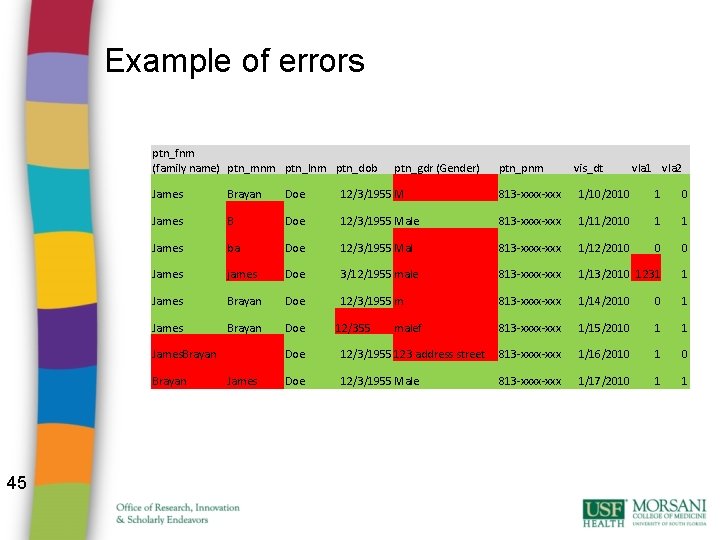
Example of errors ptn_fnm (family name) ptn_mnm ptn_lnm ptn_dob ptn_pnm vis_dt vla 1 vla 2 James Brayan Doe 12/3/1955 M 813 -xxxx-xxx 1/10/2010 1 0 James B Doe 12/3/1955 Male 813 -xxxx-xxx 1/11/2010 1 1 James ba Doe 12/3/1955 Mal 813 -xxxx-xxx 1/12/2010 0 0 James james Doe 3/12/1955 male 813 -xxxx-xxx 1/13/2010 1231 1 James Brayan Doe 12/3/1955 m 813 -xxxx-xxx 1/14/2010 0 1 James Brayan Doe 813 -xxxx-xxx 1/15/2010 1 1 James. Brayan 45 ptn_gdr (Gender) James 12/355 malef Doe 12/3/1955 123 address street 813 -xxxx-xxx 1/16/2010 1 0 Doe 12/3/1955 Male 813 -xxxx-xxx 1/17/2010 1 1
All the best. . Contact me if you have further questions or need assistance Email: rmhaksar@usf. edu Or Schedule an appointment to see us in the RISE office. Thank you.