
Designing a Power Station Based on CSP Technology
Designing a Power Station Based on CSP Technology in Nablus Governorate Prepared by: Aman Zreaq Safaa Sarsour Sahar hannoon Supervisor: Dr. Aysar Yasin
Outline: • Introduction. • Objectives. • Concentrating Solar Power Technology • Research Methodology. • Site selection criteria. • Discussion and analysis
Introduction: • Palestine suffers from shortage of energy • Environmental impact of fossil fuel • CSP depends on solar energy that abundant and everywhere.
Objectives • The objective of this research is to investigate the technical and economic feasibility for thermal solar power generation plant with 1 mw capacity in Nablus governorate

Objectives The importance of this research is to answer some questions: • what are the main conditions and requirements needed for implementing CSP systems? • What is the importance of setting up the station?
Concentrating Solar Power Technology • CSP components 1. 2. 3. 4. 5. Collectors Receiver Reflectors Power blocks Heat transfer fluids and thermal storage
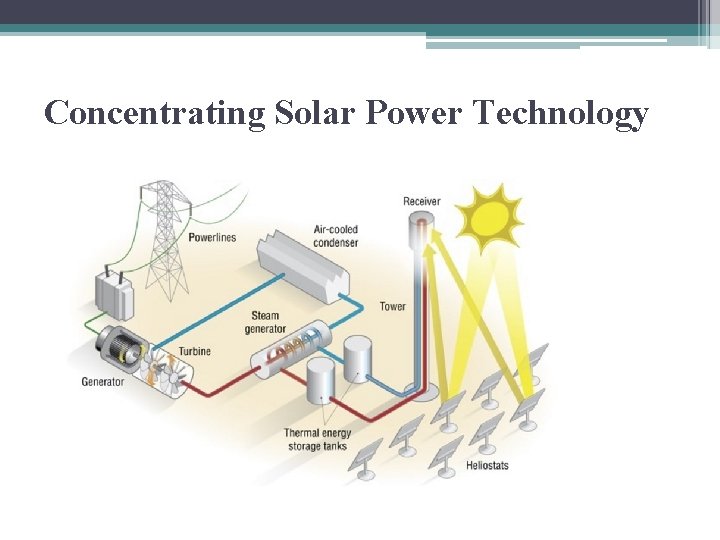
Concentrating Solar Power Technology
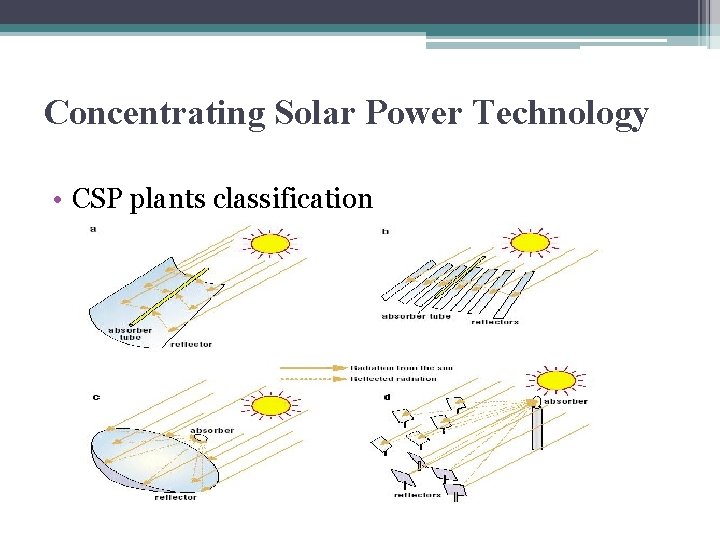
Concentrating Solar Power Technology • CSP plants classification
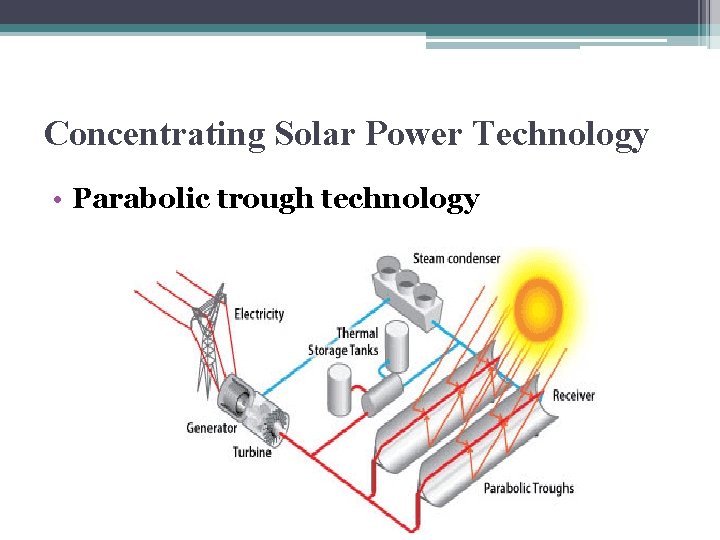
Concentrating Solar Power Technology • Parabolic trough technology
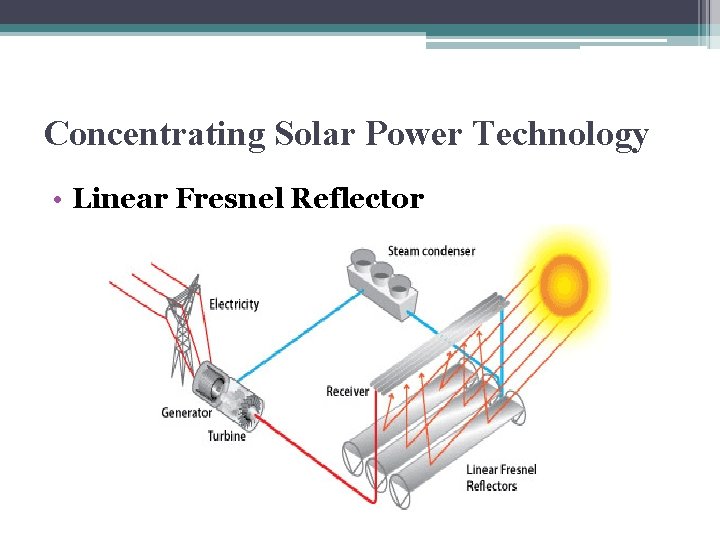
Concentrating Solar Power Technology • Linear Fresnel Reflector
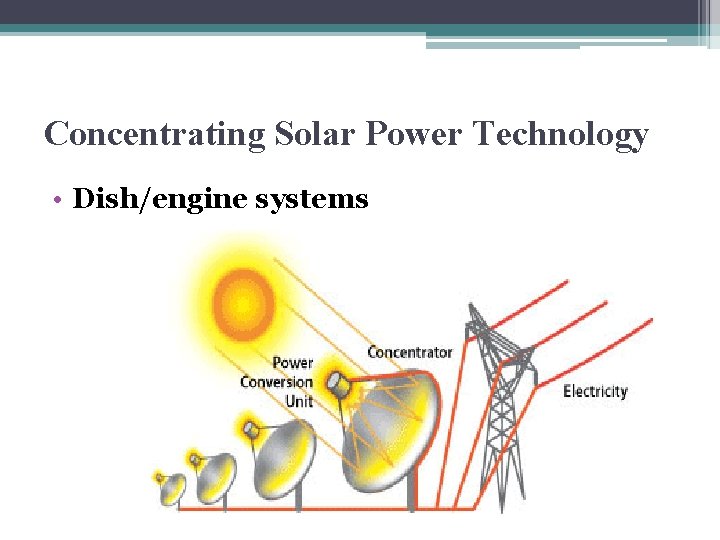
Concentrating Solar Power Technology • Dish/engine systems
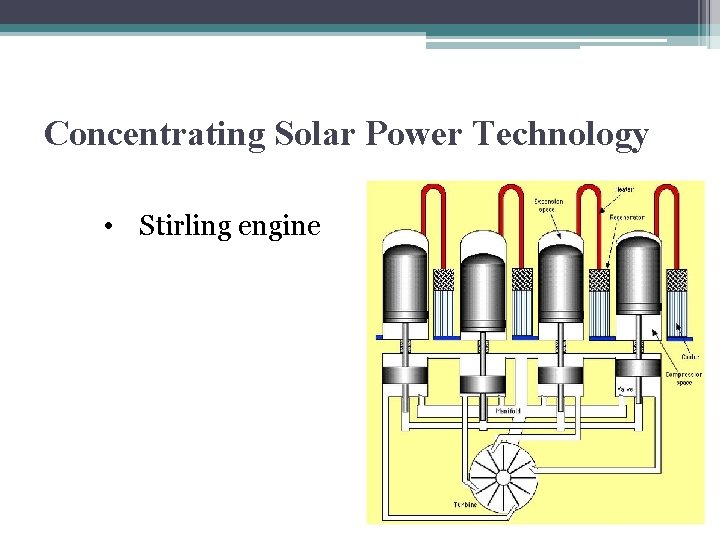
Concentrating Solar Power Technology • Stirling engine
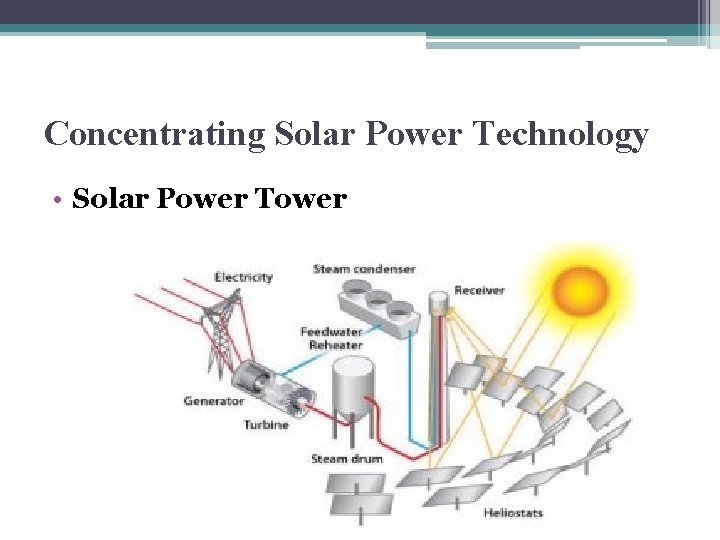
Concentrating Solar Power Technology • Solar Power Tower
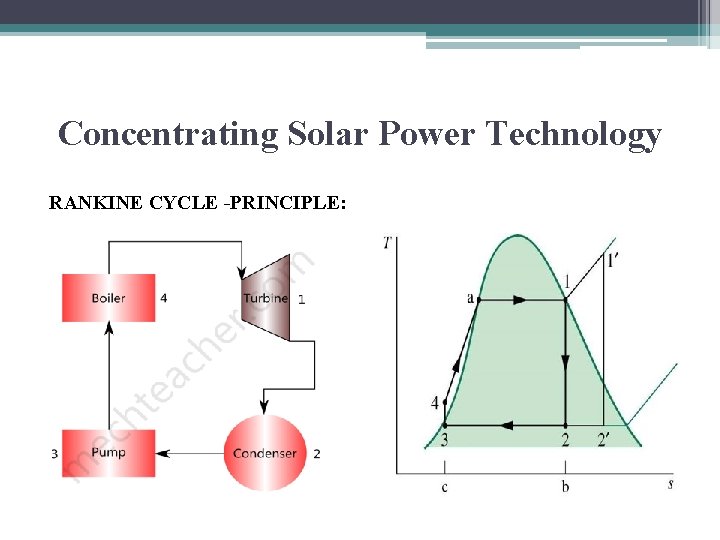
Concentrating Solar Power Technology RANKINE CYCLE -PRINCIPLE:
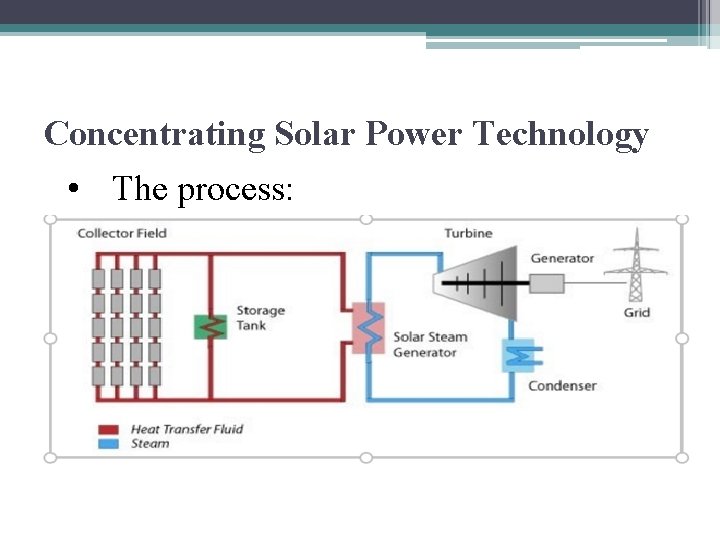
Concentrating Solar Power Technology • The process:
CSP Storage • THERMAL STORAGE SYSTEM ALLOWS PROVIDE POWER DURING PERIODS OF ABSENCE OF DIRECT SUN ORIENTED RADIATION, • THE MAIN CHALLENGE FACING THE RENEWABLE SOURCES OF ENERGY IS THE ENERGY STORAGE, CONCENTRATING SOLAR POWER CSP SYSTEM PROVIDE A SOLUTION BY THERMAL STORAGE WITHOUT NEEDING TO USE BATTERY THAT HAVE A LOT OF PROBLEMS
Heat transfer fluids • WATER (550 C°) AND (160 BAR) • HEAVY OIL (440 C°) • MOLTEN SALT IS A MIXTURE OF NITRATE SALTS (MAINLY SODIUM NITRATE NANO 3 AND POTASSIUM NITRATE KNO 3 AT A 60 -40 (230 C°)
CSP Storage • SEVERAL THERMAL ENERGY STORAGE TECHNOLOGIES THAT HAVE BEEN IMPLEMENTED FOR CSP PLANTS ARE MAINLY: • TWO-TANK (DIRECT AND INDIRECT) • SINGLE-TANK SYSTEMS.
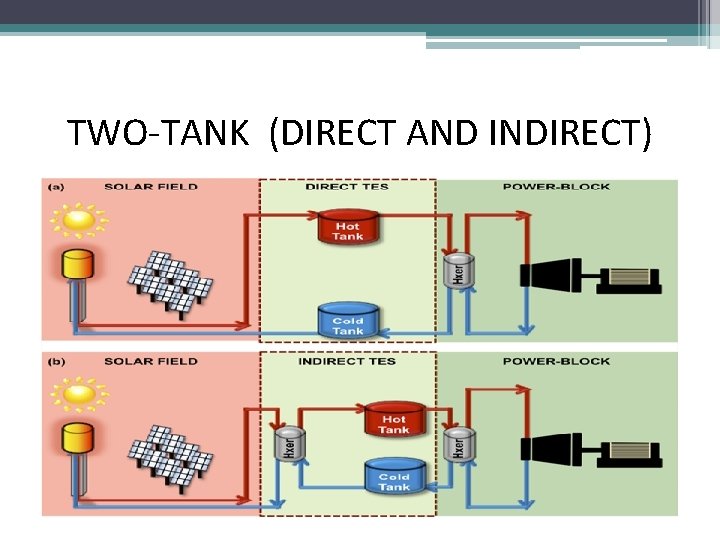
TWO-TANK (DIRECT AND INDIRECT)
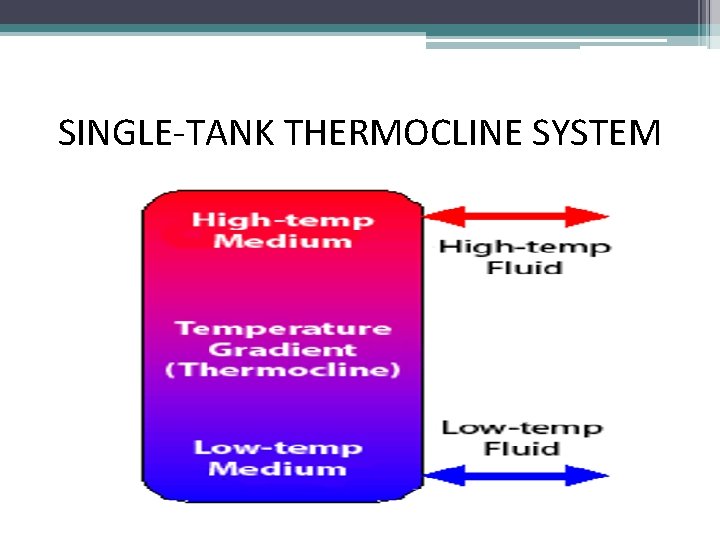
SINGLE-TANK THERMOCLINE SYSTEM
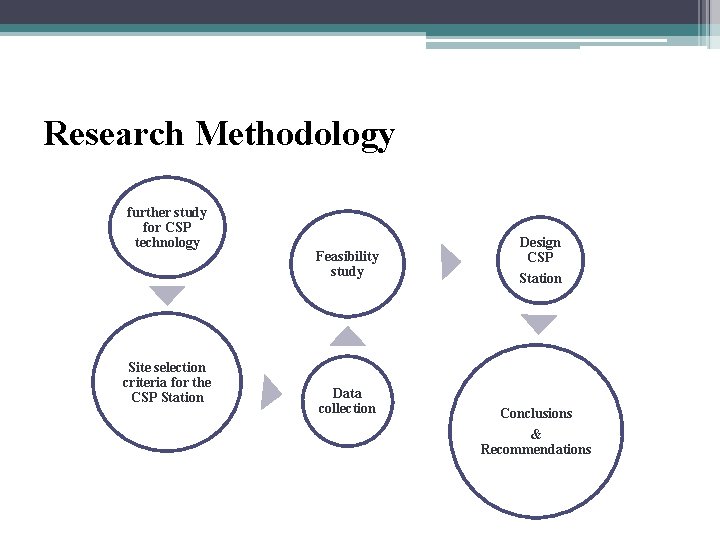
Research Methodology further study for CSP technology Site selection criteria for the CSP Station Feasibility study Data collection Design CSP Station Conclusions & Recommendations
Site selection criteria: • The selected sites for CSP systems have to comply with certain requirements. These requirements : 1. Solar radiation potential: a minimum requirement for CSP of around 2, 000 k. Wh/m² is commonly cited. 2. Land cover and slope: the specific surface area for a CSP plant in average is about 25000 m²/MW. The slope is ranged about 1 -2% for Linear focus and up to 3 -4% for point focus technologies. For Nablus the slope is nearly to 2%.
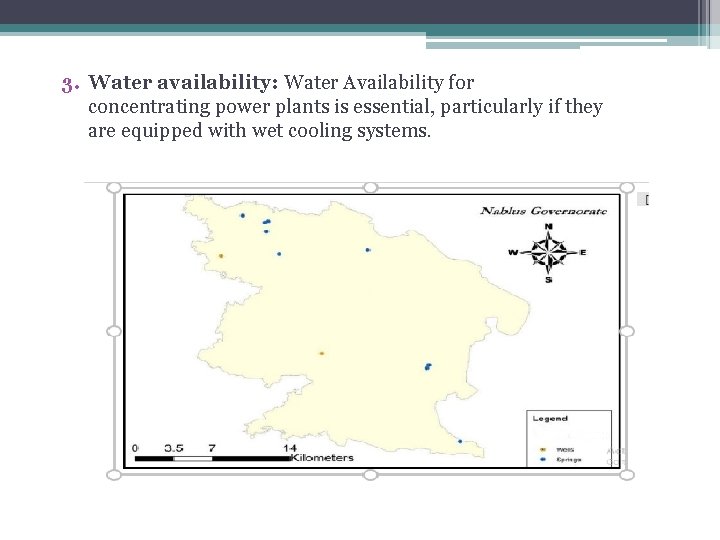
3. Water availability: Water Availability for concentrating power plants is essential, particularly if they are equipped with wet cooling systems.
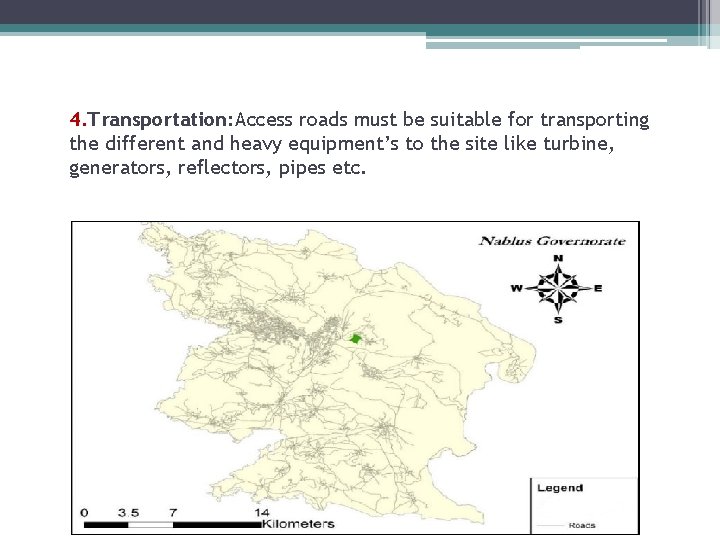
4. Transportation: Access roads must be suitable for transporting the different and heavy equipment’s to the site like turbine, generators, reflectors, pipes etc.
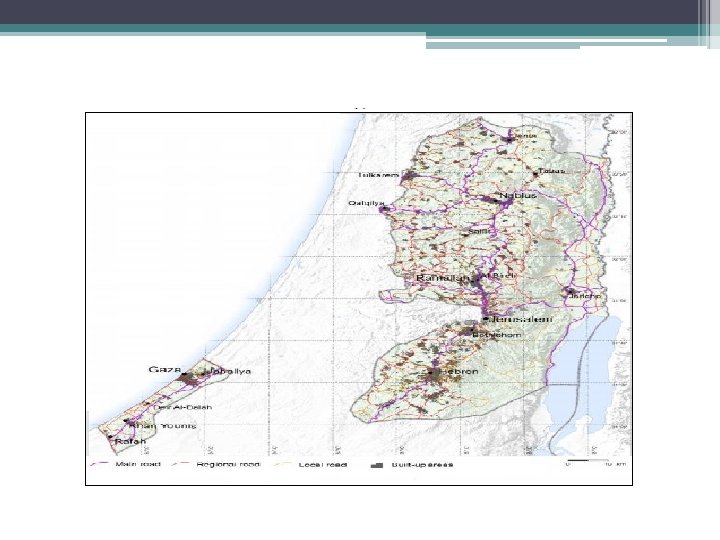
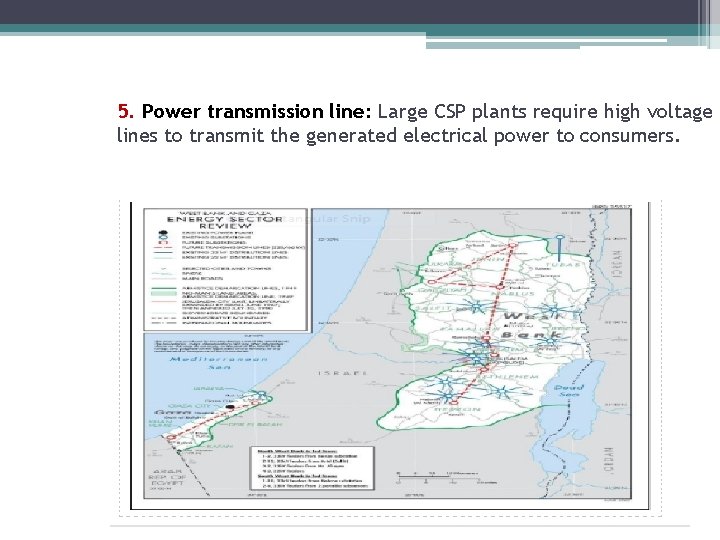
5. Power transmission line: Large CSP plants require high voltage lines to transmit the generated electrical power to consumers.
6. Other meteorological: a)Wind: The performance and structural design of the solar field is affected by high winds due to the solar field is not intended to work at winds of more than 8. 3 to 19. 5 m/s and it depends on the selected CSP technology. The average wind speed of Nablus Governorate is within the range 1. 76 m/s. a)Ambient temperature and humidity : The efficiency of the sun oriented field depend on the convective losses of the heat transfer fluid and the collectors to the ambient air.
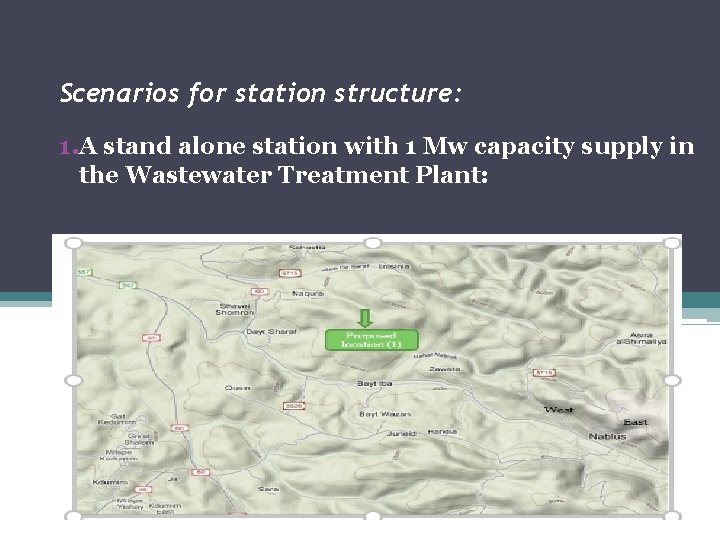
Scenarios for station structure: 1. A stand alone station with 1 Mw capacity supply in the Wastewater Treatment Plant:
Wastewater treatment plant: • It's located at the western part of the Nablus city which located at Wadi Zeimar near Dayr Sharaf. With area of the plant is 32560 m 2. • The maximum influent flow rate to the plant is 17000 m 3/d, with quality of total suspended solids of 784 mg/L, and biological oxygen demand of 656 mg/L • The plant is designed to give effluent quality of 20/30 (Biological oxygen demand per total suspended solids) • The effluent flow rates are 16264, 38 and 4899 m 3/d, of treated water, sludge and biogas respectively. • The length of the wastewater network is 230 km including the transfer line. • The waste water network covers about 93% of the total area of Nablus city, and thus 96% of total population benefit from this service. • The purposes of wastewater treatment plant are to protect the environment, to save water resources and to use the treated water in agricultural application and others.
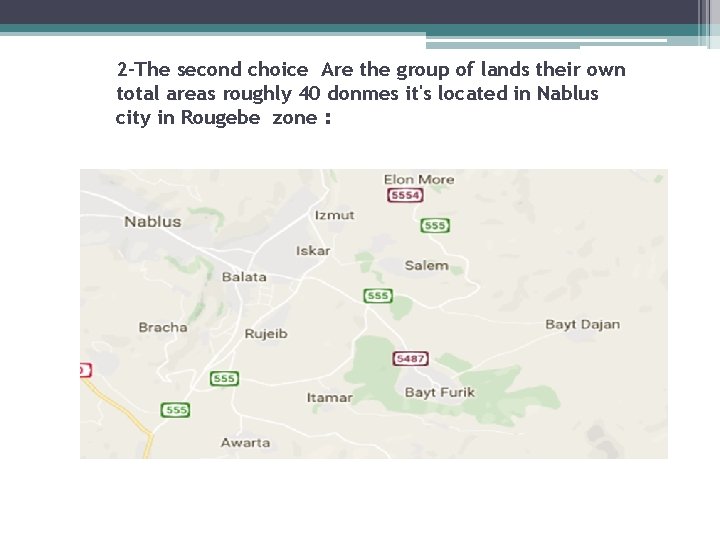
2 -The second choice Are the group of lands their own total areas roughly 40 donmes it's located in Nablus city in Rougebe zone :
Discussion and analysis: • We will use many Software and Codes for Analysis of Concentrating Solar Power Technologies the following a summary of models and software that can be used to analyze various concentrated solar technologies: v SAM v TRNSYS v RET screen
- Slides: 31