
DesignBuild Transportation Projects and the National Environmental Policy
Design-Build Transportation Projects and the National Environmental Policy Act (NEPA) Lamar S. Smith FHWA, Planning and Environment Office of NEPA Facilitation
Some Things to Consider • • • Do design-build projects differ from traditional projects where NEPA is concerned? How? Why? Should the NEPA / project development process be treated differently for design-build projects? What difference does it make if a project is processed as a CE, EA, or EIS? The perspectives and expectations of customers and stakeholders? Any potential problem areas or areas of concern related to design-build process and the NEPA process.

NEPA National and Federal Policy • • Encourage productive and enjoyable harmony Promote, prevent, or eliminate damage to the environment Stimulate the health and welfare of man Enrich the understanding of ecological systems and the natural resources important to the Nation Foster and promote the general welfare Create and maintain conditions under which man and nature can exist in productive harmony Fulfill the social, economic, and other requirements of present and future generations of Americans

NEPA Federal Environmental Process • • Policies, regulations, and laws be interpreted and administered in accordance with the NEPA Systematic, interdisciplinary approach Environmental values given appropriate consideration Documentation and disclosure Objective consideration of alternatives Interagency consultation and comment Public participation
Basic NEPA Principles • • Federal responsibility Objectivity Informed decisions Balanced environmental protection Analysis, documentation, and disclosure Agency input Public involvement and participation Avoidance - minimization - compensation
FHWA Project Development FHWA Policy • • • All environmental investigations, reviews, and consultations be coordinated as a single process Compliance with all applicable requirements be reflected in the environmental document Alternatives be evaluated and decisions be made in the best overall public interest based on: o need for safe and efficient transportation o social, economic, and environmental impacts o National, State, and local environmental goals

Project Development Process FHWA Policy: Essential to Project Development • public involvement • systematic interdisciplinary approach Measures necessary to mitigate adverse impacts • be incorporated into the action • are eligible for Federal funding
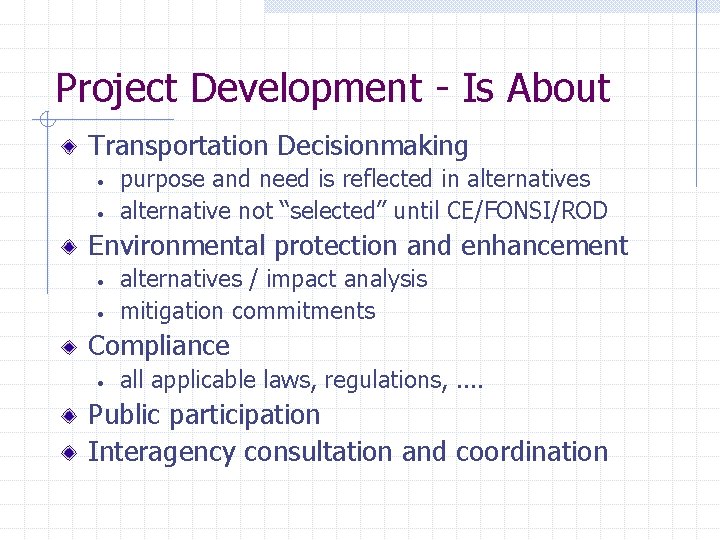
Project Development - Is About Transportation Decisionmaking • • purpose and need is reflected in alternatives alternative not “selected” until CE/FONSI/ROD Environmental protection and enhancement • • alternatives / impact analysis mitigation commitments Compliance • all applicable laws, regulations, . . Public participation Interagency consultation and coordination
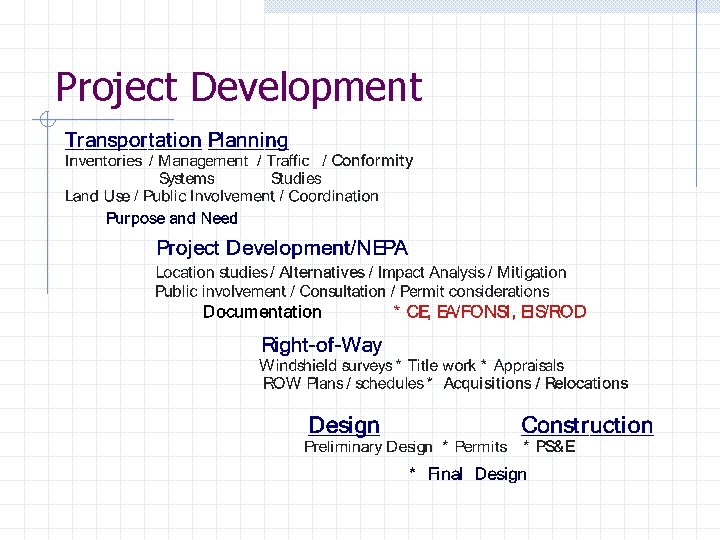
Project Development
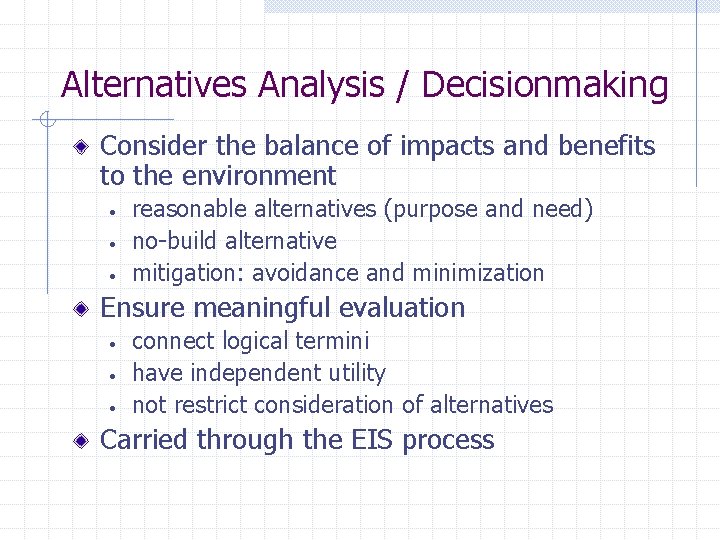
Alternatives Analysis / Decisionmaking Consider the balance of impacts and benefits to the environment • • • reasonable alternatives (purpose and need) no-build alternative mitigation: avoidance and minimization Ensure meaningful evaluation • • • connect logical termini have independent utility not restrict consideration of alternatives Carried through the EIS process
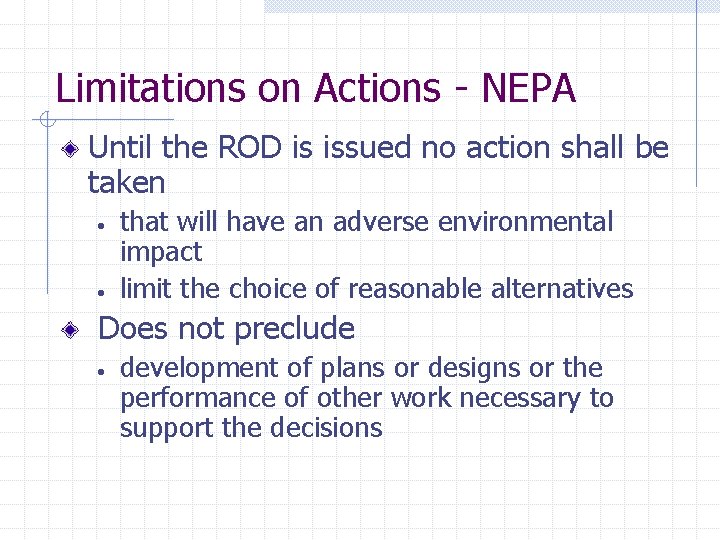
Limitations on Actions - NEPA Until the ROD is issued no action shall be taken • • that will have an adverse environmental impact limit the choice of reasonable alternatives Does not preclude • development of plans or designs or the performance of other work necessary to support the decisions
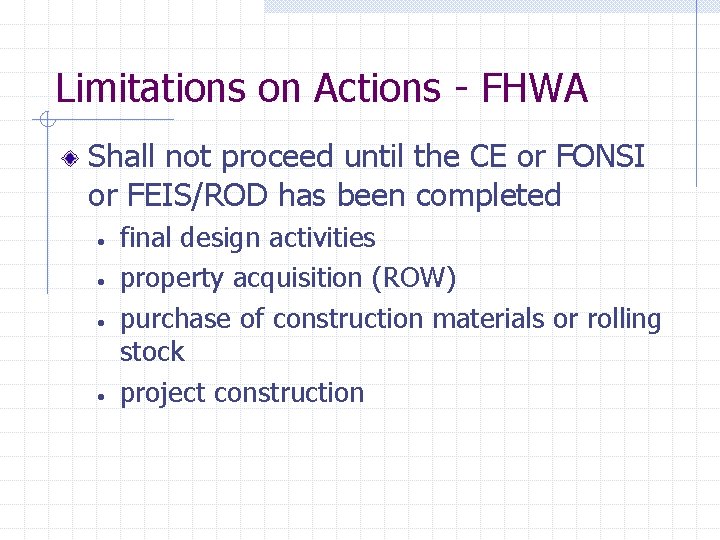
Limitations on Actions - FHWA Shall not proceed until the CE or FONSI or FEIS/ROD has been completed • • final design activities property acquisition (ROW) purchase of construction materials or rolling stock project construction
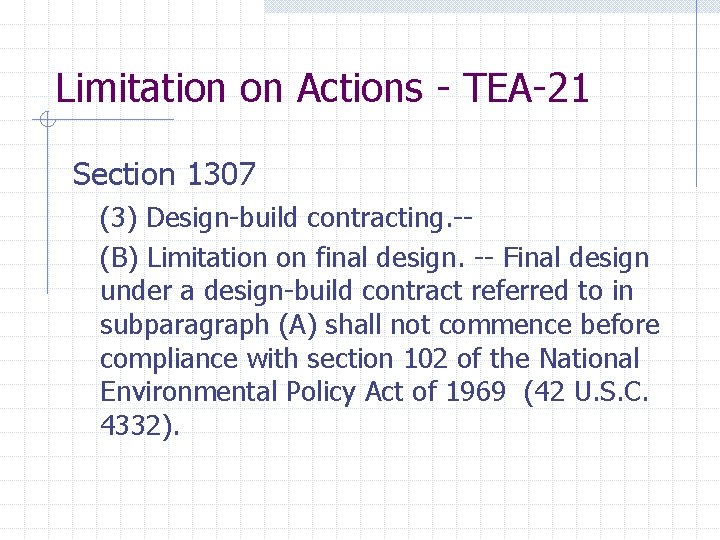
Limitation on Actions - TEA-21 Section 1307 (3) Design-build contracting. -(B) Limitation on final design. -- Final design under a design-build contract referred to in subparagraph (A) shall not commence before compliance with section 102 of the National Environmental Policy Act of 1969 (42 U. S. C. 4332).
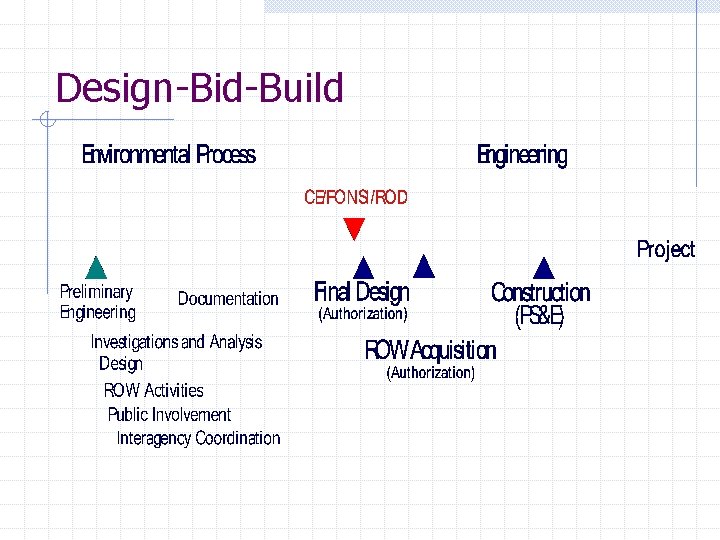
Design-Bid-Build
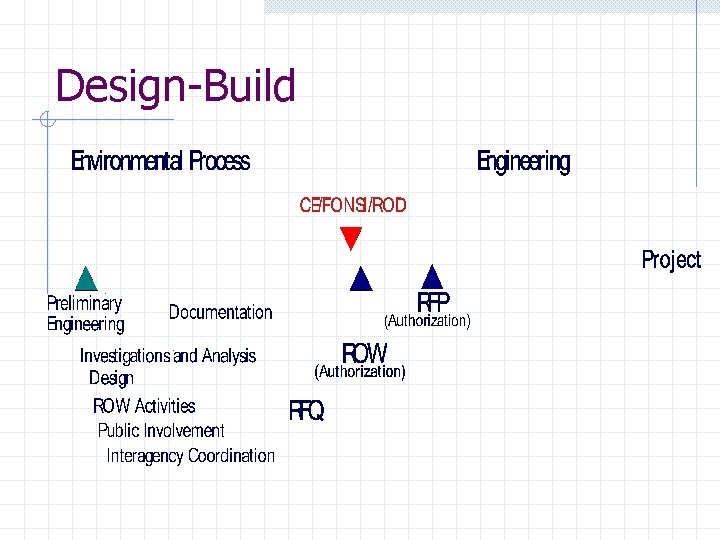
Design-Build
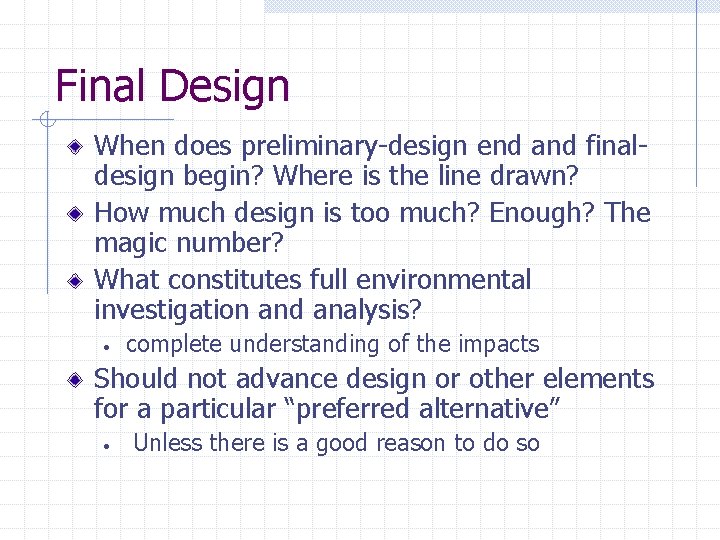
Final Design When does preliminary-design end and finaldesign begin? Where is the line drawn? How much design is too much? Enough? The magic number? What constitutes full environmental investigation and analysis? • complete understanding of the impacts Should not advance design or other elements for a particular “preferred alternative” • Unless there is a good reason to do so
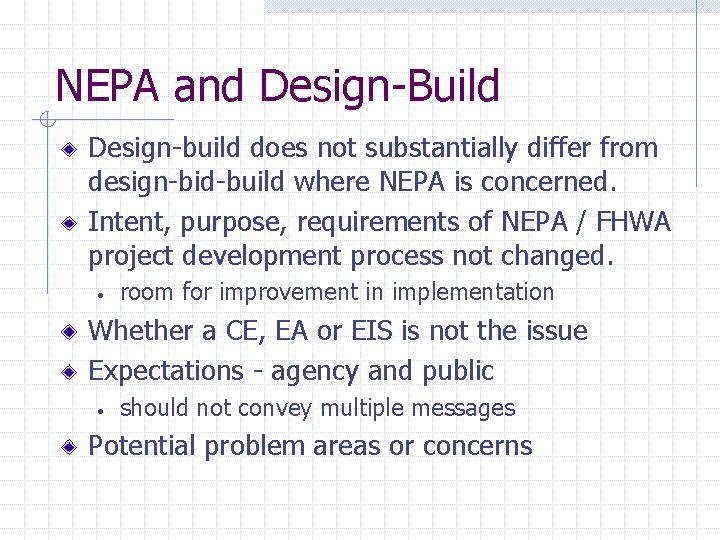
NEPA and Design-Build Design-build does not substantially differ from design-bid-build where NEPA is concerned. Intent, purpose, requirements of NEPA / FHWA project development process not changed. • room for improvement in implementation Whether a CE, EA or EIS is not the issue Expectations - agency and public • should not convey multiple messages Potential problem areas or concerns
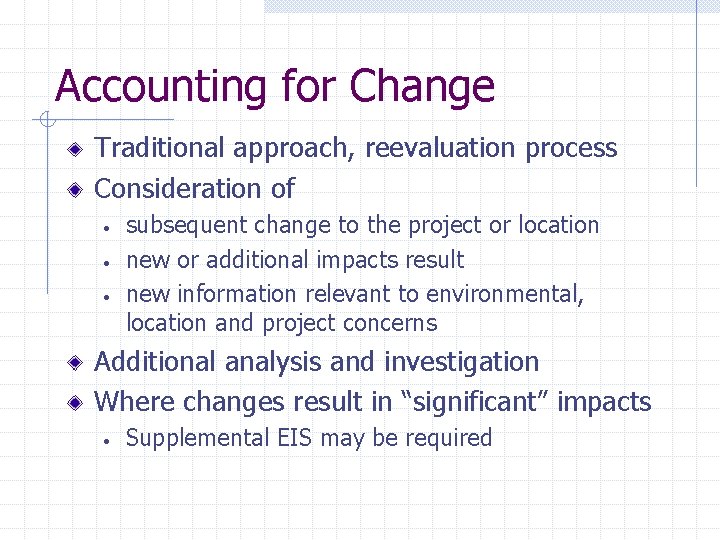
Accounting for Change Traditional approach, reevaluation process Consideration of • • • subsequent change to the project or location new or additional impacts result new information relevant to environmental, location and project concerns Additional analysis and investigation Where changes result in “significant” impacts • Supplemental EIS may be required
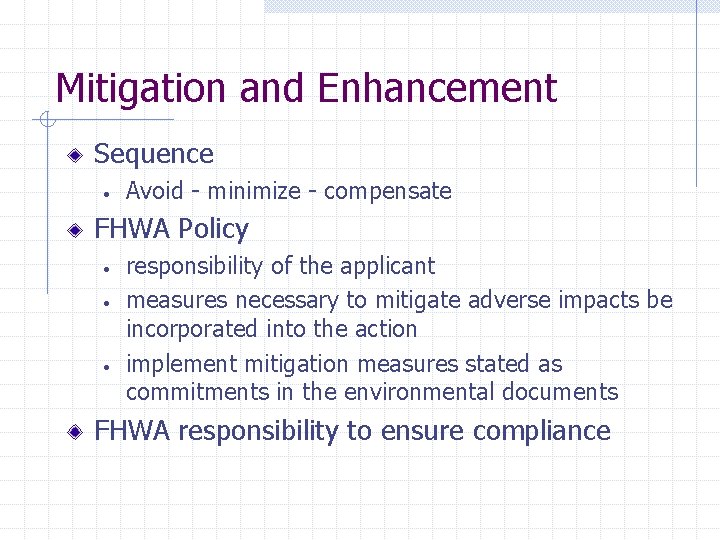
Mitigation and Enhancement Sequence • Avoid - minimize - compensate FHWA Policy • • • responsibility of the applicant measures necessary to mitigate adverse impacts be incorporated into the action implement mitigation measures stated as commitments in the environmental documents FHWA responsibility to ensure compliance
Other Considerations Section 4(f) CWA - Section 404 process and permit application NHPA - Section 106 Endangered Species Act - Section 7 Consultation Others. .
- Slides: 20