
Design Testing and Modeling of Axial Oscillation Tools


- Slides: 17
Design, Testing and Modeling of Axial Oscillation Tools Emmanuel Omojuwa, P. E. 1
Presenter Introduction § Licensed Professional Engineer (P. E. ) – OK State Board of Engineers § Education – BS Mechanical Engineering (University of Lagos, Nigeria) – 2007 – MS Petroleum Engineering (University of Oklahoma, Norman) – 2011 – Ph. D. Candidate, Petroleum Engineering (University of Oklahoma, Norman) § Professional Experience – – – 2 Drilling Engineer, Sterling Oil Exploration, Lagos, Nigeria – 2007 -2009 MWD/LWD Engineer, Schlumberger Oilfield Svcs, Youngsville, LA – 2011 -2012 Well Placement Engineer, Schlumberger Oilfield Svcs, Midland, TX– 2012 -2014 Drilling Analysis Engineer, Schlumberger Oilfield Svcs, Midland, TX – 2014 -2015 Senior Product Engineer, JA Oilfield Mfg. Inc. , Oklahoma City, OK – 2015 -
Presentation Outline § Introduction § Design and Operation of Axial Oscillation Tools (AOTs) § Testing of AOTs § Modeling of AOTs in Drillstrings § Model Validation and Parametric Study § Conclusions and Recommendations 3
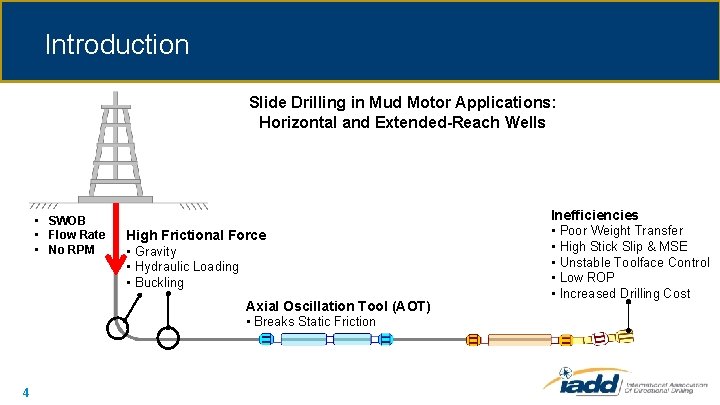
Introduction Slide Drilling in Mud Motor Applications: Horizontal and Extended-Reach Wells • SWOB • Flow Rate • No RPM High Frictional Force • Gravity • Hydraulic Loading • Buckling Axial Oscillation Tool (AOT) • Breaks Static Friction 4 Inefficiencies • Poor Weight Transfer • High Stick Slip & MSE • Unstable Toolface Control • Low ROP • Increased Drilling Cost
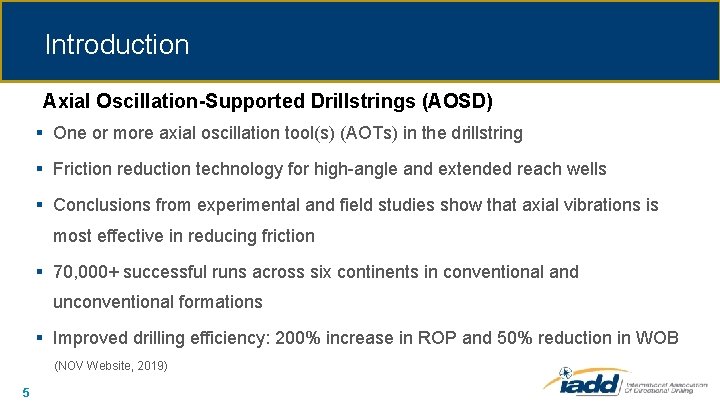
Introduction Axial Oscillation-Supported Drillstrings (AOSD) § One or more axial oscillation tool(s) (AOTs) in the drillstring § Friction reduction technology for high-angle and extended reach wells § Conclusions from experimental and field studies show that axial vibrations is most effective in reducing friction § 70, 000+ successful runs across six continents in conventional and unconventional formations § Improved drilling efficiency: 200% increase in ROP and 50% reduction in WOB (NOV Website, 2019) 5
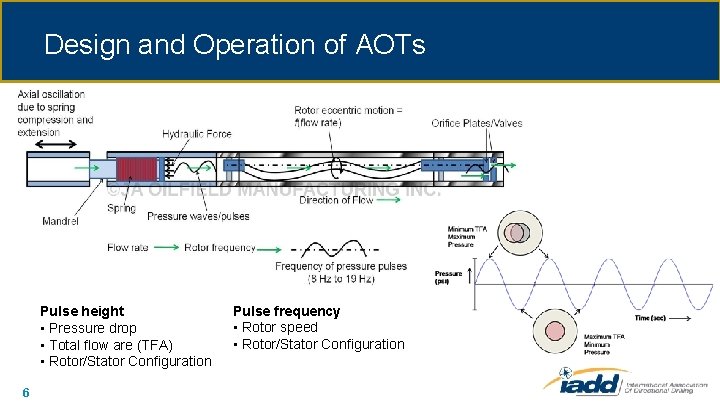
Design and Operation of AOTs Pulse height • Pressure drop • Total flow are (TFA) • Rotor/Stator Configuration 6 Pulse frequency • Rotor speed • Rotor/Stator Configuration
Design and Operation of AOTs Performance of Axial Oscillation-Supported Drillstrings § AOTs Operating Parameters: Flow rate, frequency, fluid density, valve sizing, Pressure drop, AOT spring rate, pump open area (POA), type of drilling fluid, downhole temperature § Drilling Parameters: Weight-on-bit (WOB) and RPM § Friction: Coulomb friction damps oscillations (most dominant) § Borehole Geometry: High friction in curve and lateral sections § Drillstring characteristic: Stiffness, Length/Diameter ratio 7
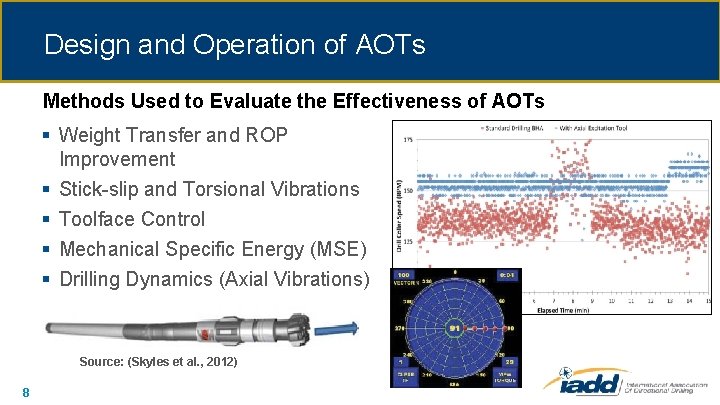
Design and Operation of AOTs Methods Used to Evaluate the Effectiveness of AOTs § Weight Transfer and ROP Improvement § Stick-slip and Torsional Vibrations § Toolface Control § Mechanical Specific Energy (MSE) § Drilling Dynamics (Axial Vibrations) Source: (Skyles et al. , 2012) 8
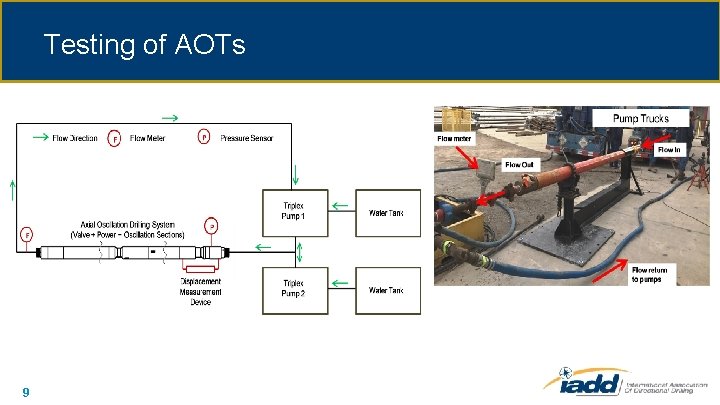
Testing of AOTs 9
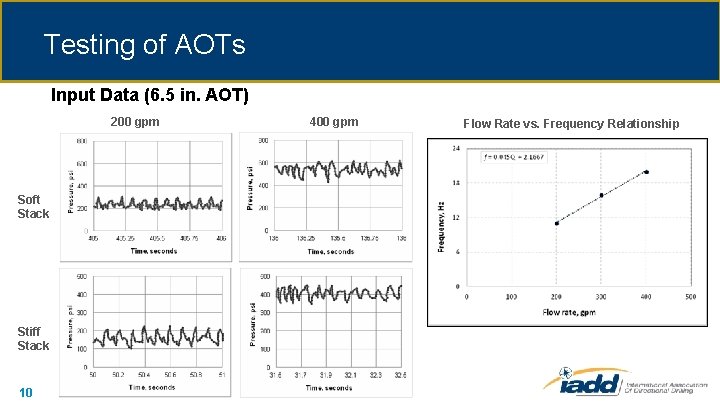
Testing of AOTs Input Data (6. 5 in. AOT) 200 gpm Soft Stack Stiff Stack 10 400 gpm Flow Rate vs. Frequency Relationship
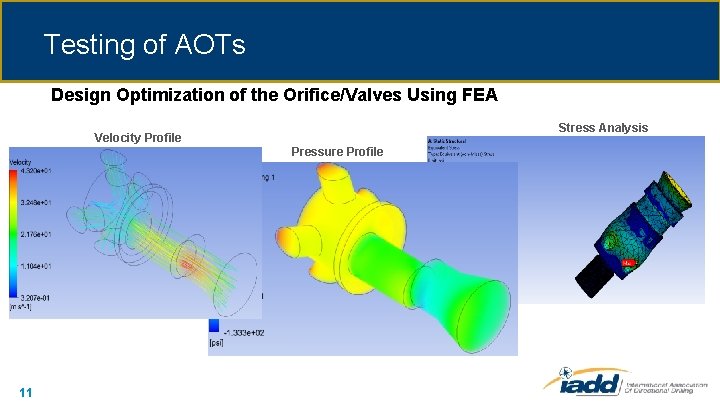
Testing of AOTs Design Optimization of the Orifice/Valves Using FEA Stress Analysis Velocity Profile Pressure Profile 11
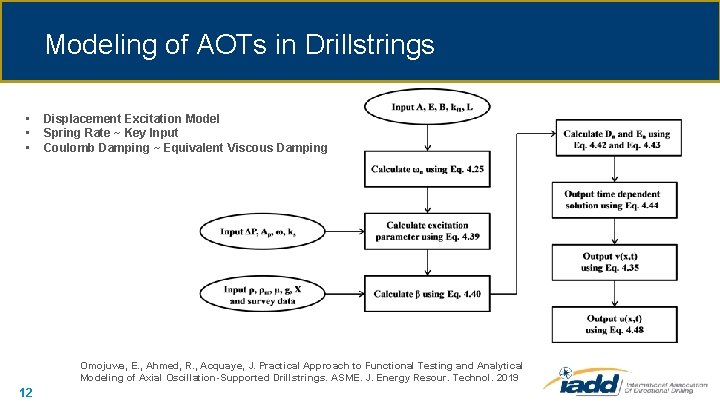
Modeling of AOTs in Drillstrings • • • Displacement Excitation Model Spring Rate ~ Key Input Coulomb Damping ~ Equivalent Viscous Damping Omojuwa, E. , Ahmed, R. , Acquaye, J. Practical Approach to Functional Testing and Analytical Modeling of Axial Oscillation-Supported Drillstrings. ASME. J. Energy Resour. Technol. 2019 12
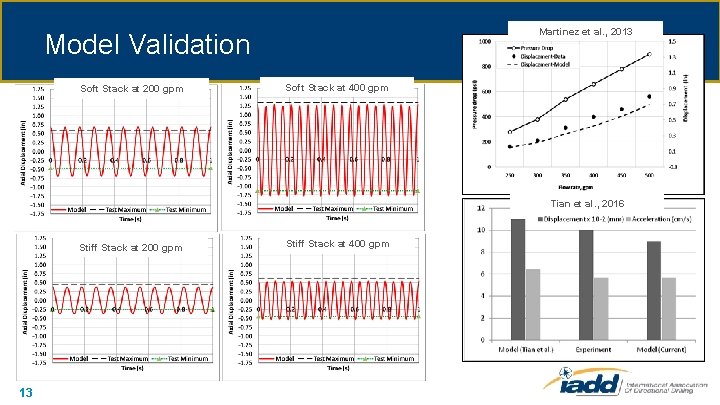
Martinez et al. , 2013 Model Validation Soft Stack at 200 gpm Soft Stack at 400 gpm Tian et al. , 2016 Stiff Stack at 200 gpm 13 Stiff Stack at 400 gpm
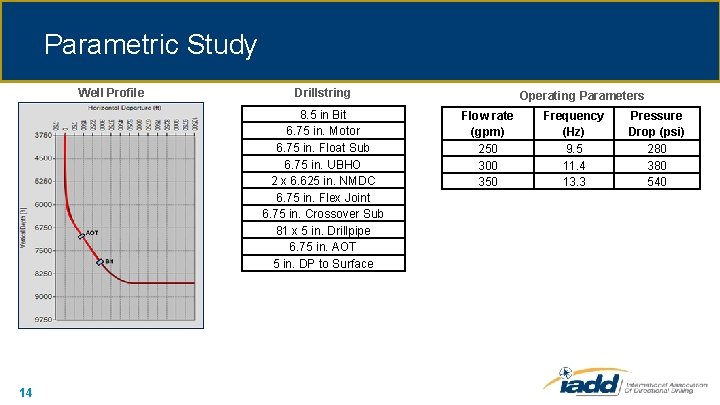
Parametric Study Well Profile Drillstring 8. 5 in Bit 6. 75 in. Motor 6. 75 in. Float Sub 6. 75 in. UBHO 2 x 6. 625 in. NMDC 6. 75 in. Flex Joint 6. 75 in. Crossover Sub 81 x 5 in. Drillpipe 6. 75 in. AOT 5 in. DP to Surface 14 Operating Parameters Flow rate (gpm) 250 300 350 Frequency (Hz) 9. 5 11. 4 13. 3 Pressure Drop (psi) 280 380 540
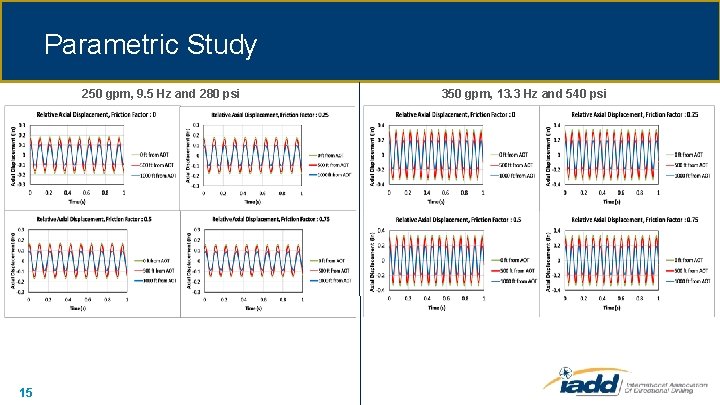
Parametric Study 250 gpm, 9. 5 Hz and 280 psi 15 350 gpm, 13. 3 Hz and 540 psi
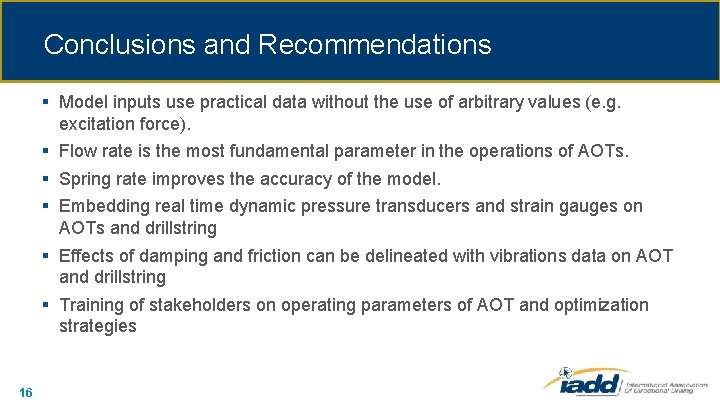
Conclusions and Recommendations § Model inputs use practical data without the use of arbitrary values (e. g. excitation force). § Flow rate is the most fundamental parameter in the operations of AOTs. § Spring rate improves the accuracy of the model. § Embedding real time dynamic pressure transducers and strain gauges on AOTs and drillstring § Effects of damping and friction can be delineated with vibrations data on AOT and drillstring § Training of stakeholders on operating parameters of AOT and optimization strategies 16
Thank You 17