
Design Progress of CEPC Interaction Region Superconducting Quadrupole
- Slides: 20
Design Progress of CEPC Interaction Region Superconducting Quadrupole and Sextupole magnets Yingshun Zhu Accelerator Center, Magnet Group Institute of High Energy Physics, Chinese Academy of Sciences 2016. 9. 2 CEPC-Spp. C Study Group Meeting
Contents l Introduction l Design progress of Superconducting Magnets in CEPC Interaction Region QD 0, Anti-solenoid, Sextupole magnet l Summary
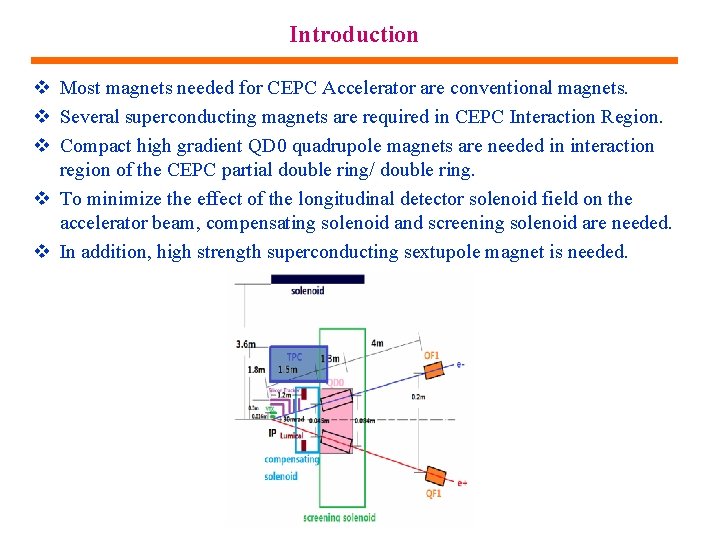
Introduction Most magnets needed for CEPC Accelerator are conventional magnets. Several superconducting magnets are required in CEPC Interaction Region. Compact high gradient QD 0 quadrupole magnets are needed in interaction region of the CEPC partial double ring/ double ring. To minimize the effect of the longitudinal detector solenoid field on the accelerator beam, compensating solenoid and screening solenoid are needed. In addition, high strength superconducting sextupole magnet is needed.
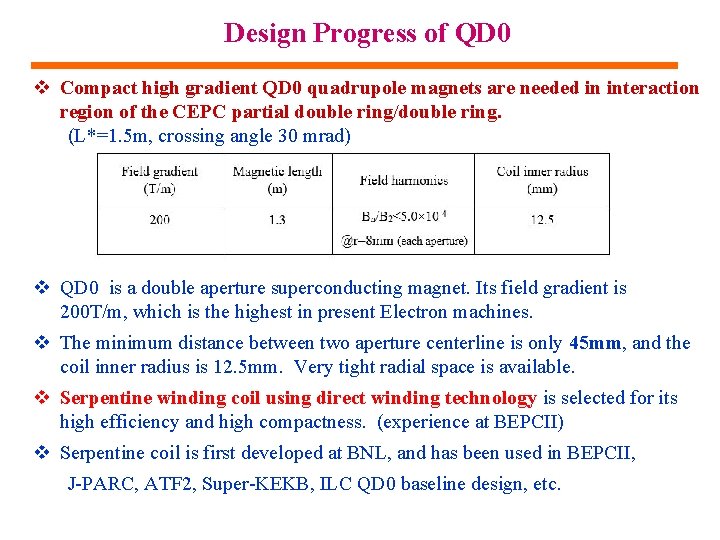
Design Progress of QD 0 Compact high gradient QD 0 quadrupole magnets are needed in interaction region of the CEPC partial double ring/double ring. (L*=1. 5 m, crossing angle 30 mrad) QD 0 is a double aperture superconducting magnet. Its field gradient is 200 T/m, which is the highest in present Electron machines. The minimum distance between two aperture centerline is only 45 mm, and the coil inner radius is 12. 5 mm. Very tight radial space is available. Serpentine winding coil using direct winding technology is selected for its high efficiency and high compactness. (experience at BEPCII) Serpentine coil is first developed at BNL, and has been used in BEPCII, J-PARC, ATF 2, Super-KEKB, ILC QD 0 baseline design, etc.
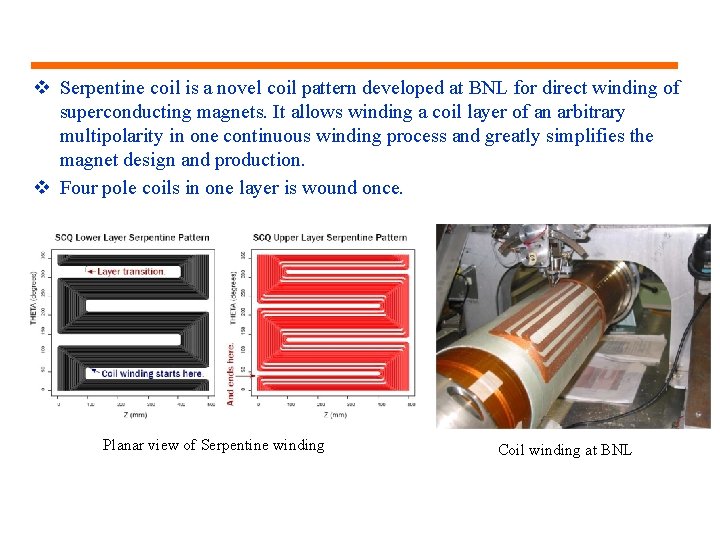
Serpentine coil is a novel coil pattern developed at BNL for direct winding of superconducting magnets. It allows winding a coil layer of an arbitrary multipolarity in one continuous winding process and greatly simplifies the magnet design and production. Four pole coils in one layer is wound once. Planar view of Serpentine winding Coil winding at BNL
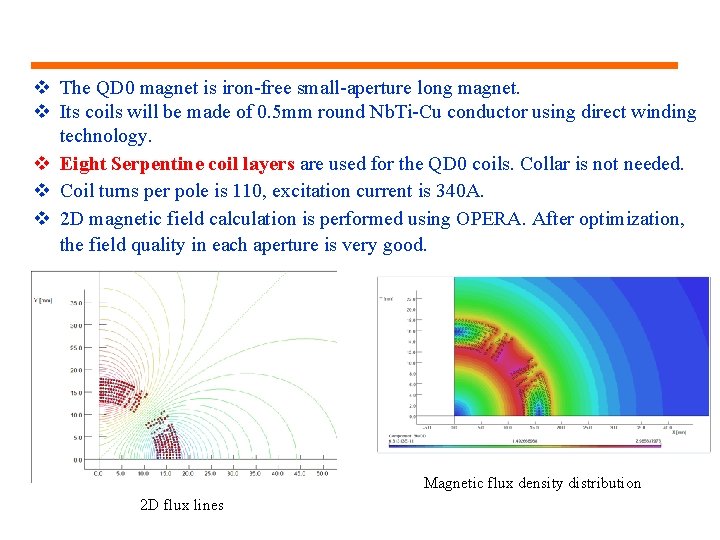
The QD 0 magnet is iron-free small-aperture long magnet. Its coils will be made of 0. 5 mm round Nb. Ti-Cu conductor using direct winding technology. Eight Serpentine coil layers are used for the QD 0 coils. Collar is not needed. Coil turns per pole is 110, excitation current is 340 A. 2 D magnetic field calculation is performed using OPERA. After optimization, the field quality in each aperture is very good. Magnetic flux density distribution 2 D flux lines
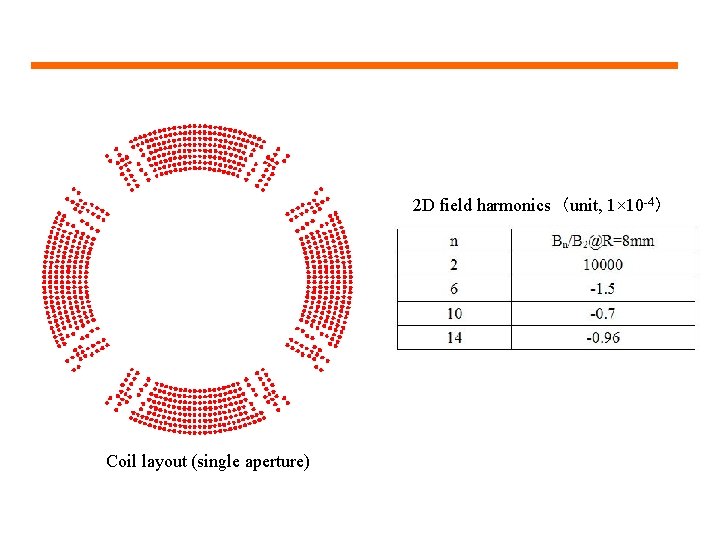
2 D field harmonics(unit, 1× 10 -4) Coil layout (single aperture)
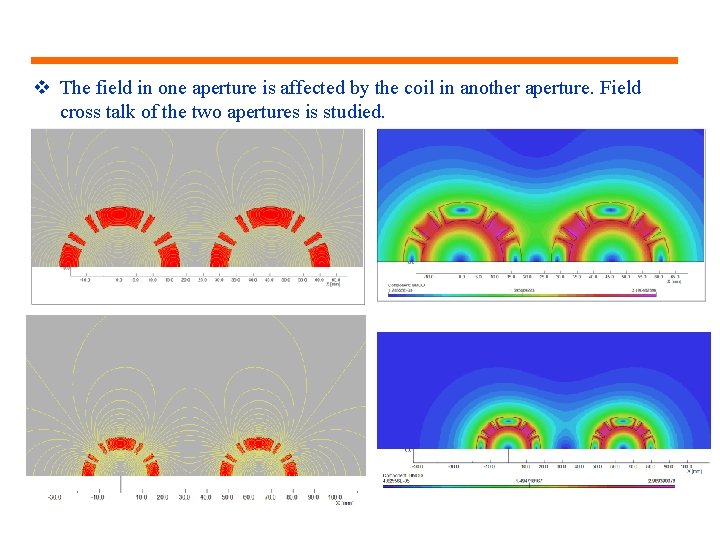
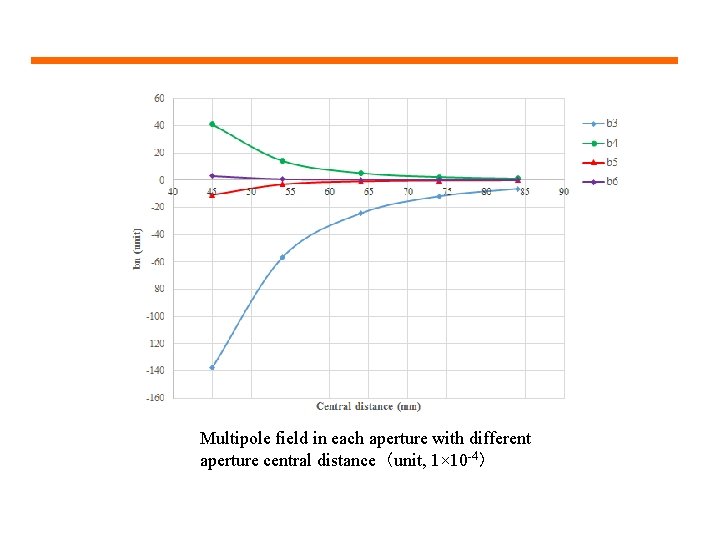
The field in one aperture is affected by the coil in another aperture. Field cross talk of the two apertures is studied.
Multipole field in each aperture with different aperture central distance(unit, 1× 10 -4)
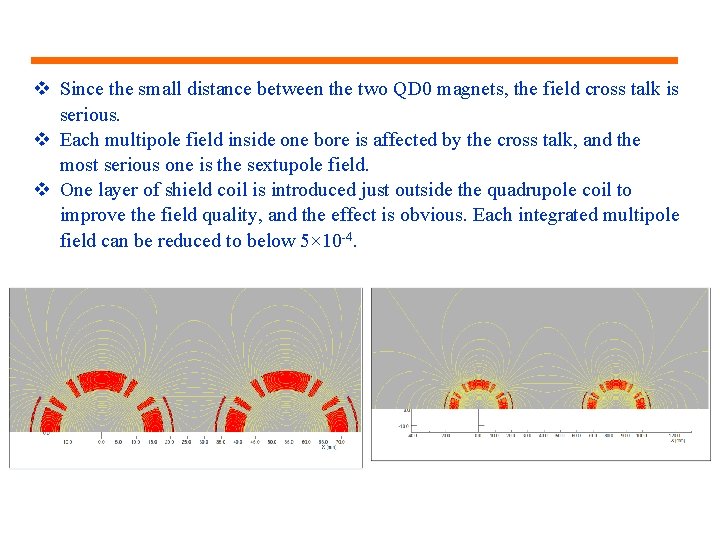
Since the small distance between the two QD 0 magnets, the field cross talk is serious. Each multipole field inside one bore is affected by the cross talk, and the most serious one is the sextupole field. One layer of shield coil is introduced just outside the quadrupole coil to improve the field quality, and the effect is obvious. Each integrated multipole field can be reduced to below 5× 10 -4.
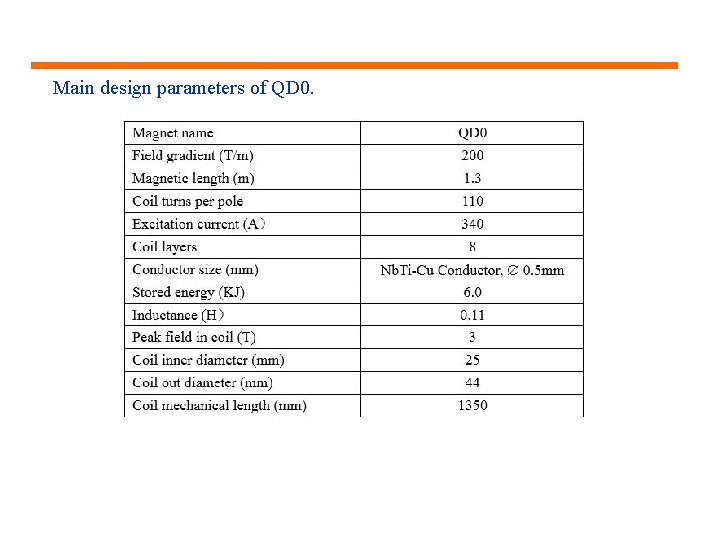
Main design parameters of QD 0.
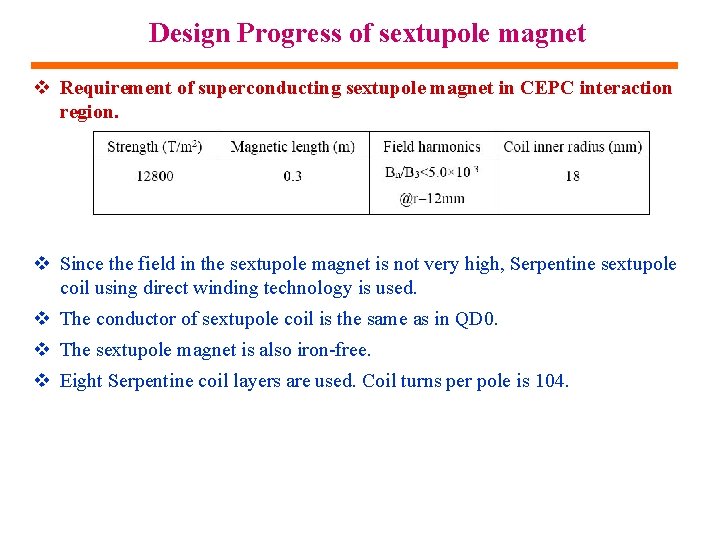
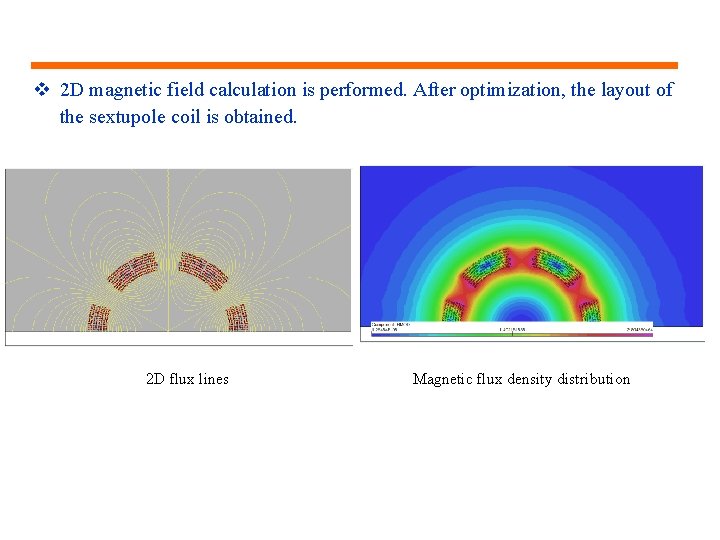
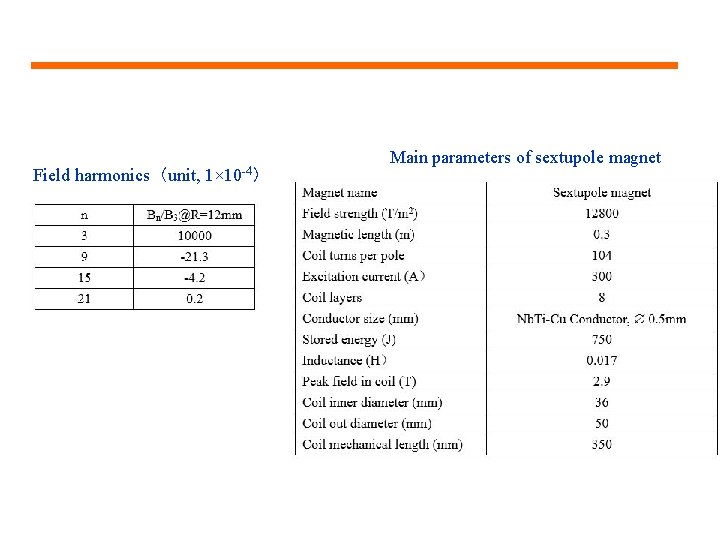
Design Progress of sextupole magnet Requirement of superconducting sextupole magnet in CEPC interaction region. Since the field in the sextupole magnet is not very high, Serpentine sextupole coil using direct winding technology is used. The conductor of sextupole coil is the same as in QD 0. The sextupole magnet is also iron-free. Eight Serpentine coil layers are used. Coil turns per pole is 104.
2 D magnetic field calculation is performed. After optimization, the layout of the sextupole coil is obtained. 2 D flux lines Magnetic flux density distribution
Field harmonics(unit, 1× 10 -4) Main parameters of sextupole magnet
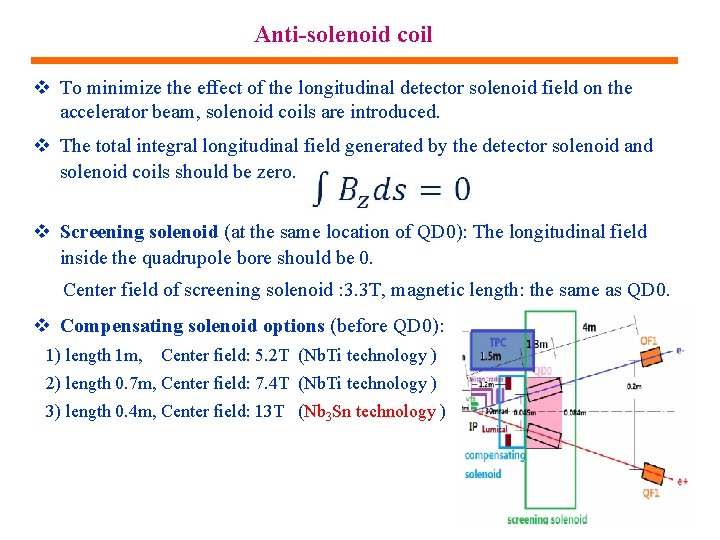
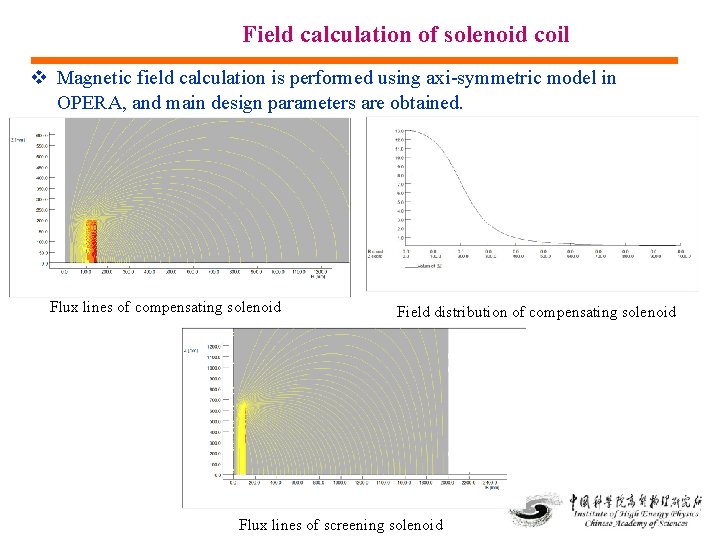
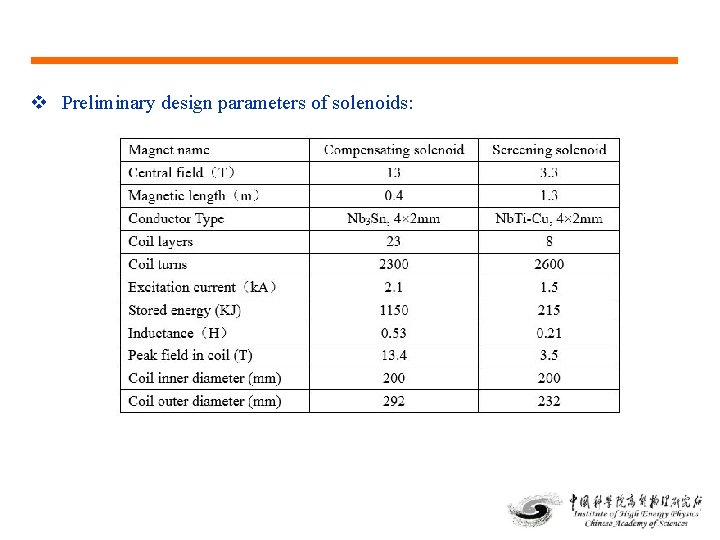
Anti-solenoid coil To minimize the effect of the longitudinal detector solenoid field on the accelerator beam, solenoid coils are introduced. The total integral longitudinal field generated by the detector solenoid and solenoid coils should be zero. Screening solenoid (at the same location of QD 0): The longitudinal field inside the quadrupole bore should be 0. Center field of screening solenoid : 3. 3 T, magnetic length: the same as QD 0. Compensating solenoid options (before QD 0): 1) length 1 m, Center field: 5. 2 T (Nb. Ti technology ) 2) length 0. 7 m, Center field: 7. 4 T (Nb. Ti technology ) 3) length 0. 4 m, Center field: 13 T (Nb 3 Sn technology )
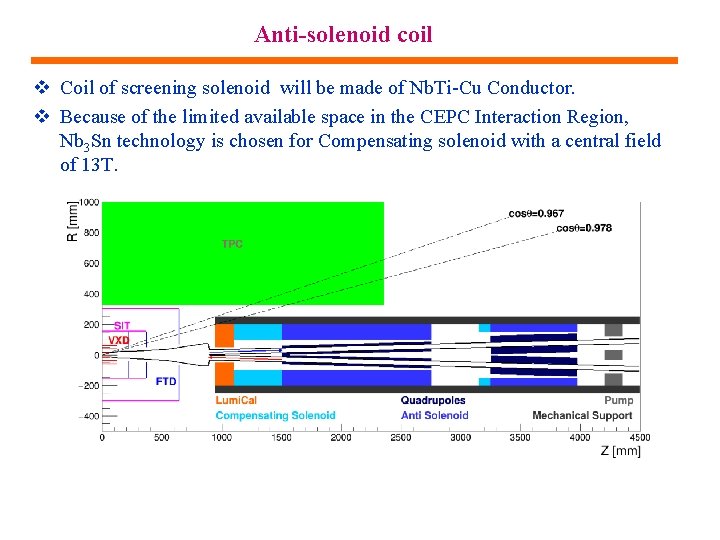
Anti-solenoid coil Coil of screening solenoid will be made of Nb. Ti-Cu Conductor. Because of the limited available space in the CEPC Interaction Region, Nb 3 Sn technology is chosen for Compensating solenoid with a central field of 13 T.
Field calculation of solenoid coil Magnetic field calculation is performed using axi-symmetric model in OPERA, and main design parameters are obtained. Flux lines of compensating solenoid Field distribution of compensating solenoid Flux lines of screening solenoid
Preliminary design parameters of solenoids:
Summary It is challenging to develop high strength superconducting magnets in CEPC Interaction Region. Serpentine coil using direct winding technology is suitable for QD 0 and sextupole magnet. Cross talk effect between two apertures in QD 0 can be compensated to be acceptable. Due to the limited longitudinal space, high field compensating solenoid with a central field of 13 T is used. Conceptual design of superconducting magnets in CEPC Interaction Region is performed, and some prototypes will be proposed.
Thanks for your attention! CEPC-Spp. C Study Group Meeting