
Design Principles q The different arrangements or compositions

- Slides: 23
Design Principles q The different arrangements – or compositions - of the ELEMENTS of design to create artistic, interesting, more visually powerful photographs.
What are the Principles of Art? § § § § Balance Contrast Emphasis Proportion Movement Repetition & Variation Transition Unity
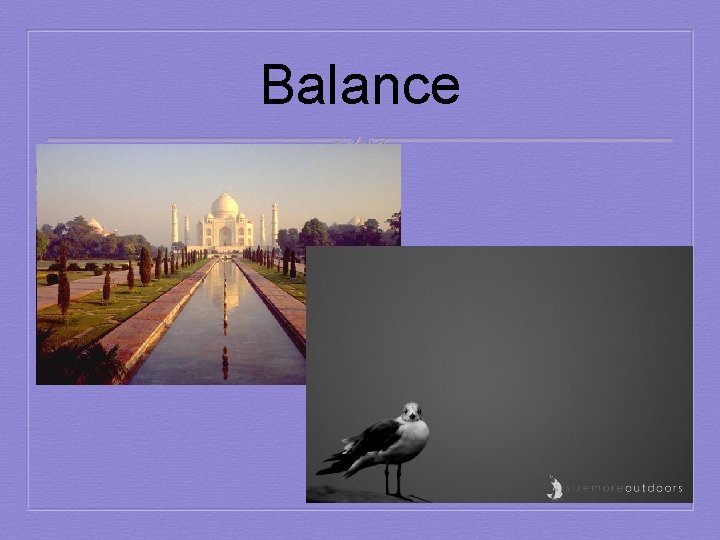
Balance The way the elements are arranged to create a sense of stability or equillibrium. Balance may be formal (symmetrical) or informal (asymmetrical).
Balance
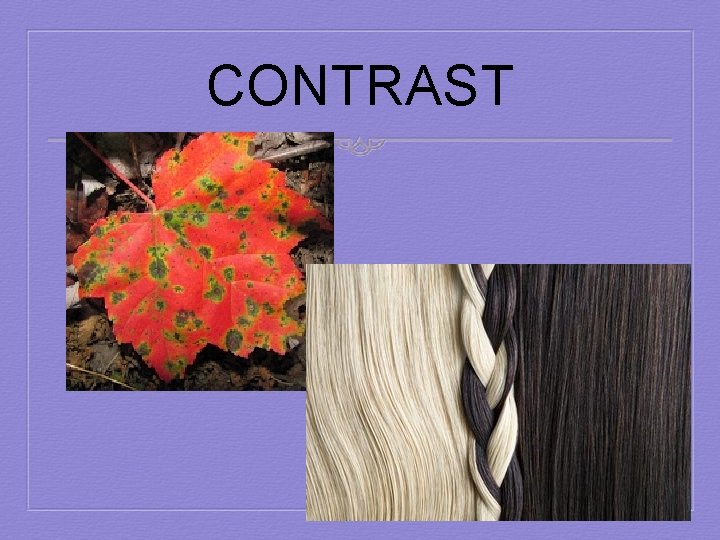
CONTRAST Contrast refers to the arrangement of opposite elements and differences in the work. You can achieve variety by using different shapes, textures, colors and values in your work.
CONTRAST
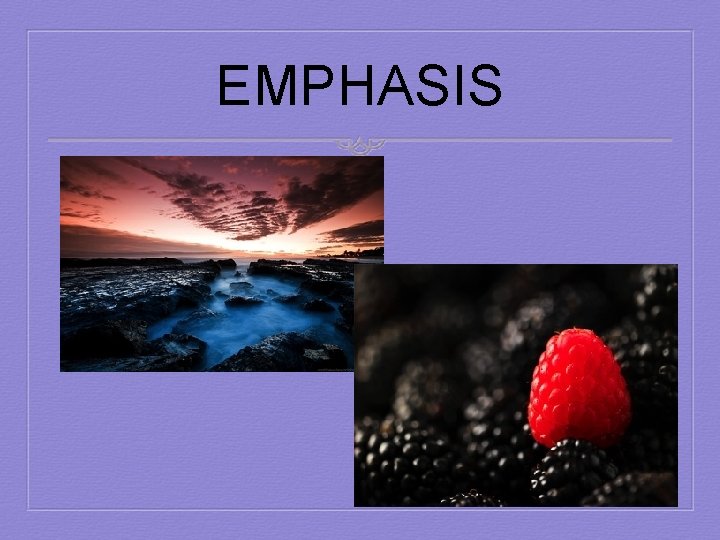
EMPHASIS or Focal Point Emphasis in a composition refers the focal point or center of interest; an area of heightened interest in an art work
EMPHASIS
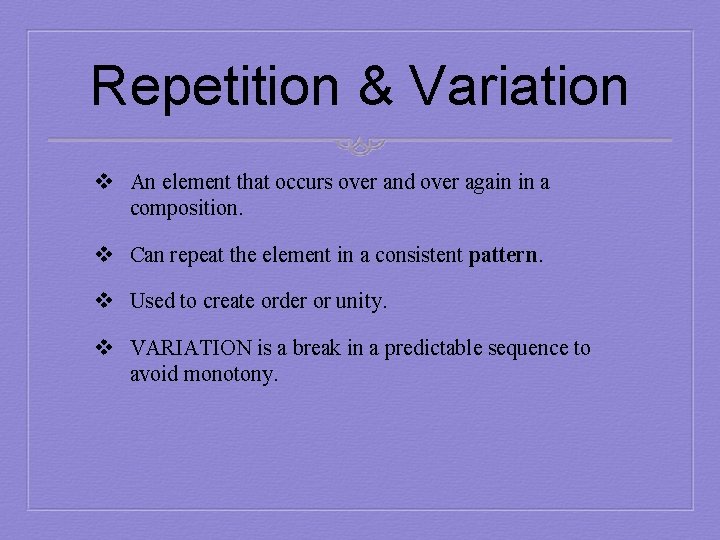
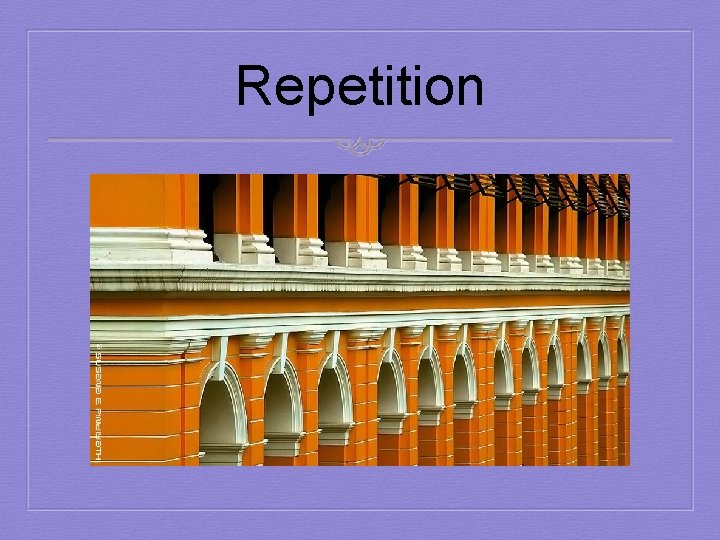
Repetition & Variation v An element that occurs over and over again in a composition. v Can repeat the element in a consistent pattern. v Used to create order or unity. v VARIATION is a break in a predictable sequence to avoid monotony.
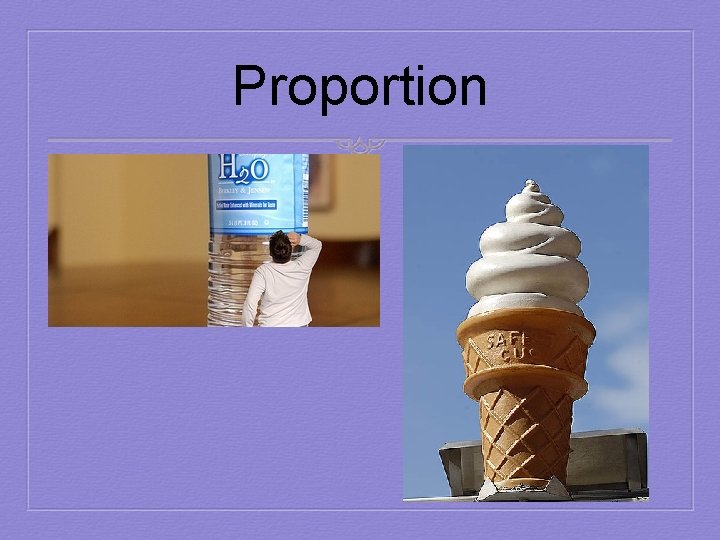
Proportion • Refers to the relative size and scale of the various elements in a design. The issue is the relationship between objects, or parts, of a whole. • This establishes scale or relative size
Proportion
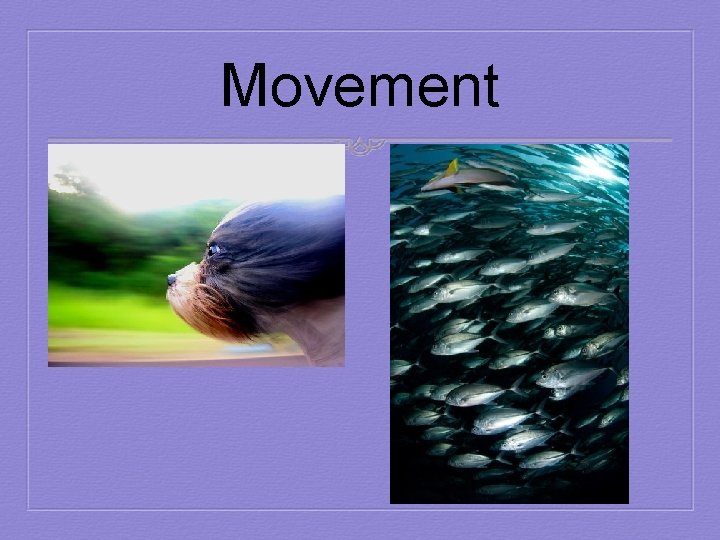
Movement adds excitement to your work by showing implied movement of objects or spaces; the path our eyes follow. Rhythm is a type of movement in drawing and painting. It is seen in repeating of shapes and colors. Alternating lights and darks also give a sense of rhythm.
Movement
Repetition & Variation v An element that occurs over and over again in a composition. v Can repeat the element in a consistent pattern. v Used to create order or unity. v VARIATION is a break in a predictable sequence to avoid monotony.
Repetition
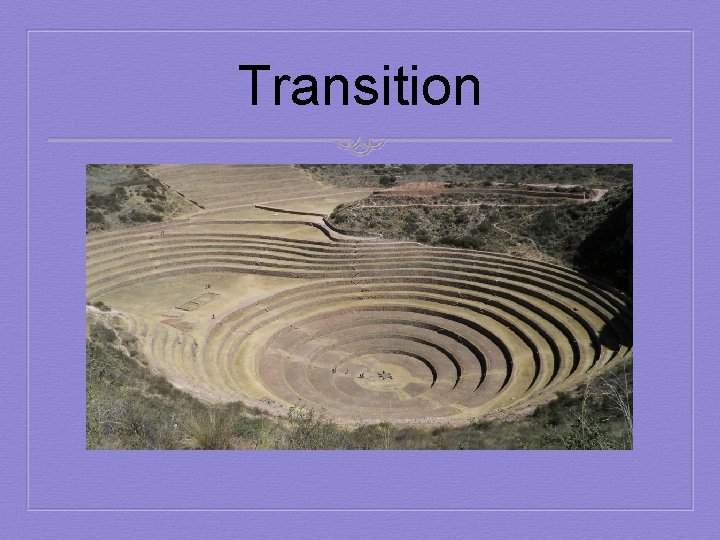
Transition • How something transitions from one element to another.
Transition
Transition
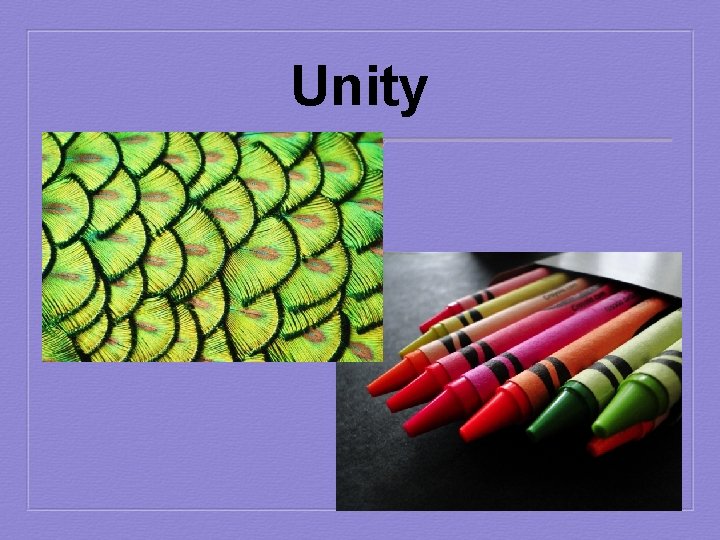
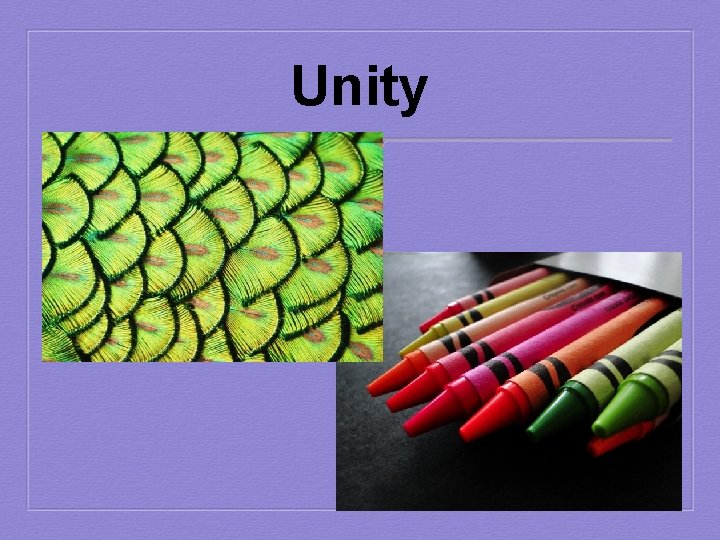
Unity The quality of oneness or wholeness, the basic compatibility between all elements. When elements appear to belong together in a picture.
Unity
Unity The quality of oneness or wholeness, the basic compatibility between all elements. When elements appear to belong together in a picture.
Unity
Elements and Principles in Photographic Composition § The Elements and Principles are used to make artisitc choices when taking photos. § You should know and understand the elements and principles of art to see and identify them all around you and capture them in your photos.