
Design Principles Chapter 8 ShapeVolume Shape A visually
- Slides: 27
Design Principles Chapter 8: Shape/Volume
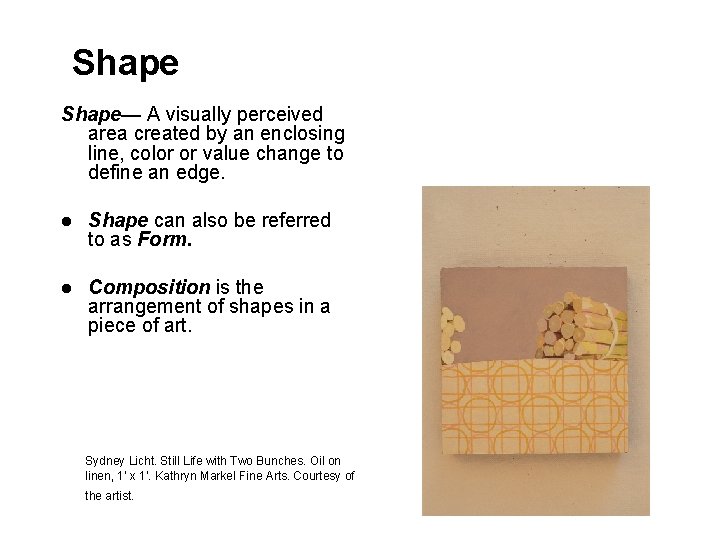
Shape— A visually perceived area created by an enclosing line, color or value change to define an edge. l Shape can also be referred to as Form. l Composition is the arrangement of shapes in a piece of art. Sydney Licht. Still Life with Two Bunches. Oil on linen, 1’ x 1’. Kathryn Markel Fine Arts. Courtesy of the artist.
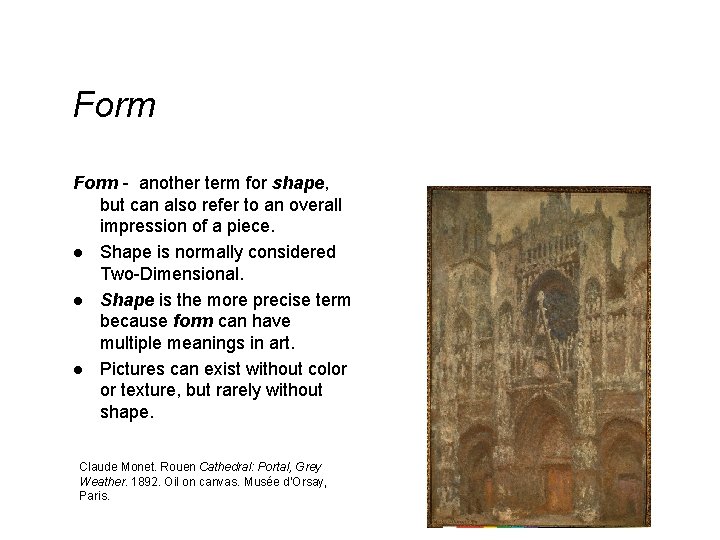
Form - another term for shape, but can also refer to an overall impression of a piece. l Shape is normally considered Two-Dimensional. l Shape is the more precise term because form can have multiple meanings in art. l Pictures can exist without color or texture, but rarely without shape. Claude Monet. Rouen Cathedral: Portal, Grey Weather. 1892. Oil on canvas. Musée d’Orsay, Paris.
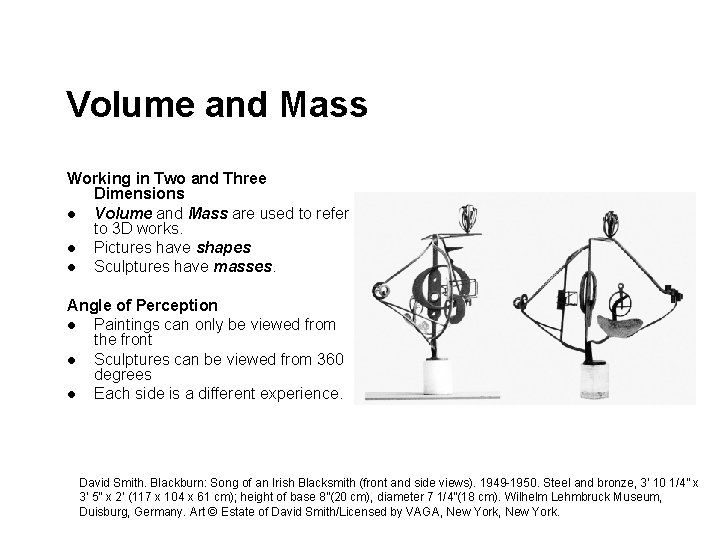
Volume and Mass Working in Two and Three Dimensions l Volume and Mass are used to refer to 3 D works. l Pictures have shapes l Sculptures have masses. Angle of Perception l Paintings can only be viewed from the front l Sculptures can be viewed from 360 degrees l Each side is a different experience. David Smith. Blackburn: Song of an Irish Blacksmith (front and side views). 1949 -1950. Steel and bronze, 3’ 10 1/4” x 3’ 5” x 2’ (117 x 104 x 61 cm); height of base 8”(20 cm), diameter 7 1/4”(18 cm). Wilhelm Lehmbruck Museum, Duisburg, Germany. Art © Estate of David Smith/Licensed by VAGA, New York.
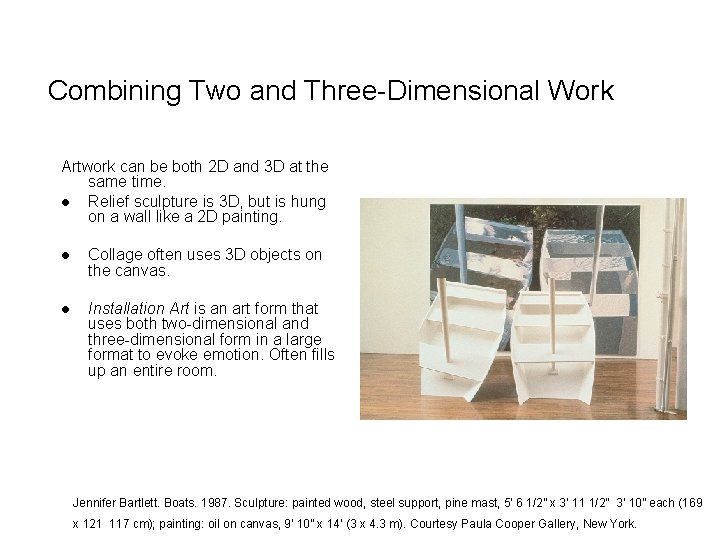
Combining Two and Three-Dimensional Work Artwork can be both 2 D and 3 D at the same time. l Relief sculpture is 3 D, but is hung on a wall like a 2 D painting. l Collage often uses 3 D objects on the canvas. l Installation Art is an art form that uses both two-dimensional and three-dimensional form in a large format to evoke emotion. Often fills up an entire room. Jennifer Bartlett. Boats. 1987. Sculpture: painted wood, steel support, pine mast, 5’ 6 1/2” x 3’ 11 1/2” 3’ 10” each (169 x 121 117 cm); painting: oil on canvas, 9’ 10” x 14’ (3 x 4. 3 m). Courtesy Paula Cooper Gallery, New York.
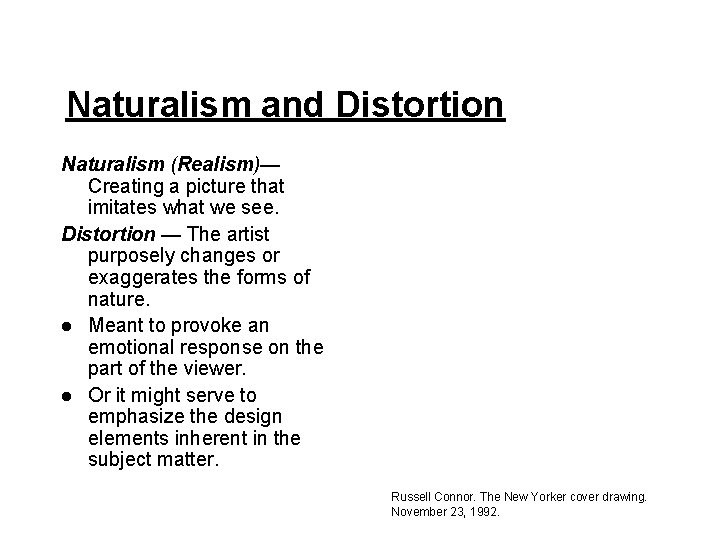
Naturalism and Distortion Naturalism (Realism)— Creating a picture that imitates what we see. Distortion — The artist purposely changes or exaggerates the forms of nature. l Meant to provoke an emotional response on the part of the viewer. l Or it might serve to emphasize the design elements inherent in the subject matter. Russell Connor. The New Yorker cover drawing. November 23, 1992.
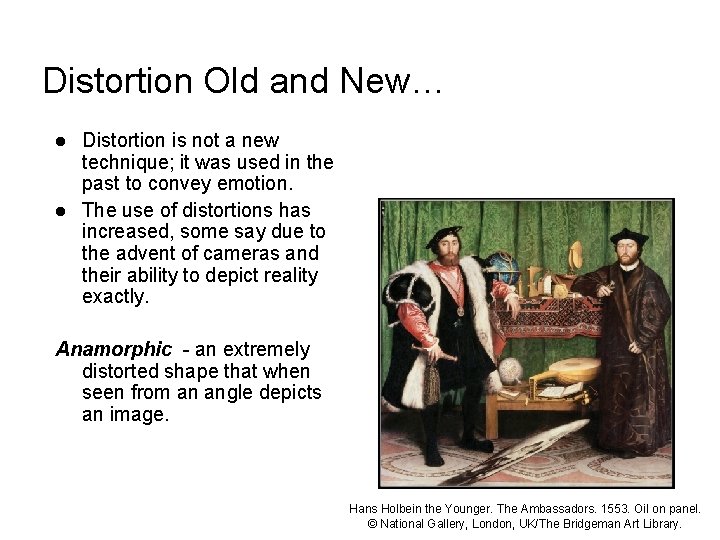
Distortion Old and New… l l Distortion is not a new technique; it was used in the past to convey emotion. The use of distortions has increased, some say due to the advent of cameras and their ability to depict reality exactly. Anamorphic - an extremely distorted shape that when seen from an angle depicts an image. Hans Holbein the Younger. The Ambassadors. 1553. Oil on panel. © National Gallery, London, UK/The Bridgeman Art Library.
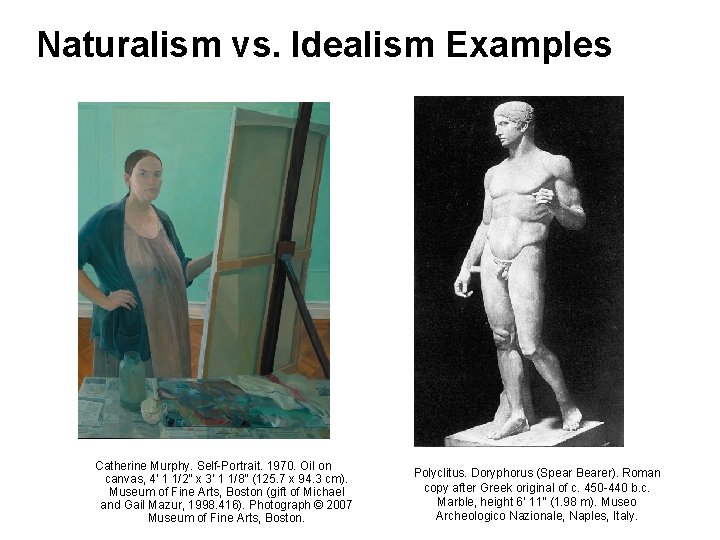
Naturalism and Idealism Naturalism shows life and nature exactly how it is. • It is concerned with true to life appearance. Idealism tries to create the perfect or ‘ideal’ form. l Idealism is a recurrent theme in art and in society. l The Greeks and Romans have strived to depict the ideal form. l Today we still do this in fashion and advertising. l Represents the world not as it is, but as how the artist and society feels it should be. l Governments often use idealized images to promote their political system.
Naturalism vs. Idealism Examples Catherine Murphy. Self-Portrait. 1970. Oil on canvas, 4’ 1 1/2” x 3’ 1 1/8” (125. 7 x 94. 3 cm). Museum of Fine Arts, Boston (gift of Michael and Gail Mazur, 1998. 416). Photograph © 2007 Museum of Fine Arts, Boston. Polyclitus. Doryphorus (Spear Bearer). Roman copy after Greek original of c. 450 -440 b. c. Marble, height 6’ 11” (1. 98 m). Museo Archeologico Nazionale, Naples, Italy.
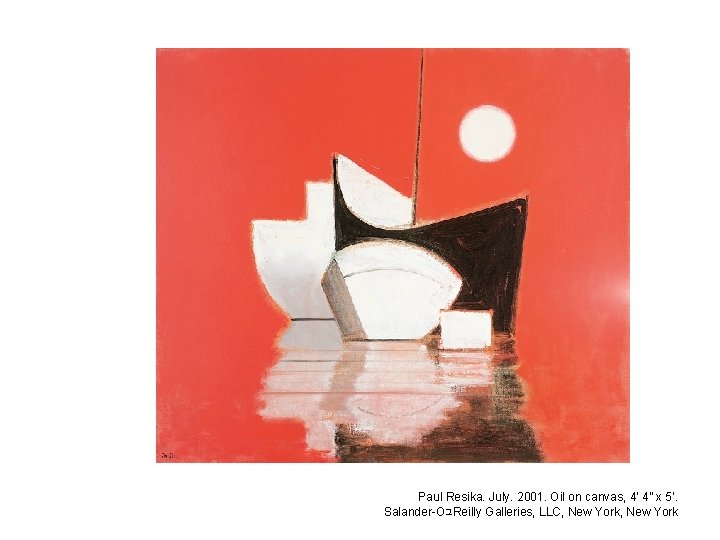
Abstraction: Essence of Shape Abstraction— A simplification of natural shapes to basic shapes. • The degree of abstraction can vary. • ‘Reductive’ abstraction is where the subject is reduced or simplified to its basic building blocks. • Abstraction is not new. • All form, however complex, can be simplified to basic geometric shapes.
Paul Resika. July. 2001. Oil on canvas, 4’ 4” x 5’. Salander-OユReilly Galleries, LLC, New York
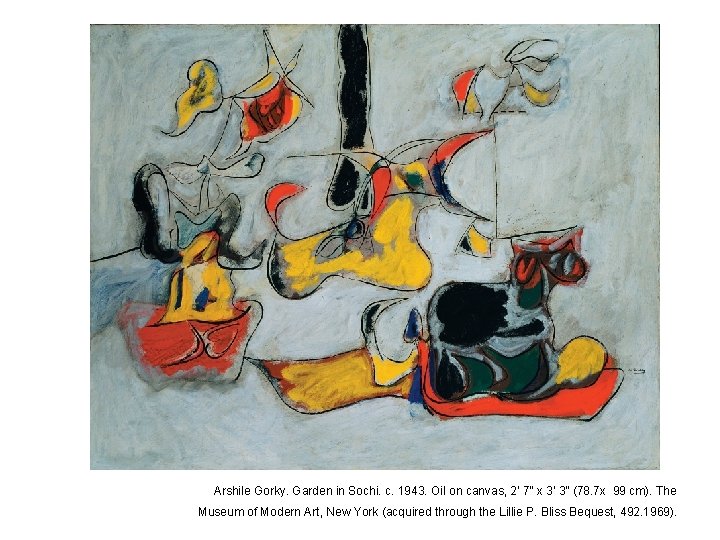
Biomorphic Shapes Not all abstraction is geometric. Biomorphic— Abstract shapes that allude to natural, organic forms.
Arshile Gorky. Garden in Sochi. c. 1943. Oil on canvas, 2’ 7” x 3’ 3” (78. 7 x 99 cm). The Museum of Modern Art, New York (acquired through the Lillie P. Bliss Bequest, 492. 1969).
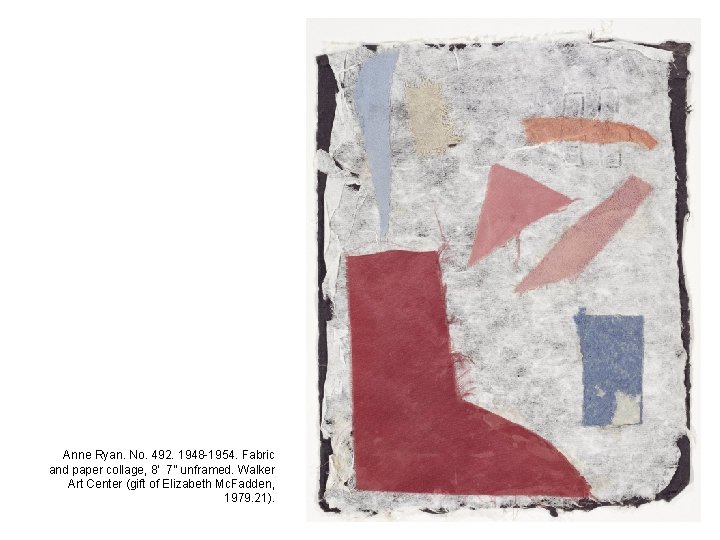
Nonobjective Shapes: Pure Forms Nonobjective shapes –shapes that have no reference or subject matter. l Nonobjective work is critiqued solely on its visual design. (Composition, color, etc…) l Nonobjective work can still convey emotion.
Anne Ryan. No. 492. 1948 -1954. Fabric and paper collage, 8’ 7” unframed. Walker Art Center (gift of Elizabeth Mc. Fadden, 1979. 21).
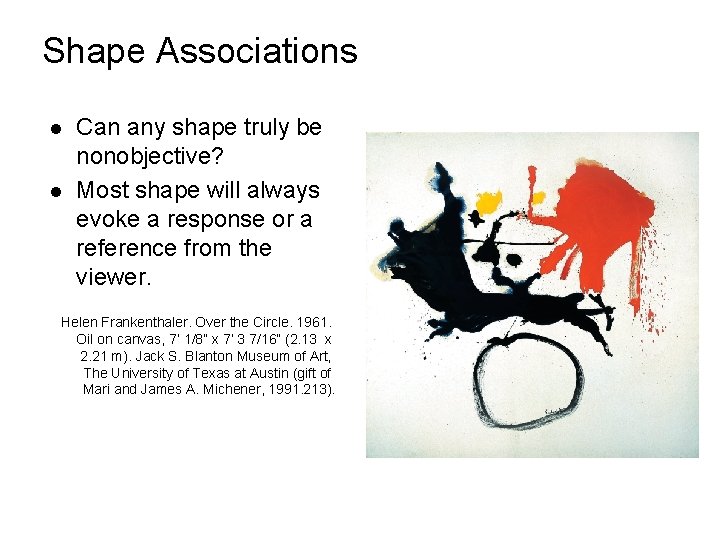
Shape Associations l l Can any shape truly be nonobjective? Most shape will always evoke a response or a reference from the viewer. Helen Frankenthaler. Over the Circle. 1961. Oil on canvas, 7’ 1/8” x 7’ 3 7/16” (2. 13 x 2. 21 m). Jack S. Blanton Museum of Art, The University of Texas at Austin (gift of Mari and James A. Michener, 1991. 213).
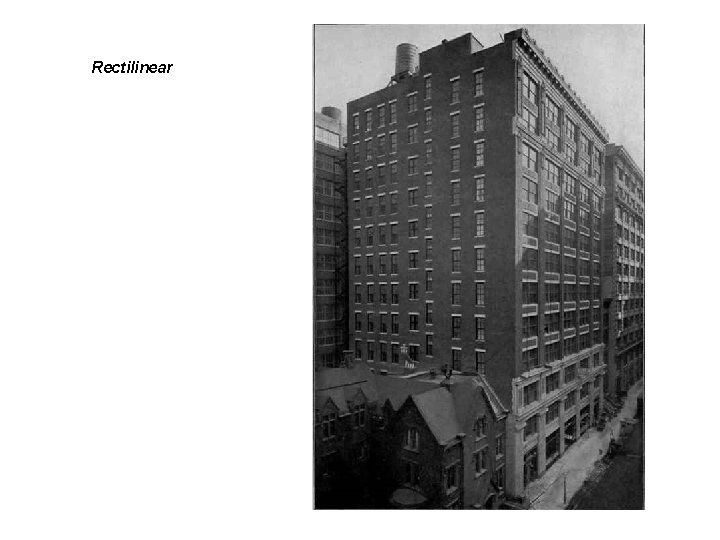
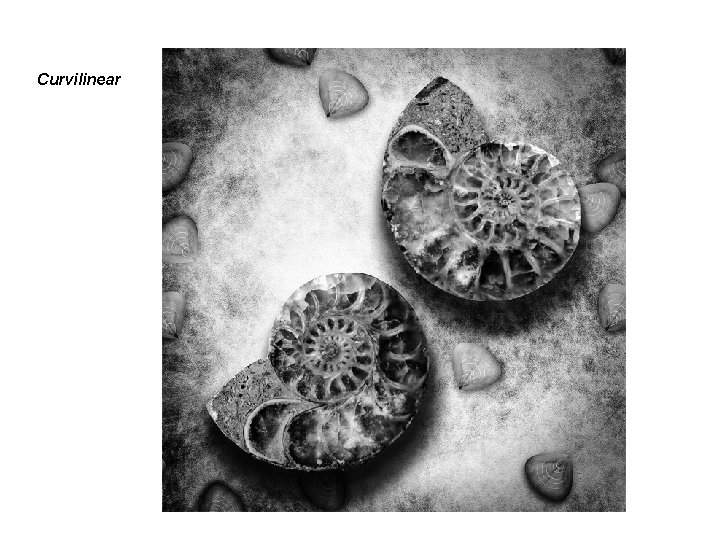
Rectilinear and Curvilinear Rectilinear— Forms that have straight lines, sharp edges and rectangular planes. Geometric Shapes – Squares, rectangles and triangles. l Thought of as man made or manufactured things. Curvilinear— A continual curved form. Organic Shapes l Thought of as natural, for example leaves, seashells and flowers.
Rectilinear
Curvilinear
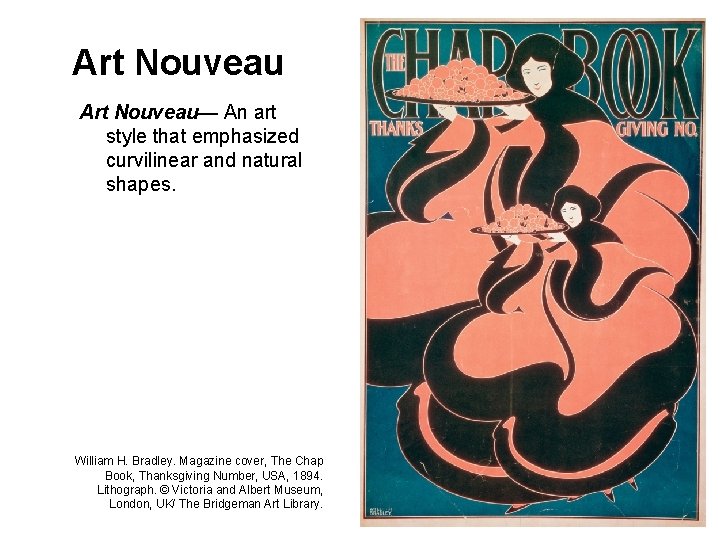
Art Nouveau— An art style that emphasized curvilinear and natural shapes. William H. Bradley. Magazine cover, The Chap Book, Thanksgiving Number, USA, 1894. Lithograph. © Victoria and Albert Museum, London, UK/ The Bridgeman Art Library.
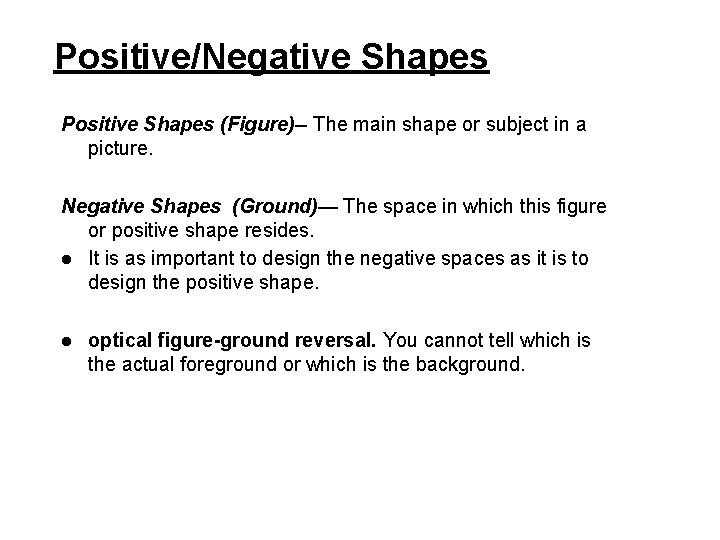
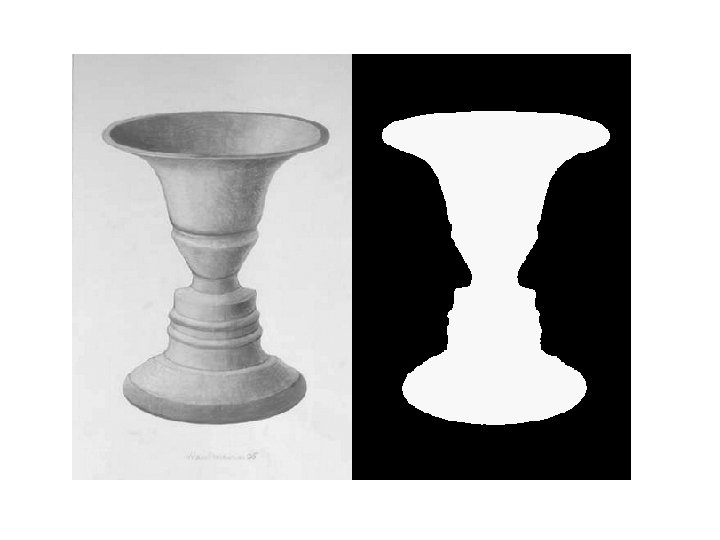
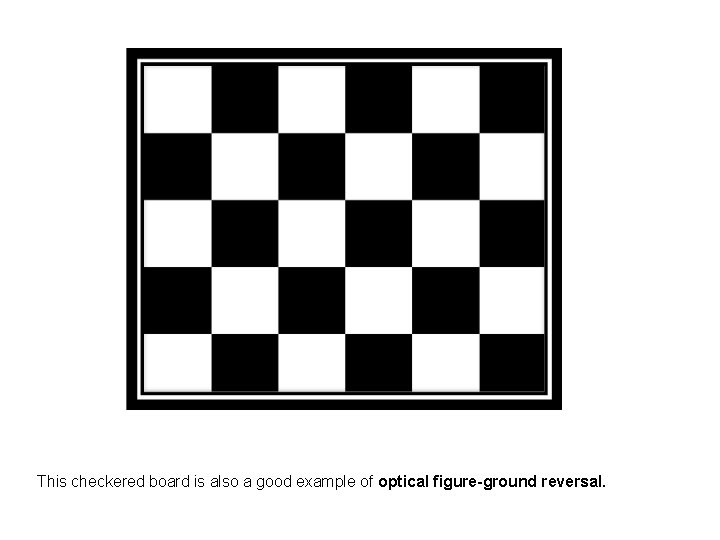
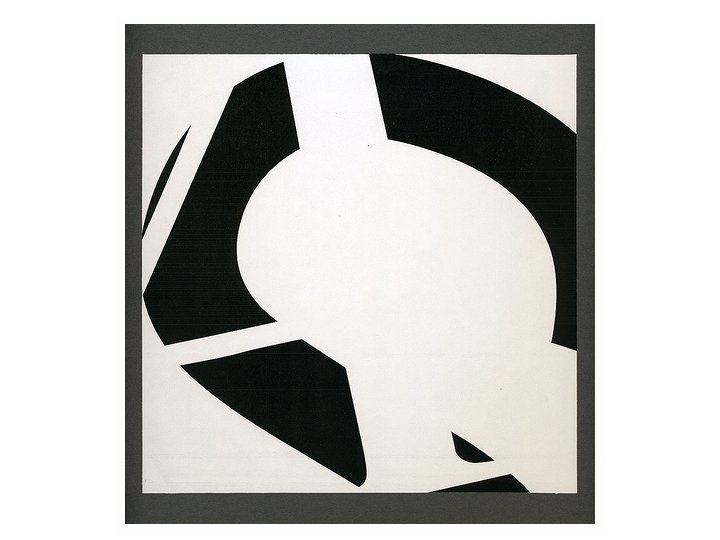
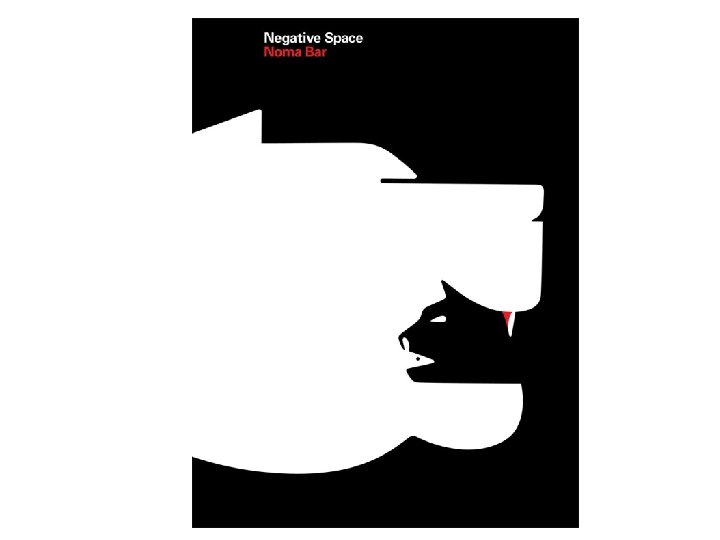
Positive/Negative Shapes Positive Shapes (Figure)-- The main shape or subject in a picture. Negative Shapes (Ground)— The space in which this figure or positive shape resides. l It is as important to design the negative spaces as it is to design the positive shape. l optical figure-ground reversal. You cannot tell which is the actual foreground or which is the background.
This checkered board is also a good example of optical figure-ground reversal.
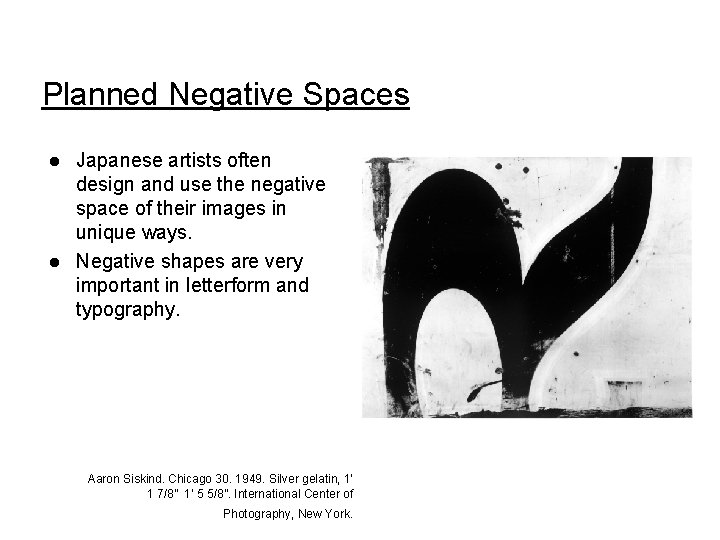
Planned Negative Spaces l l Japanese artists often design and use the negative space of their images in unique ways. Negative shapes are very important in letterform and typography. Aaron Siskind. Chicago 30. 1949. Silver gelatin, 1’ 1 7/8” 1’ 5 5/8”. International Center of Photography, New York.
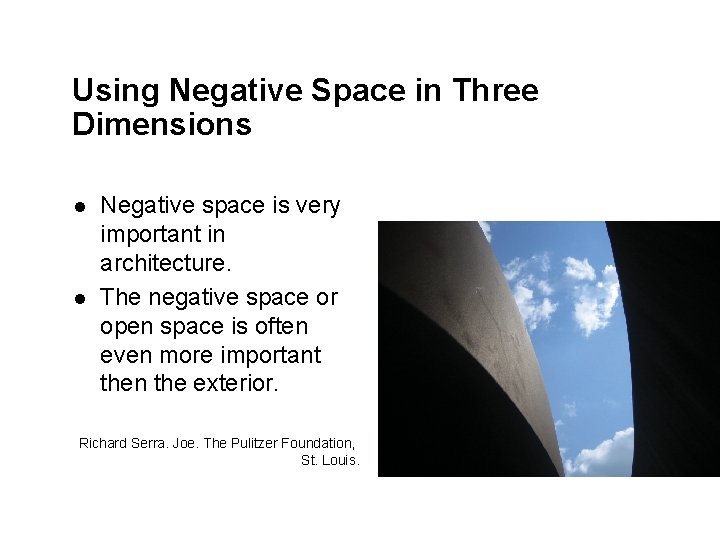
Using Negative Space in Three Dimensions l l Negative space is very important in architecture. The negative space or open space is often even more important then the exterior. Richard Serra. Joe. The Pulitzer Foundation, St. Louis.