
Design of the MICE RF Cavity Module Status

- Slides: 16
Design of the MICE RF Cavity Module: • • Status of the module design Module flange sealing options MICE CM 17 @ CERN February 23, 2007 • Steve Virostek • Lawrence Berkeley National Lab
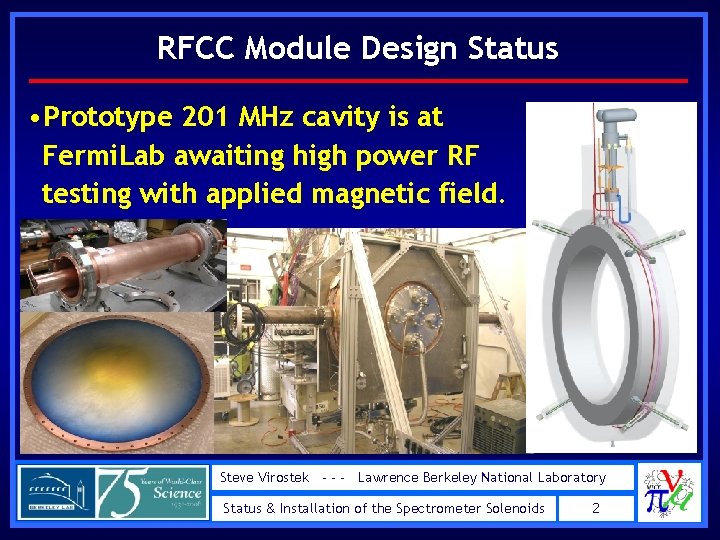
RFCC Module Design Status • Prototype 201 MHz cavity is at Fermi. Lab awaiting high power RF testing with applied magnetic field. Steve Virostek - - - Lawrence Berkeley National Laboratory Status & Installation of the Spectrometer Solenoids 2
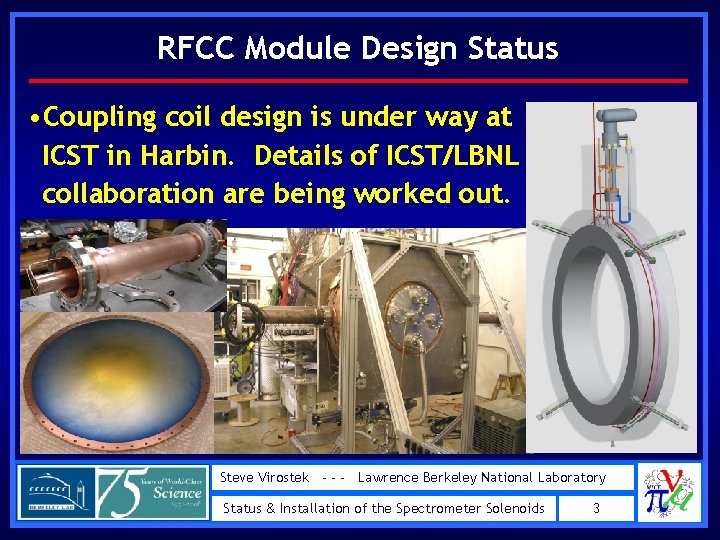
RFCC Module Design Status • Coupling coil design is under way at ICST in Harbin. Details of ICST/LBNL collaboration are being worked out. Steve Virostek - - - Lawrence Berkeley National Laboratory Status & Installation of the Spectrometer Solenoids 3
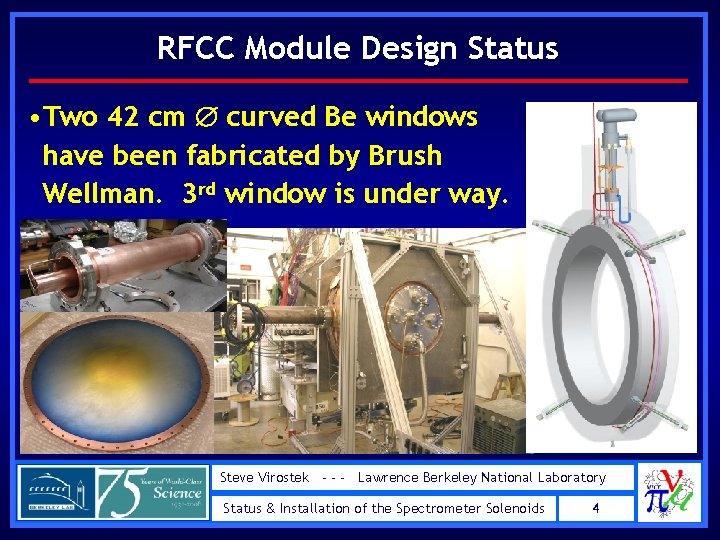
RFCC Module Design Status • Two 42 cm curved Be windows have been fabricated by Brush Wellman. 3 rd window is under way. Steve Virostek - - - Lawrence Berkeley National Laboratory Status & Installation of the Spectrometer Solenoids 4
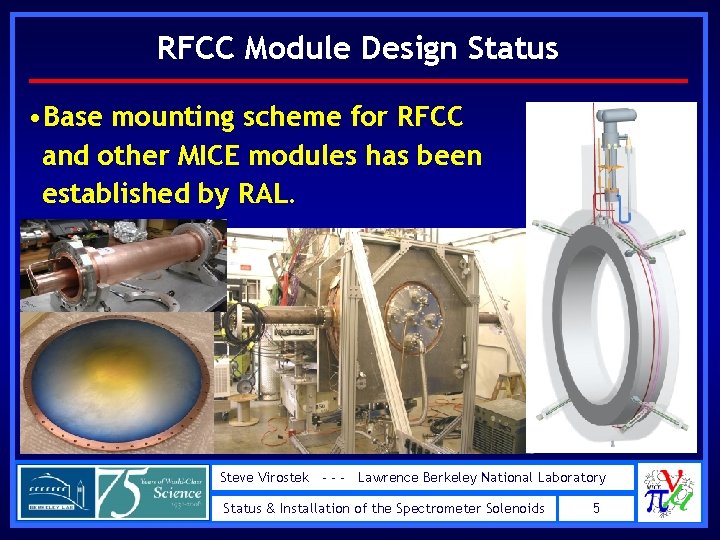
RFCC Module Design Status • Base mounting scheme for RFCC and other MICE modules has been established by RAL. Steve Virostek - - - Lawrence Berkeley National Laboratory Status & Installation of the Spectrometer Solenoids 5
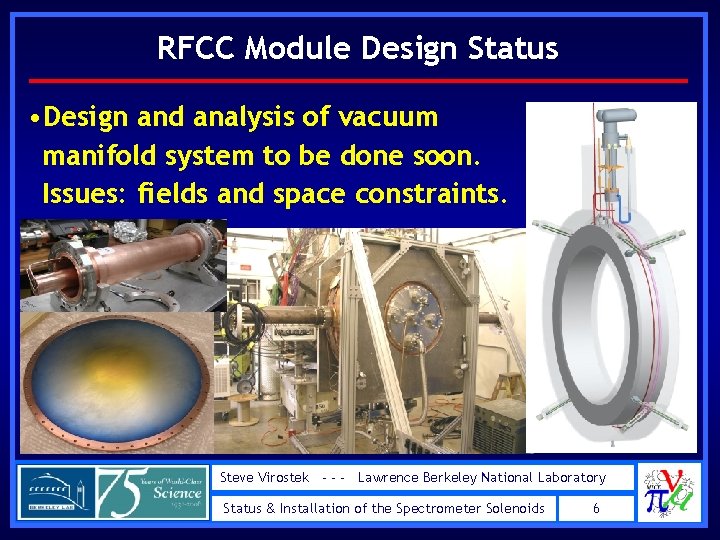
RFCC Module Design Status • Design and analysis of vacuum manifold system to be done soon. Issues: fields and space constraints. Steve Virostek - - - Lawrence Berkeley National Laboratory Status & Installation of the Spectrometer Solenoids 6
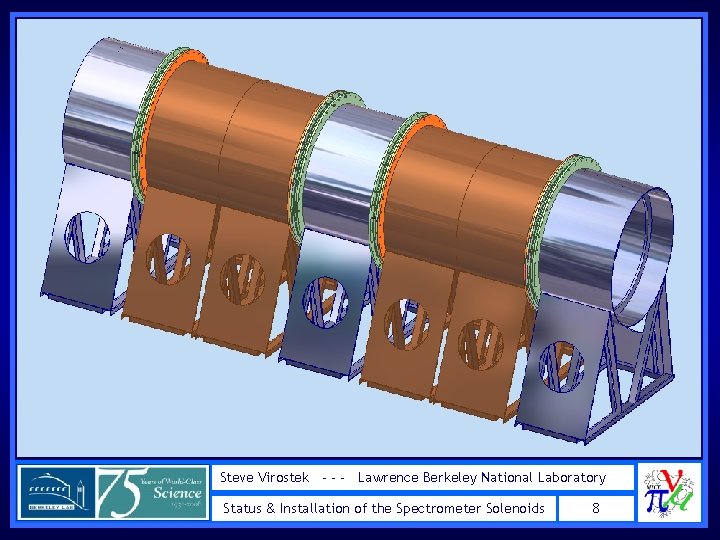
Module Joint Sealing Issues • MICE does not require metal seals on vacuum joints, but a future machine will • MICE module joints may need somewhat frequent disassembly (maintenance, repair, reconfig. ) • O-rings will provide the most reliable and cost effective (inexpensive and re-useable) solution • But, MICE should demonstrate all technologies for a future machine including the use of metal seals • How is this achieved w/o undue burden on MICE? Steve Virostek - - - Lawrence Berkeley National Laboratory Status & Installation of the Spectrometer Solenoids 7
Steve Virostek - - - Lawrence Berkeley National Laboratory Status & Installation of the Spectrometer Solenoids 8
Steve Virostek - - - Lawrence Berkeley National Laboratory Status & Installation of the Spectrometer Solenoids 9
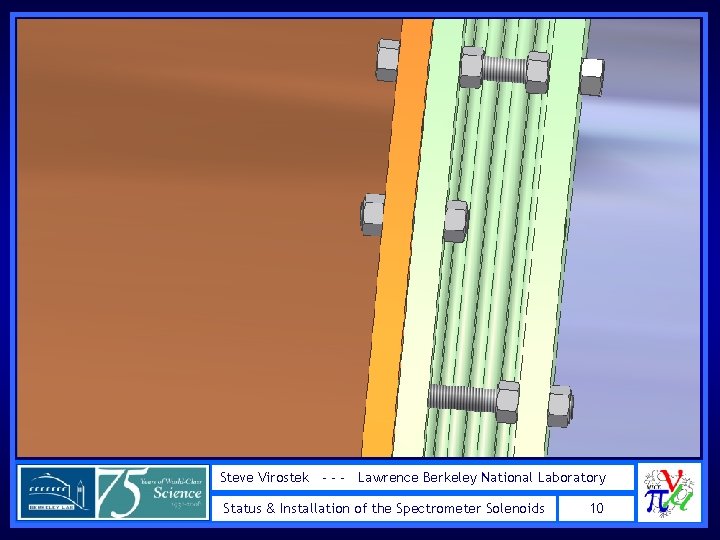
Steve Virostek - - - Lawrence Berkeley National Laboratory Status & Installation of the Spectrometer Solenoids 10
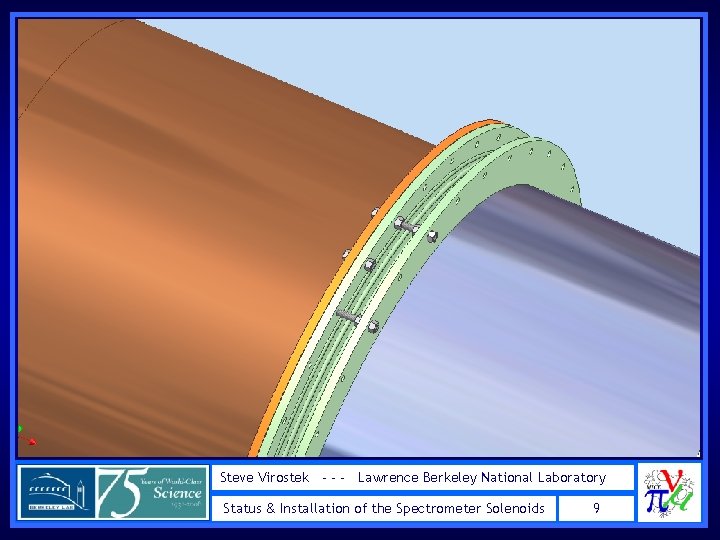
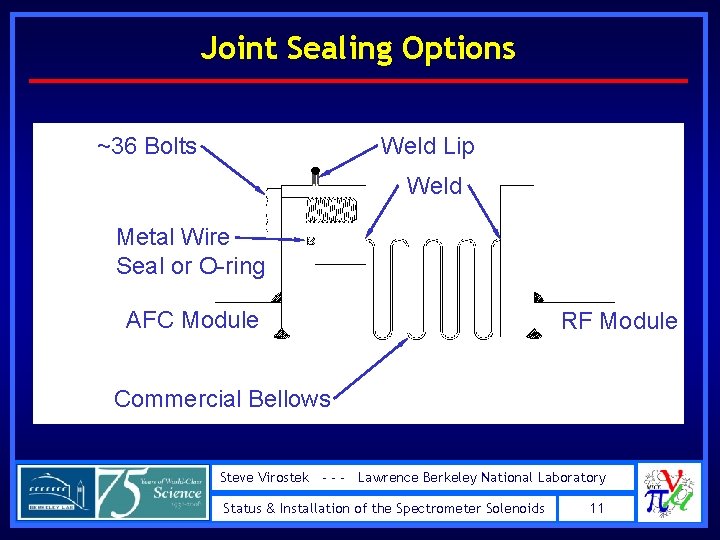
Joint Sealing Options ~36 Bolts Weld Lip Weld Metal Wire Seal or O-ring AFC Module RF Module Commercial Bellows Steve Virostek - - - Lawrence Berkeley National Laboratory Status & Installation of the Spectrometer Solenoids 11
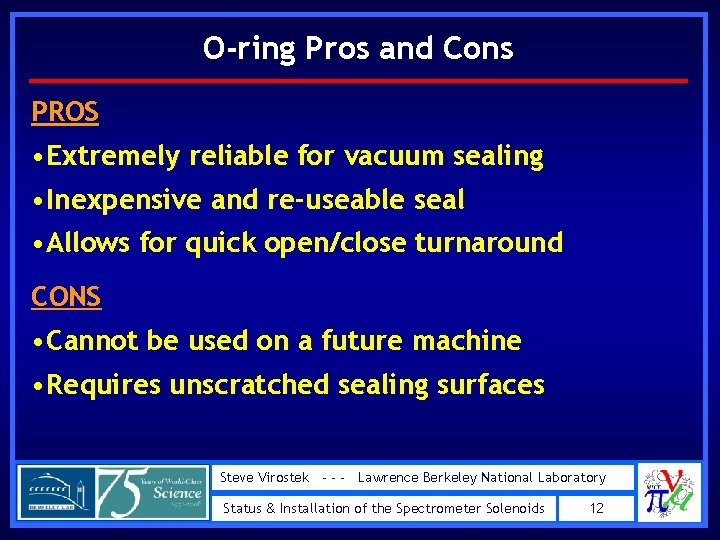
O-ring Pros and Cons PROS • Extremely reliable for vacuum sealing • Inexpensive and re-useable seal • Allows for quick open/close turnaround CONS • Cannot be used on a future machine • Requires unscratched sealing surfaces Steve Virostek - - - Lawrence Berkeley National Laboratory Status & Installation of the Spectrometer Solenoids 12
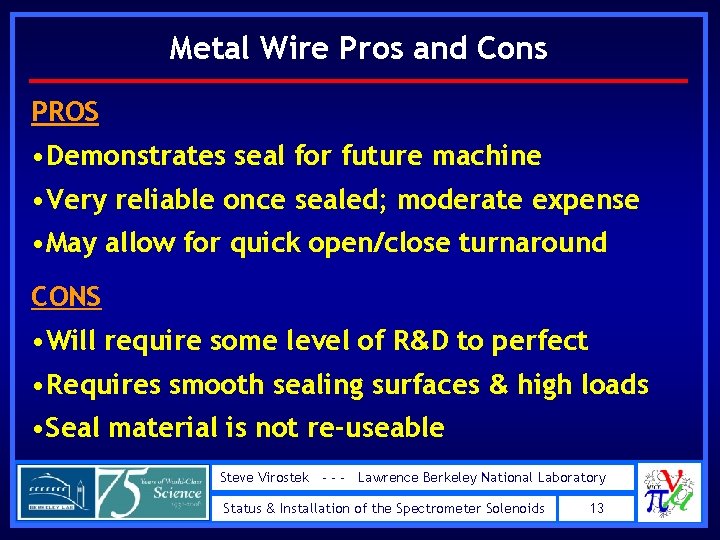
Metal Wire Pros and Cons PROS • Demonstrates seal for future machine • Very reliable once sealed; moderate expense • May allow for quick open/close turnaround CONS • Will require some level of R&D to perfect • Requires smooth sealing surfaces & high loads • Seal material is not re-useable Steve Virostek - - - Lawrence Berkeley National Laboratory Status & Installation of the Spectrometer Solenoids 13
Weld Lip Pros and Cons PROS • Demonstrates seal for future machine • Extremely reliable long term seal • Allows for imperfections in mating surfaces CONS • Cannot carry loads across bellows with bolts • Labor intensive for installation and removal • Limited number of weld/grind cycles allowed Steve Virostek - - - Lawrence Berkeley National Laboratory Status & Installation of the Spectrometer Solenoids 14
What are the options in our approach? • Always use O-rings for all module joints but demonstrate one of the metal seals off line • Use O-rings for all joints until final MICE assembly when only one metal seal is used • Use O-rings for all joints until final MICE assembly when all metal seals are used • Always use metal seals for all joints Steve Virostek - - - Lawrence Berkeley National Laboratory Status & Installation of the Spectrometer Solenoids 15
Summary • Must develop an approach to demonstrate vacuum sealing technology without future machine excessive burden on MICE • Need a decision on the preferred approach • A compromise between O-ring and metal seals is a likely choice • Off line tests of metal seals recommended • Metal wire is less complex than welded lip Steve Virostek - - - Lawrence Berkeley National Laboratory Status & Installation of the Spectrometer Solenoids 16