
DESIGN OF TABLE OF SPECIFICATION AS AN ASSESSMENT
DESIGN OF “TABLE OF SPECIFICATION” AS AN ASSESSMENT GUIDE IN OUTCOME-BASED EDUCATION (OBE) FOR ODL Nantha Kumar Subramaniam
Introduction In Malaysia, Outcome-based Education (OBE) is being implemented in all institutions of higher level since 2009 All programs must comply to the OBE requirements 2
OVERVIEW: Outcome-based Education Outcome-Based Education (OBE) is an educational system that put emphasis on what the students are expected to be able to do within the specified period of learning This requires having a clear set of essential knowledge and skills that students are expected to have learnt at the end of their learning experience 3
WHY OBE? This is to ensure the academic programmes, delivery system and the assessment methods will produce graduates equipped with high quality knowledge and skills 4
Main pillars of OBE PEO – Programme Educational Objectives PLO – Programme Learning Outcomes CLO – Course Learning Outcomes 5
PEO – Programme Educational Objectives PEO are the broad statements that describe the career and professional accomplishments that the programme is preparing graduates to achieve after they graduated 6
PLO – Programme Learning Outcomes PLO are the statements that describe the specific and general knowledge, skills, attitude and abilities that the programme graduates should demonstrate upon graduation 7
CLO – Course Learning Outcomes CLO is the statements on what a student should know, understand can do upon the completion of a period of study for the course. CLOs are mapped to their respective PLOs. 8

--OBE FOCUS AREA-Assessment component in OBE boils down to the course level and attempts to answer the following: PLO CLO CLO What is to be assessed? How to assess? Is the course effective? To what degree are students learning? 9

OBJECTIVE To propose and implement a holistic and OBE-compliant Table-of. Specification (TOS) This TOS will allow the instructor to achieve balance in the test and to identify the achievement domains being measured and to ensure that a fair and representative sample of questions appear on the both coursework and examination 10
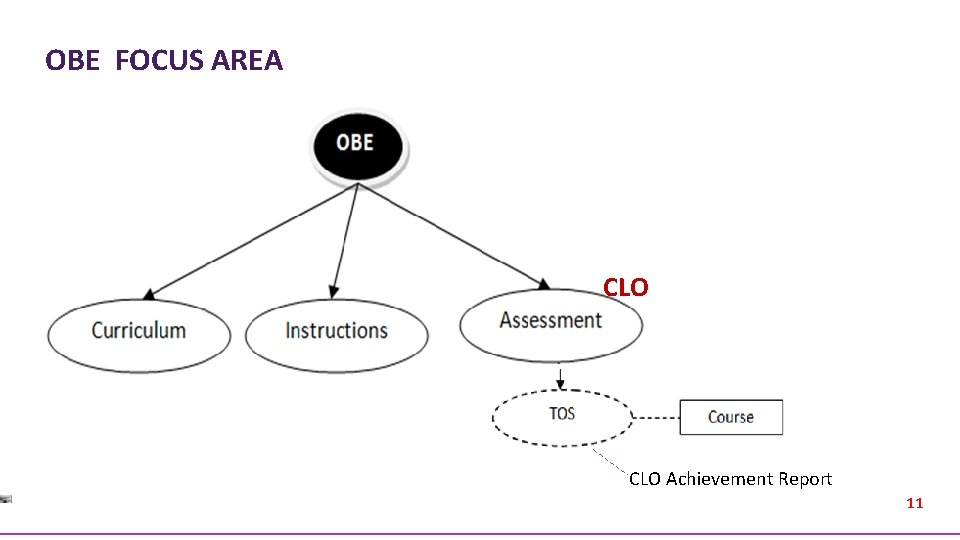
OBE FOCUS AREA CLO Achievement Report 11
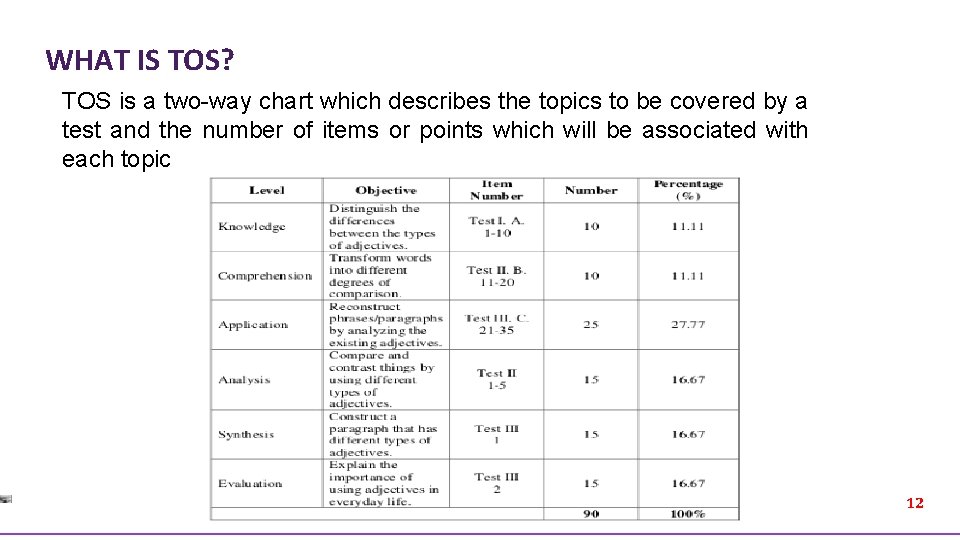
WHAT IS TOS? TOS is a two-way chart which describes the topics to be covered by a test and the number of items or points which will be associated with each topic 12

DESIGN OF OBE-COMPLIANT TOS 13
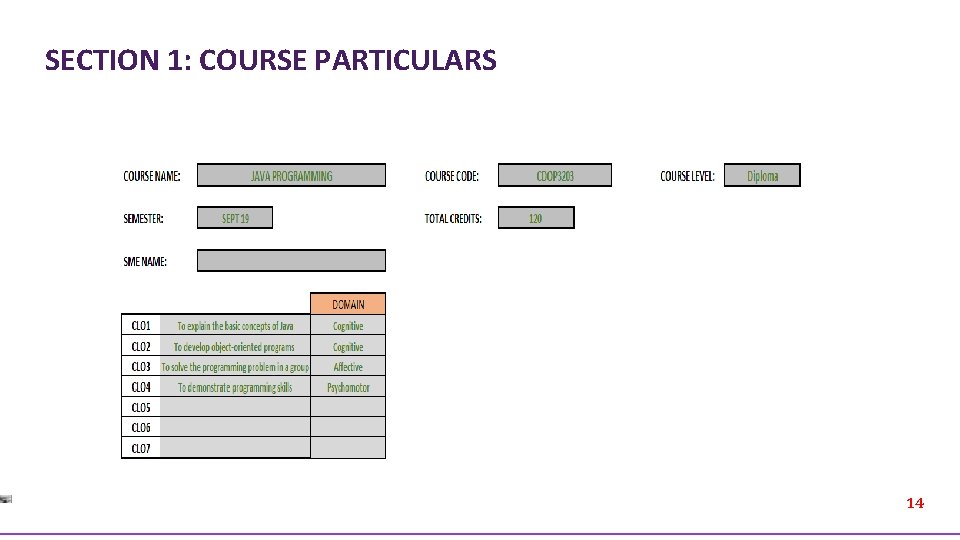
SECTION 1: COURSE PARTICULARS 14
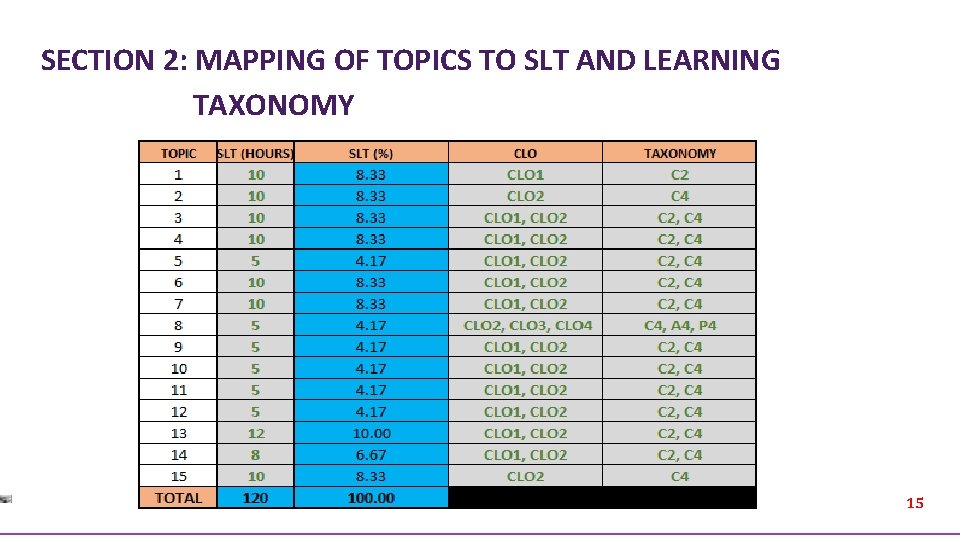
SECTION 2: MAPPING OF TOPICS TO SLT AND LEARNING TAXONOMY 15
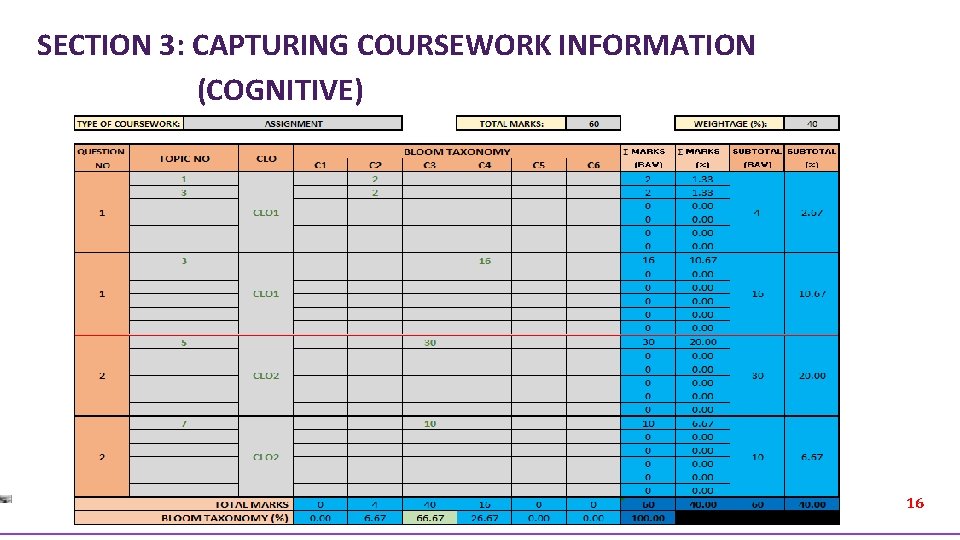
SECTION 3: CAPTURING COURSEWORK INFORMATION (COGNITIVE) 16
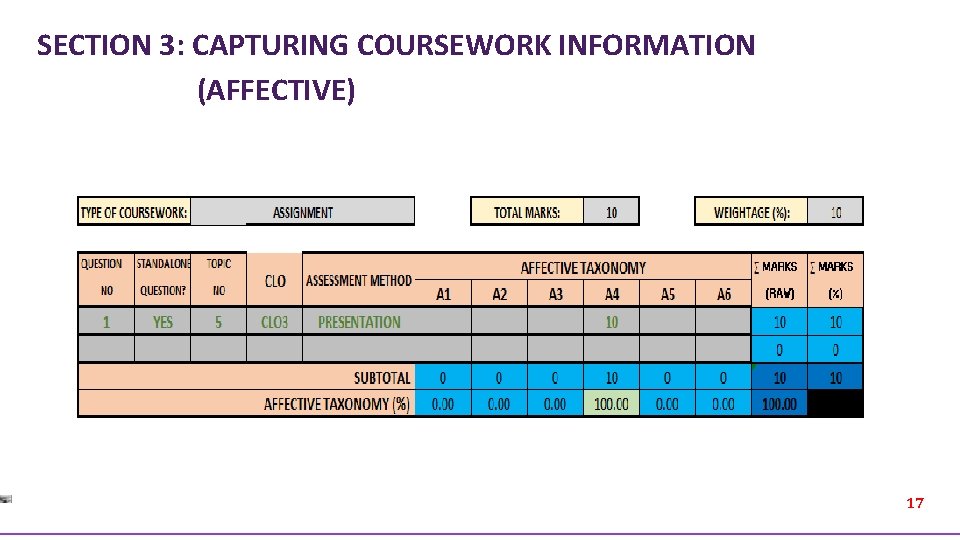
SECTION 3: CAPTURING COURSEWORK INFORMATION (AFFECTIVE) 17

SECTION 3: CAPTURING COURSEWORK INFORMATION (PSYCHOMOTOR) 18

SECTION 4: CAPTURING SUMMATIVE INFORMATION 19
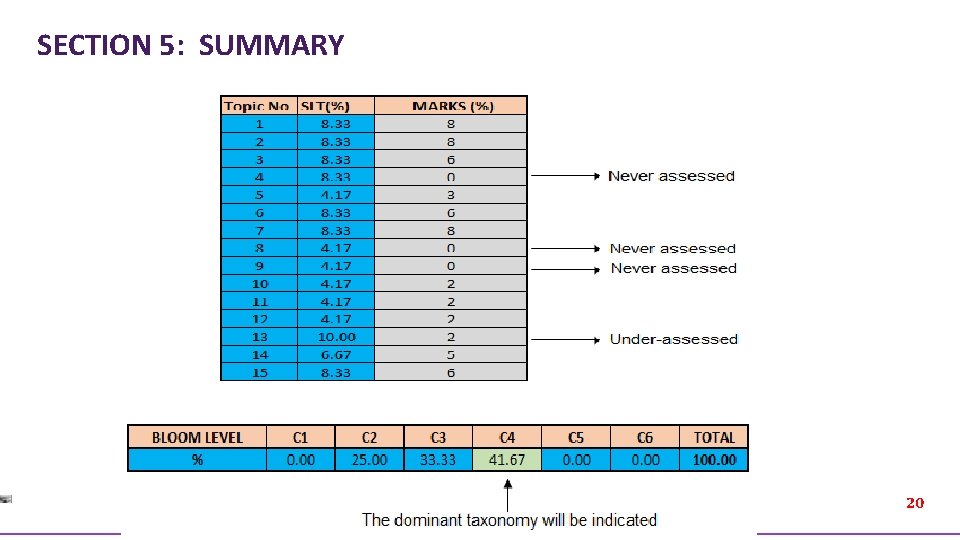
SECTION 5: SUMMARY 20

CALCULATING THE ACHIEVEMENT OF CLOs 21
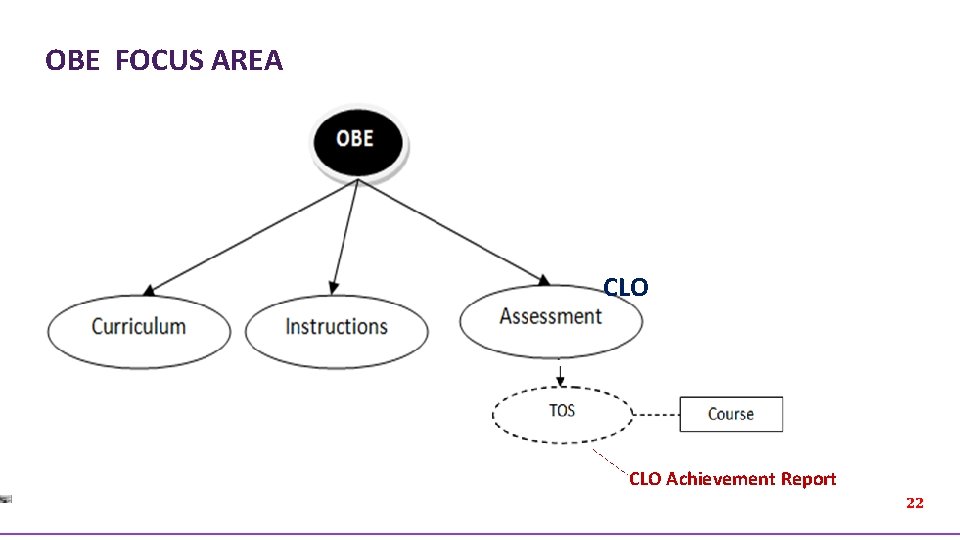
OBE FOCUS AREA CLO Achievement Report 22

COMPUTER GENERATED ASSESSMENT PERFORMANCE REPORT 23

24

25
Way Forward: E-TOS in the Question Bank 26

E-TOS in the Question Bank System 27
Conclusion 28
• Assessment is very much abstract in nature and a complicated process • The TOS proposed in this paper is able to guide the instructors in preparing the test items in a more holistic and systematic manners • The TOS is very flexible as it allows the instructor to fill-up the TOS in an incremental and iterative manner in order to achieve the desired result in a shorter time 29
Thank you. . 30

31
FEEDBACK FROM THE ACADEMICS Complicated process had been made easy; It helps me to understand the assessment better; It gives the bird-view of the assessment; It helps me to enhance my course; I am now confident with my test items. 32
- Slides: 32