
Design of Scintillator Arrays for DualEnd Depthof Interaction

- Slides: 22
Design of Scintillator Arrays for Dual-End Depth-of. Interaction Encoding Small-Animal PET Detectors Kent Burr, Adrian Ivan, Don Castleberry, Jim Le. Blanc Detector Technology Lab, GE Research
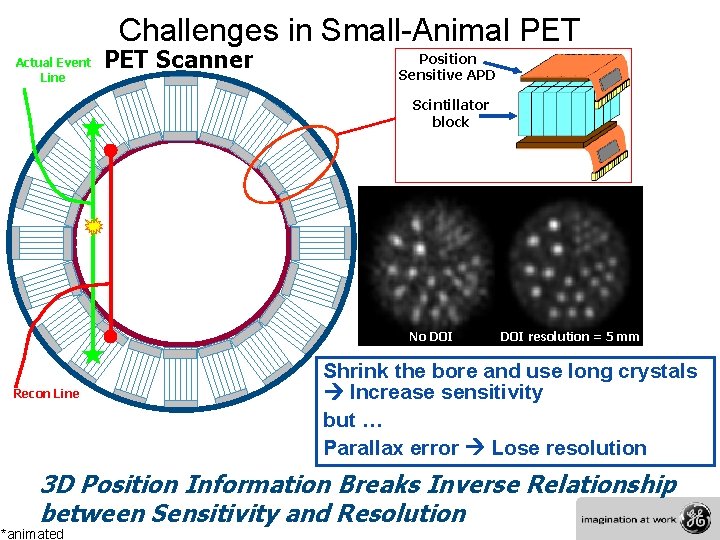
Challenges in Small-Animal PET Actual Event Line PET Scanner Position Sensitive APD Scintillator block No DOI Recon Line DOI resolution = 5 mm Shrink the bore and use long crystals Increase sensitivity but … Parallax error Lose resolution 3 D Position Information Breaks Inverse Relationship between Sensitivity and Resolution *animated
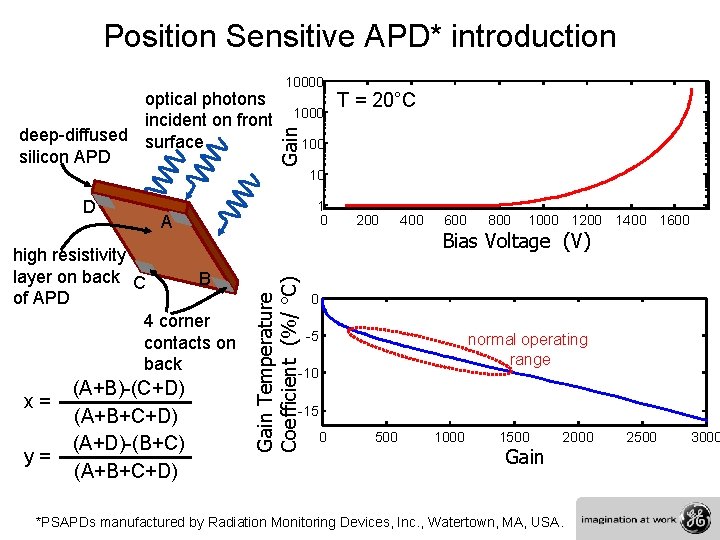
Position Sensitive APD* introduction 1000 T = 20°C Gain optical photons incident on front deep-diffused surface silicon APD 10000 10 A high resistivity layer on back C B of APD 4 corner contacts on back x= y= 1 0 (A+B)-(C+D) (A+B+C+D) (A+D)-(B+C) (A+B+C+D) 200 400 600 800 1000 1200 1400 1600 Bias Voltage (V) Gain Temperature Coefficient (%/ °C) D 0 -5 normal operating range -10 -15 0 500 1000 1500 Gain 2000 *PSAPDs manufactured by Radiation Monitoring Devices, Inc. , Watertown, MA, USA. 2500 3000
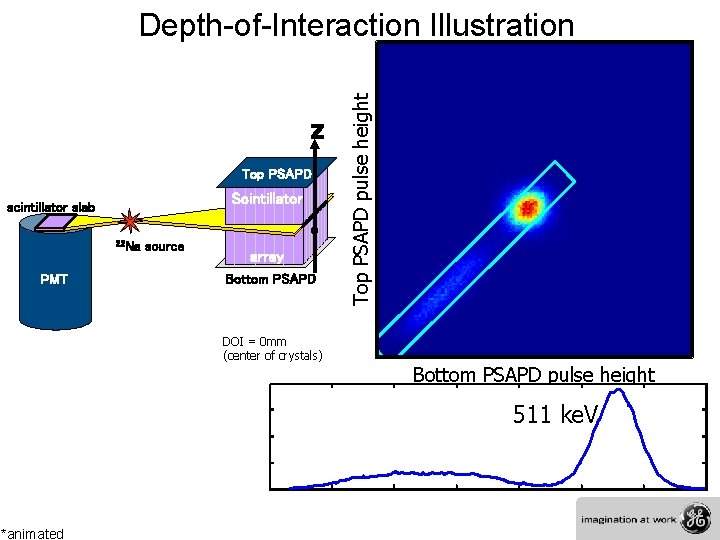
z Top PSAPD Scintillator slab 22 Na PMT source array Bottom PSAPD DOI = 0 mm (center of crystals) Top PSAPD pulse height Depth-of-Interaction Illustration Bottom PSAPD pulse height 511 ke. V *animated
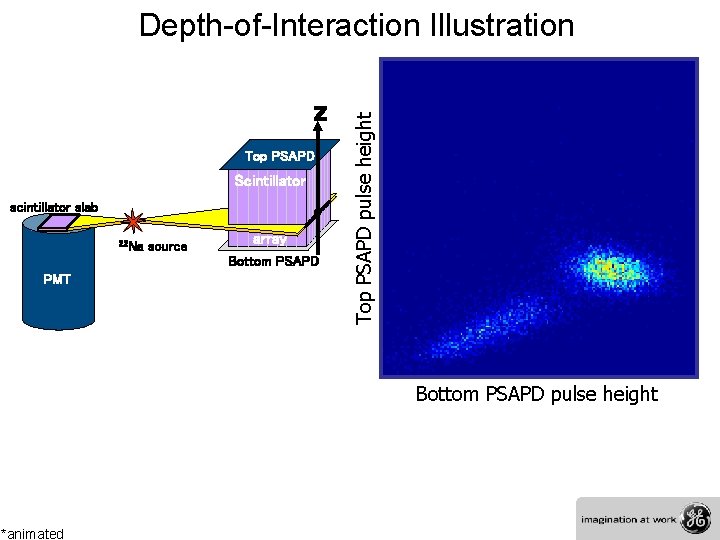
z z z Top PSAPD scintillator slab 22 Na PMT source Top PSAPD Scintillator Top PSAPD Scintillator Scintillator array array Bottom PSAPD Bottom PSAPD Top PSAPD pulse height Depth-of-Interaction Illustration Bottom PSAPD pulse height *animated
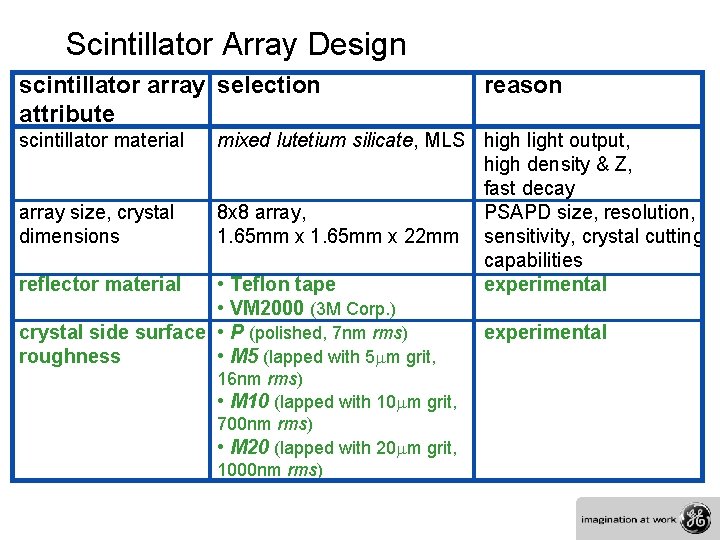
Scintillator Array Design scintillator array selection attribute scintillator material reason mixed lutetium silicate, MLS high light output, high density & Z, fast decay array size, crystal PSAPD size, resolution, 8 x 8 array, dimensions 1. 65 mm x 22 mm sensitivity, crystal cutting capabilities reflector material experimental • Teflon tape • VM 2000 (3 M Corp. ) crystal side surface • P (polished, 7 nm rms) experimental roughness • M 5 (lapped with 5 m grit, 16 nm rms) • M 10 (lapped with 10 m grit, 700 nm rms) • M 20 (lapped with 20 m grit, 1000 nm rms)
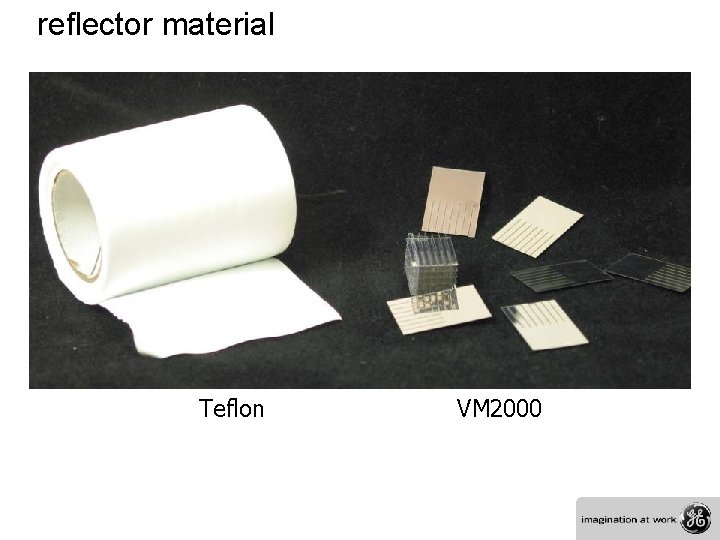
reflector material Teflon VM 2000
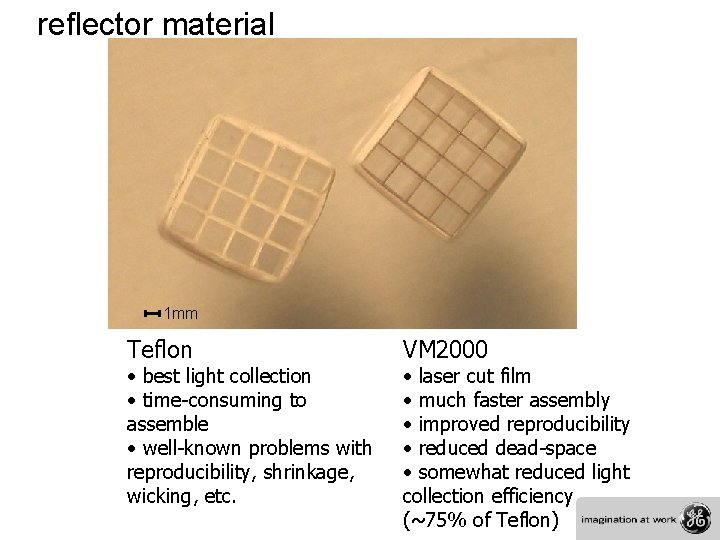
reflector material 1 mm Teflon • best light collection • time-consuming to assemble • well-known problems with reproducibility, shrinkage, wicking, etc. VM 2000 • laser cut film • much faster assembly • improved reproducibility • reduced dead-space • somewhat reduced light collection efficiency (~75% of Teflon)
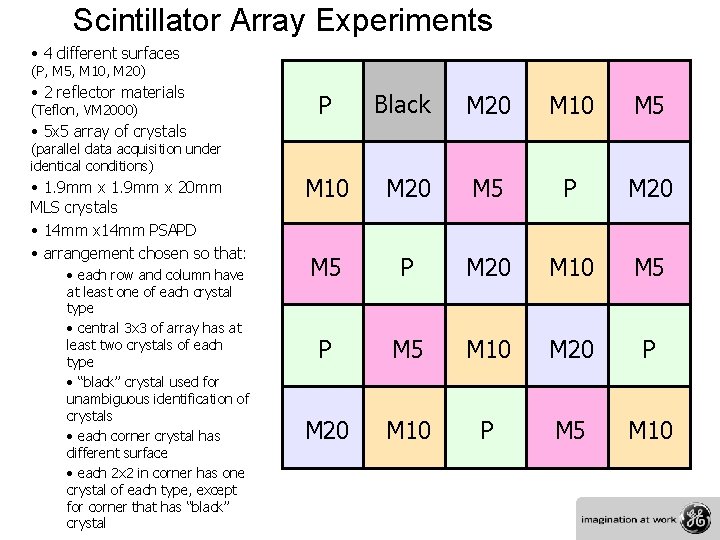
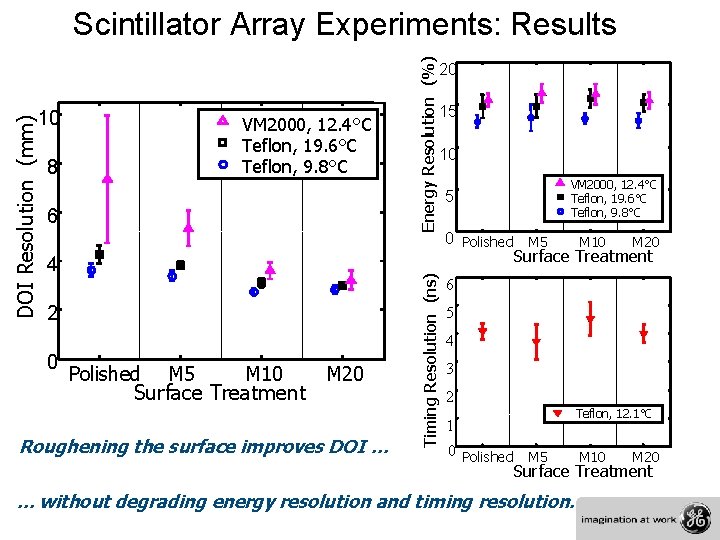
Scintillator Array Experiments • 4 different surfaces (P, M 5, M 10, M 20) • 2 reflector materials (Teflon, VM 2000) P Black M 20 M 10 M 5 M 10 M 20 M 5 P M 20 M 10 M 5 P M 5 M 10 M 20 P M 20 M 10 P M 5 M 10 • 5 x 5 array of crystals (parallel data acquisition under identical conditions) • 1. 9 mm x 20 mm MLS crystals • 14 mm x 14 mm PSAPD • arrangement chosen so that: • each row and column have at least one of each crystal type • central 3 x 3 of array has at least two crystals of each type • “black” crystal used for unambiguous identification of crystals • each corner crystal has different surface • each 2 x 2 in corner has one crystal of each type, except for corner that has “black” crystal
VM 2000, 12. 4°C Teflon, 19. 6°C Teflon, 9. 8°C 8 6 15 10 VM 2000, 12. 4°C Teflon, 19. 6°C Teflon, 9. 8°C 5 0 Polished M 5 M 10 M 20 Surface Treatment 4 2 0 Energy Resolution (%) 10 20 Polished M 5 M 10 Surface Treatment M 20 Roughening the surface improves DOI … Timing Resolution (ns) DOI Resolution (mm) Scintillator Array Experiments: Results 6 5 4 3 2 Teflon, 12. 1°C 1 0 Polished M 5 M 10 M 20 Surface Treatment … without degrading energy resolution and timing resolution.
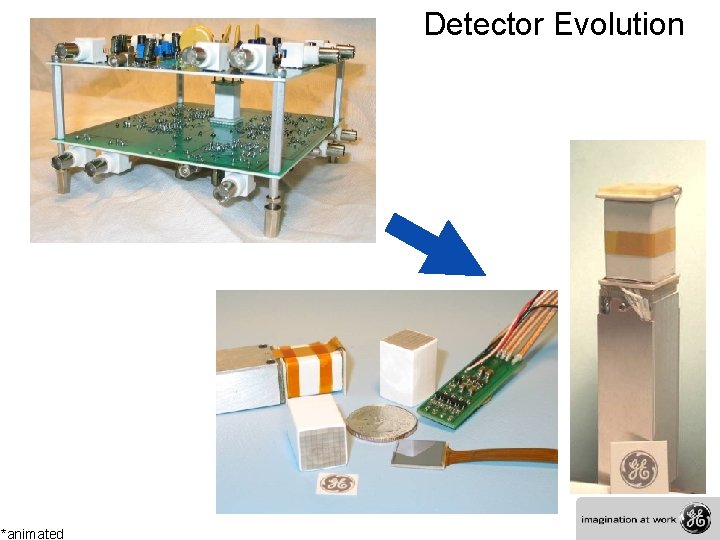
Detector Evolution *animated
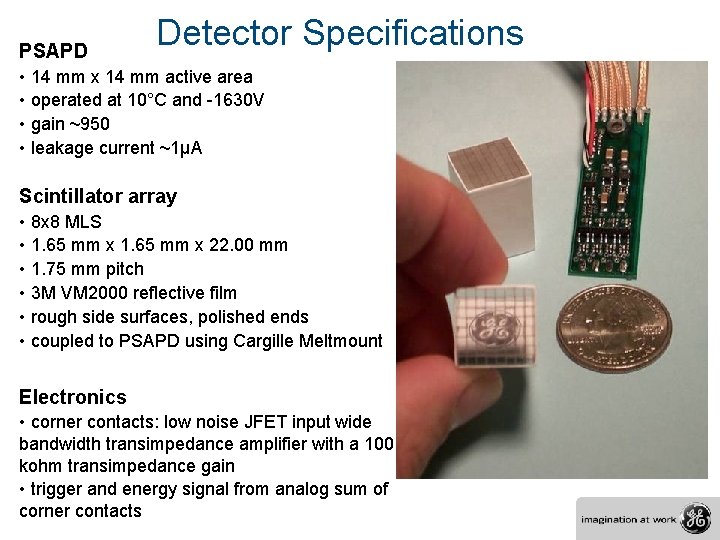
PSAPD Detector Specifications • 14 mm x 14 mm active area • operated at 10°C and -1630 V • gain ~950 • leakage current ~1µA Scintillator array • 8 x 8 MLS • 1. 65 mm x 22. 00 mm • 1. 75 mm pitch • 3 M VM 2000 reflective film • rough side surfaces, polished ends • coupled to PSAPD using Cargille Meltmount Electronics • corner contacts: low noise JFET input wide bandwidth transimpedance amplifier with a 100 kohm transimpedance gain • trigger and energy signal from analog sum of corner contacts
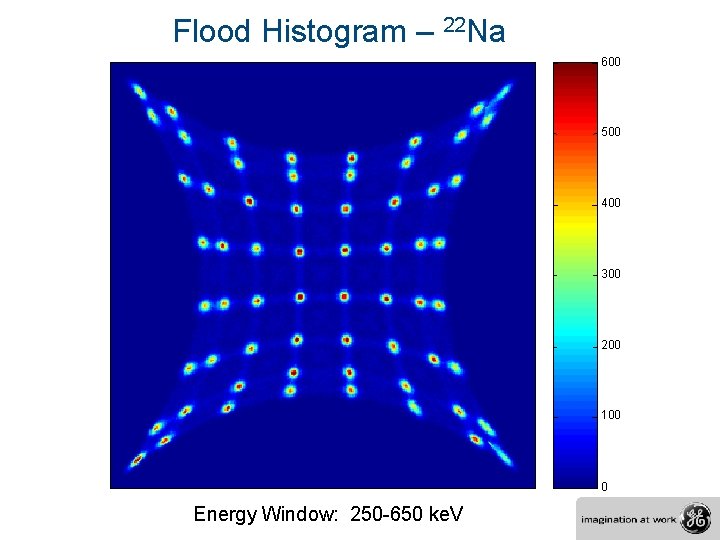
Flood Histogram – 22 Na 600 500 400 300 200 100 0 Energy Window: 250 -650 ke. V
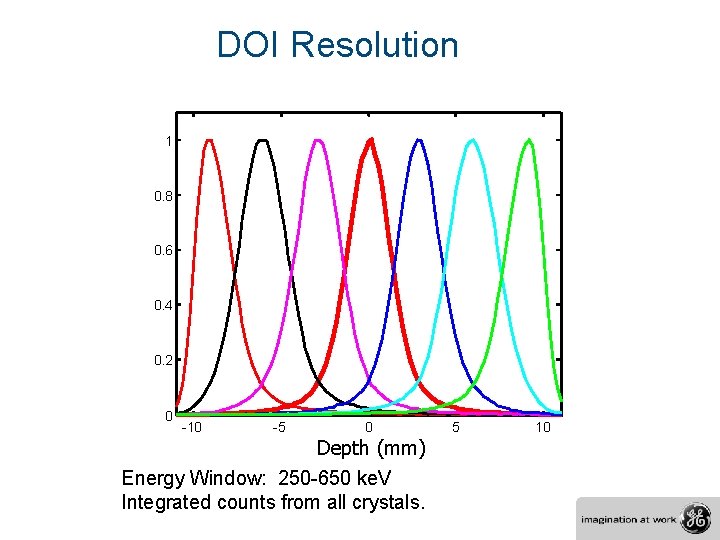
DOI Resolution Normalized Counts 1 0. 8 0. 6 0. 4 0. 2 0 -10 -5 0 Depth (mm) Energy Window: 250 -650 ke. V Integrated counts from all crystals. 5 10
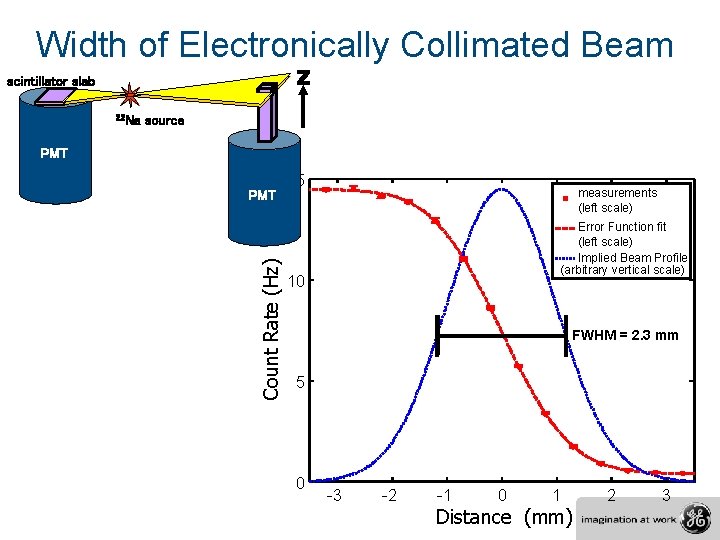
Width of Electronically Collimated Beam z scintillator slab 22 Na source PMT Count Rate (Hz) PMT 15 measurements (left scale) Error Function fit (left scale) Implied Beam Profile (arbitrary vertical scale) 10 FWHM = 2. 3 mm 5 0 -3 -2 -1 0 1 Distance (mm) 2 3
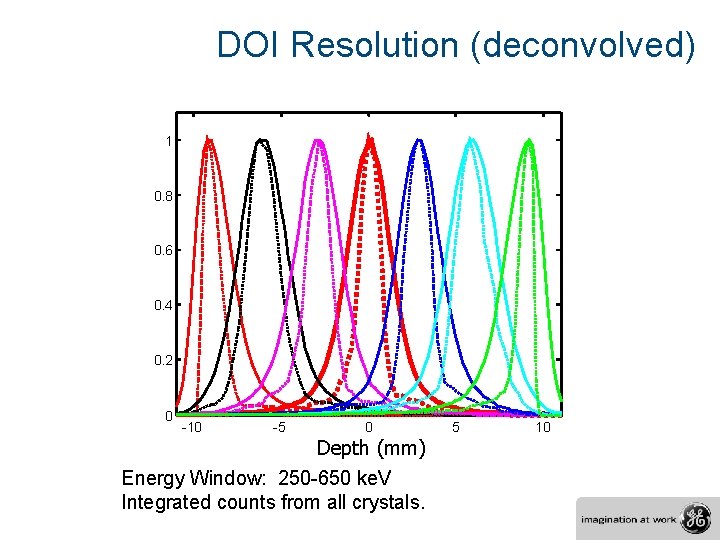
DOI Resolution (deconvolved) Normalized Counts 1 0. 8 0. 6 0. 4 0. 2 0 -10 -5 0 Depth (mm) Energy Window: 250 -650 ke. V Integrated counts from all crystals. 5 10
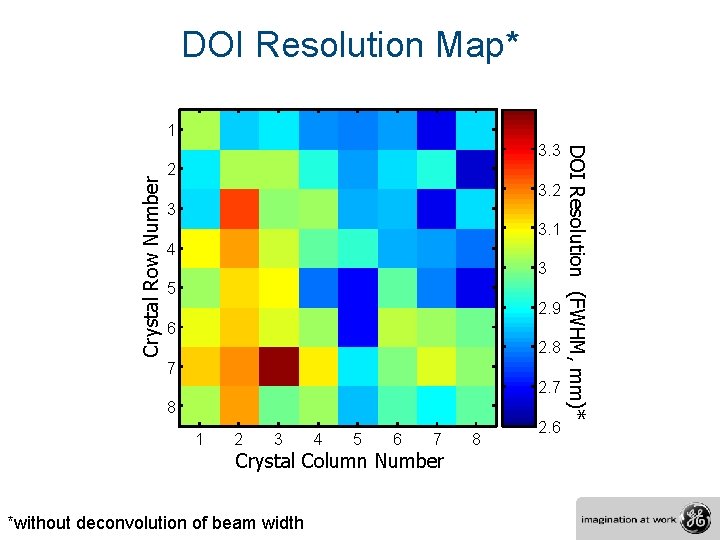
DOI Resolution Map* 1 Crystal Row Number 2 3 3. 1 4 3 5 2. 9 6 2. 8 7 2. 7 8 1 2 3 4 5 6 7 Crystal Column Number *without deconvolution of beam width 8 2. 6 DOI Resolution (FWHM, mm)* 3. 3
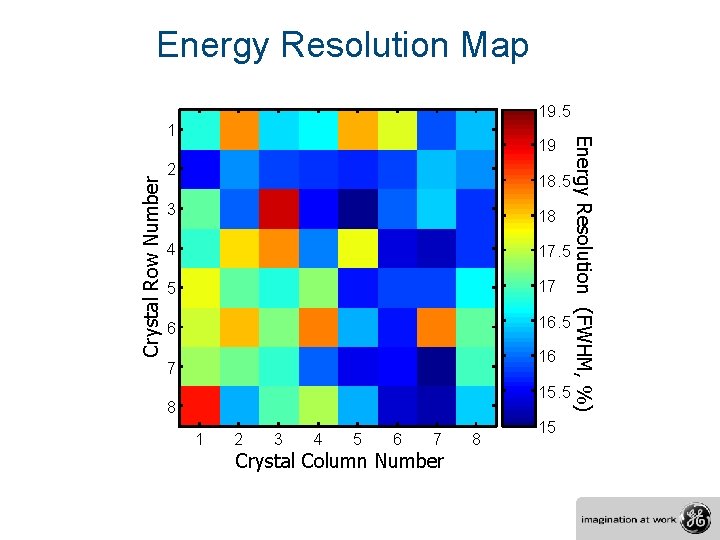
Energy Resolution Map 19. 5 Crystal Row Number 19 2 18. 5 3 18 4 17. 5 5 17 6 16. 5 16 7 15. 5 8 1 2 3 4 5 6 7 Crystal Column Number 8 15 Energy Resolution (FWHM, %) 1
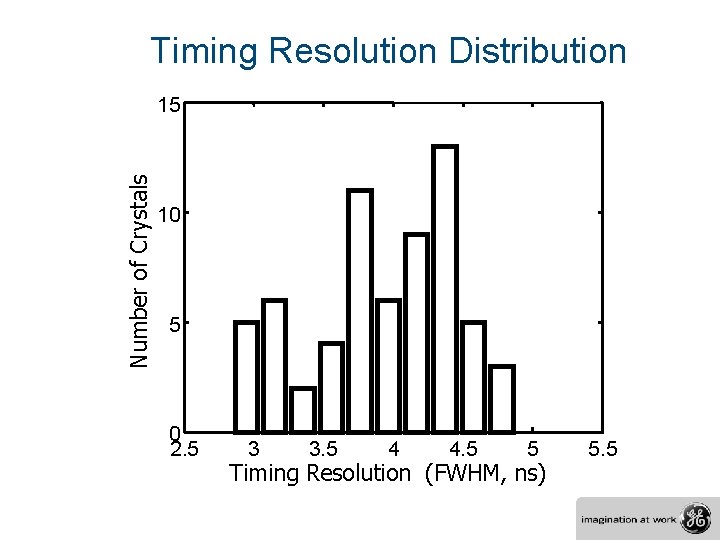
Timing Resolution Distribution Number of Crystals 15 10 5 0 2. 5 3 3. 5 4 4. 5 5 Timing Resolution (FWHM, ns) 5. 5
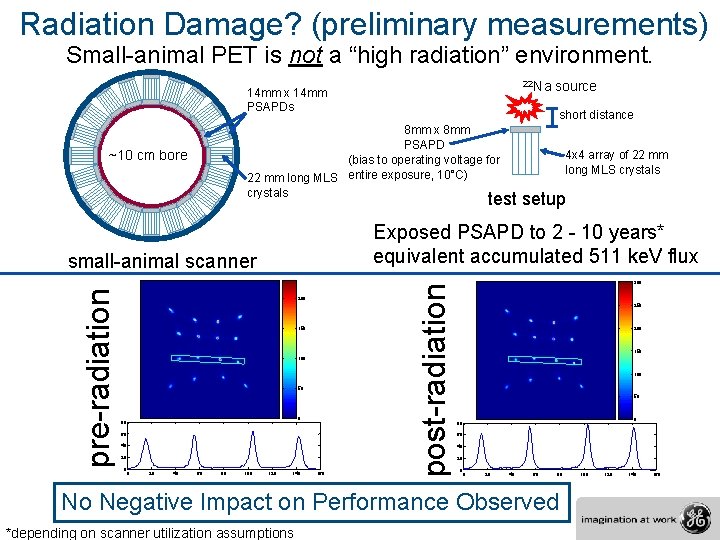
Radiation Damage? (preliminary measurements) Small-animal PET is not a “high radiation” environment. 22 Na 14 mm x 14 mm PSAPDs source short distance 8 mm x 8 mm PSAPD (bias to operating voltage for 22 mm long MLS entire exposure, 10°C) crystals ~10 cm bore 4 x 4 array of 22 mm long MLS crystals test setup pre-radiation small-animal scanner 200 150 100 50 0 80 60 40 20 0 0 20 40 60 80 100 120 140 160 post-radiation Exposed PSAPD to 2 - 10 years* equivalent accumulated 511 ke. V flux 300 250 200 150 100 50 0 80 60 40 20 0 0 20 40 60 80 No Negative Impact on Performance Observed *depending on scanner utilization assumptions 100 120 140 160
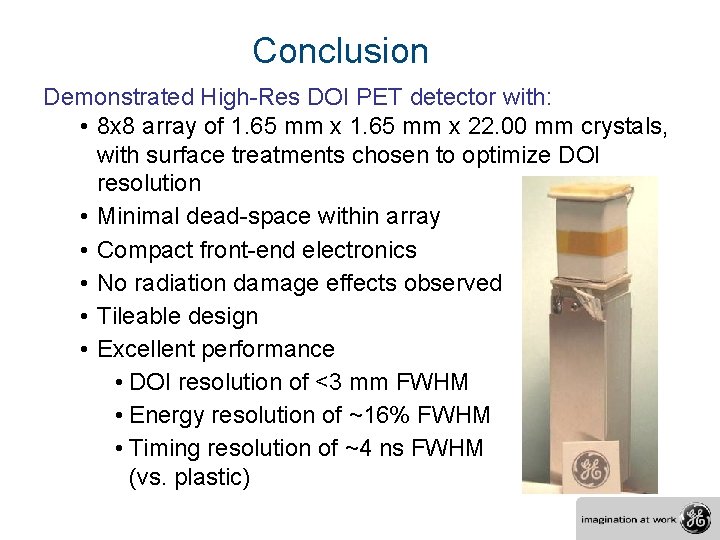
Conclusion Demonstrated High-Res DOI PET detector with: • 8 x 8 array of 1. 65 mm x 22. 00 mm crystals, with surface treatments chosen to optimize DOI resolution • Minimal dead-space within array • Compact front-end electronics • No radiation damage effects observed • Tileable design • Excellent performance • DOI resolution of <3 mm FWHM • Energy resolution of ~16% FWHM • Timing resolution of ~4 ns FWHM (vs. plastic)
References • DOI in PET L. R. Mac. Donald and M. Dahlbom, "Parallax Correction in PET Using Depth of Interaction Information, " IEEE Trans. Nucl. Sci. , vol. 45, no. 4, pp. 2232 – 2237, Aug. 1998. Y. Shao, R. M. Manjeshwar, F. P. Jansen, P. N. Kumar, A. F. Chatziioannou, “Simulation Studies for a High Resolution and High Sensitivity Small Animal PET with DOI Detection Capability, ” presented at IEEE Medical Imaging Conference, M 6 -11, Portland, OR, Oct. 2003. • dual-end readout W. W. Moses, S. E. Derenzo, "Design Studies for a PET Detector Module Using a PIN Photodiode to Measure Depth of Interaction, " IEEE Trans. Nucl. Sci. , vol. 41, pp. 1441 – 1445, Aug. 1994. Y. Shao, K. Meadors, R. W. Silverman, R. Farrell, L. Cirignano, R. Grazioso, K. S. Shah, S. R. Cherry, "Dual APD Array Readout of LSO Crystals: Optimization of Crystal Surface Treatment, " IEEE Trans. Nucl. Sci. , vol. 49, no. 3, pp. 649 – 654, June 2002. • PSAPDs K. S. Shah, R. Farrell, R. Grazioso, E. S. Harmon, E. Karplus, "Position-Sensitive Avalanche Photodiodes for Gamma. Ray Imaging, " IEEE Trans. Nucl. Sci. , vol. 49, no. 4, pp. 1687 – 1692, Aug. 2002. • MLS C. M. Pepin, P. Berard, R. Lecomte, "Comparison of LSO, LGSO and MLS Scintillators, " in Proc. IEEE Nuclear Science Symposium, vol. 1, San Diego, CA, Nov. 2001, pp. 124 – 128. • VM 2000 R. S. Miyaoka, S. G. Kohlmyer, T. K. Lewellen, "Performance Characteristics of Micro Crystal Element (Mi. CE) Detectors, " IEEE Trans. Nucl. Sci. , vol. 48, no. 4, pp. 1403 – 1407, Aug. 2001. Acknowledgment • K. Shah and R. Farrell (RMD). • T. Lewellen, R. Miyaoka, and M. Janes (U. Wash).