
DESIGN OF MACHINE MEMBERS DMM TEXT BOOKS UNIT
DESIGN OF MACHINE MEMBERS (DMM)
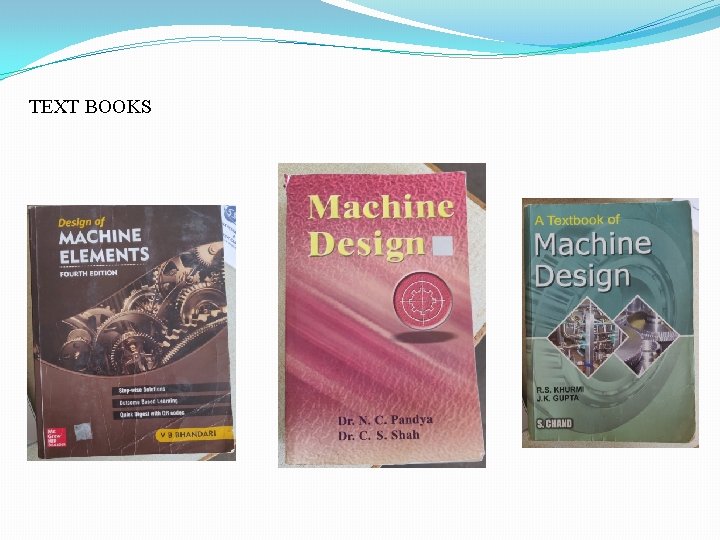
TEXT BOOKS
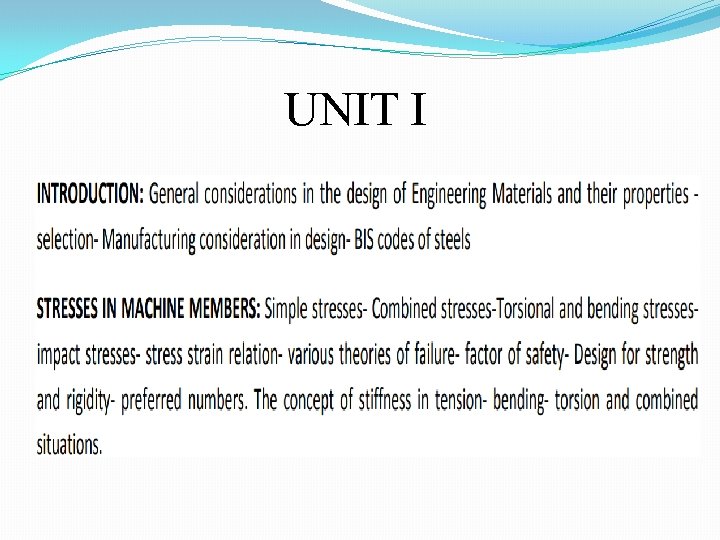
UNIT I
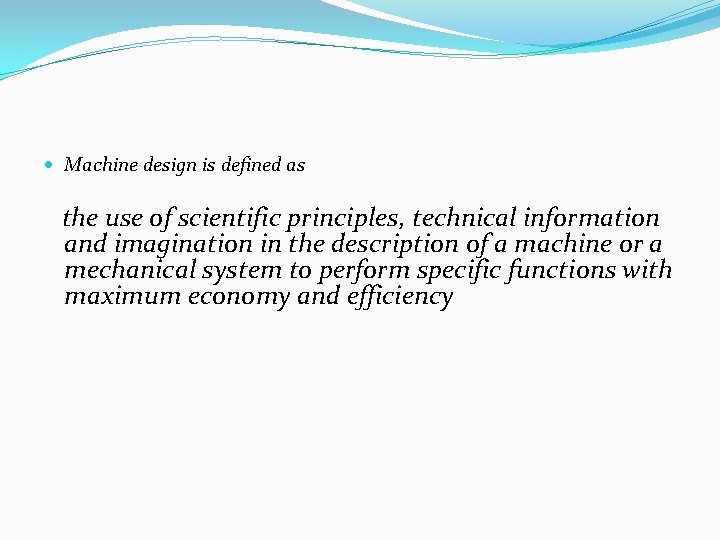
Machine design is defined as the use of scientific principles, technical information and imagination in the description of a machine or a mechanical system to perform specific functions with maximum economy and efficiency
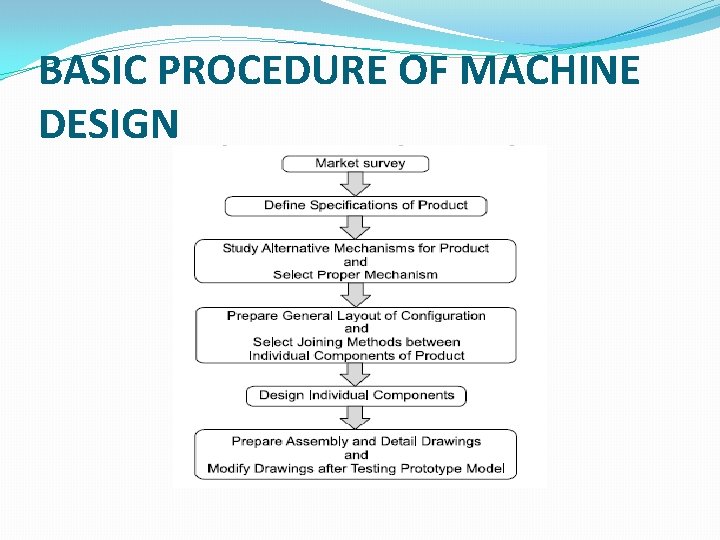
BASIC PROCEDURE OF MACHINE DESIGN
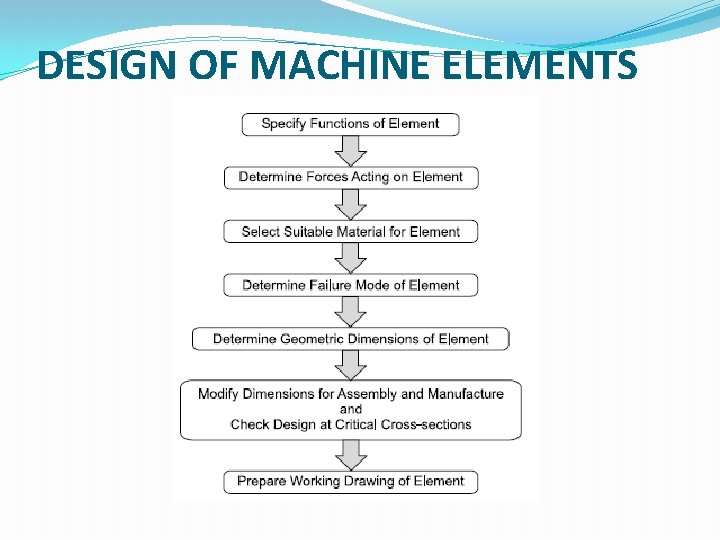
DESIGN OF MACHINE ELEMENTS
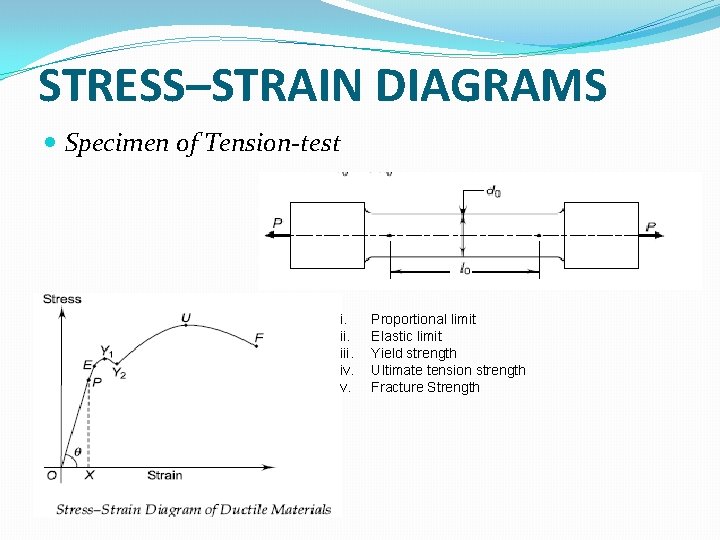
STRESS–STRAIN DIAGRAMS Specimen of Tension-test i. iii. iv. v. Proportional limit Elastic limit Yield strength Ultimate tension strength Fracture Strength
MECHANICAL PROPERTIES OF ENGINEERING MATERIALS strength elasticity plasticity stiffness resilience toughness malleability ductility brittleness hardness
§Strength is defined as the ability of the material to resist, without rupture, external forces causing various types of stresses. §Elasticity is defined as the ability of the material to regain its original shape and size after the deformation, when the external forces are removed. §Plasticity is defined as the ability of the material to retain the deformation produced under the load on a permanent basis. §Stiffness or rigidity is defined as the ability of the material to resist deformation under the action of an external load. §Resilience is defined as the ability of the material to absorb energy when deformed elastically and to release this energy when unloaded. §Toughness is defined as the ability of the material to absorb energy before fracture takes place. §Malleability is defined as the ability of a material to deform to a greater extent before the sign of crack, when it is subjected to compressive force.
BIS SYSTEM OF DESIGNATION OF STEELS A large number of varieties of steel are used for machine components. Steels are designated by a group of letters or numbers indicating any one of the following three properties. (i) tensile strength; (ii) carbon content; and (iii) composition of alloying elements.
Steels, which are standardised on the basis of their tensile strength without detailed chemical composition, are specified by two ways: — (i) A symbol Fe followed by the minimum tensile strength in N/mm 2. For example, Fe 360 indicates a steel with a minimum tensile strength of 360 N/mm 2. (ii) A symbol Fe. E followed by the yield strength in N/mm 2. Similarly, Fe. E 250 indicates a steel with a minimum yield strength of 250 N/mm 2.
- Slides: 13