
Design of a Pneumatic Powered Bicycle Abdulelah Almarqabi
Design of a Pneumatic Powered Bicycle *Abdulelah Almarqabi 201400105 Sohaib Imran 201303504 Salman Siddique 201303877 Mohammad Faraaz 201400318 Abdullah Bashir 201400533 Advisors Dr. Mohammad Asad / Dr. Nader Sawalhi
Content v Objectives v Background v Relevance v Constraints & Standards v Design v Testing & results v Conclusion & future recommendations 2
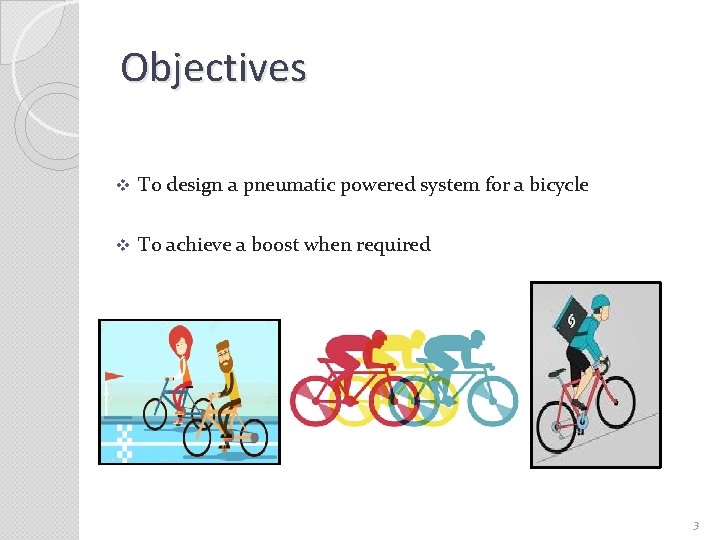
Objectives v To design a pneumatic powered system for a bicycle v To achieve a boost when required 3
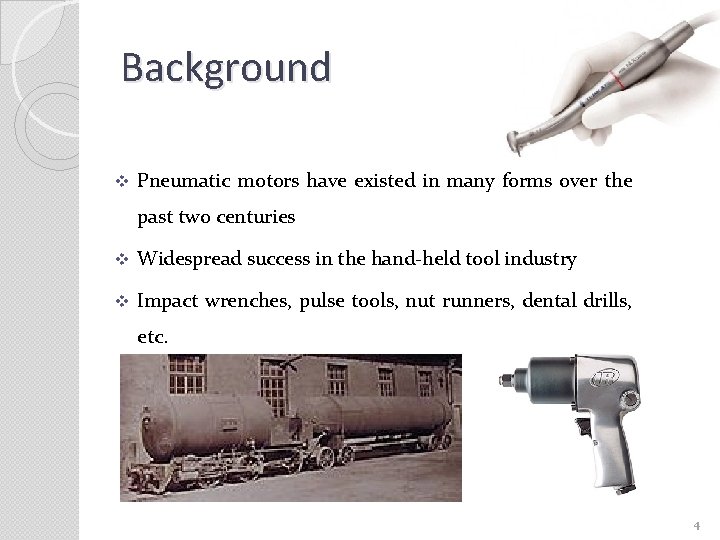
Background v Pneumatic motors have existed in many forms over the past two centuries v Widespread success in the hand-held tool industry v Impact wrenches, pulse tools, nut runners, dental drills, etc. 4
Motivation and relevance �Elon Musk �Every year 17. 6 million bikes are sold in India. �Reducing Global warming is one of the biggest issues worldwide 5
Design Constraints
Design Constraints (1) 1. Geometrical constrain v. Weight of an average human is 80 kg’s 2. Sustainability v. More economical v. But depends on the person, and also on the terrain 3. Environmental v. Extremely hot weather in the kingdom 7
Design Constraints (2) 4. Economic v. High cost /low demand v. Variation in bike prices 5. Manufacturability v. Confined space 6. Safety v. Good quality helmets v. Alert lighting system 8

Engineering Standards
Engineering Standards v ISO 4210: 2014 standard for bicycles v St. VZO standard (Bike safety) v ISO 3857 -2: 1977 v ASME BPVC Section VIII-Division 1 10
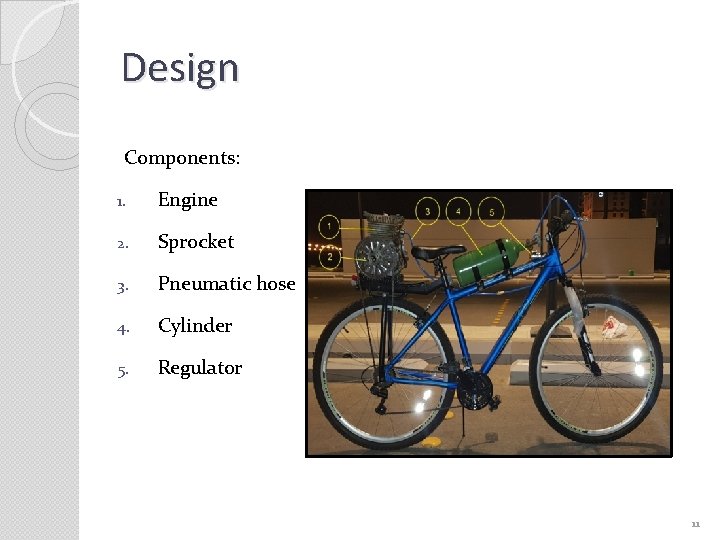
Design Components: 1. Engine 2. Sprocket 3. Pneumatic hose 4. Cylinder 5. Regulator 11
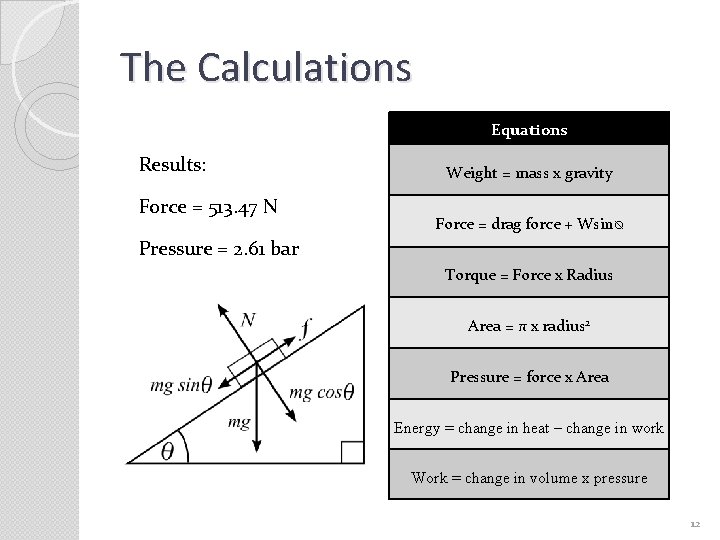
The Calculations Equations Results: Force = 513. 47 N Weight = mass x gravity Force = drag force + Wsinᴓ Pressure = 2. 61 bar Torque = Force x Radius Area = π x radius 2 Pressure = force x Area Energy = change in heat – change in work Work = change in volume x pressure 12
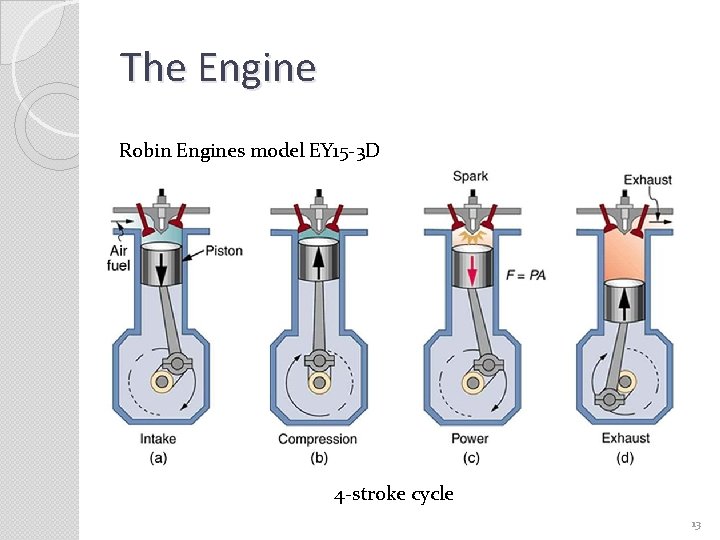
The Engine Robin Engines model EY 15 -3 D 4 -stroke cycle 13
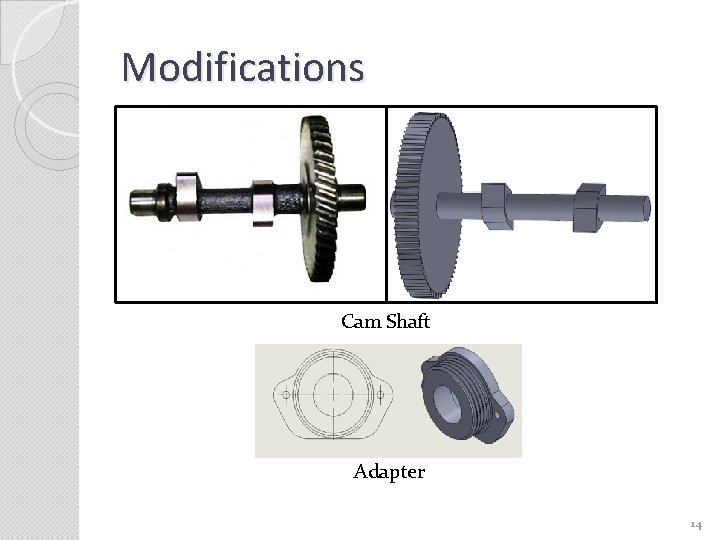
Modifications Cam Shaft Adapter 14
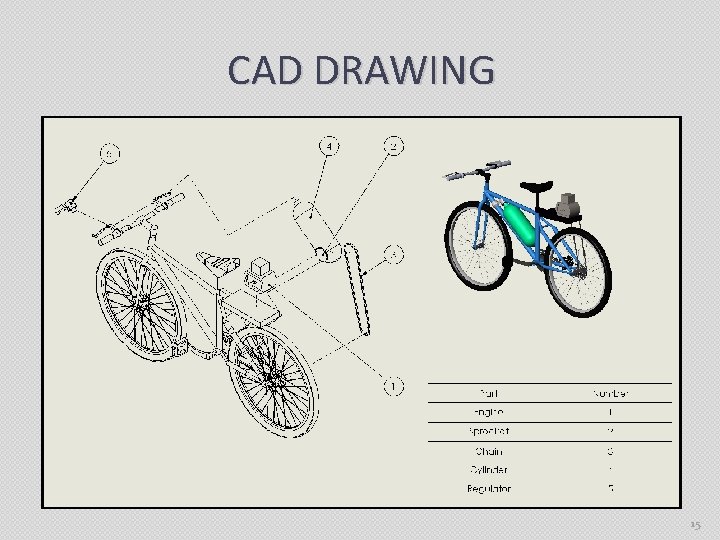
CAD DRAWING 15
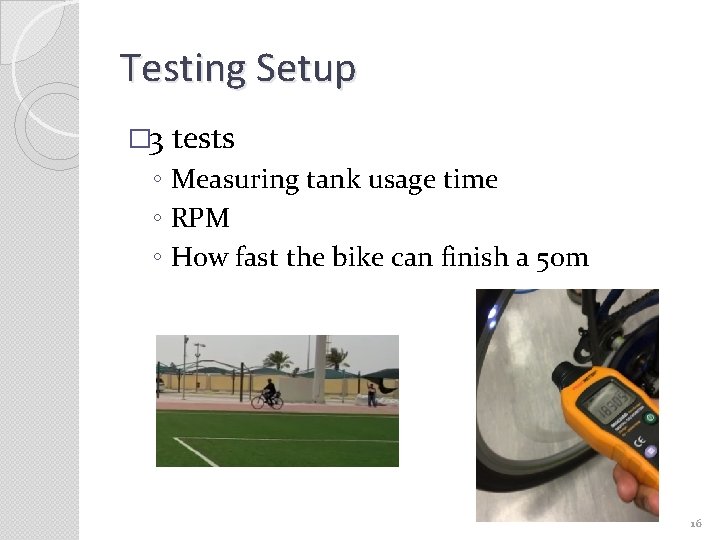
Testing Setup � 3 tests ◦ Measuring tank usage time ◦ RPM ◦ How fast the bike can finish a 50 m 16
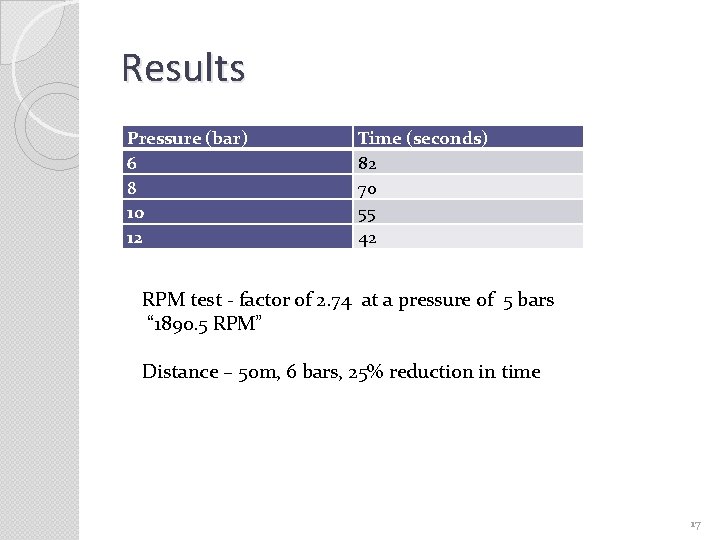
Results Pressure (bar) 6 8 10 12 Time (seconds) 82 70 55 42 RPM test - factor of 2. 74 at a pressure of 5 bars “ 1890. 5 RPM” Distance – 50 m, 6 bars, 25% reduction in time 17
Recommendations & Conclusion �Design of a pneumatic cylinder-piston engine �Material used �Dimensions used 18
Acknowledgement We appreciate the support and guidance of the Mechanical Engineering department. Special thanks to Dr. Mohammad Asad and Dr. Nader Sawalhi for their continued support to us throughout our work. 19
- Slides: 19