
Design of a Flight Planning System to Reduce

- Slides: 48
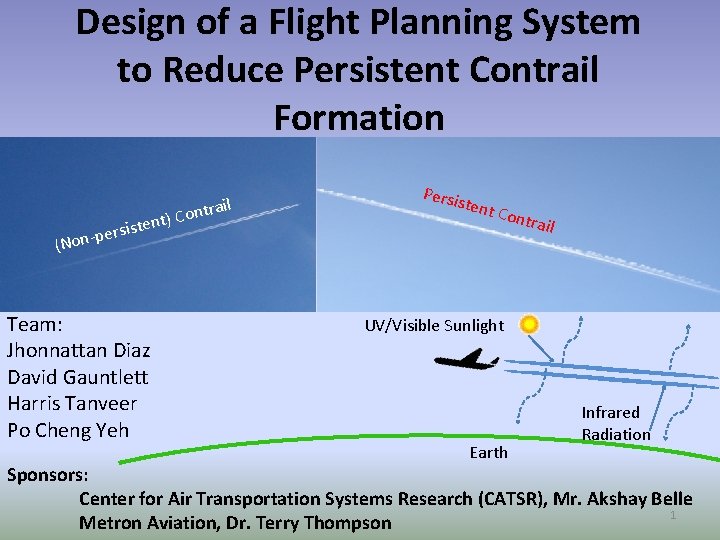
Design of a Flight Planning System to Reduce Persistent Contrail Formation (Non- rail t n o C tent) s i s r e p Team: Jhonnattan Diaz David Gauntlett Harris Tanveer Po Cheng Yeh Persi stent Cont rail UV/Visible Sunlight Earth Infrared Radiation Sponsors: Center for Air Transportation Systems Research (CATSR), Mr. Akshay Belle 1 Metron Aviation, Dr. Terry Thompson
Agenda • Context • Stakeholder Analysis • Problem, Need Statement, Mission Requirements • Design Alternatives • Design of Experiment • Project Management • Questions 2
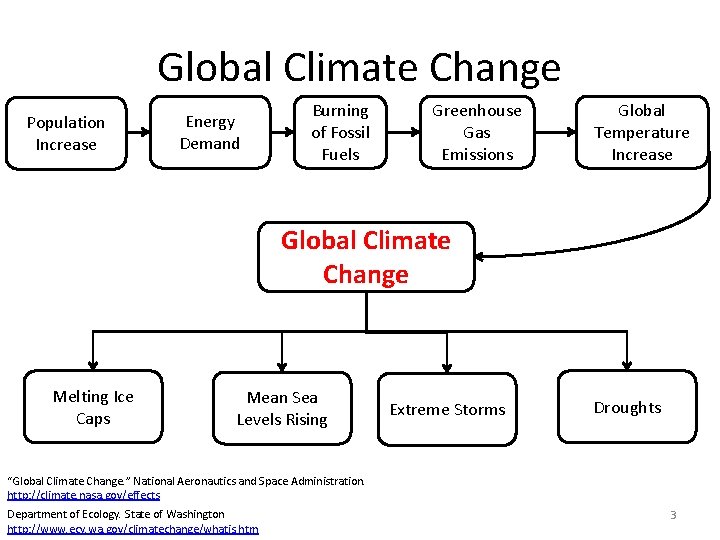
Global Climate Change Population Increase Energy Demand Burning of Fossil Fuels Greenhouse Gas Emissions Global Temperature Increase Global Climate Change Melting Ice Caps Mean Sea Levels Rising Extreme Storms Droughts “Global Climate Change. ” National Aeronautics and Space Administration. http: //climate. nasa. gov/effects Department of Ecology. State of Washington http: //www. ecy. wa. gov/climatechange/whatis. htm 3
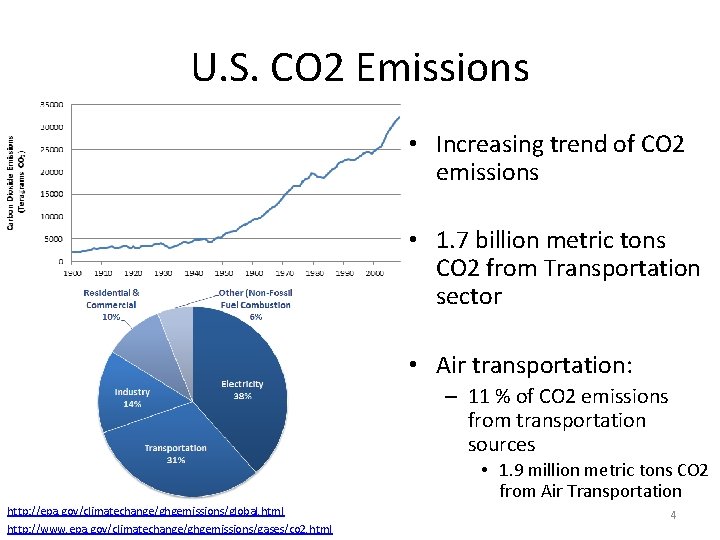
U. S. CO 2 Emissions • Increasing trend of CO 2 emissions • 1. 7 billion metric tons CO 2 from Transportation sector • Air transportation: – 11 % of CO 2 emissions from transportation sources • 1. 9 million metric tons CO 2 from Air Transportation http: //epa. gov/climatechange/ghgemissions/global. html http: //www. epa. gov/climatechange/ghgemissions/gases/co 2. html 4
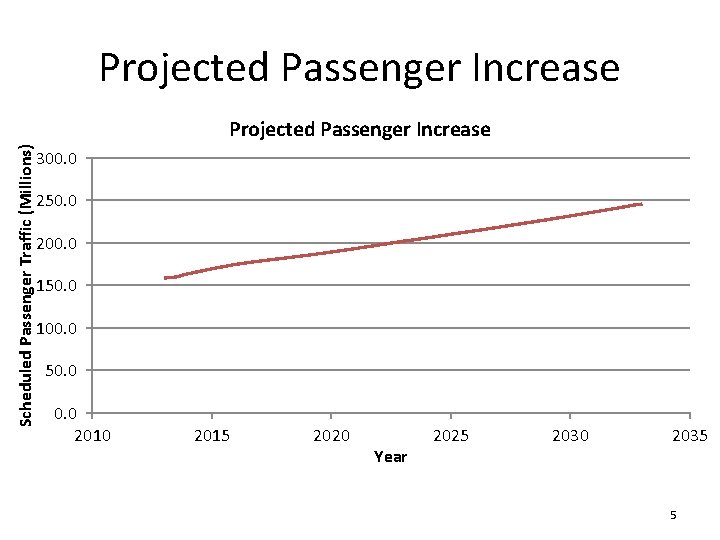
Projected Passenger Increase Scheduled Passenger Traffic (Millions) Projected Passenger Increase 300. 0 250. 0 200. 0 150. 0 100. 0 50. 0 2010 2015 2020 Year 2025 2030 2035 5
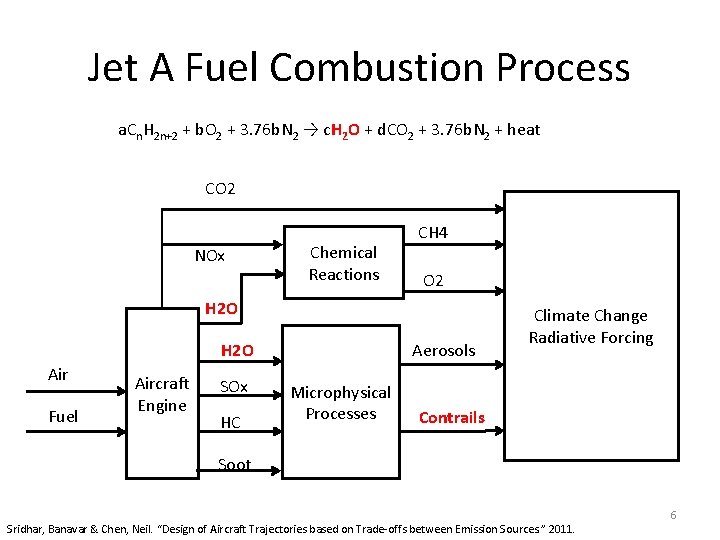
Jet A Fuel Combustion Process a. Cn. H 2 n+2 + b. O 2 + 3. 76 b. N 2 → c. H 2 O + d. CO 2 + 3. 76 b. N 2 + heat CO 2 NOx Chemical Reactions CH 4 O 2 H 2 O Air Fuel Aircraft Engine SOx HC Aerosols Microphysical Processes Climate Change Radiative Forcing Contrails Soot Sridhar, Banavar & Chen, Neil. “Design of Aircraft Trajectories based on Trade-offs between Emission Sources. ” 2011. 6
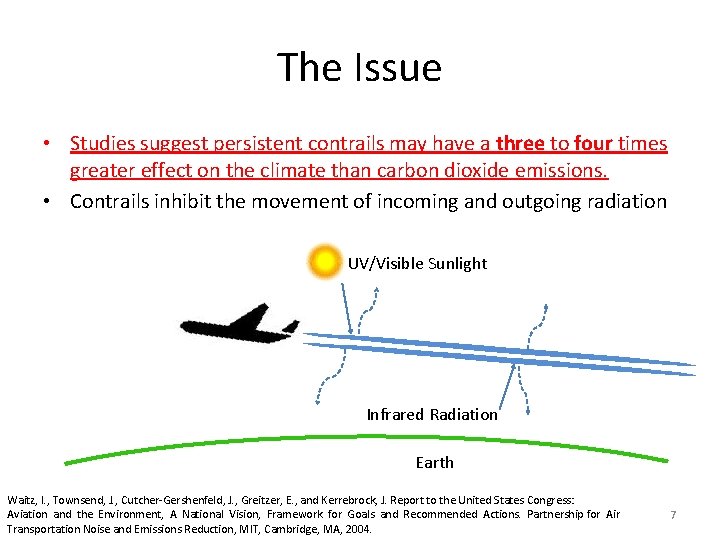
The Issue • Studies suggest persistent contrails may have a three to four times greater effect on the climate than carbon dioxide emissions. • Contrails inhibit the movement of incoming and outgoing radiation UV/Visible Sunlight Infrared Radiation Earth Waitz, I. , Townsend, J. , Cutcher-Gershenfeld, J. , Greitzer, E. , and Kerrebrock, J. Report to the United States Congress: Aviation and the Environment, A National Vision, Framework for Goals and Recommended Actions. Partnership for Air Transportation Noise and Emissions Reduction, MIT, Cambridge, MA, 2004. 7
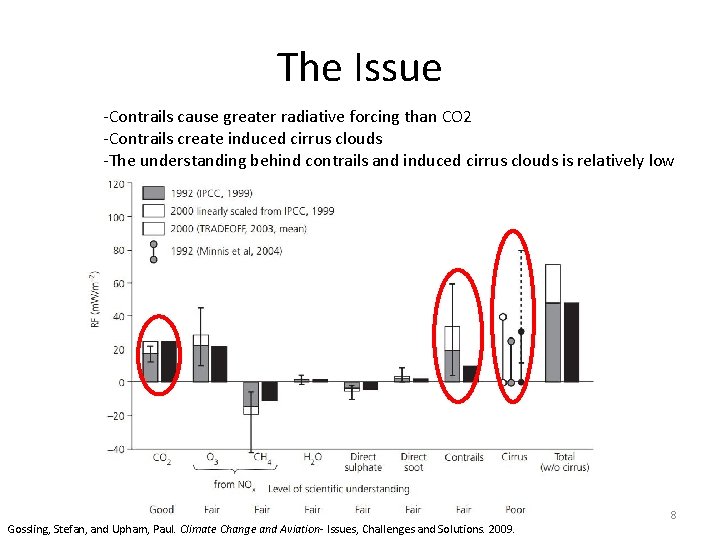
The Issue -Contrails cause greater radiative forcing than CO 2 -Contrails create induced cirrus clouds -The understanding behind contrails and induced cirrus clouds is relatively low Gossling, Stefan, and Upham, Paul. Climate Change and Aviation- Issues, Challenges and Solutions. 2009. 8
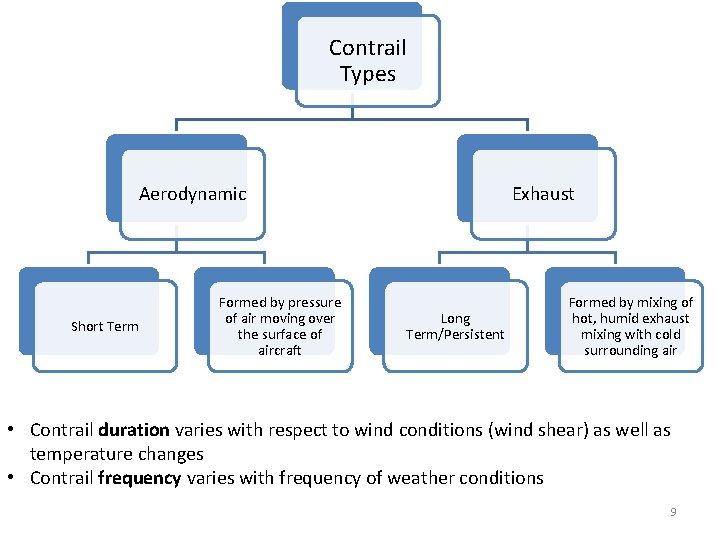
Contrail Types Aerodynamic Short Term Formed by pressure of air moving over the surface of aircraft Exhaust Long Term/Persistent Formed by mixing of hot, humid exhaust mixing with cold surrounding air • Contrail duration varies with respect to wind conditions (wind shear) as well as temperature changes • Contrail frequency varies with frequency of weather conditions 9
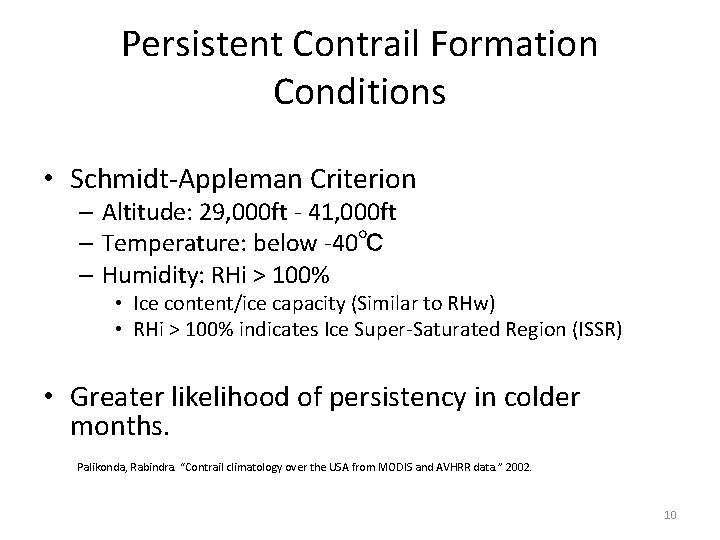
Persistent Contrail Formation Conditions • Schmidt-Appleman Criterion – Altitude: 29, 000 ft - 41, 000 ft – Temperature: below -40℃ – Humidity: RHi > 100% • Ice content/ice capacity (Similar to RHw) • RHi > 100% indicates Ice Super-Saturated Region (ISSR) • Greater likelihood of persistency in colder months. Palikonda, Rabindra. “Contrail climatology over the USA from MODIS and AVHRR data. ” 2002. 10
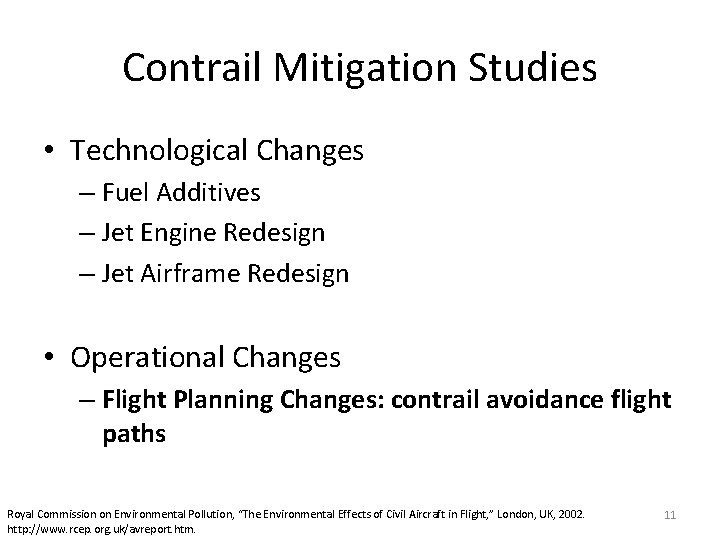
Contrail Mitigation Studies • Technological Changes – Fuel Additives – Jet Engine Redesign – Jet Airframe Redesign • Operational Changes – Flight Planning Changes: contrail avoidance flight paths Royal Commission on Environmental Pollution, “The Environmental Effects of Civil Aircraft in Flight, ” London, UK, 2002. http: //www. rcep. org. uk/avreport. htm. 11
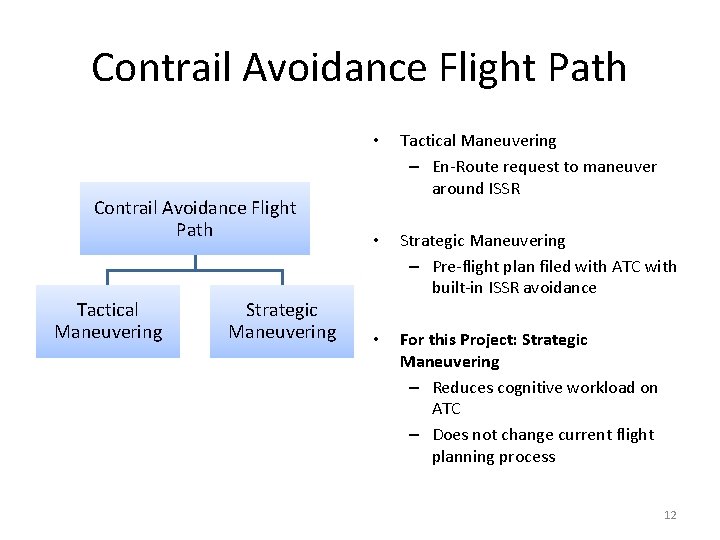
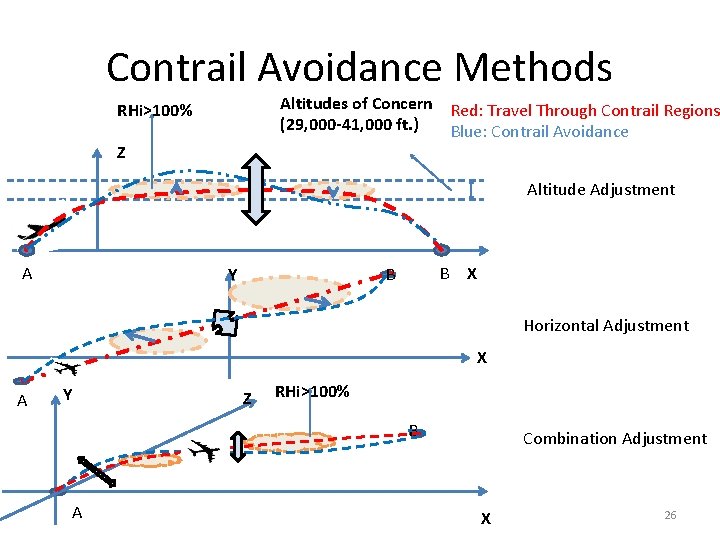
Contrail Avoidance Flight Path Tactical Maneuvering Strategic Maneuvering • Tactical Maneuvering – En-Route request to maneuver around ISSR • Strategic Maneuvering – Pre-flight plan filed with ATC with built-in ISSR avoidance • For this Project: Strategic Maneuvering – Reduces cognitive workload on ATC – Does not change current flight planning process 12
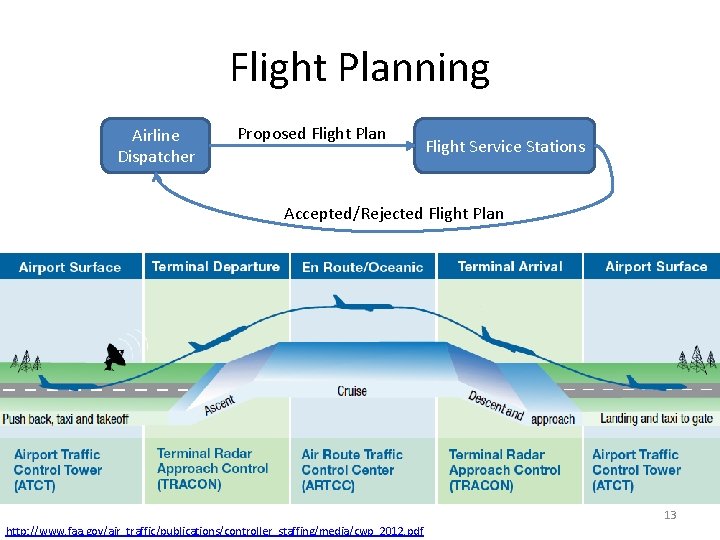
Flight Planning Airline Dispatcher Proposed Flight Plan Flight Service Stations Accepted/Rejected Flight Plan 13 http: //www. faa. gov/air_traffic/publications/controller_staffing/media/cwp_2012. pdf
Agenda • Context • Stakeholder Analysis • Problem, Need Statement, Mission Requirements • Design Alternatives • Design of Experiment • Project Management • Questions 14
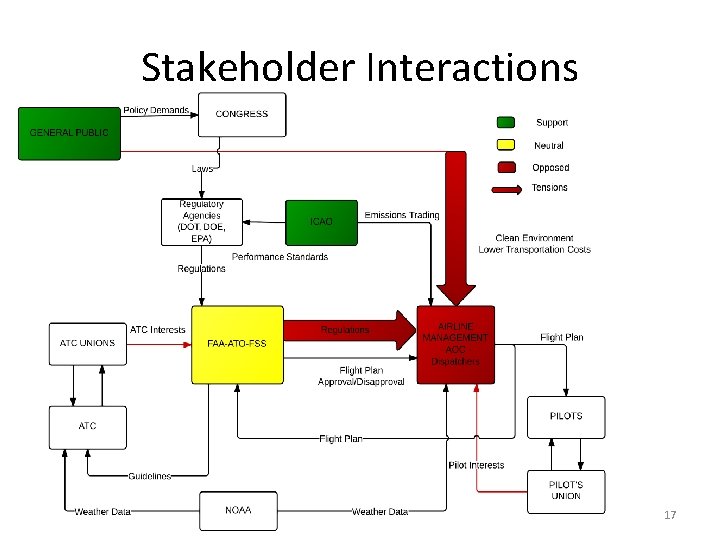
Stakeholder Analysis Who is affected if contrail avoidance flight planning is attempted? What are their interests and goals? 15
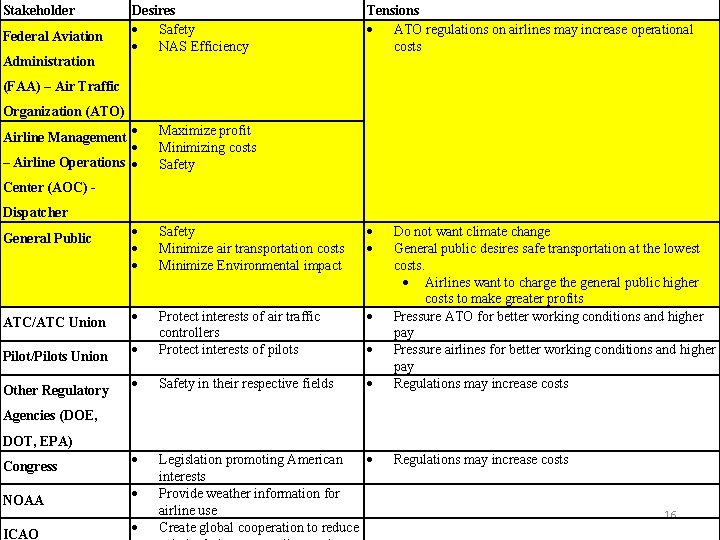
Stakeholder Federal Aviation Administration Desires Safety NAS Efficiency Tensions ATO regulations on airlines may increase operational costs (FAA) – Air Traffic Organization (ATO) Airline Management – Airline Operations Maximize profit Minimizing costs Safety Center (AOC) Dispatcher Safety Minimize air transportation costs Minimize Environmental impact ATC/ATC Union Pilot/Pilots Union Protect interests of air traffic controllers Protect interests of pilots Other Regulatory Safety in their respective fields Congress NOAA ICAO Legislation promoting American interests Provide weather information for airline use Create global cooperation to reduce General Public Do not want climate change General public desires safe transportation at the lowest costs. Airlines want to charge the general public higher costs to make greater profits Pressure ATO for better working conditions and higher pay Pressure airlines for better working conditions and higher pay Regulations may increase costs Agencies (DOE, DOT, EPA) Regulations may increase costs 16
Stakeholder Interactions 17
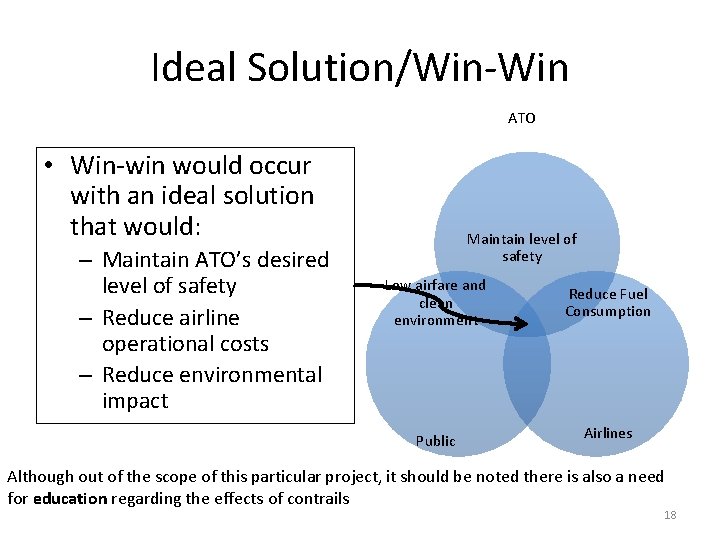
Ideal Solution/Win-Win ATO • Win-win would occur with an ideal solution that would: – Maintain ATO’s desired level of safety – Reduce airline operational costs – Reduce environmental impact Maintain level of safety Low airfare and clean environment Public Reduce Fuel Consumption Airlines Although out of the scope of this particular project, it should be noted there is also a need for education regarding the effects of contrails 18
Agenda • Context • Stakeholder Analysis • Problem, Need Statement, Mission Requirements • Design Alternatives • Design of Experiment • Project Management • Questions 19
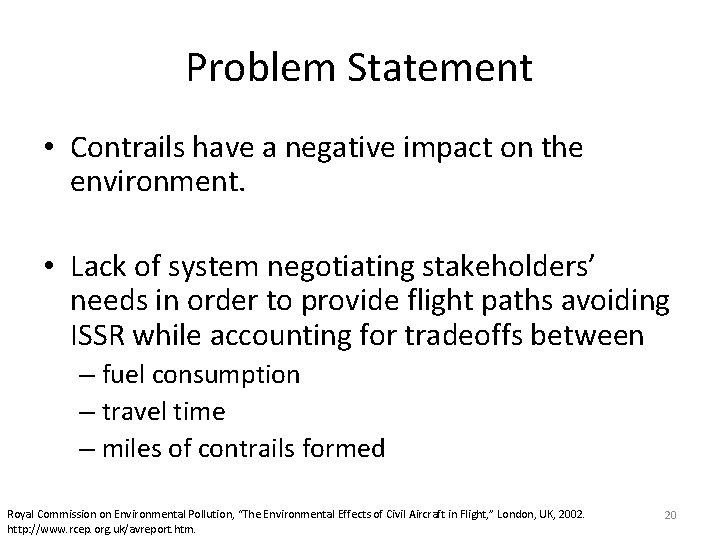
Problem Statement • Contrails have a negative impact on the environment. • Lack of system negotiating stakeholders’ needs in order to provide flight paths avoiding ISSR while accounting for tradeoffs between – fuel consumption – travel time – miles of contrails formed Royal Commission on Environmental Pollution, “The Environmental Effects of Civil Aircraft in Flight, ” London, UK, 2002. http: //www. rcep. org. uk/avreport. htm. 20
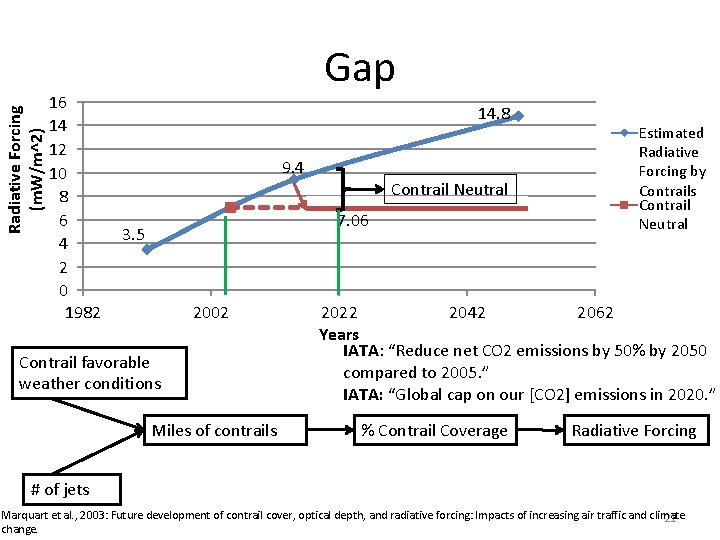
Radiative Forcing (m. W/m^2) 16 14 12 10 8 6 4 2 0 1982 Gap 14. 8 9. 4 Contrail Neutral 7. 06 3. 5 2002 Contrail favorable weather conditions Miles of contrails Estimated Radiative Forcing by Contrails Contrail Neutral 2022 2042 2062 Years IATA: “Reduce net CO 2 emissions by 50% by 2050 compared to 2005. ” IATA: “Global cap on our [CO 2] emissions in 2020. ” % Contrail Coverage Radiative Forcing # of jets Marquart et al. , 2003: Future development of contrail cover, optical depth, and radiative forcing: Impacts of increasing air traffic and climate 21 change.
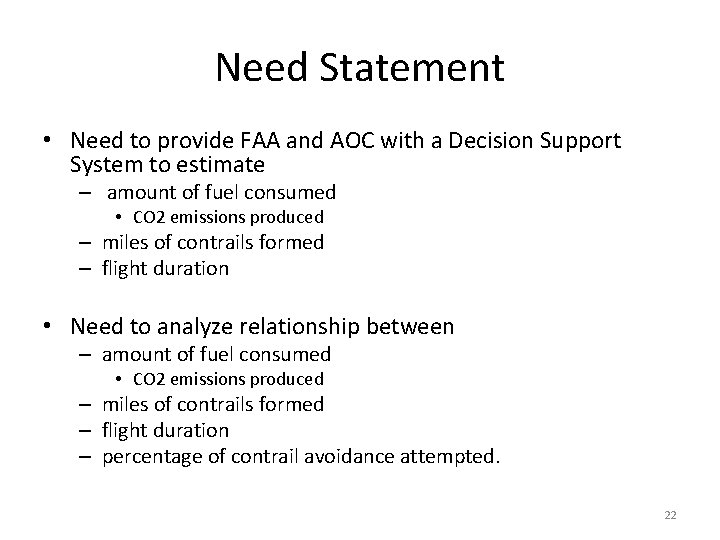
Need Statement • Need to provide FAA and AOC with a Decision Support System to estimate – amount of fuel consumed • CO 2 emissions produced – miles of contrails formed – flight duration • Need to analyze relationship between – amount of fuel consumed • CO 2 emissions produced – miles of contrails formed – flight duration – percentage of contrail avoidance attempted. 22
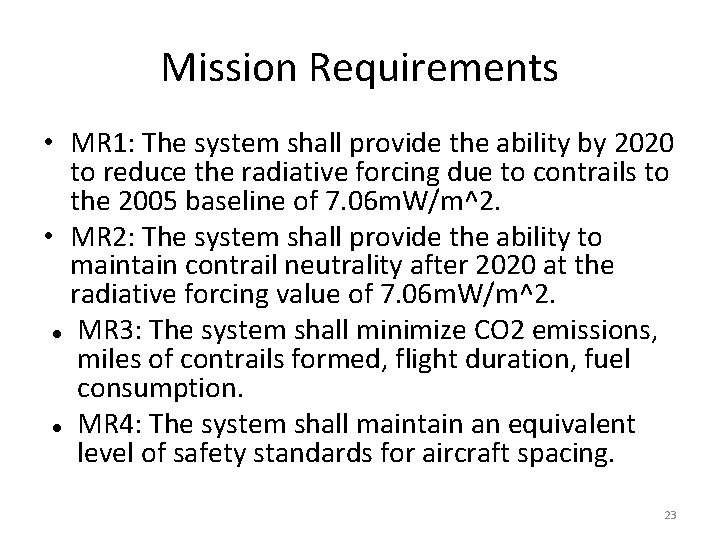
Mission Requirements • MR 1: The system shall provide the ability by 2020 to reduce the radiative forcing due to contrails to the 2005 baseline of 7. 06 m. W/m^2. • MR 2: The system shall provide the ability to maintain contrail neutrality after 2020 at the radiative forcing value of 7. 06 m. W/m^2. MR 3: The system shall minimize CO 2 emissions, miles of contrails formed, flight duration, fuel consumption. MR 4: The system shall maintain an equivalent level of safety standards for aircraft spacing. 23
Agenda • Context • Stakeholder Analysis • Problem, Need Statement, Mission Requirements • Design Alternatives • Design of Experiment • Project Management • Questions 24
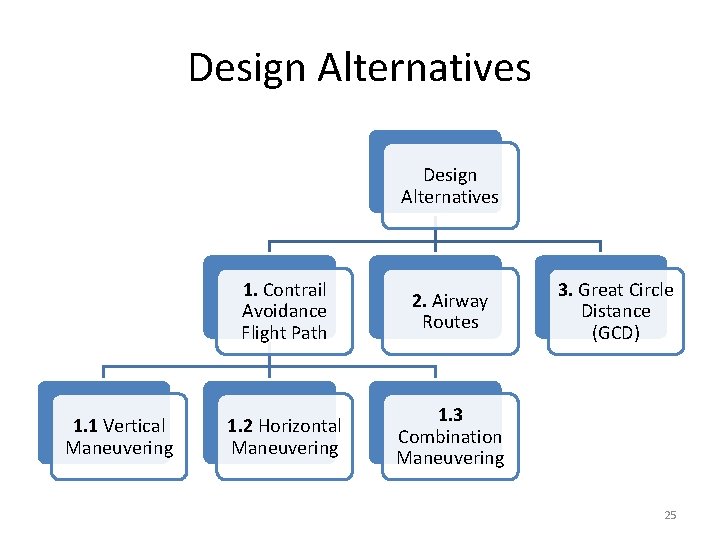
Design Alternatives 1. 1 Vertical Maneuvering 1. Contrail Avoidance Flight Path 2. Airway Routes 1. 2 Horizontal Maneuvering 1. 3 Combination Maneuvering 3. Great Circle Distance (GCD) 25
Contrail Avoidance Methods Altitudes of Concern Red: Travel Through Contrail Regions (29, 000 -41, 000 ft. ) Blue: Contrail Avoidance RHi>100% Z Altitude Adjustment A Y B X B Horizontal Adjustment X A Y Z RHi>100% B A Combination Adjustment X 26
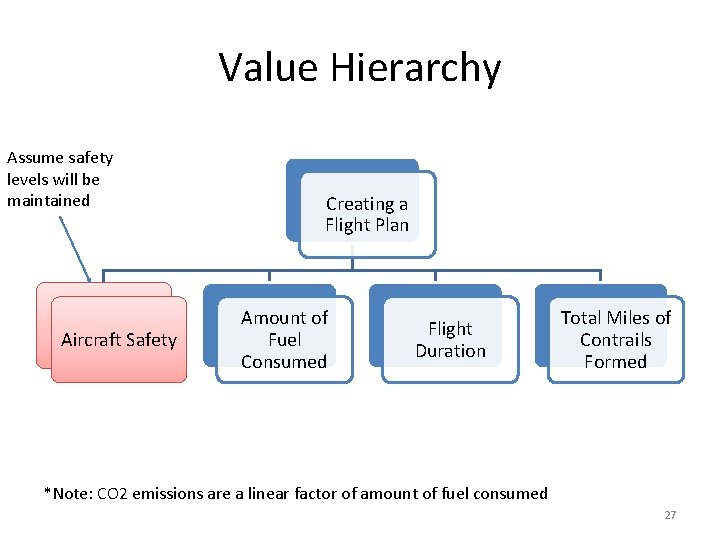
Value Hierarchy Assume safety levels will be maintained Aircraft Safety Creating a Flight Plan Amount of Fuel Consumed Flight Duration Total Miles of Contrails Formed *Note: CO 2 emissions are a linear factor of amount of fuel consumed 27
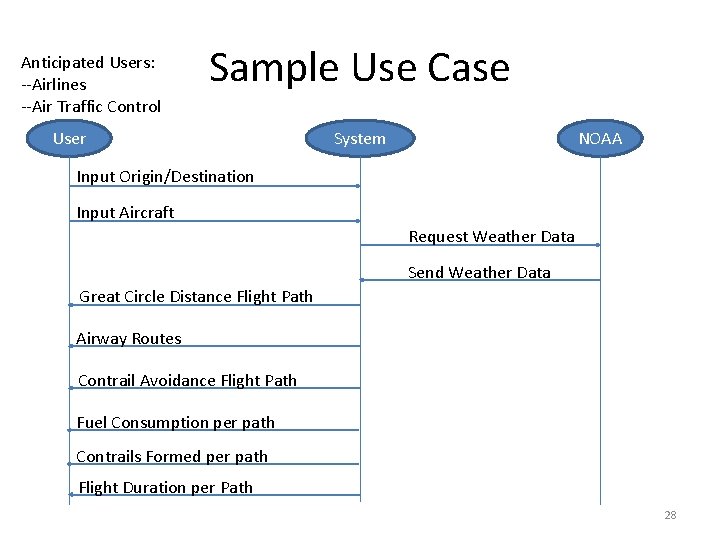
Anticipated Users: --Airlines --Air Traffic Control Sample Use Case User NOAA System Input Origin/Destination Input Aircraft Request Weather Data Send Weather Data Great Circle Distance Flight Path Airway Routes Contrail Avoidance Flight Path Fuel Consumption per path Contrails Formed per path Flight Duration per Path 28
Agenda • Context • Stakeholder Analysis • Problem, Need Statement, Mission Requirements • Design Alternatives • Design of Experiment • Project Management • Questions 29
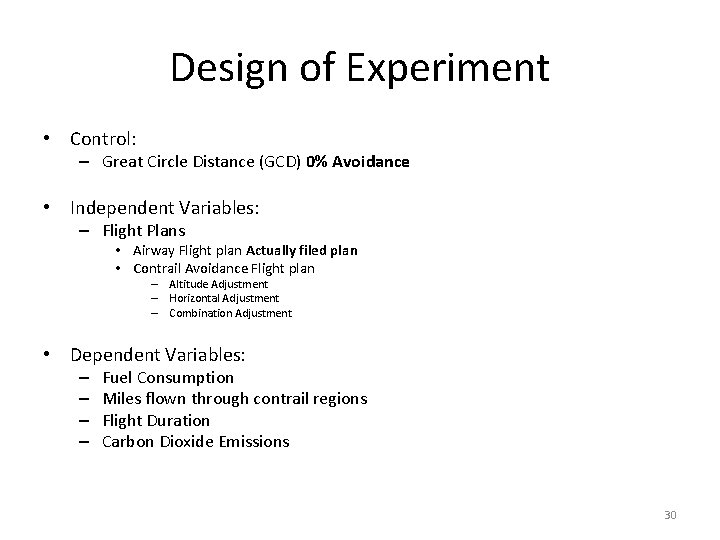
Design of Experiment • Control: – Great Circle Distance (GCD) 0% Avoidance • Independent Variables: – Flight Plans • Airway Flight plan Actually filed plan • Contrail Avoidance Flight plan – Altitude Adjustment – Horizontal Adjustment – Combination Adjustment • Dependent Variables: – – Fuel Consumption Miles flown through contrail regions Flight Duration Carbon Dioxide Emissions 30
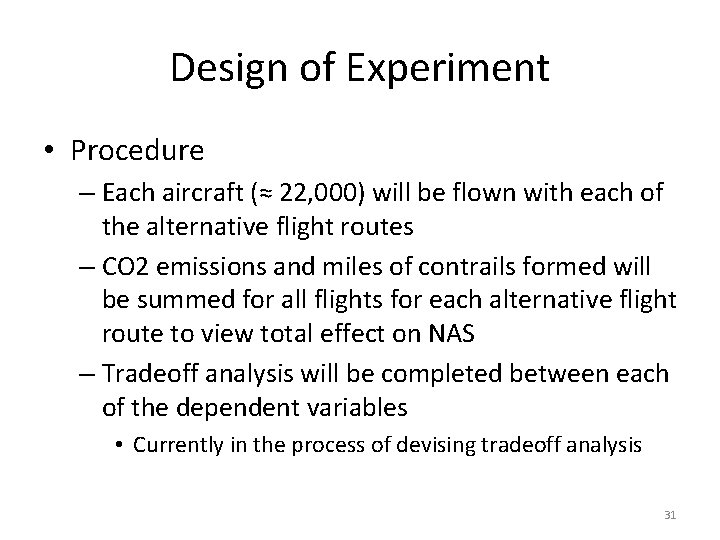
Design of Experiment • Procedure – Each aircraft (≈ 22, 000) will be flown with each of the alternative flight routes – CO 2 emissions and miles of contrails formed will be summed for all flights for each alternative flight route to view total effect on NAS – Tradeoff analysis will be completed between each of the dependent variables • Currently in the process of devising tradeoff analysis 31
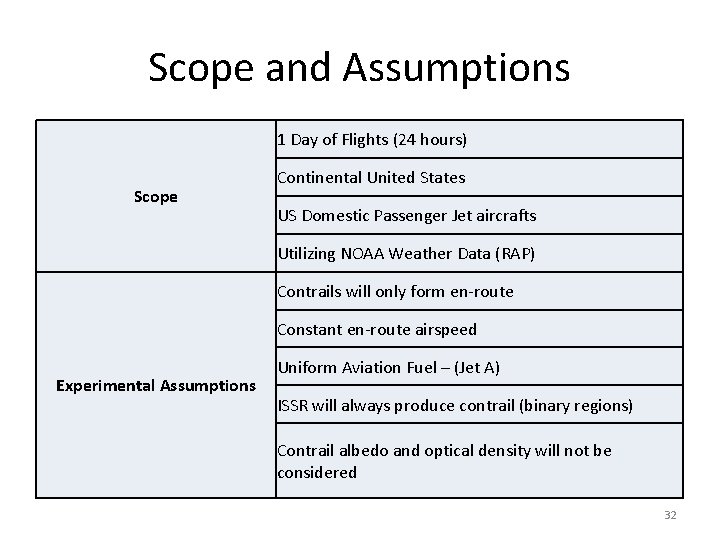
Scope and Assumptions 1 Day of Flights (24 hours) Scope Continental United States US Domestic Passenger Jet aircrafts Utilizing NOAA Weather Data (RAP) Contrails will only form en-route Constant en-route airspeed Experimental Assumptions Uniform Aviation Fuel – (Jet A) ISSR will always produce contrail (binary regions) Contrail albedo and optical density will not be considered 32
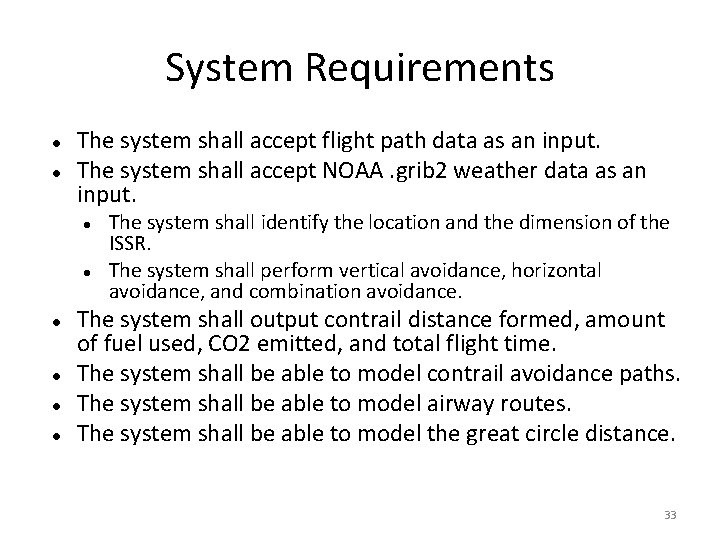
System Requirements The system shall accept flight path data as an input. The system shall accept NOAA. grib 2 weather data as an input. The system shall identify the location and the dimension of the ISSR. The system shall perform vertical avoidance, horizontal avoidance, and combination avoidance. The system shall output contrail distance formed, amount of fuel used, CO 2 emitted, and total flight time. The system shall be able to model contrail avoidance paths. The system shall be able to model airway routes. The system shall be able to model the great circle distance. 33
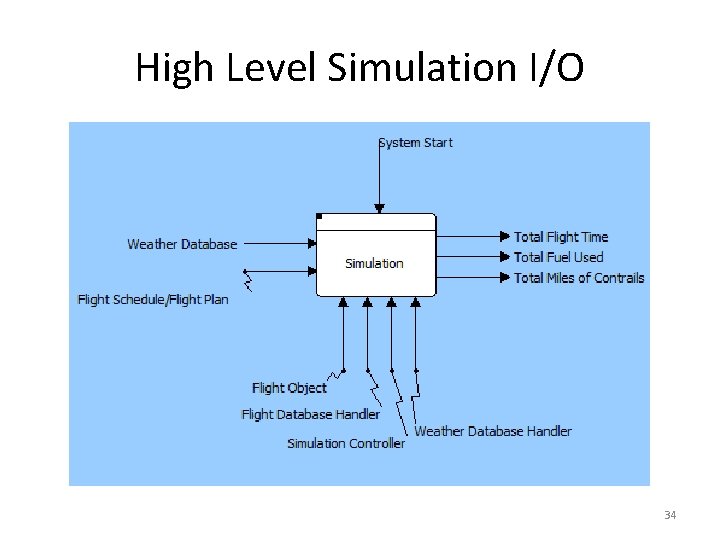
High Level Simulation I/O 34
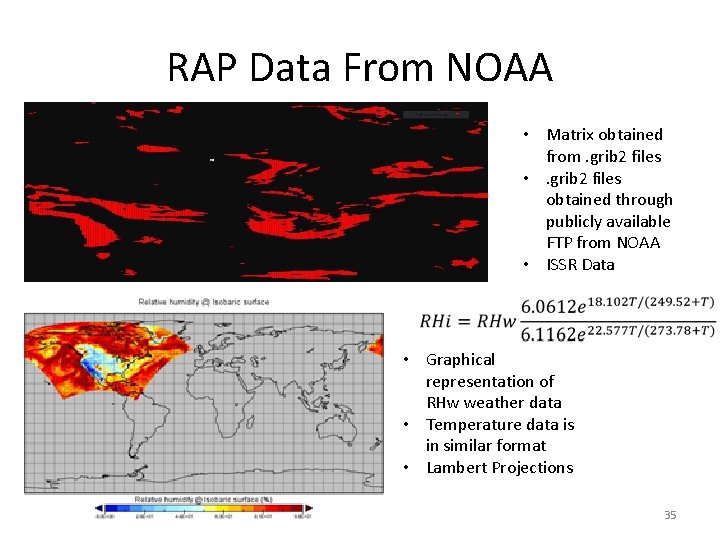
RAP Data From NOAA • Matrix obtained from. grib 2 files • . grib 2 files obtained through publicly available FTP from NOAA • ISSR Data • Graphical representation of RHw weather data • Temperature data is in similar format • Lambert Projections 35
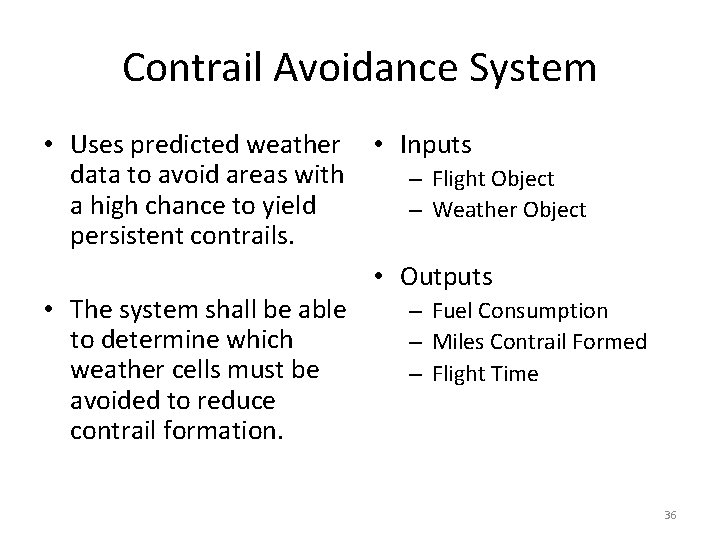
Contrail Avoidance System • Uses predicted weather • Inputs data to avoid areas with – Flight Object a high chance to yield – Weather Object persistent contrails. • Outputs – Fuel Consumption • The system shall be able to determine which – Miles Contrail Formed weather cells must be – Flight Time avoided to reduce contrail formation. 36
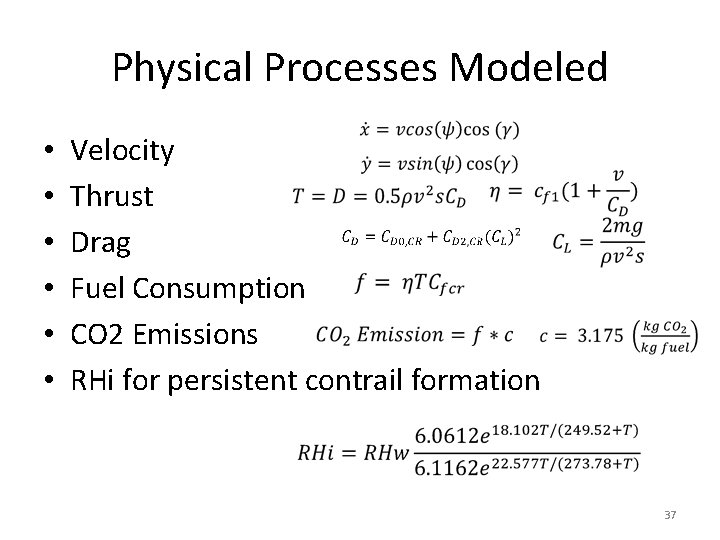
Physical Processes Modeled • • • Velocity Thrust Drag Fuel Consumption CO 2 Emissions RHi for persistent contrail formation 37
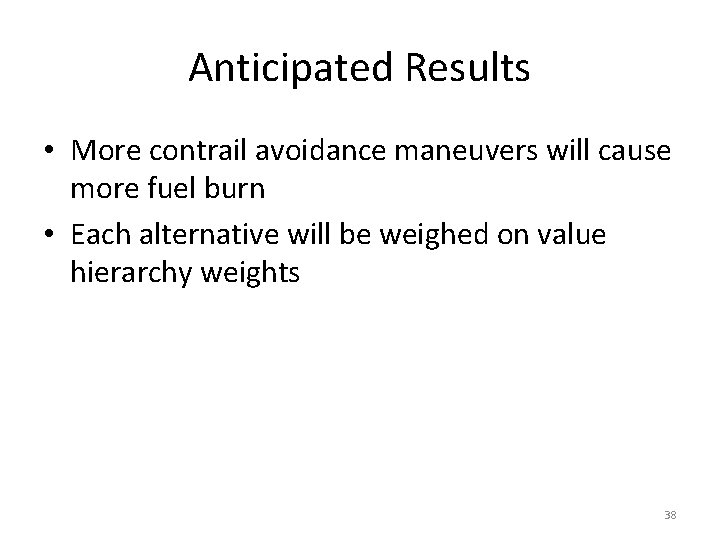
Anticipated Results • More contrail avoidance maneuvers will cause more fuel burn • Each alternative will be weighed on value hierarchy weights 38
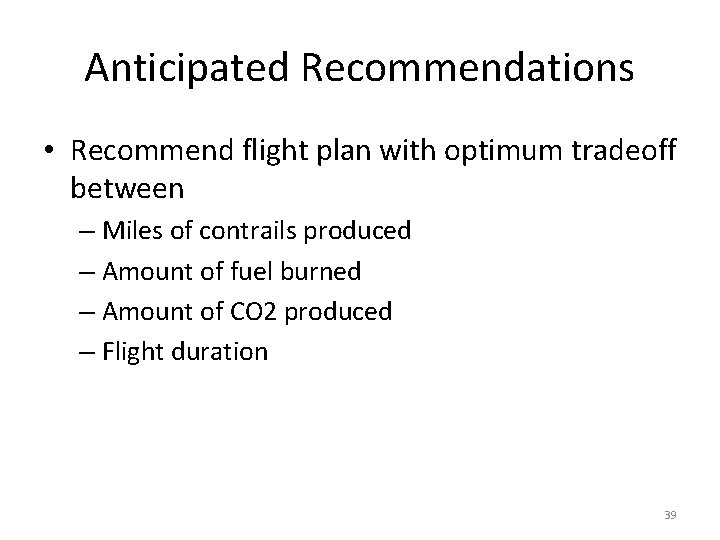
Anticipated Recommendations • Recommend flight plan with optimum tradeoff between – Miles of contrails produced – Amount of fuel burned – Amount of CO 2 produced – Flight duration 39
Project Management 40
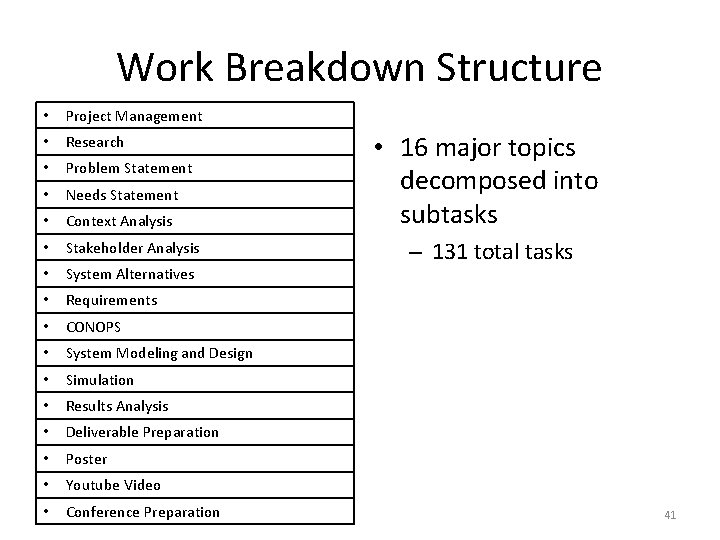
Work Breakdown Structure • Project Management • Research • Problem Statement • Needs Statement • Context Analysis • Stakeholder Analysis • System Alternatives • Requirements • CONOPS • System Modeling and Design • Simulation • Results Analysis • Deliverable Preparation • Poster • Youtube Video • Conference Preparation • 16 major topics decomposed into subtasks – 131 total tasks 41
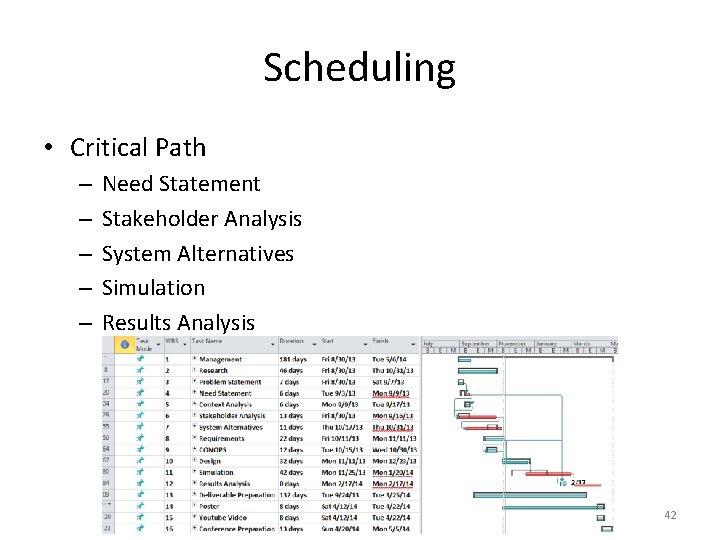
Scheduling • Critical Path – – – Need Statement Stakeholder Analysis System Alternatives Simulation Results Analysis 42
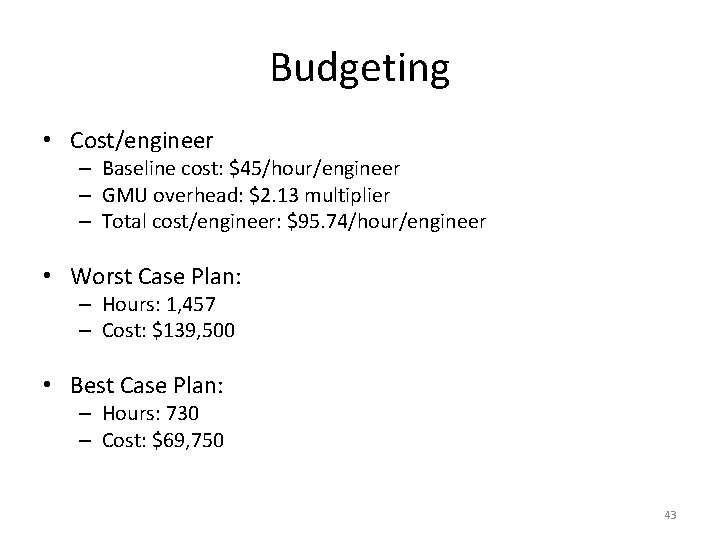
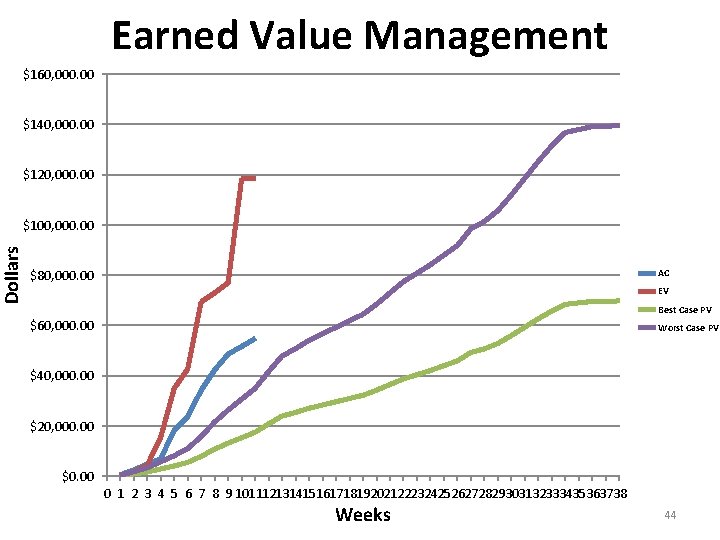
Budgeting • Cost/engineer – Baseline cost: $45/hour/engineer – GMU overhead: $2. 13 multiplier – Total cost/engineer: $95. 74/hour/engineer • Worst Case Plan: – Hours: 1, 457 – Cost: $139, 500 • Best Case Plan: – Hours: 730 – Cost: $69, 750 43
Earned Value Management $160, 000. 00 $140, 000. 00 $120, 000. 00 Dollars $100, 000. 00 $80, 000. 00 AC EV Best Case PV $60, 000. 00 Worst Case PV $40, 000. 00 $20, 000. 00 $0. 00 0 1 2 3 4 5 6 7 8 9 1011121314151617181920212223242526272829303132333435363738 Weeks 44
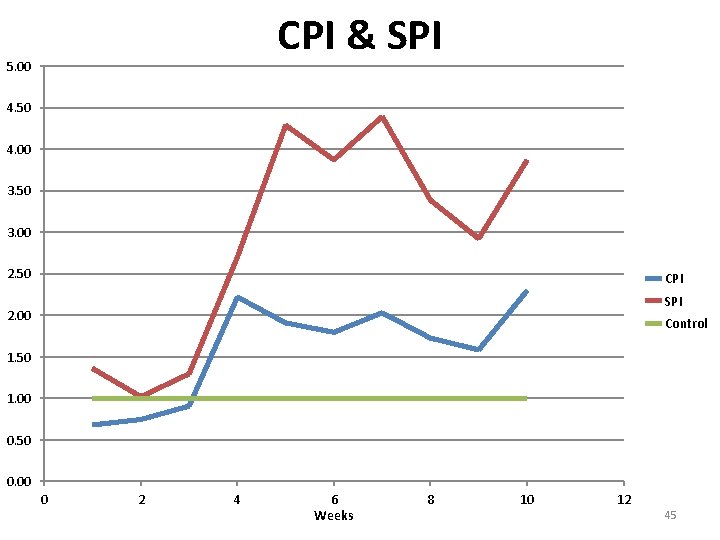
CPI & SPI 5. 00 4. 50 4. 00 3. 50 3. 00 2. 50 CPI SPI 2. 00 Control 1. 50 1. 00 0. 50 0. 00 0 2 4 6 Weeks 8 10 12 45
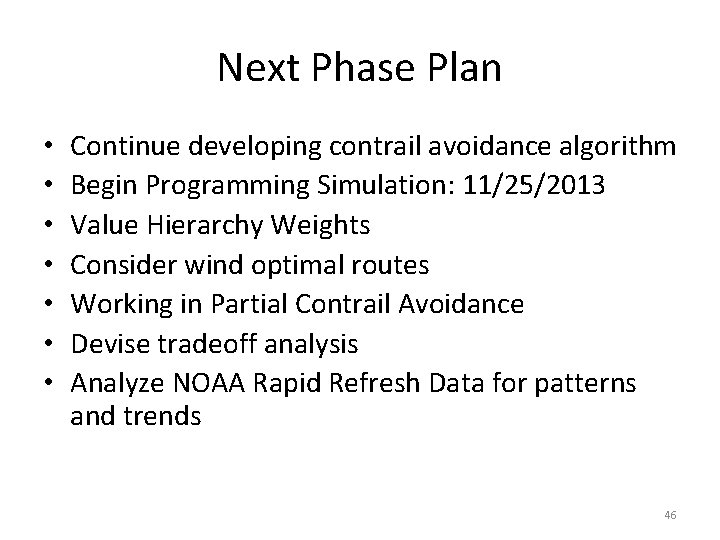
Next Phase Plan • • Continue developing contrail avoidance algorithm Begin Programming Simulation: 11/25/2013 Value Hierarchy Weights Consider wind optimal routes Working in Partial Contrail Avoidance Devise tradeoff analysis Analyze NOAA Rapid Refresh Data for patterns and trends 46
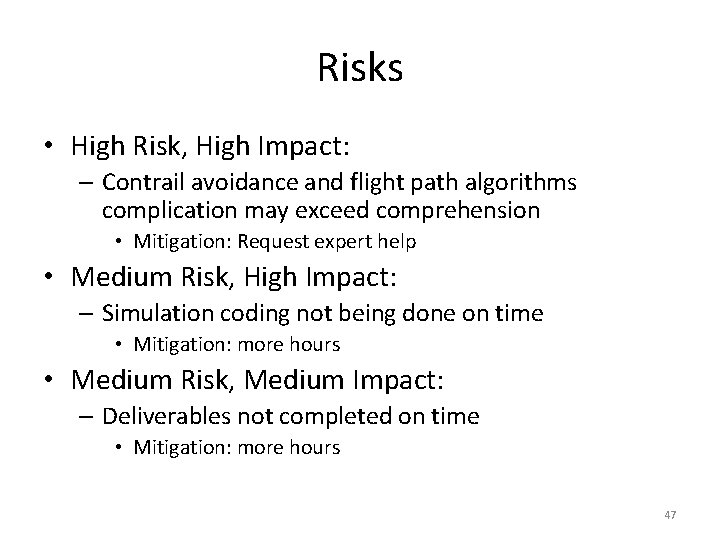
Risks • High Risk, High Impact: – Contrail avoidance and flight path algorithms complication may exceed comprehension • Mitigation: Request expert help • Medium Risk, High Impact: – Simulation coding not being done on time • Mitigation: more hours • Medium Risk, Medium Impact: – Deliverables not completed on time • Mitigation: more hours 47
Questions? 48