
Design for a New Optical Table of the
Design for a New Optical Table of the Shintake Monitor Takashi Yamanaka The University of Tokyo ATF 2 meeting 2007/10/15
Contents • Principle of the Shintake monitor • Mechanism of the phase monitor • Changes for a new optical table – widen the range of measurable beam size – stablize the fringe position – increase the signal photon • Status
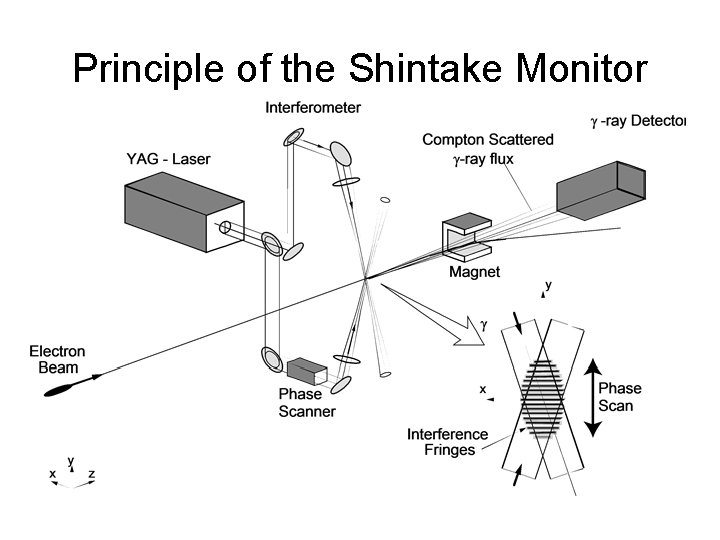
Principle of the Shintake Monitor
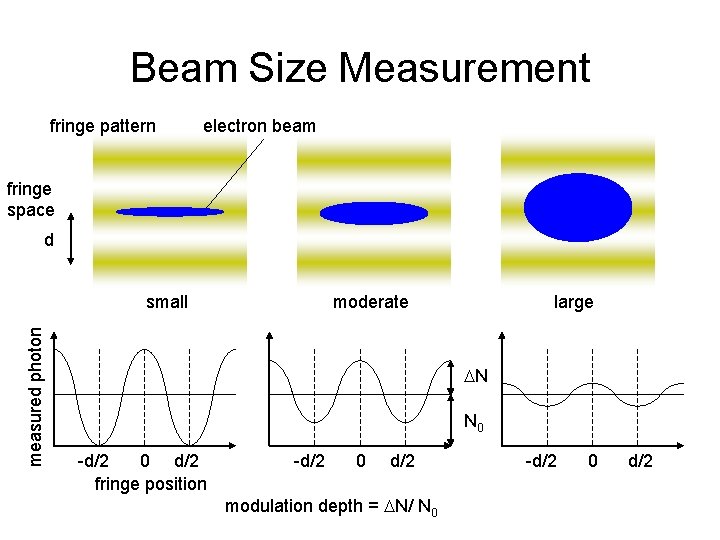
Beam Size Measurement fringe pattern electron beam fringe space d measured photon small large moderate DN N 0 -d/2 0 d/2 fringe position -d/2 0 d/2 modulation depth = DN/ N 0 -d/2 0 d/2
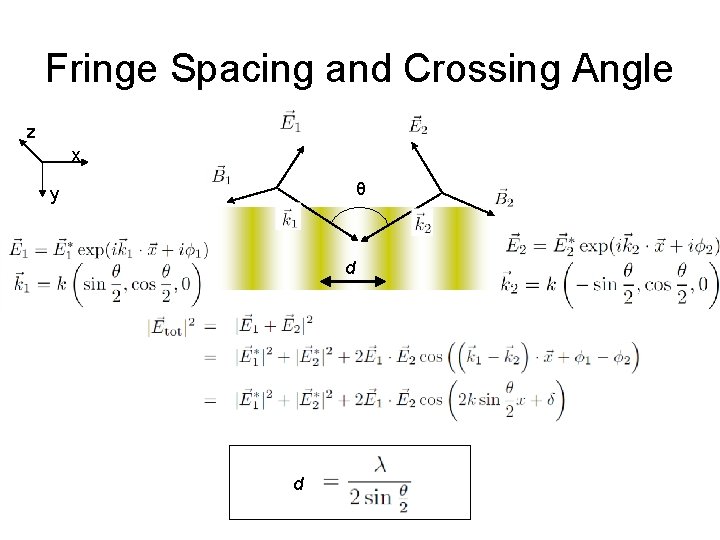
Fringe Spacing and Crossing Angle z x θ y d d

Phase Monitor Phase detection sample Phase magnification by microscope lens, captured by image sensor Lens and image sensor • The phase does not sensitive to vibration of lens & sensor. • Fourier method suppresses sensitivity to optical noise.
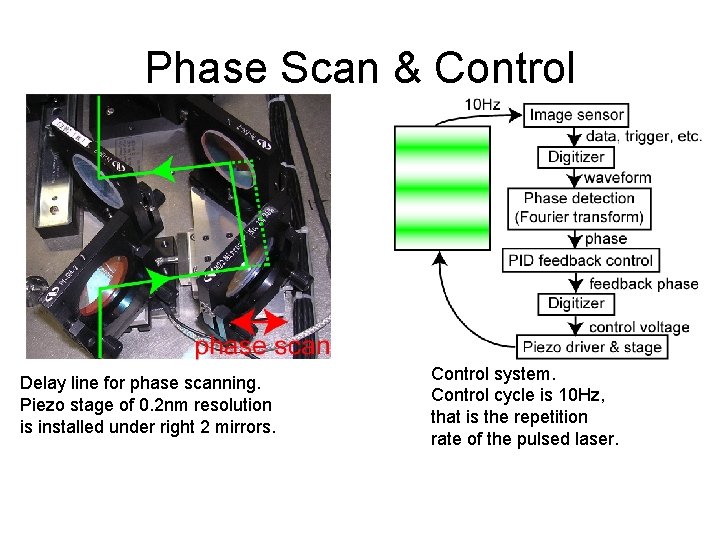
Phase Scan & Control Delay line for phase scanning. Piezo stage of 0. 2 nm resolution is installed under right 2 mirrors. Control system. Control cycle is 10 Hz, that is the repetition rate of the pulsed laser.
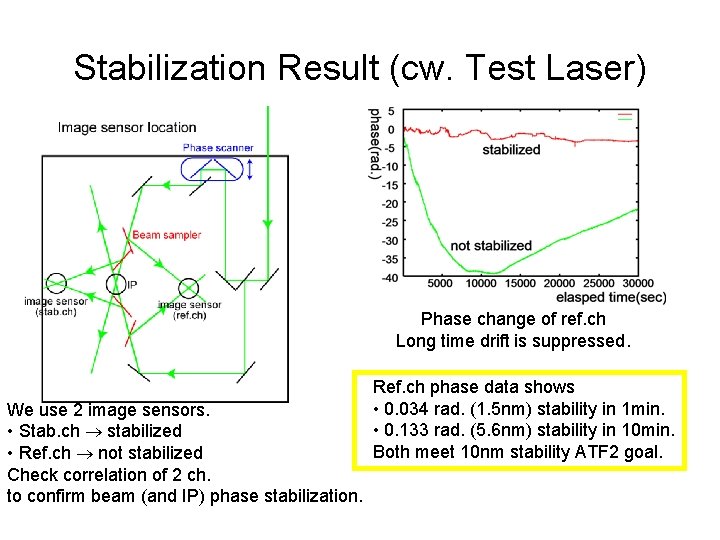
Stabilization Result (cw. Test Laser) Phase change of ref. ch Long time drift is suppressed. We use 2 image sensors. • Stab. ch stabilized • Ref. ch not stabilized Check correlation of 2 ch. to confirm beam (and IP) phase stabilization. Ref. ch phase data shows • 0. 034 rad. (1. 5 nm) stability in 1 min. • 0. 133 rad. (5. 6 nm) stability in 10 min. Both meet 10 nm stability ATF 2 goal.
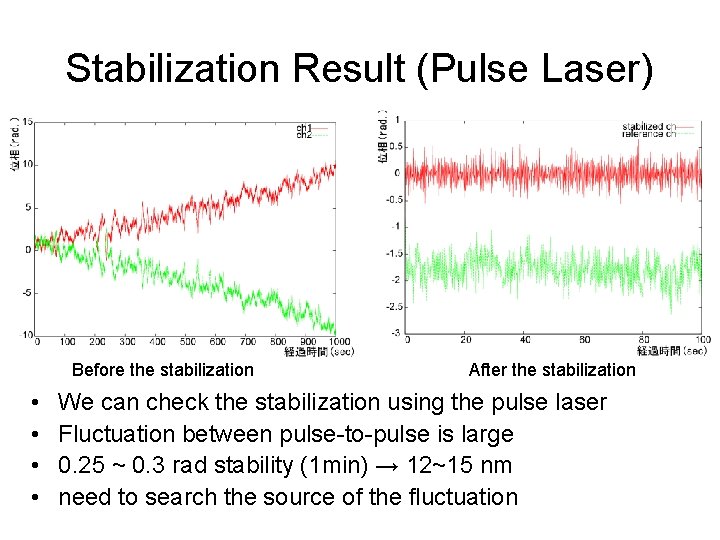
Stabilization Result (Pulse Laser) Before the stabilization • • After the stabilization We can check the stabilization using the pulse laser Fluctuation between pulse-to-pulse is large 0. 25 ~ 0. 3 rad stability (1 min) → 12~15 nm need to search the source of the fluctuation
Motivations to Design a New Table 1. Widen the range of measurable beam size (for sy) – by Increasing number of the laser crossing angles 2. Stabilize the interference fringe position – by adding the fringe monitor 3. Increase the signal photons from the collision with electron beam – by delivering the laser beam without losing its power
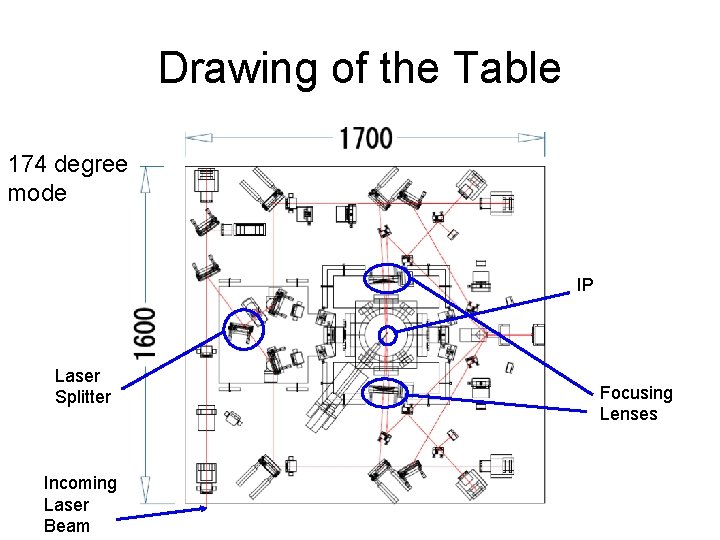
Drawing of the Table 174 degree mode IP Laser Splitter Incoming Laser Beam Focusing Lenses
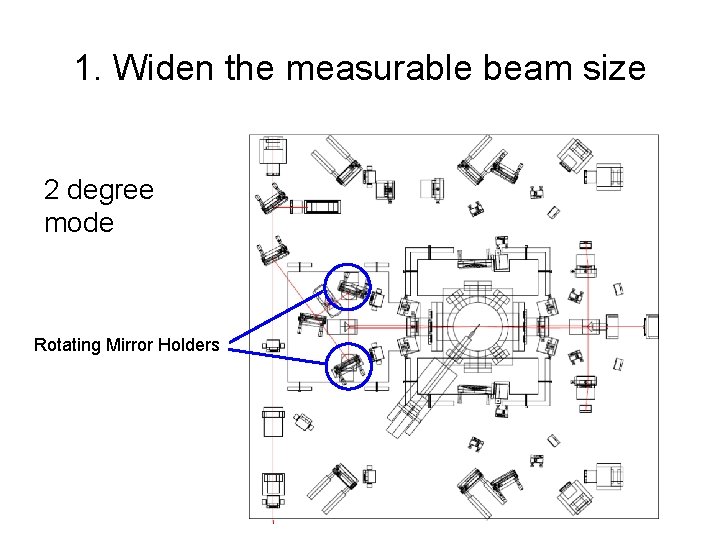
1. Widen the measurable beam size 2 degree 174 30 8 degree mode Rotating Mirror Holders
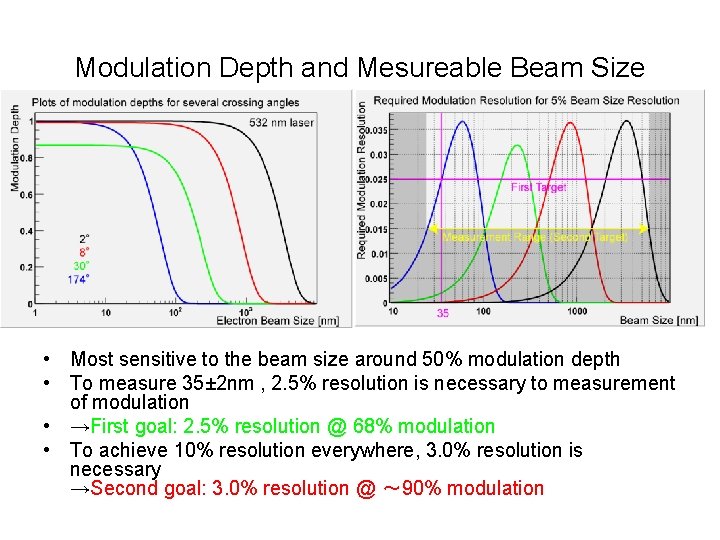
Modulation Depth and Mesureable Beam Size • Most sensitive to the beam size around 50% modulation depth • To measure 35± 2 nm , 2. 5% resolution is necessary to measurement of modulation • →First goal: 2. 5% resolution @ 68% modulation • To achieve 10% resolution everywhere, 3. 0% resolution is necessary →Second goal: 3. 0% resolution @ ~ 90% modulation
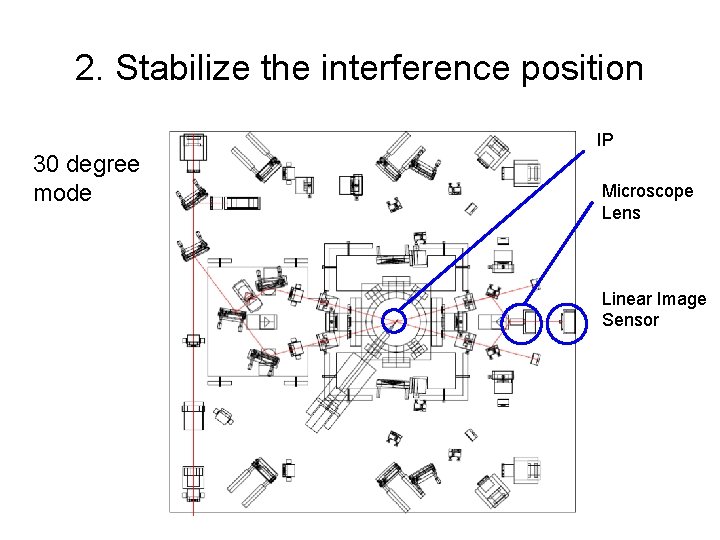
2. Stabilize the interference position IP 30 degree mode Microscope Lens Linear Image Sensor
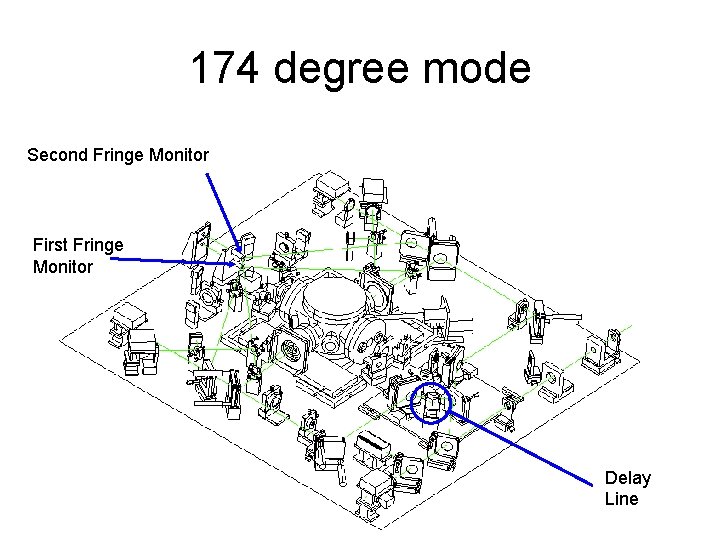
174 degree mode Second Fringe Monitor First Fringe Monitor Delay Line
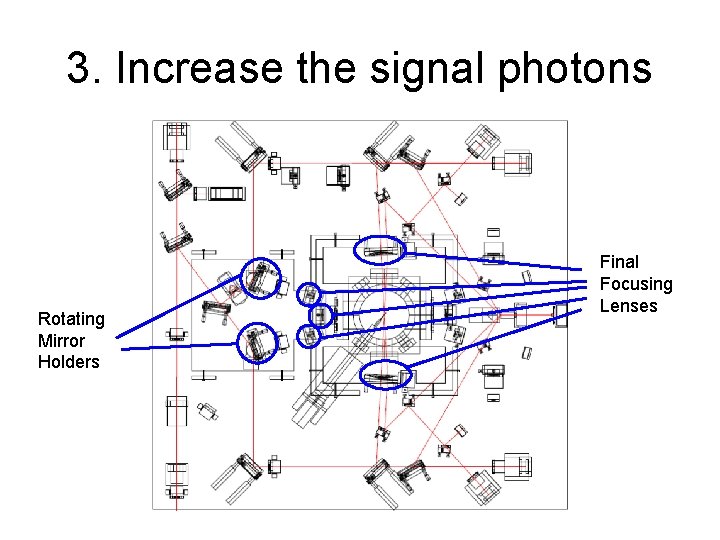
3. Increase the signal photons Rotating Mirror Holders Final Focusing Lenses
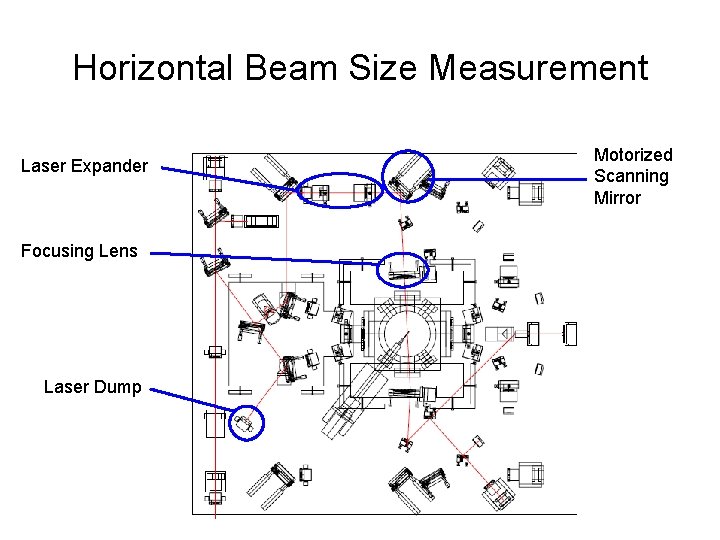
Horizontal Beam Size Measurement Laser Expander Focusing Lens Laser Dump Motorized Scanning Mirror
Status • • Design has almost done Next tasks are tests of optics – Basic tests have finished – Detailed tasks are remained • • Forming the interference fringe in a new optics arrangement Considering the alignment strategy
- Slides: 18