
Design and Manufacturing of desiccant disk for use






- Slides: 21
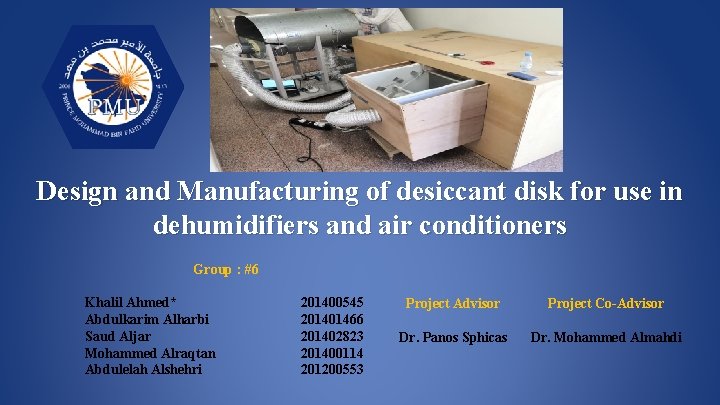
Design and Manufacturing of desiccant disk for use in dehumidifiers and air conditioners Group : #6 Khalil Ahmed* Abdulkarim Alharbi Saud Aljar Mohammed Alraqtan Abdulelah Alshehri 201400545 201401466 201402823 201400114 201200553 Project Advisor Project Co-Advisor Dr. Panos Sphicas Dr. Mohammed Almahdi
Outline 1. Objectives 2. Background & Motivation and relevance 3. Design Constraints Engineering Standards & Design specification 4. Conceptual Design, Calculations & fabrication 5. Experimental setup, Testing & Results 6. Conclusion & Feature Recommendation
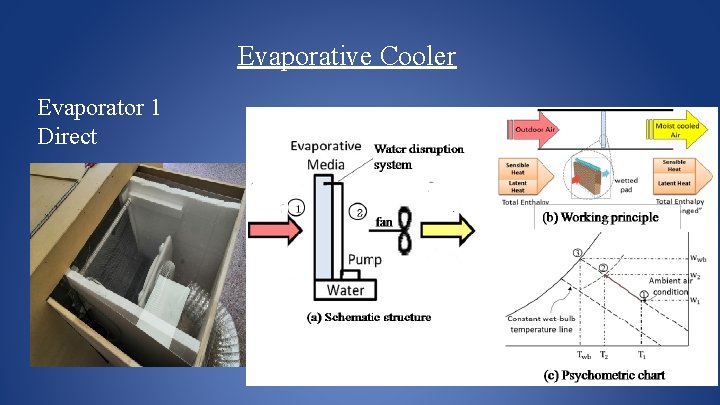
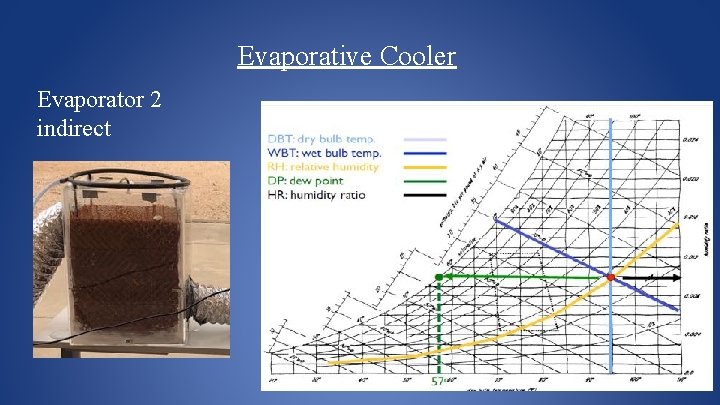
1 Objectives 1. Improve the instrumentation and data acquisition (newer and more thermocouples, installed fan anemometers, installed more RH sensors). 2. Design and build a direct and an indirect evaporative cooler. Test and compare the results from the two coolers. 3. Installed DC fans that can be powered by a 12 V 15 amp Battery. 4. Create inspection hatch and close leaks in the desiccant disk. 5. Test the system and acquire new improved data.
2 Background & motivation and Relevance Silica Gel DHT 11 Sensors
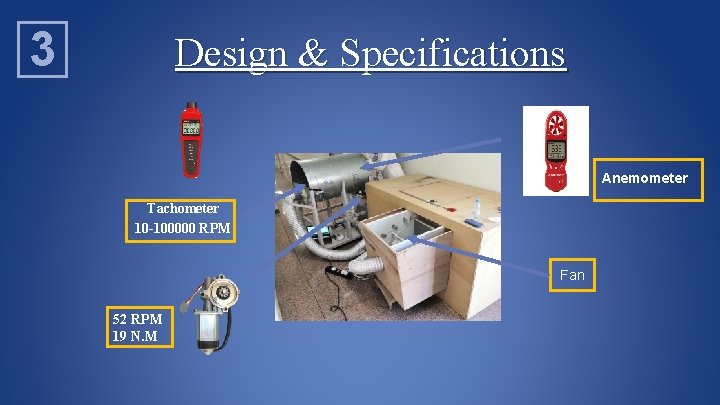
3 Design & Specifications Anemometer Tachometer 10 -100000 RPM Fan 52 RPM 19 N. M
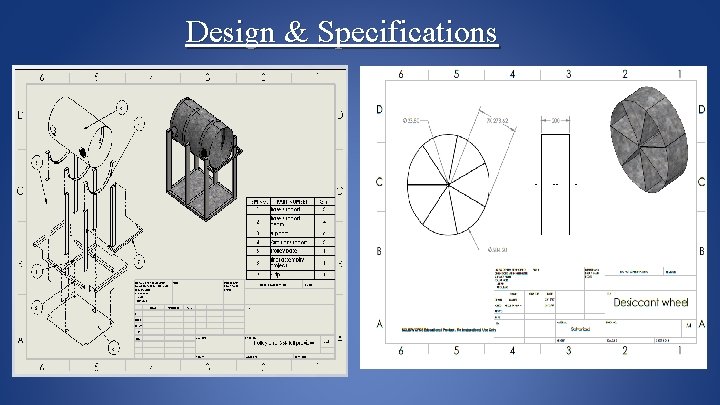
Design & Specifications
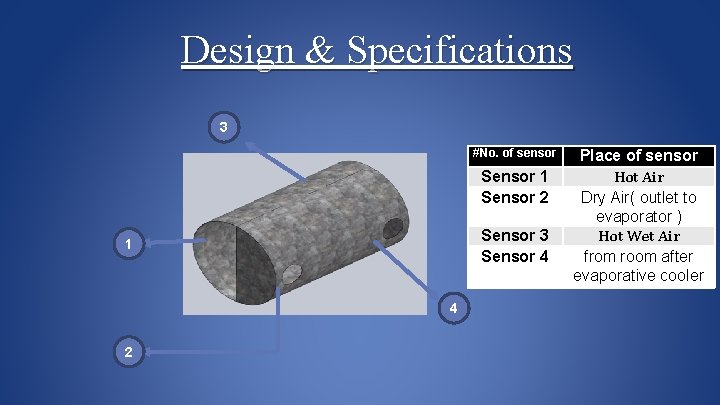
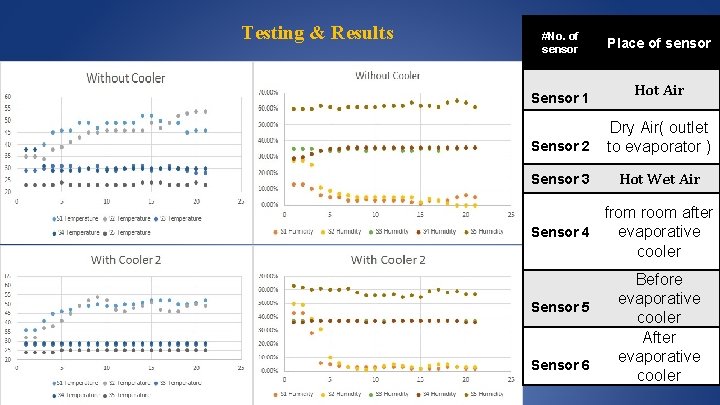
Design & Specifications 3 #No. of sensor Sensor 1 Sensor 2 Sensor 3 Sensor 4 1 4 2 Place of sensor Hot Air Dry Air( outlet to evaporator ) Hot Wet Air from room after evaporative cooler
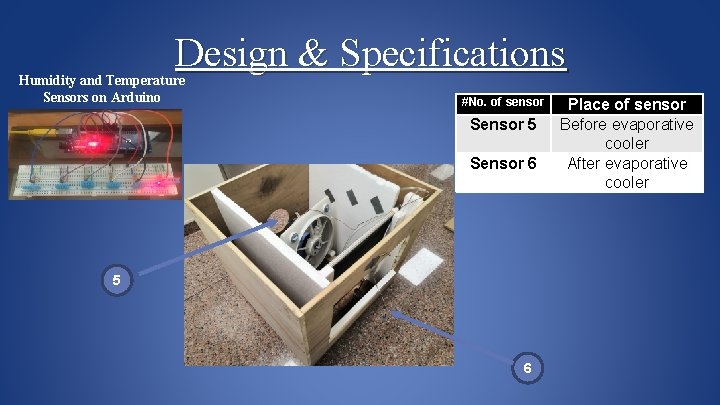
Design & Specifications Humidity and Temperature Sensors on Arduino #No. of sensor Sensor 5 Sensor 6 5 6 Place of sensor Before evaporative cooler After evaporative cooler
Constraints • Environments • Economical • Manufacturability • Safety • Sustainability • Geometrical constraints • Engineering standards
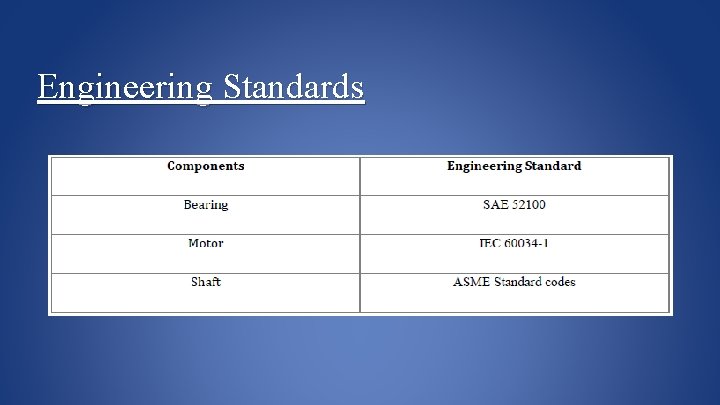
Engineering Standards
4 Conceptual Design, Calculations & fabrication
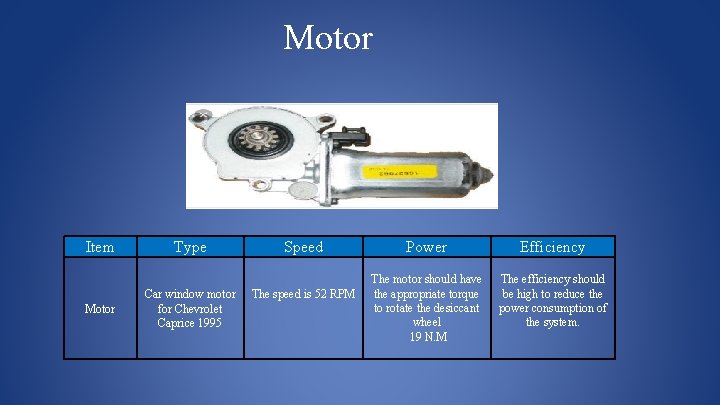
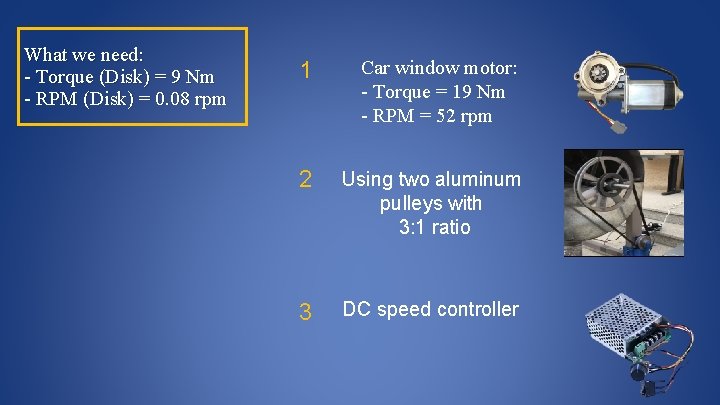
Motor Item Motor Type Car window motor for Chevrolet Caprice 1995 Speed The speed is 52 RPM Power Efficiency The motor should have the appropriate torque to rotate the desiccant wheel 19 N. M The efficiency should be high to reduce the power consumption of the system.
What we need: - Torque (Disk) = 9 Nm - RPM (Disk) = 0. 08 rpm 1 Car window motor: - Torque = 19 Nm - RPM = 52 rpm 2 Using two aluminum pulleys with 3: 1 ratio 3 DC speed controller
Evaporative Cooler Evaporator 1 Direct
Evaporative Cooler Evaporator 2 indirect
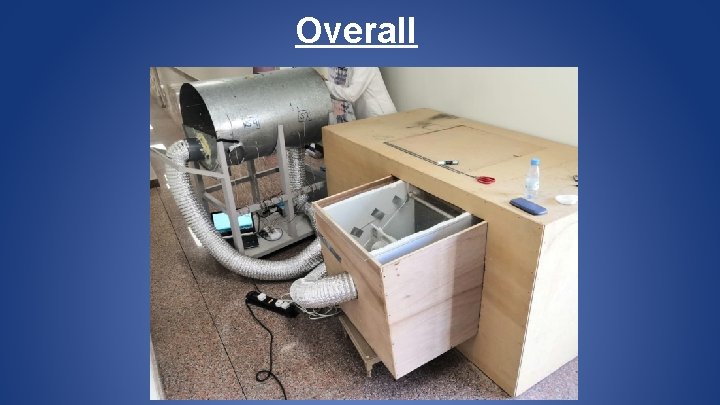
Overall
5 Testing & Results
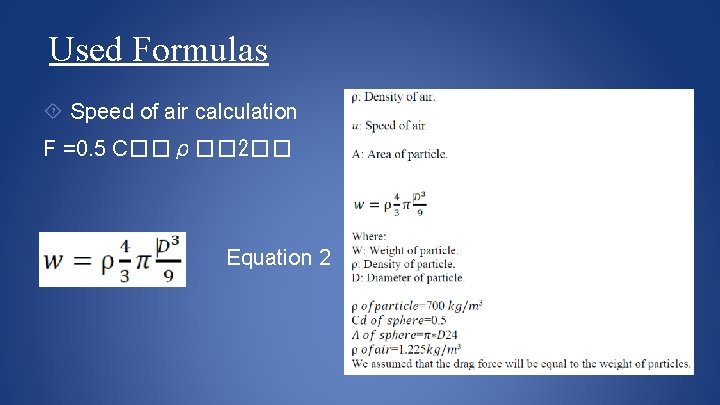
Used Formulas Speed of air calculation F =0. 5 C��ρ�� 2�� Equation 2 Equation 1
Testing & Results #No. of sensor Sensor 1 Place of sensor Hot Air Sensor 2 Dry Air( outlet to evaporator ) Sensor 3 Hot Wet Air from room after Sensor 4 evaporative cooler Sensor 5 Sensor 6 Before evaporative cooler After evaporative cooler
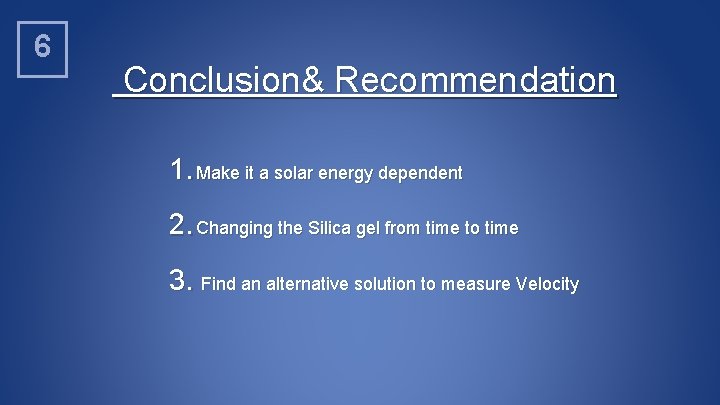
6 Conclusion& Recommendation 1. Make it a solar energy dependent 2. Changing the Silica gel from time to time 3. Find an alternative solution to measure Velocity
Regards