
Design and introduction of the Qualification Development Methodology


- Slides: 11
Design and introduction of the Qualification Development Methodology David Tournay – Key Expert
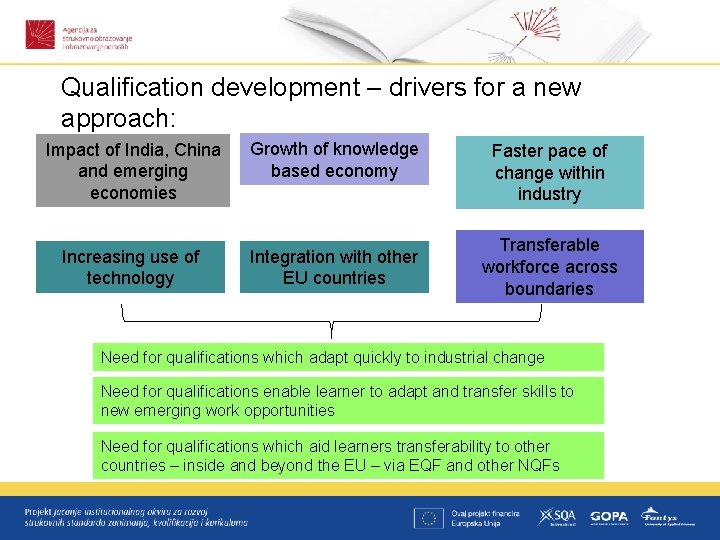
Qualification development – drivers for a new approach: Impact of India, China and emerging economies Growth of knowledge based economy Increasing use of technology Integration with other EU countries Faster pace of change within industry Transferable workforce across boundaries Need for qualifications which adapt quickly to industrial change Need for qualifications enable learner to adapt and transfer skills to new emerging work opportunities Need for qualifications which aid learners transferability to other countries – inside and beyond the EU – via EQF and other NQFs
What the ‘methodology’ should produce: • • • Ensure VET qualifications are directly influenced by labour market needs Ensure VET qualifications are influenced by the skills needs of employers Ensure that VET qualifications are flexible – for both learner and employer – through use of unit based approach Ensure that VET qualifications support a ‘Lifelong Learning’ route – through recognition of unit based credit Ensure that VET qualifications fit within broader CROQF framework and therefore link to the European Qualifications Framework (EQF)
Our approach: • • • Designed concept of the methodology in early 2011 – incorporating both CROQF and EQF principals Developed a network of working groups, focusing on different VET sectors Coach ‘working group co-ordinators’ in order that they could support the work of the teams Tested methodology through development of 26 new VET qualifications during 2011 Enabled us to identify areas of complexity which needed further support and explanation
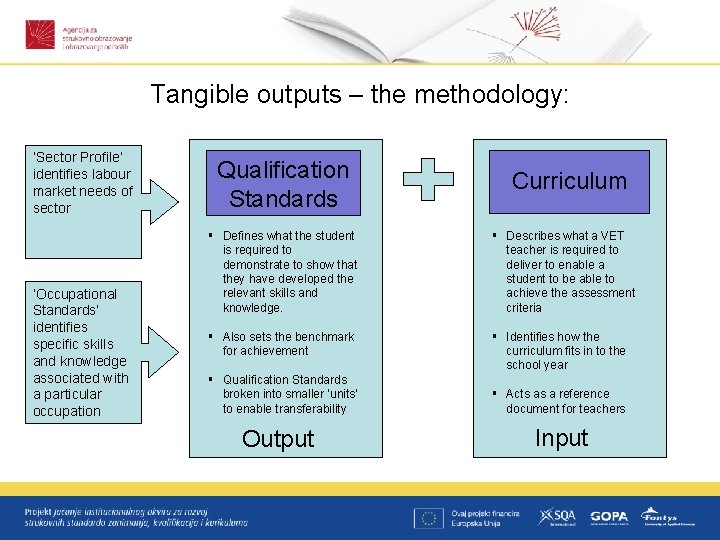
Tangible outputs – the methodology: ‘Sector Profile’ identifies labour market needs of sector ‘Occupational Standards’ identifies specific skills and knowledge associated with a particular occupation Qualification Standards Curriculum § Defines what the student is required to demonstrate to show that they have developed the relevant skills and knowledge. § Describes what a VET teacher is required to deliver to enable a student to be able to achieve the assessment criteria § Also sets the benchmark for achievement § Identifies how the curriculum fits in to the school year § Qualification Standards broken into smaller ‘units’ to enable transferability Output § Acts as a reference document for teachers Input
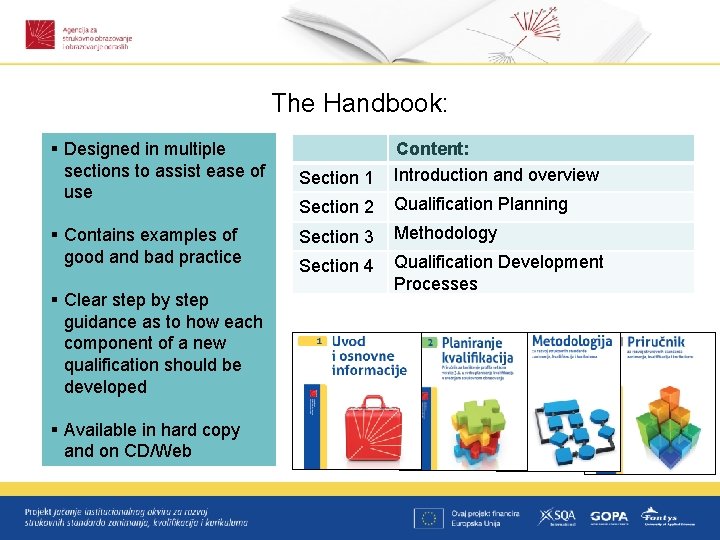
The Handbook: § Designed in multiple sections to assist ease of use § Contains examples of good and bad practice § Clear step by step guidance as to how each component of a new qualification should be developed § Available in hard copy and on CD/Web Section 1 Content: Introduction and overview Section 2 Qualification Planning Section 3 Methodology Section 4 Qualification Development Processes
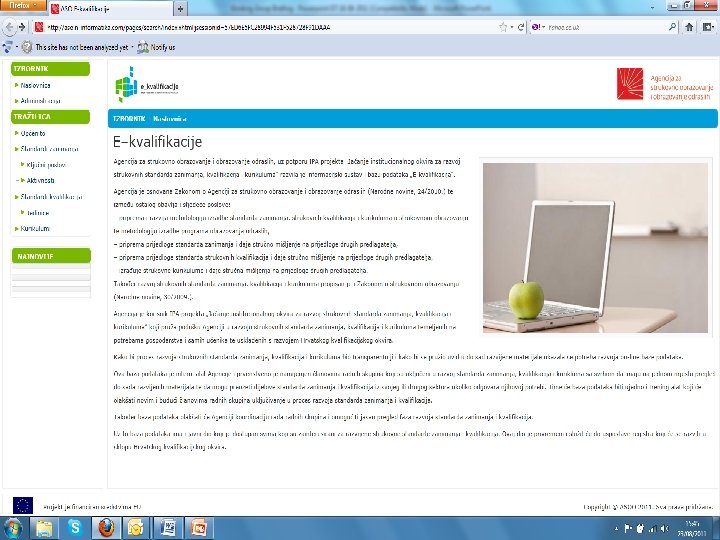
Tangible outputs: • • • 26 new VET qualifications developed – 2 per VET sector Content designed to strengthen entry into the workplace and/or progression to higher education Development of ‘Ekval’ database to assist with the development process as a management tool Ekval also enabled developers to re-use existing units In-depth handbook to assist with the development of people new to the qualifications design process Mid term training programme to assist with the development of new qualification developers beyond the completion of the project
Intangible outputs: • Critical to the success of the project • Development of a community of qualification developers – building a foundation for future work • Provided input into all sections of the methodology, handbook and qualifications • Demonstrated excellent understanding of the project goals
Hvala na pažnji! www. asoo. hr