
Design and drawing of RC Structures CV 61


- Slides: 40
Design and drawing of RC Structures CV 61 Dr. G. S. Suresh Civil Engineering Department The National Institute of Engineering Mysore-570 008 Mob: 9342188467 Email: gss_nie@yahoo. com 1
Portal frames 2
Learning out Come • Review of Design of Portal Frames • Design example Continued 3
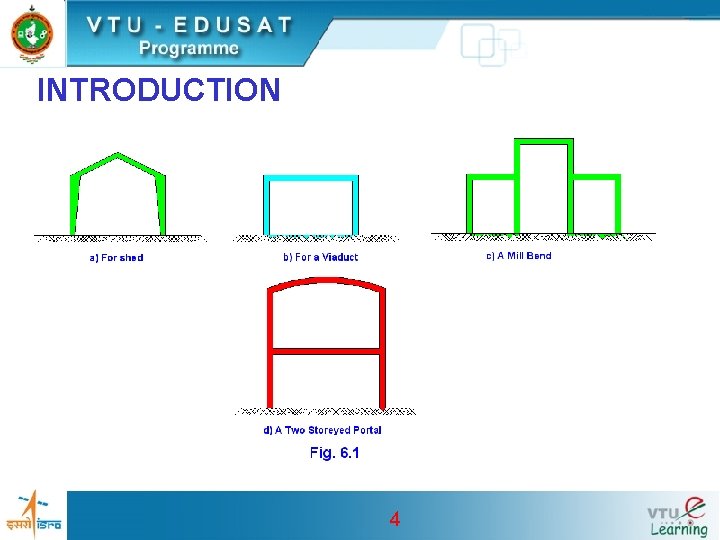
INTRODUCTION 4
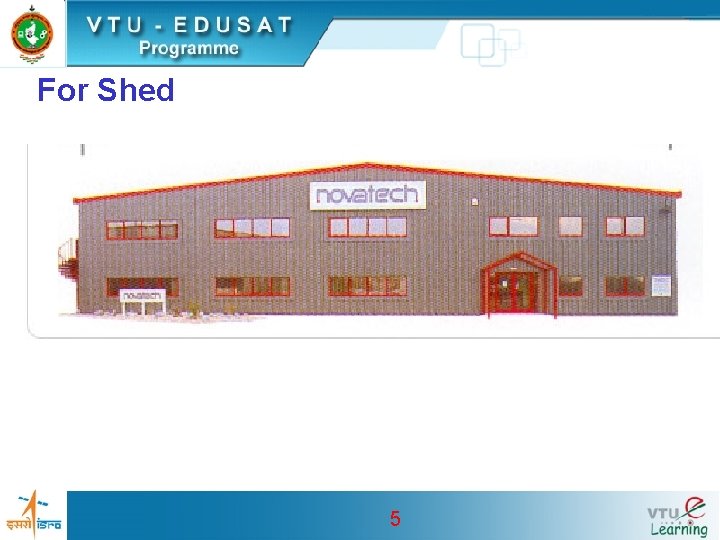
For Shed 5
For Rectangular Buildings 6
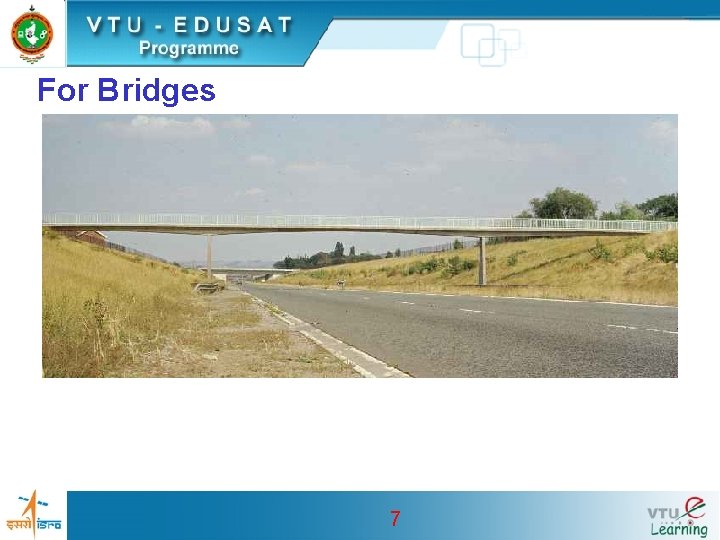
For Bridges 7
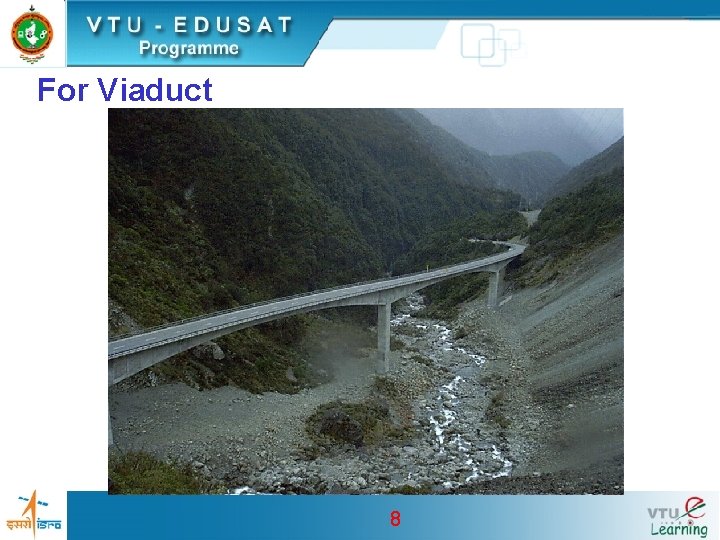
For Viaduct 8
INTRODUCTION • Step 1: Design of slabs • Step 2: Preliminary design of beams and columns • Step 3: Analysis • Step 4: Design of beams • Step 5: Design of Columns • Step 6: Design of footings 9
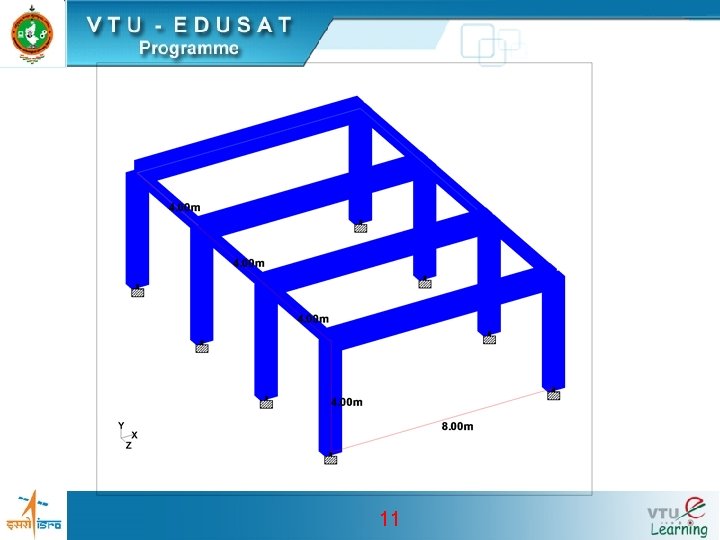
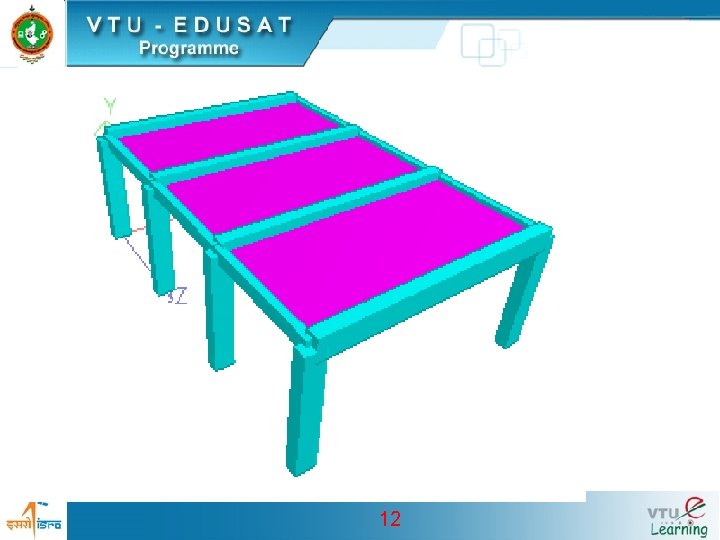
PROBLEM 1 10
11
12
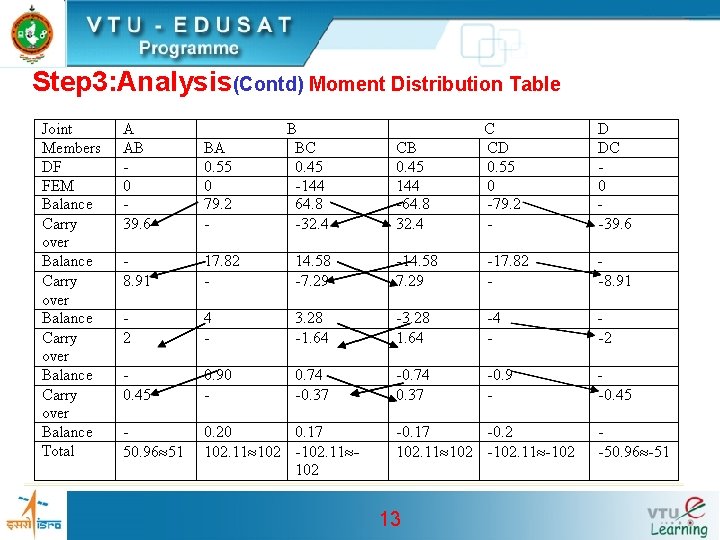
Step 3: Analysis(Contd) Moment Distribution Table 13
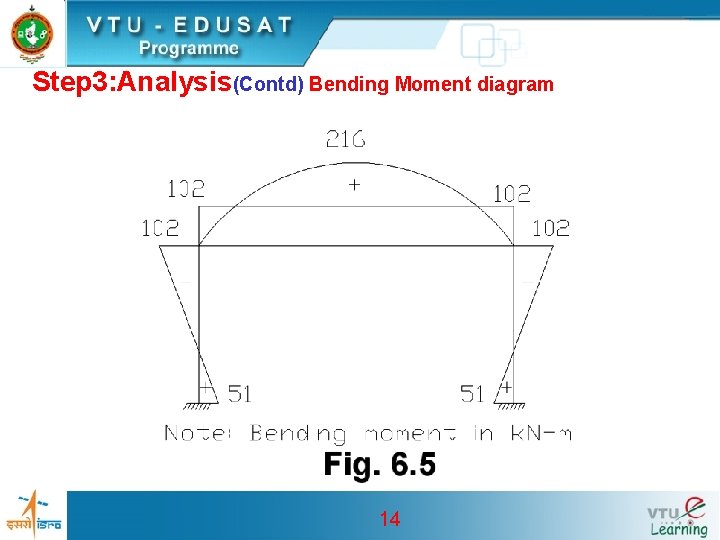
Step 3: Analysis(Contd) Bending Moment diagram 14
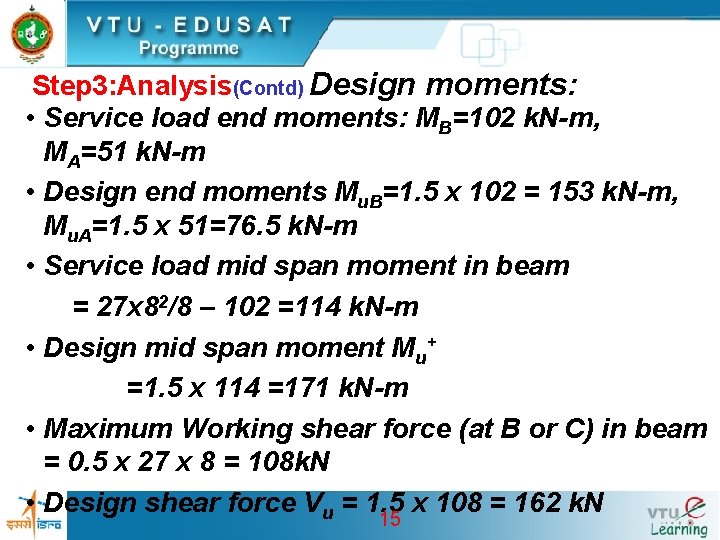
Step 3: Analysis(Contd) Design moments: • Service load end moments: MB=102 k. N-m, MA=51 k. N-m • Design end moments Mu. B=1. 5 x 102 = 153 k. N-m, Mu. A=1. 5 x 51=76. 5 k. N-m • Service load mid span moment in beam = 27 x 82/8 – 102 =114 k. N-m • Design mid span moment Mu+ =1. 5 x 114 =171 k. N-m • Maximum Working shear force (at B or C) in beam = 0. 5 x 27 x 8 = 108 k. N • Design shear force Vu = 1. 5 x 108 = 162 k. N 15
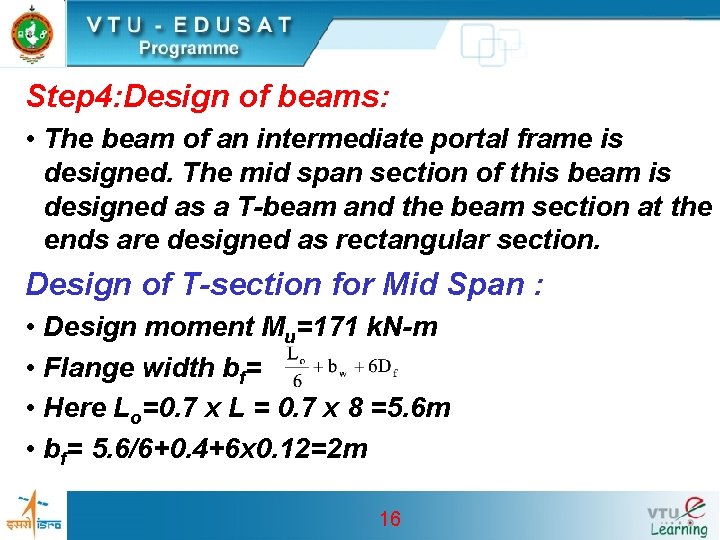
Step 4: Design of beams: • The beam of an intermediate portal frame is designed. The mid span section of this beam is designed as a T-beam and the beam section at the ends are designed as rectangular section. Design of T-section for Mid Span : • Design moment Mu=171 k. N-m • Flange width bf= • Here Lo=0. 7 x L = 0. 7 x 8 =5. 6 m • bf= 5. 6/6+0. 4+6 x 0. 12=2 m 16
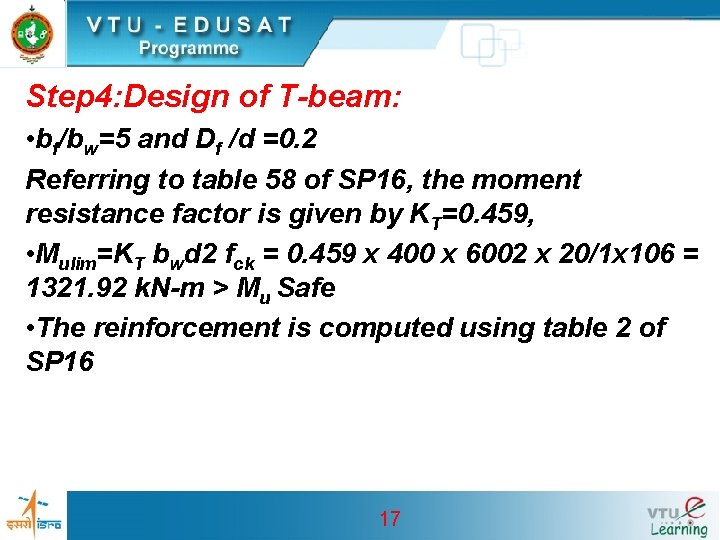
Step 4: Design of T-beam: • bf/bw=5 and Df /d =0. 2 Referring to table 58 of SP 16, the moment resistance factor is given by KT=0. 459, • Mulim=KT bwd 2 fck = 0. 459 x 400 x 6002 x 20/1 x 106 = 1321. 92 k. N-m > Mu Safe • The reinforcement is computed using table 2 of SP 16 17
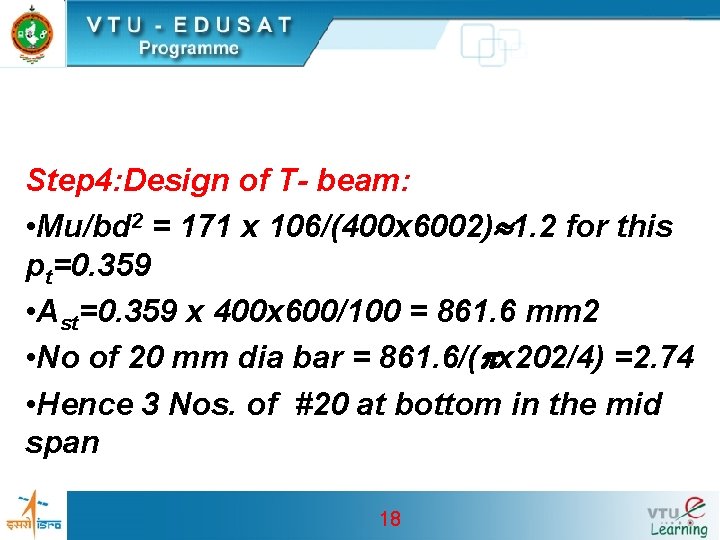
Step 4: Design of T- beam: • Mu/bd 2 = 171 x 106/(400 x 6002) 1. 2 for this pt=0. 359 • Ast=0. 359 x 400 x 600/100 = 861. 6 mm 2 • No of 20 mm dia bar = 861. 6/( x 202/4) =2. 74 • Hence 3 Nos. of #20 at bottom in the mid span 18
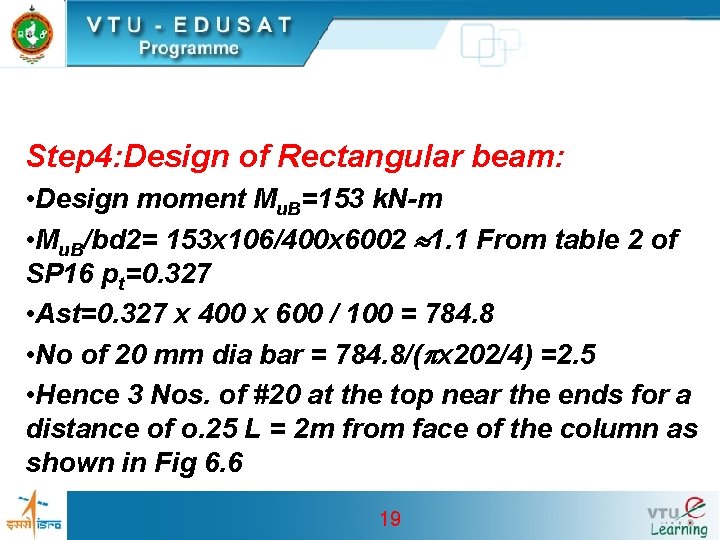
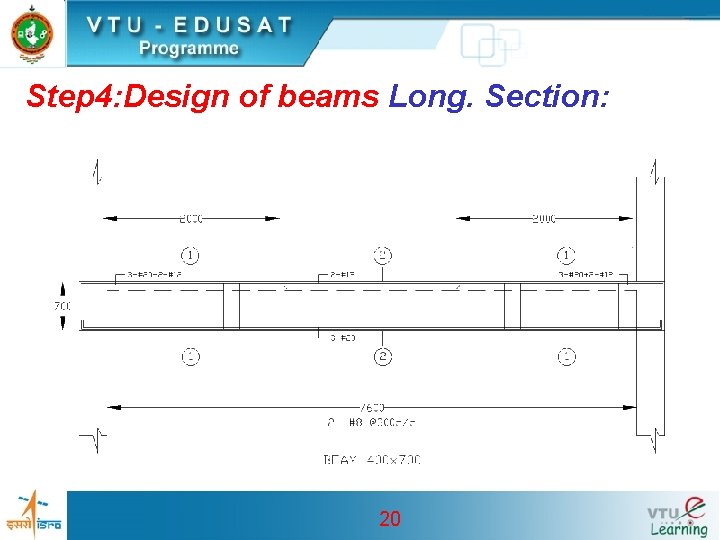
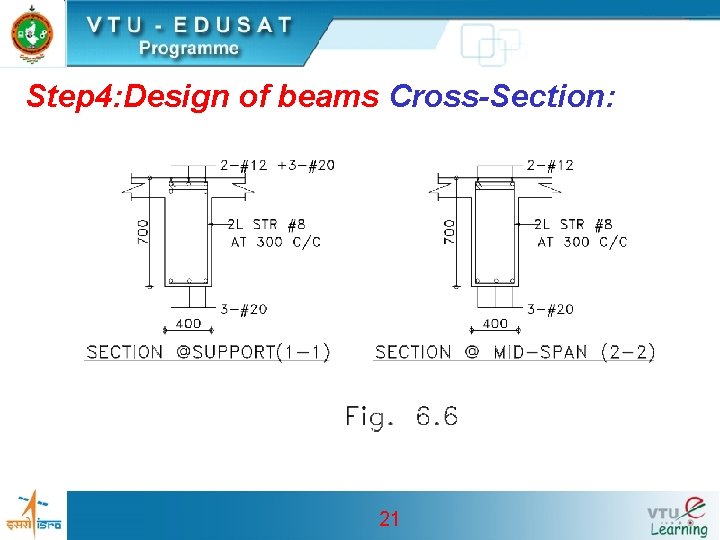
Step 4: Design of Rectangular beam: • Design moment Mu. B=153 k. N-m • Mu. B/bd 2= 153 x 106/400 x 6002 1. 1 From table 2 of SP 16 pt=0. 327 • Ast=0. 327 x 400 x 600 / 100 = 784. 8 • No of 20 mm dia bar = 784. 8/( x 202/4) =2. 5 • Hence 3 Nos. of #20 at the top near the ends for a distance of o. 25 L = 2 m from face of the column as shown in Fig 6. 6 19
Step 4: Design of beams Long. Section: 20
Step 4: Design of beams Cross-Section: 21
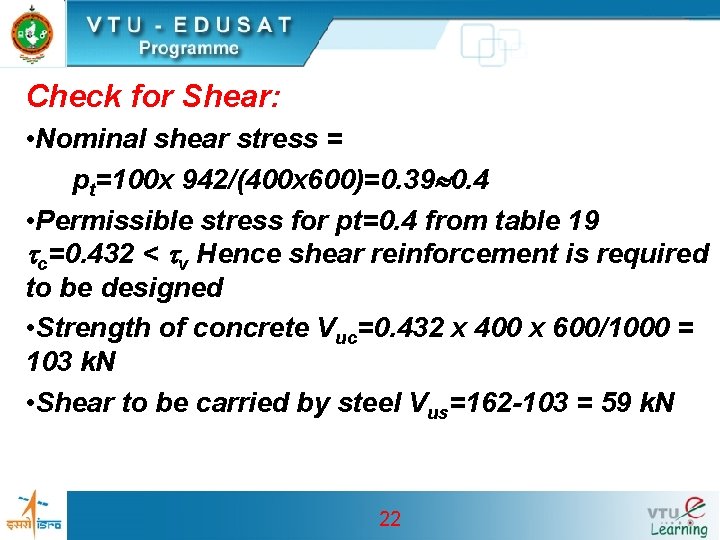
Check for Shear: • Nominal shear stress = pt=100 x 942/(400 x 600)=0. 39 0. 4 • Permissible stress for pt=0. 4 from table 19 c=0. 432 < v Hence shear reinforcement is required to be designed • Strength of concrete Vuc=0. 432 x 400 x 600/1000 = 103 k. N • Shear to be carried by steel Vus=162 -103 = 59 k. N 22
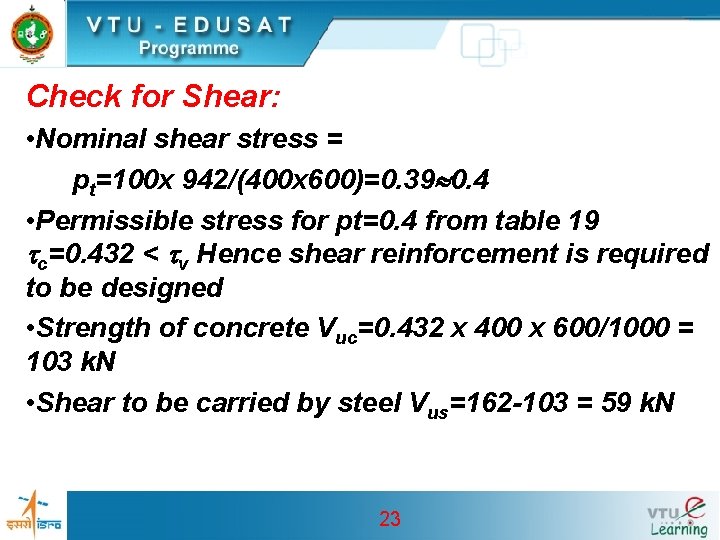
Check for Shear: • Nominal shear stress = pt=100 x 942/(400 x 600)=0. 39 0. 4 • Permissible stress for pt=0. 4 from table 19 c=0. 432 < v Hence shear reinforcement is required to be designed • Strength of concrete Vuc=0. 432 x 400 x 600/1000 = 103 k. N • Shear to be carried by steel Vus=162 -103 = 59 k. N 23
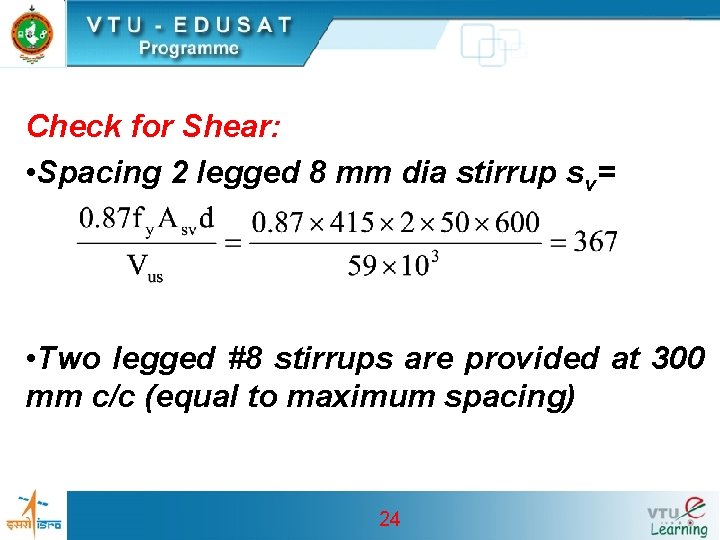
Check for Shear: • Spacing 2 legged 8 mm dia stirrup sv= • Two legged #8 stirrups are provided at 300 mm c/c (equal to maximum spacing) 24
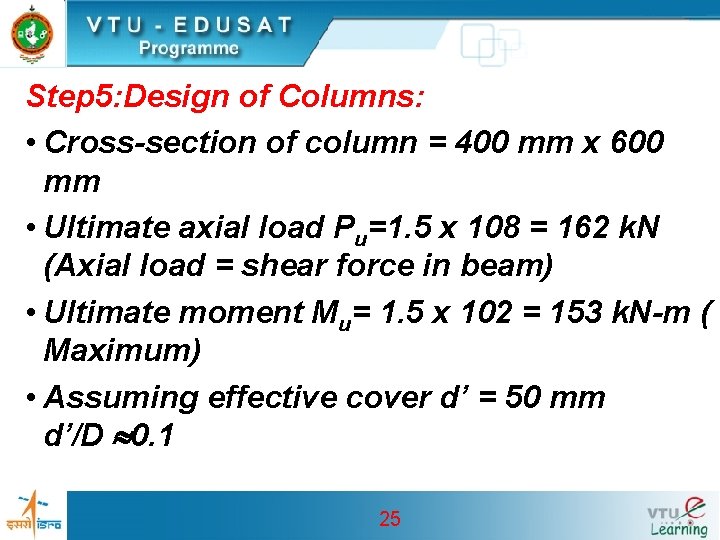
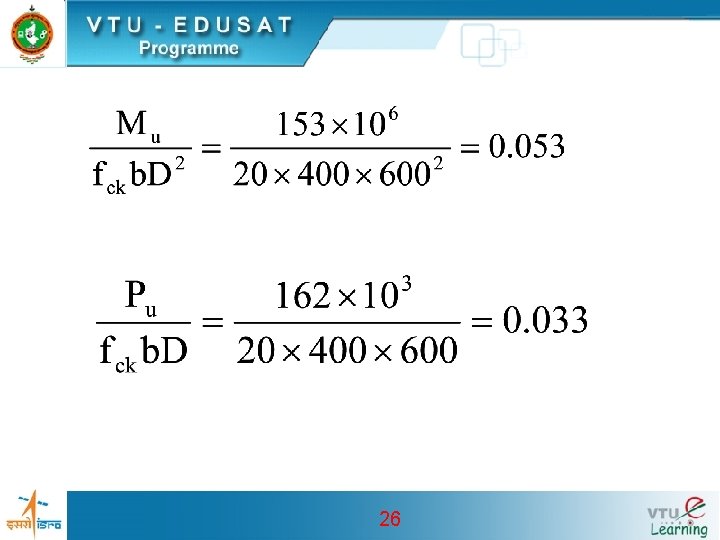
Step 5: Design of Columns: • Cross-section of column = 400 mm x 600 mm • Ultimate axial load Pu=1. 5 x 108 = 162 k. N (Axial load = shear force in beam) • Ultimate moment Mu= 1. 5 x 102 = 153 k. N-m ( Maximum) • Assuming effective cover d’ = 50 mm d’/D 0. 1 25
26
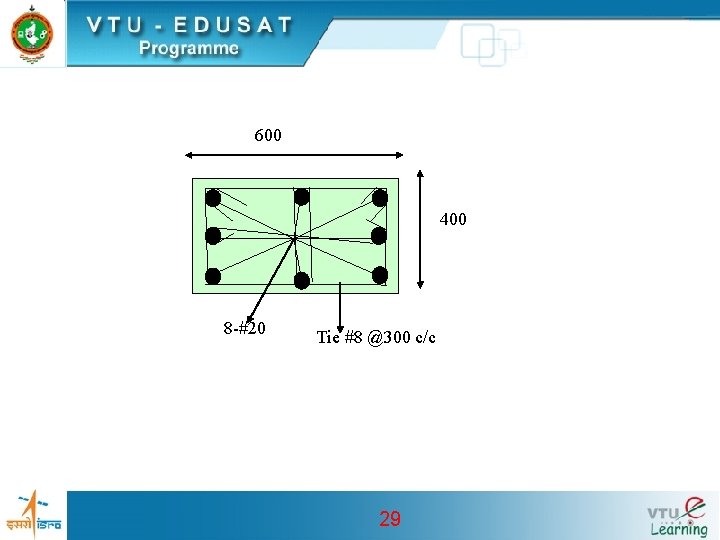
Step 5: Design of Columns: • Referring to chart 32 of SP 16, p/fck=0. 03; p=20 x 0. 03 = 0. 6 • Minimum steel in column should be 0. 8 %, Hence min steel percentage shall be adopted • Ast=0. 8 x 400 x 600/100 = 1920 mm 2 • No. of bars required = 1920/314 = 6. 1 • Provide 8 bars of #20 27
Step 5: Design of Columns: 8 mm diameter tie shall have pitch least of the following • Least lateral dimension = 400 mm • 16 times diameter of main bar = 320 mm • 48 times diameter of tie bar = 384 • 300 mm Provide 8 mm tie @ 300 mm c/c 28
600 400 8 -#20 Tie #8 @300 c/c 29
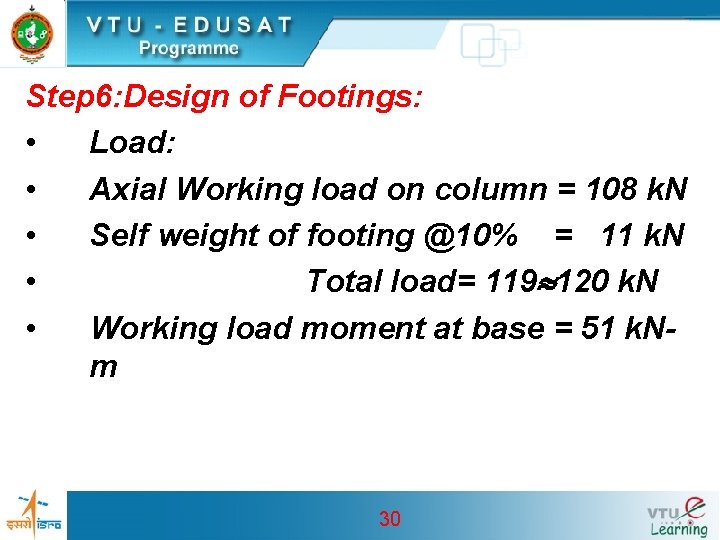
Step 6: Design of Footings: • Load: • Axial Working load on column = 108 k. N • Self weight of footing @10% = 11 k. N • Total load= 119 120 k. N • Working load moment at base = 51 k. Nm 30
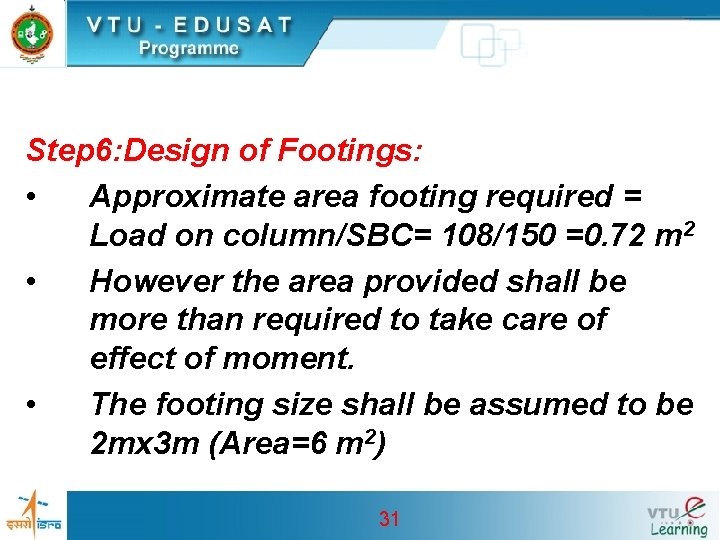
Step 6: Design of Footings: • Approximate area footing required = Load on column/SBC= 108/150 =0. 72 m 2 • However the area provided shall be more than required to take care of effect of moment. • The footing size shall be assumed to be 2 mx 3 m (Area=6 m 2) 31
32
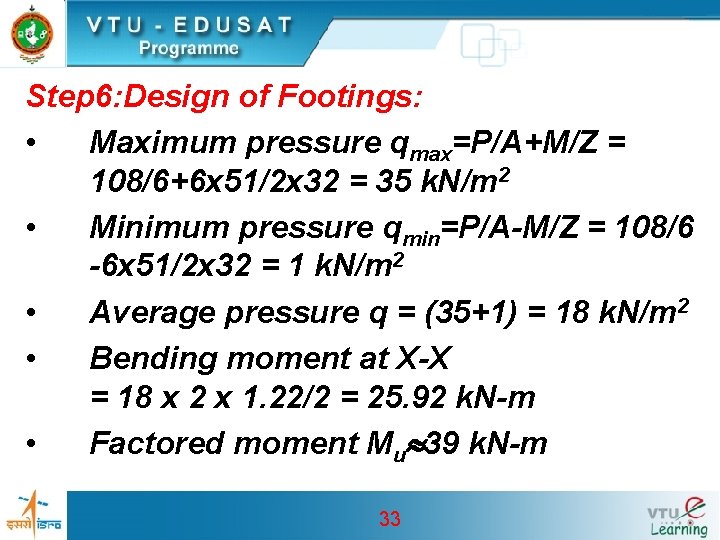
Step 6: Design of Footings: • Maximum pressure qmax=P/A+M/Z = 108/6+6 x 51/2 x 32 = 35 k. N/m 2 • Minimum pressure qmin=P/A-M/Z = 108/6 -6 x 51/2 x 32 = 1 k. N/m 2 • Average pressure q = (35+1) = 18 k. N/m 2 • Bending moment at X-X = 18 x 2 x 1. 22/2 = 25. 92 k. N-m • Factored moment Mu 39 k. N-m 33
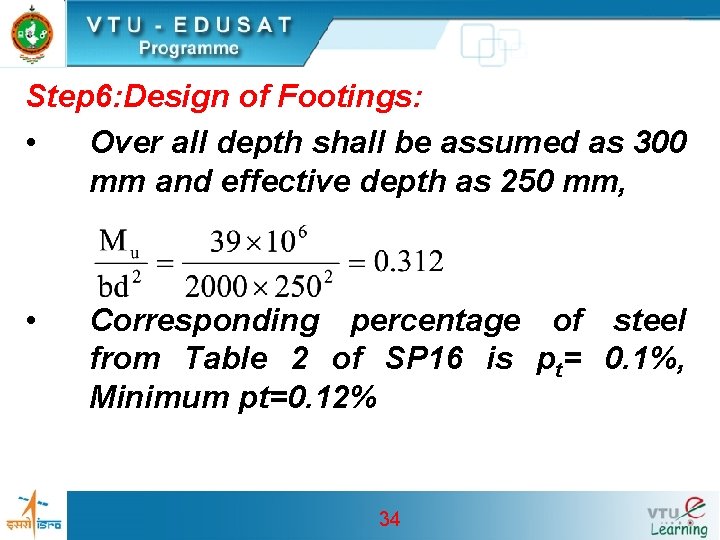
Step 6: Design of Footings: • Over all depth shall be assumed as 300 mm and effective depth as 250 mm, • Corresponding percentage of steel from Table 2 of SP 16 is pt= 0. 1%, Minimum pt=0. 12% 34
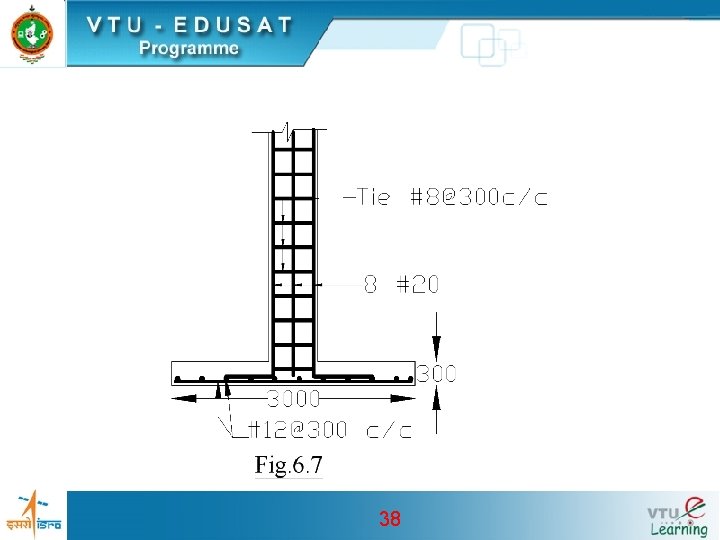
Step 6: Design of Footings: • Area of steel per meter width of footing is Ast=0. 12 x 1000 x 250/100=300 mm 2 • Spacing of 12 mm diameter bar = 113 x 1000/300 = 376 mm c/c • Provide #12 @ 300 c/c both ways 35
Step 6: Design of Footings: • • • Check for Punching Shear Length of punching influence plane = ao= 600+250 = 850 mm Width of punching influence plane = bo= 400+250 = 650 mm Punching shear Force = Vpunch =108 -18 x(0. 85 x 0. 65)=98 k. N Punching shear stress punch= Vpunch/ (2 x(ao+bo)d =98 x 103/(2 x(850+650)250) = 0. 13 MPa Permissible shear stress = 0. 25 fck=1. 18 MPa > punch Safe 36
Step 6: Design of Footings: • • • Check for One Way Shear force at a distance ‘d’ from face of column V= 18 x 2 x 0. 95 = 34. 2 k. N Shear stress v=34. 2 x 10³/(2000 x 250)=0. 064 MPa Referring to table 19 of IS 456 this stress is very small and hence safe Details of reinforcement provided in footing is shown in Fig. 37
38
39
Dr. G. S. Suresh Civil Engineering Department The National Institute of Engineering Mysore-570 008 Mob: 9342188467 Email: gss_nie@yahoo. com 40