
Design and Control of Concrete Mixtures Volume Changes
- Slides: 49
Design and Control of Concrete Mixtures Volume Changes of Concrete Design and Control of Concrete Mixtures CHAPTER 13
Design and Control of Concrete Mixtures Overview • • Early age volume changes Moisture changes Temperature changes Curling and warping Elastic and inelastic deformation Creep Chemical changes and effects
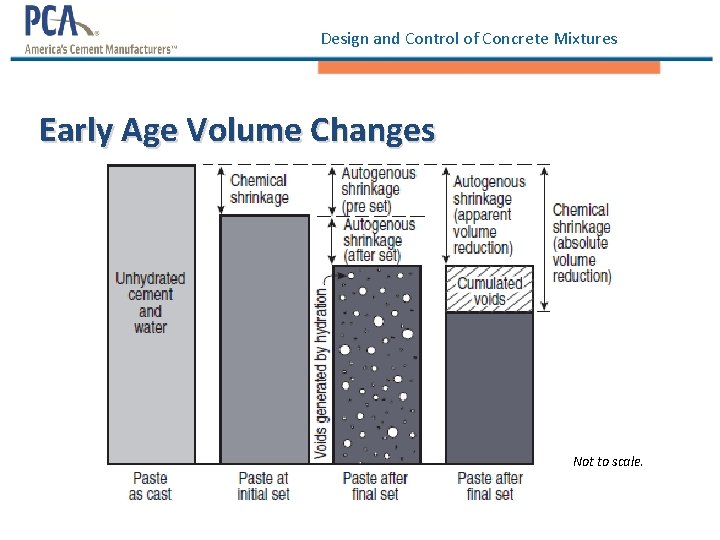
Design and Control of Concrete Mixtures Early Age Volume Changes Not to scale.
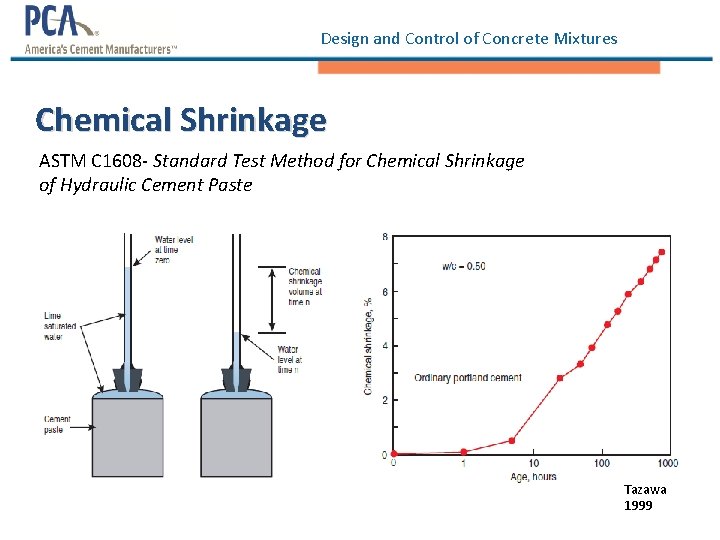
Design and Control of Concrete Mixtures Chemical Shrinkage ASTM C 1608 - Standard Test Method for Chemical Shrinkage of Hydraulic Cement Paste Tazawa 1999
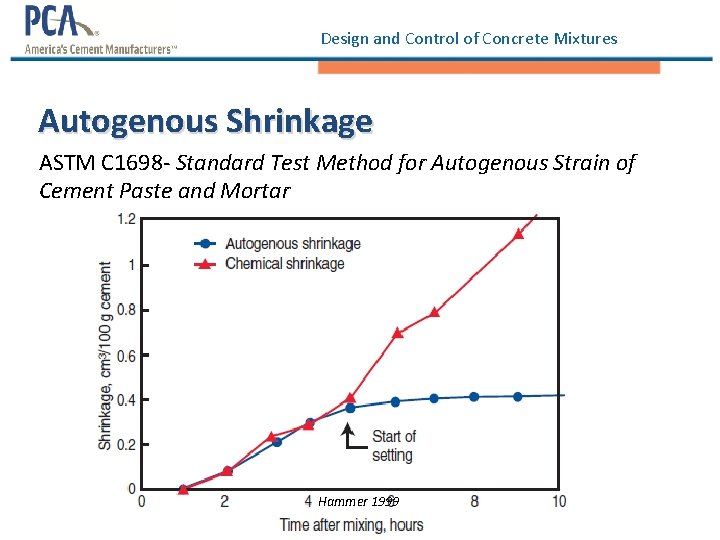
Design and Control of Concrete Mixtures Autogenous Shrinkage ASTM C 1698 - Standard Test Method for Autogenous Strain of Cement Paste and Mortar Hammer 1999
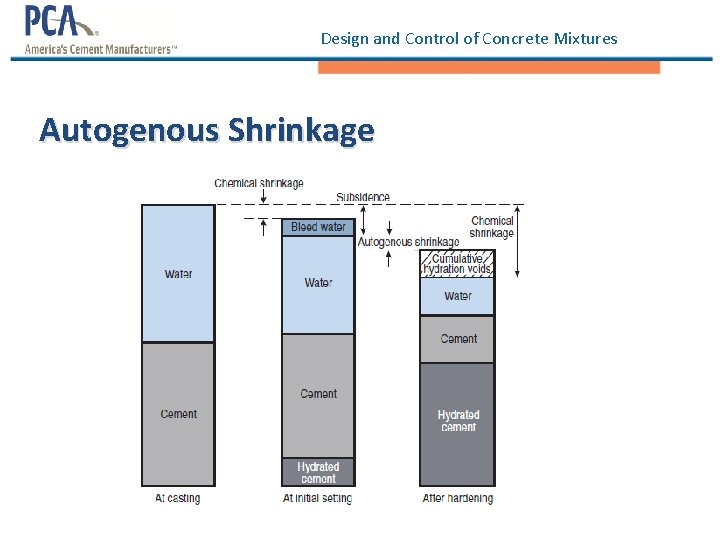
Design and Control of Concrete Mixtures Autogenous Shrinkage
Design and Control of Concrete Mixtures Subsidence • Vertical shrinkage before initial set • Caused by bleeding, escaping air, and chemical shrinkage • May be a symptom of lack of consolidation • May lead to cracking over embedments
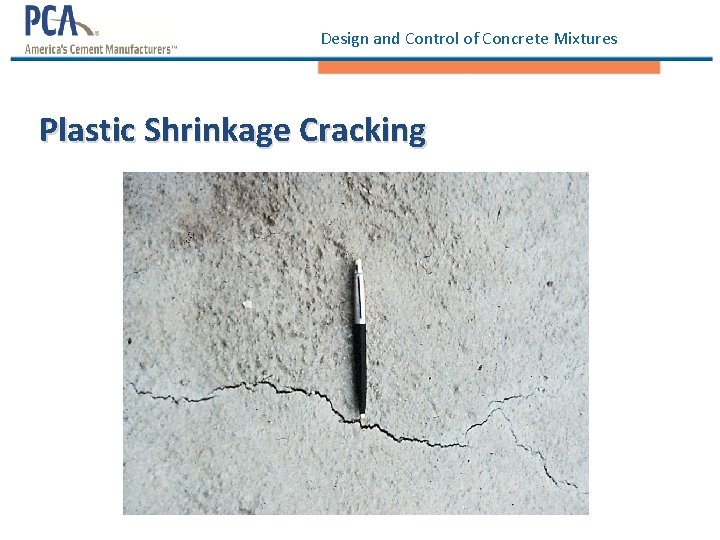
Design and Control of Concrete Mixtures Plastic Shrinkage Cracking
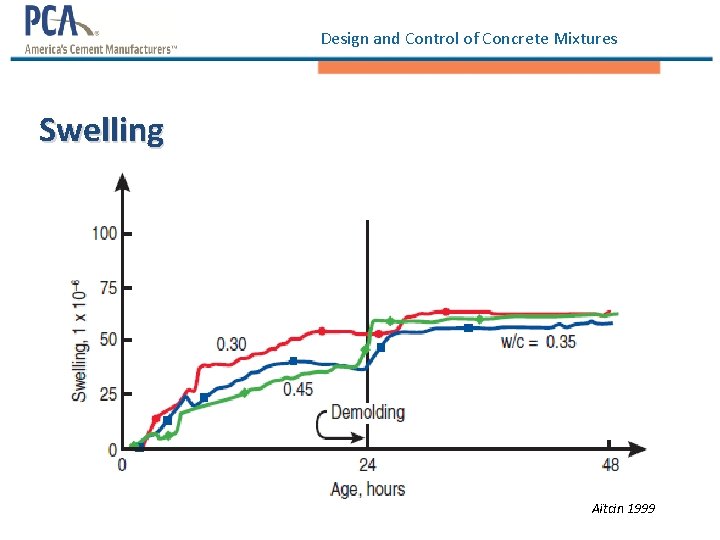
Design and Control of Concrete Mixtures Swelling Aïtcin 1999
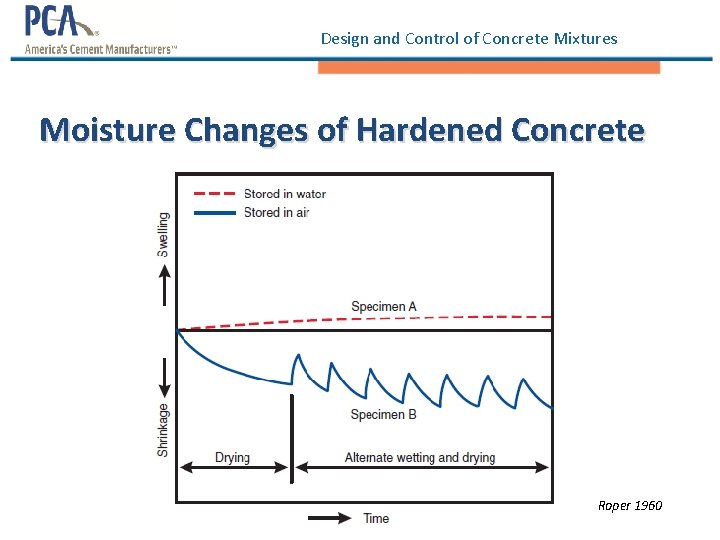
Design and Control of Concrete Mixtures Moisture Changes of Hardened Concrete Roper 1960
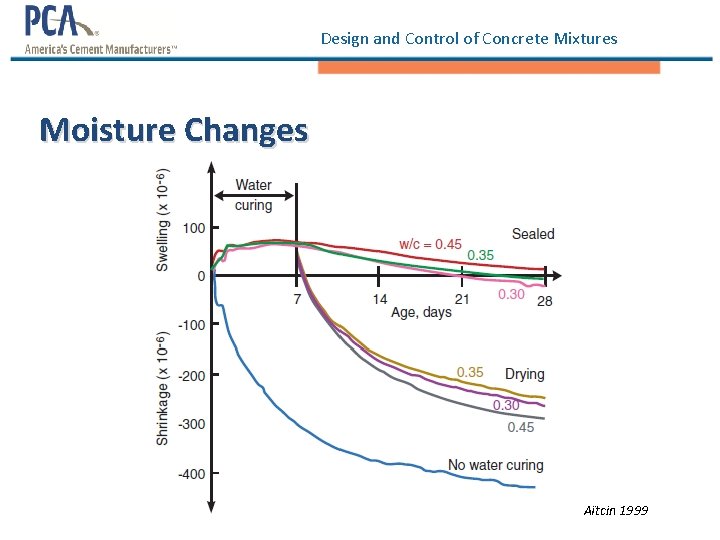
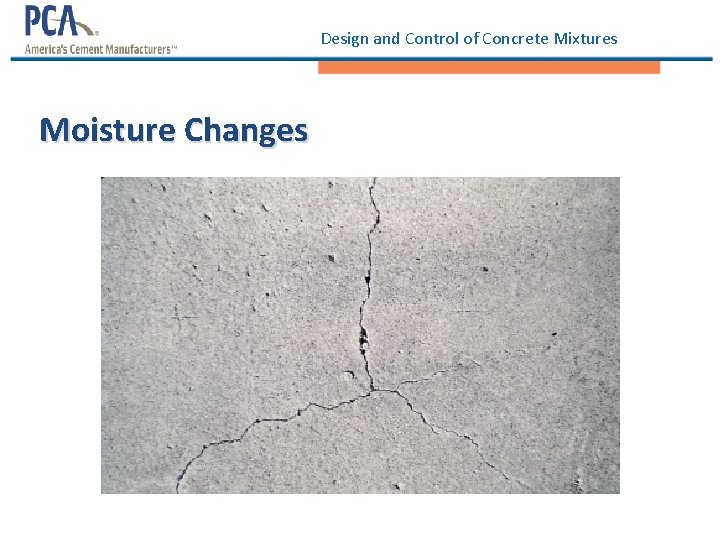
Design and Control of Concrete Mixtures Moisture Changes Aïtcin 1999
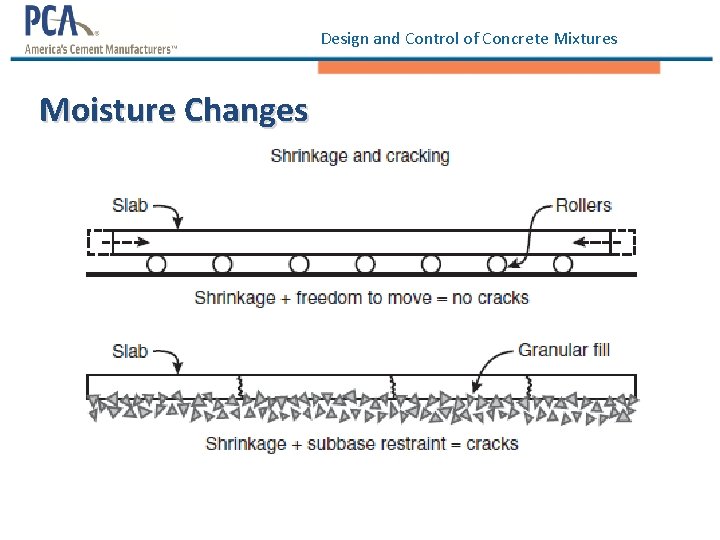
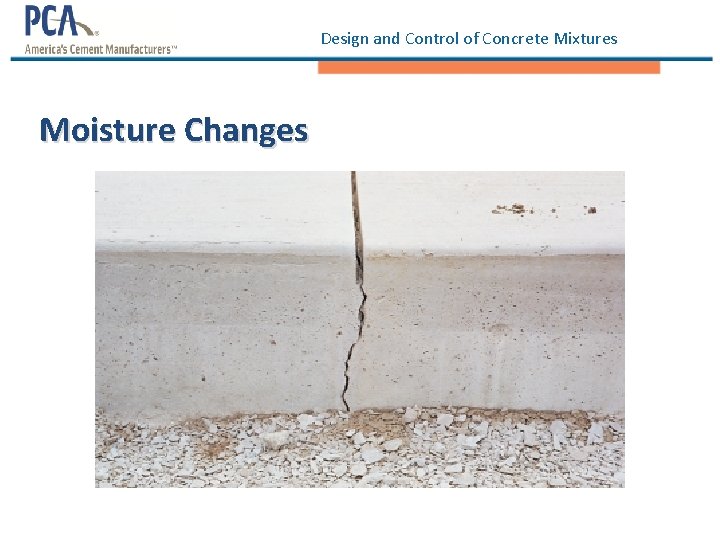
Design and Control of Concrete Mixtures Moisture Changes
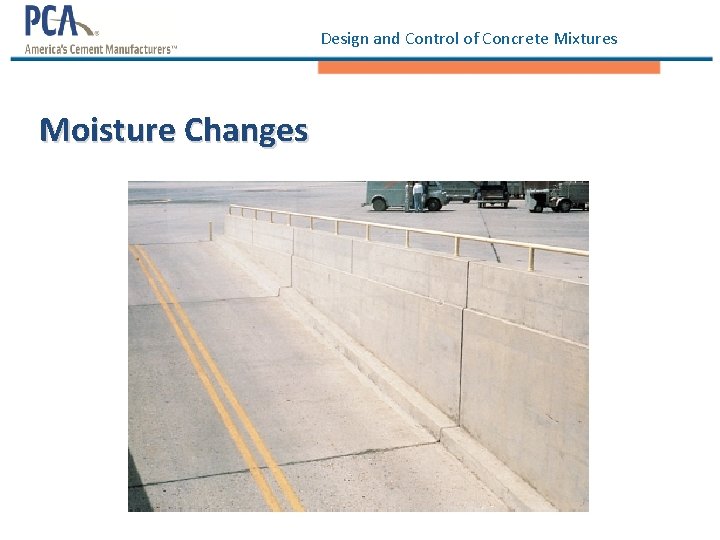
Design and Control of Concrete Mixtures Moisture Changes
Design and Control of Concrete Mixtures Moisture Changes
Design and Control of Concrete Mixtures Moisture Changes
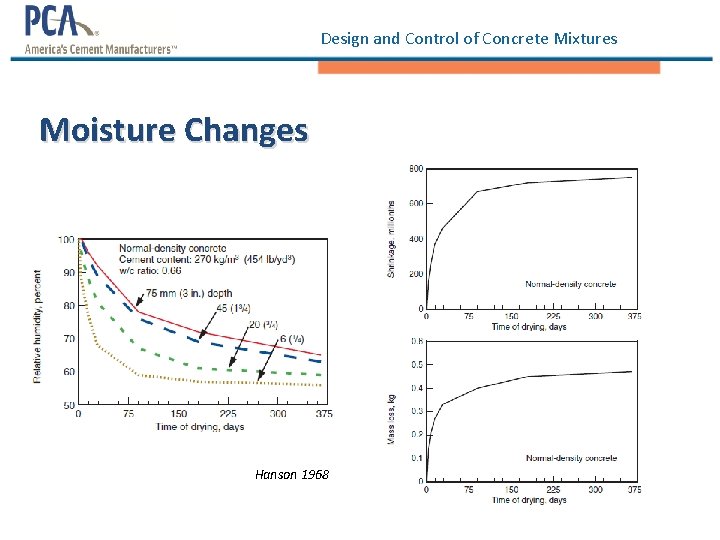
Design and Control of Concrete Mixtures Moisture Changes Hanson 1968
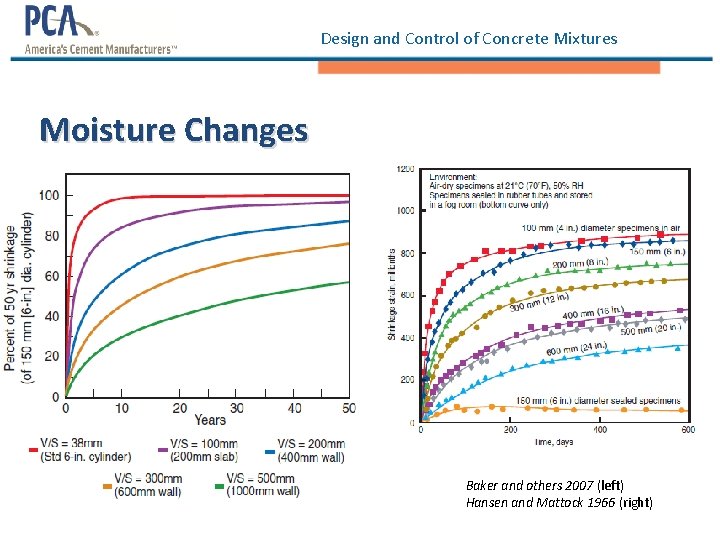
Design and Control of Concrete Mixtures Moisture Changes Baker and others 2007 (left) Hansen and Mattock 1966 (right)
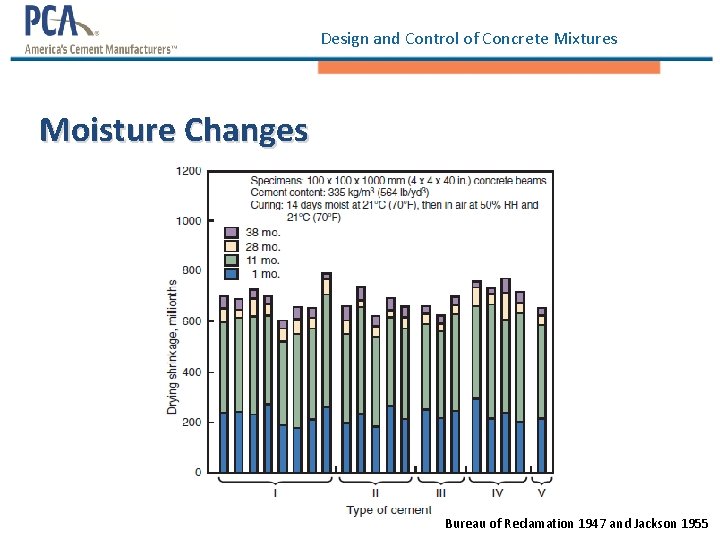
Design and Control of Concrete Mixtures Moisture Changes Bureau of Reclamation 1947 and Jackson 1955
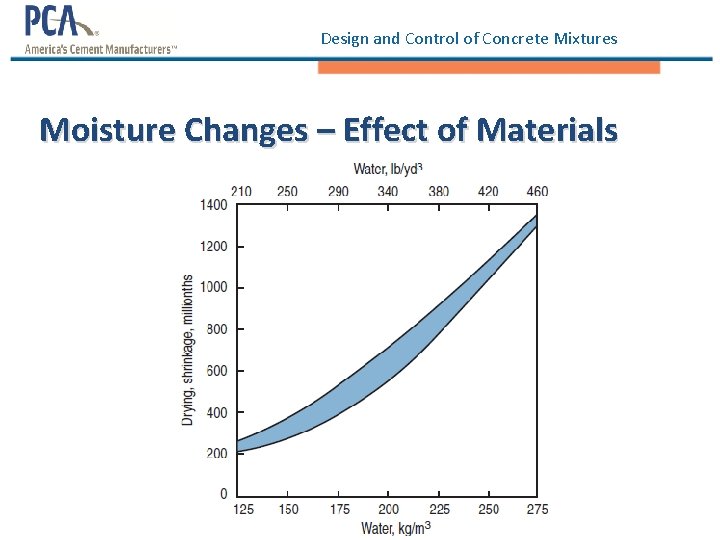
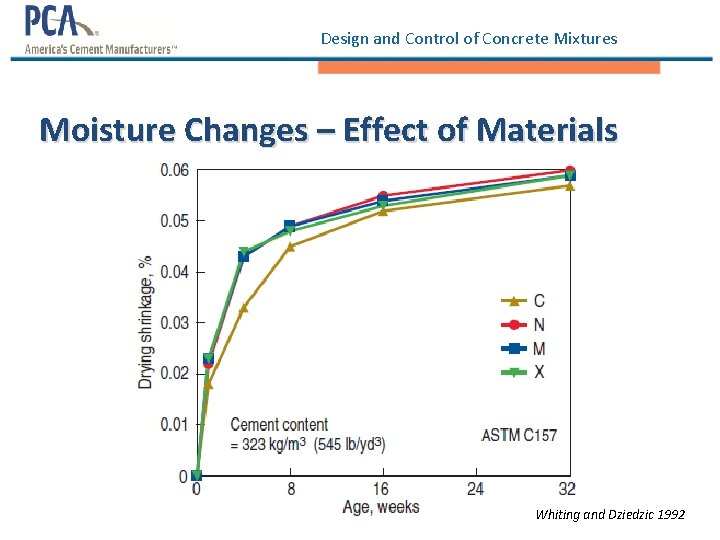
Design and Control of Concrete Mixtures Moisture Changes – Effect of Materials
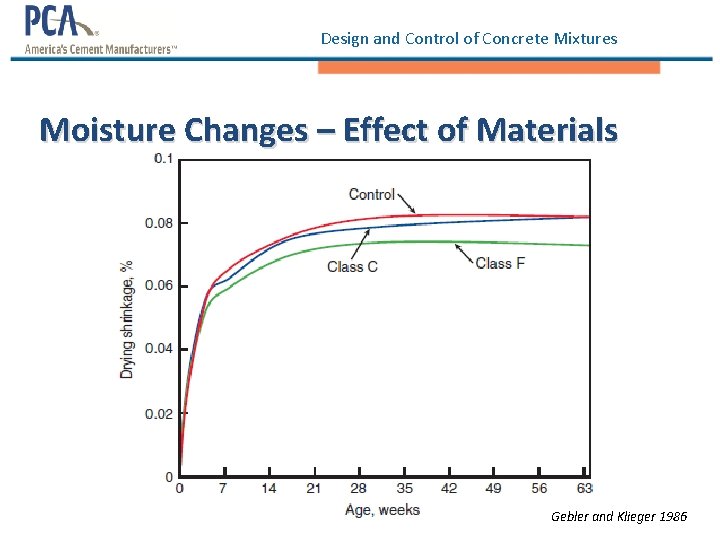
Design and Control of Concrete Mixtures Moisture Changes – Effect of Materials Gebler and Klieger 1986
Design and Control of Concrete Mixtures Moisture Changes – Effect of Materials Whiting and Dziedzic 1992
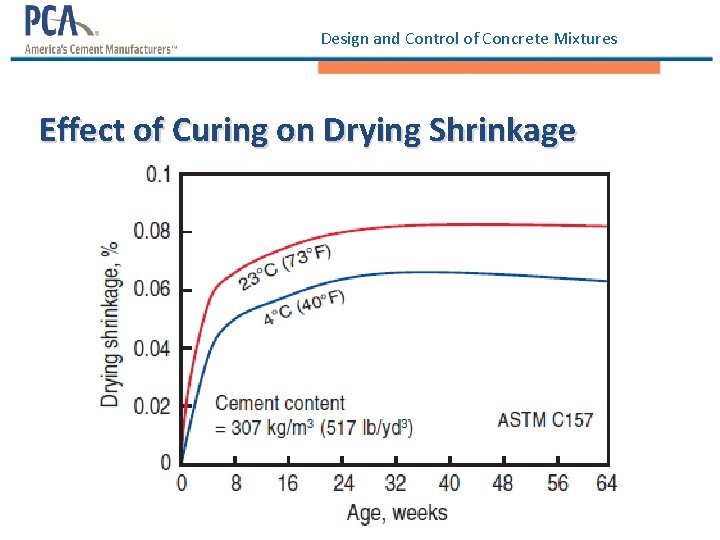
Design and Control of Concrete Mixtures Effect of Curing on Drying Shrinkage
Design and Control of Concrete Mixtures Thermal Expansion Coefficient • AASHTO T 336 - Standard Method of Test for Coefficient of Thermal Expansion of Hydraulic Cement Concrete • Average: 10 millionths/ degree Celsius (5. 5 millions per degree Fahrenheit)
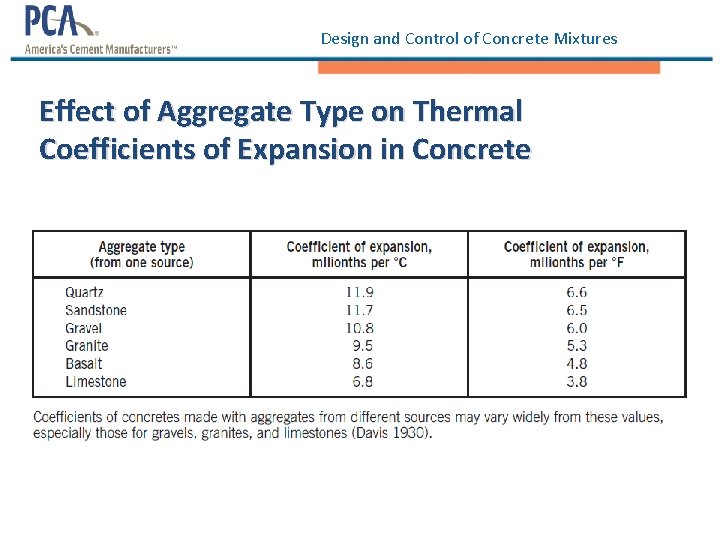
Design and Control of Concrete Mixtures Effect of Aggregate Type on Thermal Coefficients of Expansion in Concrete
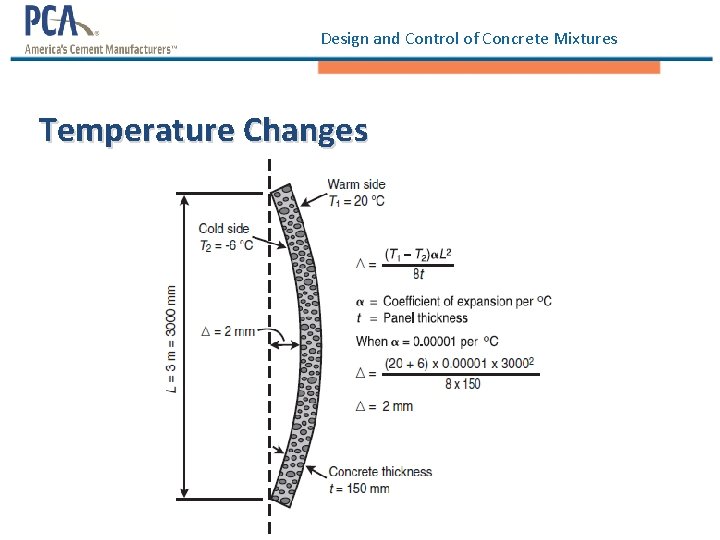
Design and Control of Concrete Mixtures Temperature Changes
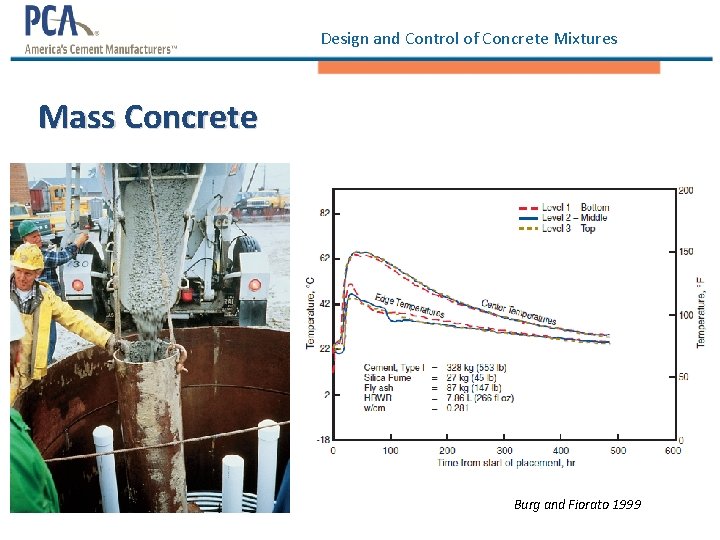
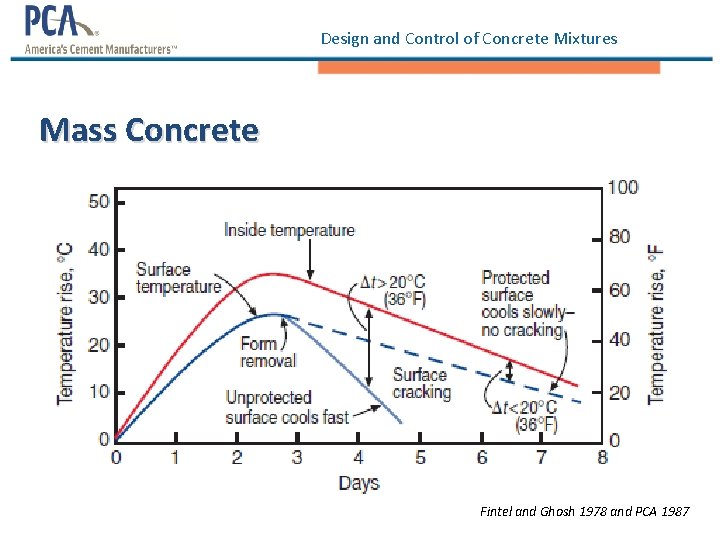
Design and Control of Concrete Mixtures Mass Concrete Burg and Fiorato 1999
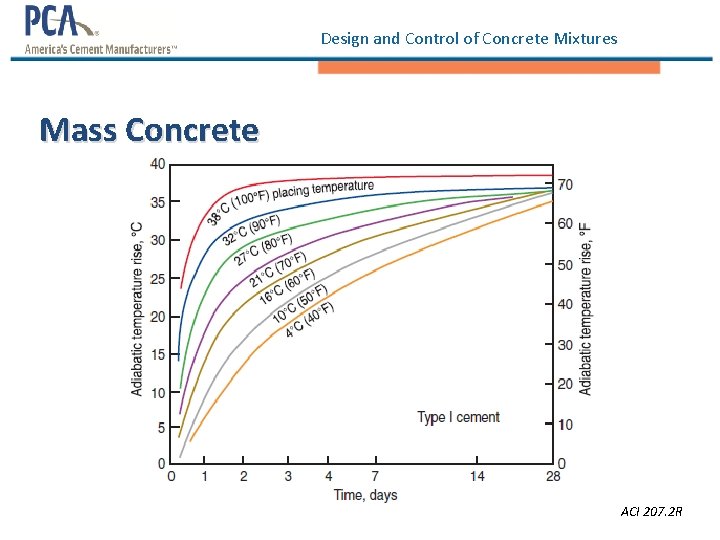
Design and Control of Concrete Mixtures Mass Concrete ACI 207. 2 R
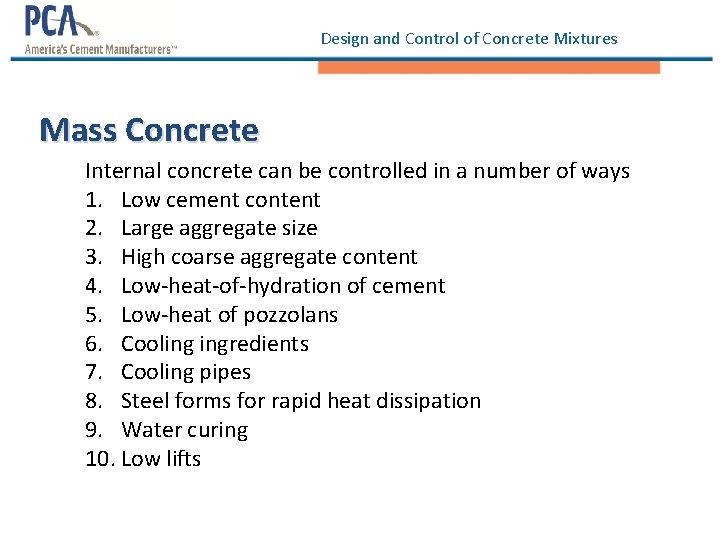
Design and Control of Concrete Mixtures Mass Concrete Internal concrete can be controlled in a number of ways 1. Low cement content 2. Large aggregate size 3. High coarse aggregate content 4. Low-heat-of-hydration of cement 5. Low-heat of pozzolans 6. Cooling ingredients 7. Cooling pipes 8. Steel forms for rapid heat dissipation 9. Water curing 10. Low lifts
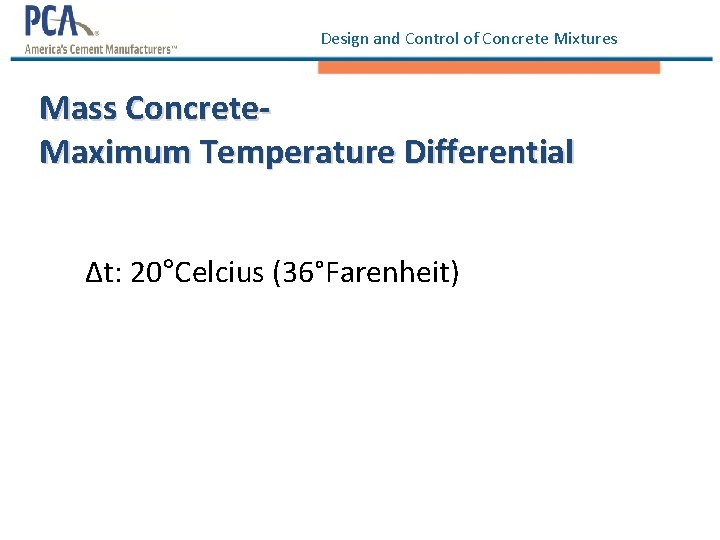
Design and Control of Concrete Mixtures Mass Concrete. Maximum Temperature Differential ∆t: 20°Celcius (36°Farenheit)
Design and Control of Concrete Mixtures Mass Concrete Fintel and Ghosh 1978 and PCA 1987
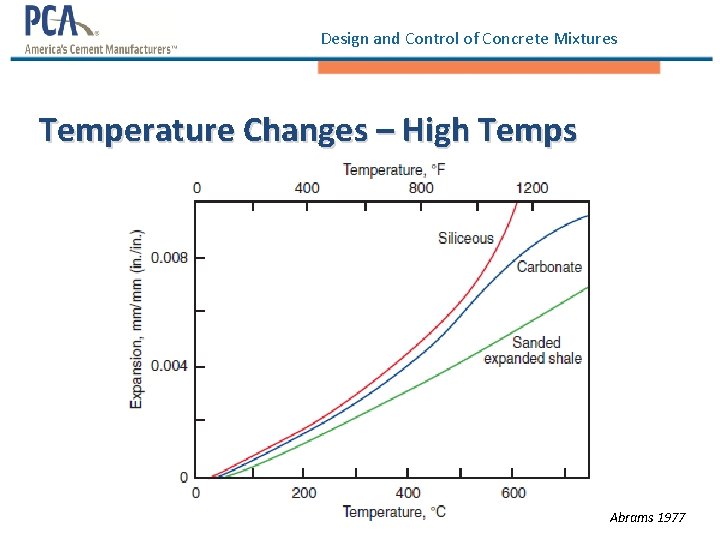
Design and Control of Concrete Mixtures Temperature Changes – High Temps Abrams 1977
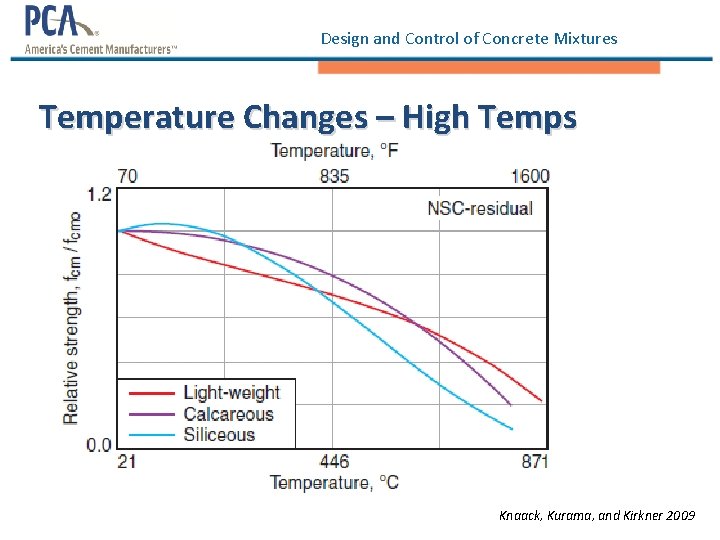
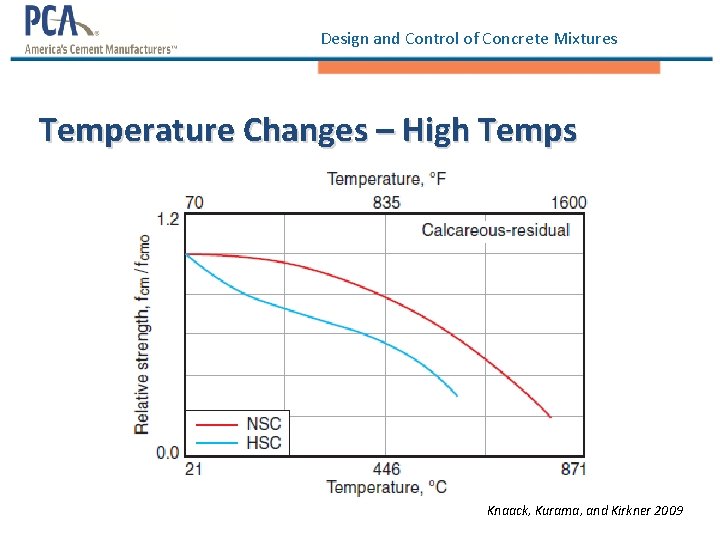
Design and Control of Concrete Mixtures Temperature Changes – High Temps Knaack, Kurama, and Kirkner 2009
Design and Control of Concrete Mixtures Temperature Changes – High Temps Knaack, Kurama, and Kirkner 2009
Design and Control of Concrete Mixtures Curling and Warping • Curling - the deformation of the slab; Can be reduced or eliminated by using design and construction techniques that minimize shrinkage potential • Slab “warping” - the deformation of the slab surface profile; If the slab surface is allowed to dry and the bottom is kept moist, the edges will tend to warp upward.
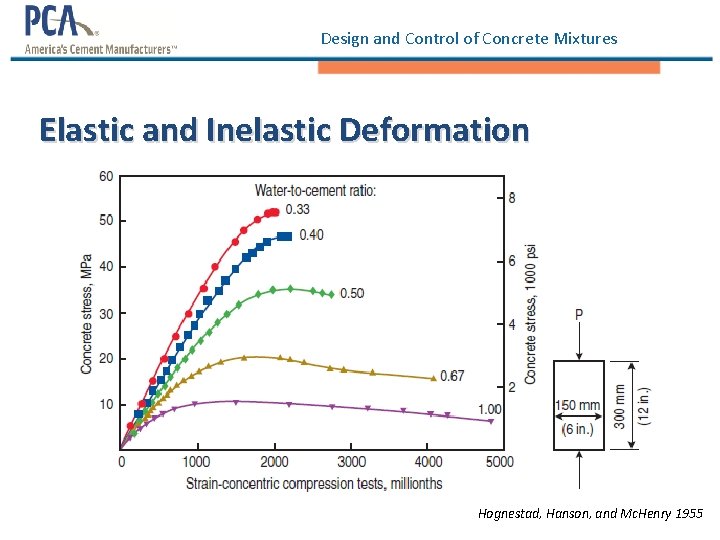
Design and Control of Concrete Mixtures Elastic and Inelastic Deformation Hognestad, Hanson, and Mc. Henry 1955
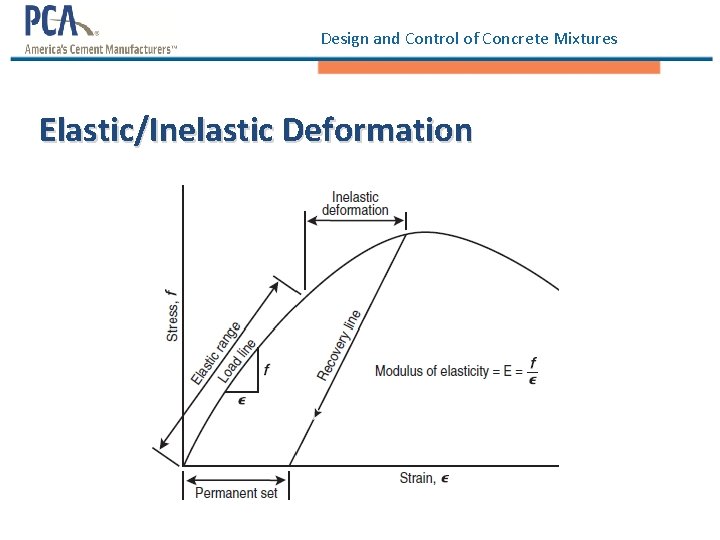
Design and Control of Concrete Mixtures Elastic/Inelastic Deformation
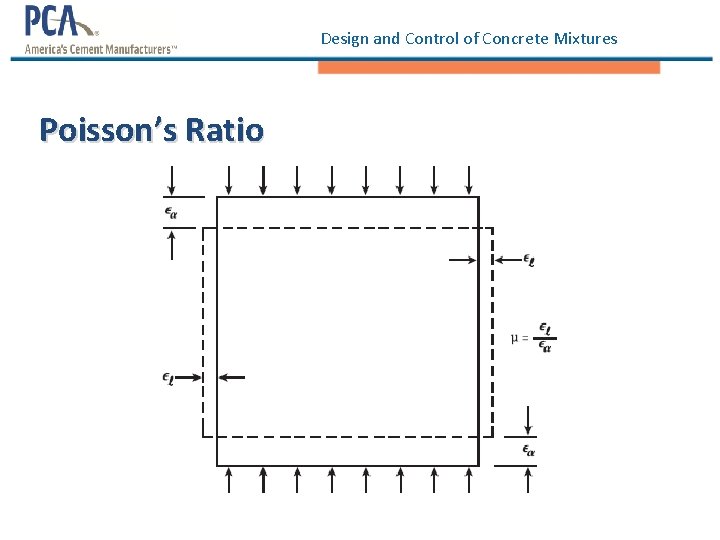
Design and Control of Concrete Mixtures Poisson’s Ratio
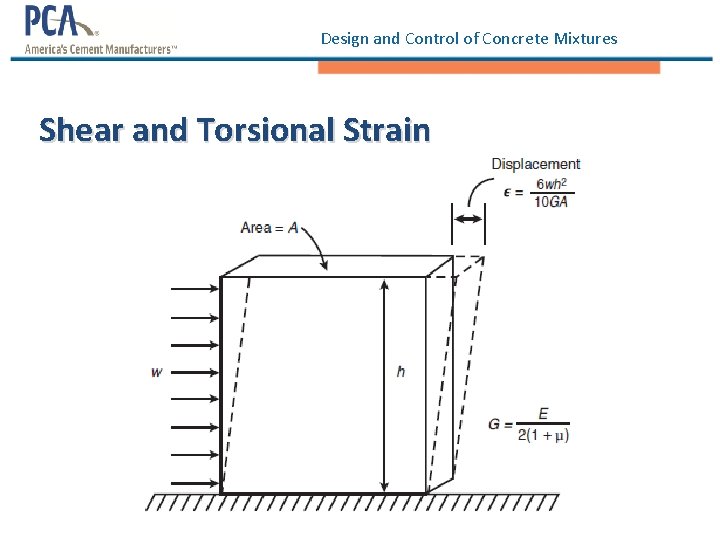
Design and Control of Concrete Mixtures Shear and Torsional Strain
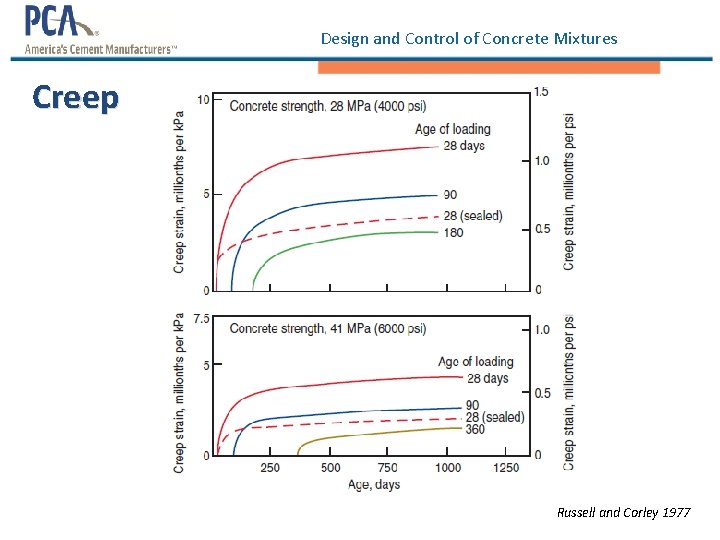
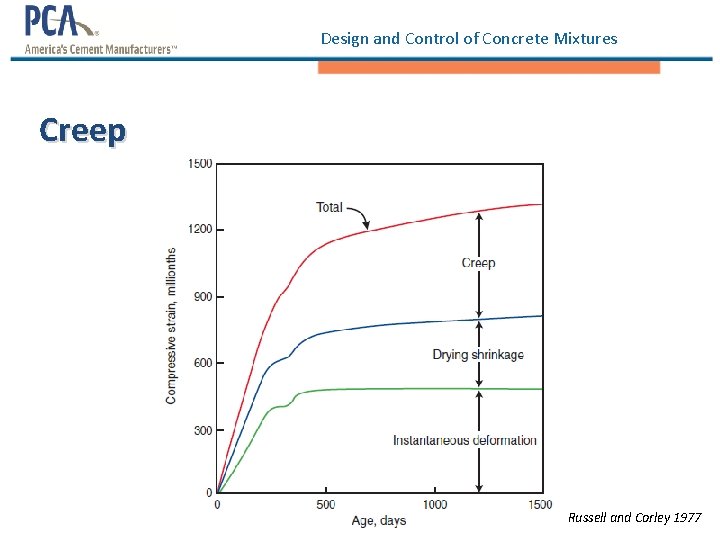
Design and Control of Concrete Mixtures Creep Russell and Corley 1977
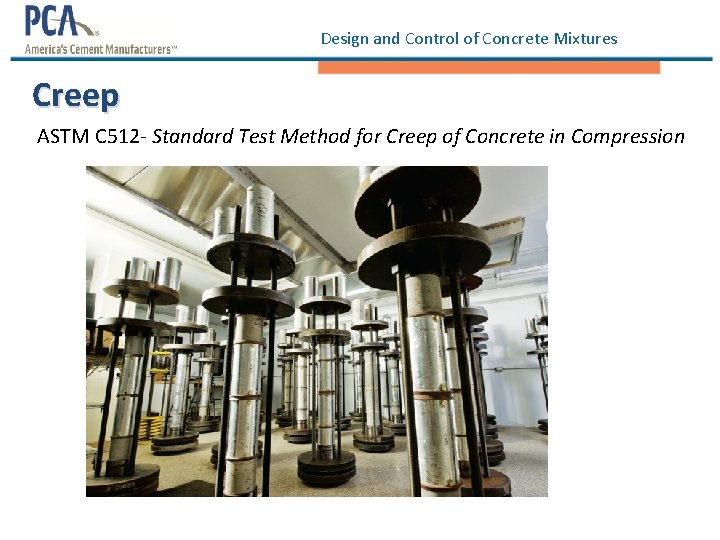
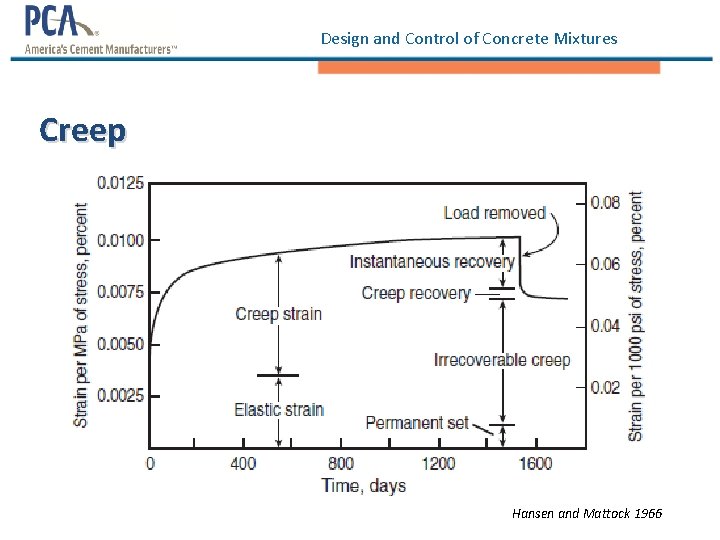
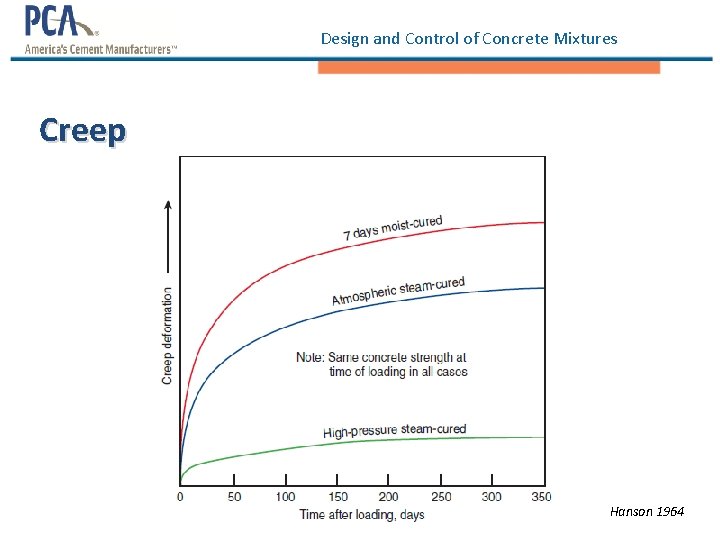
Design and Control of Concrete Mixtures Creep ASTM C 512 - Standard Test Method for Creep of Concrete in Compression
Design and Control of Concrete Mixtures Creep Hansen and Mattock 1966
Design and Control of Concrete Mixtures Creep Russell and Corley 1977
Design and Control of Concrete Mixtures Creep Hanson 1964
Design and Control of Concrete Mixtures Chemical Changes and Effects • Carbonation shrinkage • Sulfate expansion • Alkali-aggregate expansion
Design and Control of Concrete Mixtures Carbonation Shrinkage • Increases the chemical stability and strength of the concrete • Carbonation shrinkage of cast-in-place concrete is insignificant
Design and Control of Concrete Mixtures Sulfate Expansion • Occurs where soil and groundwater have a high sulfate content • Formation of solids from the chemical action or salt crystallization • The attack is greater in concrete that is exposed to wetting and drying • Results in an expansion of the concrete
Design and Control of Concrete Mixtures Alkali-Aggregate Reactions • • Certain aggregates can react with alkali hydroxides in concrete Causes expansion and cracking The reaction is greater when exposed to moisture. Alkali-aggregate reaction expansion may exceed 0. 5% in concrete and can cause the concrete to fracture and break apart.
Design and Control of Concrete Mixtures Summary • • Early age volume changes Moisture changes Temperature changes Curling and warping Elastic and inelastic deformation Creep Chemical changes and effects
Design and Control of Concrete Mixtures ?