
Design and Control of Concrete Mixtures Chemical Admixtures

- Slides: 54
Design and Control of Concrete Mixtures Chemical Admixtures Design and Control of Concrete Mixtures CHAPTER 9
Design and Control of Concrete Mixtures Overview • • Air-entraining admixtures Water-reducing admixtures Set retarding admixtures Set accelerating admixtures Specialty admixtures Admixture compatibility Storage and dispensing admixtures
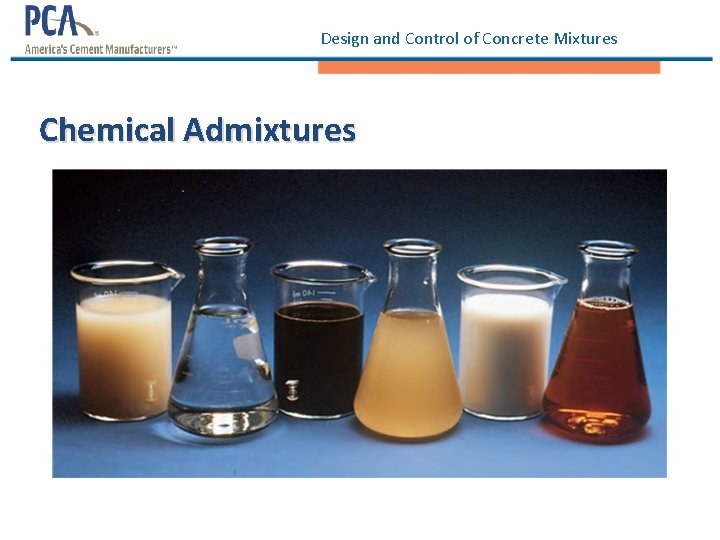
Design and Control of Concrete Mixtures Chemical Admixtures
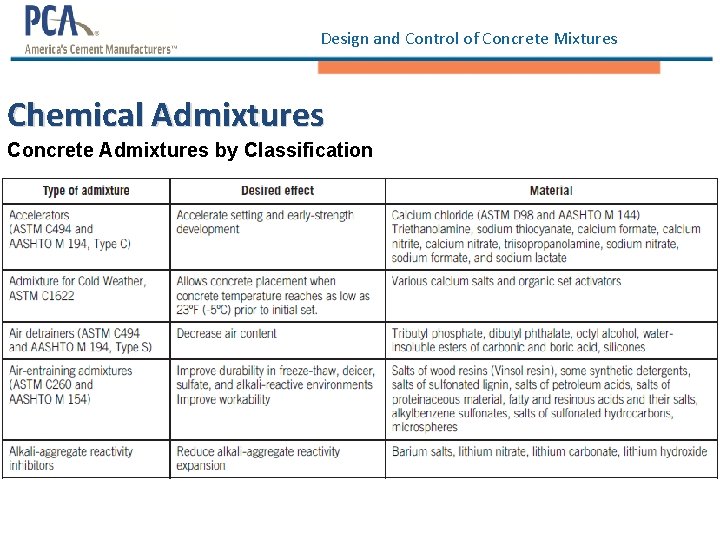
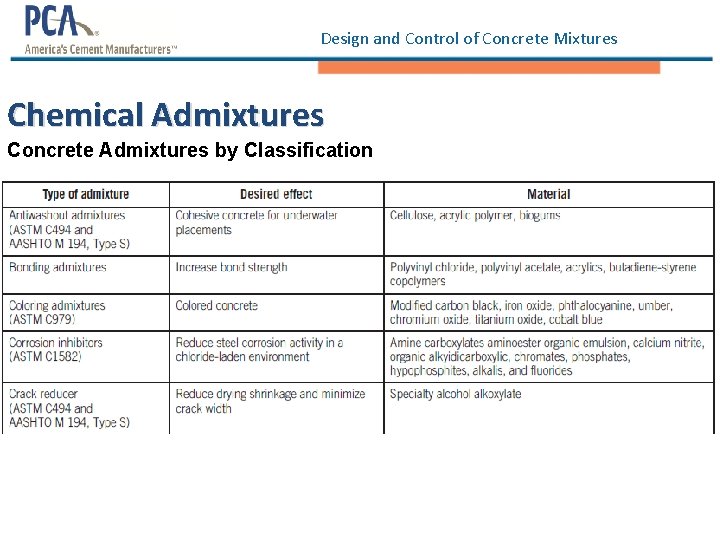
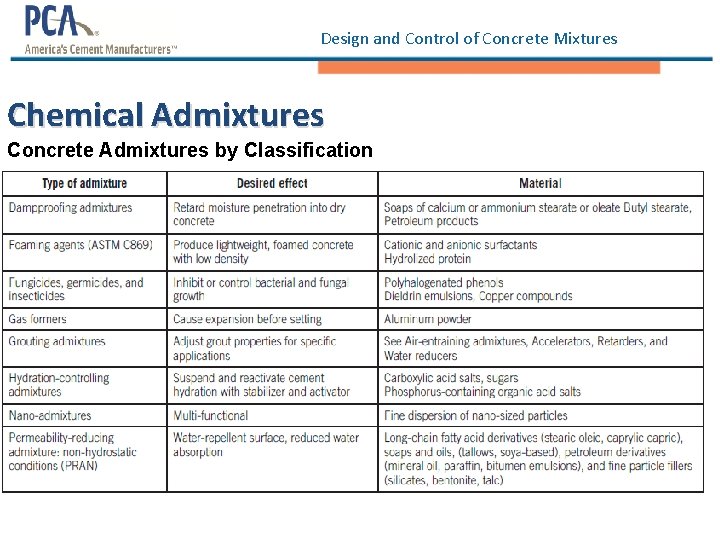
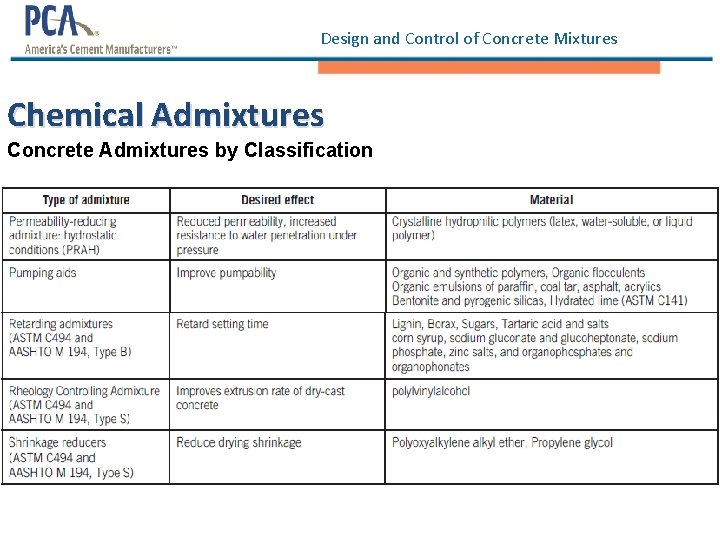
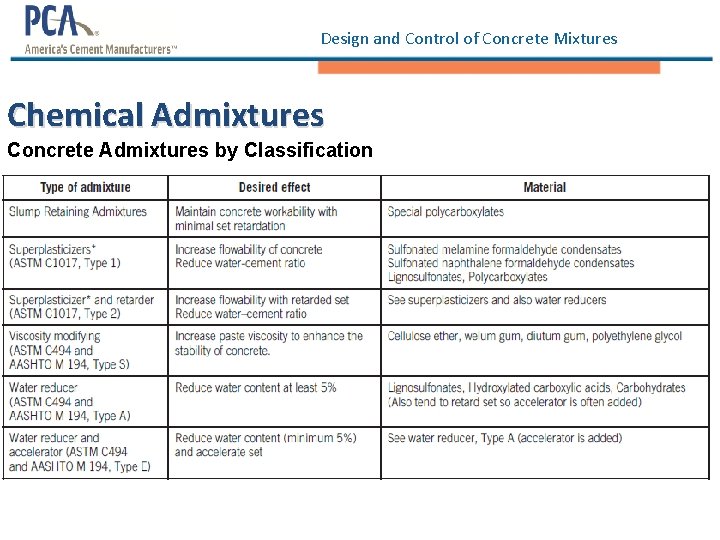
Design and Control of Concrete Mixtures Chemical Admixtures The major reasons for using chemical admixtures in concrete mixtures are: 1. To achieve specific properties in fresh and hardened concrete 2. To maintain the consistency 3. To overcome certain emergencies during concreting operations 4. To make the mixture more economical 5. To enable use of a wider selection of concrete materials (including marginal materials)
Design and Control of Concrete Mixtures Chemical Admixtures Concrete Admixtures by Classification
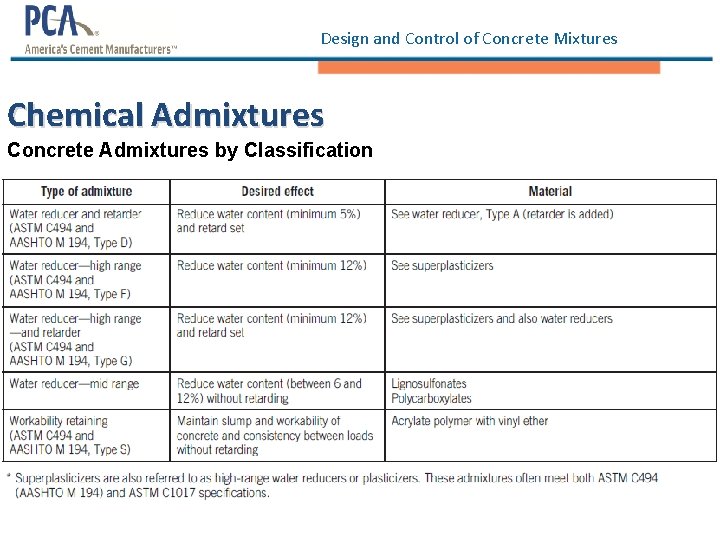
Design and Control of Concrete Mixtures Chemical Admixtures Concrete Admixtures by Classification
Design and Control of Concrete Mixtures Chemical Admixtures Concrete Admixtures by Classification
Design and Control of Concrete Mixtures Chemical Admixtures Concrete Admixtures by Classification
Design and Control of Concrete Mixtures Chemical Admixtures Concrete Admixtures by Classification
Design and Control of Concrete Mixtures Chemical Admixtures Concrete Admixtures by Classification
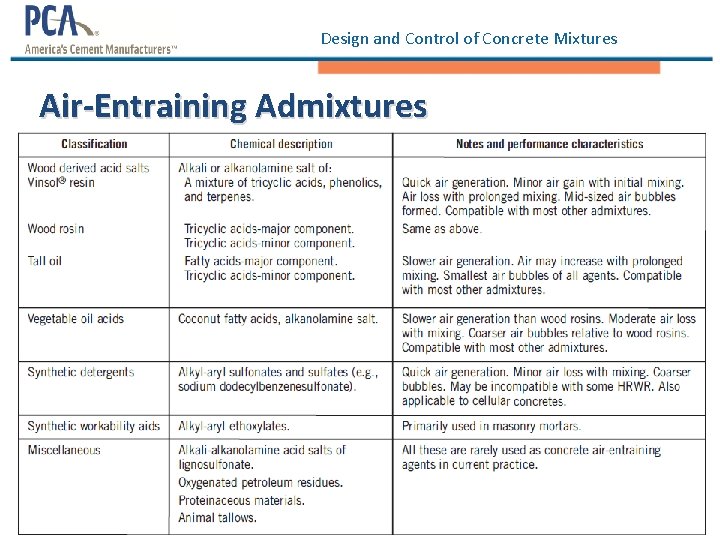
Design and Control of Concrete Mixtures Air-Entraining Admixtures
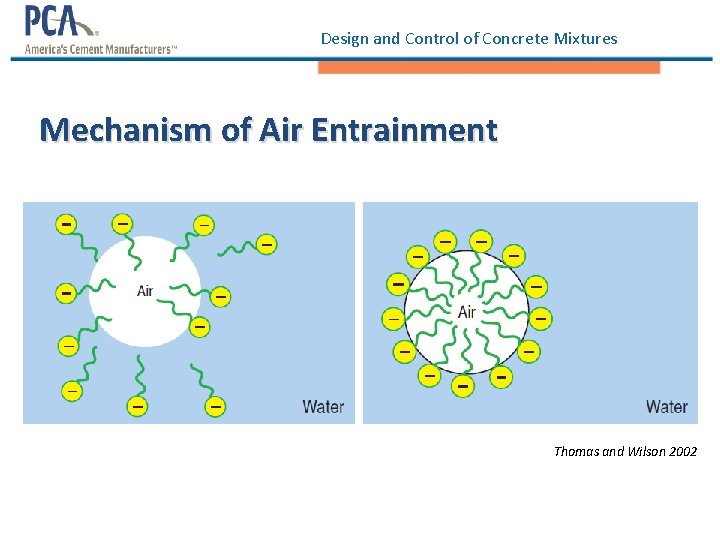
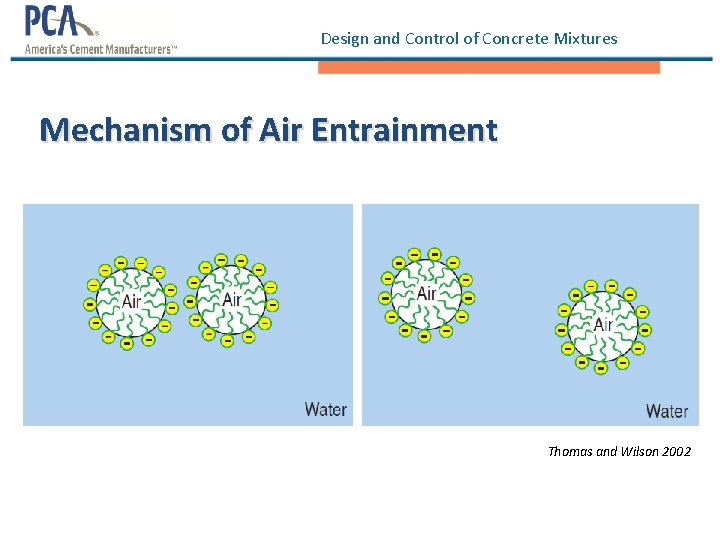
Design and Control of Concrete Mixtures Mechanism of Air Entrainment Thomas and Wilson 2002
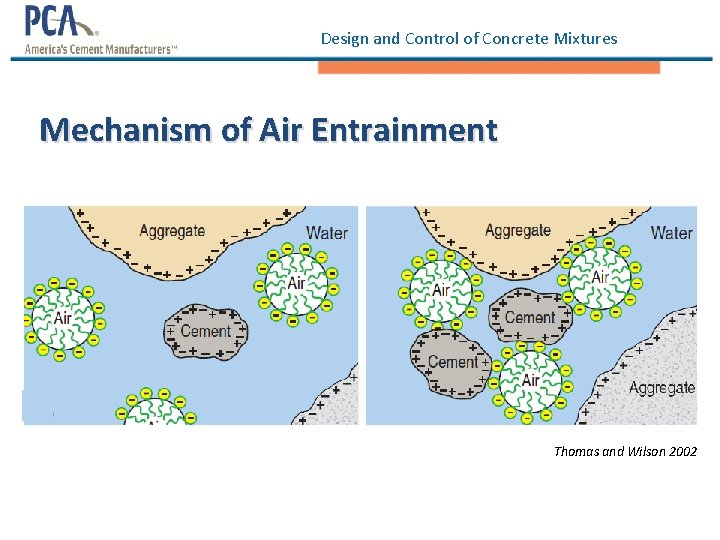
Design and Control of Concrete Mixtures Mechanism of Air Entrainment Thomas and Wilson 2002
Design and Control of Concrete Mixtures Mechanism of Air Entrainment Thomas and Wilson 2002
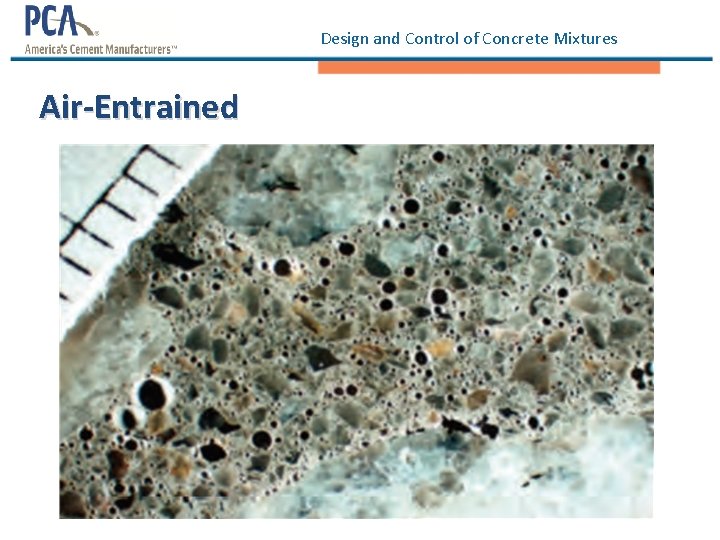
Design and Control of Concrete Mixtures Air-Entrained
Design and Control of Concrete Mixtures Control of Air Content The amount of air entrained in concrete for a given dose of admixture will depend on: • Concrete materials • Mixture proportions • Methods of transport • Placing and finishing methods • Curing • Aggregate proportions and gradation • Mixing time and intensity • Temperature • Slump
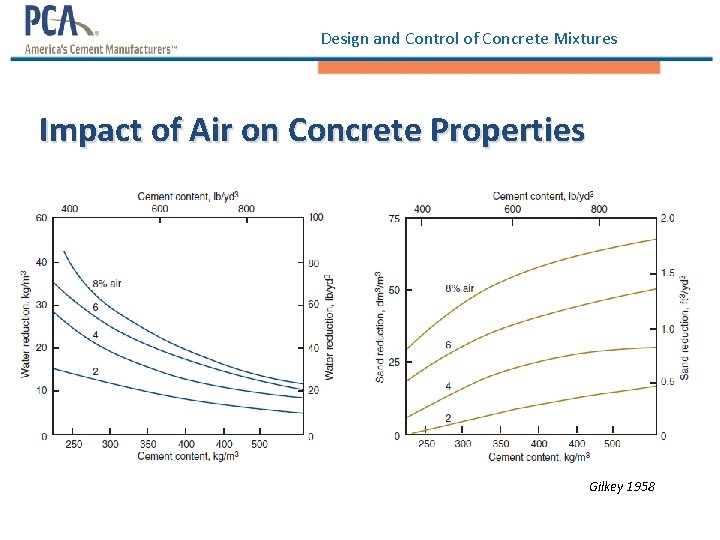
Design and Control of Concrete Mixtures Impact of Air on Concrete Properties Gilkey 1958
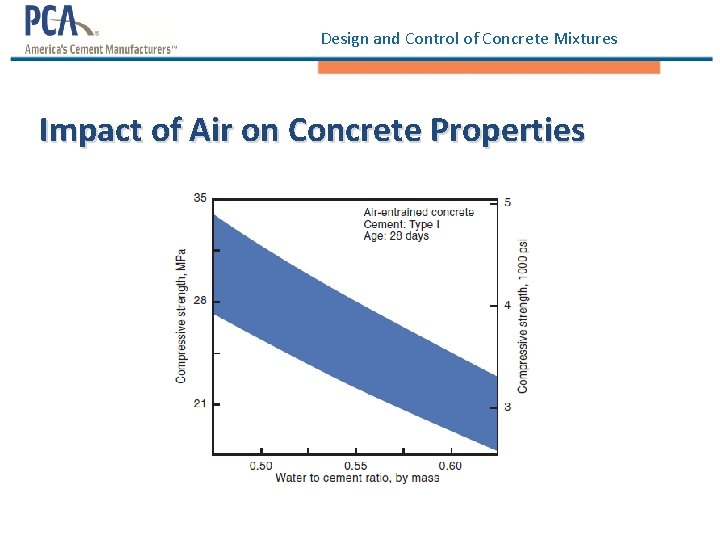
Design and Control of Concrete Mixtures Impact of Air on Concrete Properties
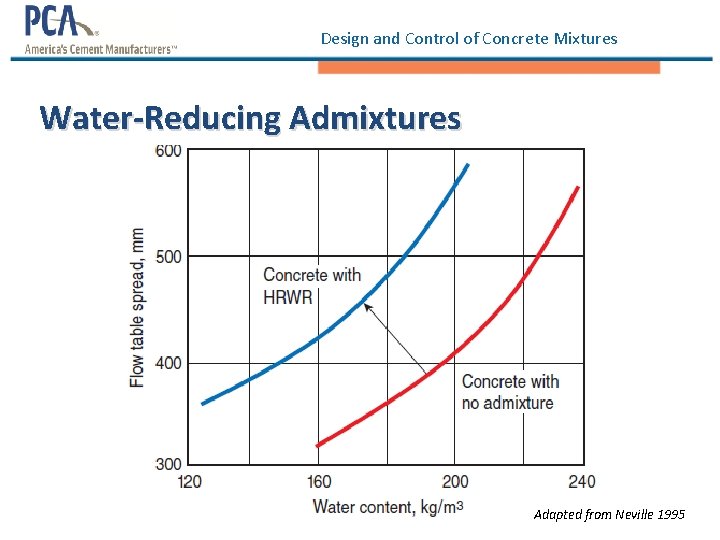
Design and Control of Concrete Mixtures Water-Reducing Admixtures Adapted from Neville 1995
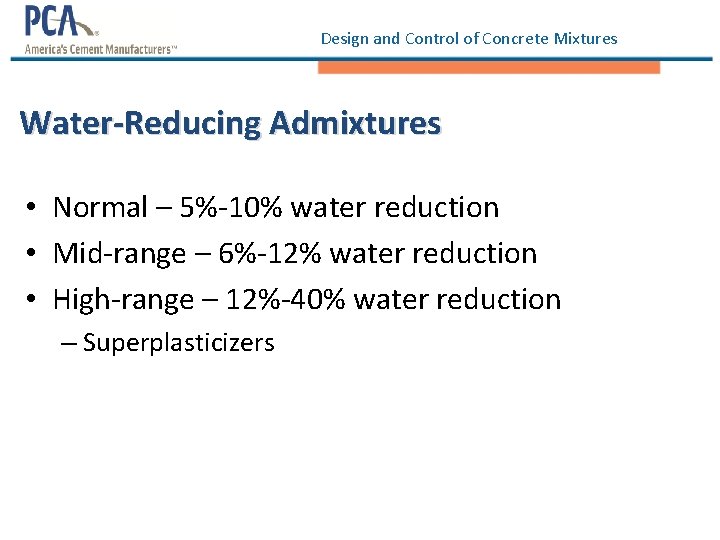
Design and Control of Concrete Mixtures Water-Reducing Admixtures • Normal – 5%-10% water reduction • Mid-range – 6%-12% water reduction • High-range – 12%-40% water reduction – Superplasticizers
Design and Control of Concrete Mixtures High-Range Water Reducers
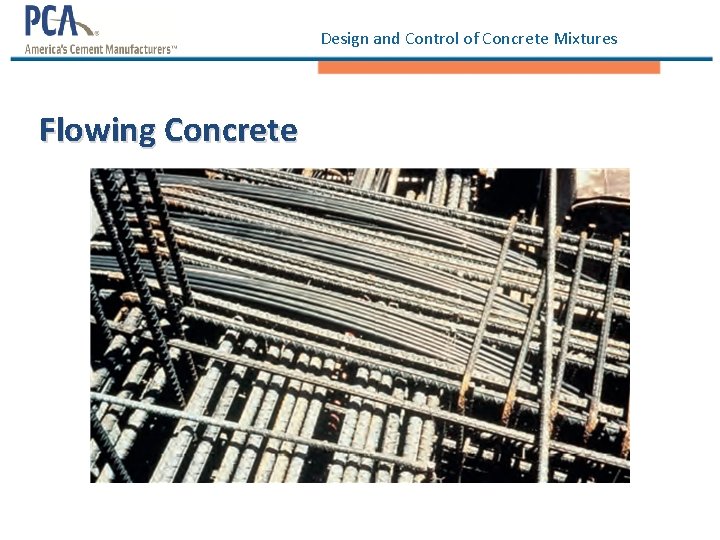
Design and Control of Concrete Mixtures Flowing Concrete
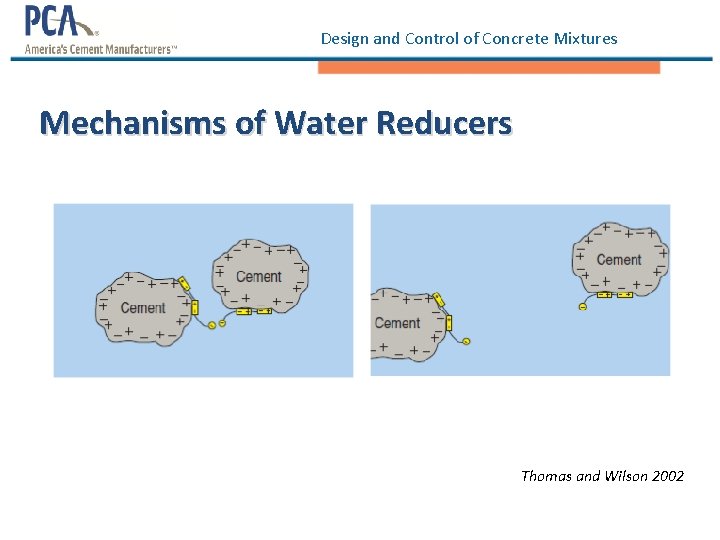
Design and Control of Concrete Mixtures Mechanisms of Water Reducers Thomas and Wilson 2002
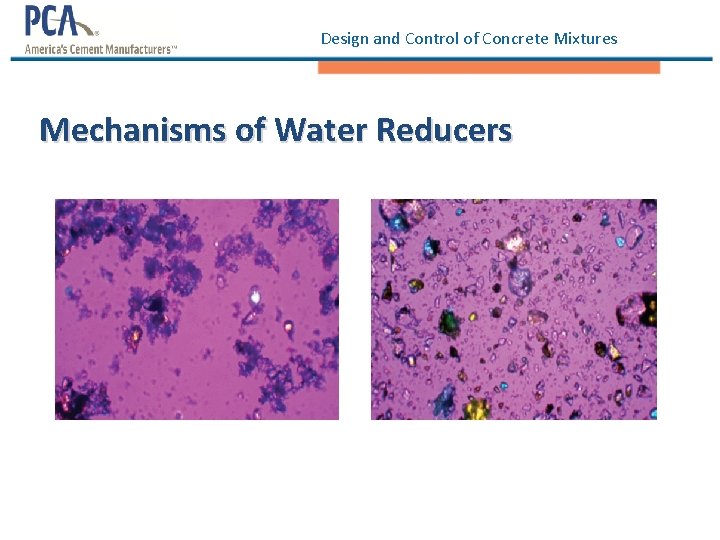
Design and Control of Concrete Mixtures Mechanisms of Water Reducers
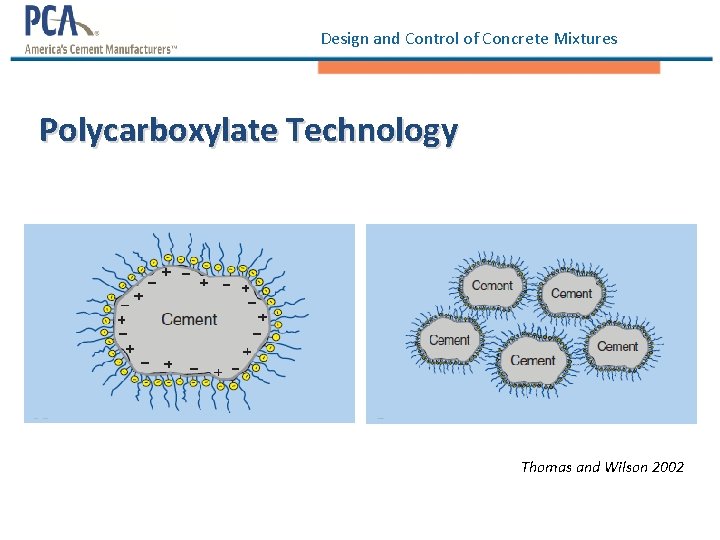
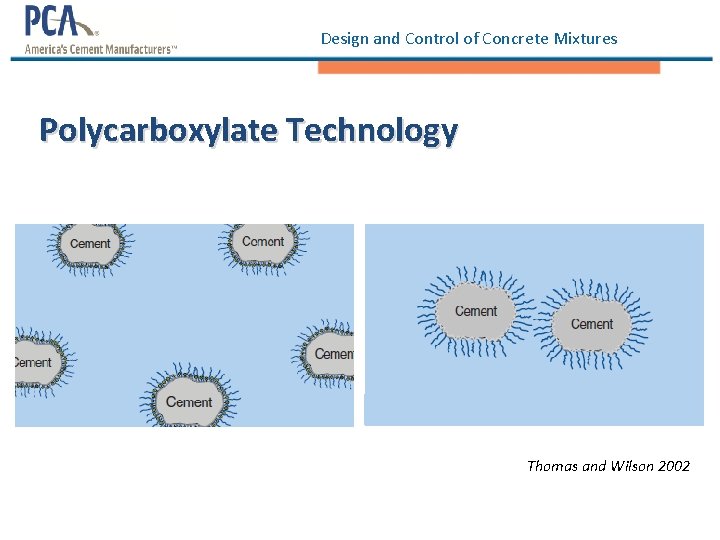
Design and Control of Concrete Mixtures Polycarboxylate Technology Thomas and Wilson 2002
Design and Control of Concrete Mixtures Polycarboxylate Technology Thomas and Wilson 2002
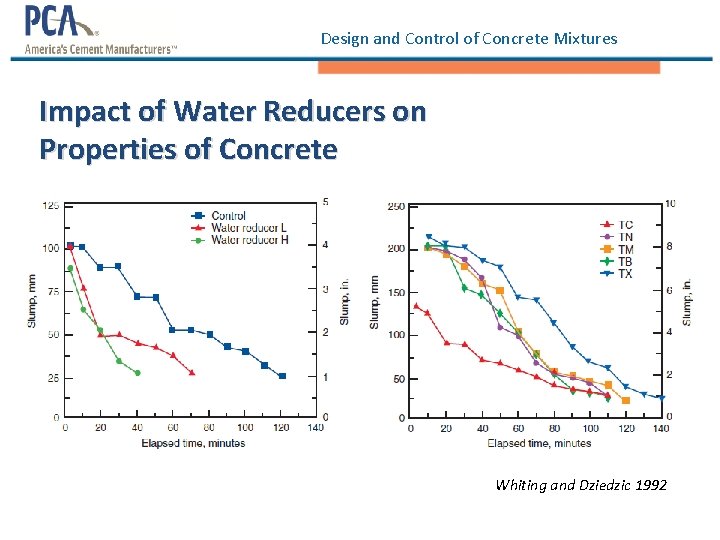
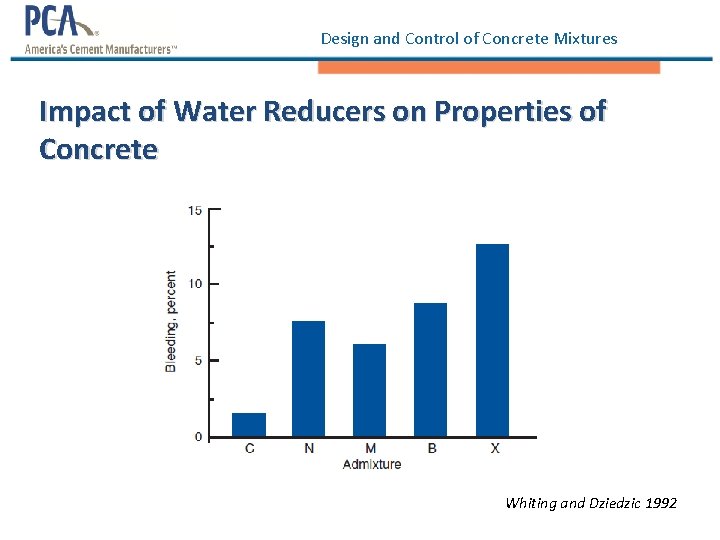
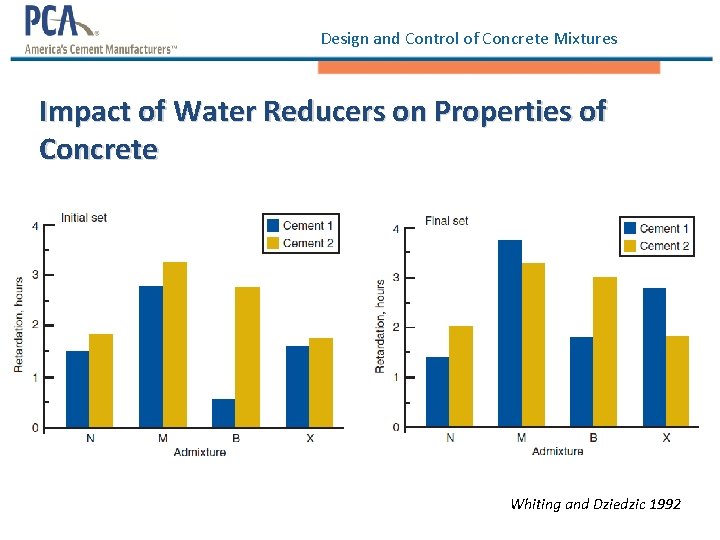
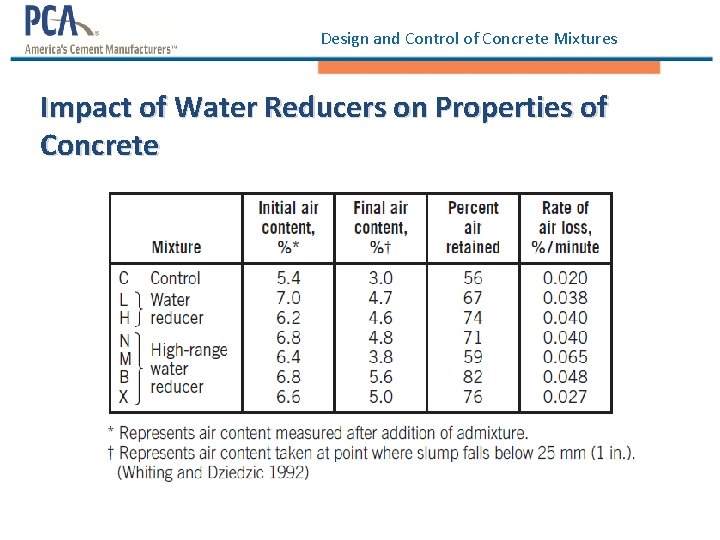
Design and Control of Concrete Mixtures Impact of Water Reducers on Properties of Concrete Whiting and Dziedzic 1992
Design and Control of Concrete Mixtures Impact of Water Reducers on Properties of Concrete Whiting and Dziedzic 1992
Design and Control of Concrete Mixtures Impact of Water Reducers on Properties of Concrete Whiting and Dziedzic 1992
Design and Control of Concrete Mixtures Impact of Water Reducers on Properties of Concrete
Design and Control of Concrete Mixtures Set-Retarding Admixtures Set Retarders are used to: (1) offset the accelerating effect of hot weather on the setting of concrete; (2) delay the initial set of concrete or grout when difficult or unusual conditions of placement occur (3) delay the set for special finishing techniques
Design and Control of Concrete Mixtures Types of Set-Retarding Admixtures • • Lignosulfonates Hydroxycarboxylic acids Polysaccharides (corn syrup) Organophospates Phosphonates Sugars and their derivatives Selected inorganic salts
Design and Control of Concrete Mixtures Set Accelerating Admixtures • Accelerates hydration and strength development • Calcium chloride – most common – Up to 2% by mass of cementing material • Triethanolamine (TEA), inorganic salts – alternatives
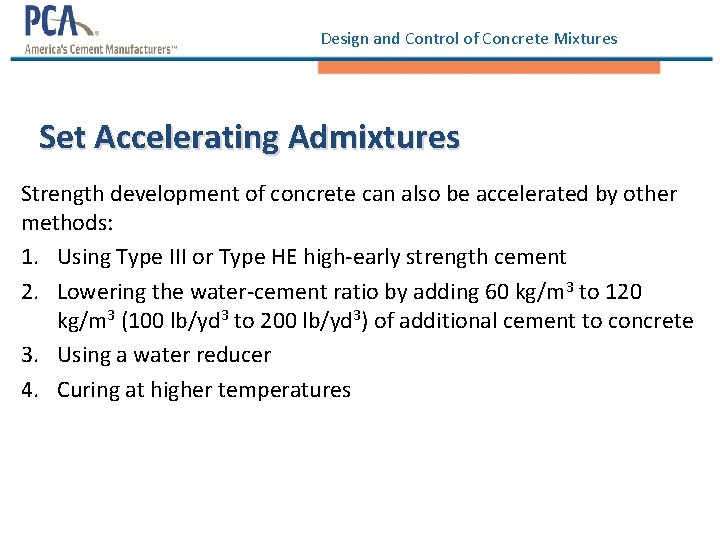
Design and Control of Concrete Mixtures Set Accelerating Admixtures Strength development of concrete can also be accelerated by other methods: 1. Using Type III or Type HE high-early strength cement 2. Lowering the water-cement ratio by adding 60 kg/m 3 to 120 kg/m 3 (100 lb/yd 3 to 200 lb/yd 3) of additional cement to concrete 3. Using a water reducer 4. Curing at higher temperatures
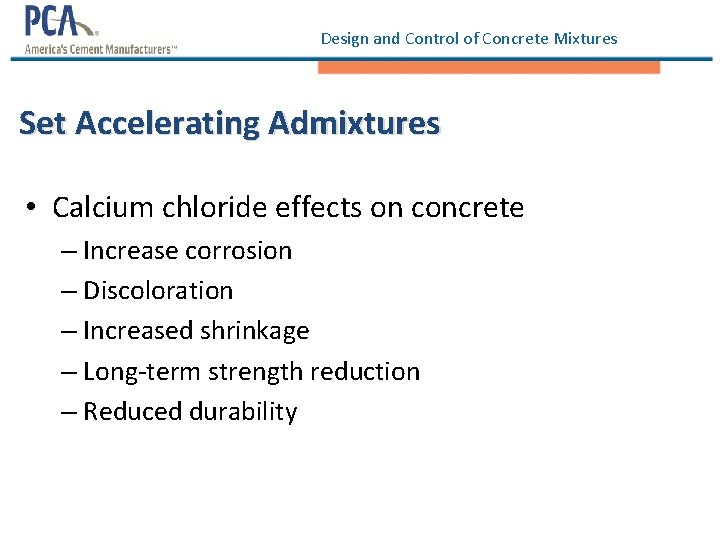
Design and Control of Concrete Mixtures Set Accelerating Admixtures • Calcium chloride effects on concrete – Increase corrosion – Discoloration – Increased shrinkage – Long-term strength reduction – Reduced durability
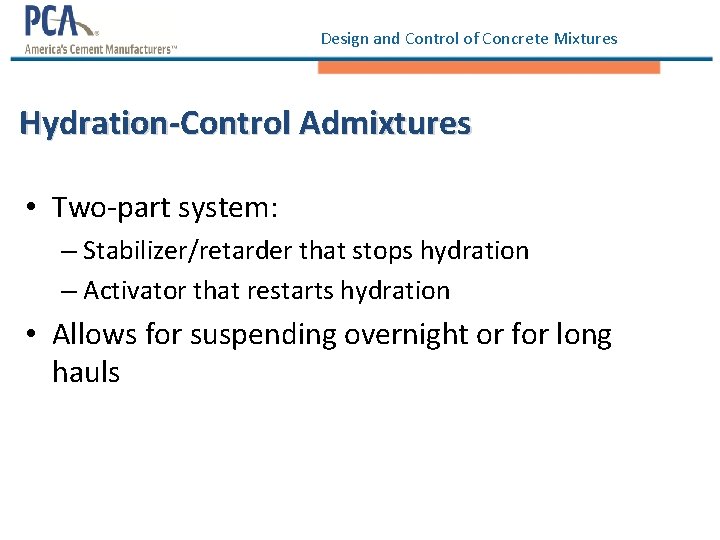
Design and Control of Concrete Mixtures Hydration-Control Admixtures • Two-part system: – Stabilizer/retarder that stops hydration – Activator that restarts hydration • Allows for suspending overnight or for long hauls
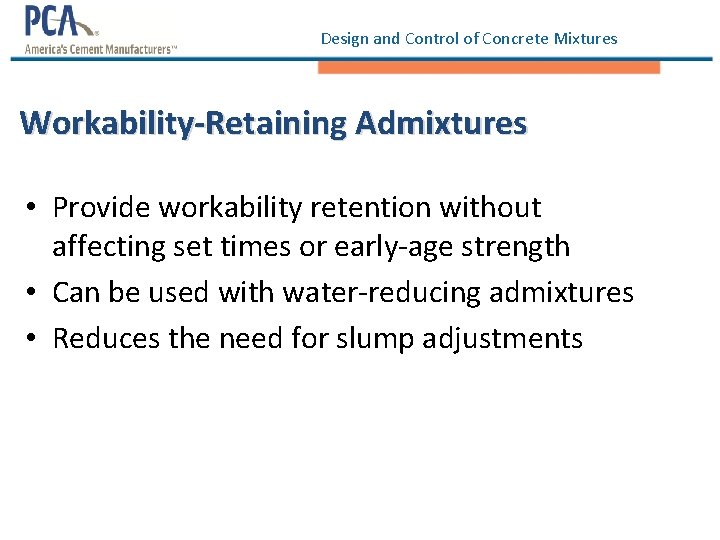
Design and Control of Concrete Mixtures Workability-Retaining Admixtures • Provide workability retention without affecting set times or early-age strength • Can be used with water-reducing admixtures • Reduces the need for slump adjustments
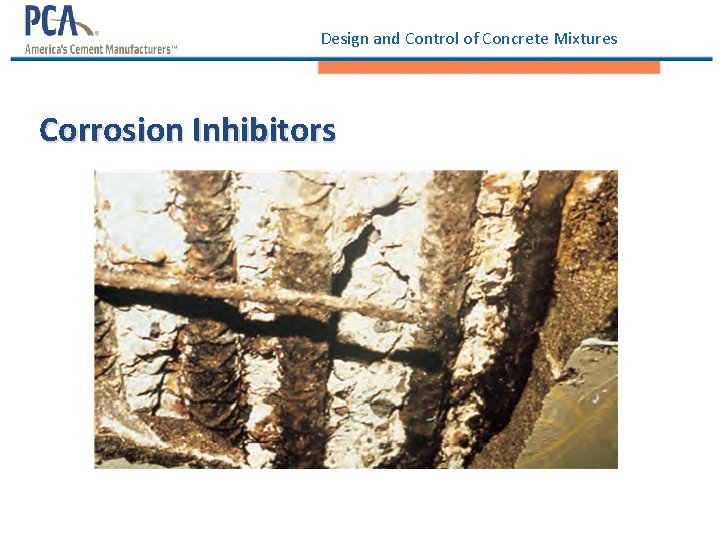
Design and Control of Concrete Mixtures Corrosion Inhibitors
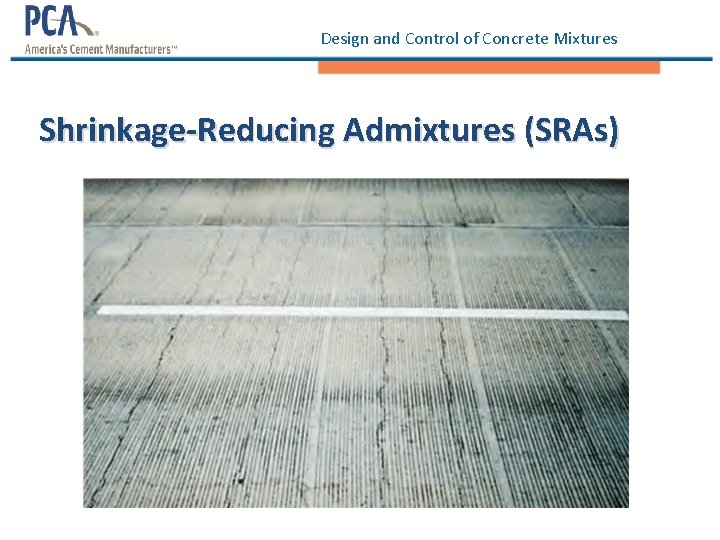
Design and Control of Concrete Mixtures Shrinkage-Reducing Admixtures (SRAs)
Design and Control of Concrete Mixtures Crack-Reducing admixtures (CRAs) • Based on a specialty alcohol alkoxylate • Perform the same as SRAs − Provide smaller crack width in the event of cracking • Provides internal stress relief compared to SRAs
Design and Control of Concrete Mixtures Permeability Reducing Admixtures • Two water penetration mechanisms: – Capillary absorption (wicking) – Direct ingress under pressure • Two types of PRA: – Non-hydrostatic (PRAN) – Hydrostatic (PRAH)
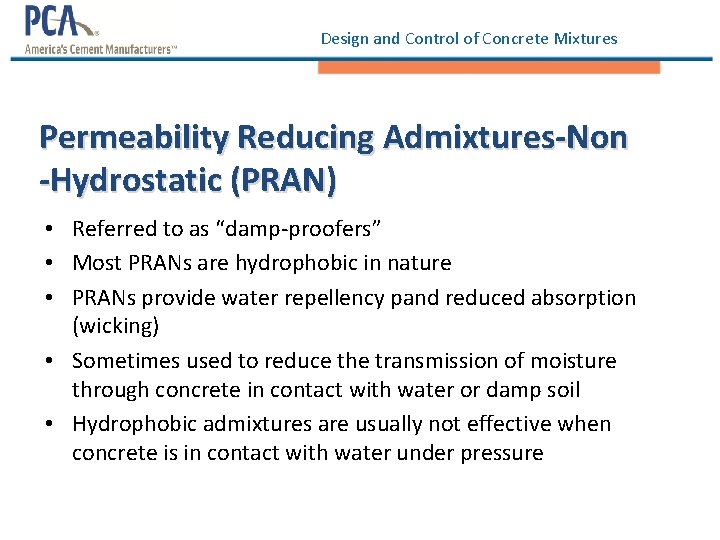
Design and Control of Concrete Mixtures Permeability Reducing Admixtures-Non -Hydrostatic (PRAN) • Referred to as “damp-proofers” • Most PRANs are hydrophobic in nature • PRANs provide water repellency pand reduced absorption (wicking) • Sometimes used to reduce the transmission of moisture through concrete in contact with water or damp soil • Hydrophobic admixtures are usually not effective when concrete is in contact with water under pressure
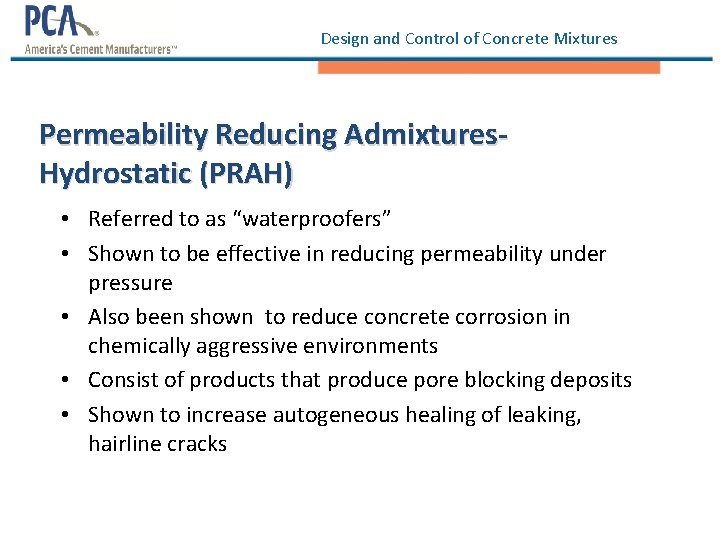
Design and Control of Concrete Mixtures Permeability Reducing Admixtures. Hydrostatic (PRAH) • Referred to as “waterproofers” • Shown to be effective in reducing permeability under pressure • Also been shown to reduce concrete corrosion in chemically aggressive environments • Consist of products that produce pore blocking deposits • Shown to increase autogeneous healing of leaking, hairline cracks
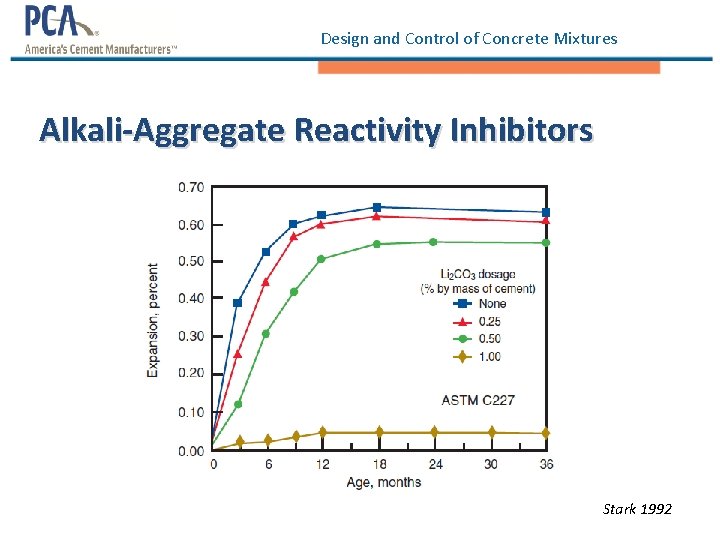
Design and Control of Concrete Mixtures Alkali-Aggregate Reactivity Inhibitors Stark 1992
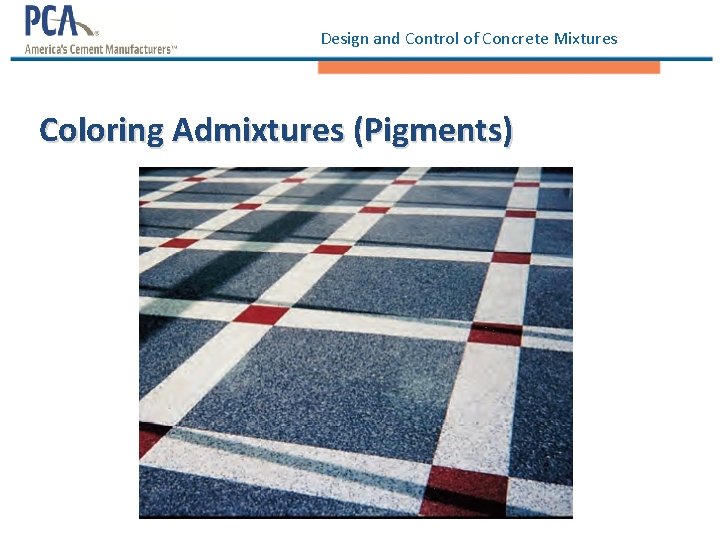
Design and Control of Concrete Mixtures Coloring Admixtures (Pigments)
Design and Control of Concrete Mixtures Air Detrainers • Reduce the air content in concrete • Used when the air content cannot be reduced • Rarely used
Design and Control of Concrete Mixtures Miscellaneous Admixtures • • Pumping aids Bonding admixtures and agents Grouting admixtures Gas-forming admixtures
Design and Control of Concrete Mixtures Miscellaneous Admixtures • Fungicidal, Germicidal, and Insecticidal Admixtures • Viscosity Modifying Admixtures • Self-Healing Admixtures
Design and Control of Concrete Mixtures Admixture Compatibility • Cement-admixture or admixture-admixture incompatibilities are encountered • Slump loss, air loss, early stiffening, and other fresh and hardened concrete properties may be affected • Solved by: – Dosage rate or sequence – Altering cement or admixture composition
Design and Control of Concrete Mixtures Less Than Expected Water Reduction • • • Composition of cementitious materials Presence of other set-control admixtures Temperature Clay minerals Admixture dosage Slump loss – Can be attributed to temperature, reactivity of cement, dispersion and availability of admixture, expansive clays – Typically avoided by delaying addition of water-reducer
Design and Control of Concrete Mixtures Less Than Expected Retardation • May be caused by increase in C 3 A • Too much retardation caused by: – Low C 3 A – Low cement reactivity – Excessive admixture – High levels of SCMs – Low temperatures
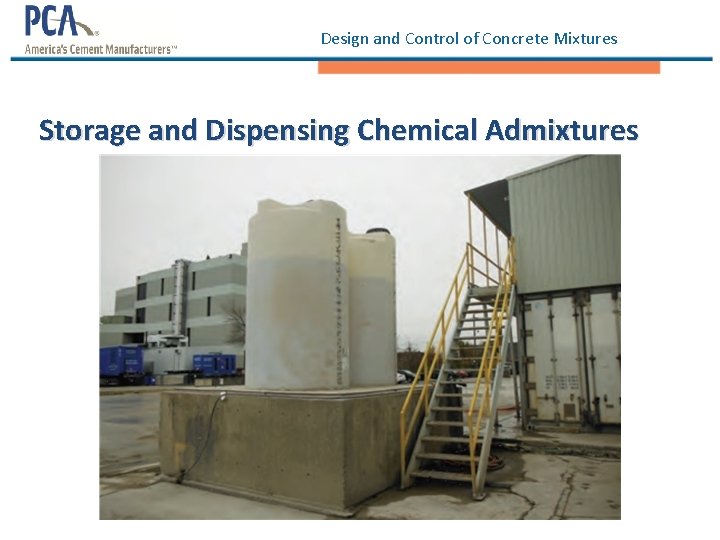
Design and Control of Concrete Mixtures Storage and Dispensing Chemical Admixtures
Design and Control of Concrete Mixtures Summary • • • Air-entraining admixtures Water-reducing admixtures Set retarding admixtures Set accelerating admixtures Hydration-control admixtures Workability-retaining admixtures Corrosion inhibitors Shrinkage-reducing admixtures Permeability reducing admixtures Alkali-aggregate reactivity inhibitors Coloring admixtures Pumping Aids Bonding admixtures and agents Grouting admixtures Gas-forming admixtures Air-detrainers Fungicidal, germicidal, and insecticidal admixtures • Viscosity modifying admixtures • Admixture compatibility • Storing and dispensing chemical admixtures • •
Design and Control of Concrete Mixtures ?