
Design and Control of an Inverted Pendulum By

Design and Control of an Inverted Pendulum By: Andrew Hovingh & Matt Roon Faculty and Industrial Mentor: Dr. James Kamman Industrial Sponsor: Parker Hannifin Corporation Project # ME 1207 -05
Agenda � Introduction � Analysis � Physical System Design � Control Implementation � Physical Results � Limitations � Recommendations � Acknowledgments � Questions
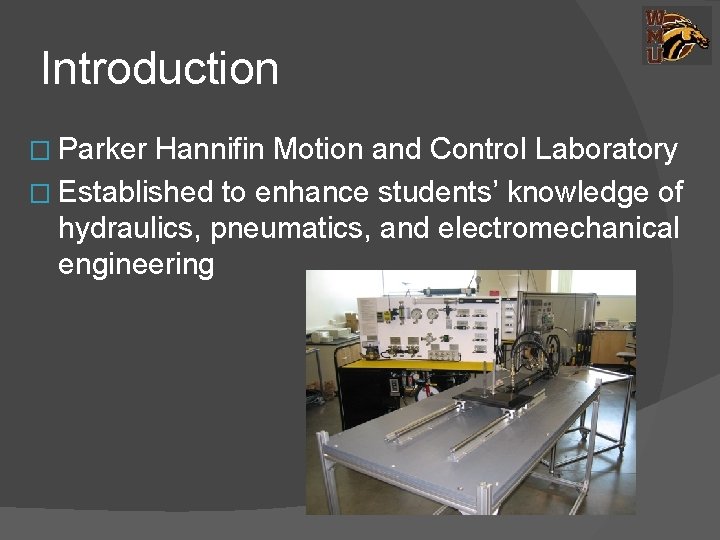
Introduction � Parker Hannifin Motion and Control Laboratory � Established to enhance students’ knowledge of hydraulics, pneumatics, and electromechanical engineering
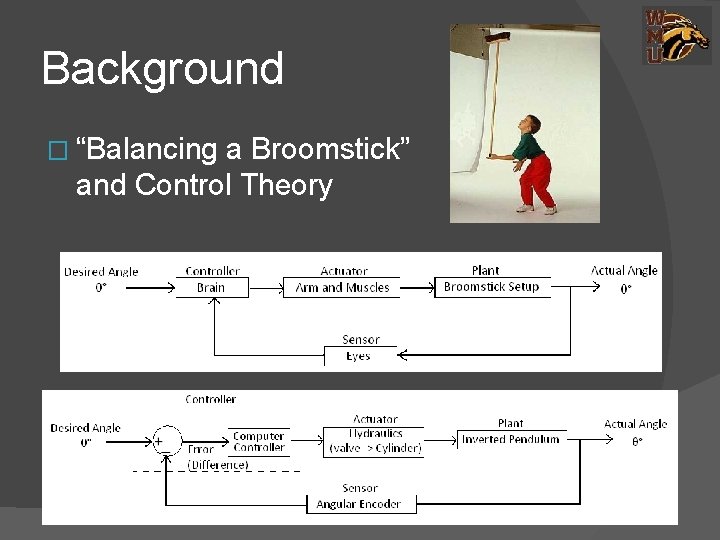
Background � “Balancing a Broomstick” and Control Theory
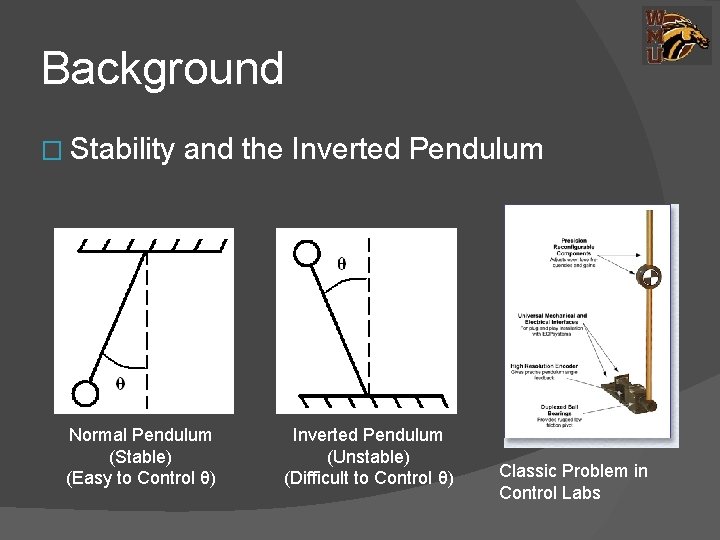
Background � Stability and the Inverted Pendulum Normal Pendulum (Stable) (Easy to Control θ) Inverted Pendulum (Unstable) (Difficult to Control θ) Classic Problem in Control Labs
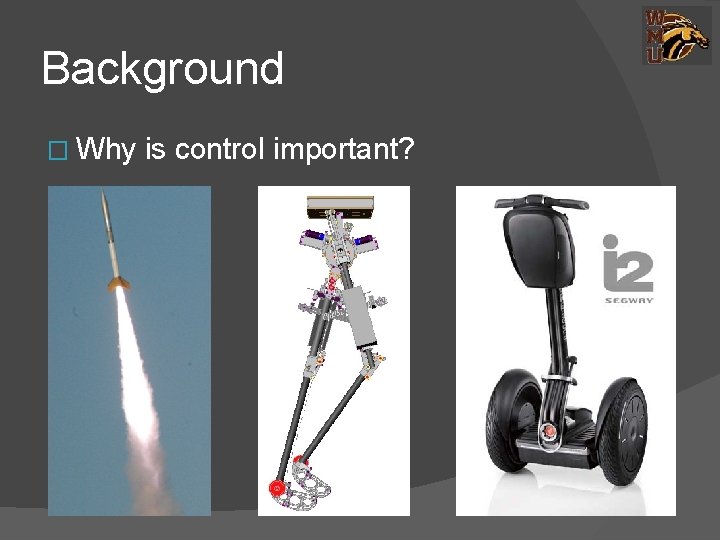
Background � Why is control important?
Project Objectives � Design and simulate control logic and system response � Design and construct inverted pendulum assembly � Keep the pendulum balancing for approximately a 15 second duration
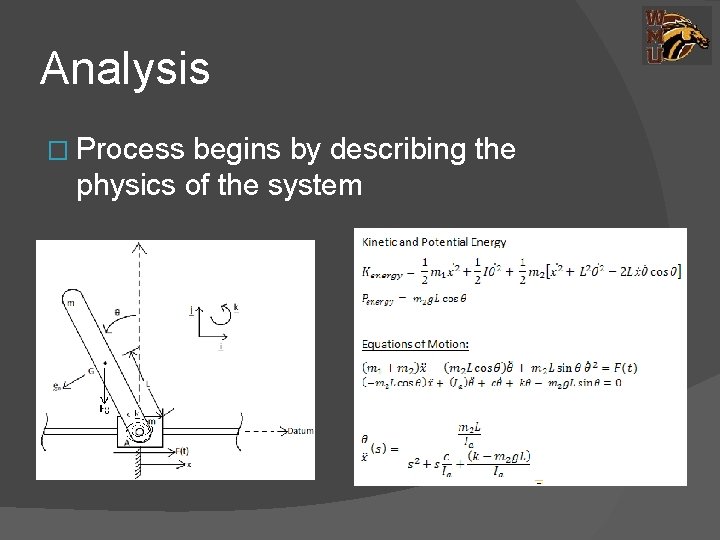
Analysis � Process begins by describing the physics of the system
Analysis � Control theory was applied to develop a potential type of controller and tune its specific components � Example Types: �P, PD, or PID �Phase Lead, Phase Lag, or Phase Lead-Lag �Others
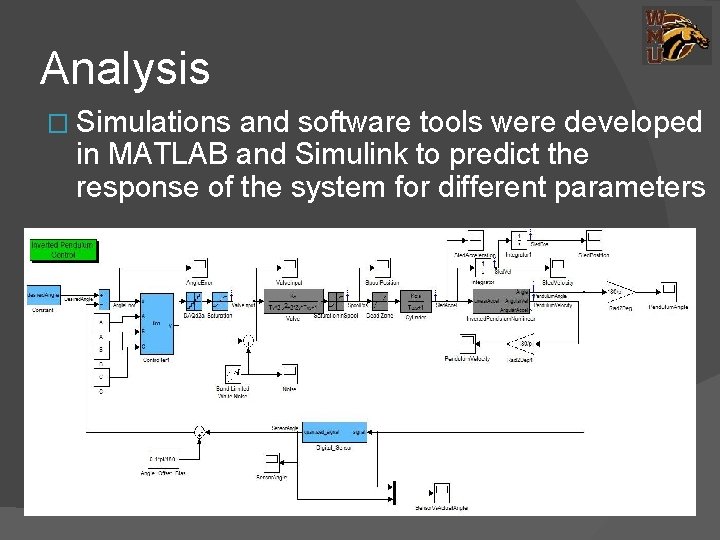
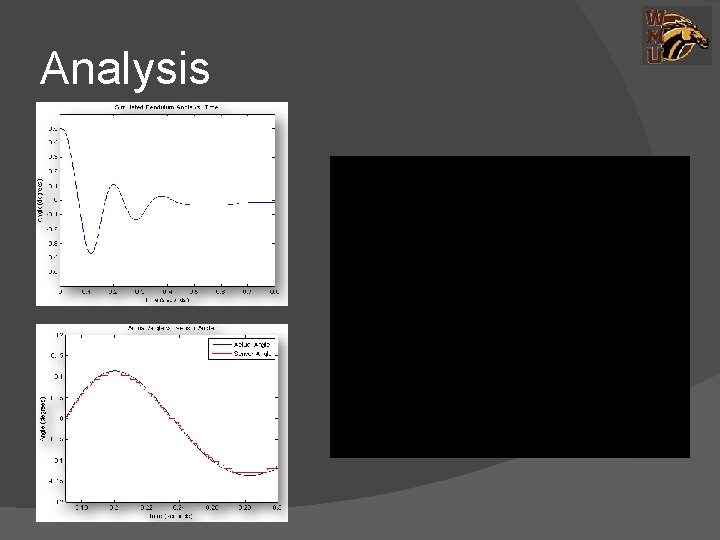
Analysis � Simulations and software tools were developed in MATLAB and Simulink to predict the response of the system for different parameters
Analysis

Analysis
Angle Sensor Selection � Manipulating the simulations, it was apparent a high resolution sensor was necessary � Both analog and digital sensors were considered, however a digital sensor was chosen based on its relative insensitivity to electronic interference (noise) � A rotary incremental encoder was the best option for this particular application
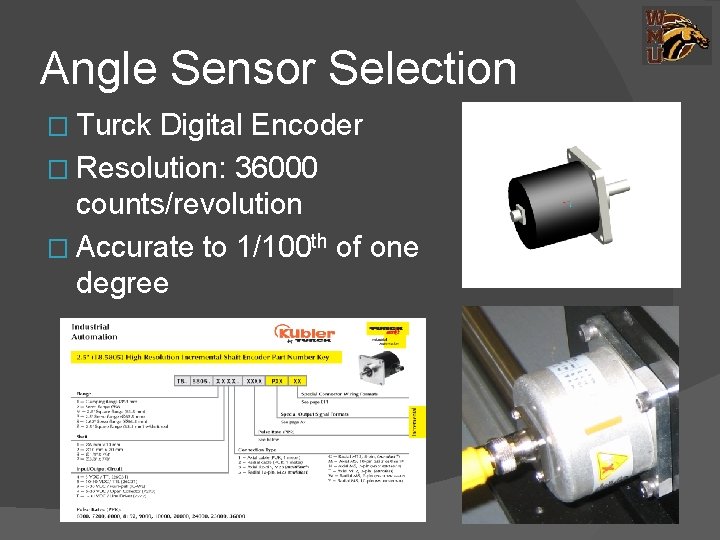
Angle Sensor Selection � Turck Digital Encoder � Resolution: 36000 counts/revolution � Accurate to 1/100 th of one degree
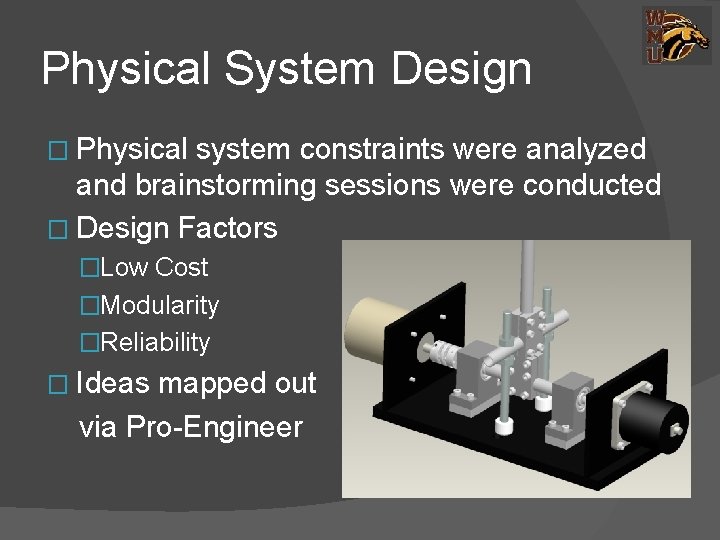
Physical System Design � Physical system constraints were analyzed and brainstorming sessions were conducted � Design Factors �Low Cost �Modularity �Reliability � Ideas mapped out via Pro-Engineer

Physical System Design � Potential suppliers were sought after and justified based on capabilities to accommodate specific machining requirements � Supplier part consistency, effective communication, and lead time were crucial to ensuring a trouble-free physical system build
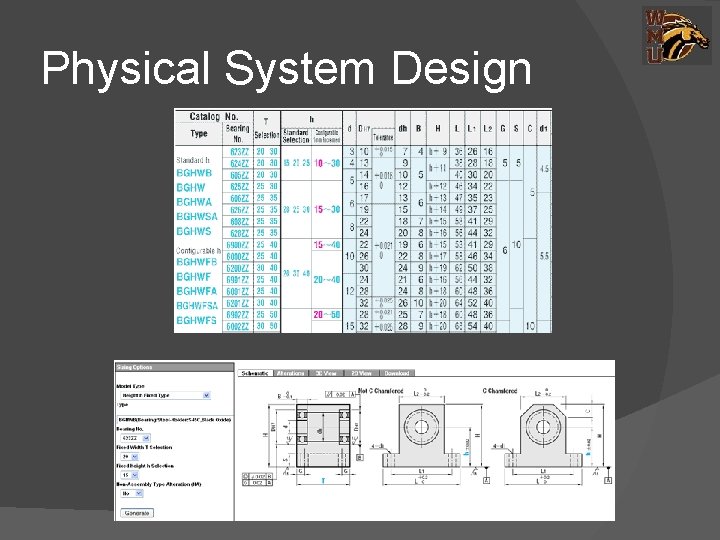
Physical System Design
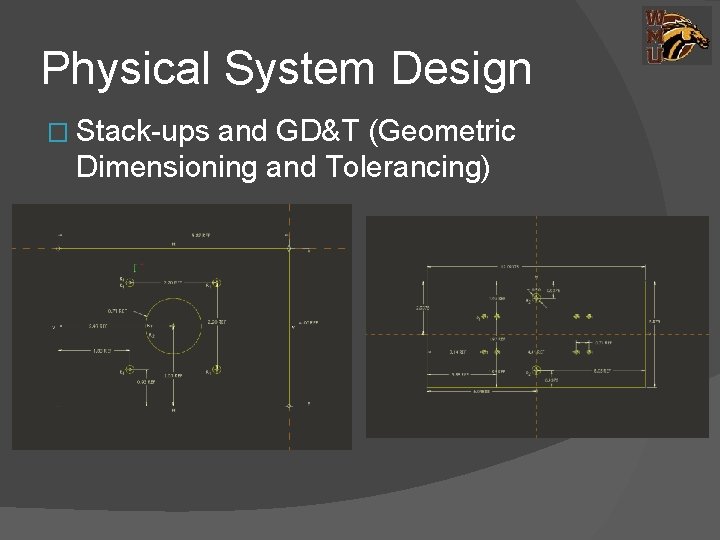
Physical System Design � Stack-ups and GD&T (Geometric Dimensioning and Tolerancing)
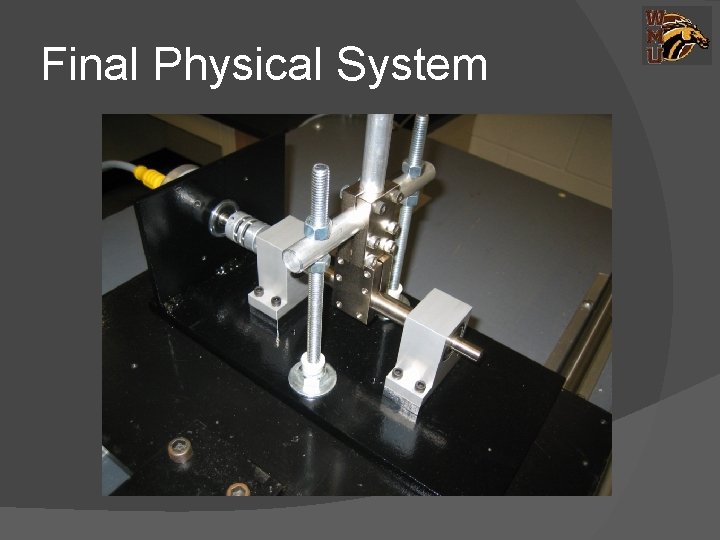
Final Physical System
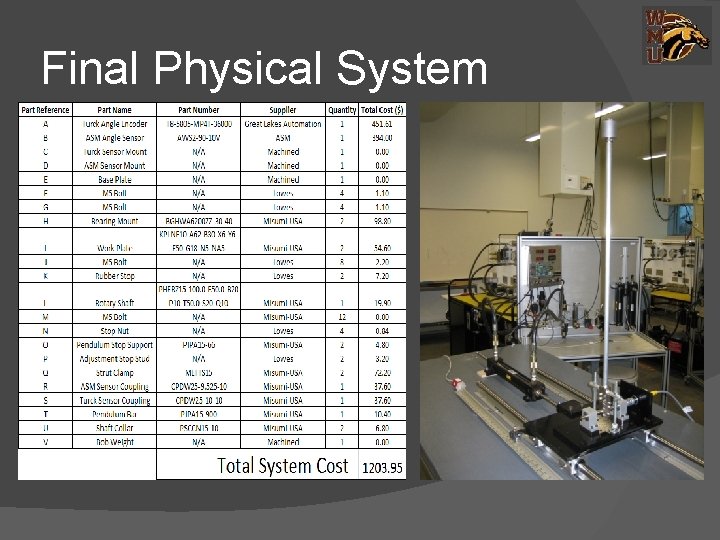
Final Physical System
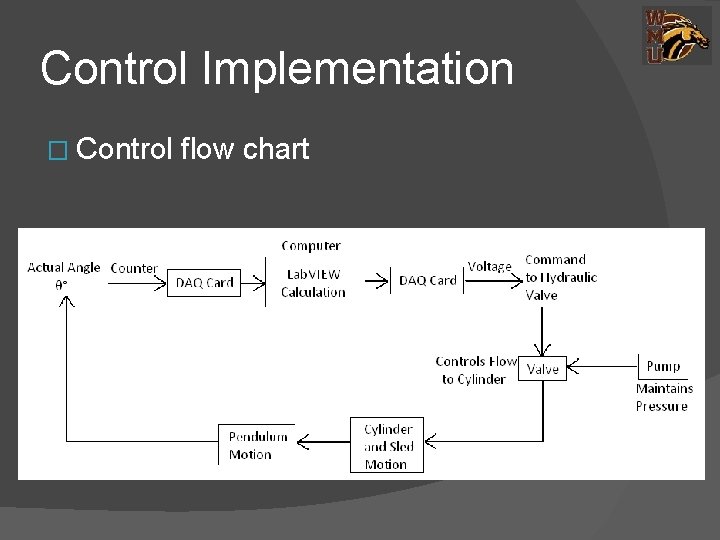
Control Implementation � Control flow chart
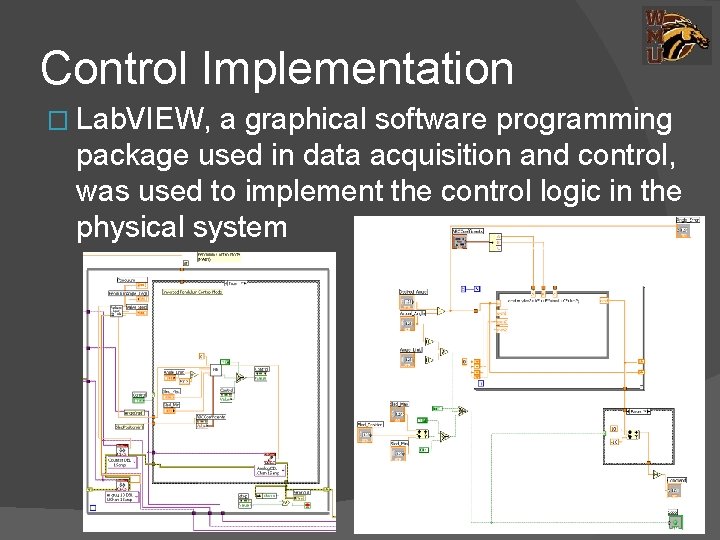
Control Implementation � Lab. VIEW, a graphical software programming package used in data acquisition and control, was used to implement the control logic in the physical system
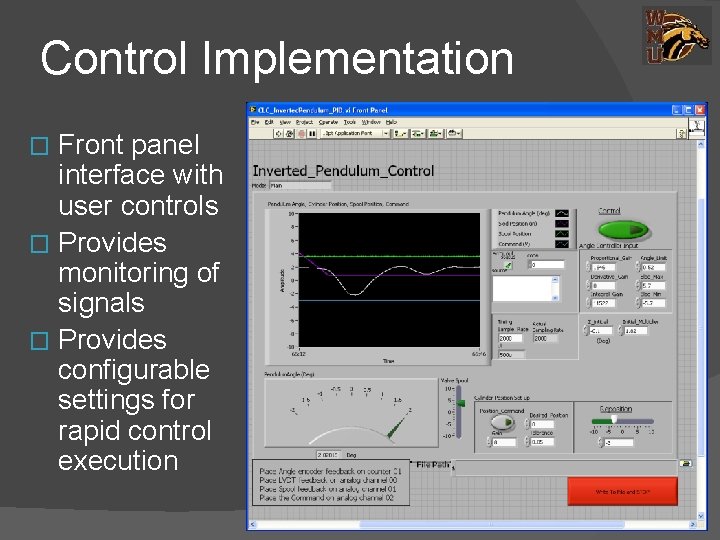
Control Implementation Front panel interface with user controls � Provides monitoring of signals � Provides configurable settings for rapid control execution �
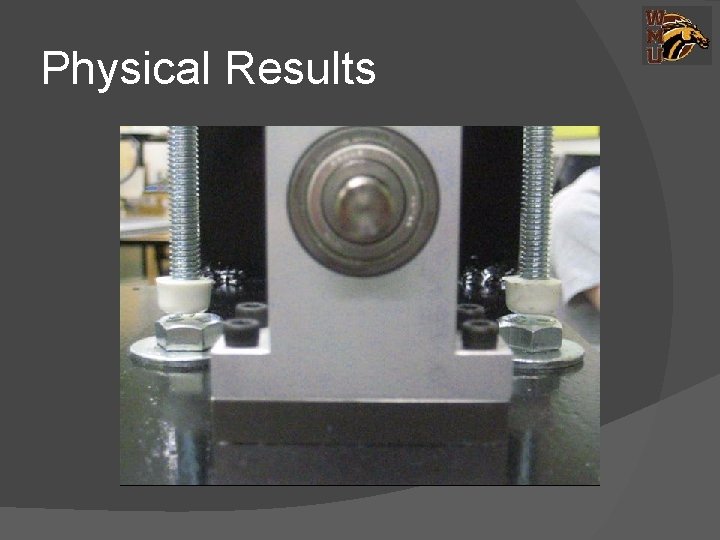
Physical Results
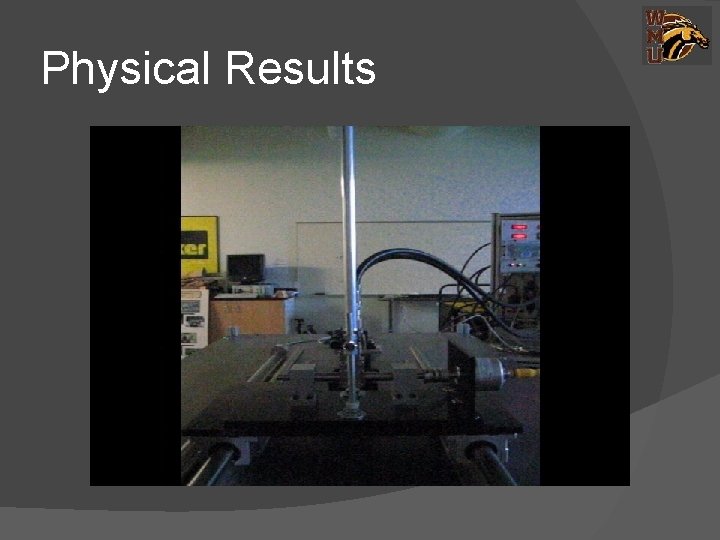
Physical Results
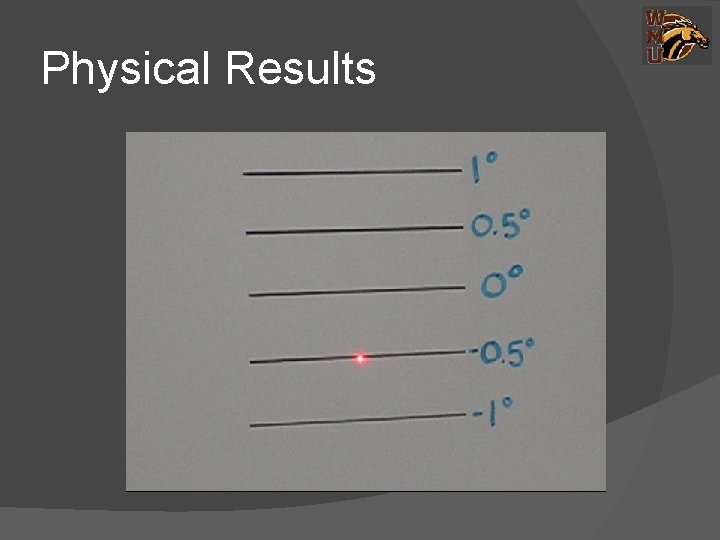
Physical Results
Limitations � Difficult to define the vertical position of the pendulum, which changes from day to day � Sled position drift limits the duration of angle control � Variation in the real system makes accurate simulation predictions challenging
Recommendations Longer pendulum � Control sled position and pendulum angle simultaneously � Place strings on ends of stroke to keep the sled in range � Attempt other system configurations � �Angle velocity and sled velocity feedback �Different controller types � Achieve better initial conditions with release mechanism

Acknowledgments � Parker Hannifin Corporation � Dr. James Kamman � Dr. Kapseong Ro � Glenn Hall

Thank You!
- Slides: 30