
Design Analysis of Axial Flow Gas Turbines P

Design Analysis of Axial Flow Gas Turbines P M V Subbarao Professor Mechanical Engineering Department A Sustainable Non-Biological Muscle by Sir Charles Parson…. .

Compressor – Turbine Rotor
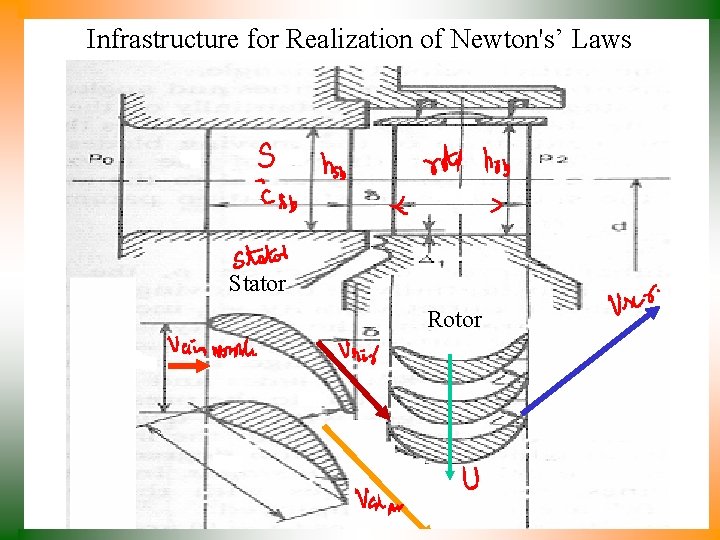
Infrastructure for Realization of Newton's’ Laws Stator Rotor

Classification of Gas Turbines
Impulse-Reaction turbine • This utilizes the principle of impulse and reaction. • There a number of rows of moving blades attached to the rotor and equal number of fixed blades attached to the casing. • The fixed blades are set in a reversed manner compared to the moving blades, and act as nozzles. • The fixed blade channels are of nozzle shape and there is a some drop in pressure accompanied by an increase in velocity. • The fluid then passes over the moving blades and, as in the pure impulse turbine, a force is exerted on the blades by the fluid. • There is further drop in pressure as the fluid passes through the moving blades, since moving blade channels are also of nozzle shape. • The relative velocity increases in the moving blades.

Velocity triangles for turbine model stage Va 1 Va 2 Vr 2 Vw Vr 2 Va 2 Vr 3 Va 3 Vr 3 Vf Va 3
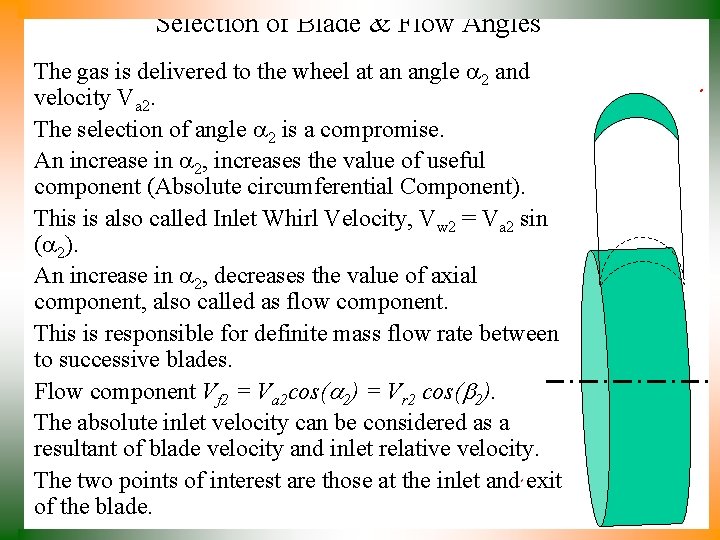
Selection of Blade & Flow Angles • The gas is delivered to the wheel at an angle a 2 and velocity Va 2. • The selection of angle a 2 is a compromise. • An increase in a 2, increases the value of useful component (Absolute circumferential Component). • This is also called Inlet Whirl Velocity, Vw 2 = Va 2 sin (a 2). • An increase in a 2, decreases the value of axial component, also called as flow component. • This is responsible for definite mass flow rate between to successive blades. • Flow component Vf 2 = Va 2 cos(a 2) = Vr 2 cos(b 2). • The absolute inlet velocity can be considered as a resultant of blade velocity and inlet relative velocity. • The two points of interest are those at the inlet and exit of the blade.
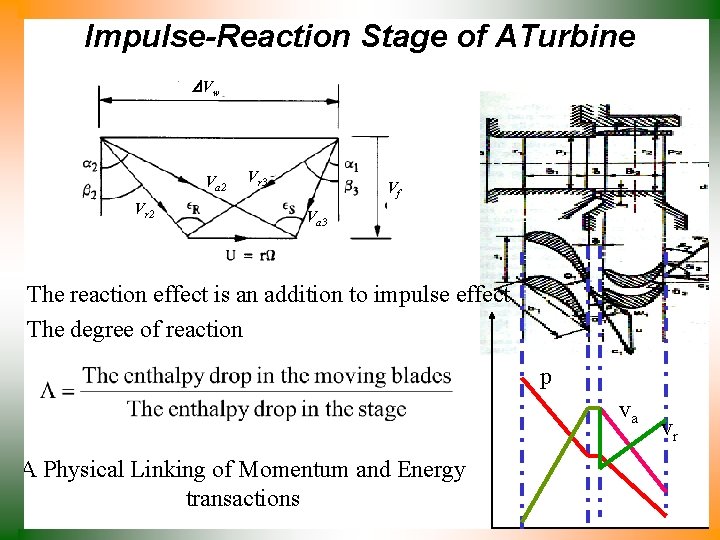
Impulse-Reaction Stage of ATurbine Vw Va 2 Vr 3 Vf Va 3 The reaction effect is an addition to impulse effect. The degree of reaction p va A Physical Linking of Momentum and Energy transactions vr
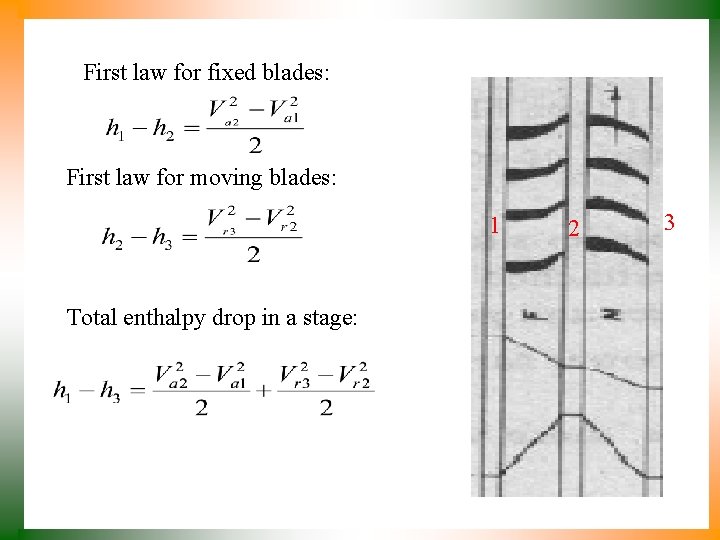
First law for fixed blades: First law for moving blades: 1 Total enthalpy drop in a stage: 2 3
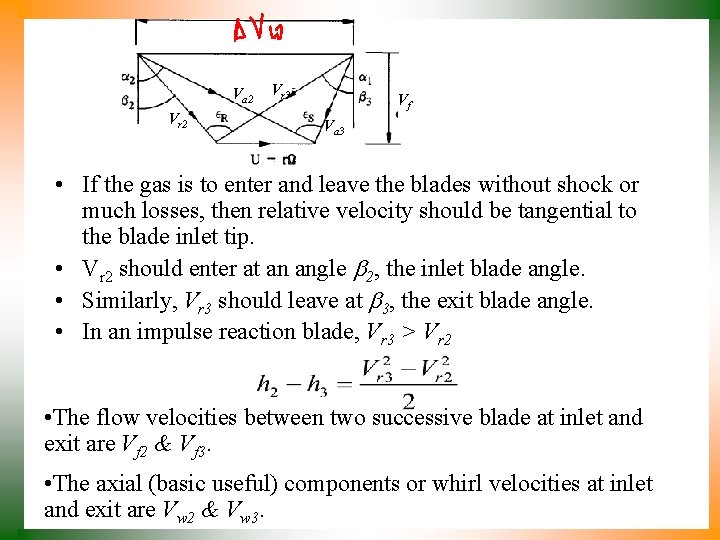
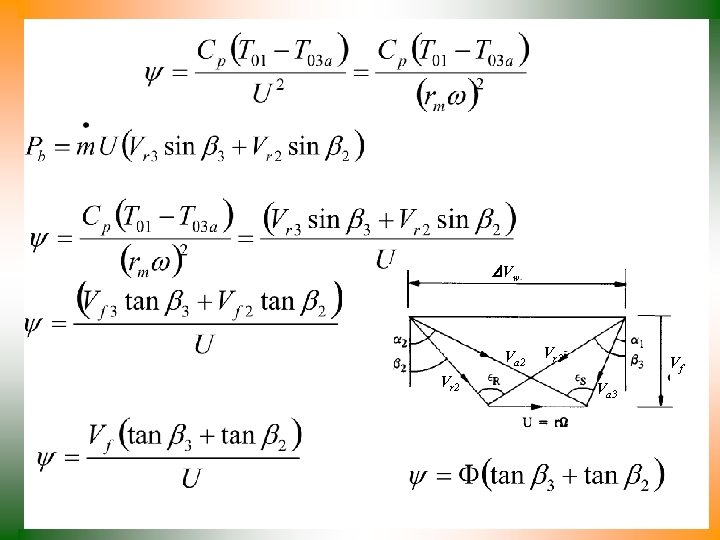
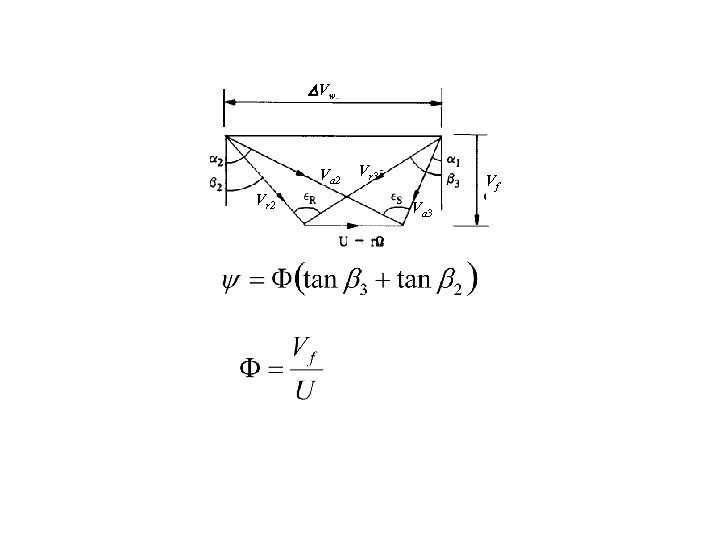
Vw Va 2 Vr 3 Vf Va 3 • If the gas is to enter and leave the blades without shock or much losses, then relative velocity should be tangential to the blade inlet tip. • Vr 2 should enter at an angle b 2, the inlet blade angle. • Similarly, Vr 3 should leave at b 3, the exit blade angle. • In an impulse reaction blade, Vr 3 > Vr 2 • The flow velocities between two successive blade at inlet and exit are Vf 2 & Vf 3. • The axial (basic useful) components or whirl velocities at inlet and exit are Vw 2 & Vw 3.
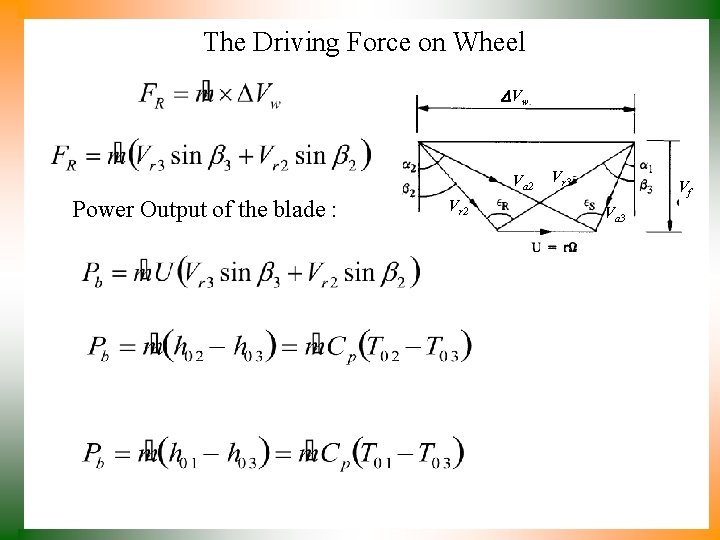
The Driving Force on Wheel Vw Va 2 Power Output of the blade : Vr 2 Vr 3 Vf Va 3
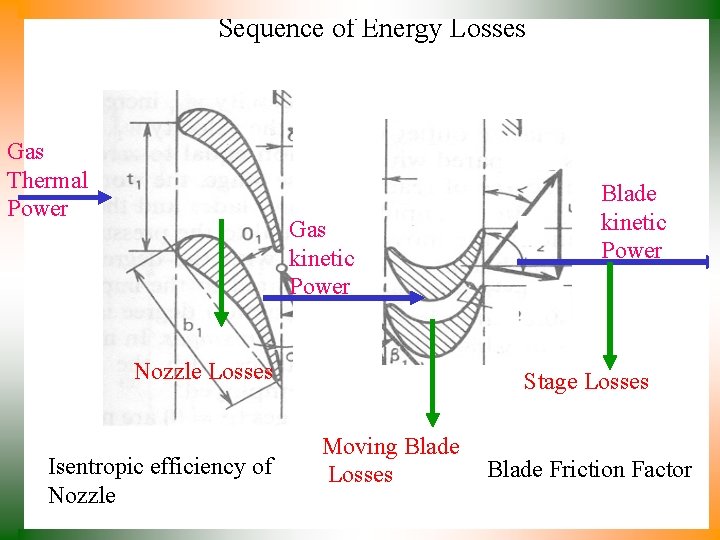
Sequence of Energy Losses Gas Thermal Power Gas kinetic Power Nozzle Losses Isentropic efficiency of Nozzle Blade kinetic Power Stage Losses Moving Blade Losses Blade Friction Factor
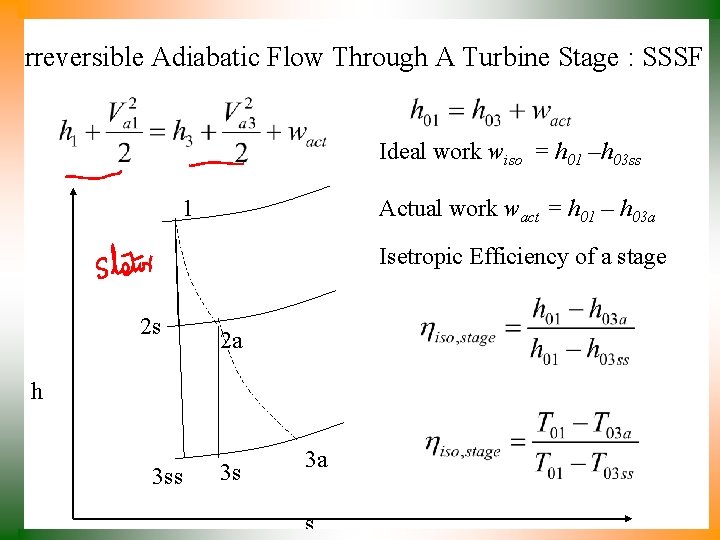
Irreversible Adiabatic Flow Through A Turbine Stage : SSSF Ideal work wiso = h 01 –h 03 ss 1 Actual work wact = h 01 – h 03 a Isetropic Efficiency of a stage 2 s 2 a h 3 ss 3 s 3 a s

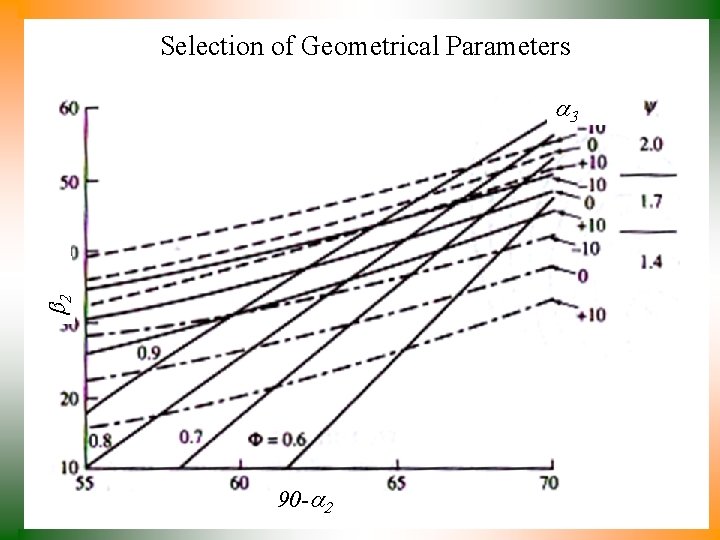
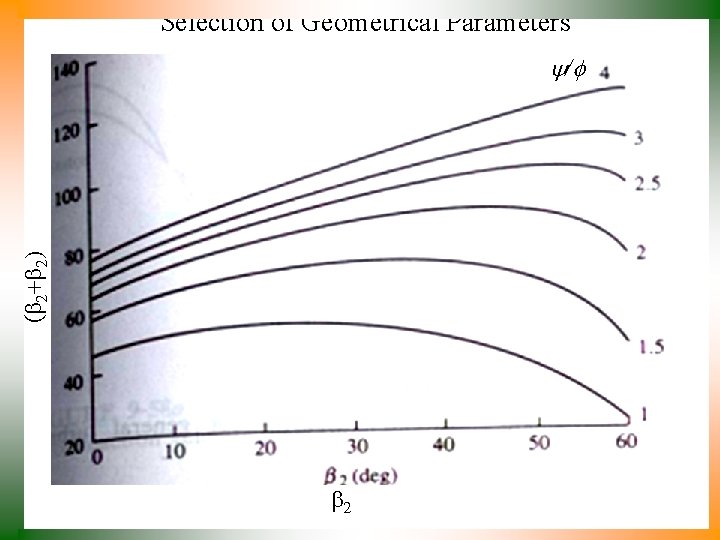
Stage Loading and Flow Coefficient Stage Loading Coefficient: Ratio of specific stage work output and square of mean rotor speed. Flow Coefficient: Ratio of the axial velocity entering to the mean rotor speed.
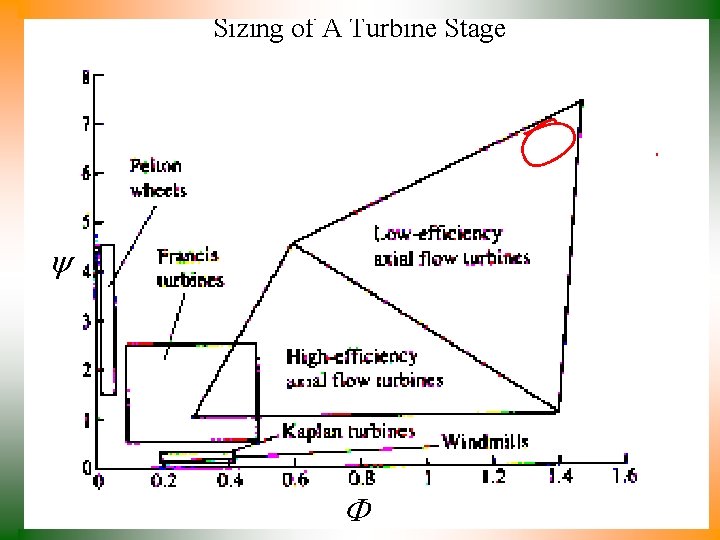
Sizing of A Turbine Stage F
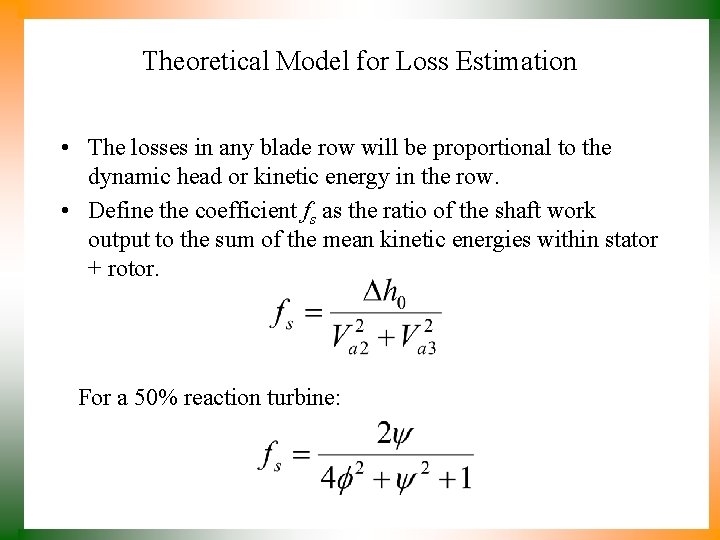
Theoretical Model for Loss Estimation • The losses in any blade row will be proportional to the dynamic head or kinetic energy in the row. • Define the coefficient fs as the ratio of the shaft work output to the sum of the mean kinetic energies within stator + rotor. For a 50% reaction turbine:
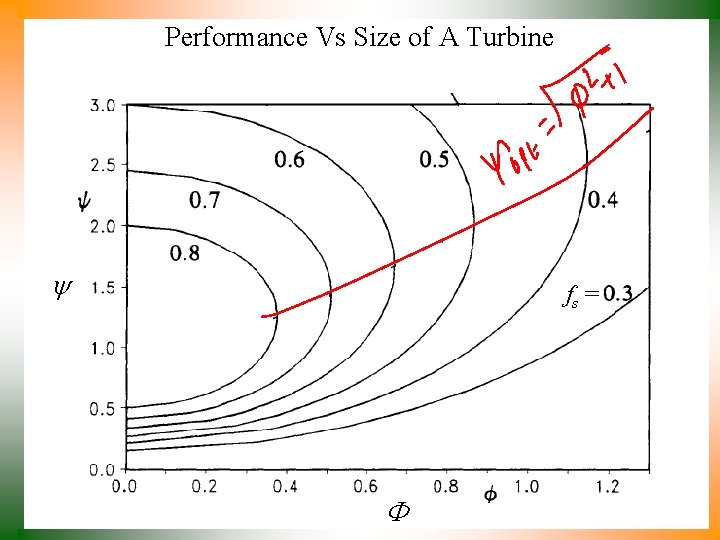
Performance Vs Size of A Turbine fs = F
Vw Va 2 Vr 3 Vf Va 3
Vw Va 2 Vr 3 Vf Va 3
Selection of Geometrical Parameters b 2 a 3 90 -a 2
Selection of Geometrical Parameters (b 2+b 2) / b 2
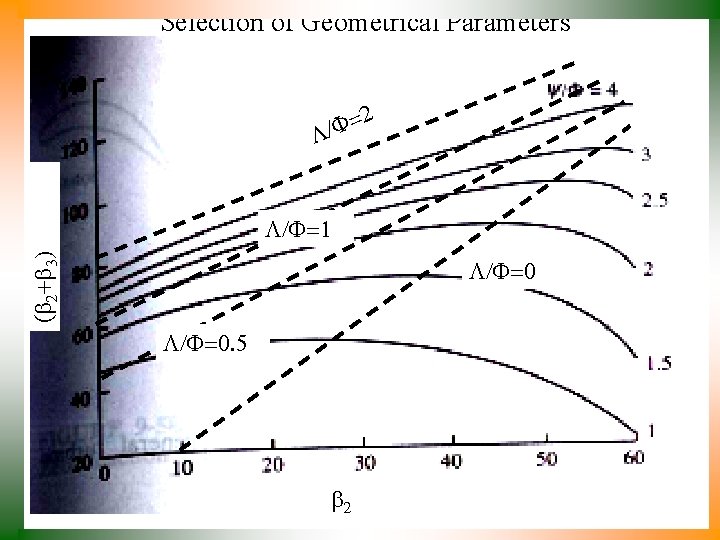
Selection of Geometrical Parameters 2 = F L/ (b 2+b 3) L/F=1 L/F=0. 5 b 2
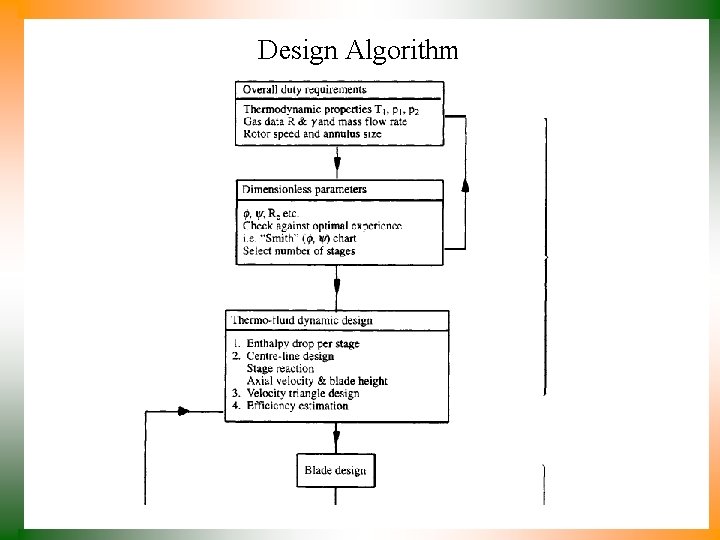
Design Algorithm
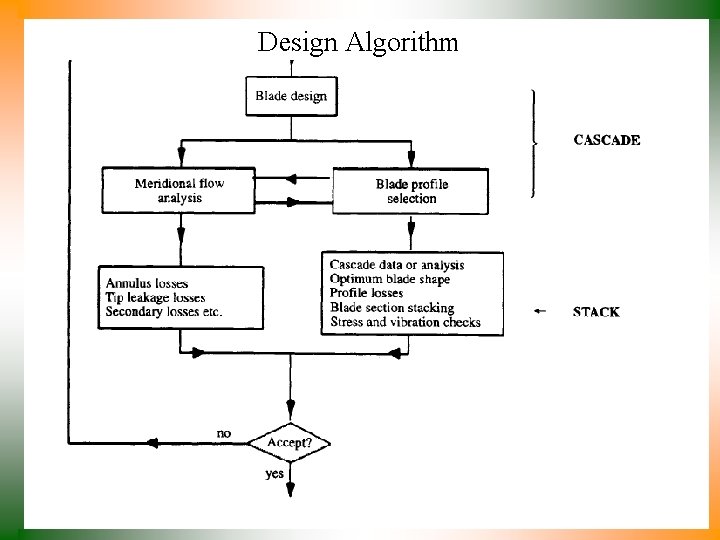
Design Algorithm

Model turbine instrumentation

Design validation
- Slides: 26