
Design 1 1 A Motor 2 Motor 3
- Slides: 14
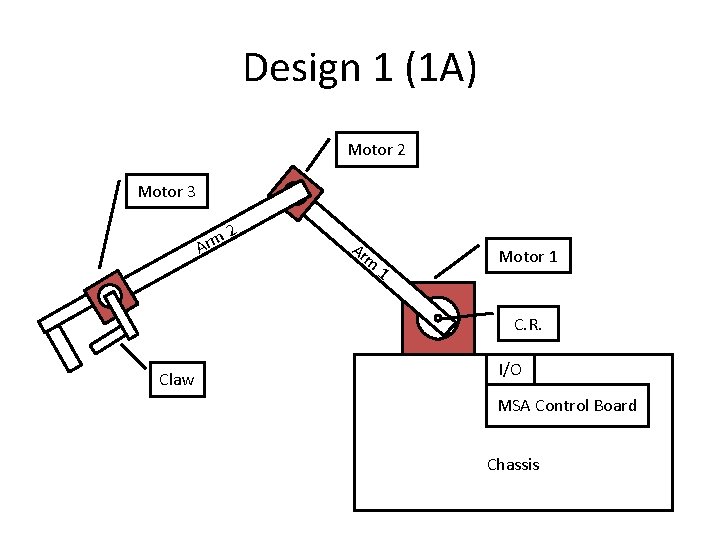
Design 1 (1 A) Motor 2 Motor 3 2 m r A Ar m 1 Motor 1 C. R. Claw I/O MSA Control Board Chassis
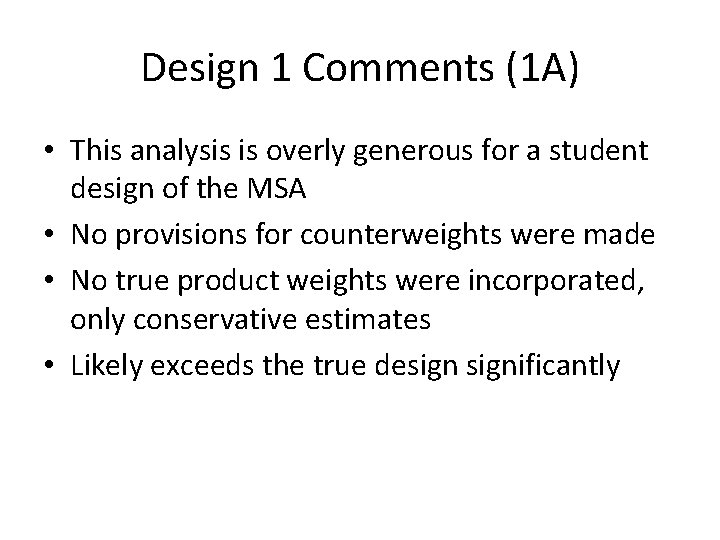
Design 1 Comments (1 A) • This analysis is overly generous for a student design of the MSA • No provisions for counterweights were made • No true product weights were incorporated, only conservative estimates • Likely exceeds the true designificantly
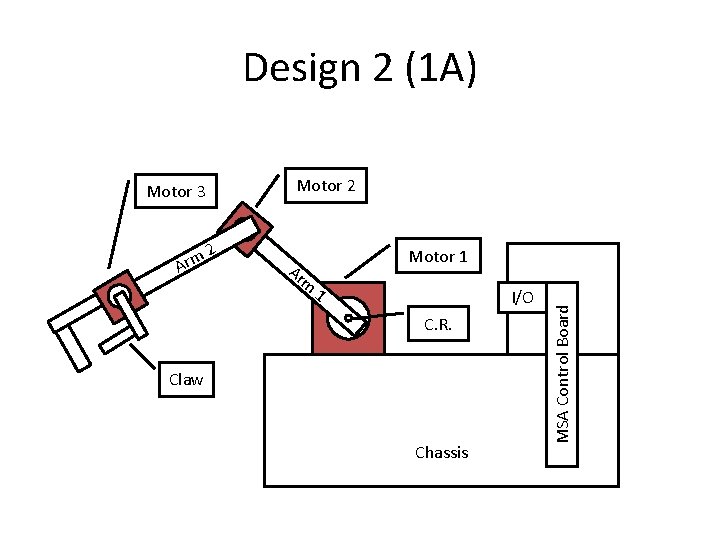
Design 2 (1 A) Motor 2 Arm 2 Motor 1 Ar m 1 I/O C. R. Claw Chassis MSA Control Board Motor 3
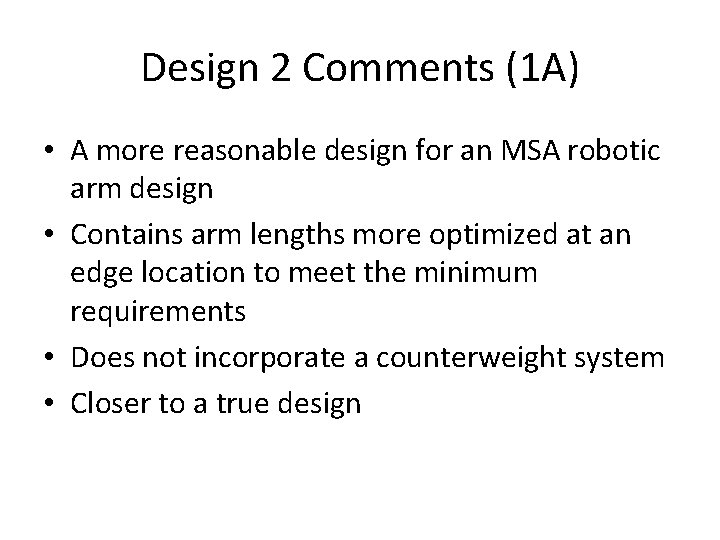
Design 2 Comments (1 A) • A more reasonable design for an MSA robotic arm design • Contains arm lengths more optimized at an edge location to meet the minimum requirements • Does not incorporate a counterweight system • Closer to a true design
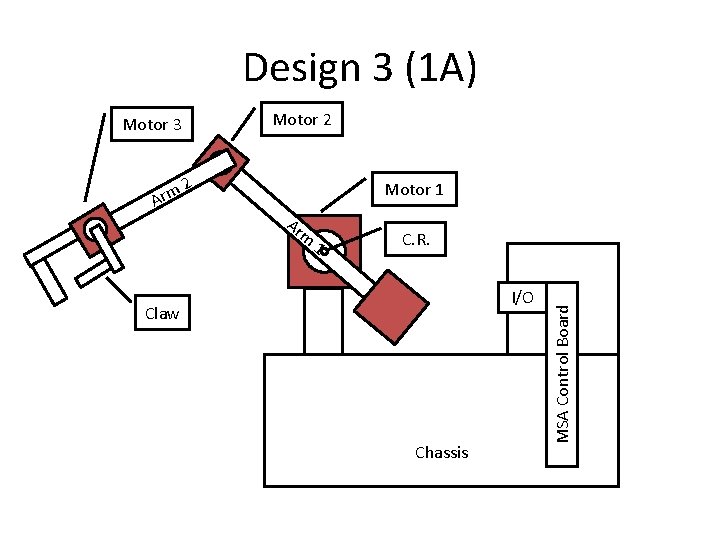
Design 3 (1 A) Motor 2 Arm 2 Motor 1 Ar m 1 C. R. I/O Claw Chassis MSA Control Board Motor 3
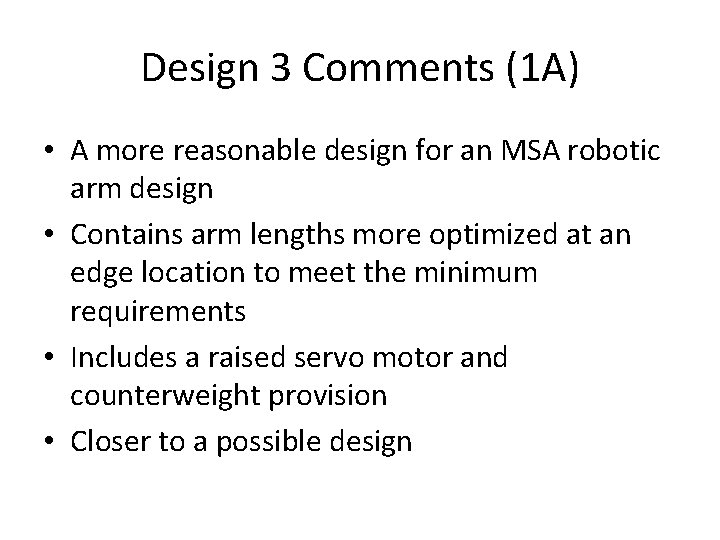
Design 3 Comments (1 A) • A more reasonable design for an MSA robotic arm design • Contains arm lengths more optimized at an edge location to meet the minimum requirements • Includes a raised servo motor and counterweight provision • Closer to a possible design
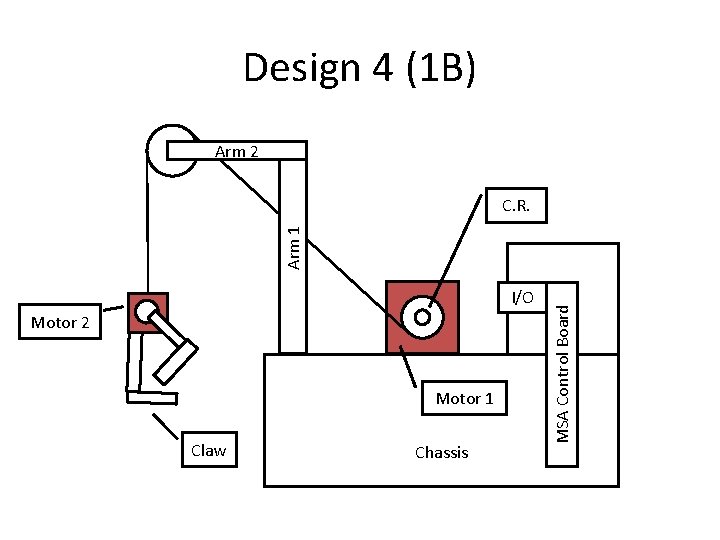
Design 4 (1 B) Arm 2 I/O Motor 2 Motor 1 Claw Chassis MSA Control Board Arm 1 C. R.
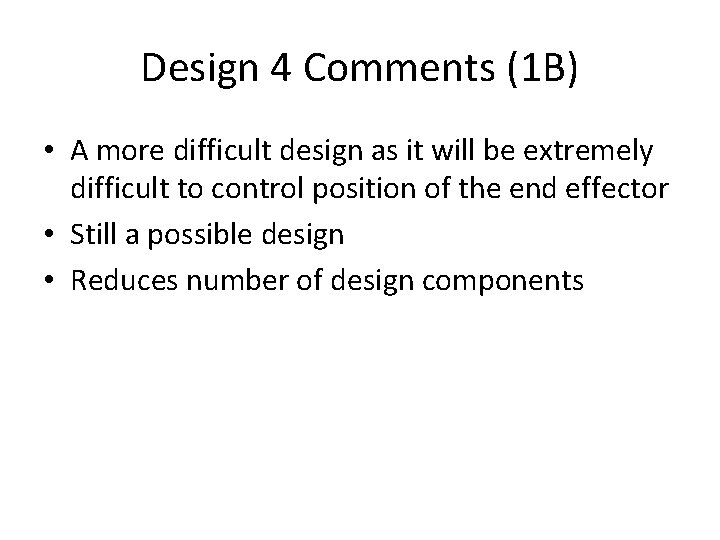
Design 4 Comments (1 B) • A more difficult design as it will be extremely difficult to control position of the end effector • Still a possible design • Reduces number of design components
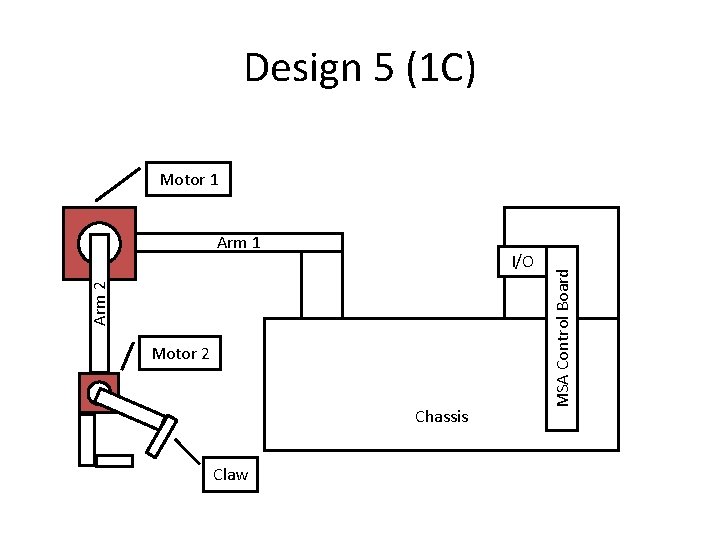
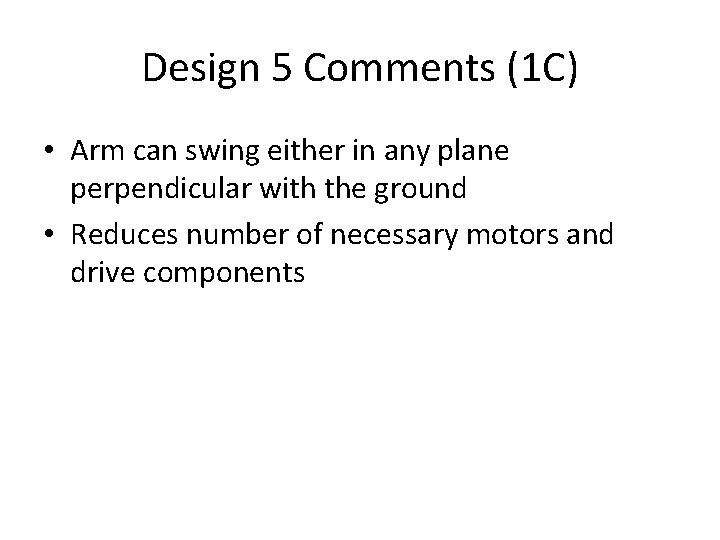
Design 5 (1 C) Arm 1 Arm 2 I/O Motor 2 Chassis Claw MSA Control Board Motor 1
Design 5 Comments (1 C) • Arm can swing either in any plane perpendicular with the ground • Reduces number of necessary motors and drive components
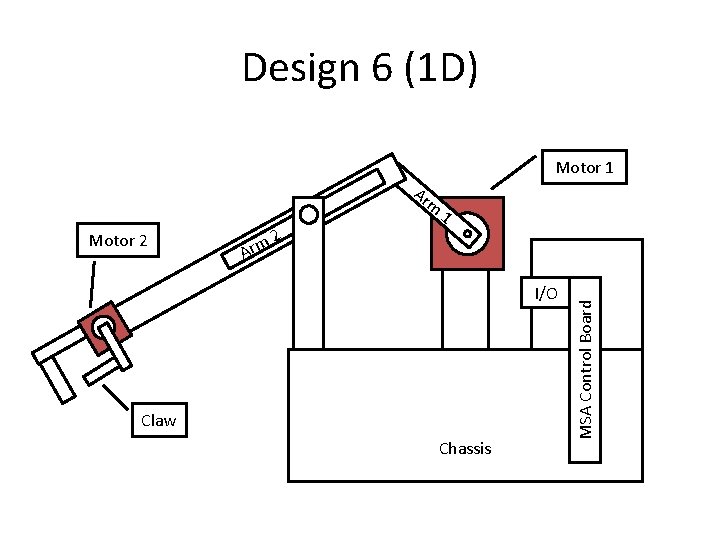
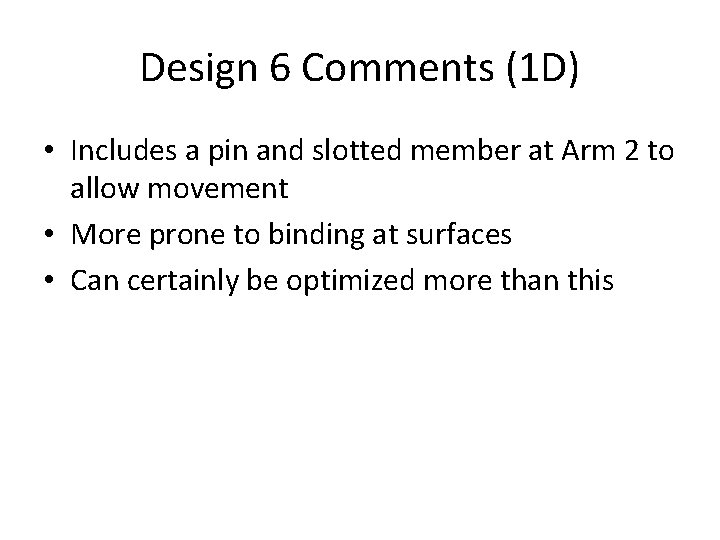
Design 6 (1 D) Motor 1 Ar m Arm 2 I/O Claw Chassis MSA Control Board Motor 2 1
Design 6 Comments (1 D) • Includes a pin and slotted member at Arm 2 to allow movement • More prone to binding at surfaces • Can certainly be optimized more than this
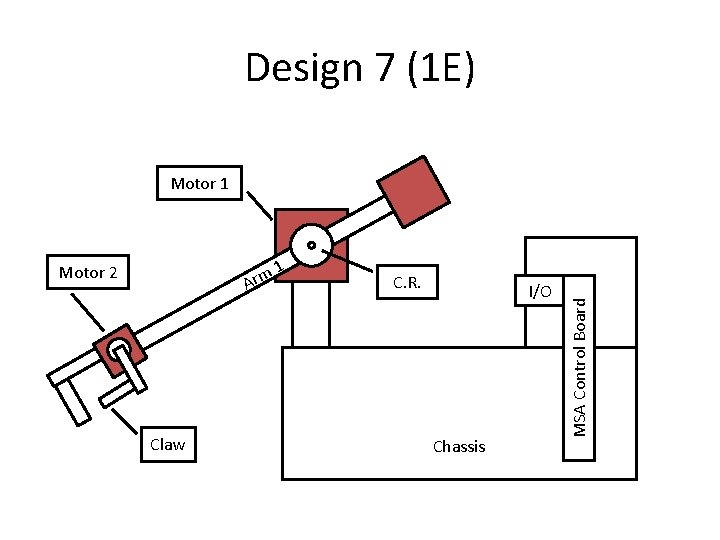
Design 7 (1 E) Motor 2 Arm Claw 1 C. R. I/O Chassis MSA Control Board Motor 1
Design 7 Comments (1 E) • Simplest design for number of components • Allows for simplest cg and calculations for moments • Includes the use of a counterweight for feasibility