
Descriptive Writing Lesson 2 To improve Dont overuse
- Slides: 14
Descriptive Writing Lesson 2
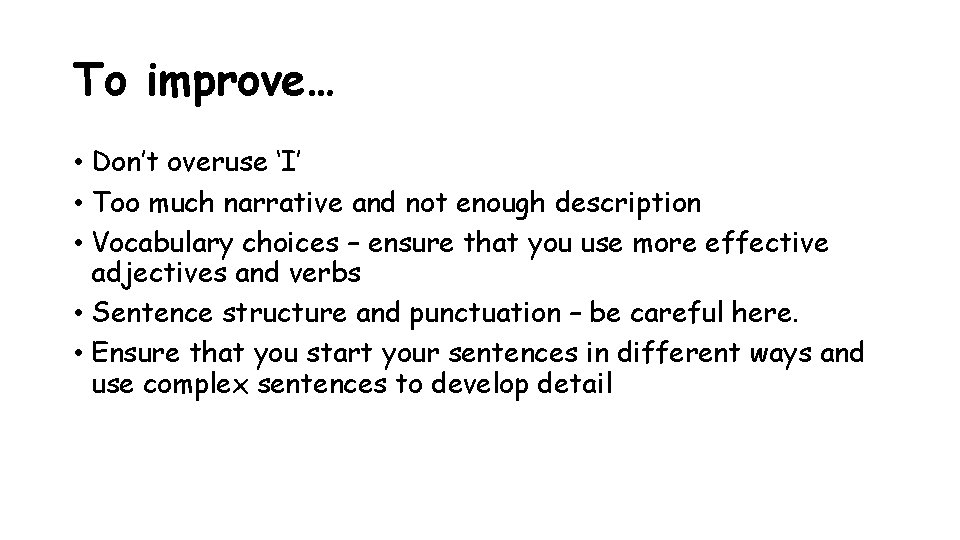
To improve… • Don’t overuse ‘I’ • Too much narrative and not enough description • Vocabulary choices – ensure that you use more effective adjectives and verbs • Sentence structure and punctuation – be careful here. • Ensure that you start your sentences in different ways and use complex sentences to develop detail
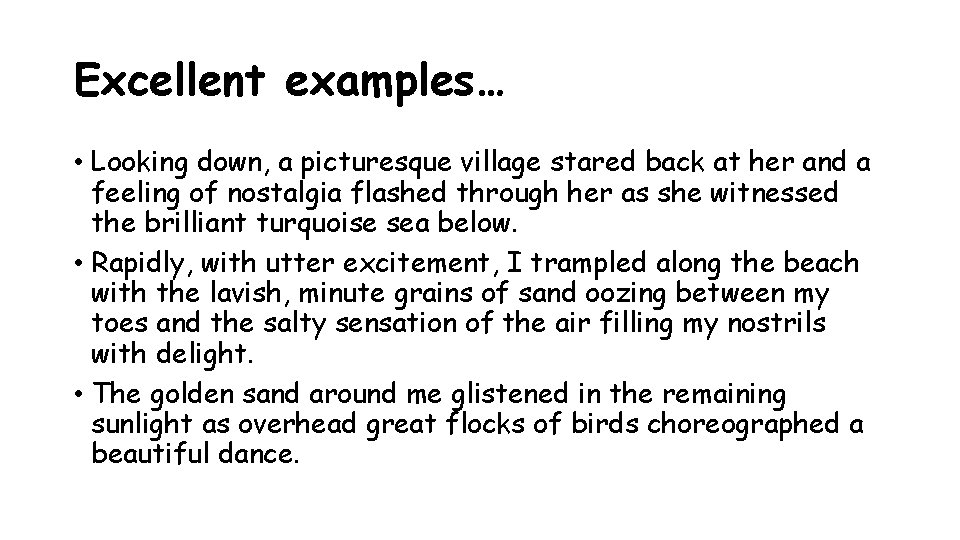
Excellent examples… • Looking down, a picturesque village stared back at her and a feeling of nostalgia flashed through her as she witnessed the brilliant turquoise sea below. • Rapidly, with utter excitement, I trampled along the beach with the lavish, minute grains of sand oozing between my toes and the salty sensation of the air filling my nostrils with delight. • The golden sand around me glistened in the remaining sunlight as overhead great flocks of birds choreographed a beautiful dance.
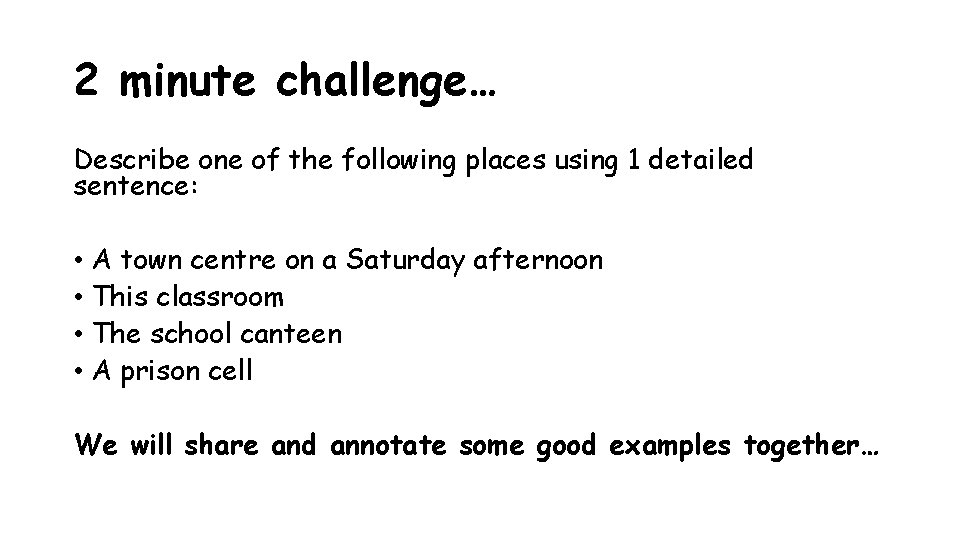
2 minute challenge… Describe one of the following places using 1 detailed sentence: • A town centre on a Saturday afternoon • This classroom • The school canteen • A prison cell We will share and annotate some good examples together…
Effective descriptions Last week I taught you some of the features of effective descriptive writing. What were they? • Powerful adjectives • Precise verbs • Imagery • Showing…not telling… • VOCABULARY
What is an appositive? • A noun or noun phrase that renames another noun right beside it. • They identify, explain or give more information about the main noun. • They are separated from the rest of a sentence with a comma or pair of commas. The guard, a new recruit, stood next to the gate. A new recruit, the guard stood next to the gate.
Why are they useful? • Allows you to vary sentence structure. • Enables you to include more information in a sentence and add complexity. The tree, a gnarled oak with long twisted branches, leaned precariously against the side of the barn. A gnarled oak with long twisted branches, the tree leaned precariously against the side of the barn.
Appositives Write a sentence including an appositive for the following nouns: • Car • Man • Dog • Forest
Vocabulary – to describe setting Good writers use a precise and sophisticated vocabulary to describe: • Effervescent • Vibrant • Vivid • Benevolent • Remarkable • Dismal • Macabre • Malevolent • Ominous • Violent
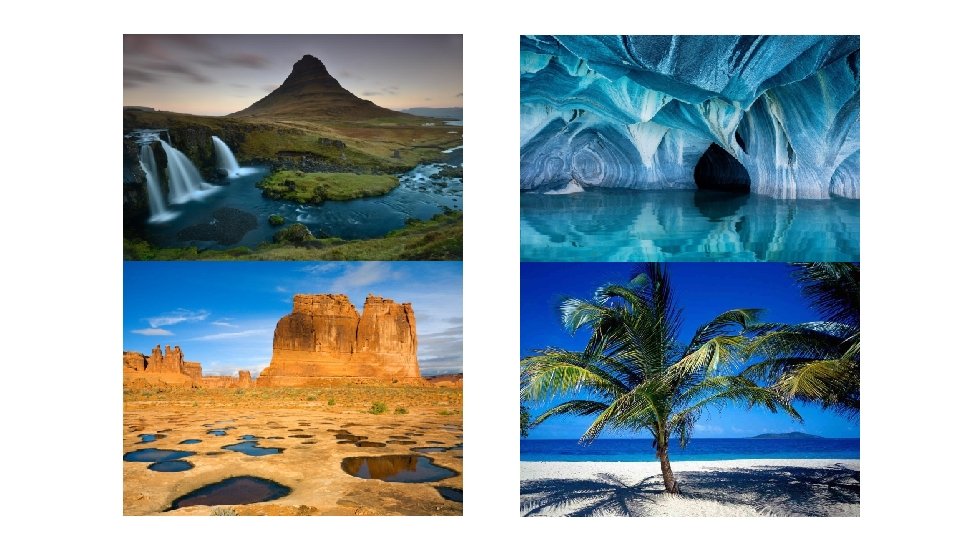
Effective descriptions You are going to plan, write and edit a description of a setting. First, think of an interesting place you could describe vividly and in detail…
Plan… First, think of an interesting place you could describe vividly and in detail… • Write a list of nouns for your setting • Write 10 descriptive noun phrases for your setting • Write 5 sentences, including appositives, for your setting. • Edit and refine your sentences. Make at least 3 vocabulary changes
Write a description of your setting. Remember: • Vocabulary choices • Vary sentence starts/structures • Syntax – use appositives, subordinate clauses etc • Show, don’t tell
Proofreading code – ‘STAR’ • Substitute words with more suitable replacements. • Take things out and remove unnecessary details. • Add things in or go into more detail. • Rearrange the order of ideas and structure of the writing. Highlight a sentence that could be improved and rewrite it underneath your work focusing on making it more descriptive