
Descriptions of Rock Forming Minerals All the following
- Slides: 14
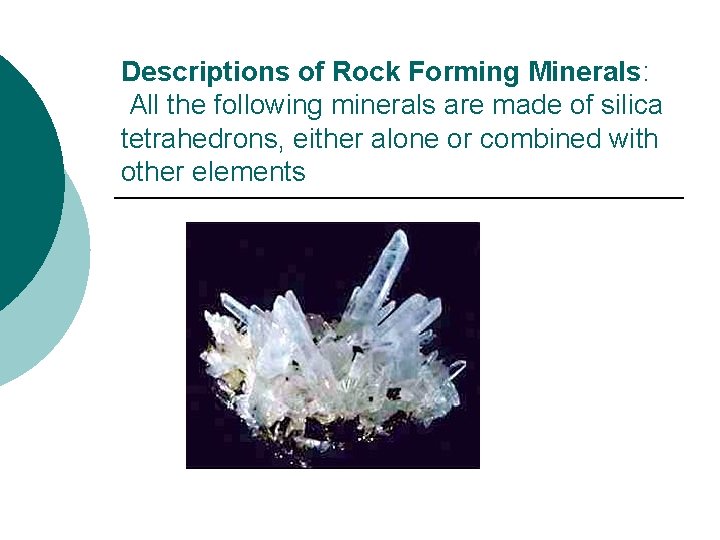
Descriptions of Rock Forming Minerals: All the following minerals are made of silica tetrahedrons, either alone or combined with other elements
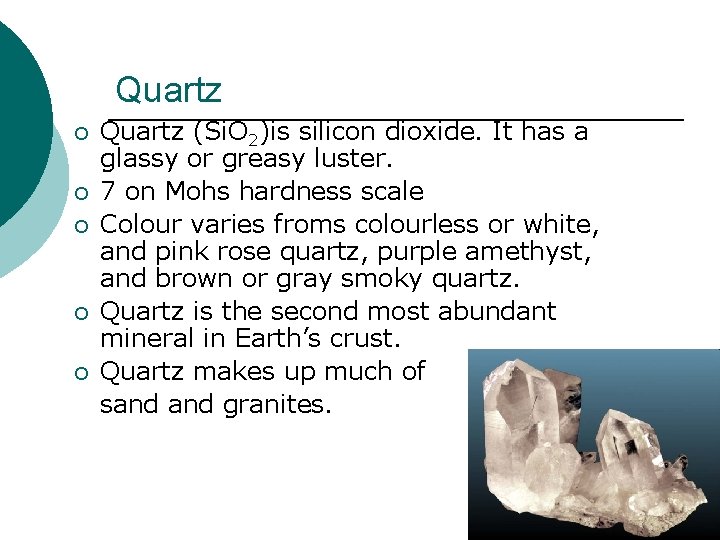
Quartz ¡ ¡ ¡ Quartz (Si. O 2)is silicon dioxide. It has a glassy or greasy luster. 7 on Mohs hardness scale Colour varies froms colourless or white, and pink rose quartz, purple amethyst, and brown or gray smoky quartz. Quartz is the second most abundant mineral in Earth’s crust. Quartz makes up much of sand granites.
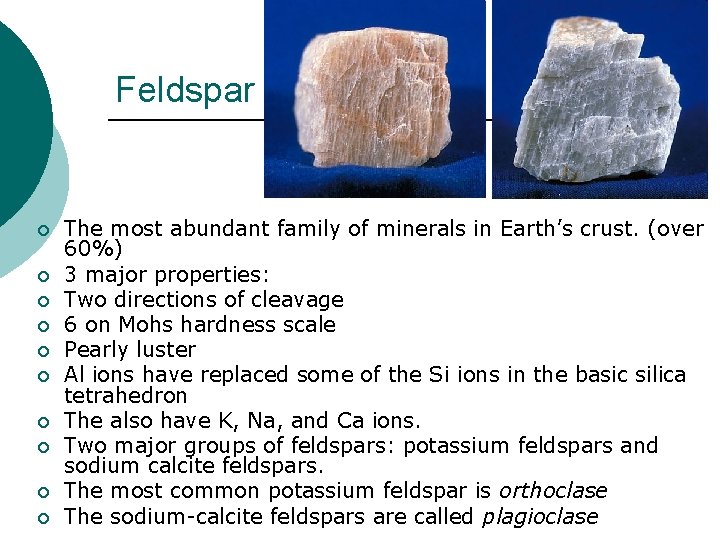
Feldspar ¡ ¡ ¡ ¡ ¡ The most abundant family of minerals in Earth’s crust. (over 60%) 3 major properties: Two directions of cleavage 6 on Mohs hardness scale Pearly luster Al ions have replaced some of the Si ions in the basic silica tetrahedron The also have K, Na, and Ca ions. Two major groups of feldspars: potassium feldspars and sodium calcite feldspars. The most common potassium feldspar is orthoclase The sodium-calcite feldspars are called plagioclase
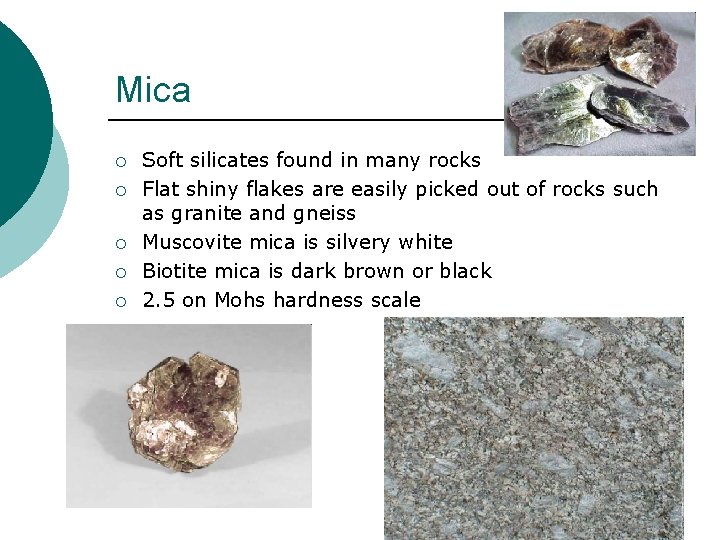
Mica ¡ ¡ ¡ Soft silicates found in many rocks Flat shiny flakes are easily picked out of rocks such as granite and gneiss Muscovite mica is silvery white Biotite mica is dark brown or black 2. 5 on Mohs hardness scale
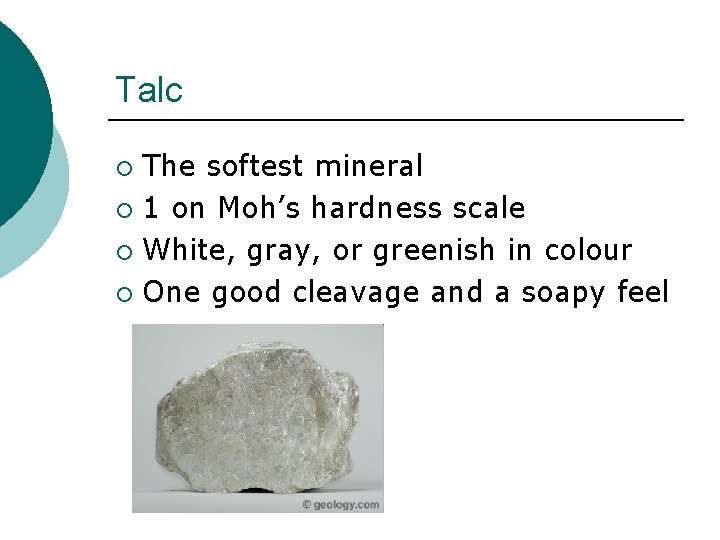
Talc The softest mineral ¡ 1 on Moh’s hardness scale ¡ White, gray, or greenish in colour ¡ One good cleavage and a soapy feel ¡
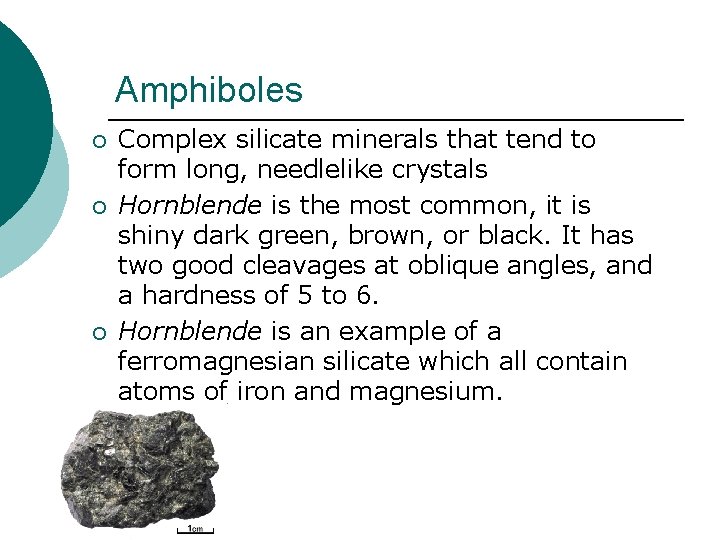
Amphiboles ¡ ¡ ¡ Complex silicate minerals that tend to form long, needlelike crystals Hornblende is the most common, it is shiny dark green, brown, or black. It has two good cleavages at oblique angles, and a hardness of 5 to 6. Hornblende is an example of a ferromagnesian silicate which all contain atoms of iron and magnesium.
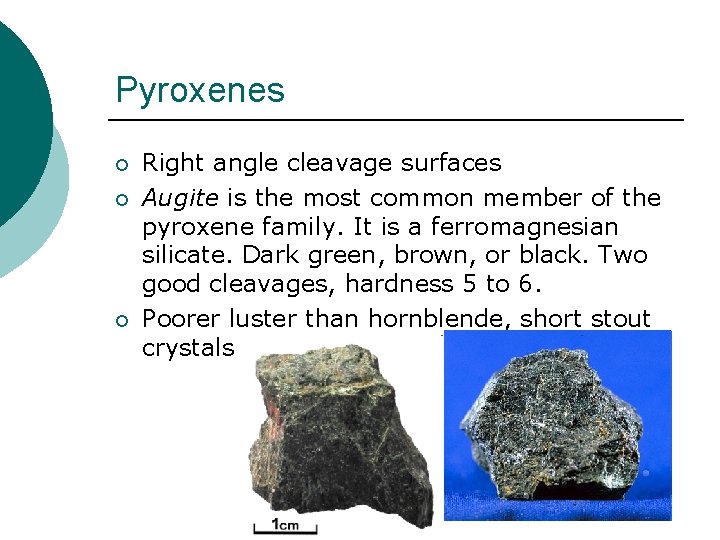
Pyroxenes ¡ ¡ ¡ Right angle cleavage surfaces Augite is the most common member of the pyroxene family. It is a ferromagnesian silicate. Dark green, brown, or black. Two good cleavages, hardness 5 to 6. Poorer luster than hornblende, short stout crystals
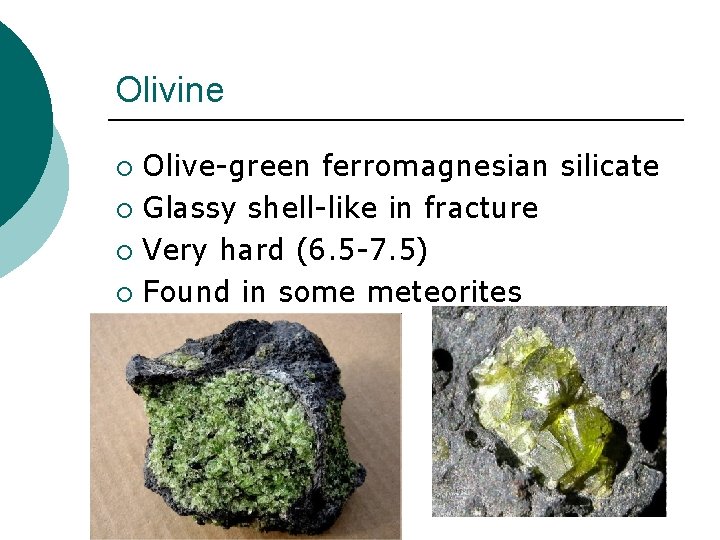
Olivine Olive-green ferromagnesian silicate ¡ Glassy shell-like in fracture ¡ Very hard (6. 5 -7. 5) ¡ Found in some meteorites ¡
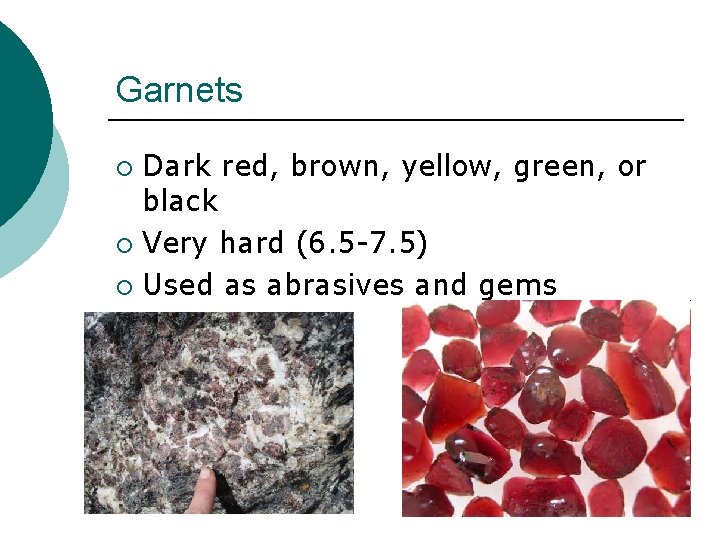
Garnets Dark red, brown, yellow, green, or black ¡ Very hard (6. 5 -7. 5) ¡ Used as abrasives and gems ¡
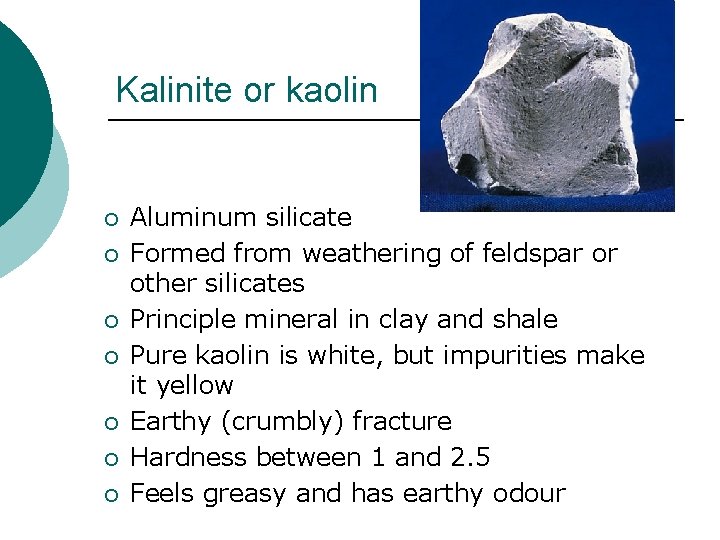
Kalinite or kaolin ¡ ¡ ¡ ¡ Aluminum silicate Formed from weathering of feldspar or other silicates Principle mineral in clay and shale Pure kaolin is white, but impurities make it yellow Earthy (crumbly) fracture Hardness between 1 and 2. 5 Feels greasy and has earthy odour
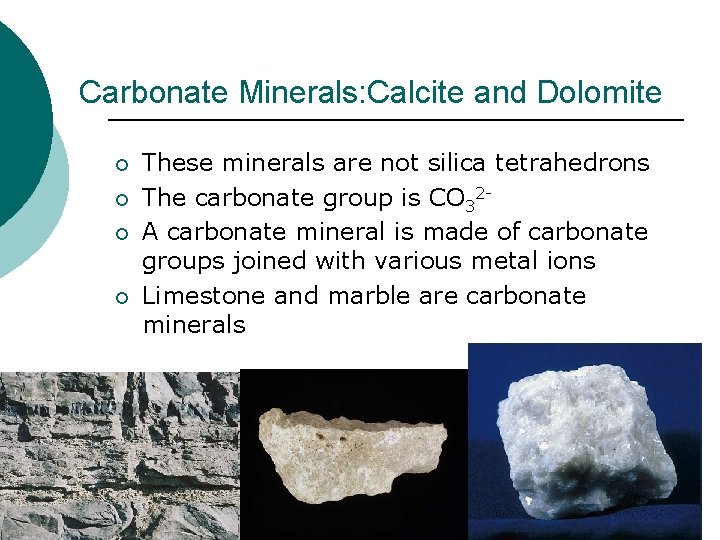
Carbonate Minerals: Calcite and Dolomite ¡ ¡ These minerals are not silica tetrahedrons The carbonate group is CO 32 A carbonate mineral is made of carbonate groups joined with various metal ions Limestone and marble are carbonate minerals
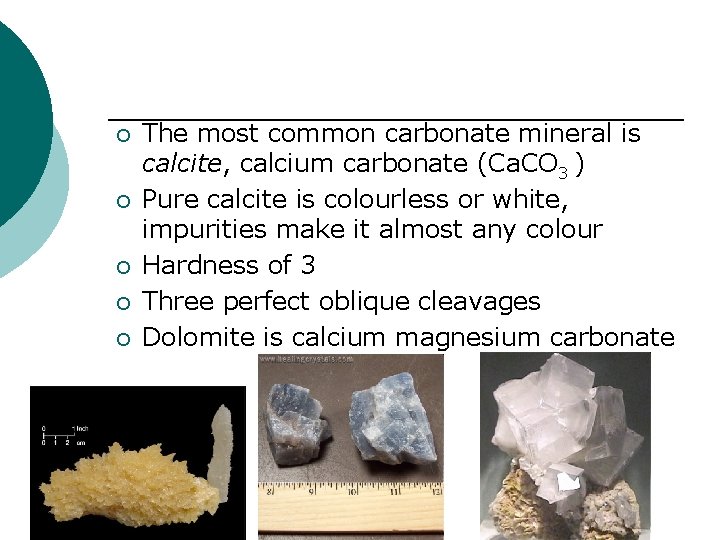
¡ ¡ ¡ The most common carbonate mineral is calcite, calcium carbonate (Ca. CO 3 ) Pure calcite is colourless or white, impurities make it almost any colour Hardness of 3 Three perfect oblique cleavages Dolomite is calcium magnesium carbonate
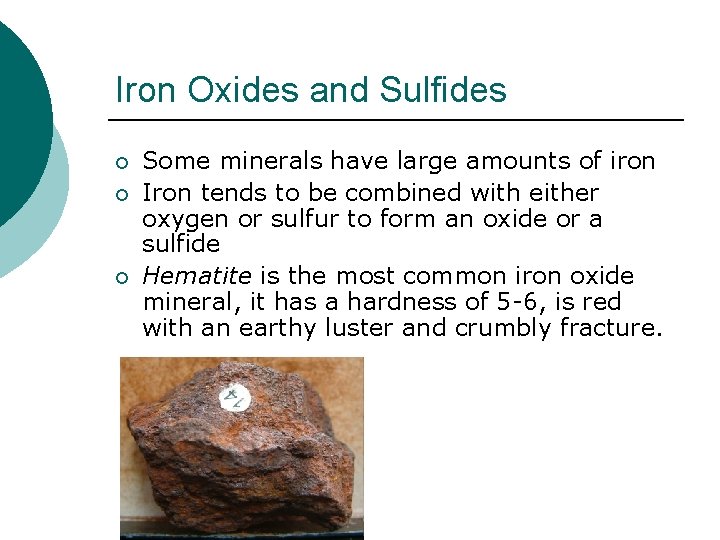
Iron Oxides and Sulfides ¡ ¡ ¡ Some minerals have large amounts of iron Iron tends to be combined with either oxygen or sulfur to form an oxide or a sulfide Hematite is the most common iron oxide mineral, it has a hardness of 5 -6, is red with an earthy luster and crumbly fracture.
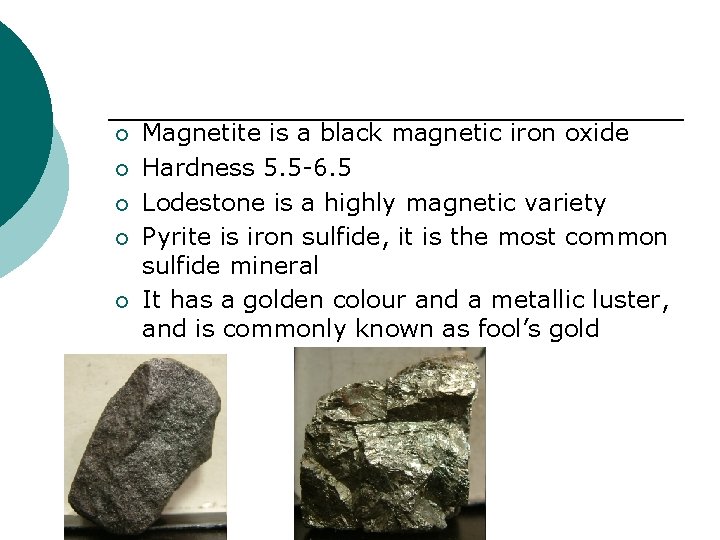
¡ ¡ ¡ Magnetite is a black magnetic iron oxide Hardness 5. 5 -6. 5 Lodestone is a highly magnetic variety Pyrite is iron sulfide, it is the most common sulfide mineral It has a golden colour and a metallic luster, and is commonly known as fool’s gold